Bad Moons Ork Boyz

Just over a week ago I was asked to join into a tale of four warlords type challenge where every two weeks all the participants need to add and paint a unit to a Warhammer 40,000 army. I decided to use this as an excuse to get my first ever 40k army painted up: Orks!
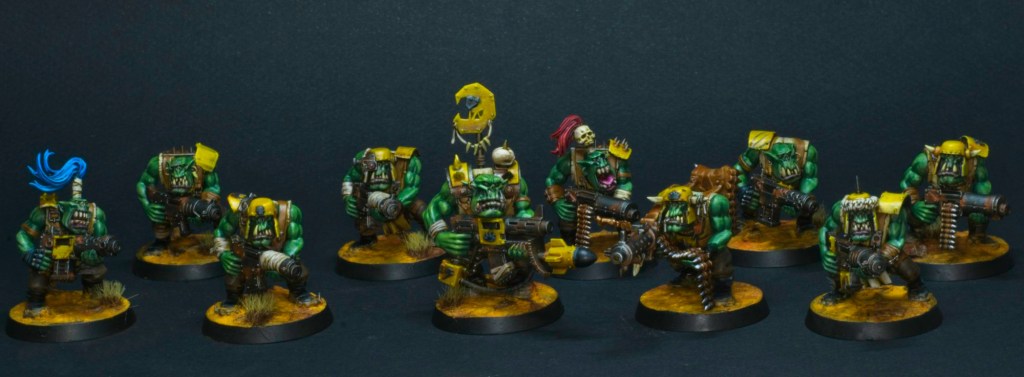
This time around we had to paint a troops unit, which is a good place to start when testing out a colour scheme. I don’t know what the next unit type will be just yet, but I’m keen to find out and get cracking as these were very enjoyable to paint.
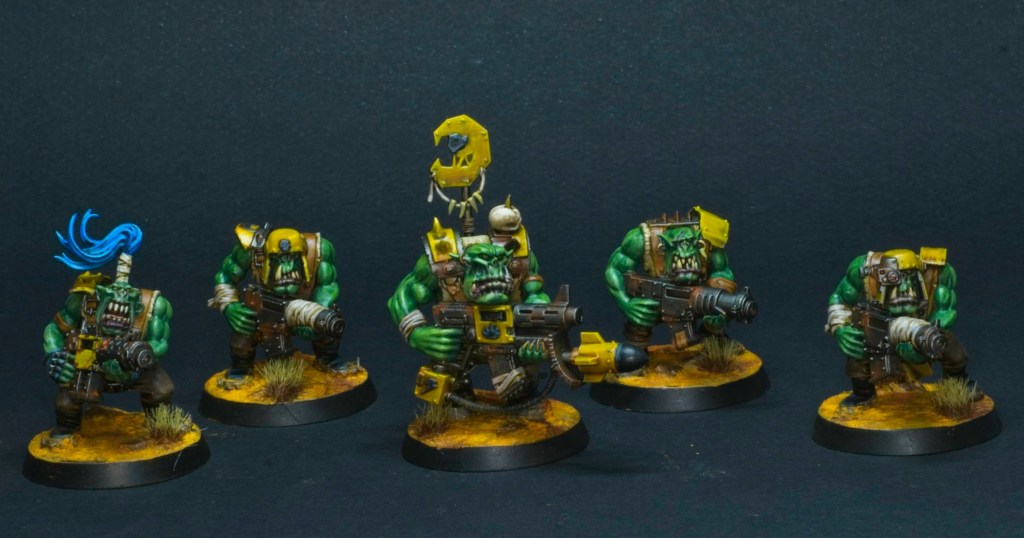
I’ve been collecting Orks on and off for a very long time (probably not far off 20 years!) so I have quite few models in my collection, and I’ve never really made a serious attempt to get an army painted, so most of them are bare plastic. These particular models weren’t even built! For a lot of others I’ll have to cut off the 25mm bases and replace them with 32mm bases as is standard for Orks these days, a task I’m not looking forward to, but want to do as the 32mm bases look much better on these rather big models.
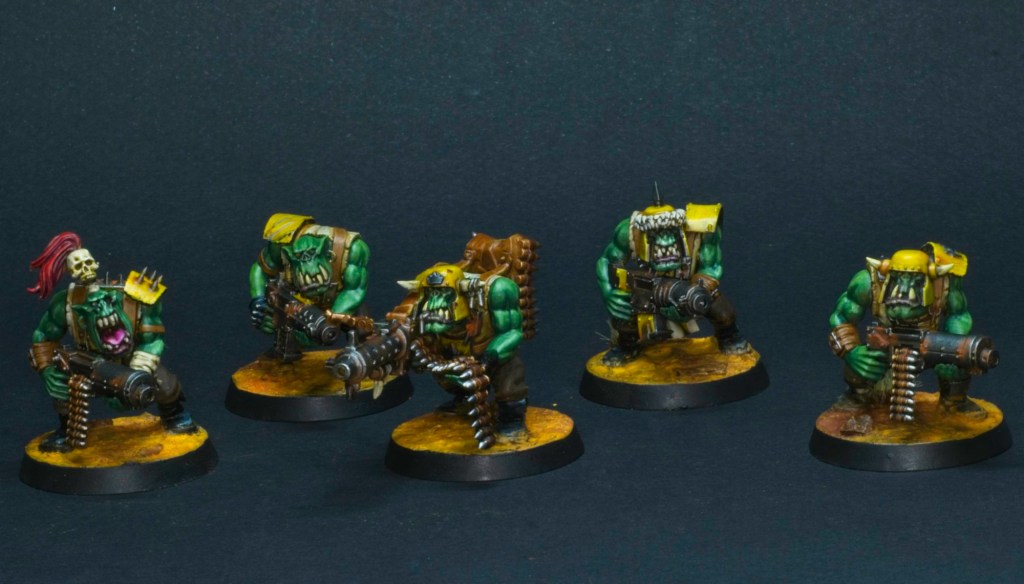
I’ve always loved the look of Orks on desert bases, so that was an easy decision. I’ve been experimenting with using dry pigments for basing for a while now, and I pretty much replicated the scheme off of the bases I made for my Rosa’s Ravagers.

I spent a bit of time on the areas I think are most important to the models: the skin and the yellow armour that marks them out as Bad Moons. I’ve documented the steps for those in the image above.

Overall very happy with the scheme and keen to keep this challenge going!
6th Airborne

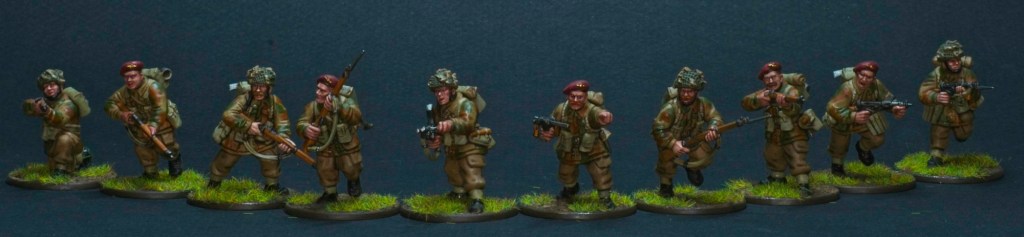
I painted this army for Bolt Action back in June-July 2020, before I’d started this blog and I’ve been wanting to document it on the blog for a while now, but haven’t made time for it. Seeing other blogs post about WW2 models ( the tipping point was the latest post from John over at https://justneedsvarnish.wordpress.com/) has finally motivated me to get these models photographed and uploaded!

I’ve had a soft spot for the British airborne regiments and their operations in Normandy on and after D-Day for a while, so when some friends and I decided to break away from our usual fare of Fantasy and Sci-fi wargaming to try out historical games (Bolt Action in this case) these models caught my attention very quickly.

I didn’t aim for any particular operation when deciding what to include, rather focusing on including units that would make sense in the period following D-Day, when the 6th AARR started using Cromwells rather than the Tetrarch for example. The force is a 1000pt army made of a single reinforced platoon under Bolt Actions army selection rules.

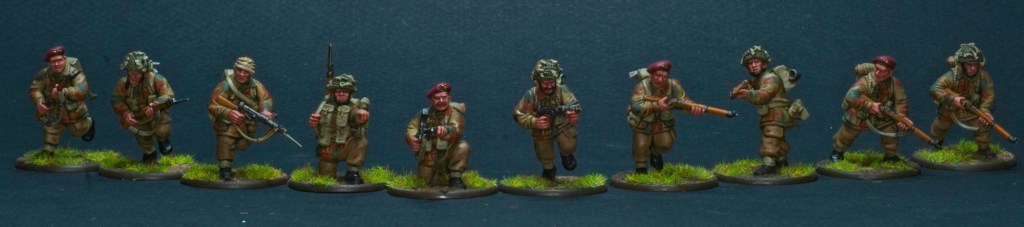
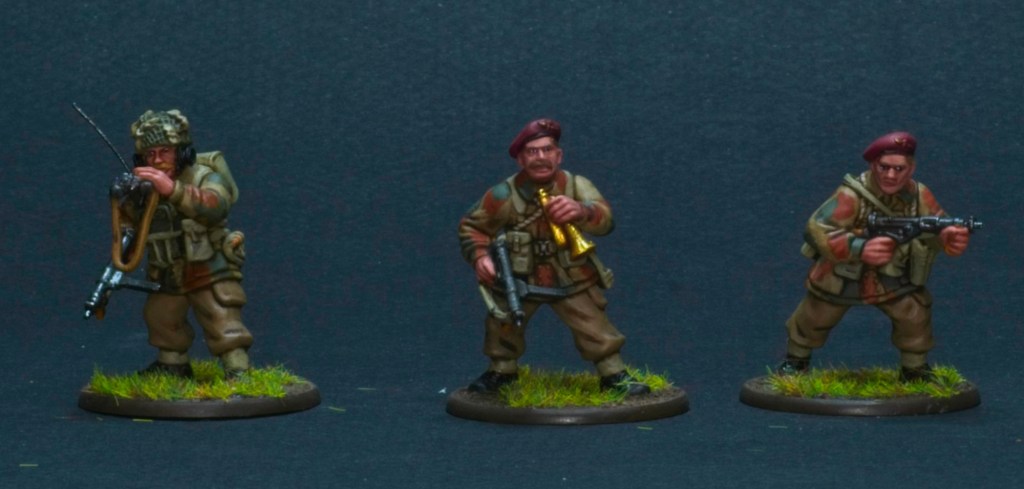
10-man Section
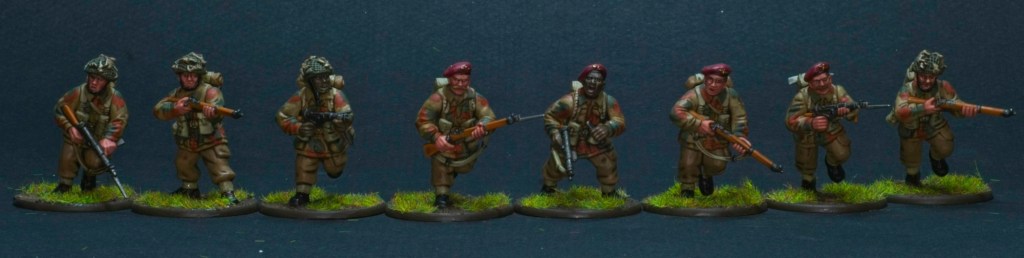
Another 10-man Section
A smaller 6-man section
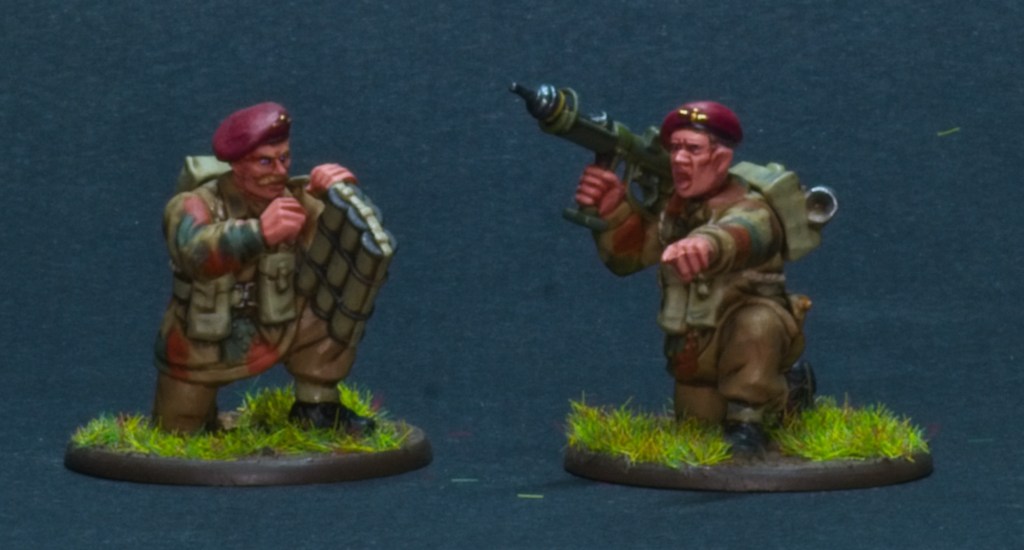
PIAT Team
Sniper Team
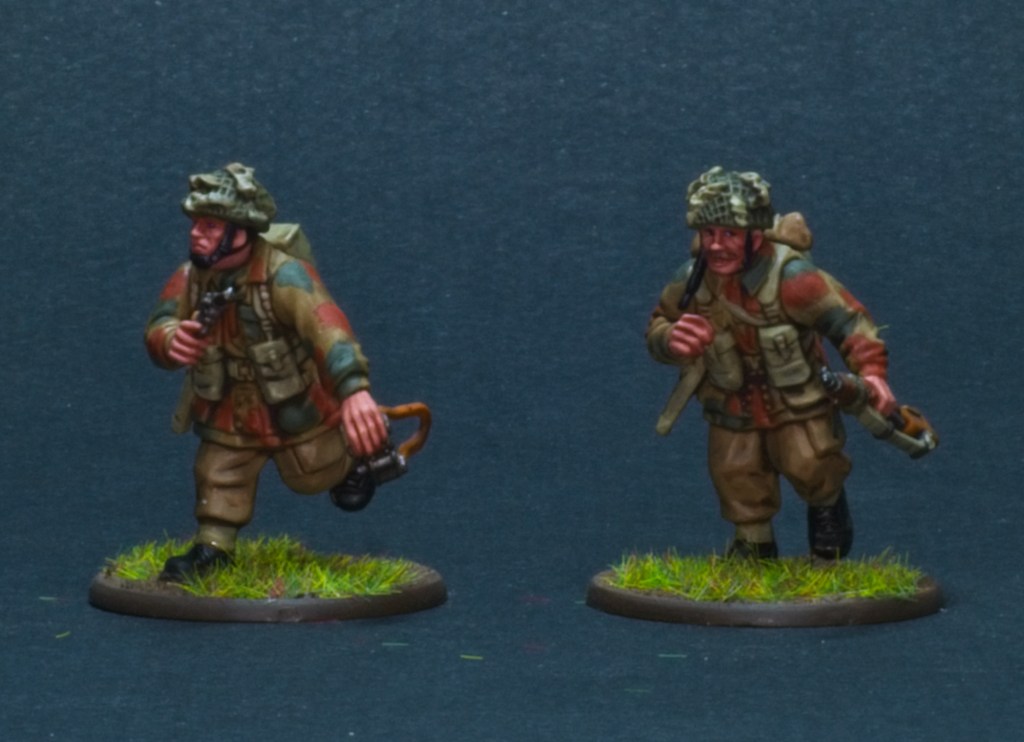
Artllery Observer (Left) and Lieutenant with a bodyguard (Right)
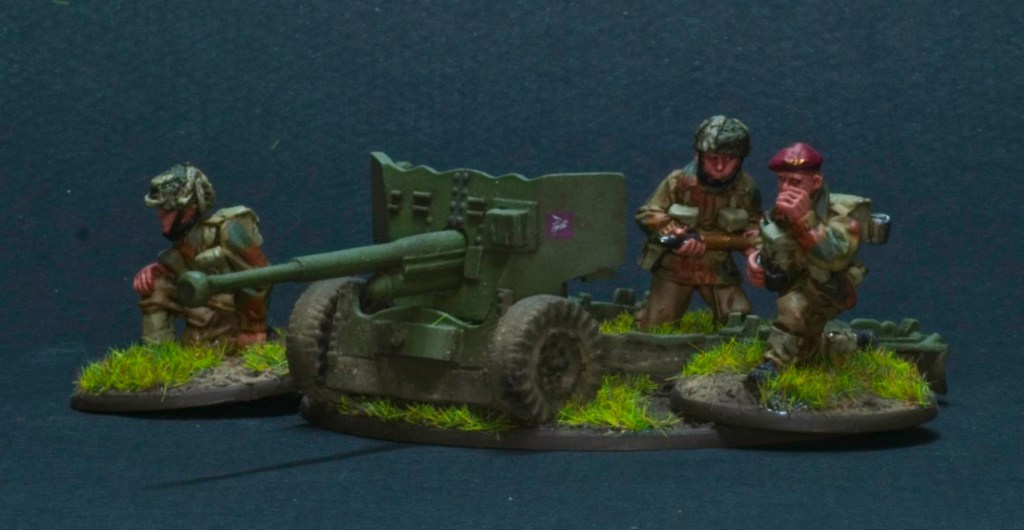
Six Pounder
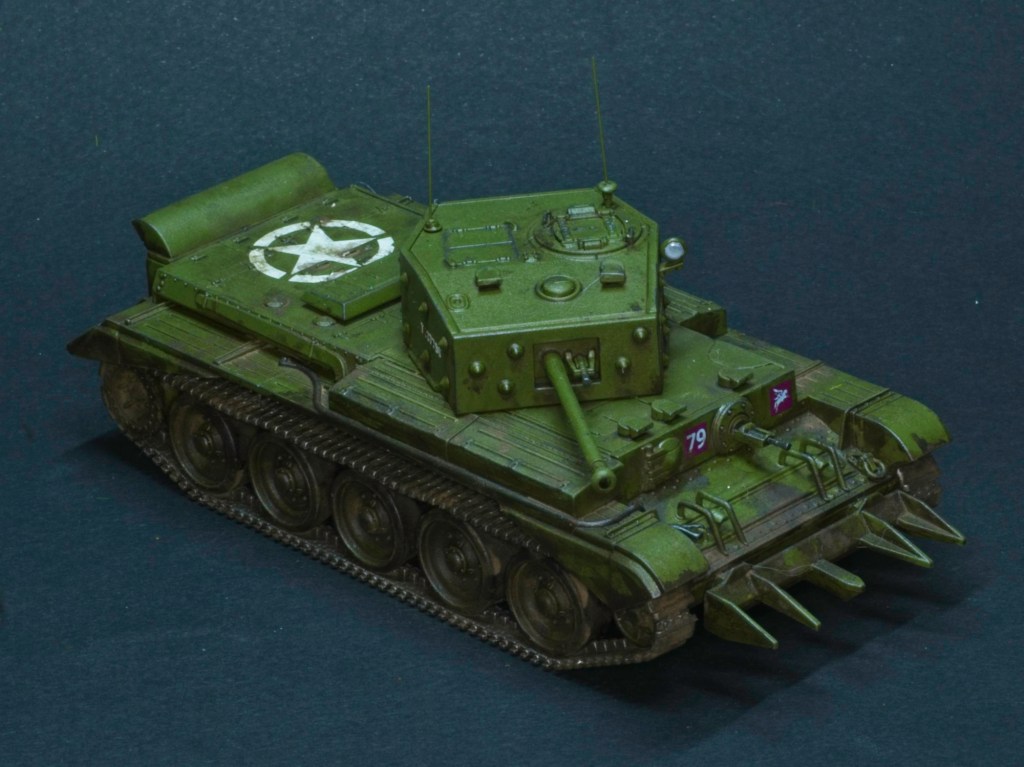
6th AARR Cromwell

This was my first foray into historical wargaming and I thoroughly enjoyed immersing myself in research material, learning about the actions of the troops the models represent and trying to get markings right! (Although I could never find a photo of the AARR Cromwells so I improvised the markings on those using pictures of Tetrarchs and Locusts)

I have 3 more cromwells to paint at some stage for when we want to play with the tank war rules, and a second Bolt Action army unbuilt, waiting for its day, so there will be more WW2 content in the future!

Mordheim Ruined House

It’s been a little while since the last post, but I’ve been busy, this time not only painting but also building. Over the last few weeks I’ve been playing Warhammer Vermintide 2 with some friends, and the game’s environments have tapped right into my nostalgia for the first wargame I ever played, Mordheim. Playing the game made me want to build some Mordheim terrain even though I have no real plans to play Mordheim any time soon, but when I get inspired I like to act on that inspiration!

There were a few directions that this specific inspiration pushed me into:

  1. I wanted to build a house
  2. It needed to be half-timbered
  3. It needed to have elements that pushed it from historical looking into the warhammer universe, i.e. skulls, weird motifs etc.
  4. I wanted to build it from scratch rather than use my 3D printer

That last post is interesting, I’ve had a filament 3D printer and I’ve printed a ton of terrain with it over that time, enough for a full table for Bolt Action, Star Wars Legion, Middle-Earth Strategy Battle Game, and a lot of pieces of post-apocalyptic scatter terrain for This Is Not A Test. It’s been really nice to have, there are a ton of great free and paid models online done by amazing artists, and it’s produced some very nice looking tables.

Building tables for Mordheim was my first serious foray into terrain-making, and back then I mostly used cardboard as the material of choice, cutting out shapes and assembling them into the ruined streets of Mordheim. I think playing Vermintide triggered 1) a want to build something in the world of Mordheim, and 2) a nostalgia for building terrain from raw materials.

I built the main structure out of foam board, which is nice and easy to work with. I then cut a balsa wood plank I had into 7mm strips to build all the timber frames, and into sections to represent the floors. I carved board shapes into the floors with a knife. The tiles were traced onto a sheet of foam board with one of the cardboard sides peeled off, while the cobbles outside were cut individually from XPS foam. To texture the outside walls I used tile grout, for the inside walls I used plaster filler. The stone details in the walls were lifted from a variety of bits, the sun face for example is from the old Warhammer 8th edition templates, using thermo plastic molds.

Overall I’m happy with the results, and really enjoyed the process, so I can see myself building more when the inspiration strikes again. Maybe one day I’ll again have a full table of Mordheim terrain!