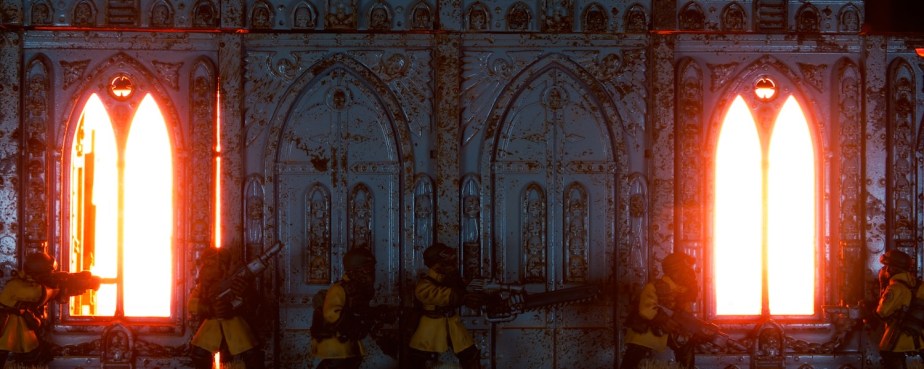
Steel Legion Guardsmen

As you know I’ve been painting away to meet the 1 Million Miniatures challenge, where I pledged to paint 100 miniatures at my local GW store. Last post saw me get to 91 miniatures, and with a little over a week left I decided to paint up this squad of Steel Legion Imperial Guard troops, which would take me up to 101 miniatures.
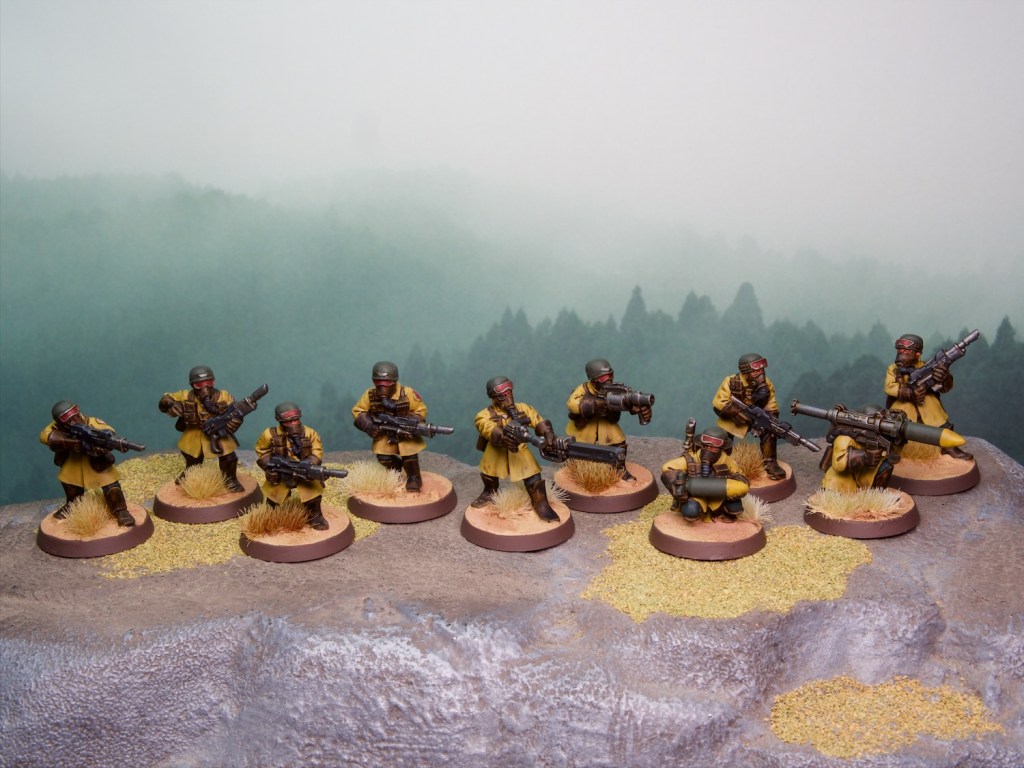
I only have 10 of these old metal models, but I decided to paint them as if I was painting an army of them, which suited the speed painting I needed to do for the challenge anyway. With the new Armageddon Warhammer 40,000 set coming out, one has to hope they’re re-releasing Steel Legion miniatures one day, which means I might be able to add to these!

Painting-wise, these were extremely simple and quick. To get a head start on the trench coats, I undercoated the models with Vallejo German Dark Yellow/Dunkelgelb airbrush primer. I then picked out what is visible of their skin in Pro Acryl Shadow Flesh, followed by covering all the leather areas (Masks, straps, books, ammo pouches… there’s a lot of leather on these models) in Wildwood contrast paint. The bedrolls are Vallejo German Fieldgrey WWII, the helmets Vallejo German Camo Dark Green. The gun casings in Vallejo German Grey, and finally the metal areas in Scale75 Black Metal.
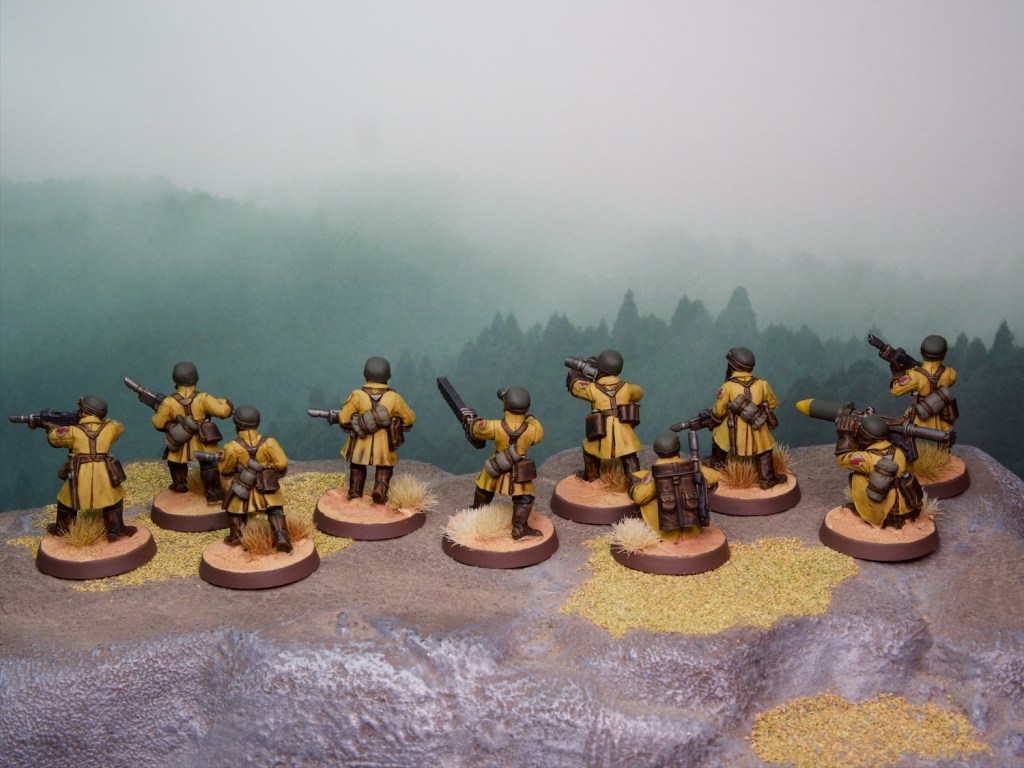
I then went for my usual all over wash, but instead of my go to Agrax Earthshade I decided to try something a little bit lighter as Earthshade can be a little dark over colours like the trench coats. Instead I decided to experiment and went for Army Painter Soft Tone. It worked really nicely, giving a nice gradient over a lot of the models. It led me to think that I might get away with minimal highlights on the models – great for army painting. For highlights I simply picked out the raised areas of the helmets, trenchcoats, and metallic areas in their respective basecoat paints (upside of using airbrush primer, you can paint it on when you need to), did a few line highlights on the guns with the German grey mixed with some AK Ivoryand that was it. The final touch was painting the glass on the goggles in Citadel Contrast Blood Angels Red – couldn’t help going for that Fallout New Vegas NCR Ranger look, too iconic!

The basing was simple as well, a thorough covering of AK Sandy Desert texture paint, followed by some MIG Brick Dust pigments. The base rim is Two Thin Coats Druid Flesh.

So with these done, this takes my tally to 101 models, completing the challenge! So what do these 101 models look together you ask? Well I couldn’t resist finding out so I laid them out for a family portrait.
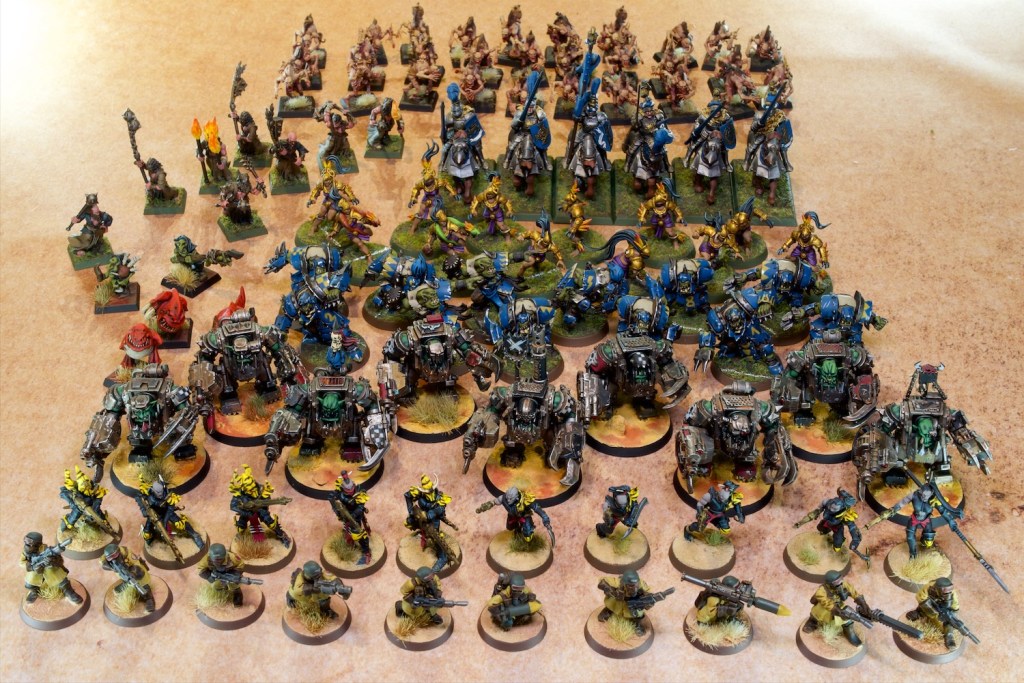
The answer is… eclectic! That’s quite a few model ranges represented there, but I’m proud to say only the Amazons were purchased during this challenge, all the other models I already had and were sitting unpainted in boxes, some for many many years. This then was a great excuse to get some paint on these older models and put a dent in the backlog!

Having the challenge finished is a bit of a weight of my shoulders, I enjoyed painting all these models, but the focus on speed definitely influenced the models I picked to paint, and I look forward to being able to pick and choose what I paint more freely!
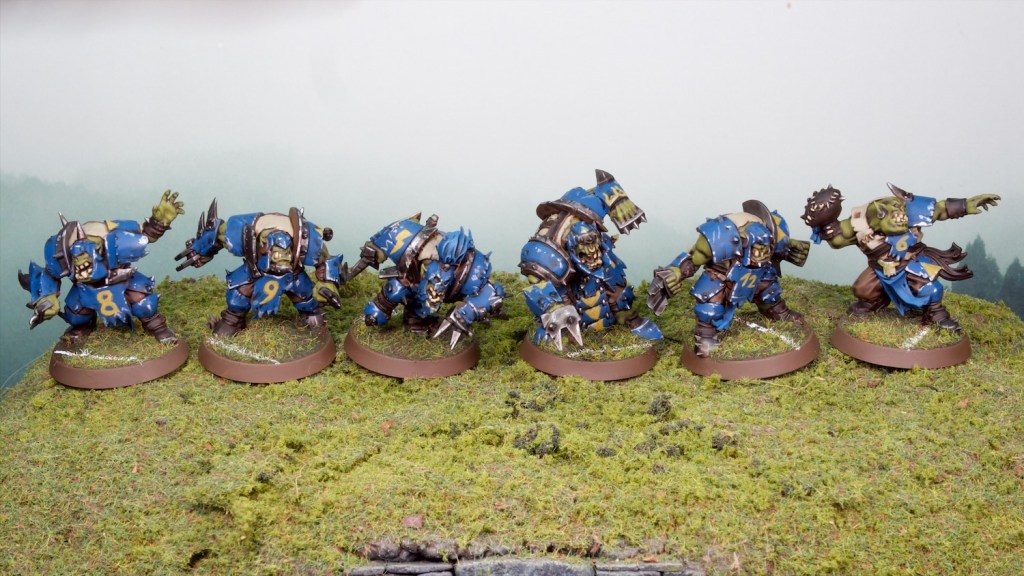
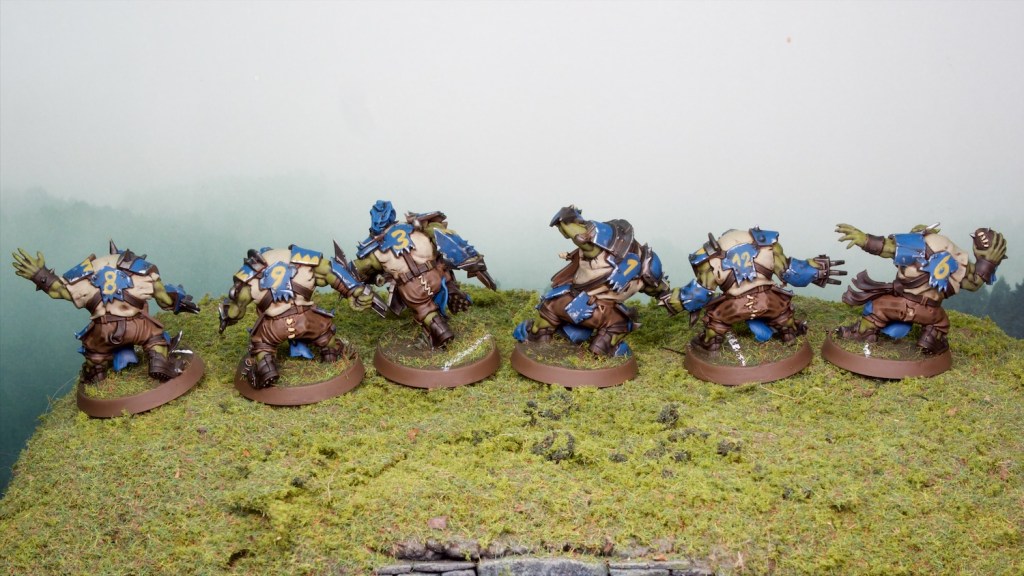
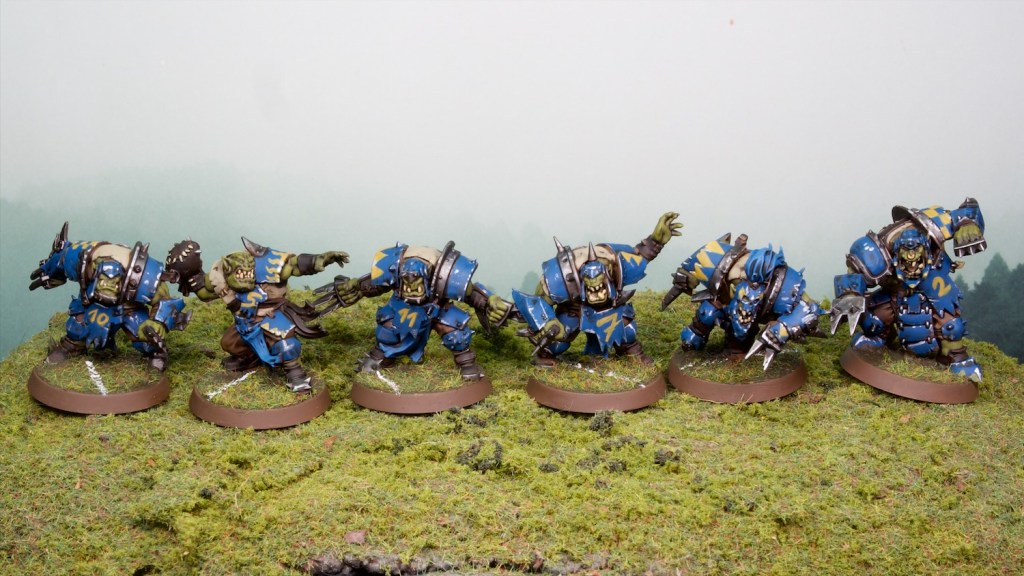
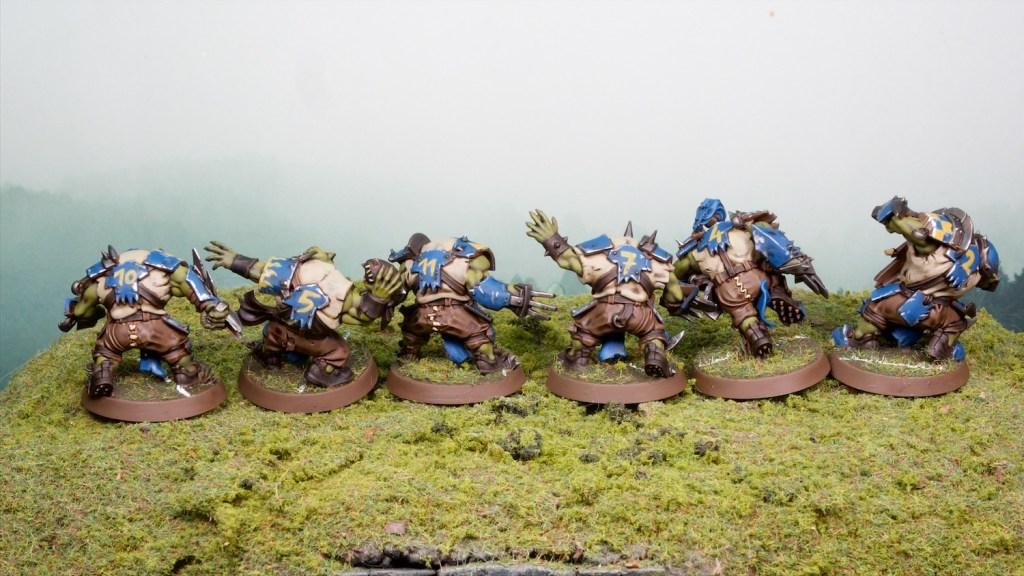
Blood Bowl Orc Team

With the deadline for the 1 Million Miniatures challenge approaching (May 9th!) and having been distracted from painting for a bit due to participating in a Vampire the Eternal Struggle tournament, it was time to get back on track and make a dent in the last 21 models needed for me to hit 100.

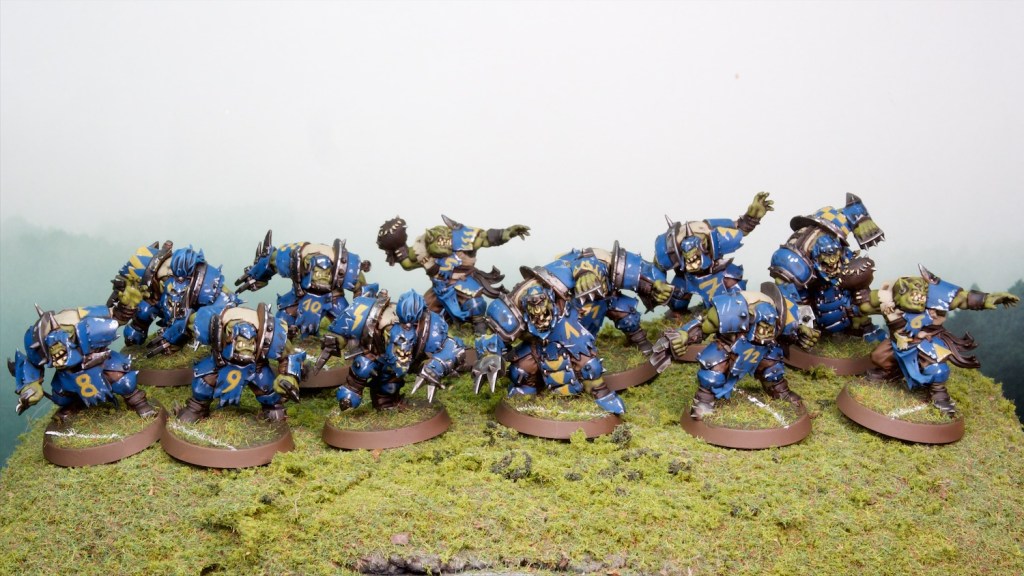
I’ve painted one Blood Bowl team already during this challenge (the Amazons) as my gaming group is keen to get into Blood Bowl. Another friend was keen to join in but not necessarily interested in the hobby aspect of the game and as I had this Orc team lying around from an old starter set I decided to paint it up for him to borrow.

I’ve been painting quite a few Warhammer and Warhammer 40k orcs/orks recently and decided to changing things up and go for a blue scheme rather than the reds and blacks I’ve been going with. I quite like the look of these, might have to paint some more blue armoured Orks in the future.

Painting process-wise, there’s not too much to write about, this is the good old base coat, Agrax Earthshade all over, highlights type of painting. The skin recipe is the same as my Warhammer orcs.

I enjoyed painting the markings on these, it’s a fun part of painting any orcs/orks, and you can get away with being a bit messy, you can be sure orcs wouldn’t be particularly neat.

These models take me to 91 total for the challenge, just need to find 9 more to do inside the next two weeks and I’ll be all done. Back to the painting table!

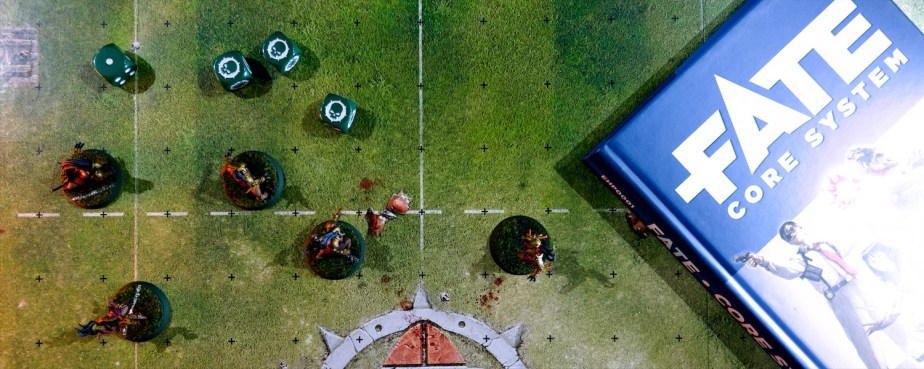
Blood Bowl Amazons // Fate Core

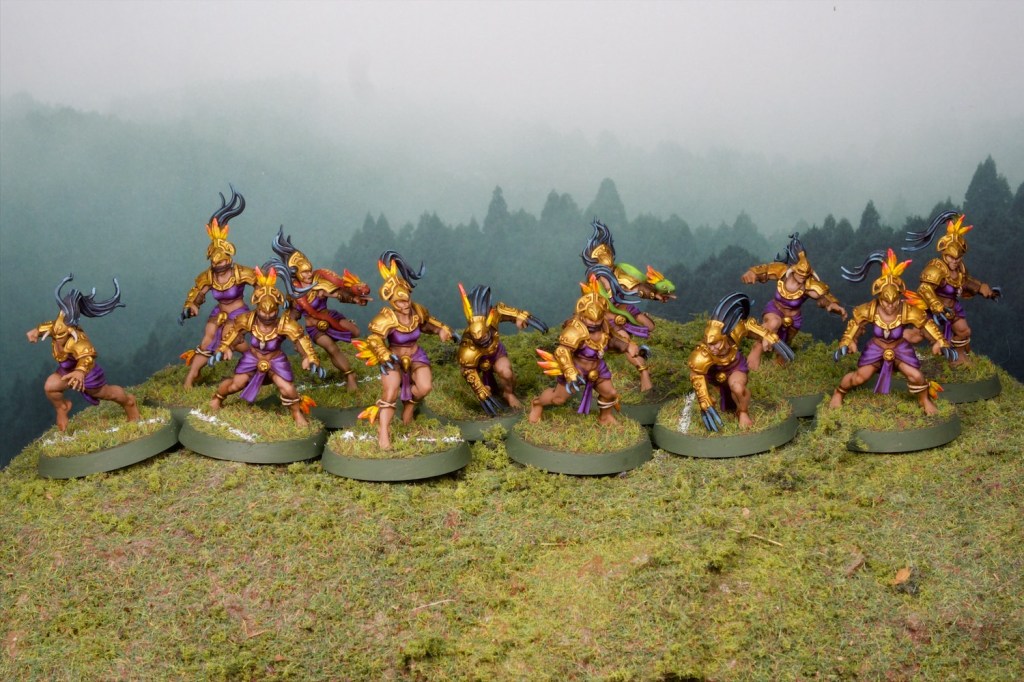
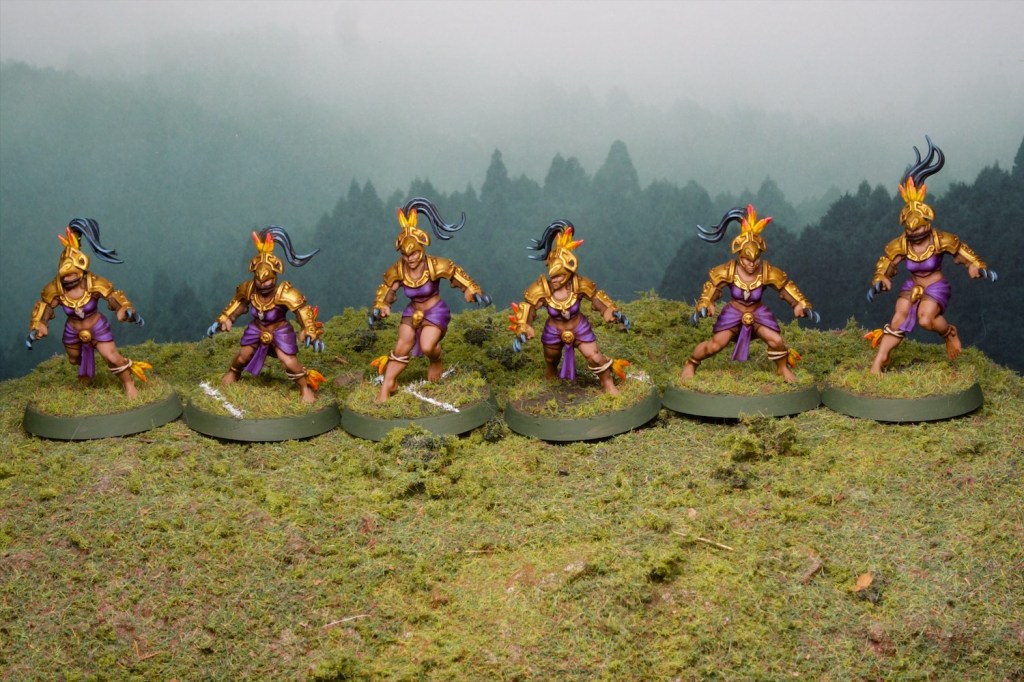
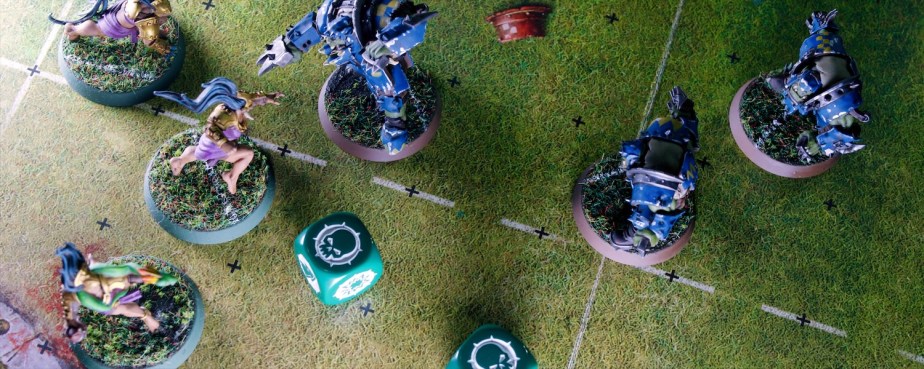
I’ve taken a slight detour through the screaming crowds of Blood Bowl fans over the last couple of weeks, as my gaming group decided to get ready for some games of Blood Bowl after the release of the latest edition of the rules. I’ve always enjoyed Blood Bowl, so I did not take much convincing and found myself assembling a freshly unsealed box of Amazons soon after.

I’d sort of kept an eye on Blood Bowl models over the last few years, and was always pretty impressed with the sculpts. Now I’ve put a modern team together and painted it I can say they stand up to that initial impression. They’re great models, with a nice amount of detail (but not so much they’re tedious to paint, which is a great balance).

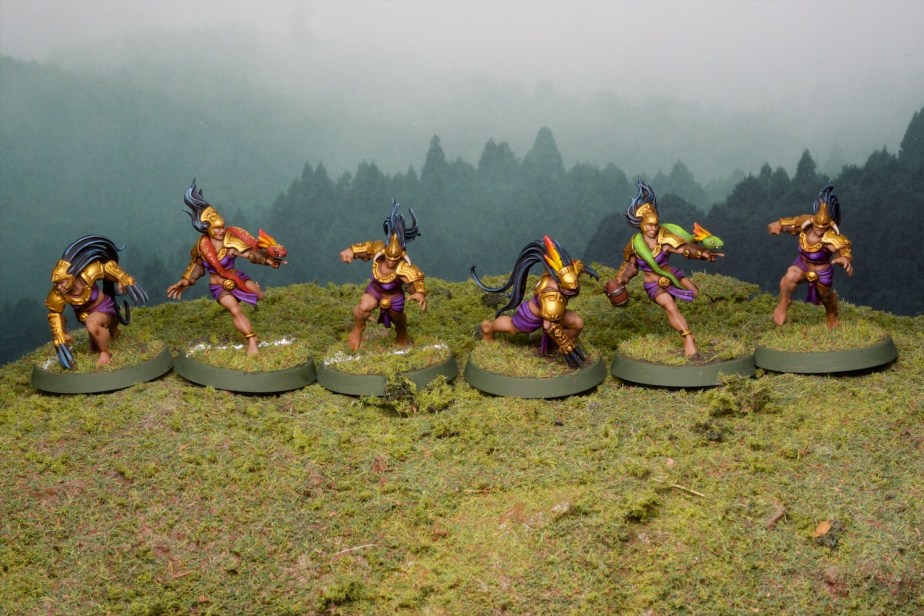
The specialist players.
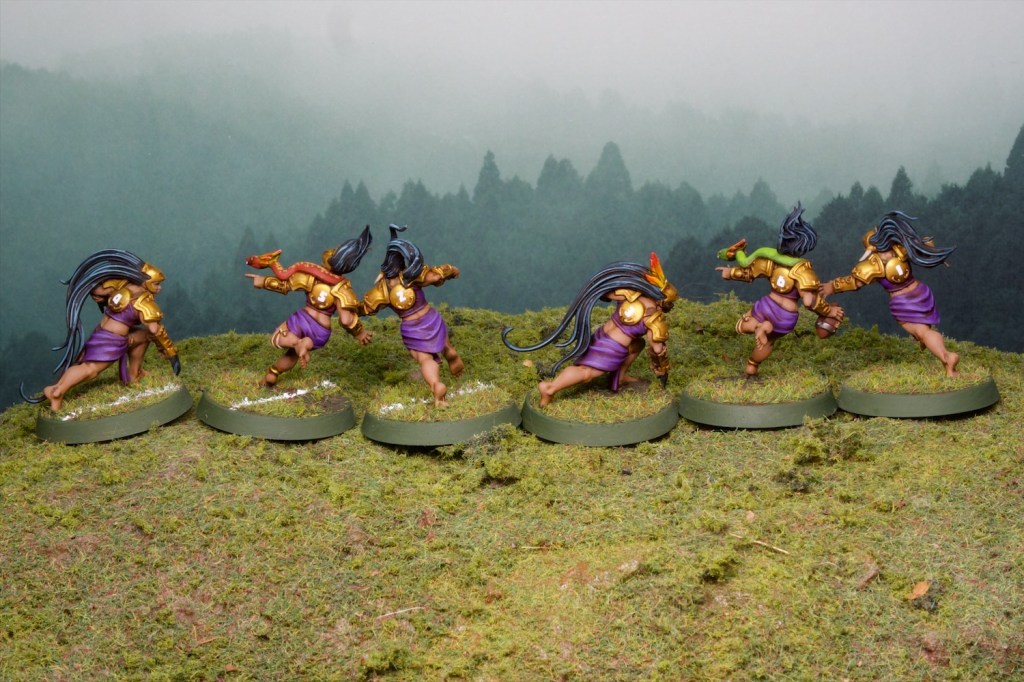
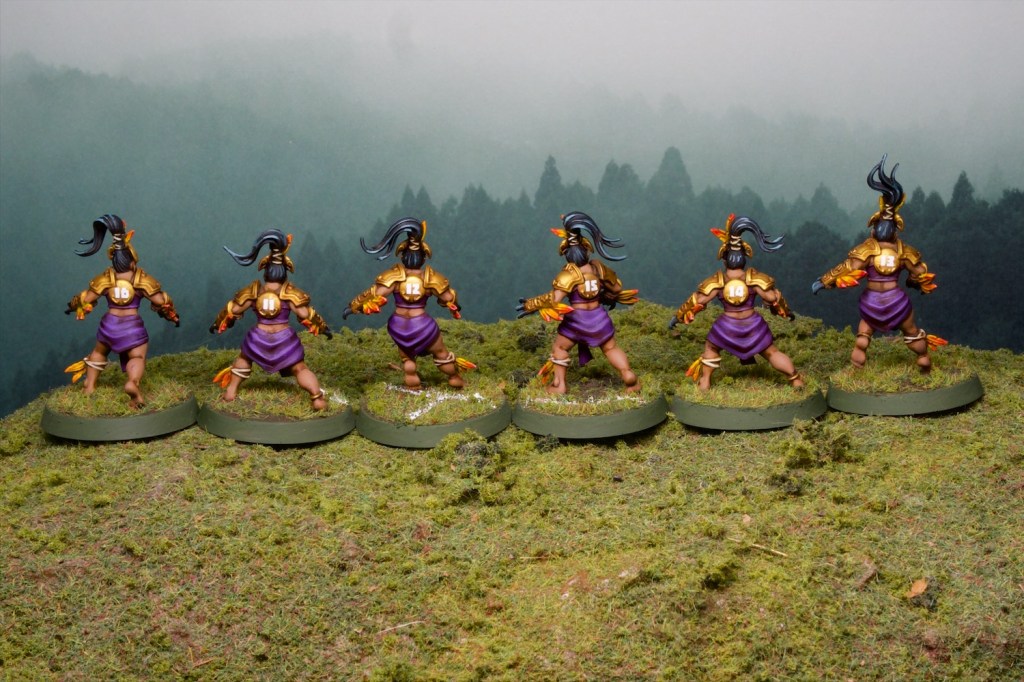
The specialist players from the back.

I went for a gold and purple colour scheme for no other reason than I found it pleasing to the eye. The yellow and red feathers were inspired by the artwork for the Magic: The Gathering set Ixalan which has these really cool yellow/red/purple feathered dinosaurs all through it.

The lineswomen.
The lineswomen from the back.

The numbers are from the transfer sheet that came with the set. They also had transfers for the base rims to indicate the player positions (e.g. blitzer etc.) which I’m sure is practical but I didn’t really like the look of that so I avoided them.

I look forward to playing some games with them, it’s been ages since I’ve played tabletop Blood Bowl (I’ve played a bit of the video games in the intervening years). Amazons were very fun to play back in the day and I hope that still holds.

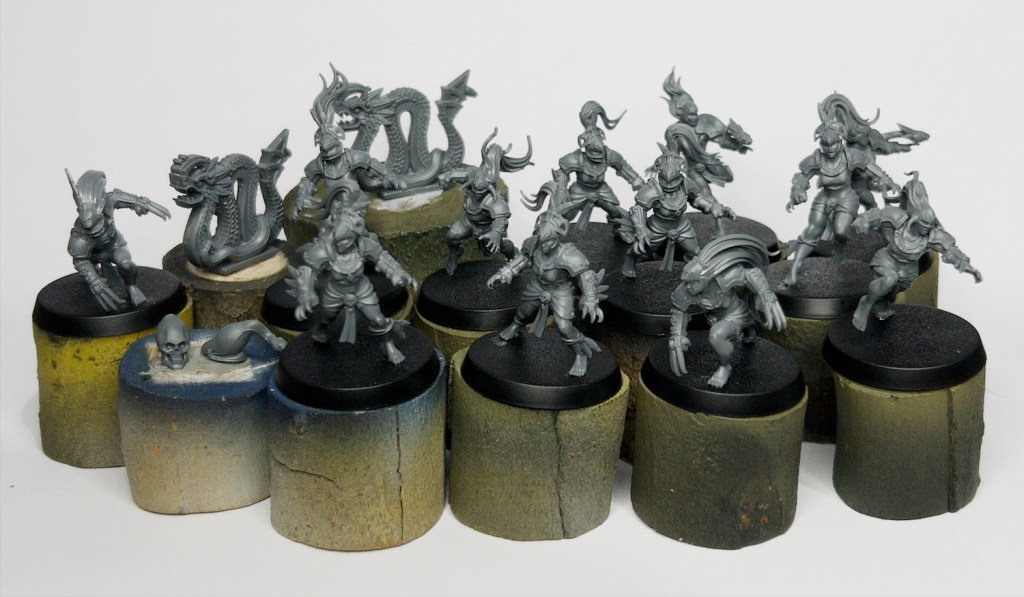
I wanted to show a photo of my setup for batch painting after a discussion with Jeff over at https://kuribospainting.com on holders for miniatures in the last post‘s comments.

As you can see I tack on the models to some bits of branch I’ve cut up into ~4cm cylinders. I find these quite comfortable to hold and they have a nice bit of weight to them (they’re eucalyptus, so quite dense) which means the models don’t topple over. I prime the models like this and don’t take them off till I go paint the base rims. Having one per model is quite practical. You can also see some of the markers and the balls which I didn’t paint yet, I’ll get to them at a later date!

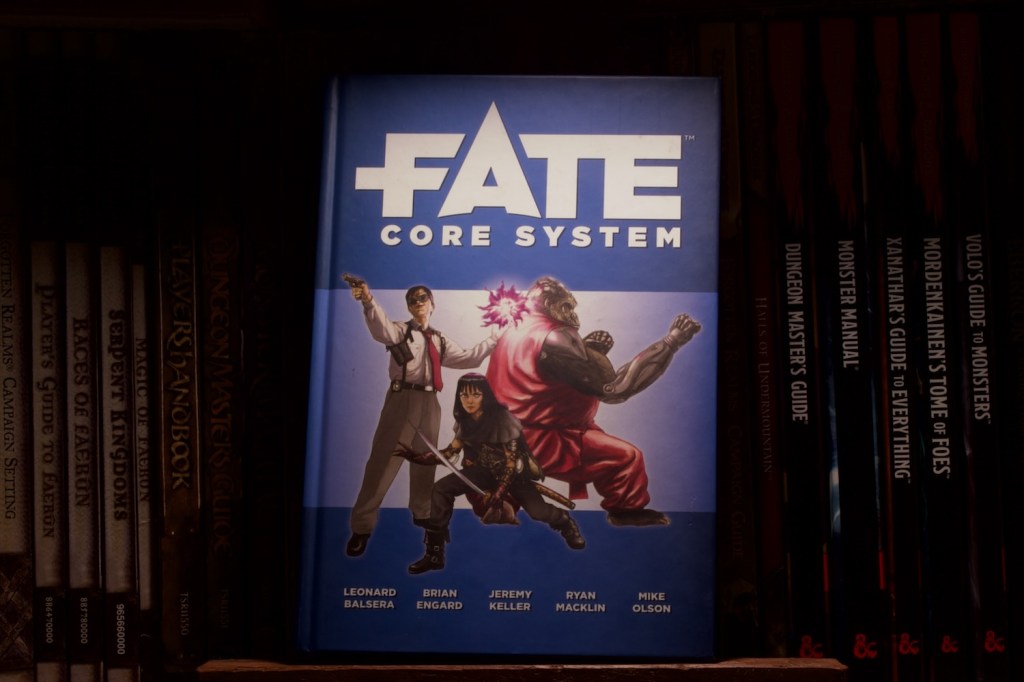
For the second instalment of From the shelves I have Fate Core from 2013.

Fate is a really interesting system that has clearly influenced a lot of later roleplaying games. I’ve played a decent amount of it over the years (although mostly an earlier version, which was part of the Dresden Files roleplaying game). As I mentioned earlier this book is from 2013 and represented a refreshed version of Fate. I’d actually never read it, so it’s been sitting on my shelves unread for 10 or so years. One good outcome of this series is that I’ve finally read through it.

The core concept of Fate is the Aspect system. The way that works is characters, antagonists, locations, basically anything in the game works have aspects, which are short descriptive sentences. These sentences can be used in the game to change what is happening by spending a resource called fate points. For example a player with a character with the aspect “Avid wargamer” could spend a fate point to get a bonus to a roll to do with statistics (this is called invoking an aspect), the player justifying this because their character is very familiar with probabilities. This works for locations too, if a location is “dimly lit”, the player could spend a fate point to get a bonus to hiding. The games master can also use these aspects to make the player’s life difficult (called a compel), for example by making the “Avid wargamer” fail to resist going into a games store when they’re meant to be meeting a friend somewhere else. When the GM does this, they offer the player a fate point which they can spend later for a positive bonus. This whole aspect system is very cool and makes the game really character driven.

There are quite a few other systems to the game but I’m focusing on aspects because I think they’re an interesting mechanic that I’d like to leverage in wargames. It would be quite easy to give aspects to units on the battlefield (e.g. “Bodyguard to the King”, “Want to prove themselves”, “Fled in the last battle”) and give players a pool of fate points they can use to invoke the aspects of their own troops for bonuses, or compel their opponent’s troops to do something negative, but passing a fate point to the opposition in so doing. I think it would be great fun for more narrative games.

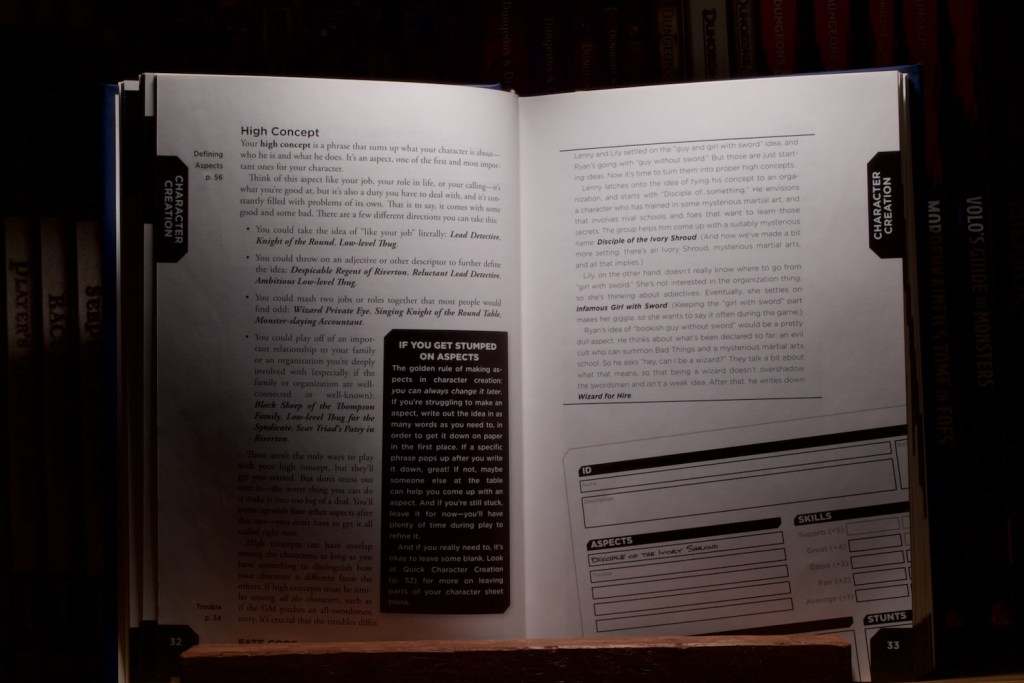
From a book writing perspective, I think this is a really well laid out book, with an abundance of clarifications for the reader. The pages above are a good representation of the style of the book, with a rules section (left page), a play example (right page, italics), and where appropriate an example of what the rule looks like on the character sheet. You also have these dark tabs on the edges of the pages that make it really easy to find sections by quickly flicking through the book.

Overall I’m impressed with the book, and really like what the game is doing. In practice my group has struggled with Fate, the system as a whole just doesn’t quite work for us and that’s why we stopped playing it. However it is packed with great ideas and I’ve re-used plenty of them throughout the years and plan on doing so plenty more in the future. Fate has also clearly had an impact on many later roleplaying games, and I find Fate mechanics or ideas all the time when reading/playing other roleplaying games.