Royal Engineers

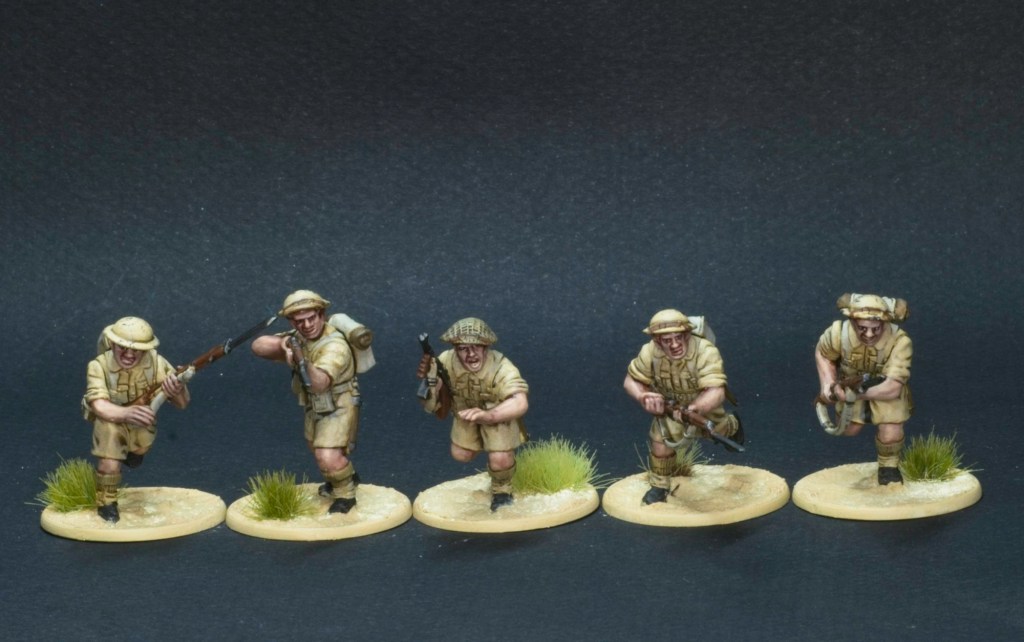
To break up painting basic infantry I decided to put together and paint my 8th army engineer section this week.
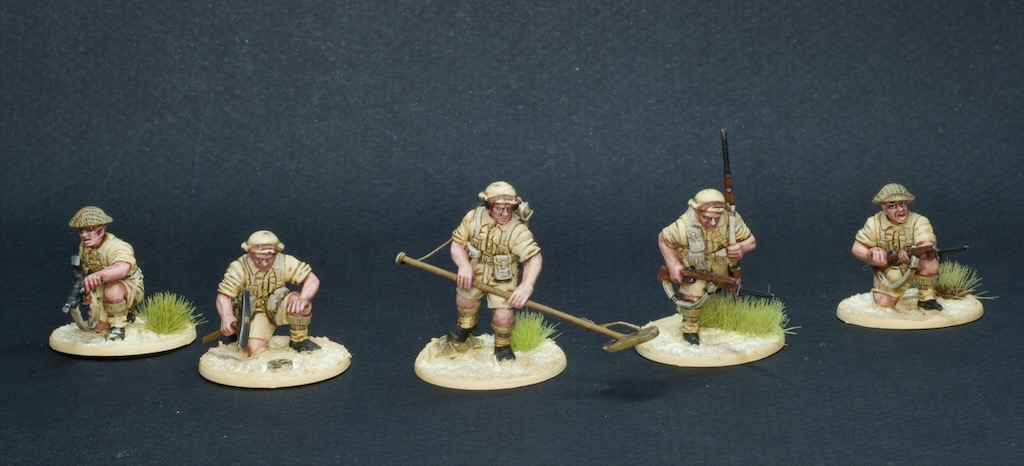
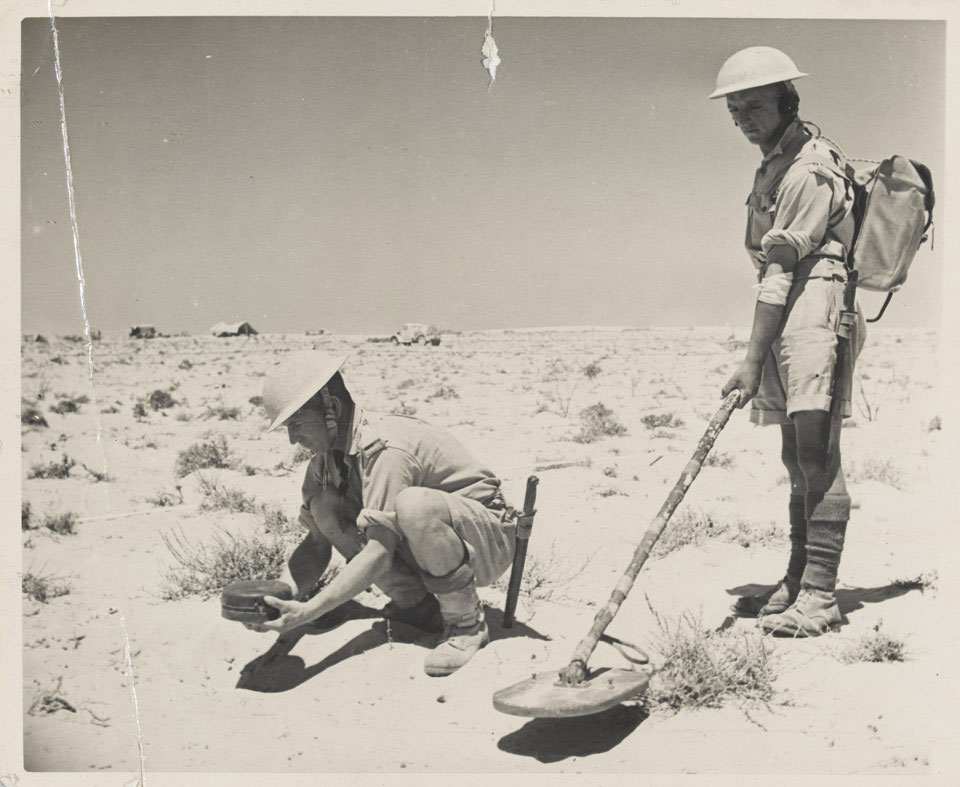
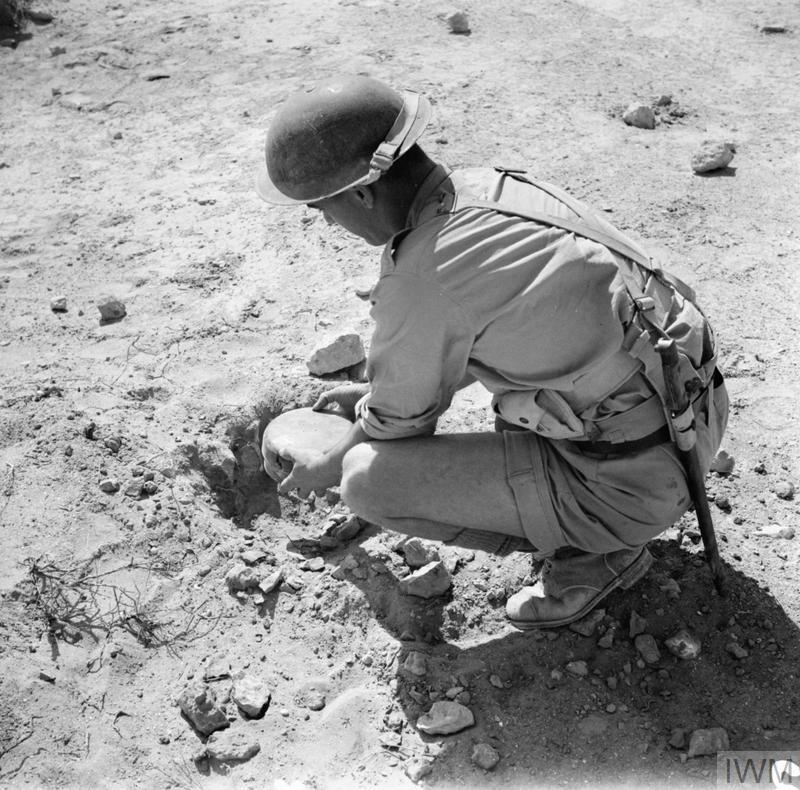
I wanted them to stand out from the infantry sections and therefore did a bit of research and found some great reference photos of royal engineers in the North African desert, with the ever present Polish metal detector. Now as far as I can tell 1941 is too early for the detector to have made its way to North Africa (most sources point to 1942), so it’s a bit anachronistic to include one here, but sometimes the rule of cool trumps accuracy!
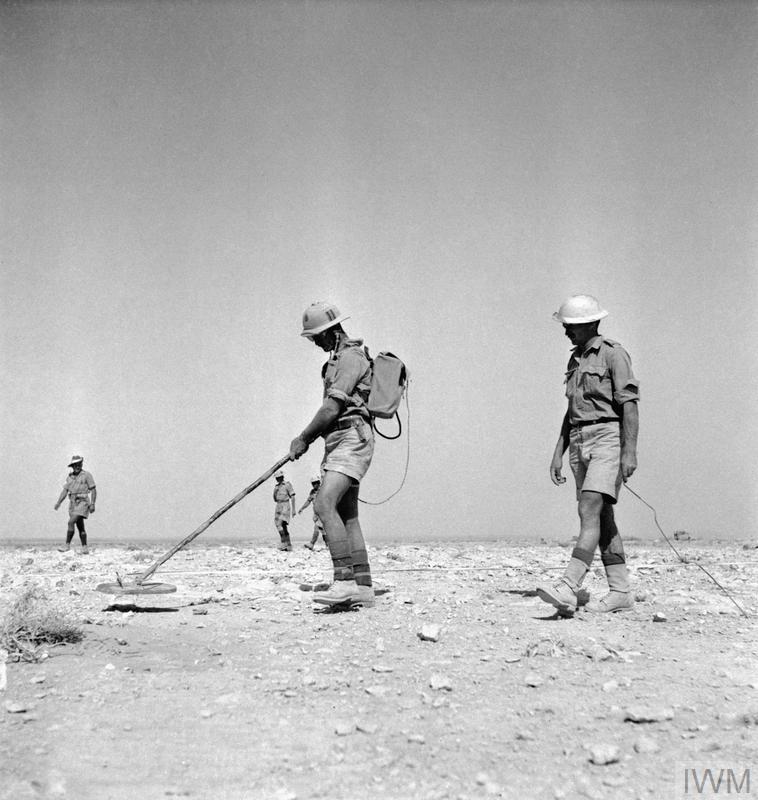
SOUTH AFRICAN FORCES IN NORTH AFRICA DURING THE SECOND WORLD WAR © IWM (E 18844)
ROYAL ENGINEERS AT WORK IN THE WESTERN DESERT © IWM (E 12778)
Royal Engineers with a mine detector, 1942 (c) https://collection.nam.ac.uk/detail.php?acc=1999-07-14-1

From a painting perspective, again nothing new, these are done the same way my infantry were painted.
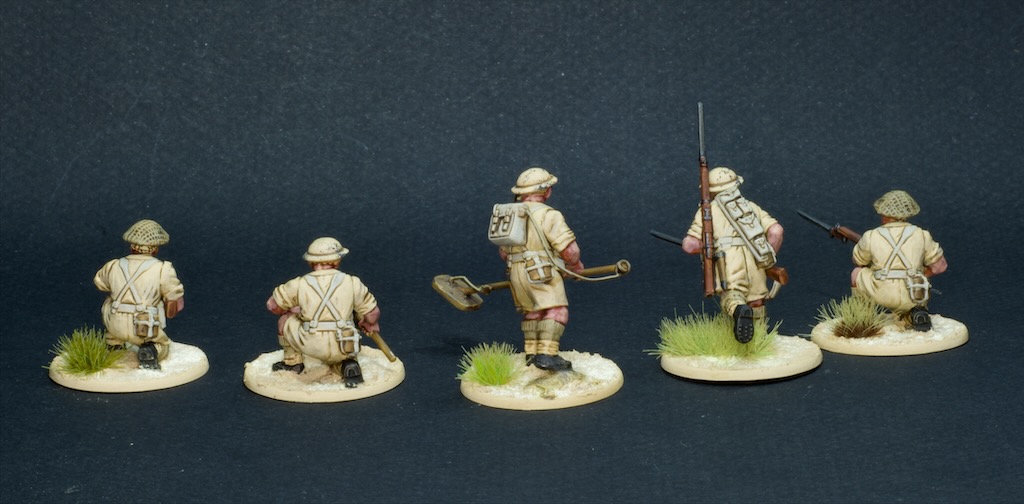
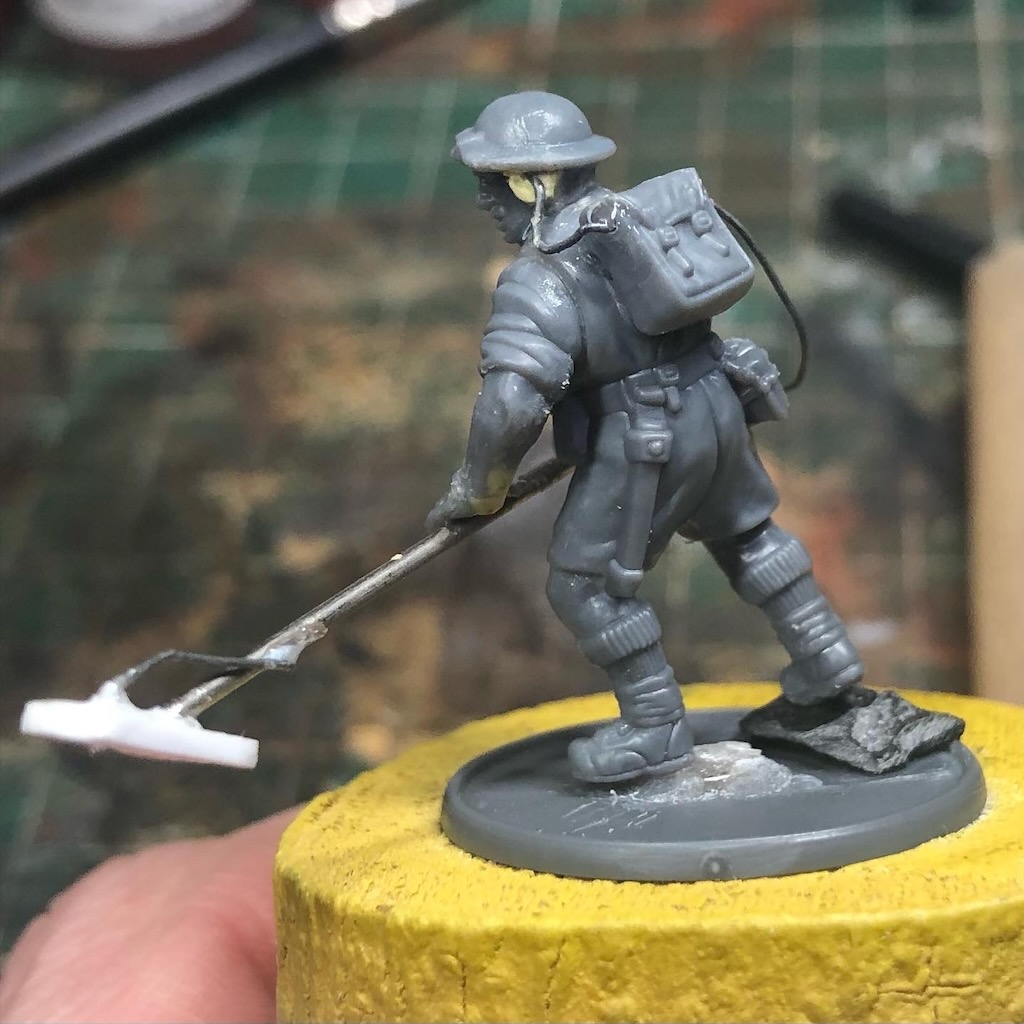
More interesting perhaps is modelling of the engineer with the detector I did using bits of wire and some plastic card.
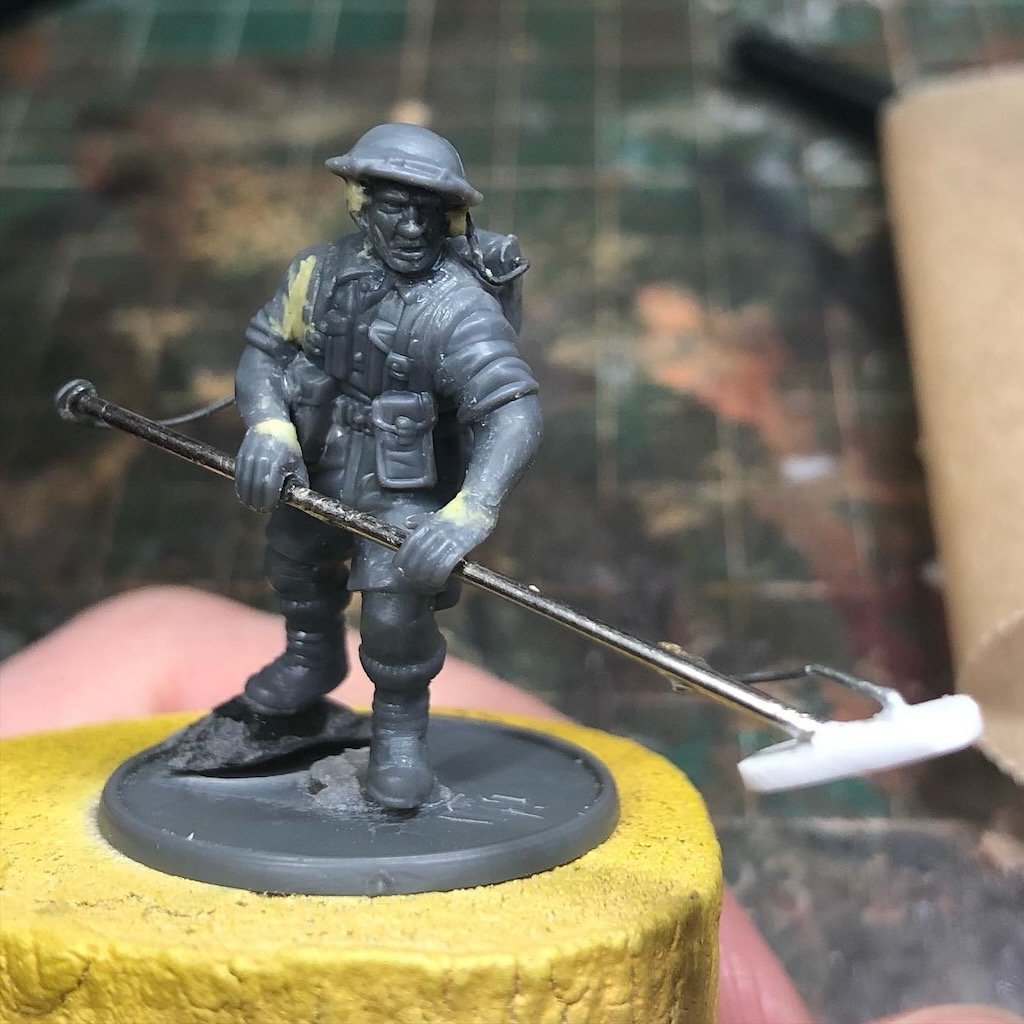
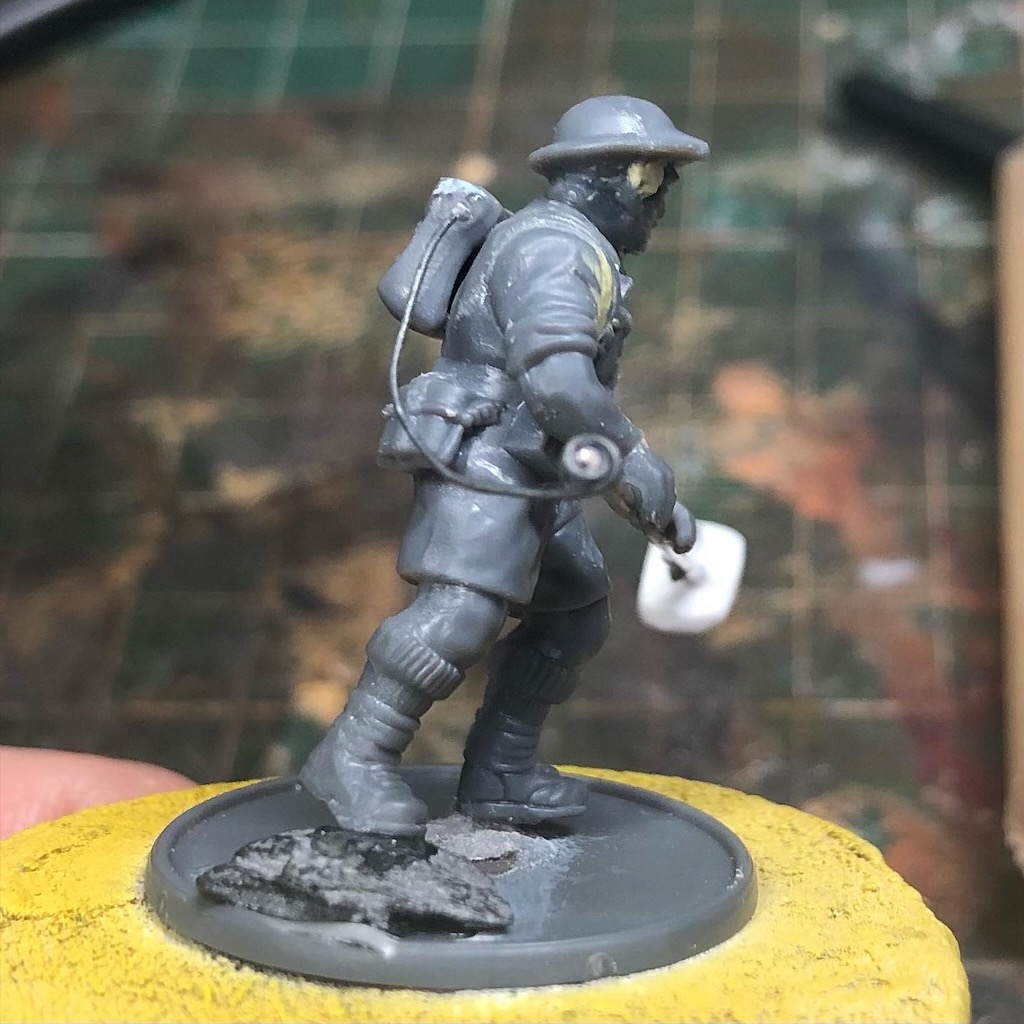
Warlord games makes a model of en engineer with a detector, but he’s done up in late war uniform and uses a later mark of detector. So I decided to make my own. Not the most skilful job, but I enjoyed myself and I think it looks fine on the table!

Update on the master list:

1940-42 Commonwealth Infantry Brigade (British)

– 2nd Lieutenant – 2 Extra men

– Artillery Forward Observer

– 10-Man Infantry Section – LMG, SMG

– 10-Man Infantry Section – LMG, SMG

– 10-Man Infantry Section – LMG, SMG

– 5-Man Royal Engineers Section – LMG, Anti-tank grenades

– Machine Gun Team

– Medium Mortar Team

– Field Artillery (25pdr)

– Bren Carrier – Pintle-Mounted LMG

– Matilda II

1940-42 Commonwealth Infantry Brigade (Australian)

– 2nd Lieutenant – 1 Extra man

– 8-Man Infantry Section – LMG, SMG

– 8-Man Infantry Section – LMG, SMG

– 8-Man Infantry Section – LMG, SMG

– 5-Man Infantry Section – LMG, Anti-tank grenades

– Bren Carrier – Pintle-Mounted LMG

– Matilda II

– Matilda II
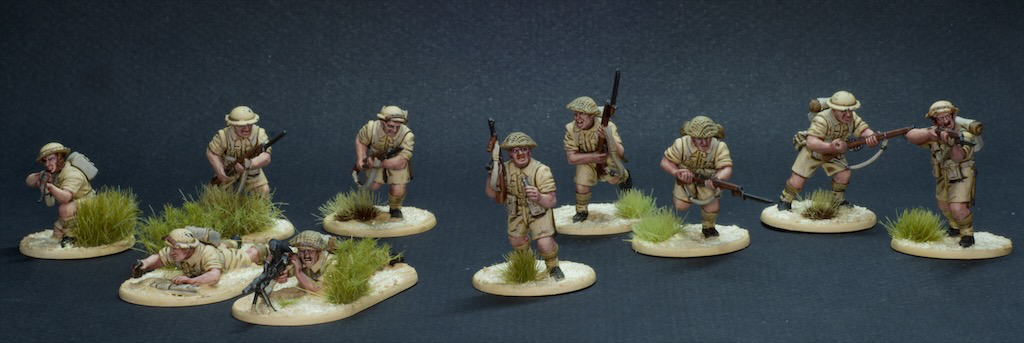
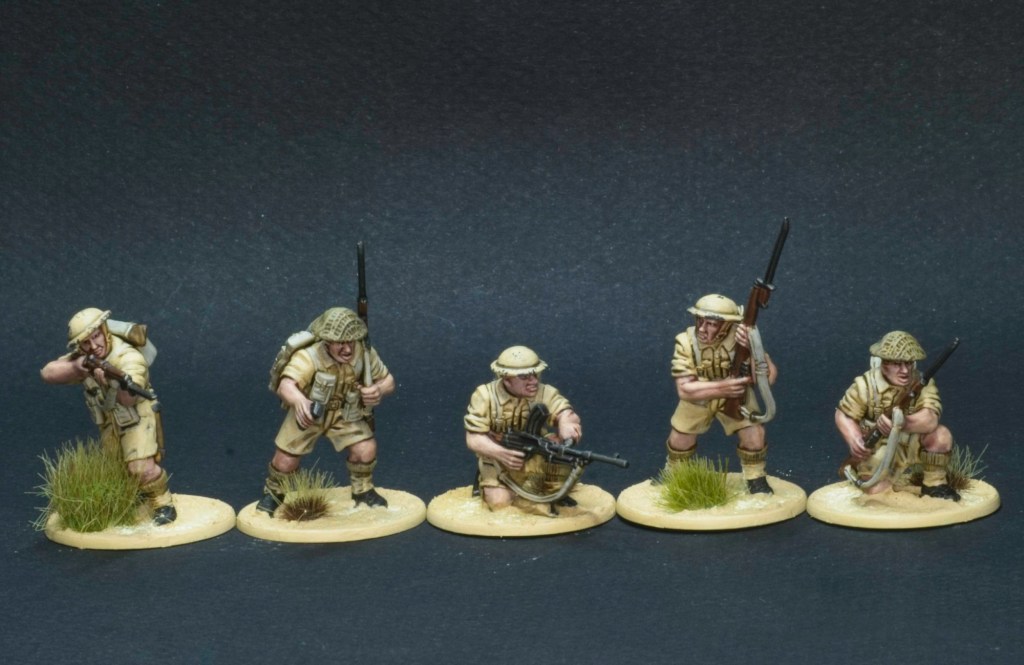
More desert Brits!

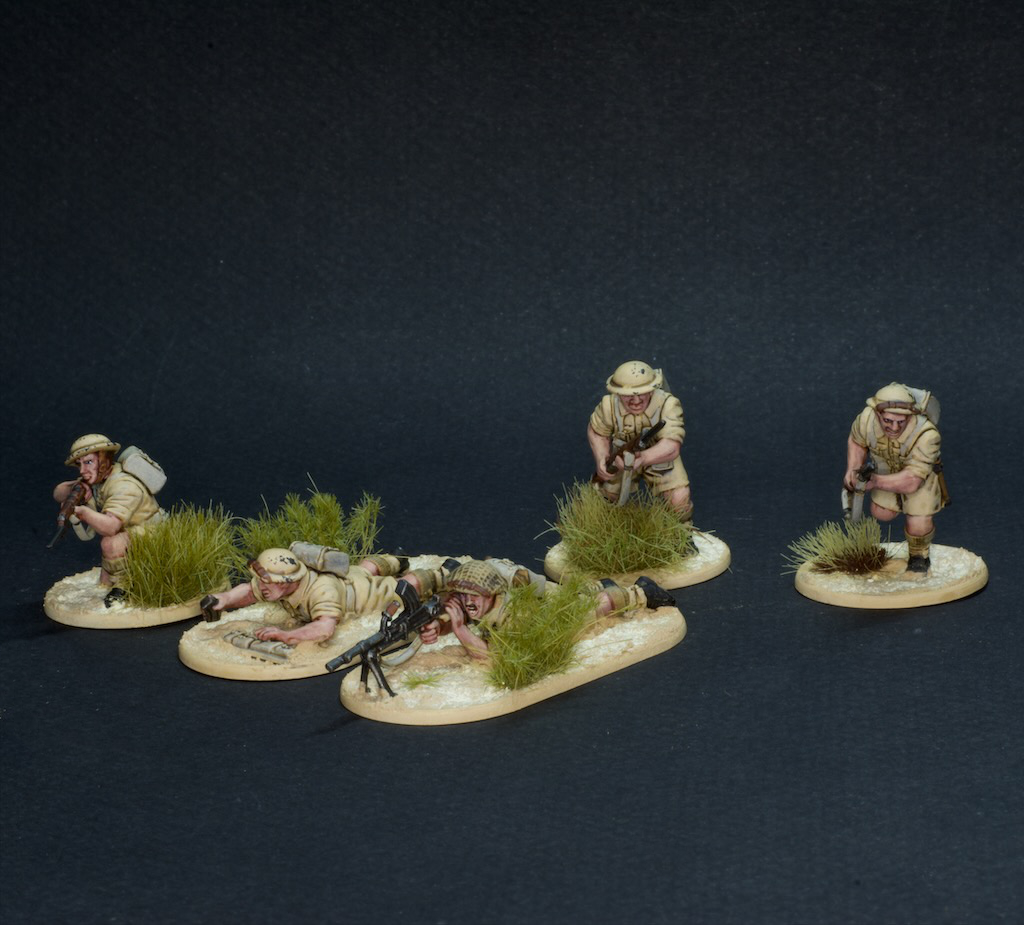
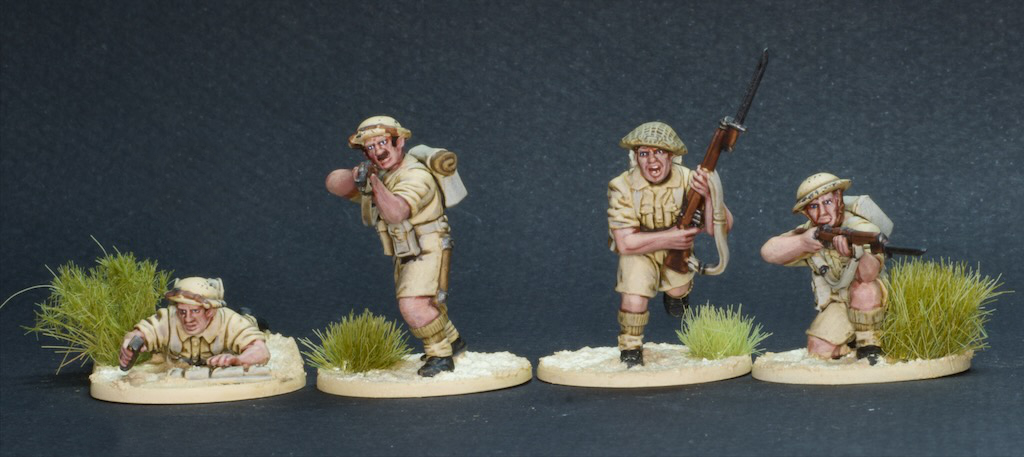
Back with a continuation of the 1941 North Africa project, this time with more of the same!

There isn’t too much to discuss from a painting standpoint, these were done in exactly the same manner as my previous post.

I built the Bren team prone for a bit of variety.

I was pretty happy with how some of the eyes on these turned out so here’s a look at that!

There will be plenty more where these came from, I have a whole lot more infantry to paint for this army as you might expect (and plenty more on the German side when I get to them!). This leads me to talk about what I’ve got planned for this army. As I mentioned last time, this army was partly inspired by my Great Grandfather having been part of 8th army in WW2, hence building these as British (the Warlord kits provide a ton of different heads for troops from all over the empire). I also plan on adding some Australian troops to the army as a nod to where I live now.

Here’s my planned army list with the currently painted models crossed out in red:

1940-42 Commonwealth Infantry Brigade (British)

– 2nd Lieutenant – 2 Extra men

– Artillery Forward Observer

– 10-Man Infantry Section – LMG, SMG

– 10-Man Infantry Section – LMG, SMG

– 10-Man Infantry Section – LMG, SMG

– 5-Man Royal Engineers Section – LMG, Anti-tank grenades

– Machine Gun Team

– Medium Mortar Team

– Field Artillery (25pdr)

– Bren Carrier – Pintle-Mounted LMG

– Matilda II

1940-42 Commonwealth Infantry Brigade (Australian)

– 2nd Lieutenant – 1 Extra man

– 8-Man Infantry Section – LMG, SMG

– 8-Man Infantry Section – LMG, SMG

– 8-Man Infantry Section – LMG, SMG

– 5-Man Infantry Section – LMG, Anti-tank grenades

– Bren Carrier – Pintle-Mounted LMG

– Matilda II

– Matilda II
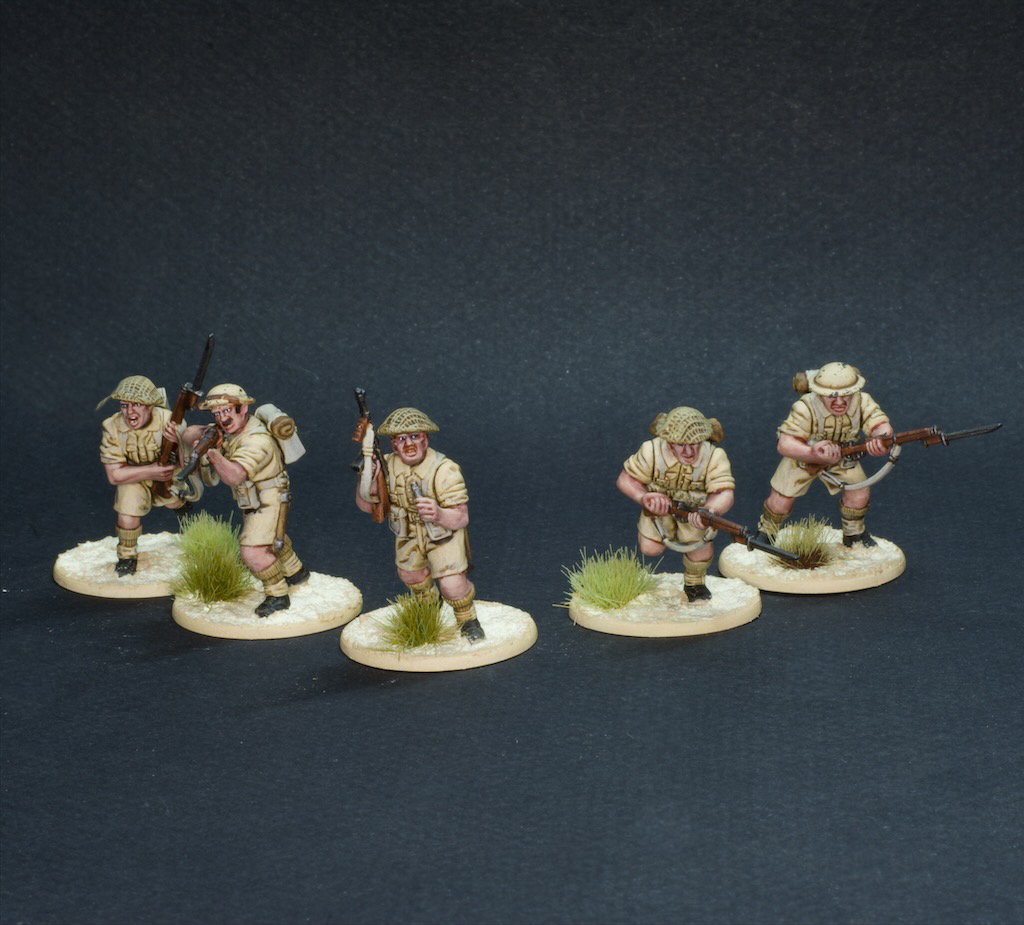
As you can see I still have a lot to do! This was never intended as a short project, and should take me quite a while to get through.

New Project! North Africa 1941

Hi all, it’s been a little while since the last post on the blog (almost 3 weeks!). Most of that delay has been because of preparations for this new project I’ve embarked on. This new project (if you’ve read the title you know!) is for some more WWII action, this time in North Africa early-ish in the war.
It’s become clear to me that finishing my 2ème DB army did not in fact cure me of the want to paint more models of the period, and in fact made me keen to move on to the next theatre instead! So why North Africa, and why 1941? There are a couple of answers to these questions so here we go.

North Africa has always been one of those theatres that drew my attention, my first model kit way back when was a spitfire in desert camo and clearly that made an impression on my younger self. Fast forward a few years and I started playing the first Battlefield game (Battlefield 1942) and spent hours playing the El Alamein and Tobruk maps, which wound up being some of my favourites of the game. When my friends and I decided to start playing Bolt Action we settled on late war Europe as the primary theatre we would all put armies together for, but North Africa was also well into the running and I was always keen to do something there.
What sealed the deal was series of conversations I had with my Dad and his Mum not long after finishing the 2ème DB models, which revealed to me that one of his Grandfathers had fought in North Africa and Italy as part of the Buffs (Royal East Kent Regiment). Once I learned that I went on a good old internet scour looking for any information I could find on what the Buffs had gotten up to during the war. By extension that meant reading a lot about the North African campaign in general and well there was no saving me from painting armies for that campaign after that!

That tackles the North Africa part, but why 1941? That answer is a lot simpler, I wanted to paint early war tanks!

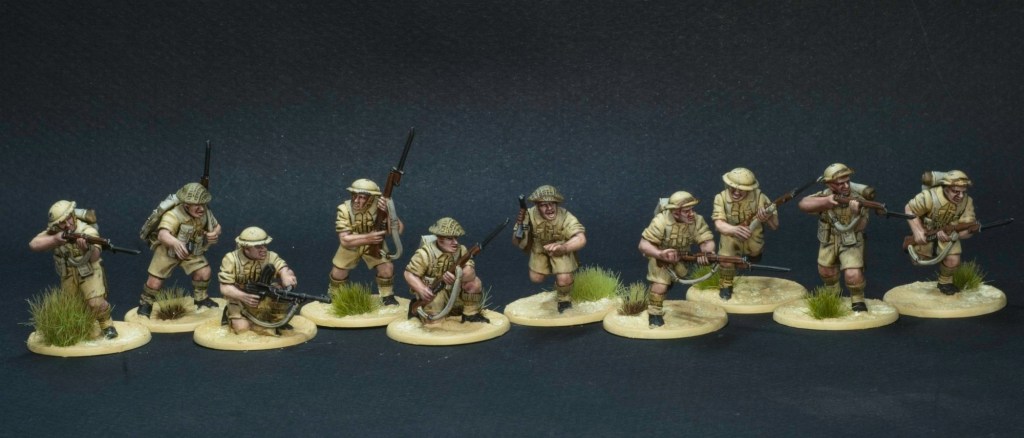
So here we are with the first models done for the project: some British infantrymen. I wanted to start with these as my Great-Grandfather was an infantryman and it therefore seemed right to start here. They’re not modelled after any regiment in particular although they could definitely stand in for the Buffs! These are Warlord Games’ 8th Army Infantry Plastics.

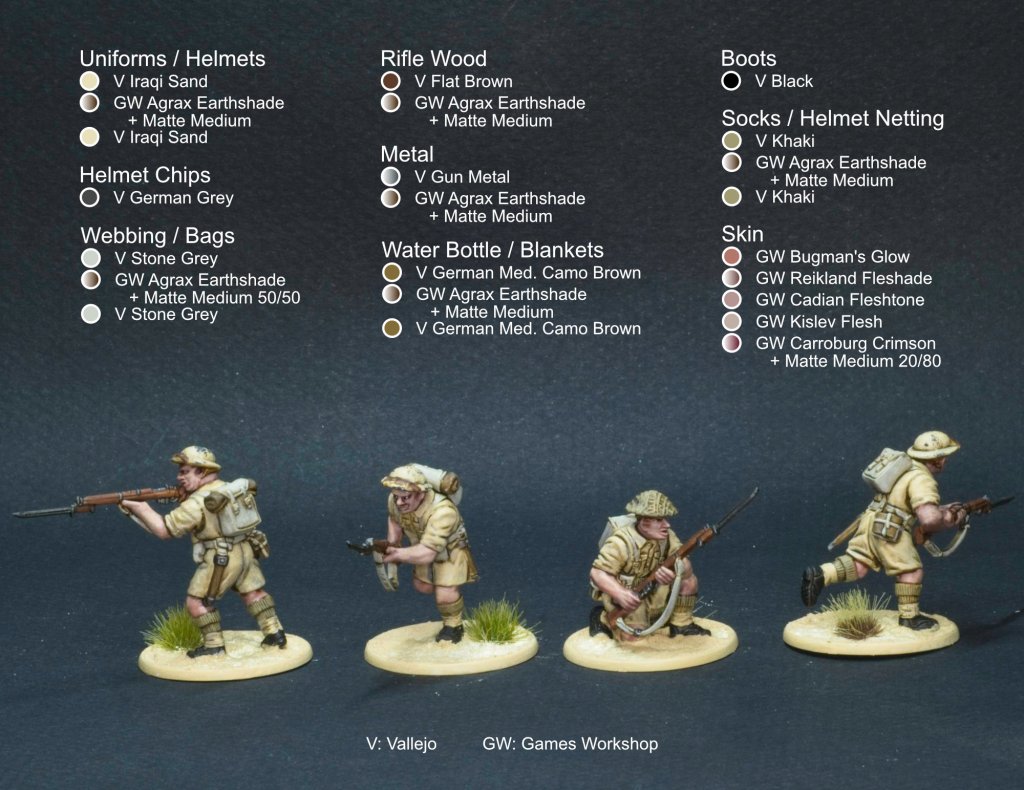
Painting-wise these were relatively simple, they’re mostly one colour after all! I created a record of the paints I used, as usual mostly so I remember how I did things down the track, but if it helps someone with their models then that’s always a nice bonus!

I broke away from my usual black base rims for these, but I really wanted to communicate that sun-drenched look and the bright rims really contributed to that I think. They’re painted in Vallejo Iraqi sand.

The reason this post isn’t called 1941 8th Army in North Africa is that as part of this project I plan on painting two armies: an 8th Army force, and their opponents the Afrika Korps (Sorry Italians! I’m sure I’ll get around to painting some). So look forward to seeing some of these painted up too in the near future!

Anyway this should keep me busy for a while! I have a lot more models to get done for this project, including many more British infantry, some Australian infantry (as a nod to where I now live), german infantry, trucks, tanks, artillery etc.

Flames and Fences

A bit of a mix of things this post! After working on a few of my bigger projects these last few weeks I felt like a small palette cleanser (can’t remember where I first saw that pun, but it’s excellent at expressing what I mean!). This resulted in me putting together and painting a blister pack of german weapon teams and an old set of Warhammer fences.

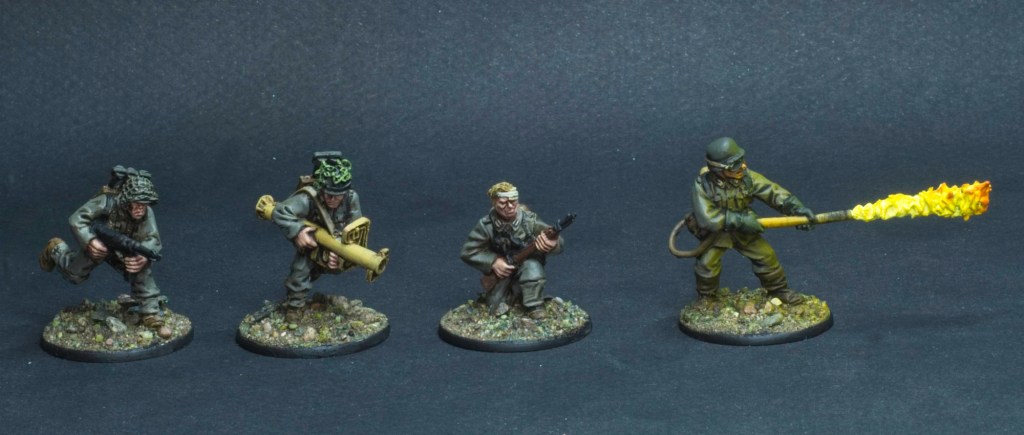
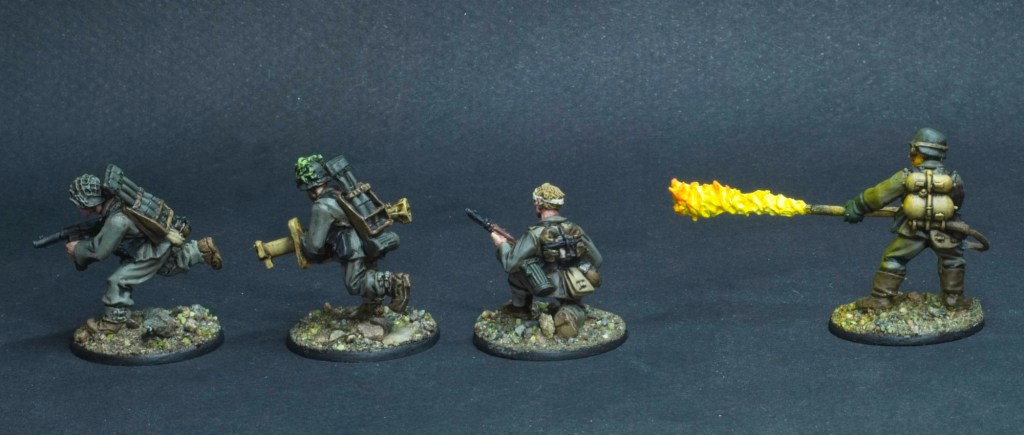
The weapon teams as you can see are made up of a Panzershrek team and a flame-thrower team. Not much to write about in terms of painting as these are done in exactly the same way as my other Grenadiers, except the fire!

I had a bit of fun with that flame, trying to make sure to keep it as bright as possible. To that end I started with a pure white, that I slowly covered in yellows then oranges at the very tips. The glow effect on the soldier is done with a very light pass of orange through the airbrush, to tint the underlying colours rather than cover them entirely. I think the effect is pretty convincing, and looks pretty good even when not lit up properly (i.e. anywhere not under painting lights!) which I’m happy with.

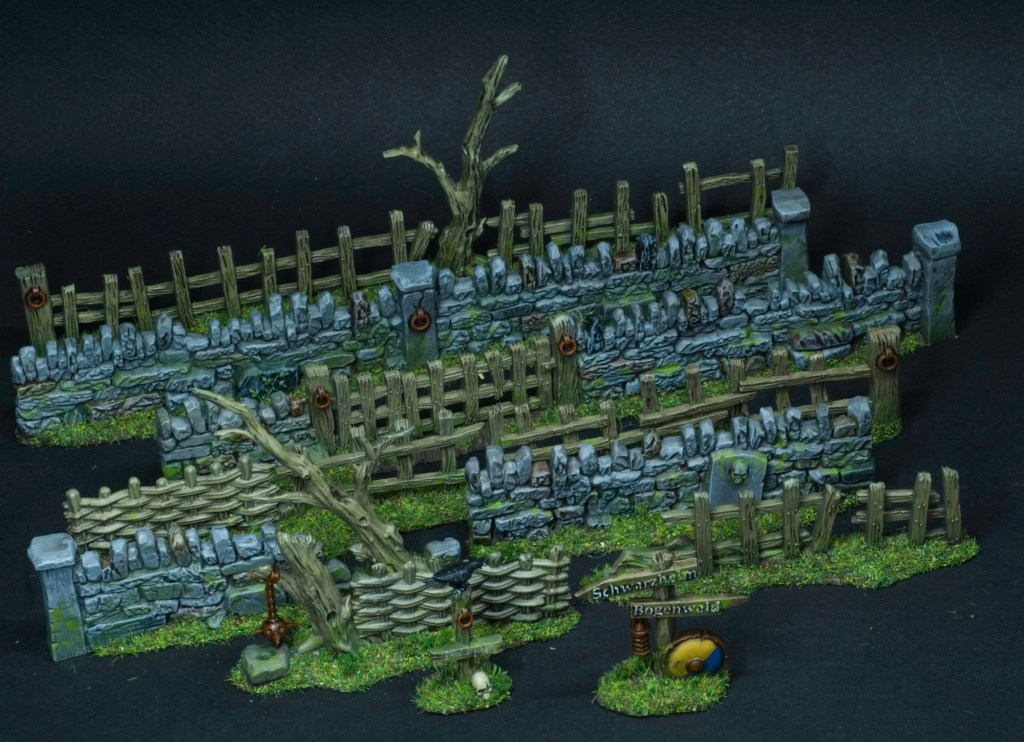
While I was painting these I also tackled an older set of plastic terrain I’ve had for years, the old fences set for Warhammer (back in the square base era!). I spent way more time n these than I usually do on terrain, but they’re great models and were very fun to paint. The green mossy parts on the walls are done with AK enamel washes (Slimy Grime Light and Slimy Grime Dark). I’ve been wanting to try these for a while and this seemed like a great project for them. Really like the result so will definitely use them on other projects.

Anyway, those were two fun short projects that served as a nice filler while I impatiently wait for my next project to be delivered!

2ème DB – Vehicles

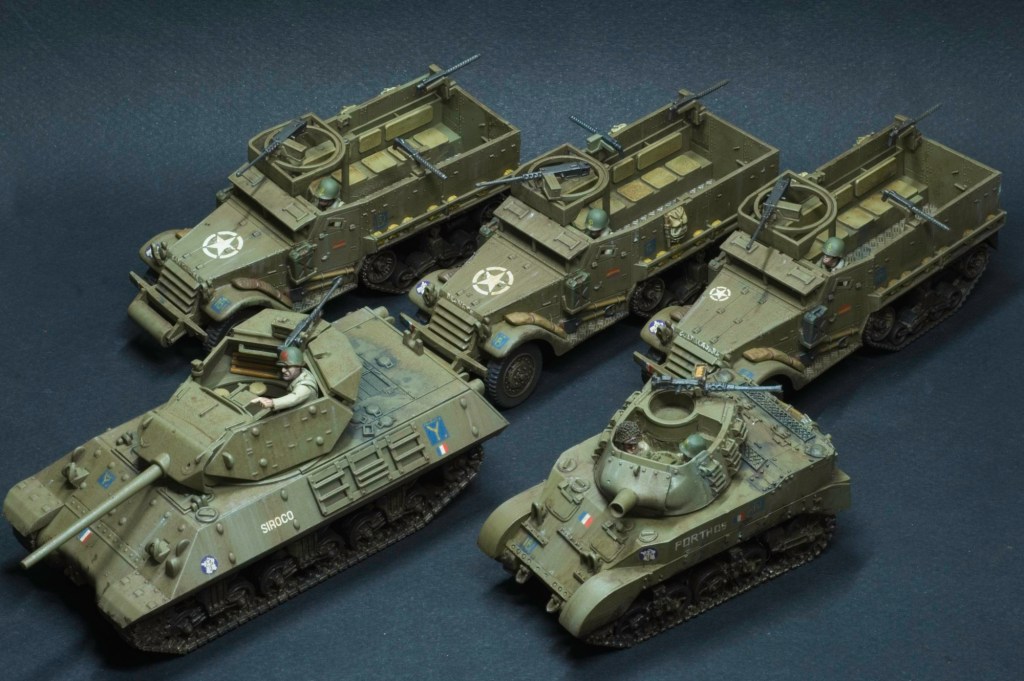
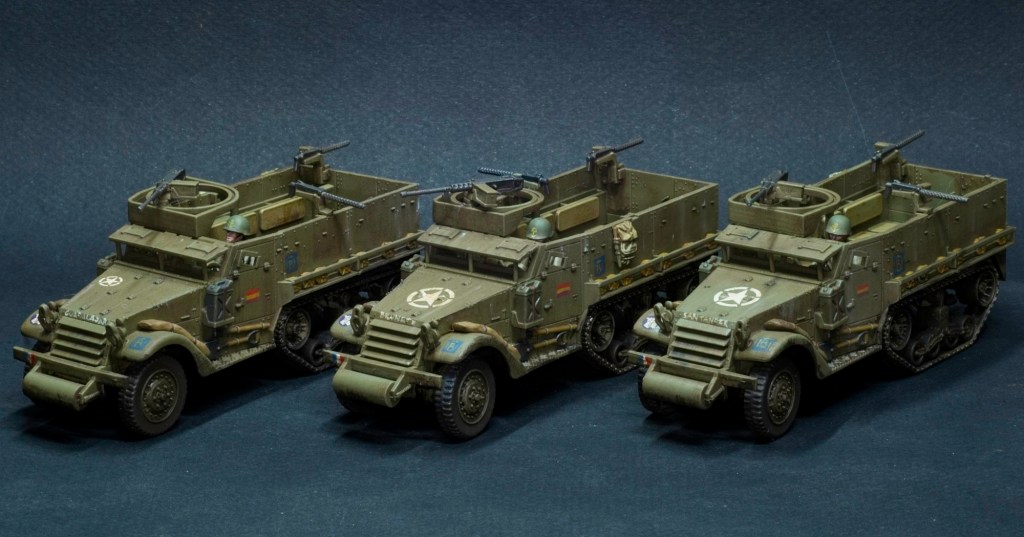
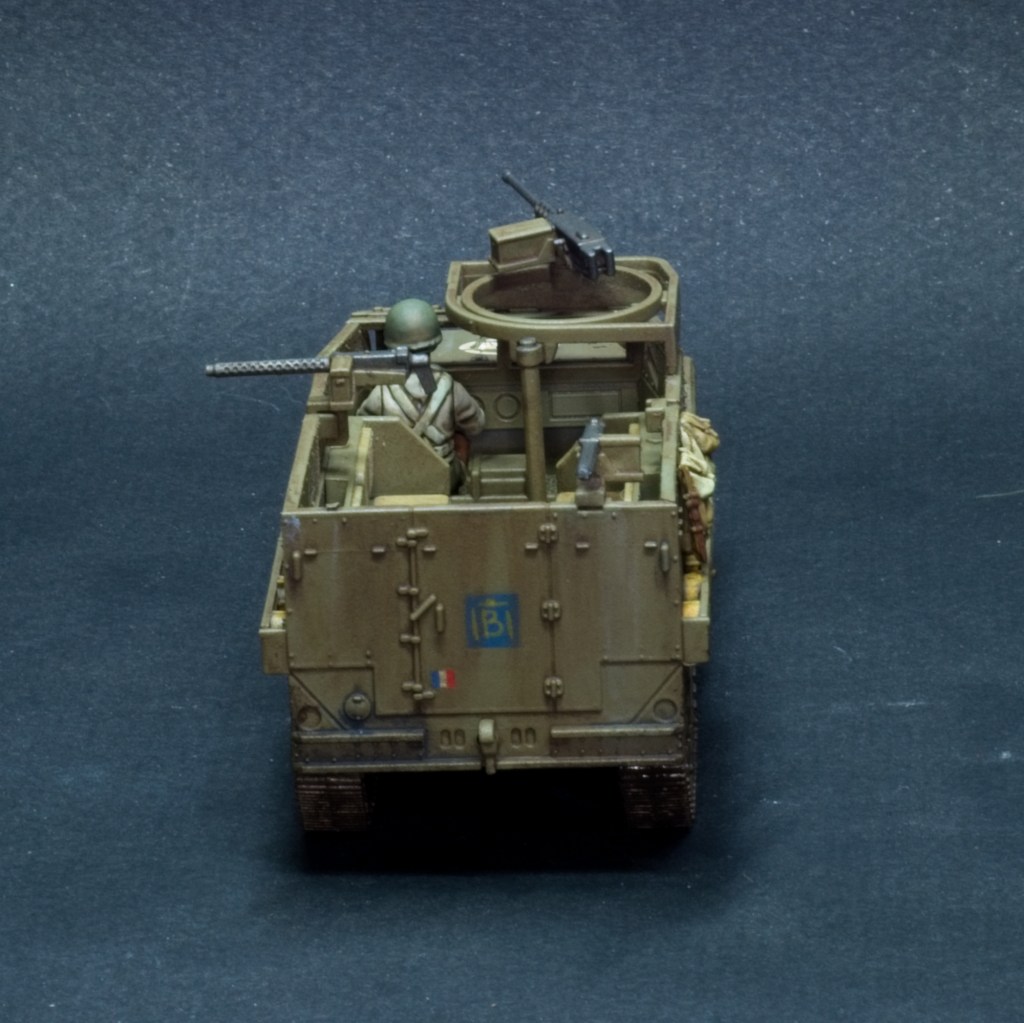
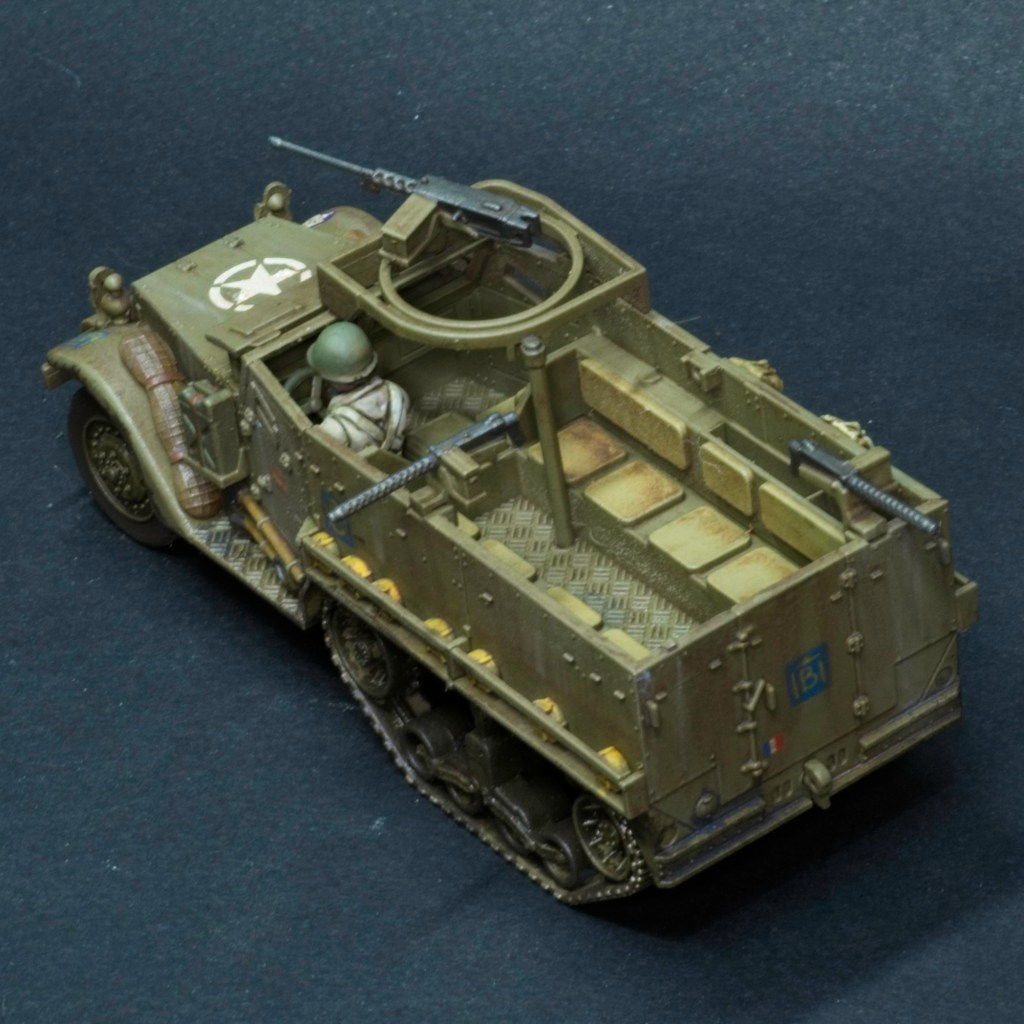
Back this time with the other half of the army! The 2ème DB being an armoured division, it couldn’t go without some transports and armour support! I tried where possible to base these on real vehicles, although limitations in reference photos and the model kits meant I had to get a little creative in some places. I also had limited suitable decals for the division so did a lot of the marking painting by hand which was an interesting challenge! It looks a little rough in places but I just tell myself a lot of the originals were hand painted too so let’s say it’s appropriate! The divisional insigna is from decals by Company B, which I was glad to find as I was not looking forward to having to paint those by hand! The other decals are from the kits themselves.

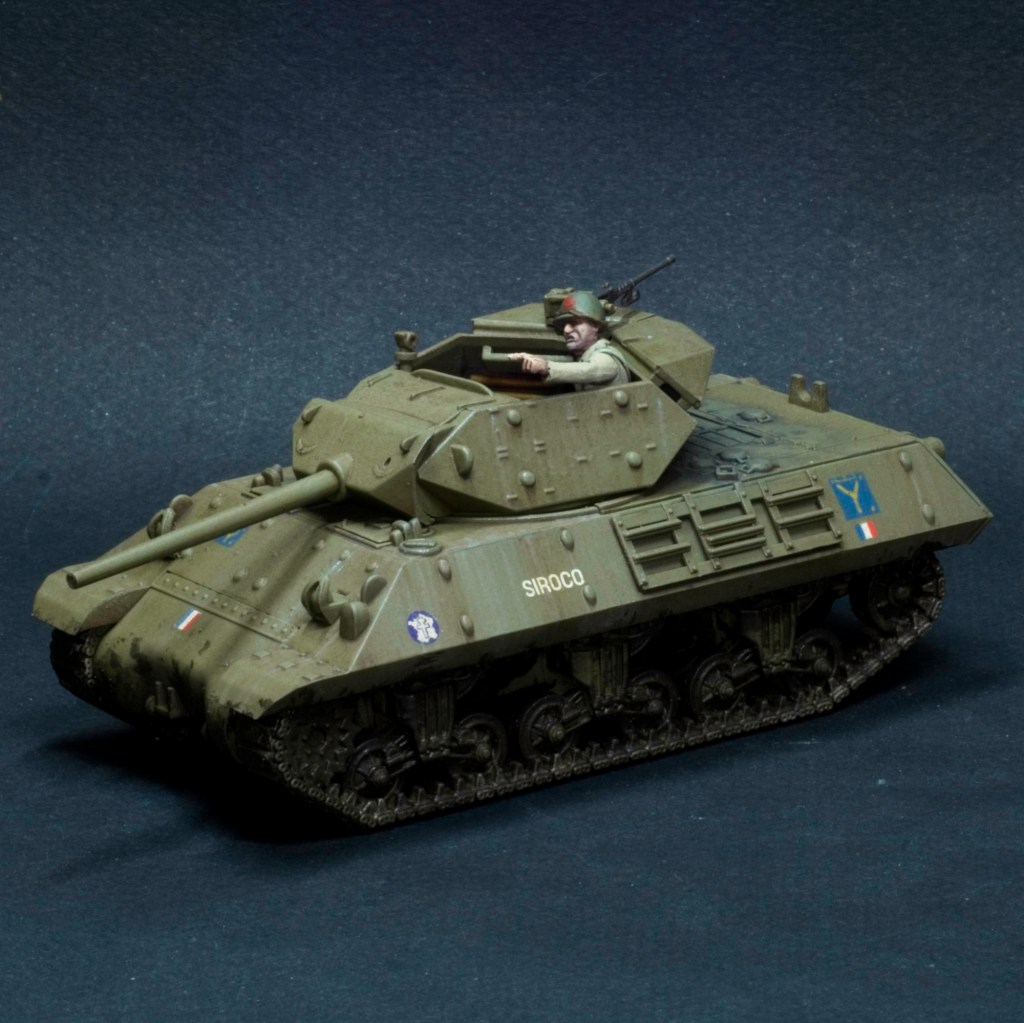
My goal was to represent elements from the 9th company of the RMT (Régiment de Marche du Tchad), known as “La Nueve” due to the large proportion of spanish revolutionaries in it. The half-tracks are painted as elements of the 9th company and the M8 as part of the support company of the 3rd battalion (that the 9th is part of). The M10 tank destroyer is painted as the Siroco, part of the RBFM (Régiment Blindé de Fusillers Marins), a tank destroyer regiment crewed by gunners from the french navy.

Half-Tracks

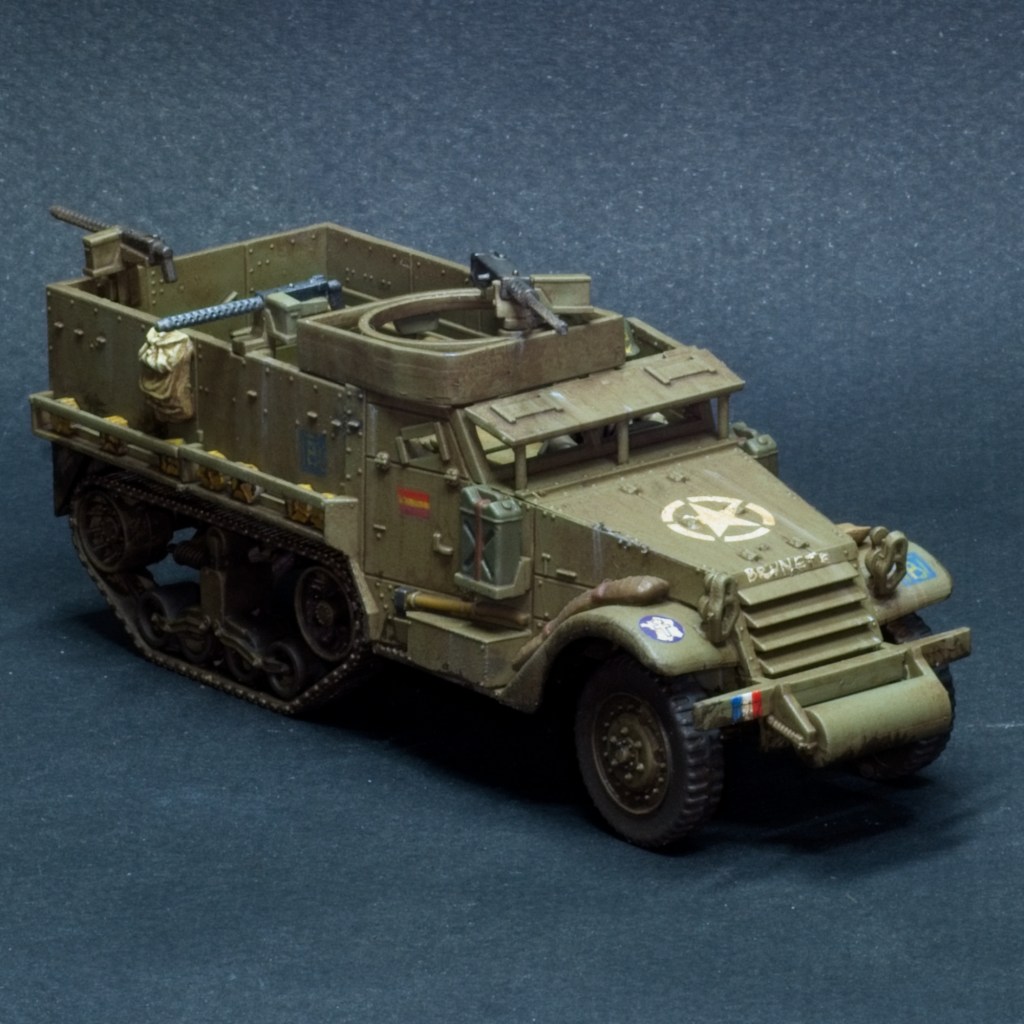
Brunete
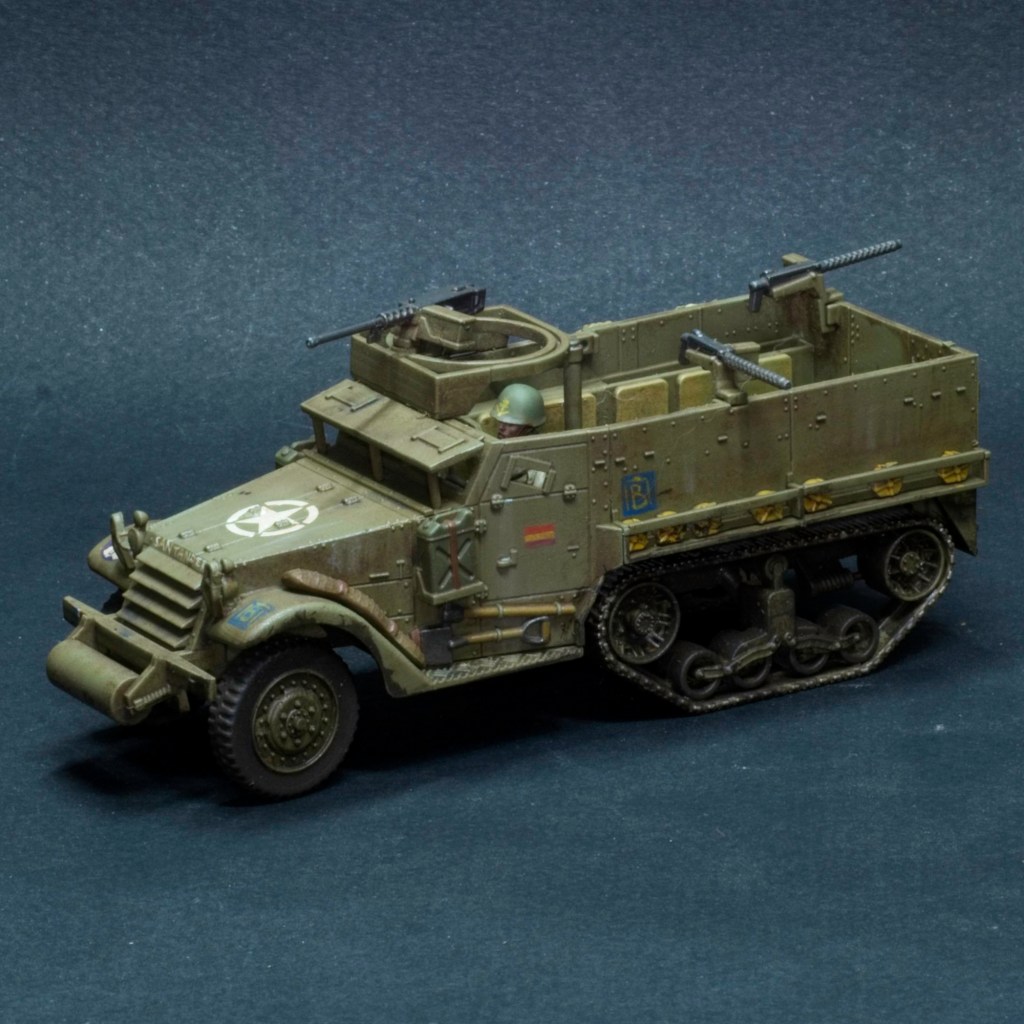
Santander
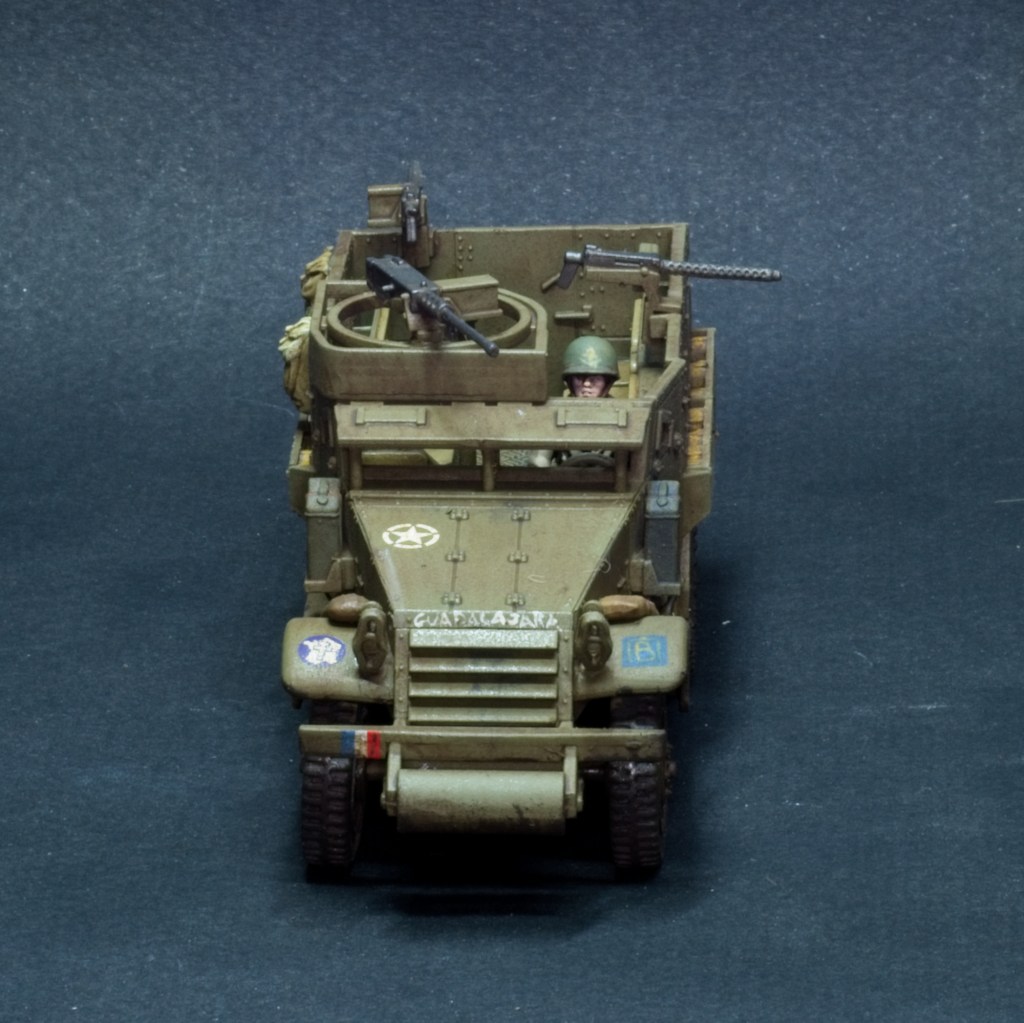
Guadalajara

The half-tracks of La Nueve were generally named after important events of the Spanish civil war, and the names you see above all appeared on half-tracks of the company. I read that the soldiers of the company were allowed to paint the spanish republican flag on their half tracks, and interpreted that as a replacement for the French flag usually found on the half-track doors, but I have no idea if that’s correct and if they were all consistent or not. After painting these I found a photo in one of my reference books that had the flag on the side of the bonnet instead of the door, so that may have been more correct, but I quite like the look of them on the doors so wasn’t too worried! These models are by Warlord Games/Italeri.

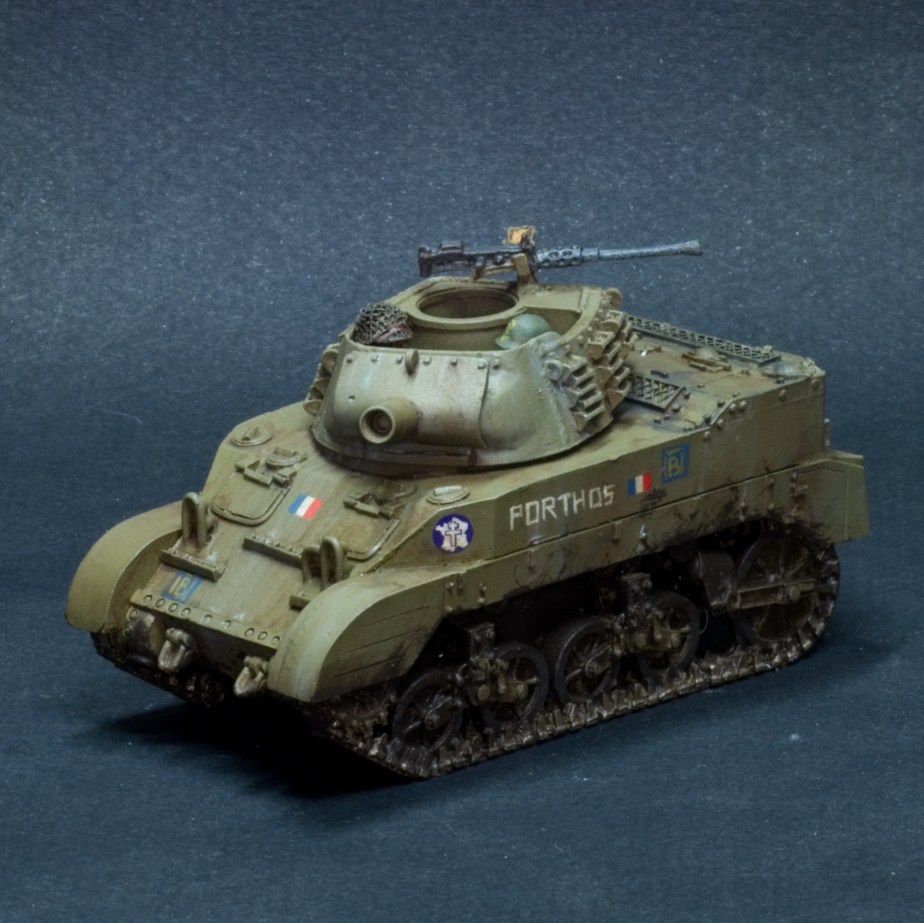
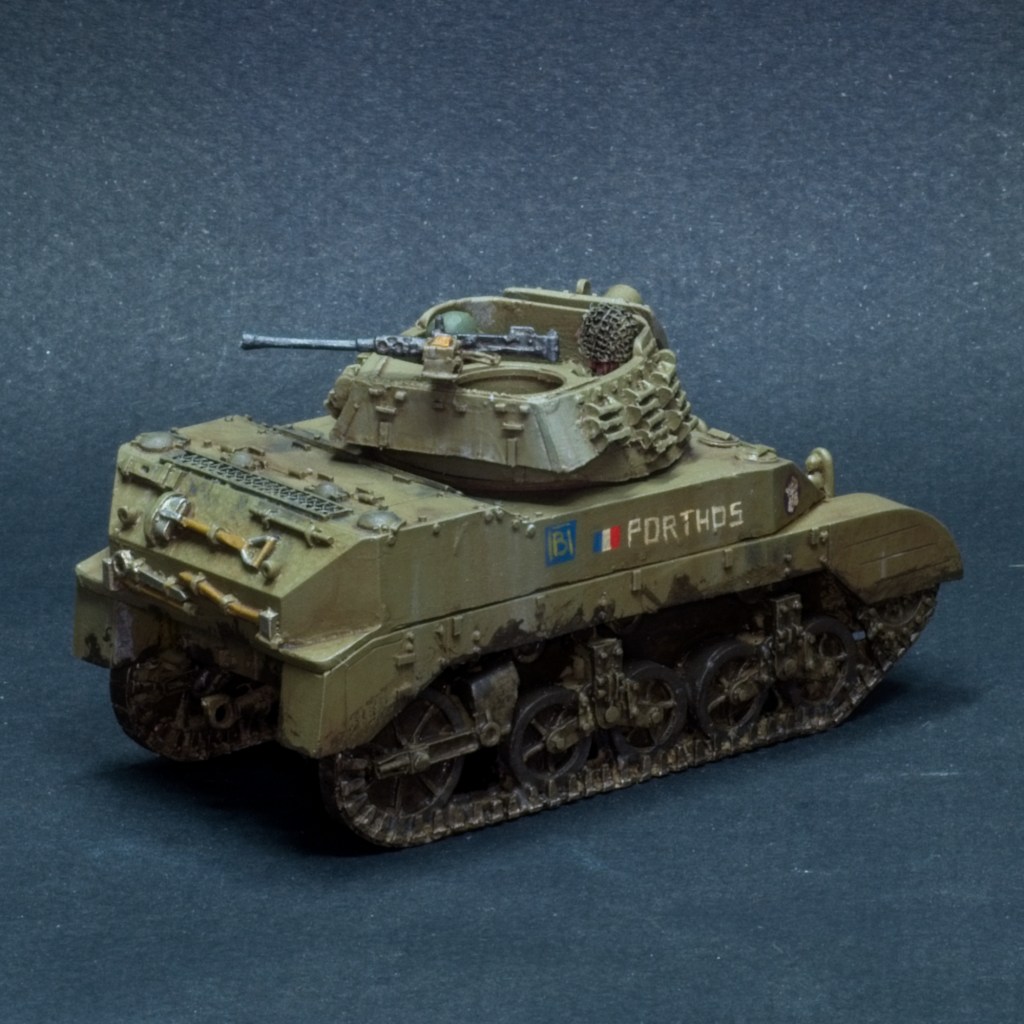
M8 HMC

Porthos” I had no reference images of, but I had some from others of the division so took a gamble on what it might have looked like! Porthos, and as you might expect Aramis and Athos made up the M8s of the 3rd Battalion of the RMT and therefore presumably would have supported La Nueve.

The model is a resin and metal kit by Warlord Games.

M10 Tank Destroyer

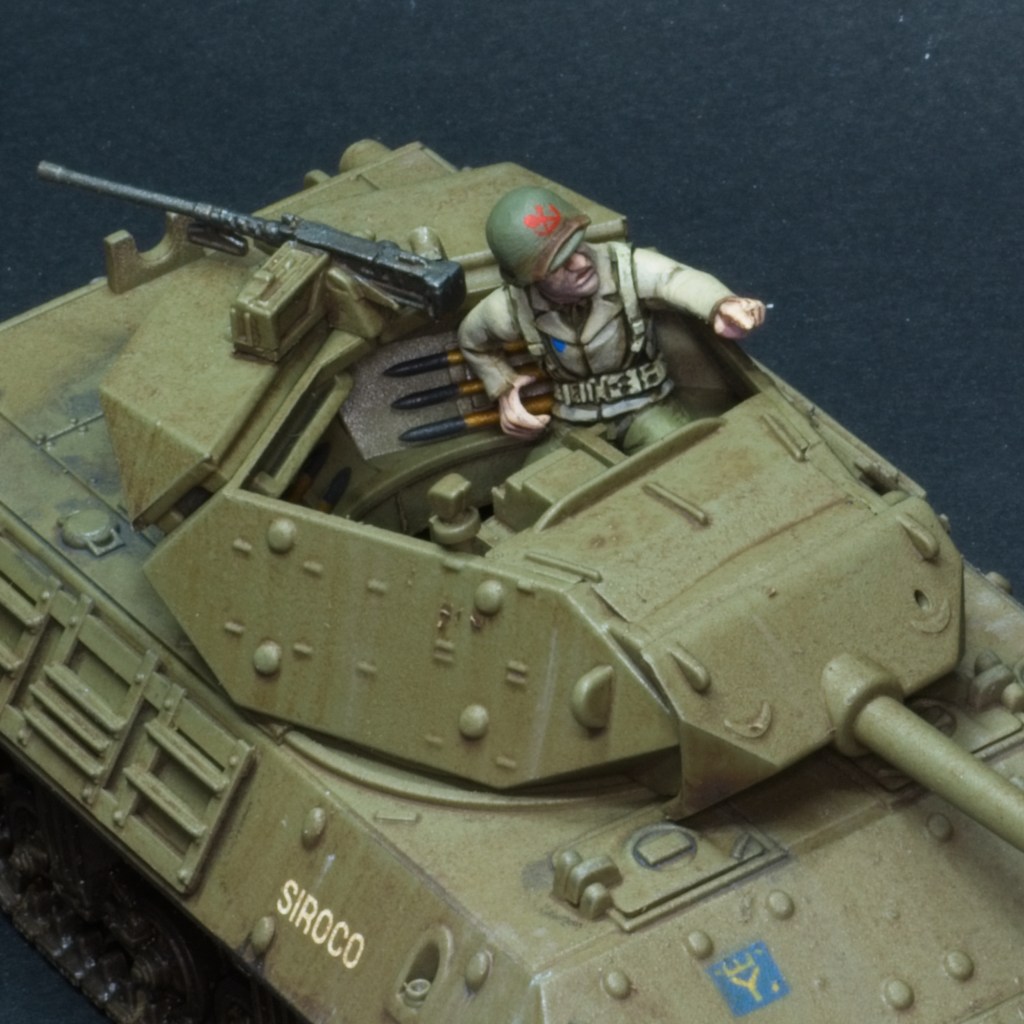
Siroco is probably one of the more famous vehicles of the divisions, famous enough that this Rubicon Models kit came with decals for it! I still used the Company B emblem to keep everything unified, and still had to paint the tactical markings (the yellow Y over blue background) by hand as there were no decals for that in the kit.

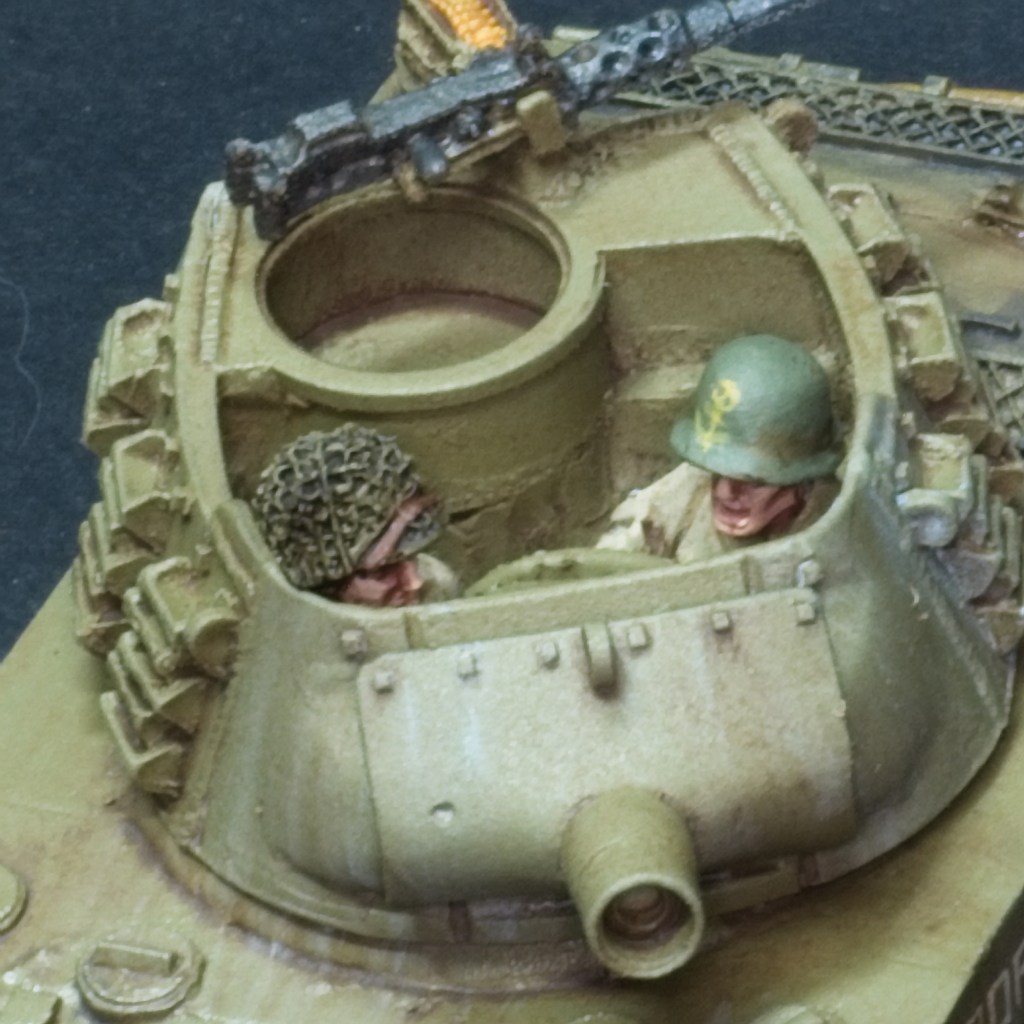
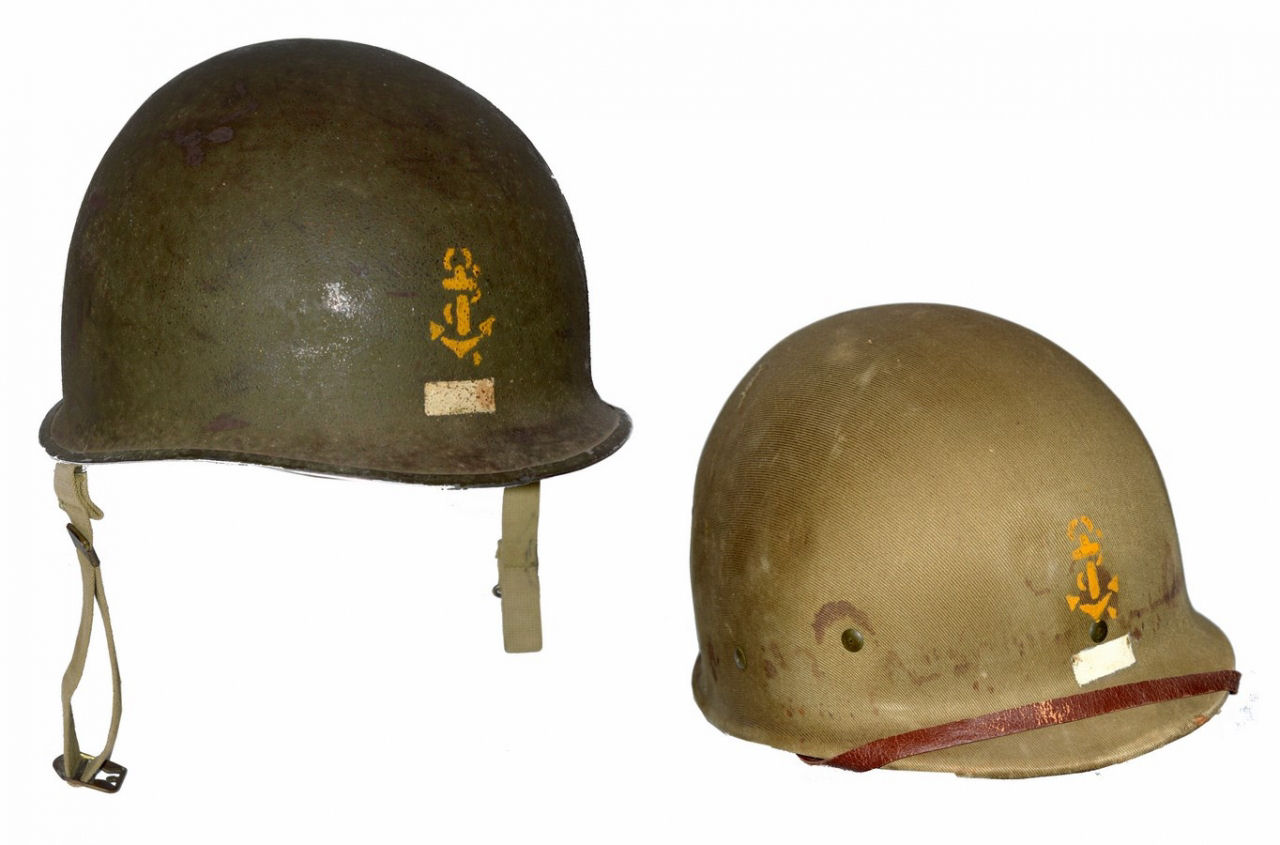
The kit did not come with crew member models, so I took a spare Warlord Games US soldier model I had and built him to fit in the turret. Presumably the rest of the crew are down below for some reason! You’ll notice this crewman’s helmet has crossed red anchors instead of the yellow anchor present on all the others. This is the emblem of the RBFM.

Painting-wise, all these vehicles were done in the same manner:

  1. Undercoat with Vallejo US Olive Drab primer
  2. Basecoat non-green areas (stowage, crew etc.)
  3. Paint on non-decal markings
  4. Gloss Varnish
  5. Decals
  6. Gloss varnish
  7. Oil wash all over with Abteiling 502 Dark Mud
  8. Dot Abteilung 502 Copper Oxide Blue in random places
  9. Wipe all that in a downwards manner with a brush wet in solvent to achieve the streaking effect
  10. Apply thinned down Abteilung 502 Starship Filth in random-ish spots around vents and fuel caps
  11. AK Wet Mud all over the tracks area
  12. Matte Varnish all over

I thoroughly enjoyed painting these models, the Free French markings are quite cool looking and considering at the end of the day these are otherwise just plain green tanks make them stand out quite a bit from “regular” US or British versions of the same vehicles.

Anyway that concludes my foray into the 2ème DB for now! Not to say that I won’t be going back to them, there are many more vehicles of theirs I’d like to do up at some time in the future!

2ème DB – Infantry

After a brief interlude in antiquity, back to World War 2 and Bolt Action, with an army that’s been in the works for a while but never got finished, my take on the 2ème Division Blindée, or Division Leclerc for some, an armoured division of American-equipped Free French troops.

If you read the previous post on the army you’ll realise that these don’t match those very well, and indeed I had a change of heart with regards to their colour, taking inspiration from the very good videos by Sonic Sledgehammer over on YouTube. From that original post, the bazooka team and the mortar team were repainted to match the newer scheme.

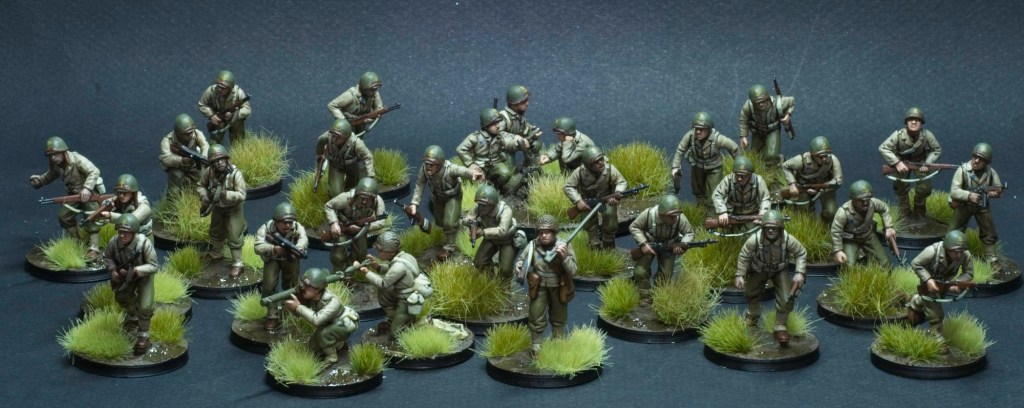
The infantry in the photo above are all I’ll need for the 1000pt army list I devised for the army. To follow on are the vehicles. As these are for an armoured division, I have half tracks for all of the squads and some tank support as well.

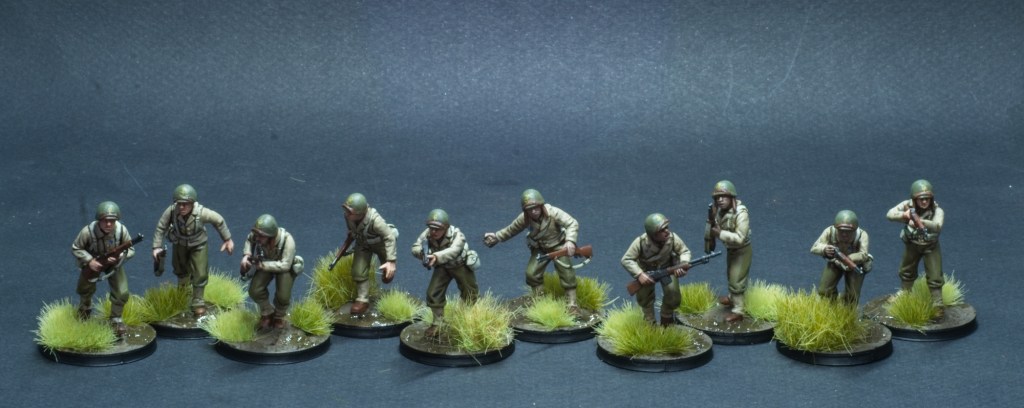
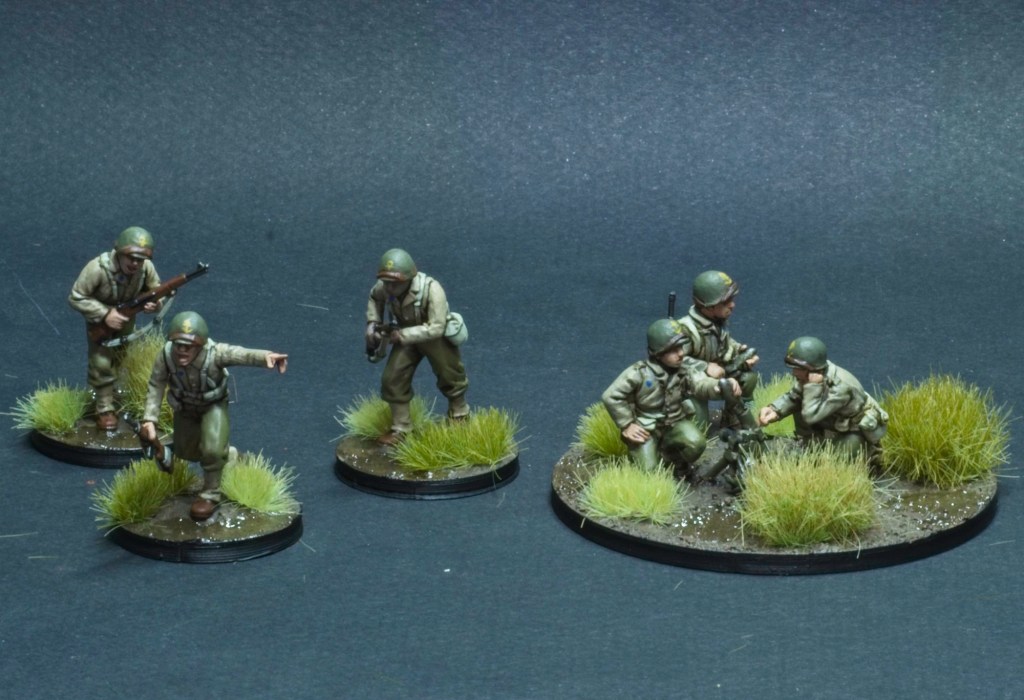
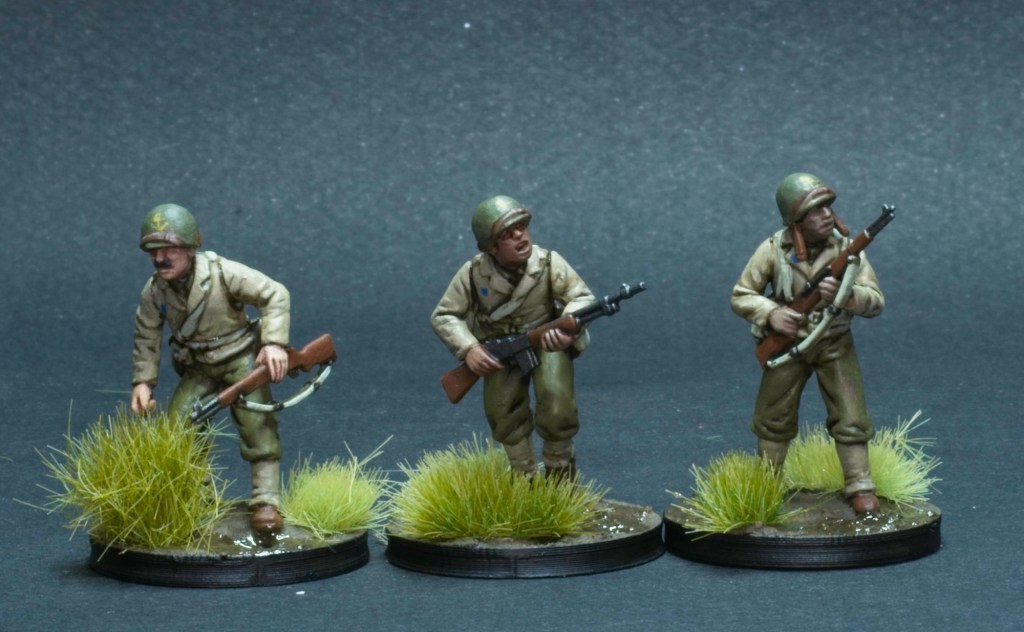
First up, we have a lieutenant and bodyguard, both armed with Thompsons.

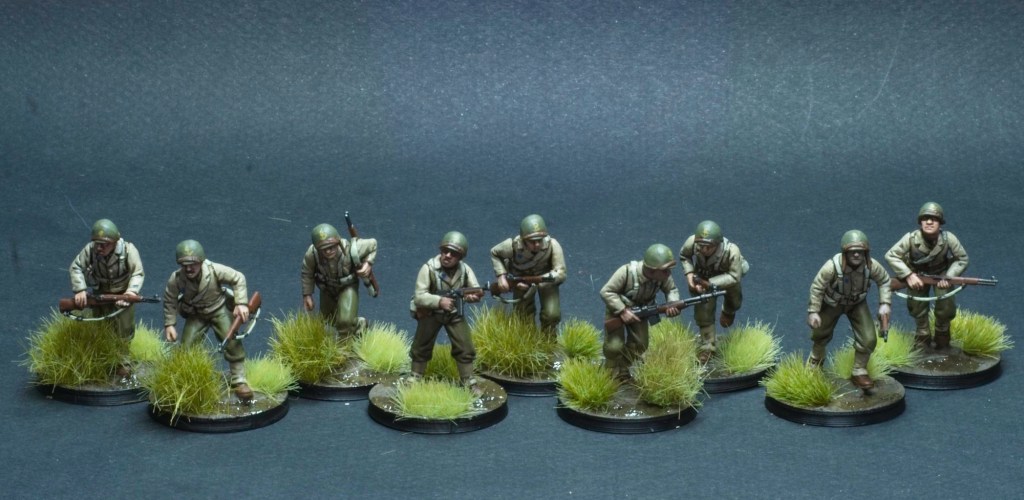
A ten-man rifle squad, with BAR and NCO with Thompson.

A nine-man rifle squad, with BAR and NCO with Thompson.

A six-man mortar squad, most of the time I envision the mortar team splitting off from the rest of the squad who will be manning the machine guns on the half-track.

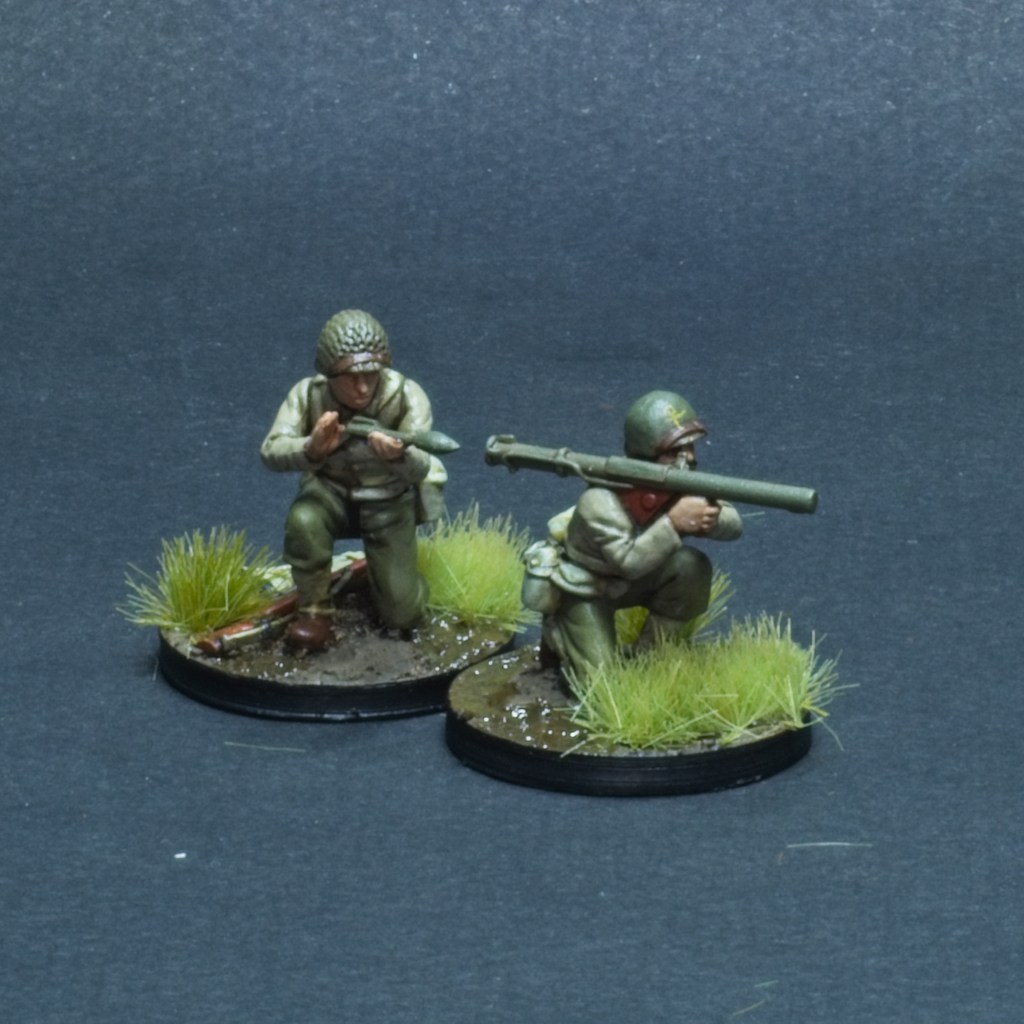
A bazooka team.

You might have noticed yellow anchors on the helmets of the non-netting covered helmets, and blue patches on most of the jackets. The Osprey book I have on the division has them marking their helmets with a yellow anchor, symbol of French colonial troops. I found a photo of American helmets painted with the same anchor (although in use by other French troops).

The blue mark represents a pin with the emblem of the division often worn by the troops. Both of these I added to make them look a little bit different to regular American soldiers!

I also tried to vary the skin tones I used, as the division had many soldiers from North Africa in its ranks as well as Republican Spaniards that had fled after the civil war.

These were a lot of fun to paint, I found myself quite motivated when I started a got through all of them 5 models at a time, which wound up being a nice batch size. The basing was a bit of fun too, I found these packs of tufts by Vallejo at my local game store and got 4 different types that I randomly scattered on the bases. I found the result looked quite swampy so I added puddles with a product by AK called … “Puddles”! They worked out nicely I think so I’ll be using that on other models.

Unless I get wildly distracted (which is a very real risk let’s be honest!) the next post should be the vehicles to match the army.

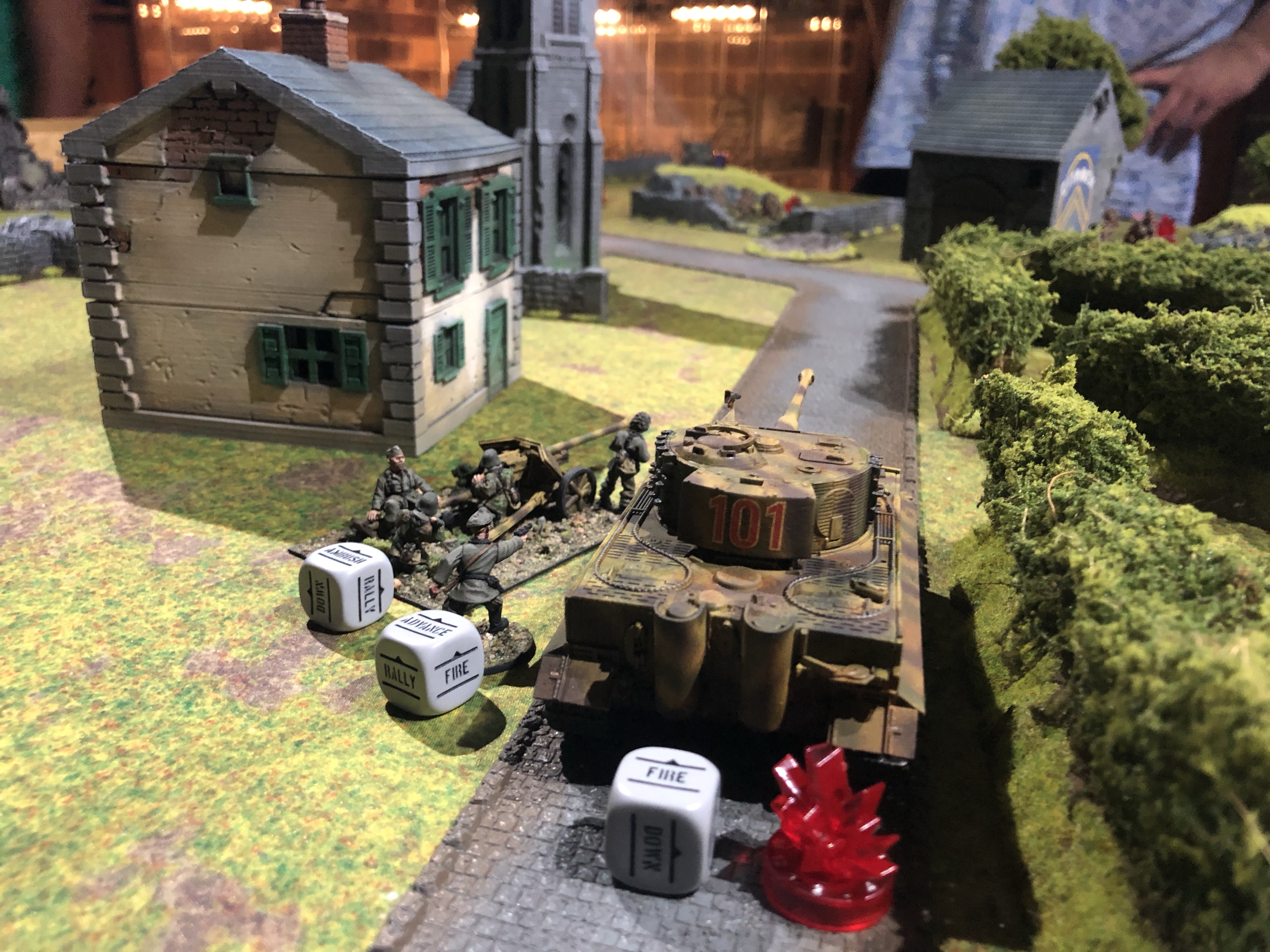
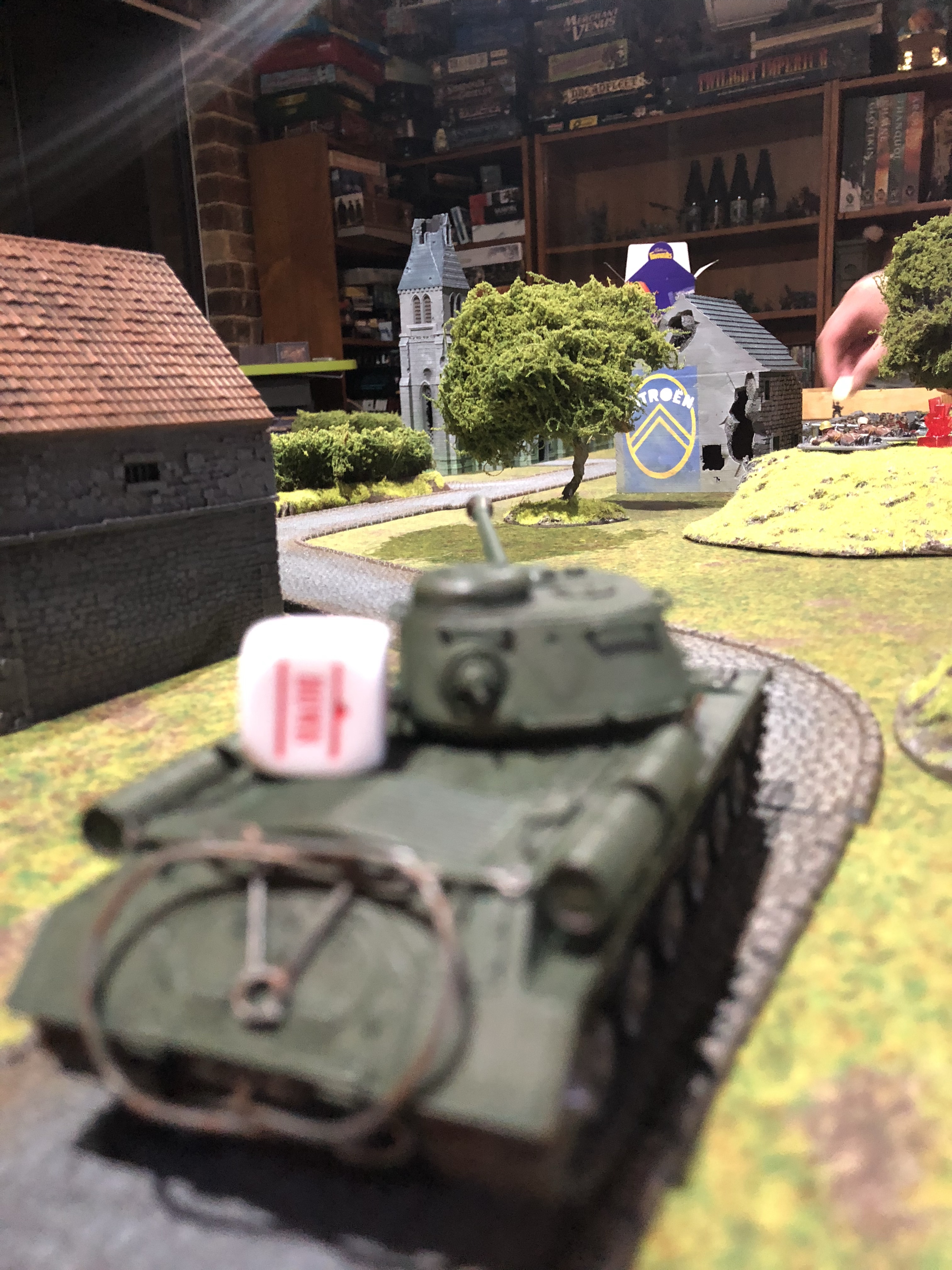
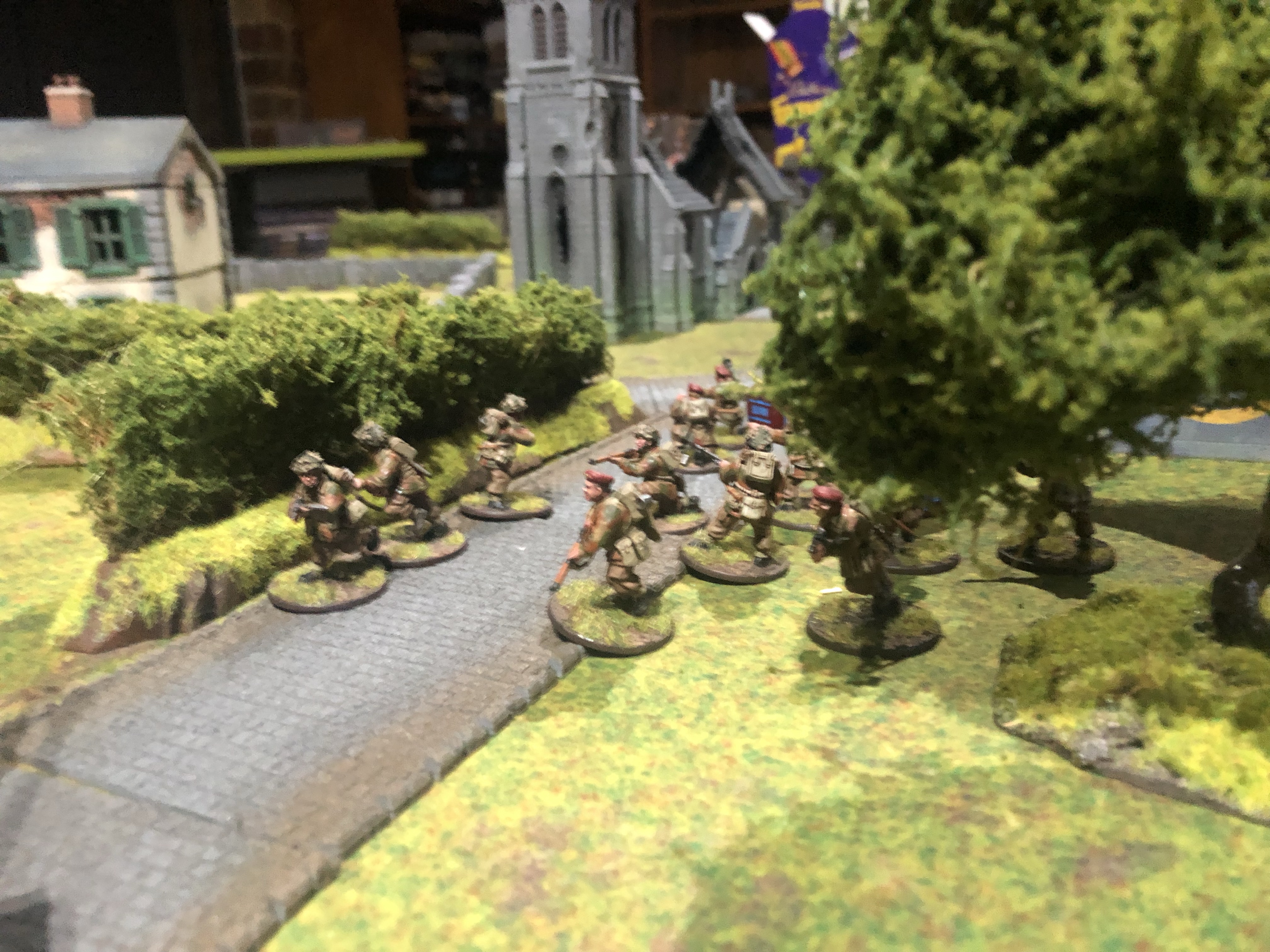
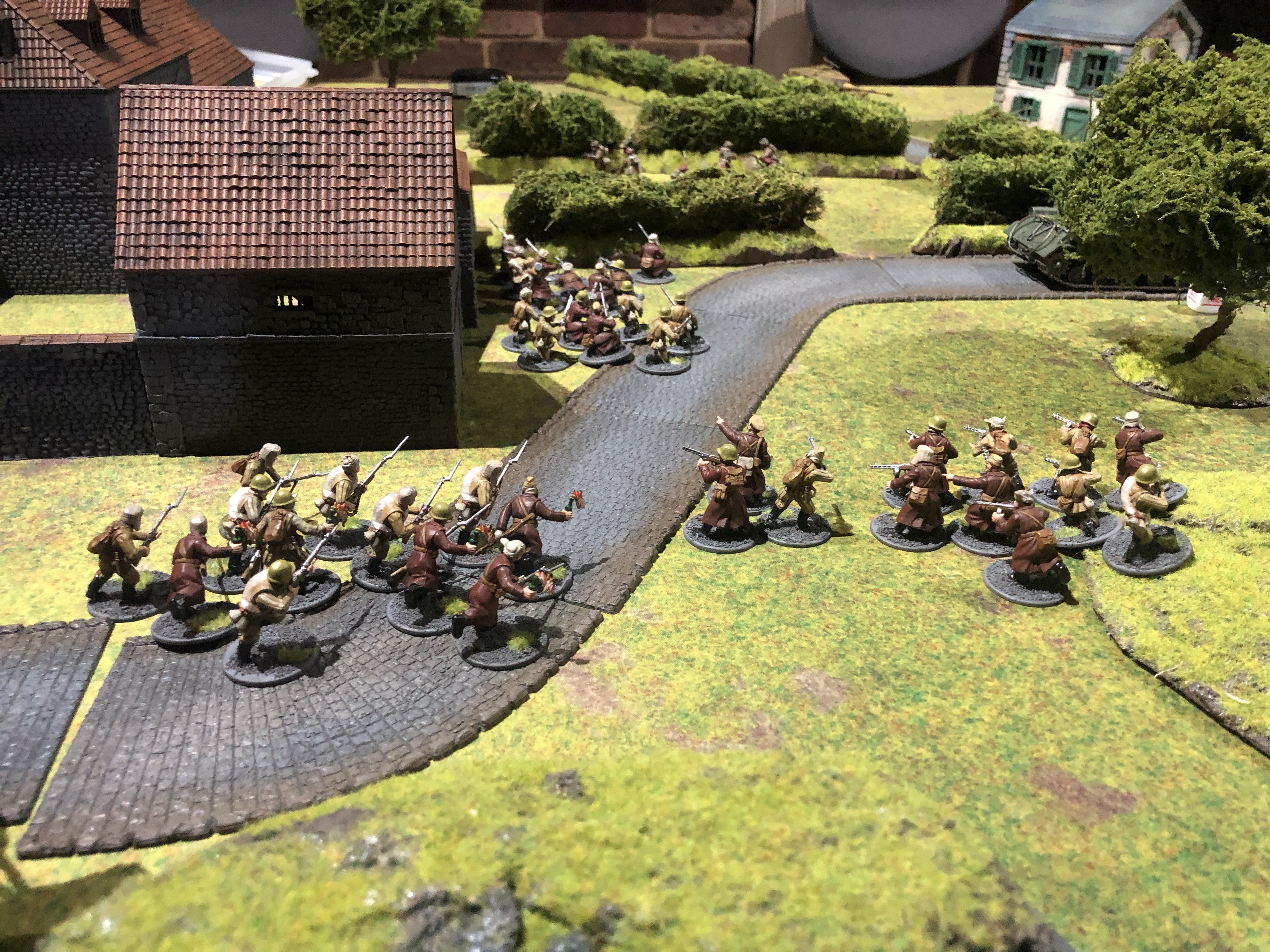
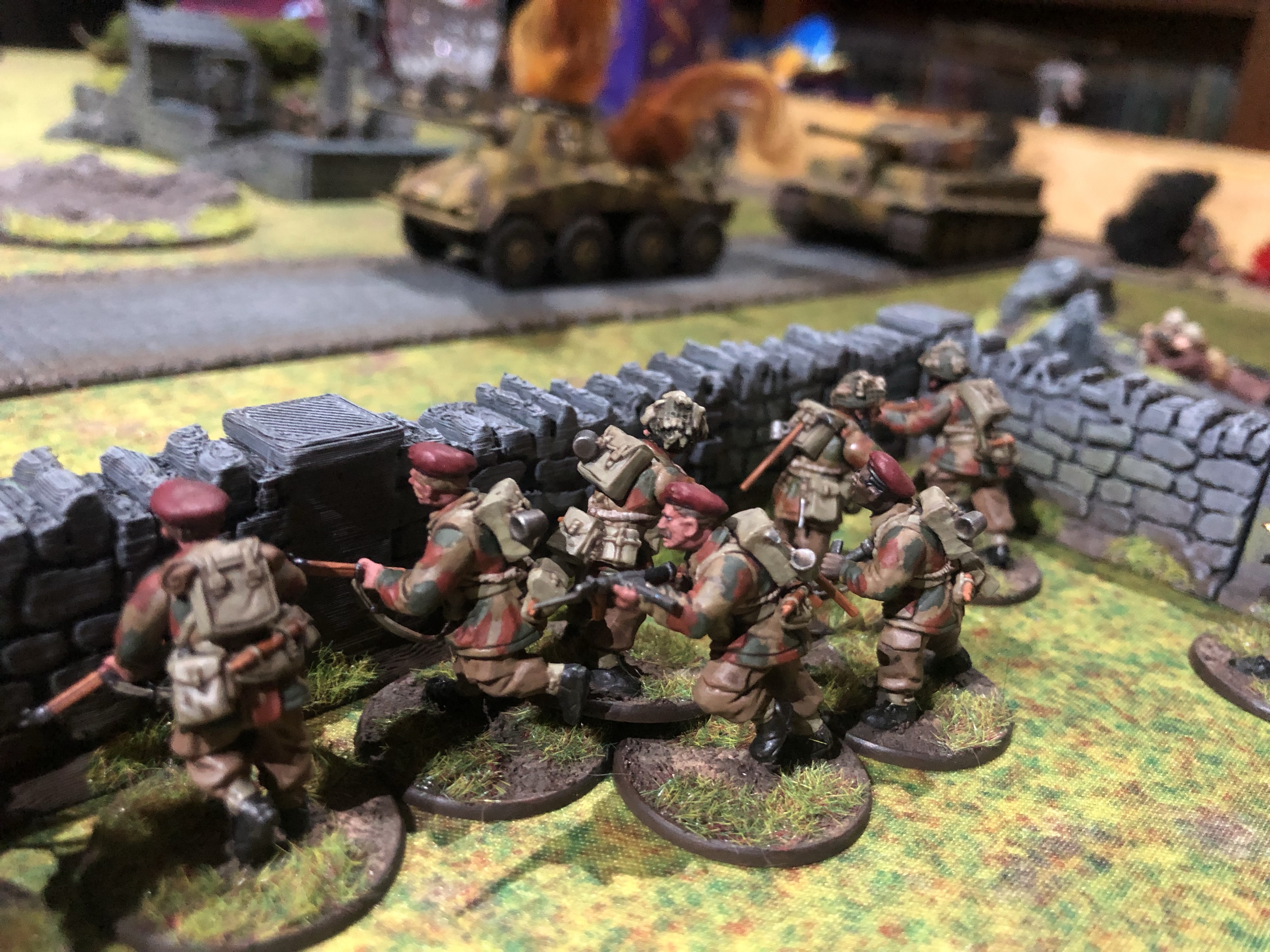
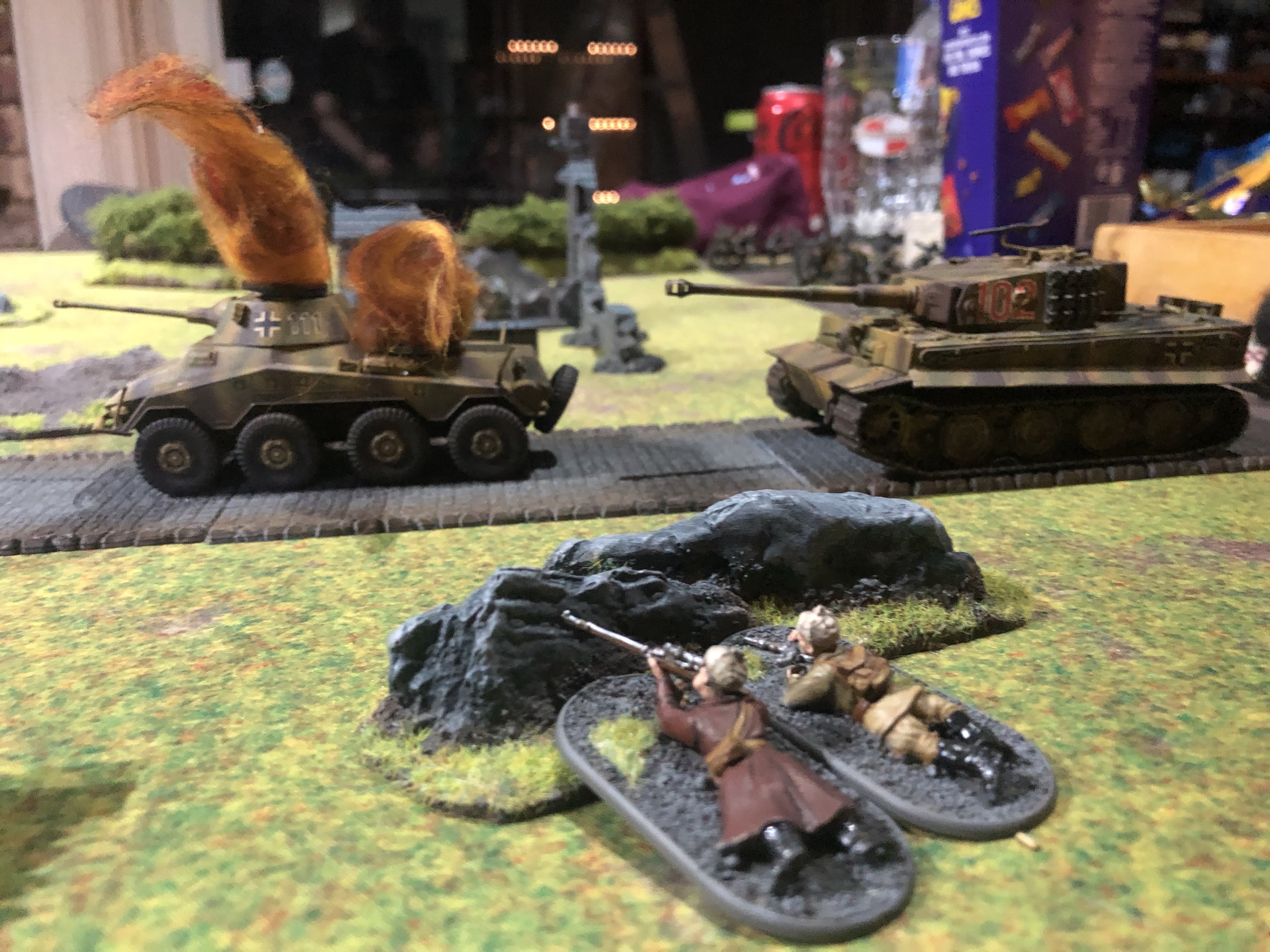
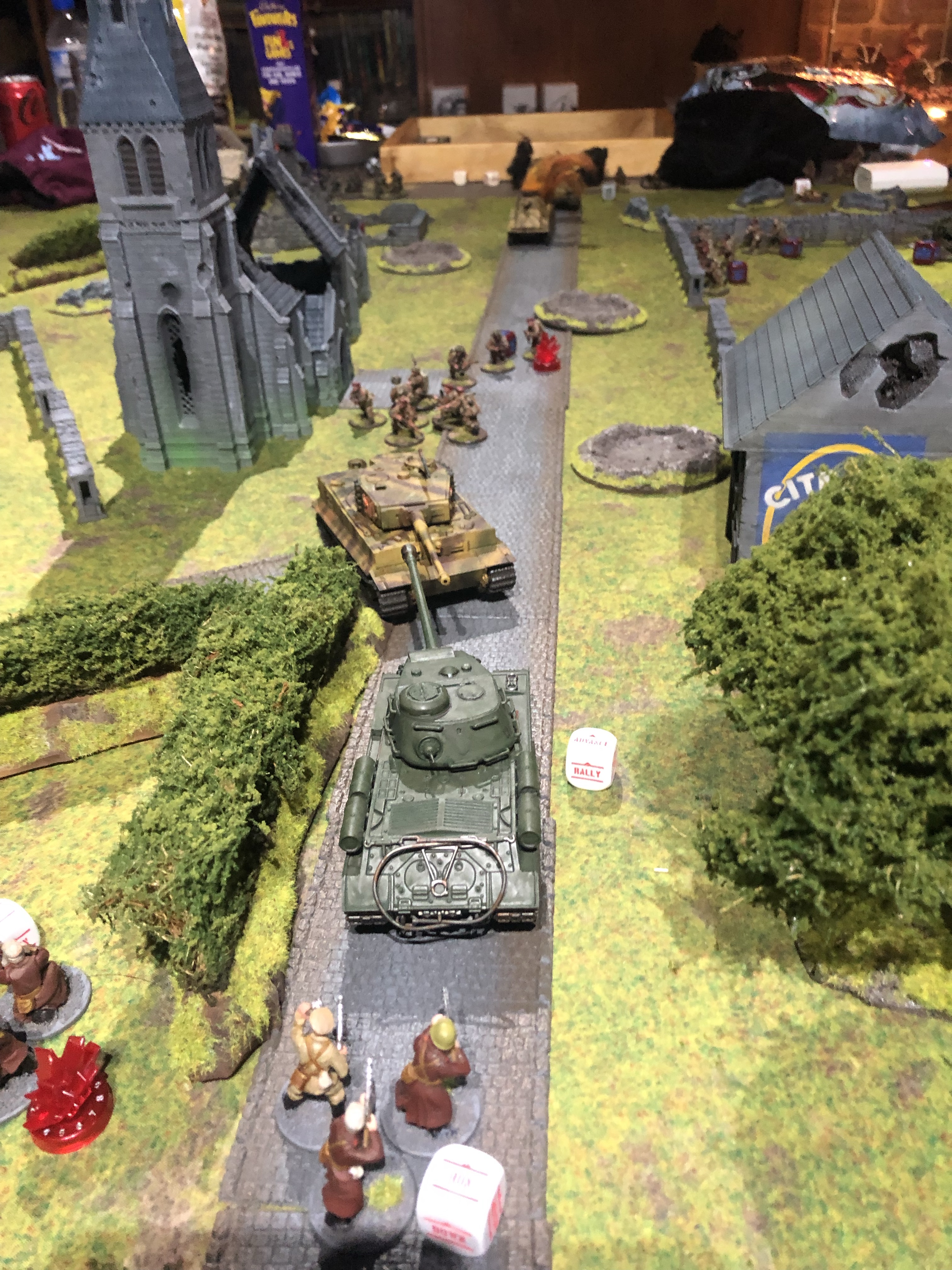
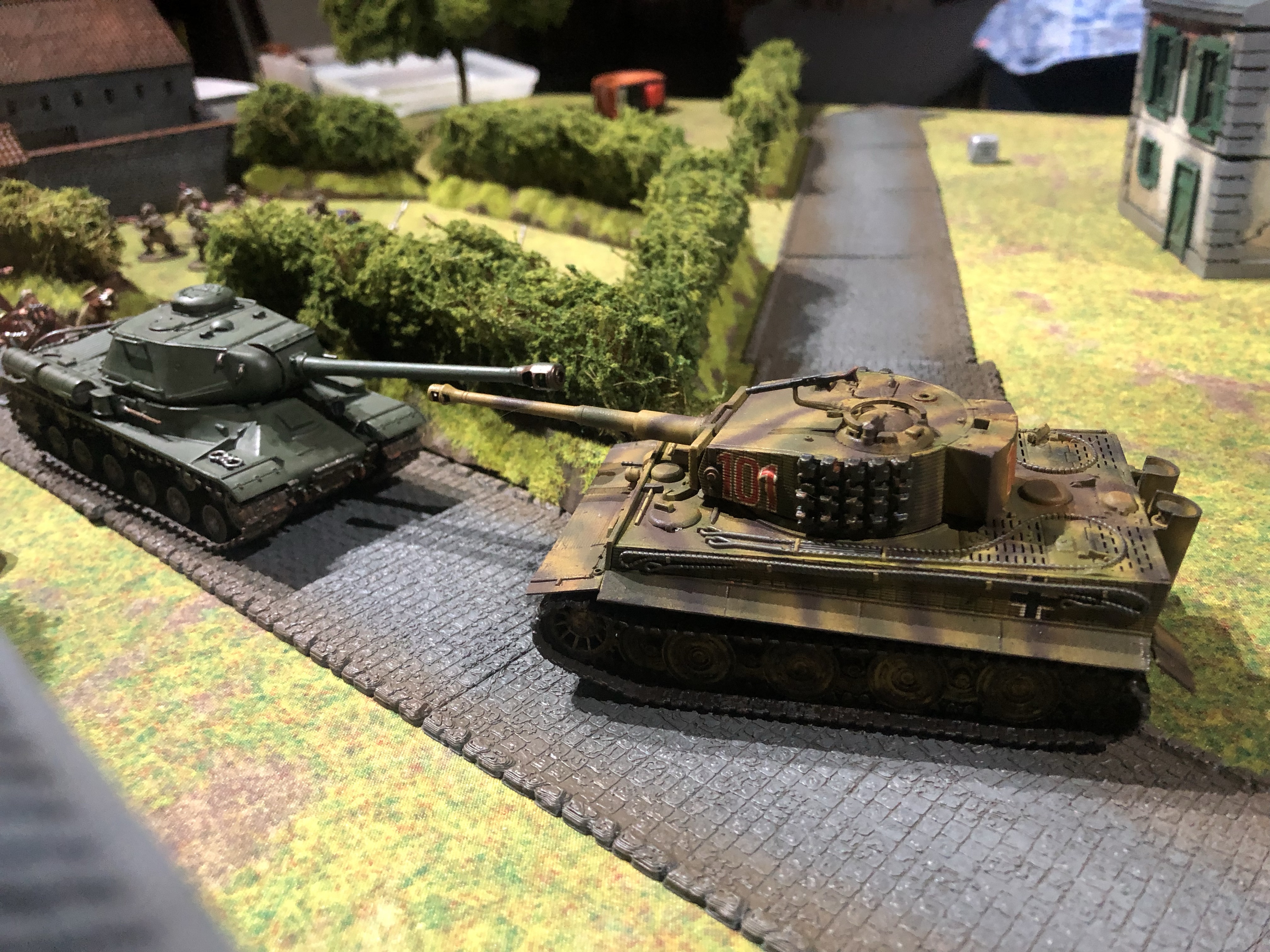
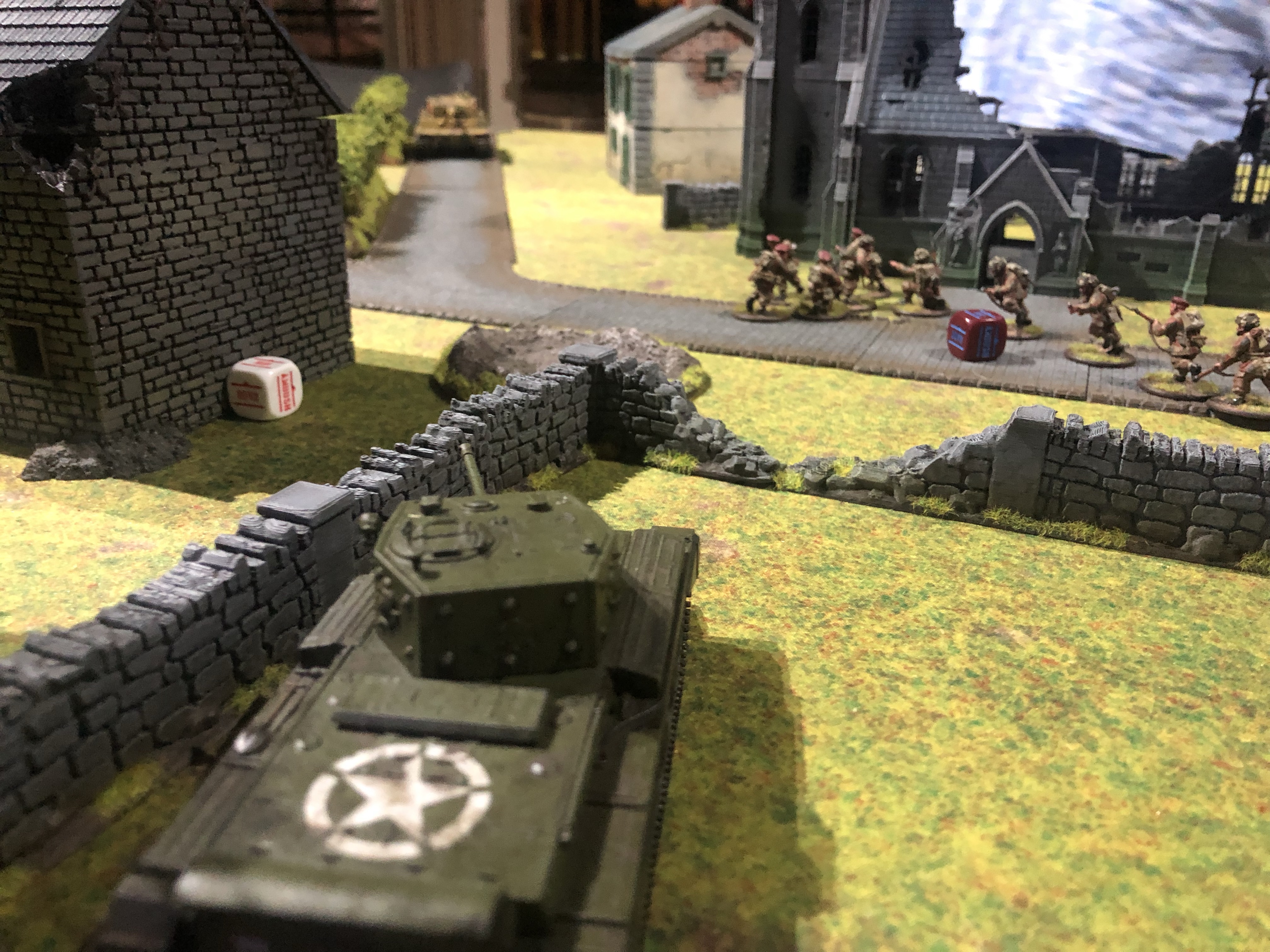
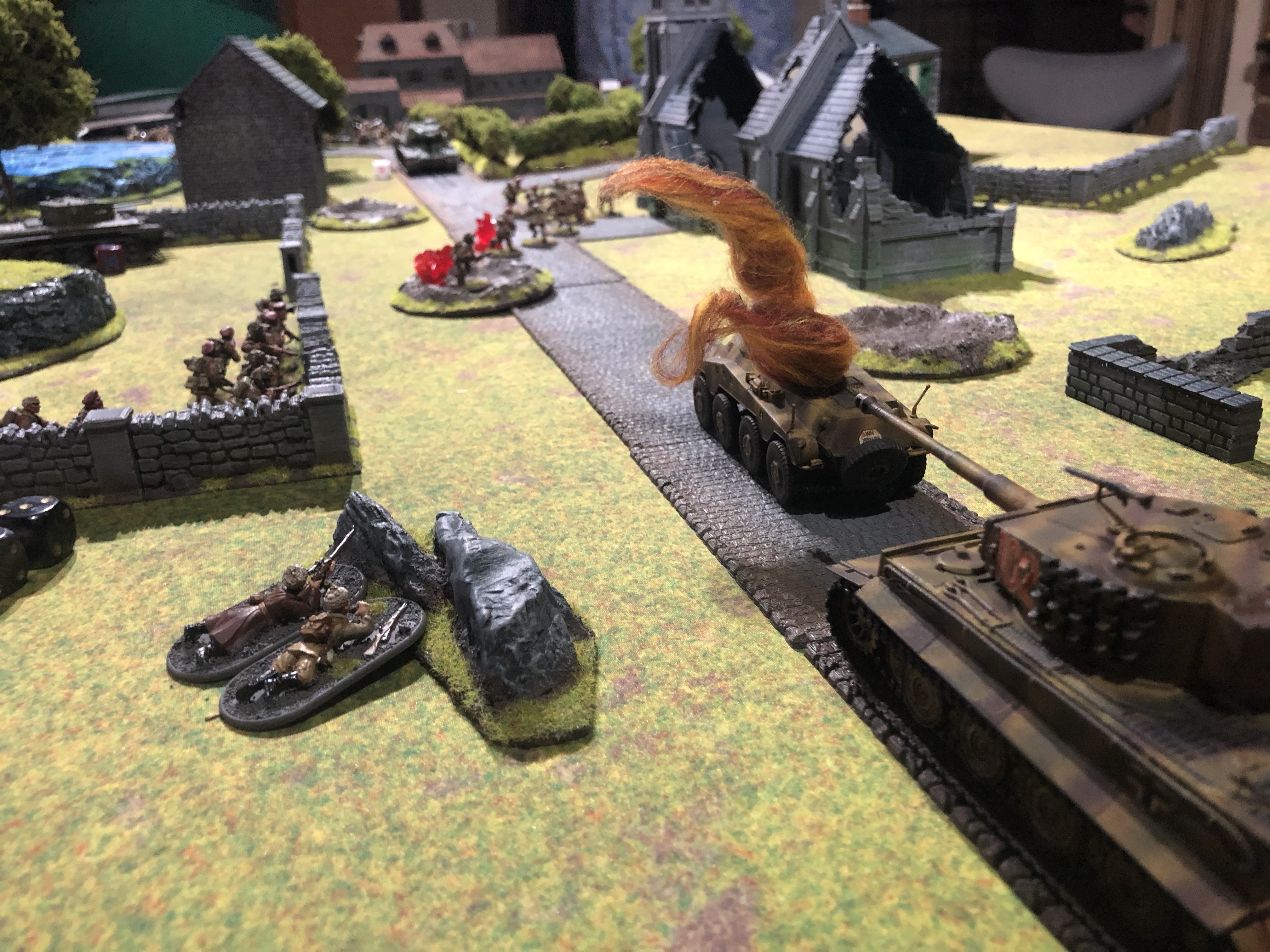
In the meantime however, this is not the end of this post! A few weeks back I played a 2000 point game of Bolt Action with some friends and thought I’d share photos. The game had a small force of Germans backed by a couple of Tigers take on a coalition of Russians and British Paratroopers, a very historical scenario as you might imagine.

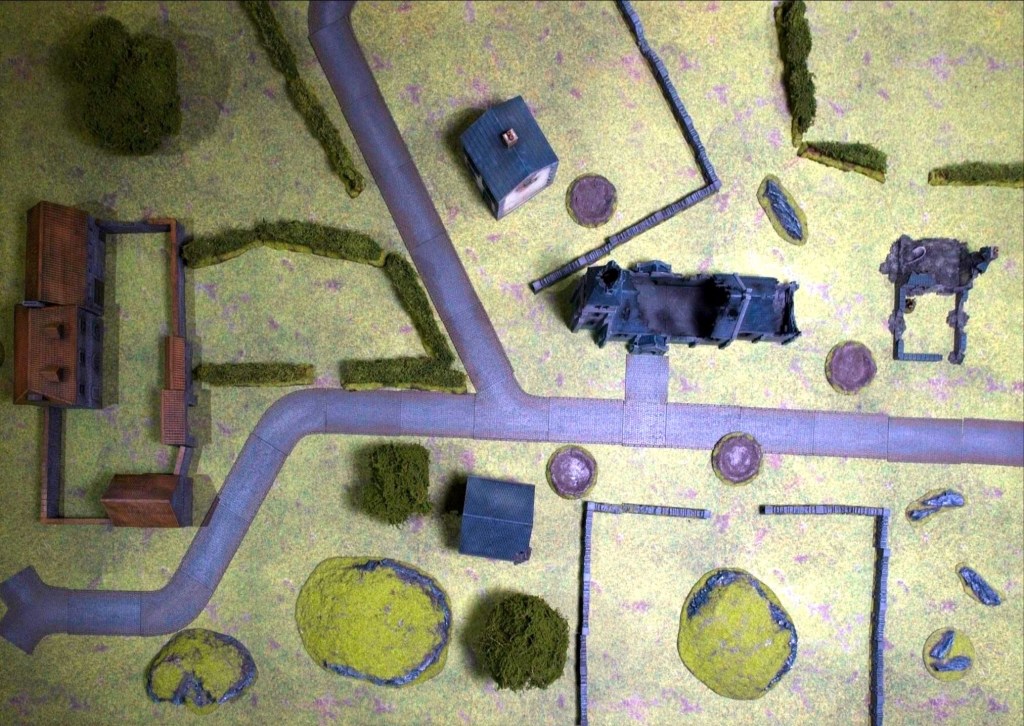
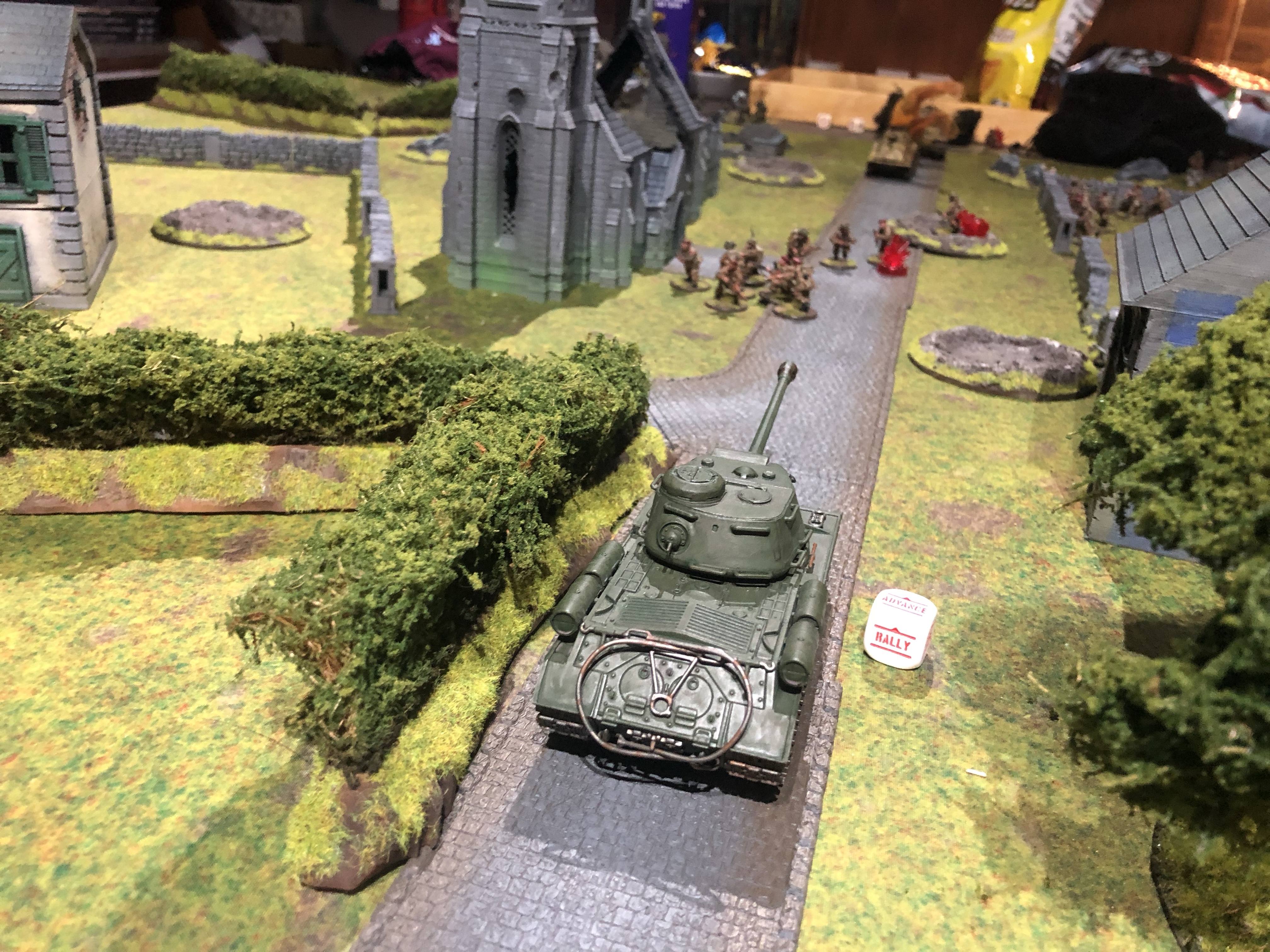
The game was played on the Normandy board I’ve been working on for a while, you can see the layout above.

The allies ended up taking the win, the game ending with just the two Tigers left on the german side, Although as you saw above, one of them ended up at point blank range of the IS-2, so who knows how that would have gone!

Road to 1000pts… and more!

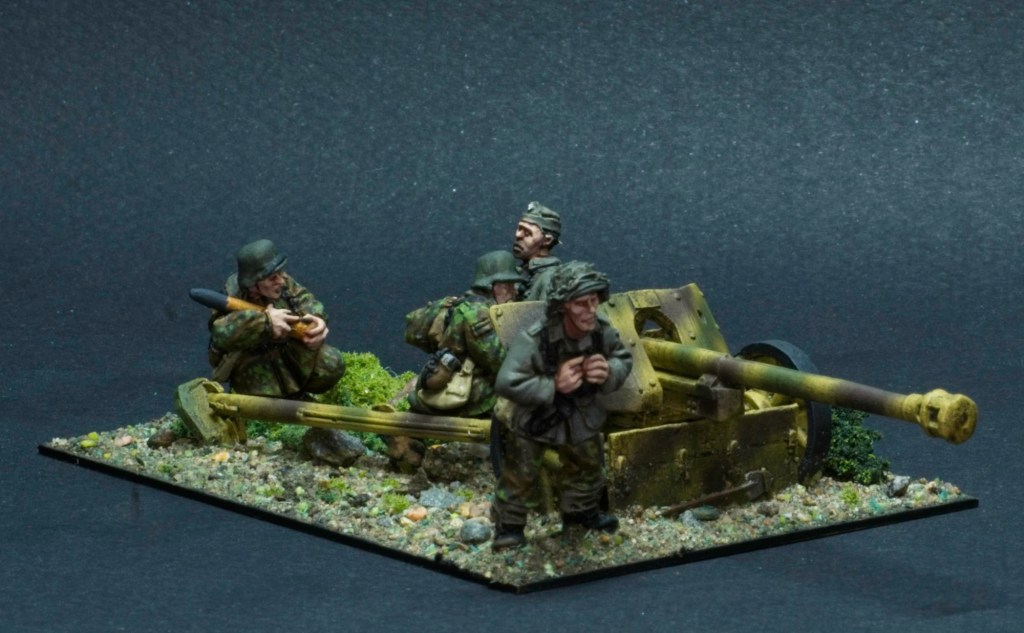
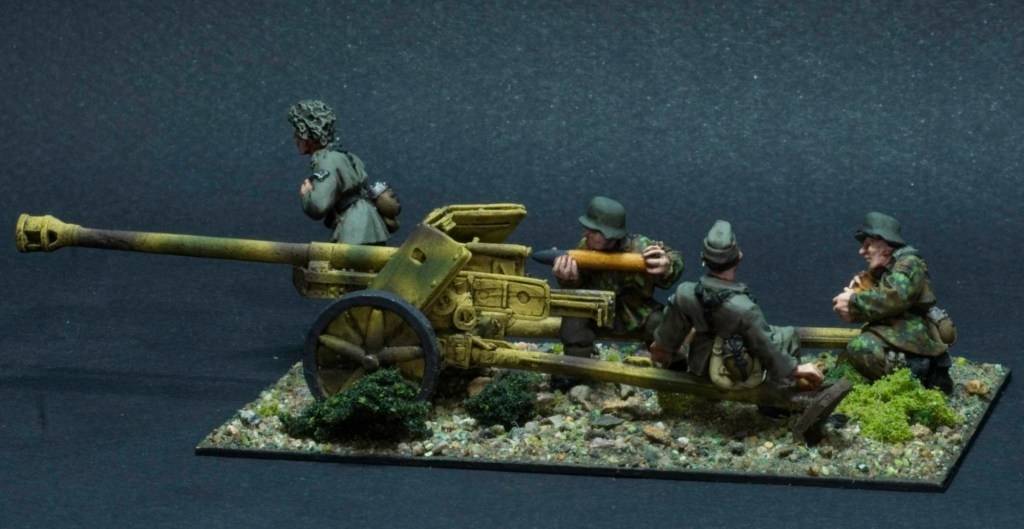
After typing up the last post, I did a quick tally of the points I’d painted for my Bolt Action army and found that I was pretty close to finishing 1000 points. All I needed was to paint up the Pak 40 and 120mm mortar teams. With that milestone so close, I decided to just go for it!

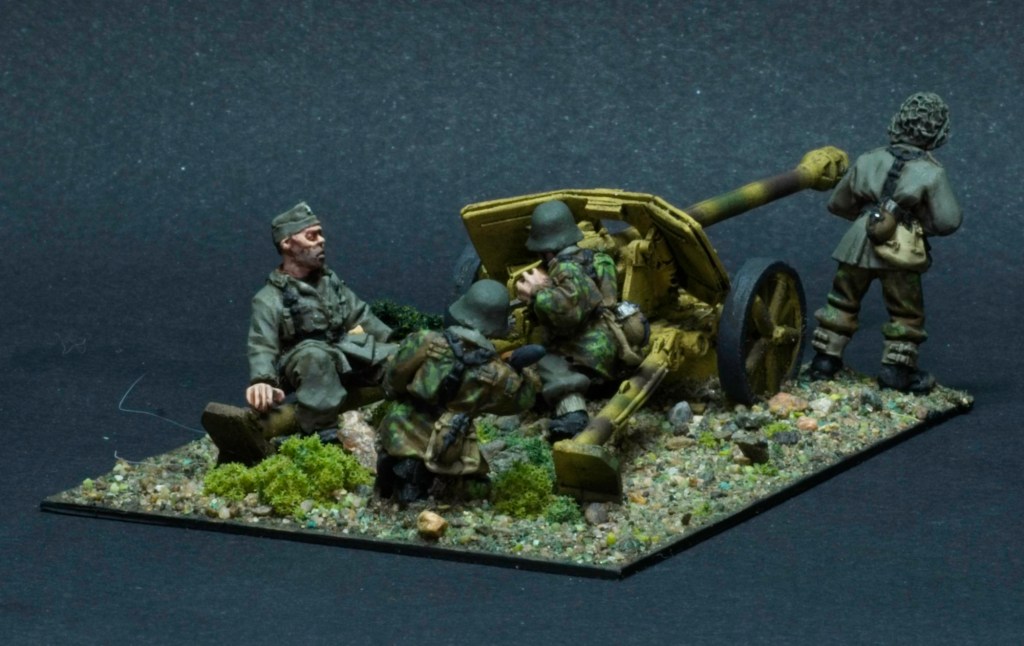
I really enjoyed painting both of these, the models are quite characterful and form this nice little vignette. The base for the Pak 40 was cut out of plasticard, as the round base provided was really too small.

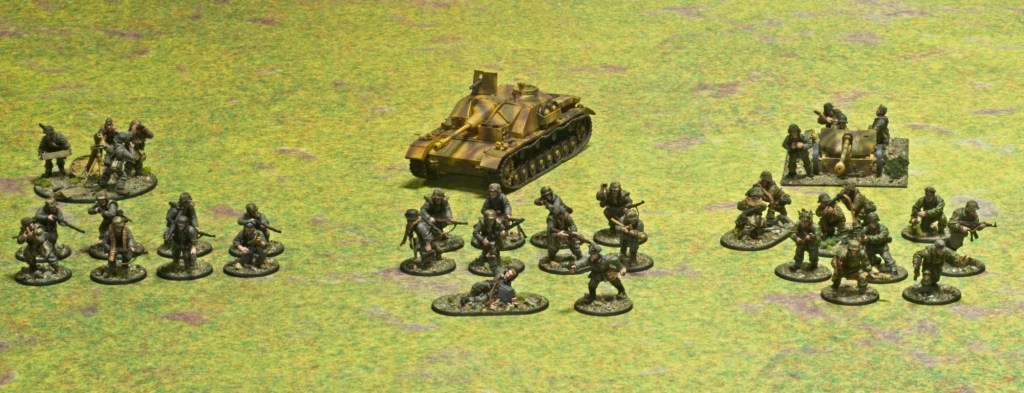
Here’s the army in the current configuration I’m thinking of for 1000 pt games

After finishing these models, I realised that painting up another lieutenant model would let me fit in more of the tanks I’d painted a while back (In regular games of Bolt Action, you can add 1 tank per reinforced platoon, adding another lieutenant would let me split the infantry sections from my base list into two of these, giving me one more tank allowed). If I made these two tanks Tiger Is, the list would come really close to 2000pts (Tigers are veeery expensive, especially if crewed by veterans). I floated the idea of playing a game with these to some friends and they came back asking to play tomorrow! So I quickly painted up the second lieutenant this morning, ready for the game! He’s a little rough around the edges, but needs must!

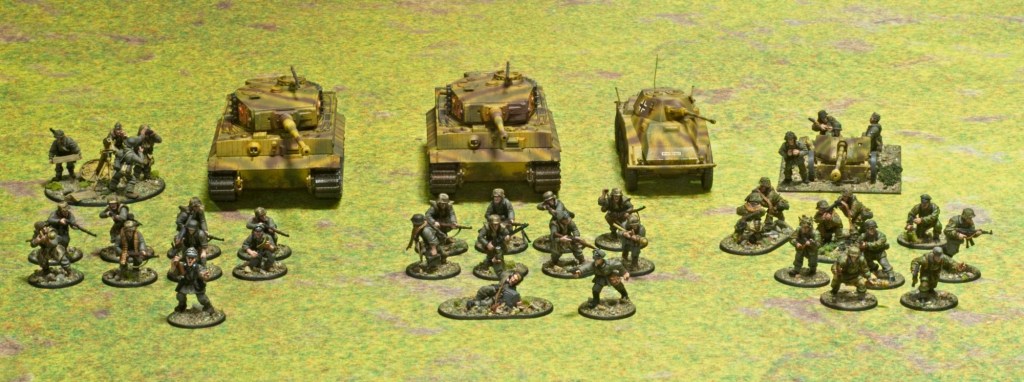
Here’s the army at 2000pts:

As you can see, it’s not much bigger, just has larger cats!

I’m looking forward to this game, which will see this german army facing my 1000pts of 6th Airborne allied with 1000pts of late war russians! Might have to think a bit to make up a plausible explanation for how that scenario occurred!

German Reinforcements

I love listening to audiobooks while I paint, and have mostly listened to books about WW2 recently, which always pushes me to paint more models from the period. Recenty I listened to “Killing the Bismark” by Ian Ballantyne, which was a fantastic account of the hunt for Bismark by the Royal Navy, mostly old from the perspective of that navy through accounts of those who were there. That definitely has me considering naval wargaming!

Following on from that, I’ve been listening to James Holland’s “Brothers in Arms”, an account of the Sherwood Rangers’ participation in the later years of the war, again told from a very personal level through accounts of men of the regiment. I’m not all the way through it yet (so far it has been excellent!), but the early chapters cover Normandy on and after D-Day which has motivated me to paint more of my Normandy armies (and also consider buying Shermans…).

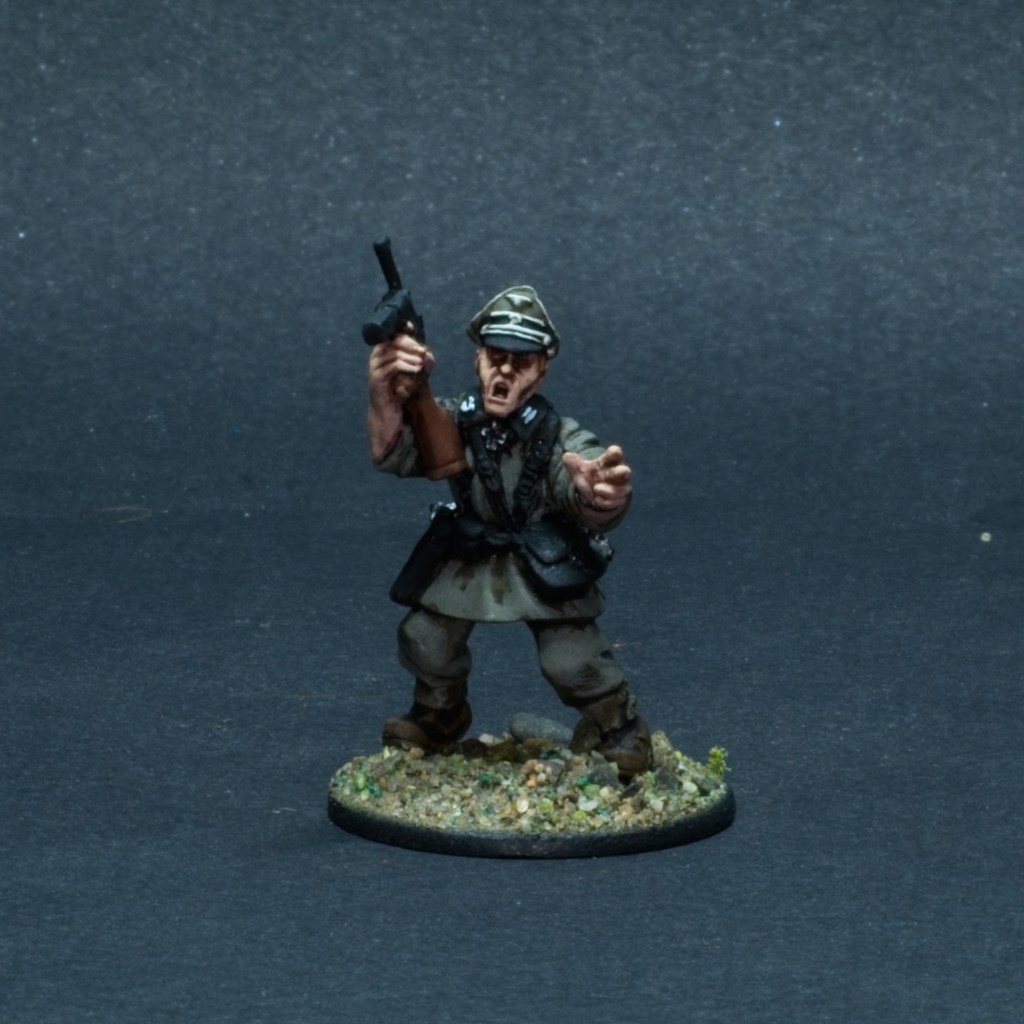
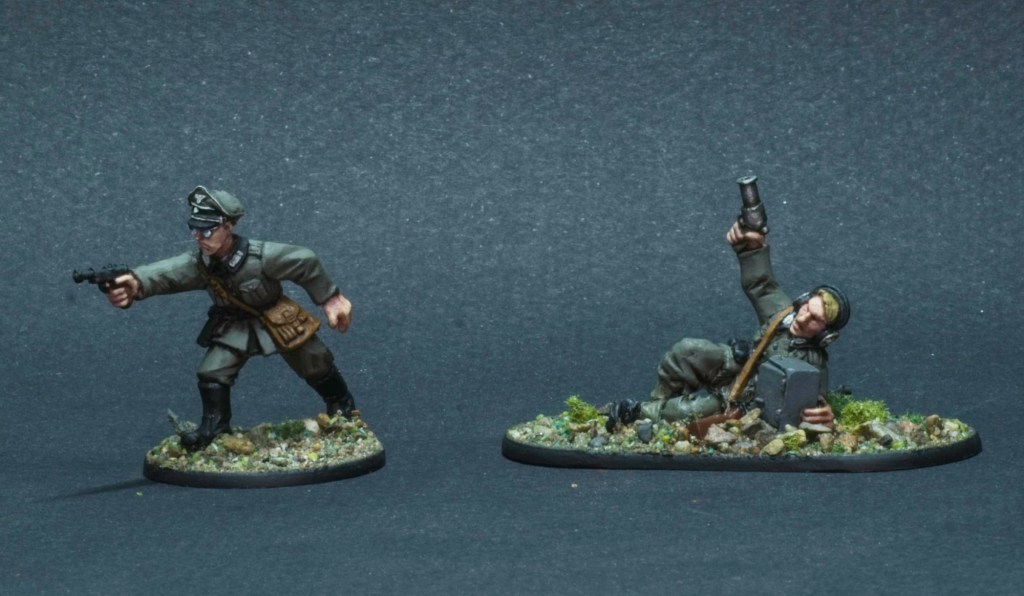
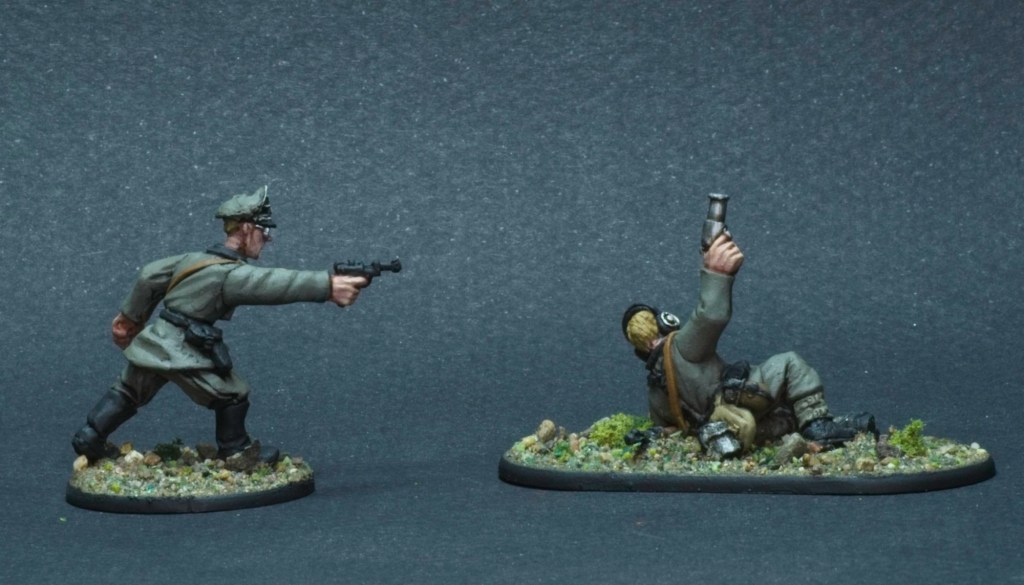
So here is the next batch of Germans for the late war army I’ve been putting together, with first up an officer and forward observation officer

The officer model I found really fun, he looks right out of Indiana Jones or another pulpy movie with the round glasses and the luger.

The observer I’ll either use as an artillery/air observer, or as a spotter for the mortar I still have to build and paint.
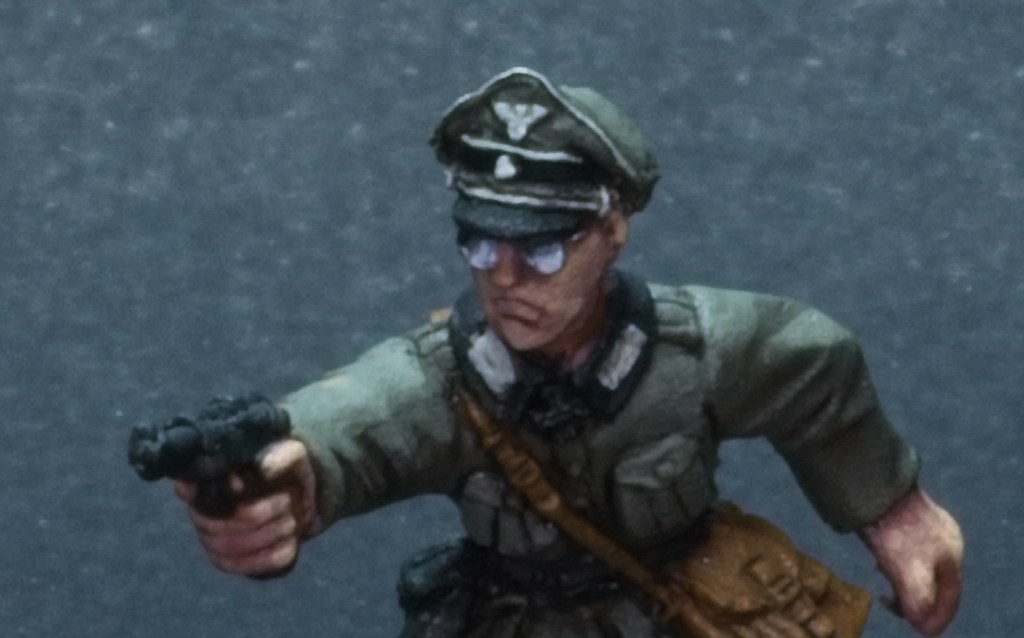
I had fun painting the reflection in the glasses so here’s a close-up!

Both models are from Warlord Games.

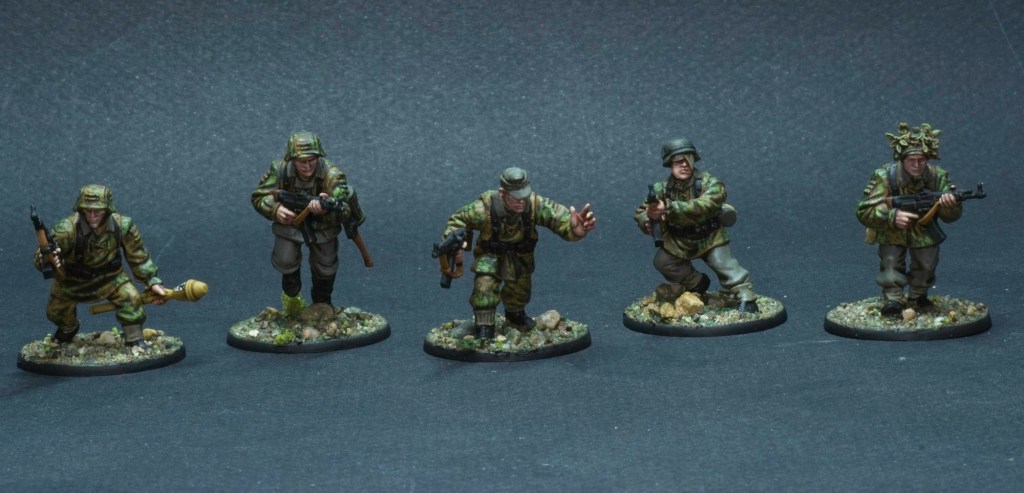
Next up are opponents that regularly show up in “Brothers in Arms”: the SS.

Last post on the army I made the comment about how I felt conflicted with painting an army of real world villains (thanks to everyone who commented by the way, I feel like some really positive and constructive discussions were had on the topic). If there was any unit to have misgivings about painting, here they are.

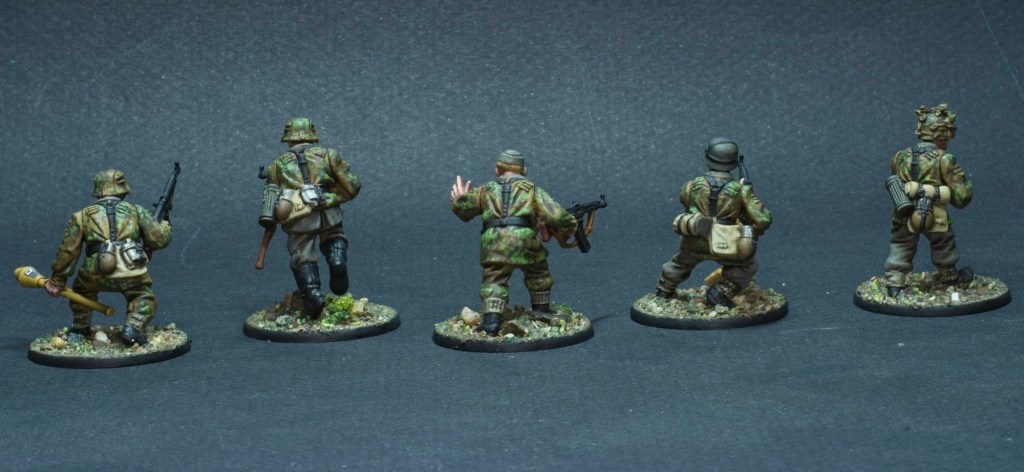
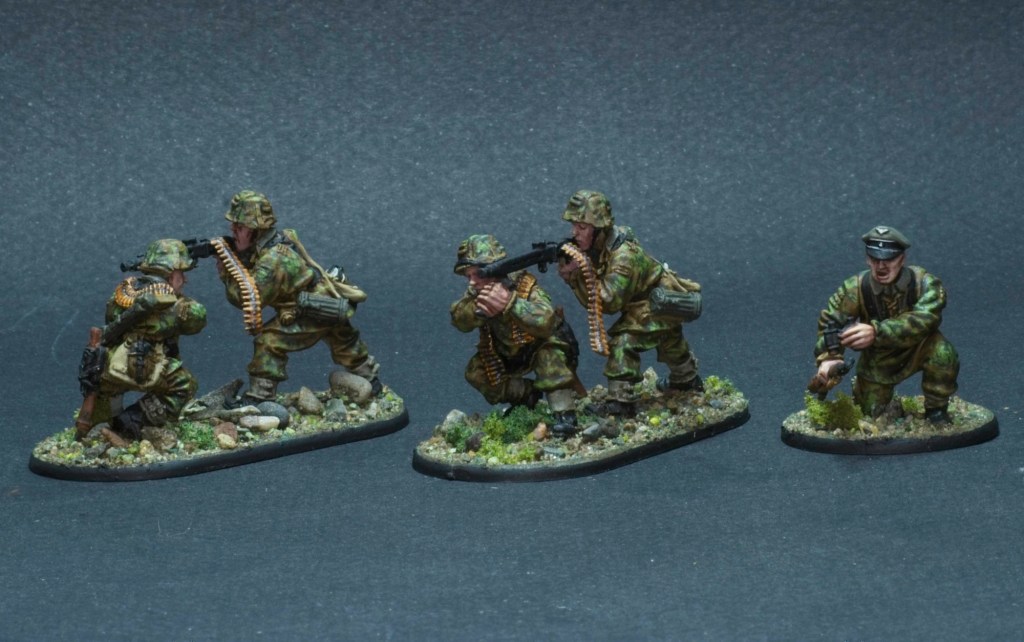
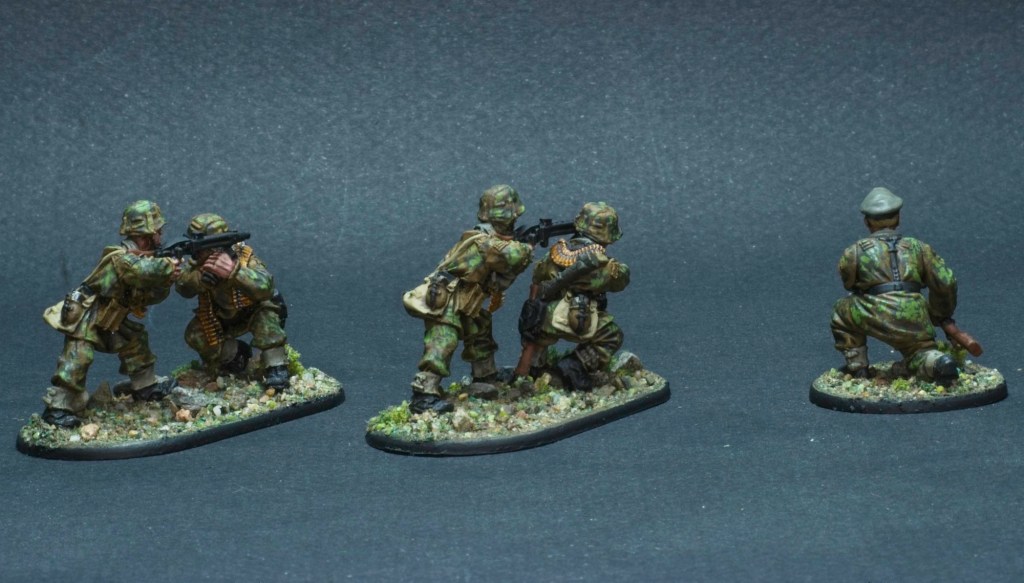
This camouflage pattern was a lot of work! I can see why display painters are drawn to it, and army painters dread it! My hands were cramping up after repeatedly dotting these 10 models. I used Vallejo German Camo Medium Brown, Vallejo German Camo Dark Green, and Vallejo Gobin Green for the pattern. As a reference I used an illustration in a very useful book I have on WW2 uniforms.

I plan on running these models in one of three ways: as a 10-man section, as two 5-man sections with an MG each, or two 5-man sections with MGs and assault rifles split up.

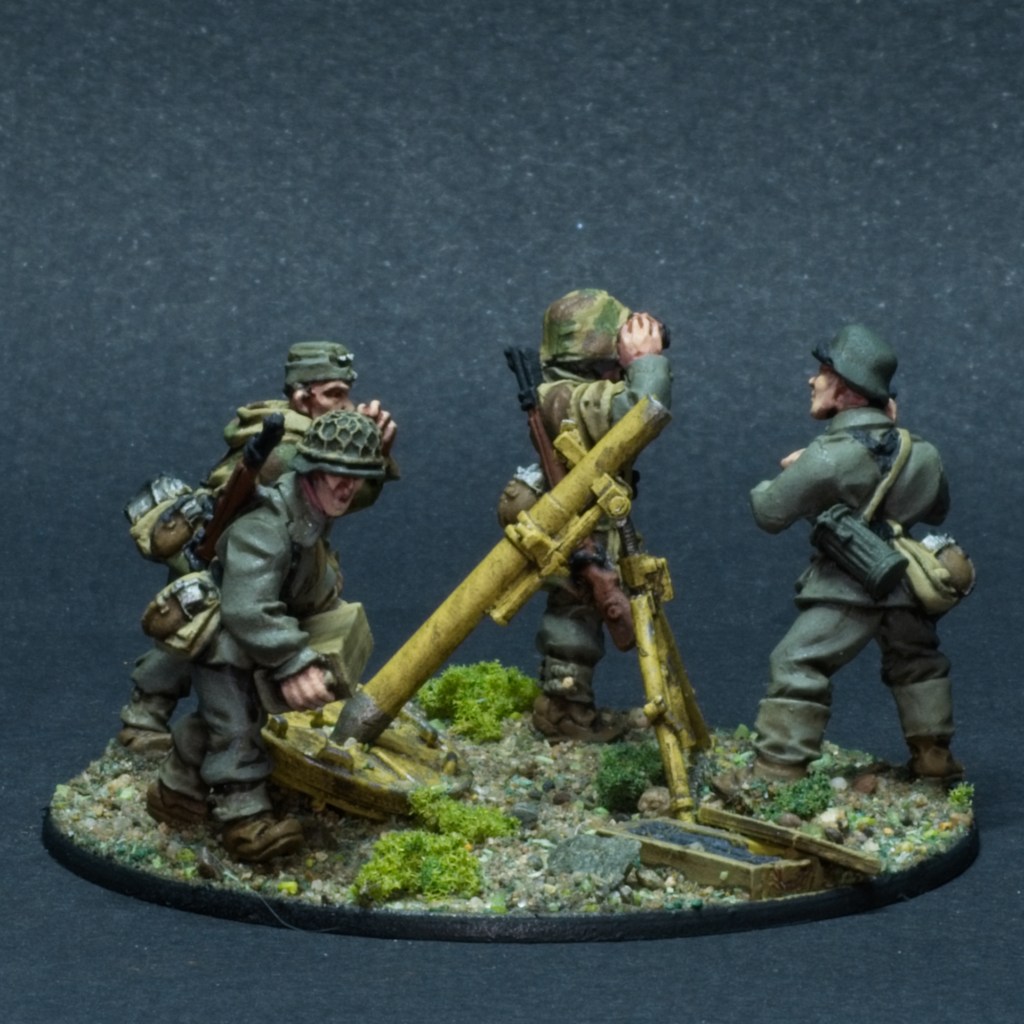
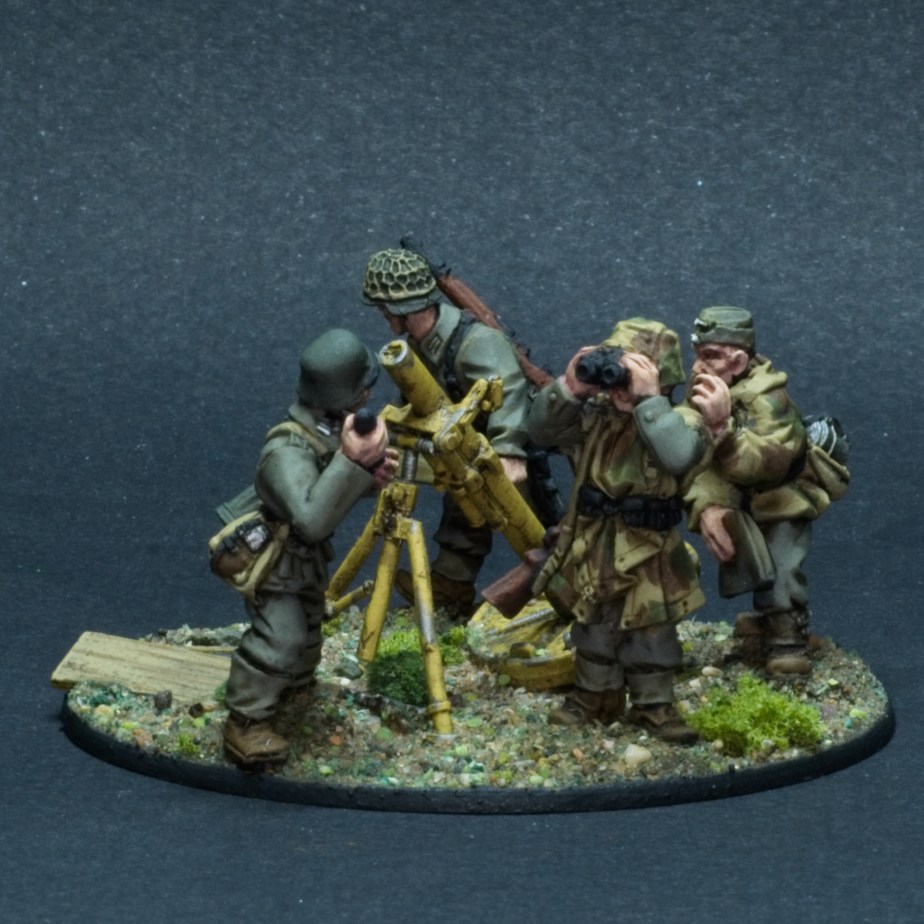
The MG models are some older Warlord Games metal models, which have one of the team members acting as a mobile tripod. I saw photos where this tripod-man was facing either way so I built the teams to have that man face both directions to add a bit of variation in what are otherwise identical poses. The rest of the models are from Warlord’s fairly new SS set.

This mostly leaves weapons teams to fill out the rest of the army as I currently plan on fielding it. Something like a couple of MG teams (with real tripods this time), an anti-tank gun, and a mortar team. I have quite a few more models in the collection, so most likely these plans will change, we will see!

Grenadiers

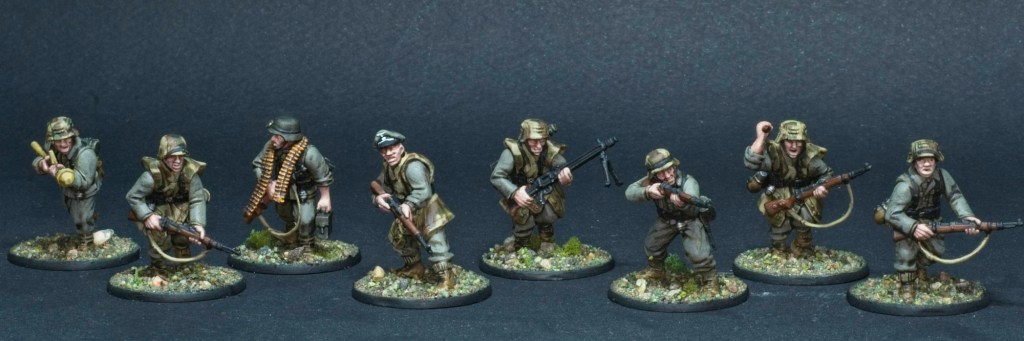
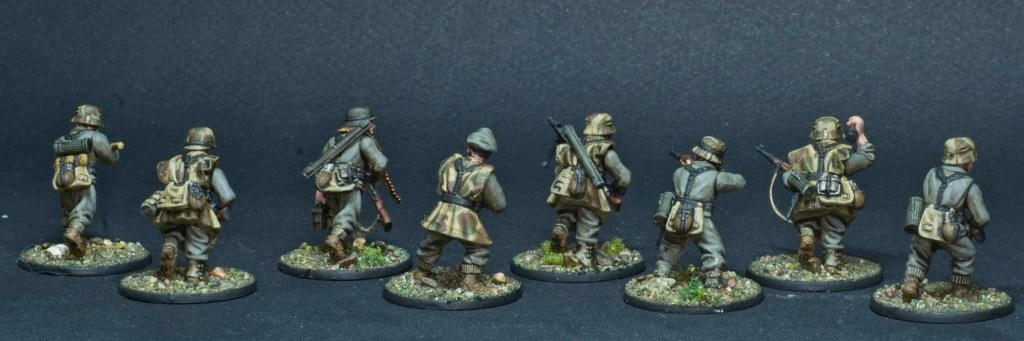
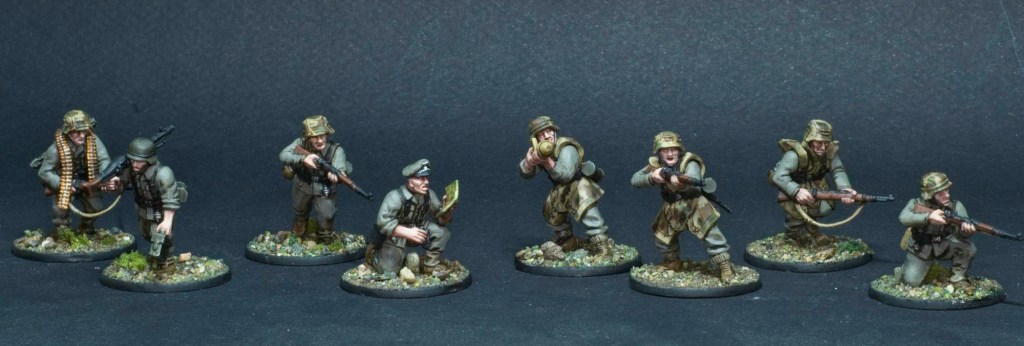
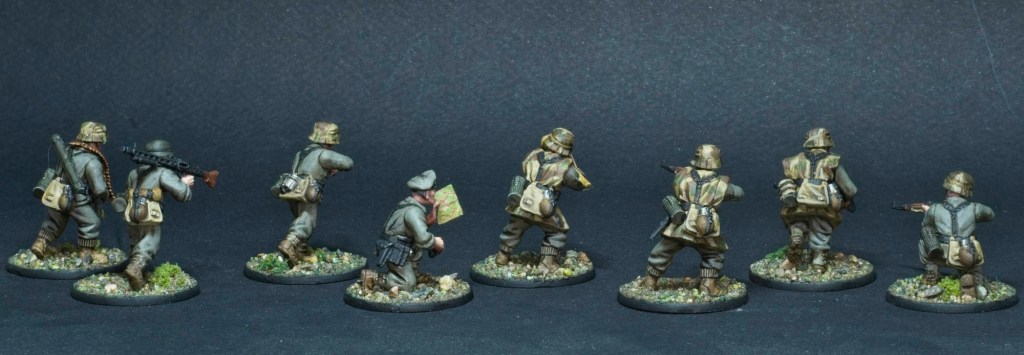
The WW2 bug is still very much around and I’ve now started painting the infantry in the German collection that was given to me. Starting with the Grenadiers, from Warlord Games’ plastic kit line.

I have 2 squads of these in the 1000pt list I’ve written up, both imaginatively armed in the exact same manner! 8 men, two as an MG team, one with Panzerfaust, and the rest with rifles.

I painted these using Duncan Rhodes’ guide, following the steps exactly up until some of the more detailed highlights that I skipped.

These were based with more base ready materials, this time the Scrublands mix. I think it looks quite nice, especially given the low amount of effort required!

I’ve been on a bit of a journey with these models, building and painting models that are evil in fantasy and sci-fi settings is one thing, but these are miniature representations of an organisation that caused harm in an unprecedented scaled to real people. I’ve had serious misgivings about painting and posting about this army, but at the end of the day I think historical wargaming can have a positive role in helping us and others keep in mind what happened in the past.

This is a bit more of a serious tone than usual on the blog, but I did want to address this as I think it’s important. I’ll probably talk some more about all this when I get to the troops of a more political nature…

More Tanks!

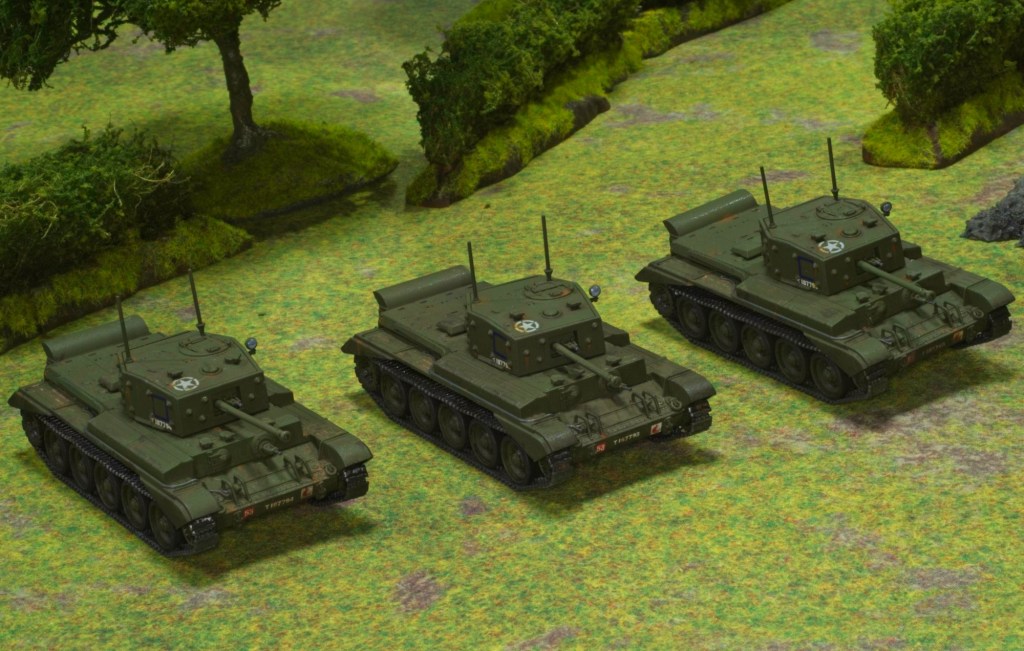
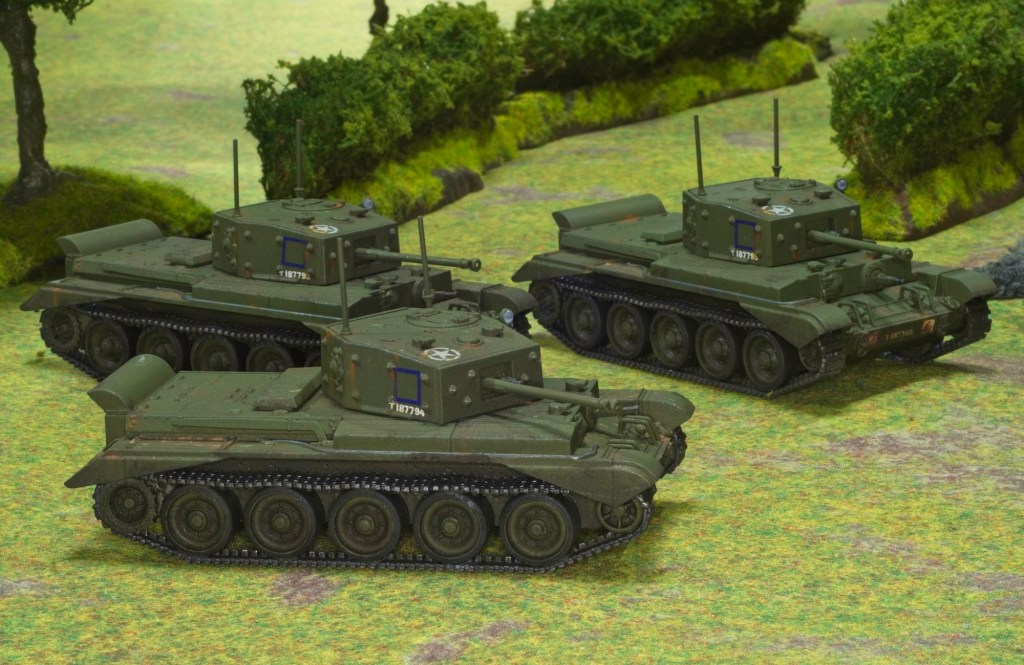
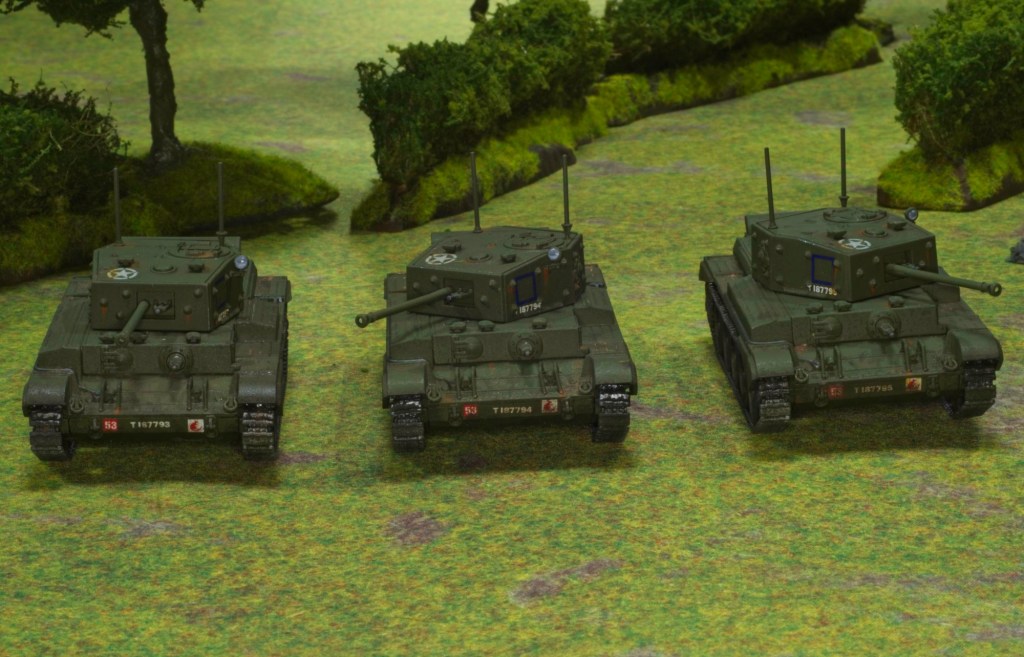
I decided that while the motivation to paint tanks is there, it should be fully utilised! I still had 3 Cromwell tanks to paint up before we could play this big tank battle, so after finishing up the last post, I decided to keep going.

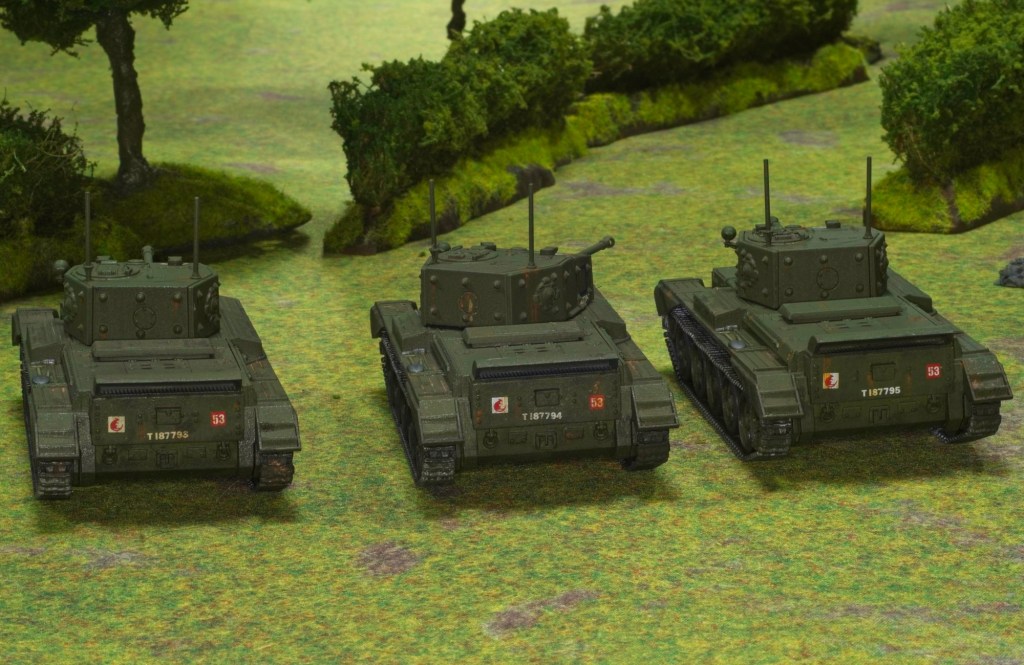
I decided to paint them as 7th Armoured tanks, as North Africa is also a campaign I’m fond of and the Desert Rats are hard to pass by! The kits came with decals for the 7th which made life easier, although I don’t believe the regimental number decals are correct, as all the reference photos I could find had them with a stag head in the top half and the number in the bottom half. Still I’m not enough of a stickler to let get in the way of finishing these!

British tanks are somewhat simpler to paint than the German camo, being simply a single colour all over, but I otherwise replicated the process I used on the German tanks last post. The decals are a mix of the ones that came with the warlord kits (the regimental numbers, the unit symbols), the allied star warlord decal sheet for the stars on the turrets, and the registration numbers from the Italeri version of the same kit (while these are Warlord branded, Italeri produces them, and sell their own version of the kit). I’m glad I had all these on hand, I think together they make a pretty complete picture, and am a little disappointed that all the decals I think are needed are not just in the box.

Some of the decals aren’t the straightest but then I remember that a lot of these were hand stenciled on, so some variation may be somewhat more realistic (at least it’s a useful excuse 😉 )

These were fun and very quick to paint, now I just have to figure out how and when to have this big tank battle!