I haven’t painted much over the last few weeks as it’s been a bit of a busy time, with some travelling (more on that later!) but I managed to chip away some more at some Empire models.
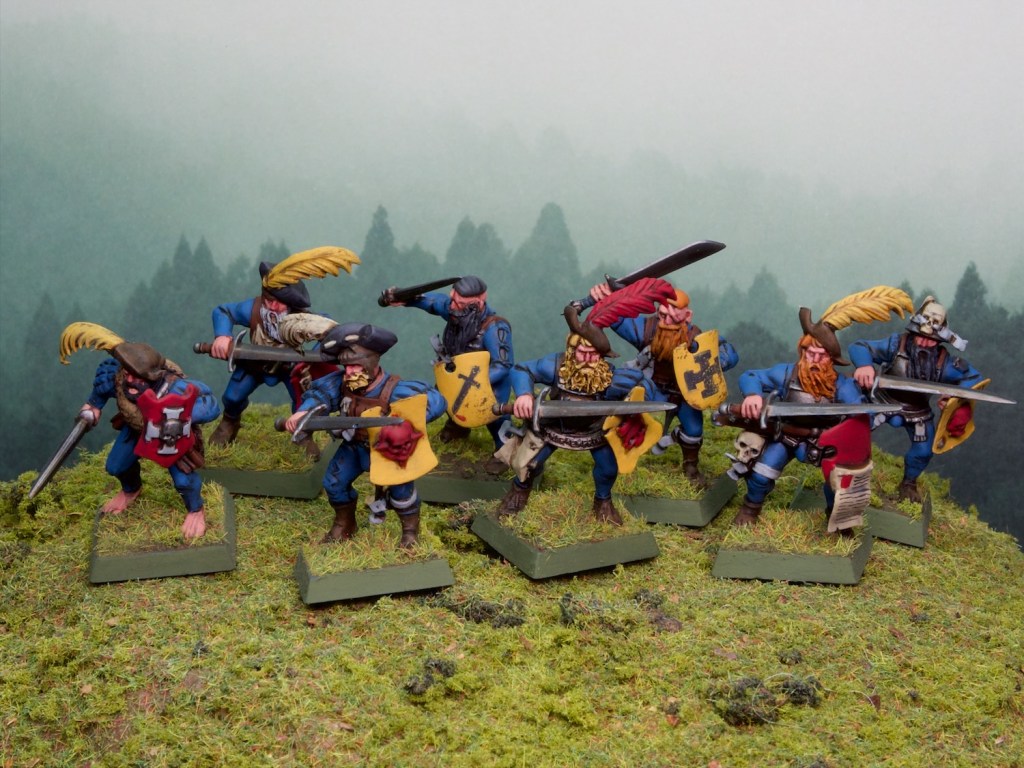
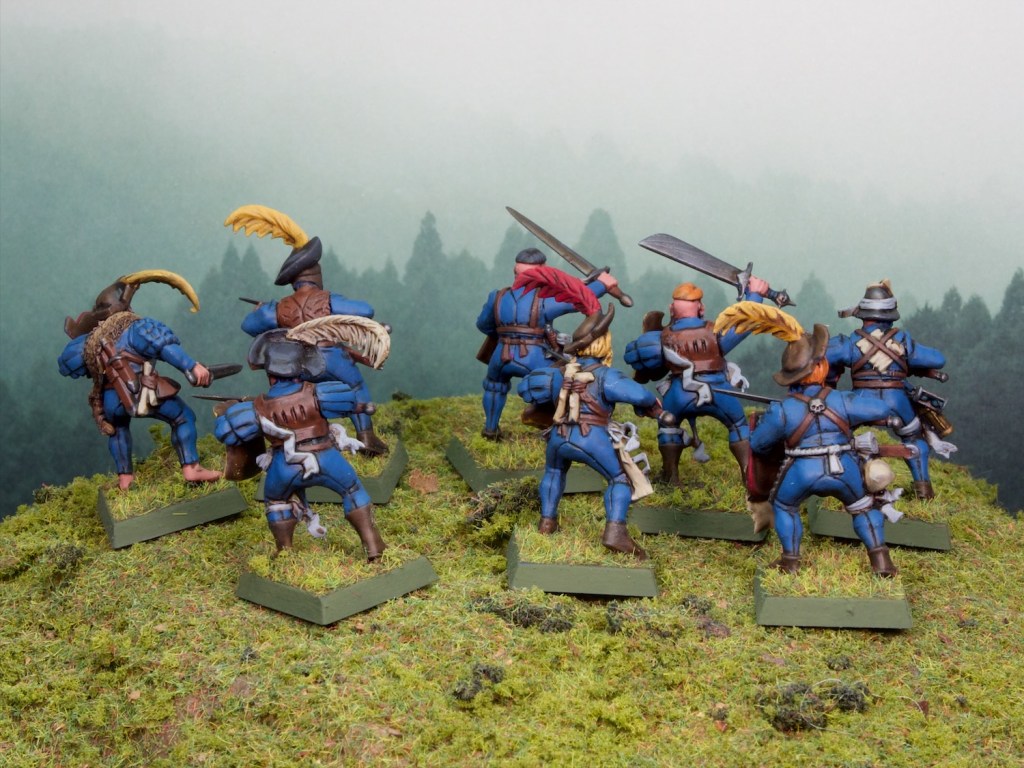
After learning to sculpt beards for last post’s Valten, I tried my hand at it again on these swordsmen. I wanted to represent some state troops from Middenland, one of the northern provinces of the Empire which is presumably filled with gruff bearded men. The Storm of Chaos campaign is mostly set around Middenheim which is the capital of Middenland. These models will then be fighting on their home ground.
The uniform of Middenland is just blue, but the book I have on Empire uniforms suggests multicoloured feathers, and I extended that to the shields. They might be a bit more colourful than the average representation of Middlenlanders but they work for me.
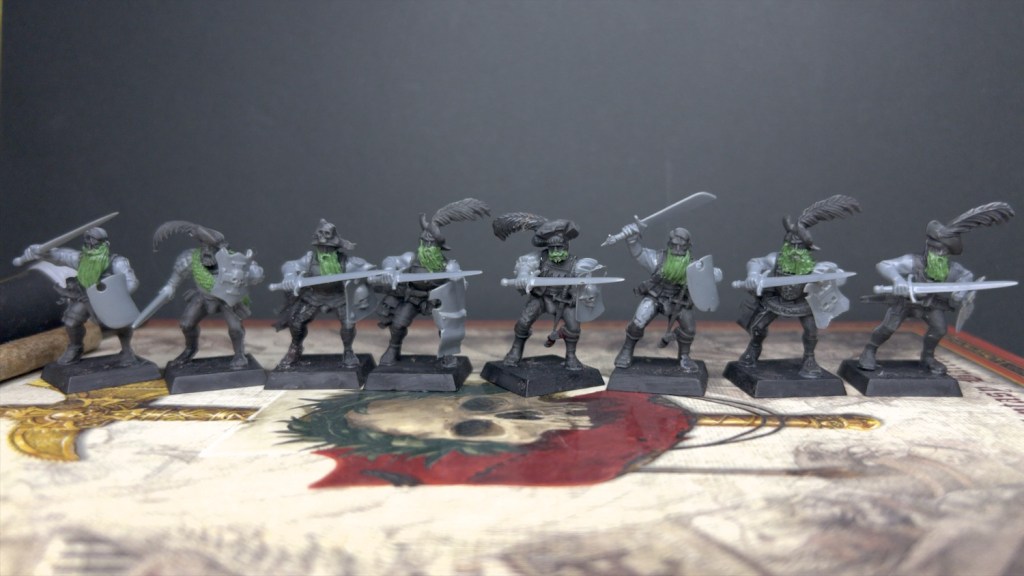
These models are “rescues”, in a previous life they belonged to a friend that had built them as halberdiers, but all of the halberds had broken over the years. I inherited them a little while back and have since then stripped them of paint and rebuilt them as swordsmen from spare arms I had.
I find that I can get most if not all the paint off when stripping plastics, but there is always some residue which adds a bit of texture to the models. As a result I wouldn’t use these as display models but they’re ok for armies!
You can see what I mean in the unpainted photo above, the light grey plastic is the new parts I glued on, while the dark grey/black areas are the stripped models. You can also see my attempts at sculpting!
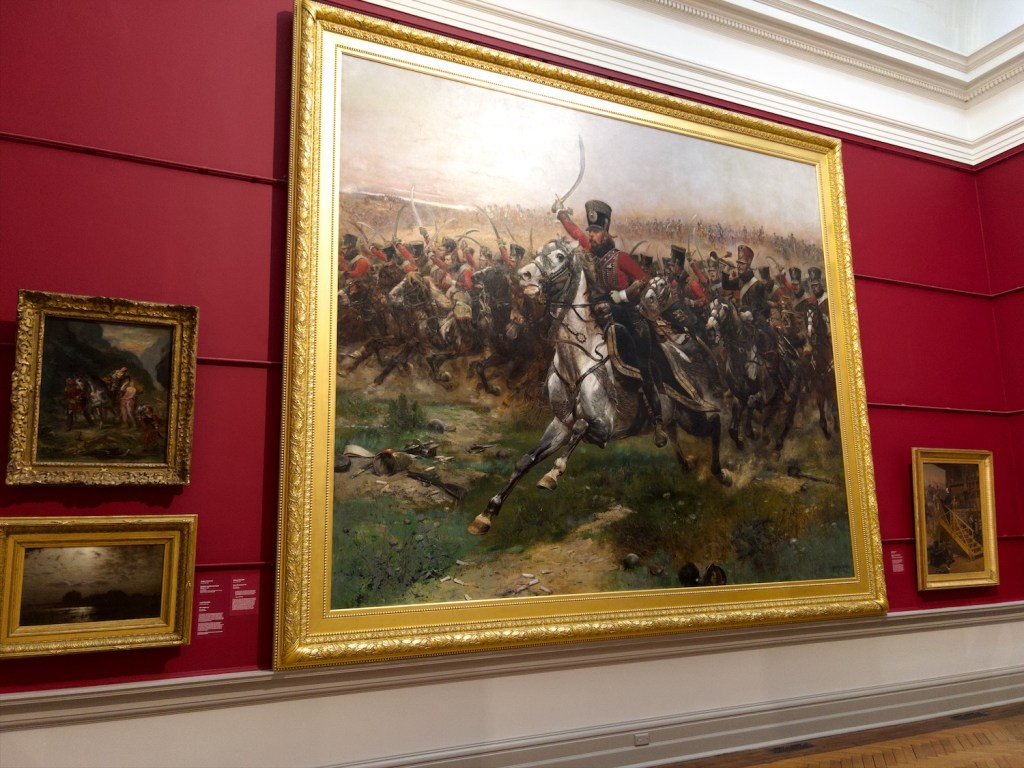
I mentioned travel above, I ducked over to Sydney for a few days to see a concert at the Opera house (a metal band would you believe!). I took the opportunity to visit some museums and the art gallery there and wanted to share this humungous painting of some Napoleonic cavalry by Édouard Detaille.
The painting is something like 4.5x5m and dominates the room. You can get a better view of the painting itself on the gallery’s website (https://www.artgallery.nsw.gov.au/collection/works/4560/), but hopefully my photo gives you a sense of scale! The whole gallery was very inspirational, plenty of ideas to pinch for hobby projects!
I’ve had a productive week, getting a fair bit built and painted. I’m still inspired by the idea of playing out a big game set in Warhammer’s Storm of Chaos campaign, specifically the battle that occurs as part of the relief of Middenheim by a combined army of Empire, High Elves, and Dwarfs. It sounds like a great excuse to break out our collective collections and play a very large game for most of a day (using the Midgard rules).
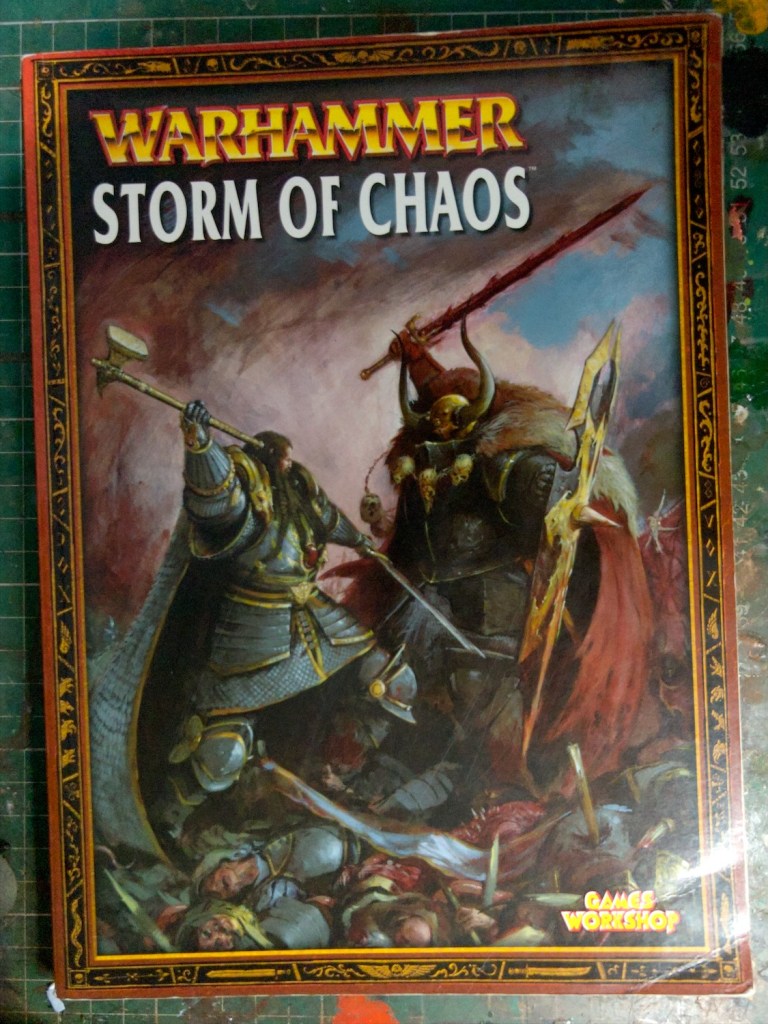
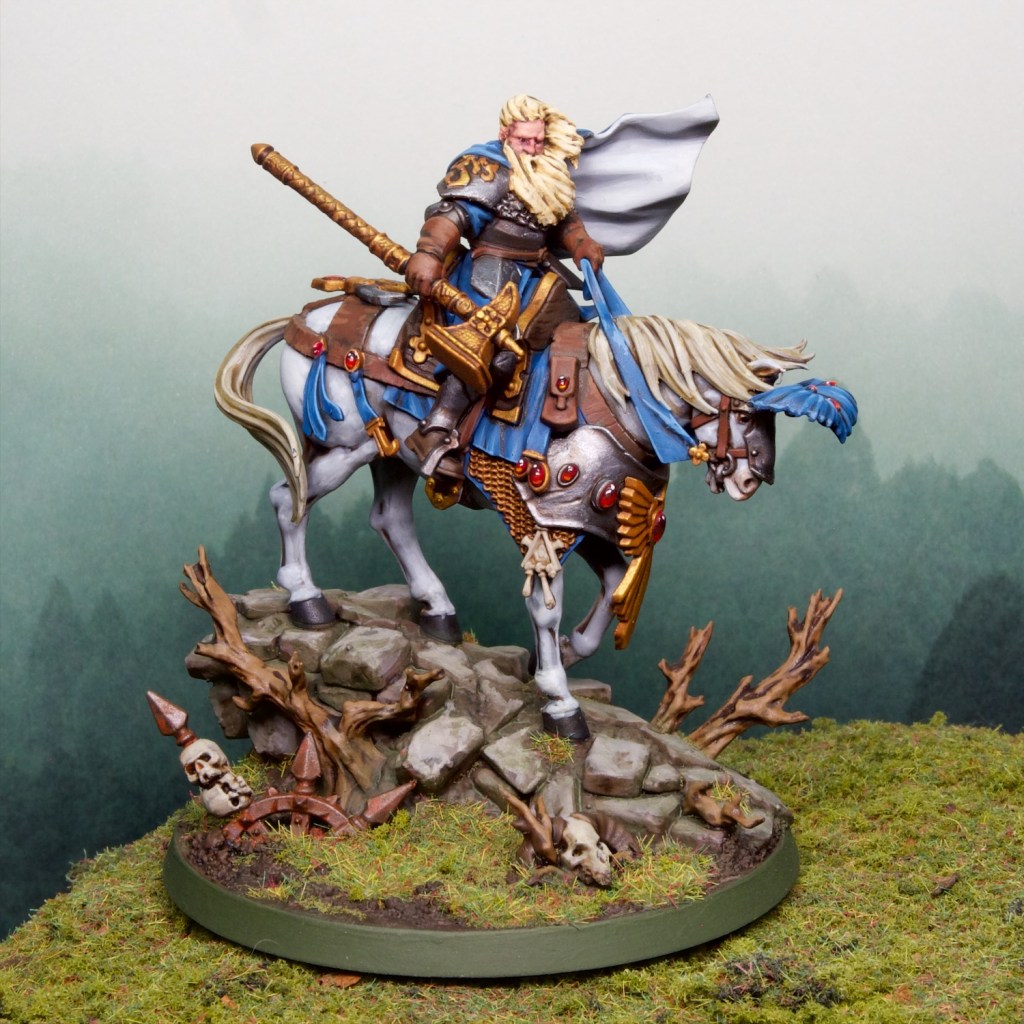
For those not in the know, Middenheim is a big city built on a mountain in the Empire, and is the target of a very large Chaos invasion led by Archaon, the biggest baddest Chaos champion. Middenheim is pretty much impregnable because of its natural defenses so the Chaos forces settle down for a long siege. Meanwhile Karl Franz, the emperor (of the empire!) gathers an army to relieve the city, with troops from many provinces of the empire. Along the way he’s joined by a Dwarf army and a High Elf army who both recognise the threat posed by the Chaos invasion. Alongside Karl Franz is Valten, who as a young man single-handedly wiped out a beastman attack on his village and has since been hailed/raised as Sigmar (the chief god of the empire) returned. There’s a whole interesting sub-story a to whether that is the case or not, but regardless the powers that be seem to buy into the story (or at least realise that if the people believe it it doesn’t make much of a difference). As a result, Karl Franz gives Valten the warhammer (the one on the cover of all the books), Ghal Maraz, and when the elves and dwarfs join up with Karl’s army, they also gift equipment to Valten, the dwarfs give him a suit of armour (that was orginally meant for Sigmar himself) and the elves a mighty steed (sired by the horse of Tyrion, the greatest high elf hero).
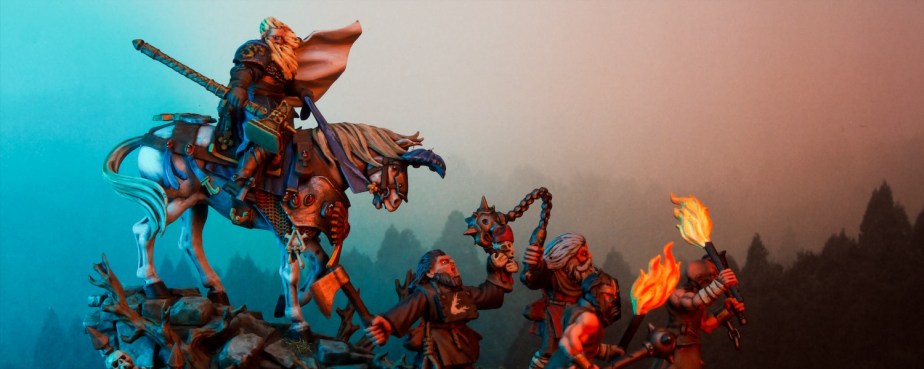
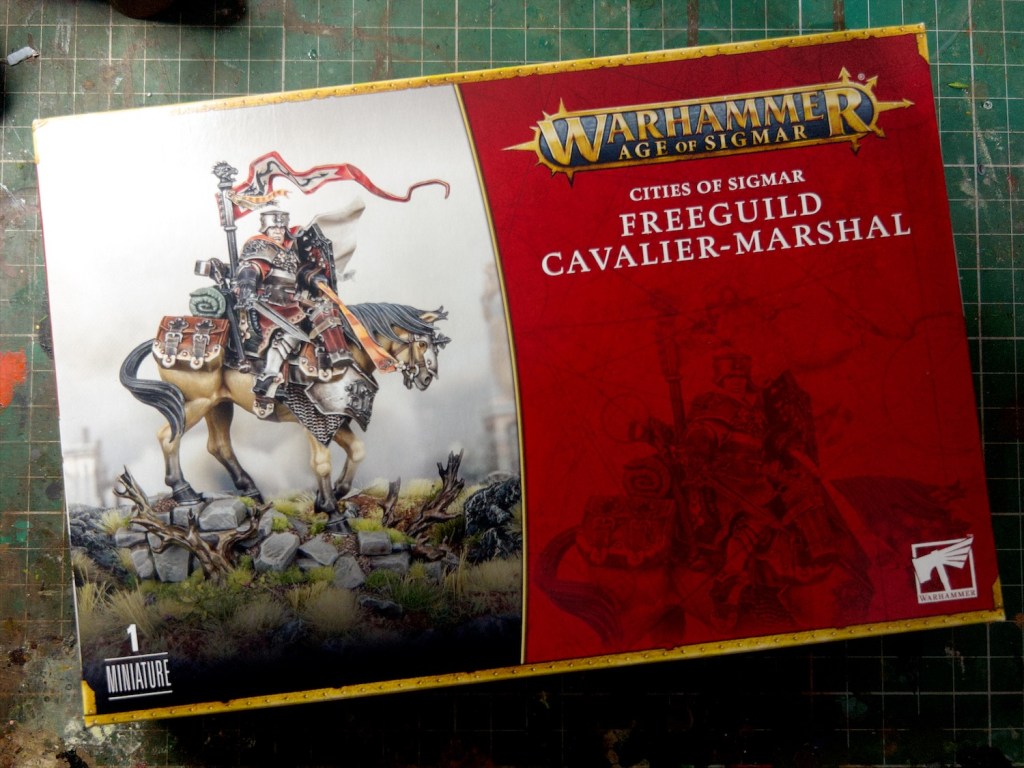
The reason I’m telling you all this is that I built and painted a custom model for Valten, and tried to capture the story in that model. Valten had a model at the time of release of the campaign book (~2004) and I think was re-released as a Finecast model during that later era. I was scouring ebay for the model and despairing slightly at the prices (and postage, UK or US to Australia is veeery expensive these days). After some deliberation I decided to just convert my own out of a model I’ve had my eye on for quite a while: the Cities of Sigmar Cavalier-Marshal.
The character of Valten is a bit of a tragic, maybe reluctant hero in my mind, the cavalier model really has a weary look to it that I think really fits Valten so it seemed like a great base for the model.
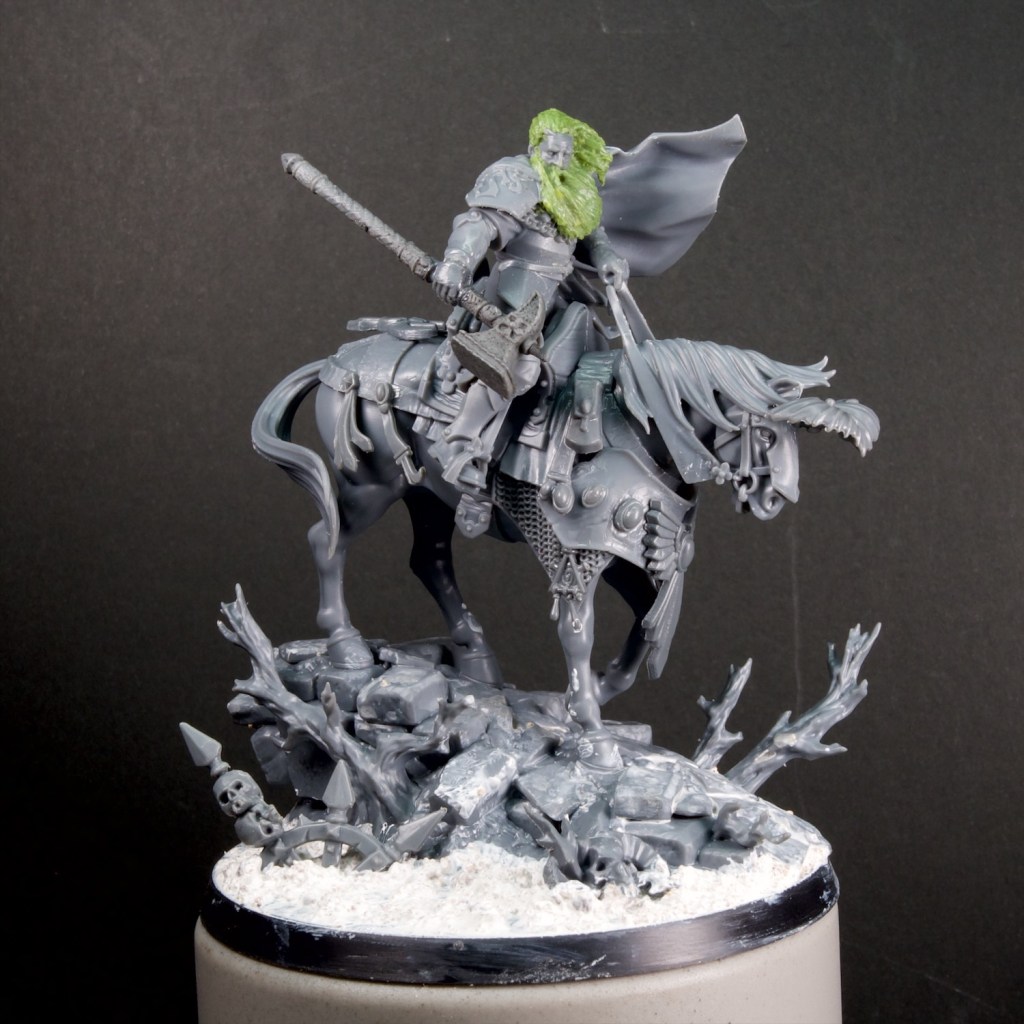
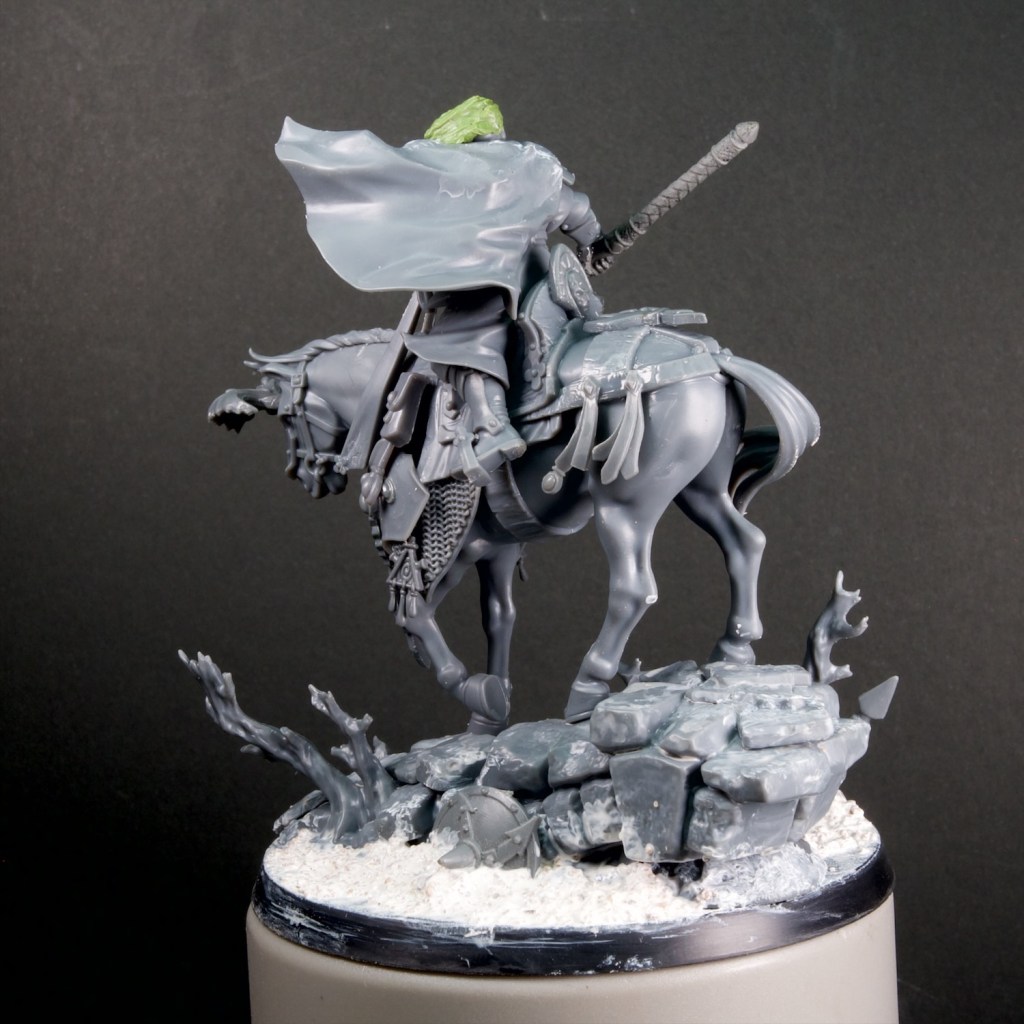
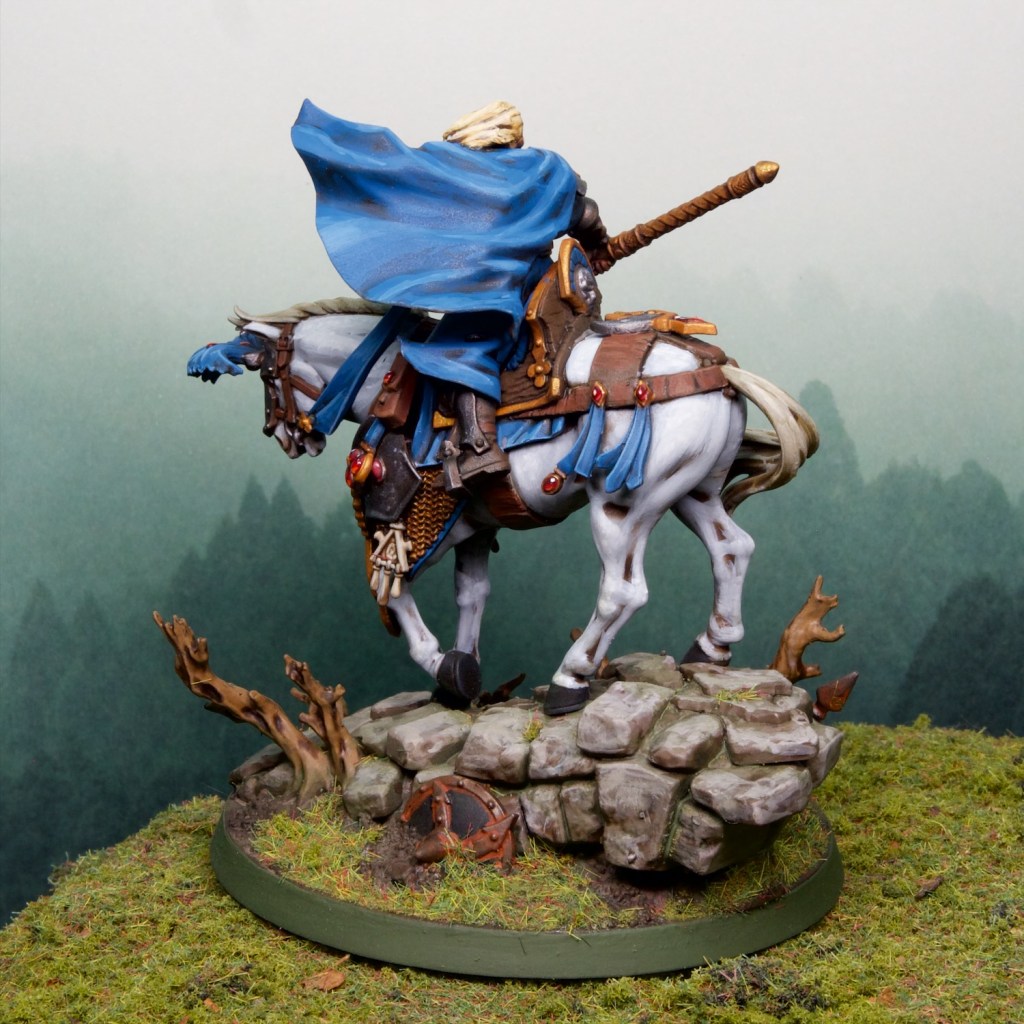
I removed as much iconography off the horse as I could and added lots of spare high elf bits I had big around to sell the horse as a gift from the elves. I kept the armour on the rider as is, the cities of sigmar range armours have a very angular look to them which I think is good for a dwarven made suit of armour.
For the head I liked the expression on the Cavalier model, but Valten has long hair and a long beard, while the Cavalier is clean shaven and short haired. So I decided to do something I do rarely, which is to sculpt! It was a bit daunting to build up this centrepiece model and to try my hand at something new right on its face, but I found this very handy tutorial by Valbjorn on YouTube and at least I knew I was going in with a plan. The result is ok I think, a bit rough in some places (not helped by the age of my green stuff) but it does the job!
For the painting stage I stuck to blues, whites, and gold as a scheme. This is how the original model was painted and helps with the whole Elven influence on the horse.
The cavalier model comes with a very cool scenic base meant to fit on an oval base. I decided to go for a 60mm round base instead so had to fill out some of the extra space. I cut up some chaos bits and blended everything in using a mix of acrylic paste and sand.
Overall I’m very happy with the model, was fun to get kit bashing and even do a bit of sculpting. It’s been a while since I painted a bigger character model and that’s enjoyable too. Getting to spend some more time on some of the details I would usually keep simpler for regular army models makes for a nice change.
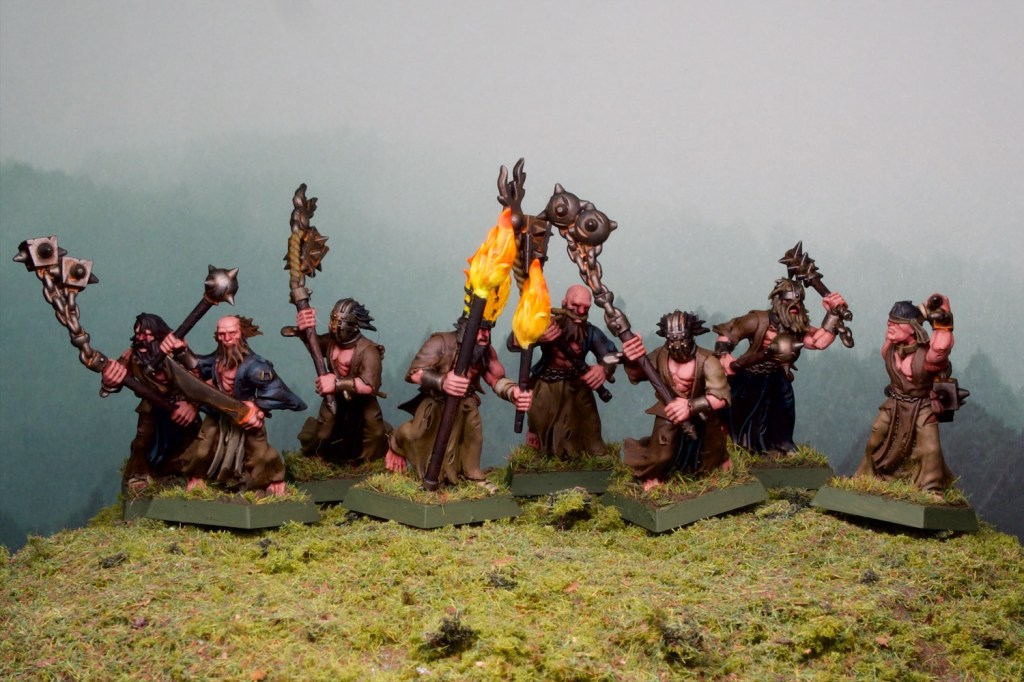
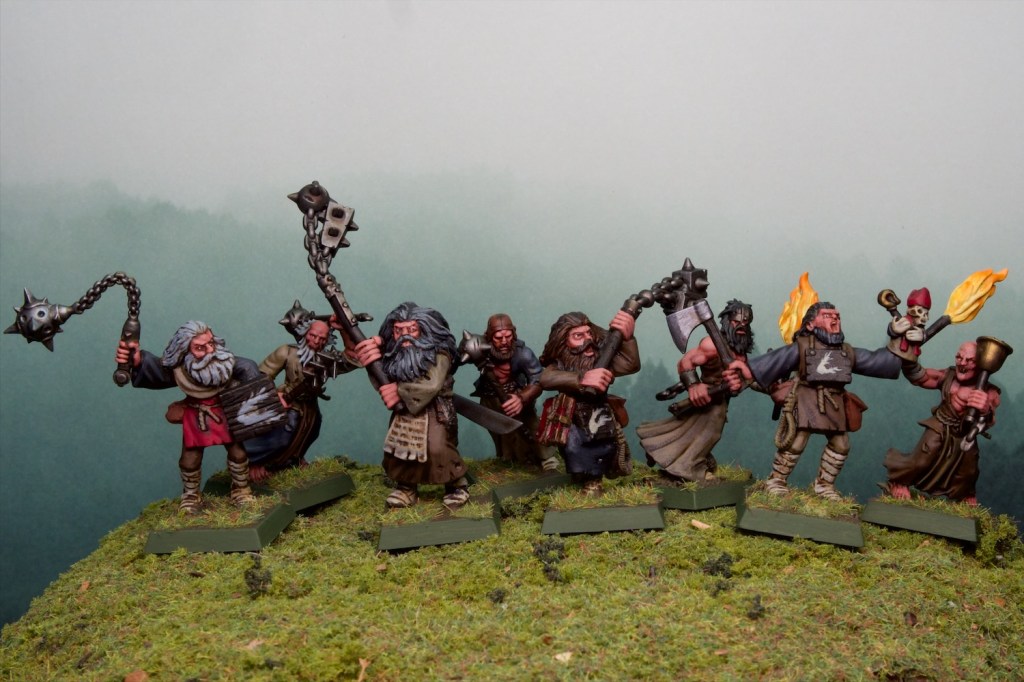
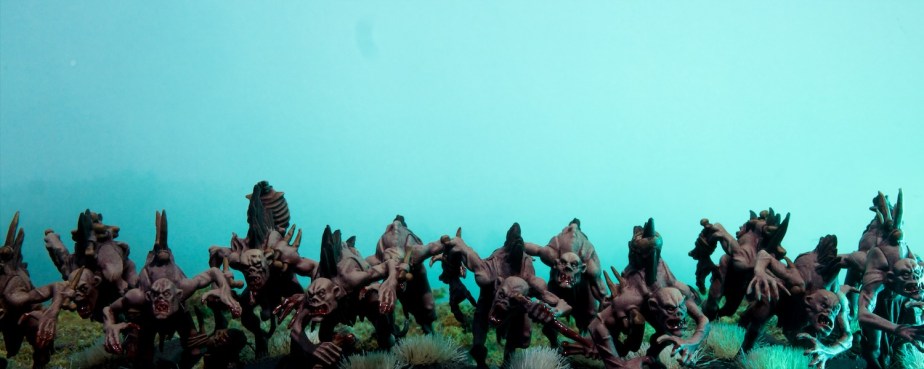
Valten is not all that I finished this week, I also painted up the first batch of some Flagellants for that same empire army.
Four of these are originally Mordheim models, some of the first models I ever bought in fact, as part of the Witch Hunter warband for the game. They’ve seen a lot of mistreatment throughout the years, and all had some breakage over that time, so I fixed them up with some plastic parts. The other four are from the current (still 10+ years old I think), plastic flagellants kit. I have another 8 to paint up of these, for a future update.
There you go, busy week but I’m happy with what I got done!
Ever since my experiments playing Warhammer with Midgard rules I’ve been thinking of fun “historical” battles we could re-create. One that’s stood out is re-fighting the siege of Middenheim from the Storm of Chaos campaign. As a group we have plenty of miniatures we could use, except a proper Empire army, which given they’re the primary force on the “good” side is a bit problematic! Luckily I have plenty of empire models, but none that are really painted.
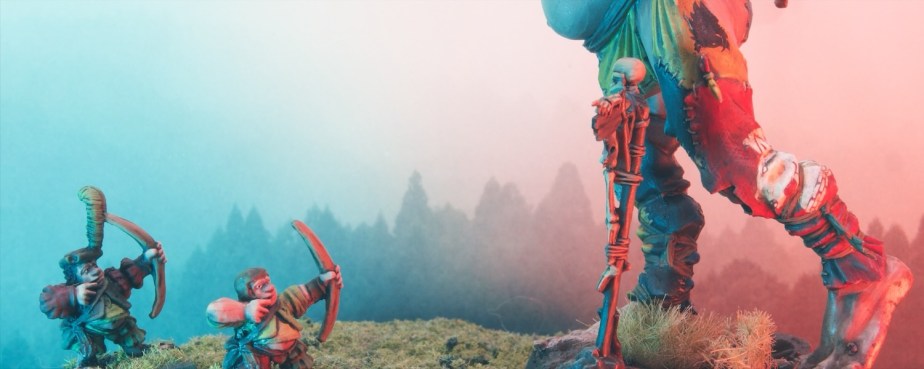
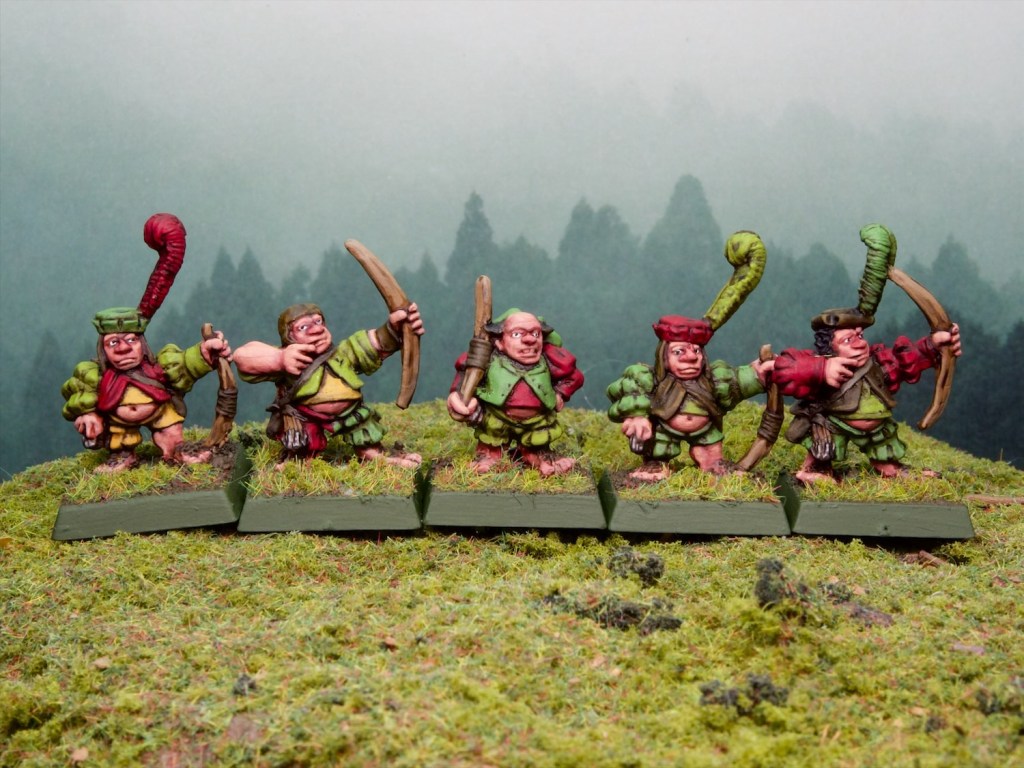
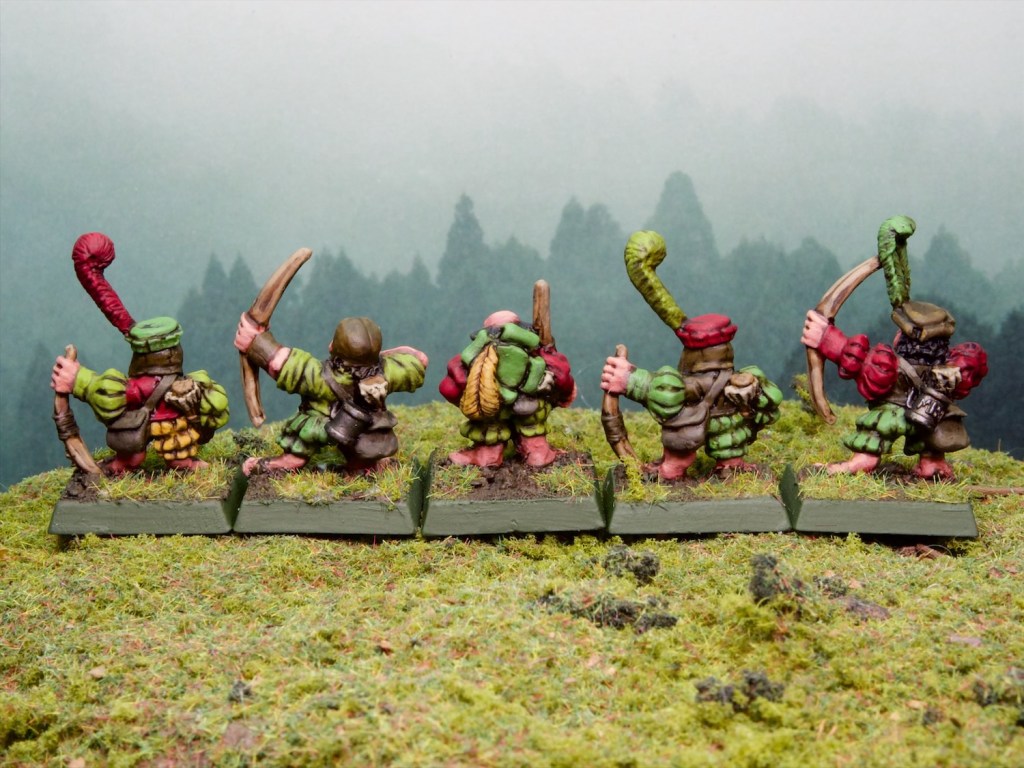
With the idea of “painting Empire models” in mind, I went scrounging through my reserves and found this small unit of halfling archers that have been sitting in a case for 15 or so years. They seemed perfect, I had a few hours to myself and they’re quite small models they seemed paintable in the allotted time.
They’re fairly old models from the Empire range, and I’m not exactly sure when they date from but I found them in a 1998 catalogue on Solegends so that should give you a rough idea.
I painted them in the colours of the Moot, the halfling province in the Empire. The uniforms are primarily green and red, but some of the guides show yellow as a spot colour so I added that too. I went for two different shades of green to keep things interesting, with the lighter yellower green being Scale75 Sherwood Green and the darker being Vallejo Game Color Goblin Green. The red is Vallejo Heavy Red, the yellow Heavy Goldbrown. They were quick to paint, I think roughly 3 hours start to finish which is a nice rate. The base rims are Scale75 Ardennes Green.
I might keep on chipping away at Empire units like this, with different uniforms rather than having only one province for the collection. Another good motivation to paint some of the pile of shame!
In other news I published another small booklet over on itch.io, this time a set of forest-themed adventure hooks for role-playing games https://lair-of-the-lagomorph.itch.io/woodland-adventures. It’s not miniatures related (although I suppose you could use it to generate wargaming scenarios in forests!), so I won’t go into it too much here, but feel free to check it out of interested.
I’ve been talking a decent amount about Midgard Heroic Battles over the last few posts, and that’s unlikely to change as I’ve been thoroughly enjoying the game. Part of what’s made it fun for me has been the flexibility and general simplicity of the ruleset. It’s meant that for the last few weeks, units that I haven’t put on the battlefield for years have been taking part in some really fun games.
While most games we’ve played so far have been Lord of the Rings themed, we’ve been wondering if the rules would work well for games in the Warhammer setting. While we enjoy the new Warhammer the Old World rules, they’re quite complex and don’t necessarily make for a beginner friendly game. We have a few friends in our gaming group that are not wargamers (board games and roleplaying games are their usual fare), and haven’t really been interested in playing Warhammer before. They have however been enjoying the games of Midgard we’ve been playing, and have been happy to play more, which is great news for me!
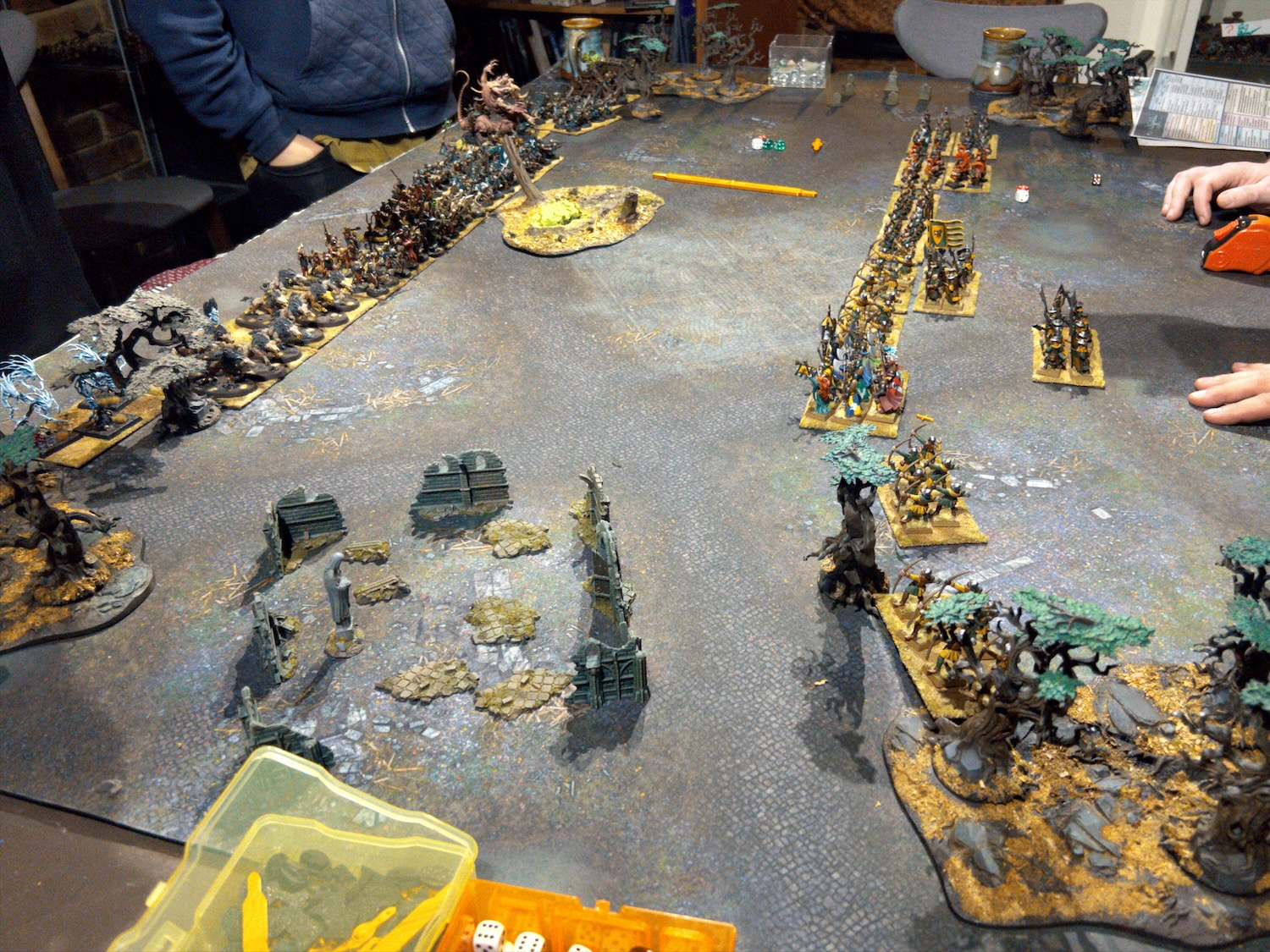
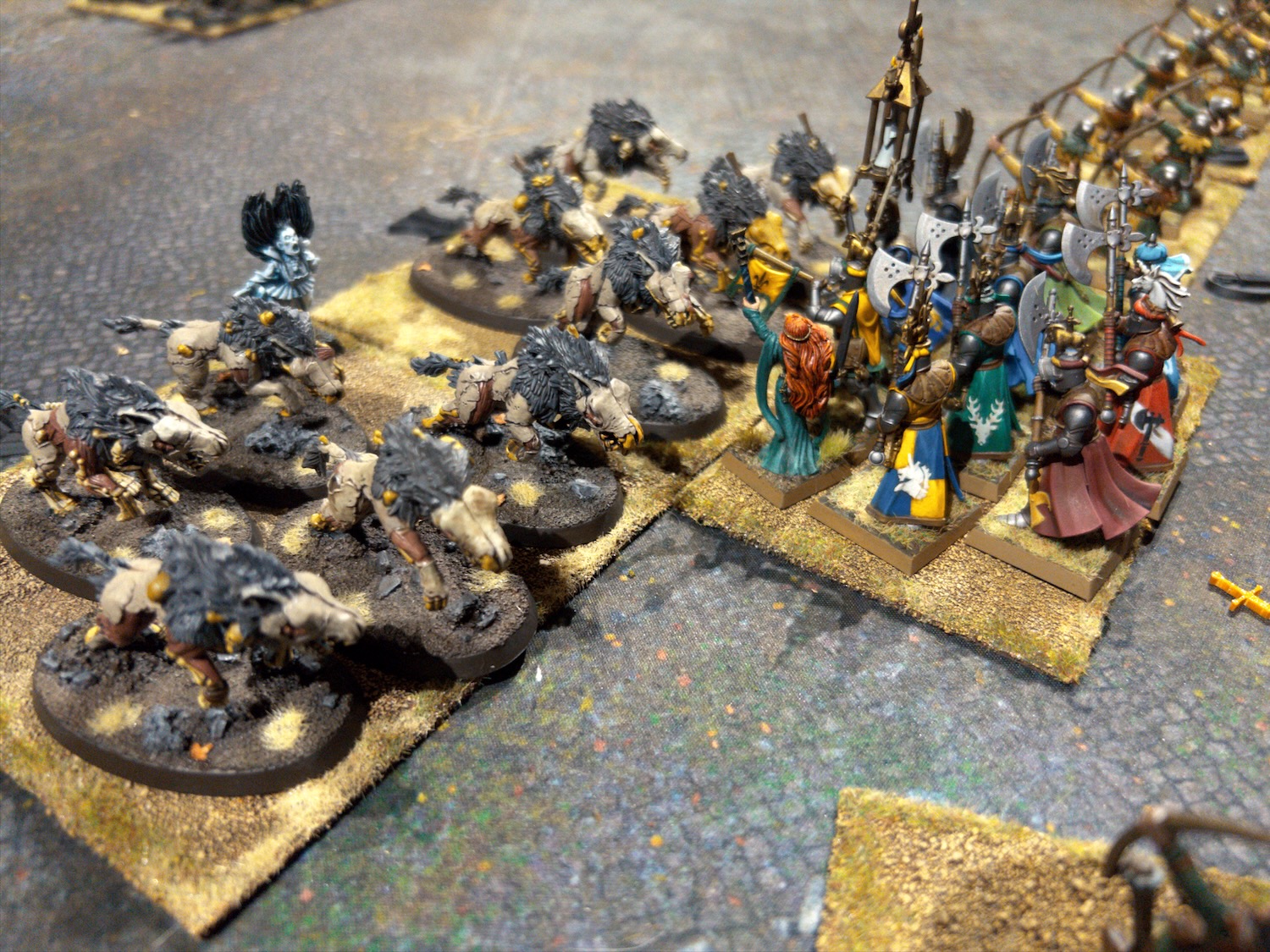
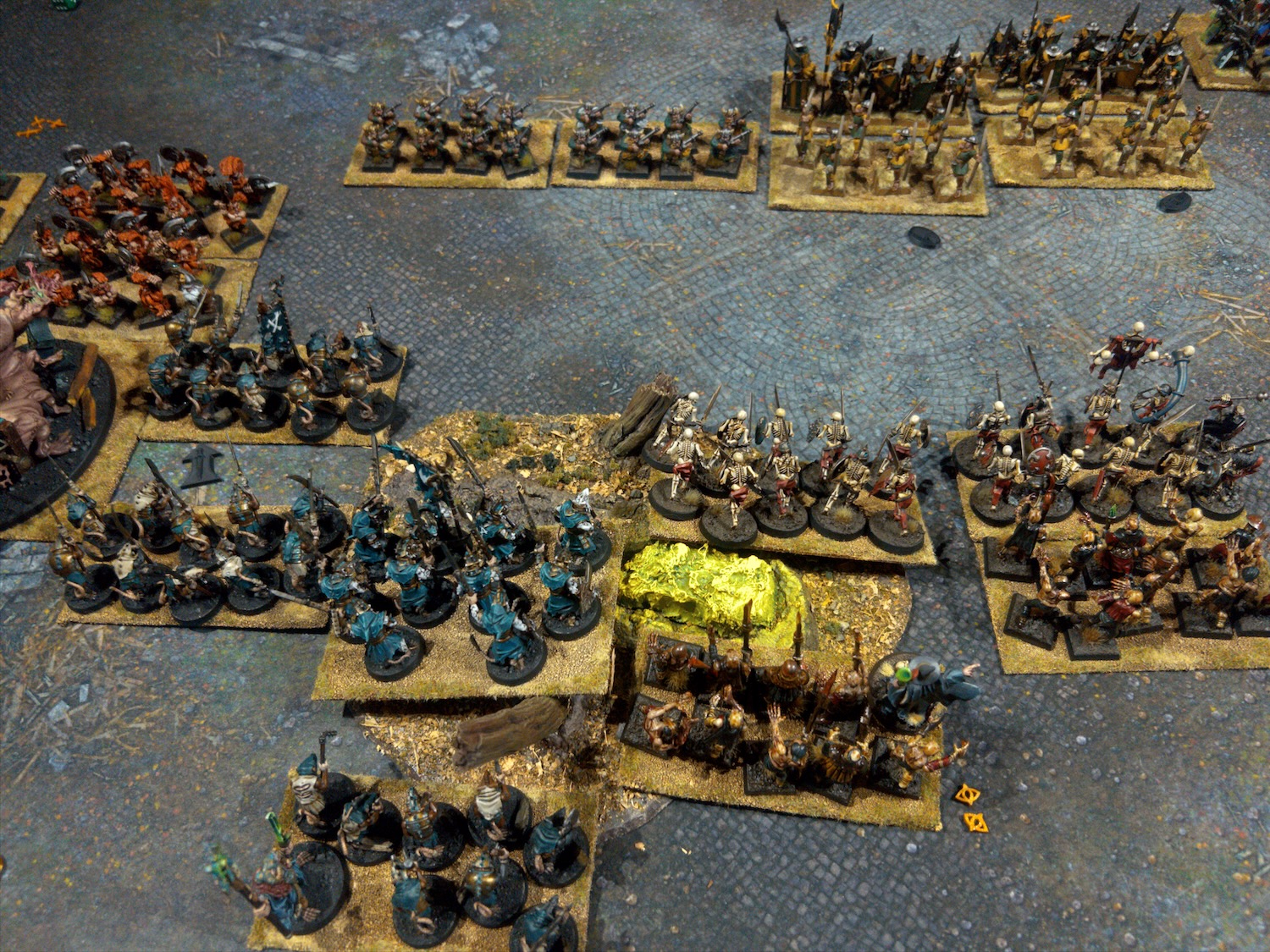
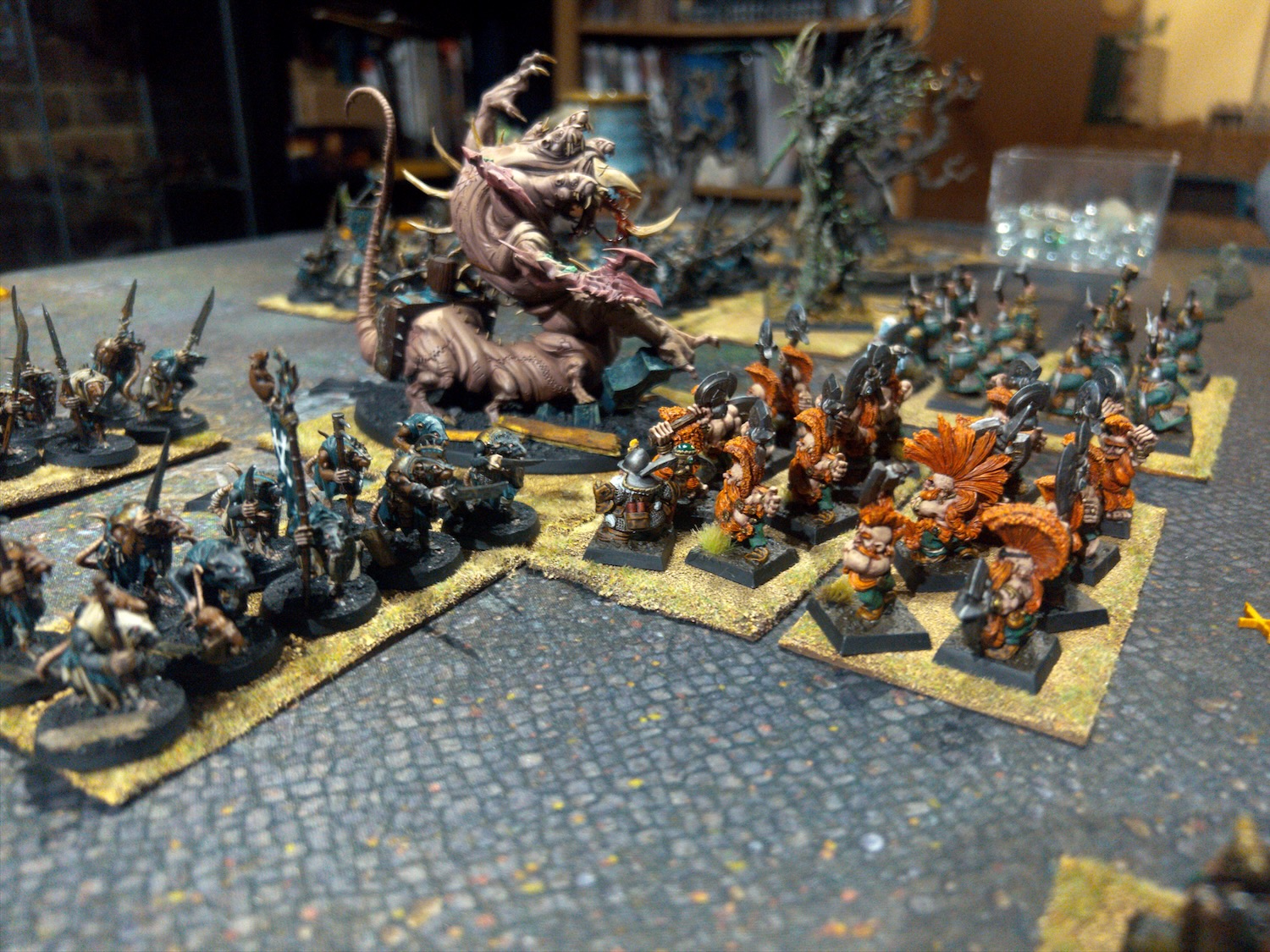
This week I had a few of those friends over and we played a big game involving four armies: a loose alliance of Skaven and Undead against Dwarves and Bretonnians. Two of the players were wargaming novices, one is relatively new, and one is an enfranchised wargamer. I was running the game as a games master. Despite the lack of experience of most of the players, and the relatively large size of the game, we comfortably got through the game in an evening which is a testament to the rules.
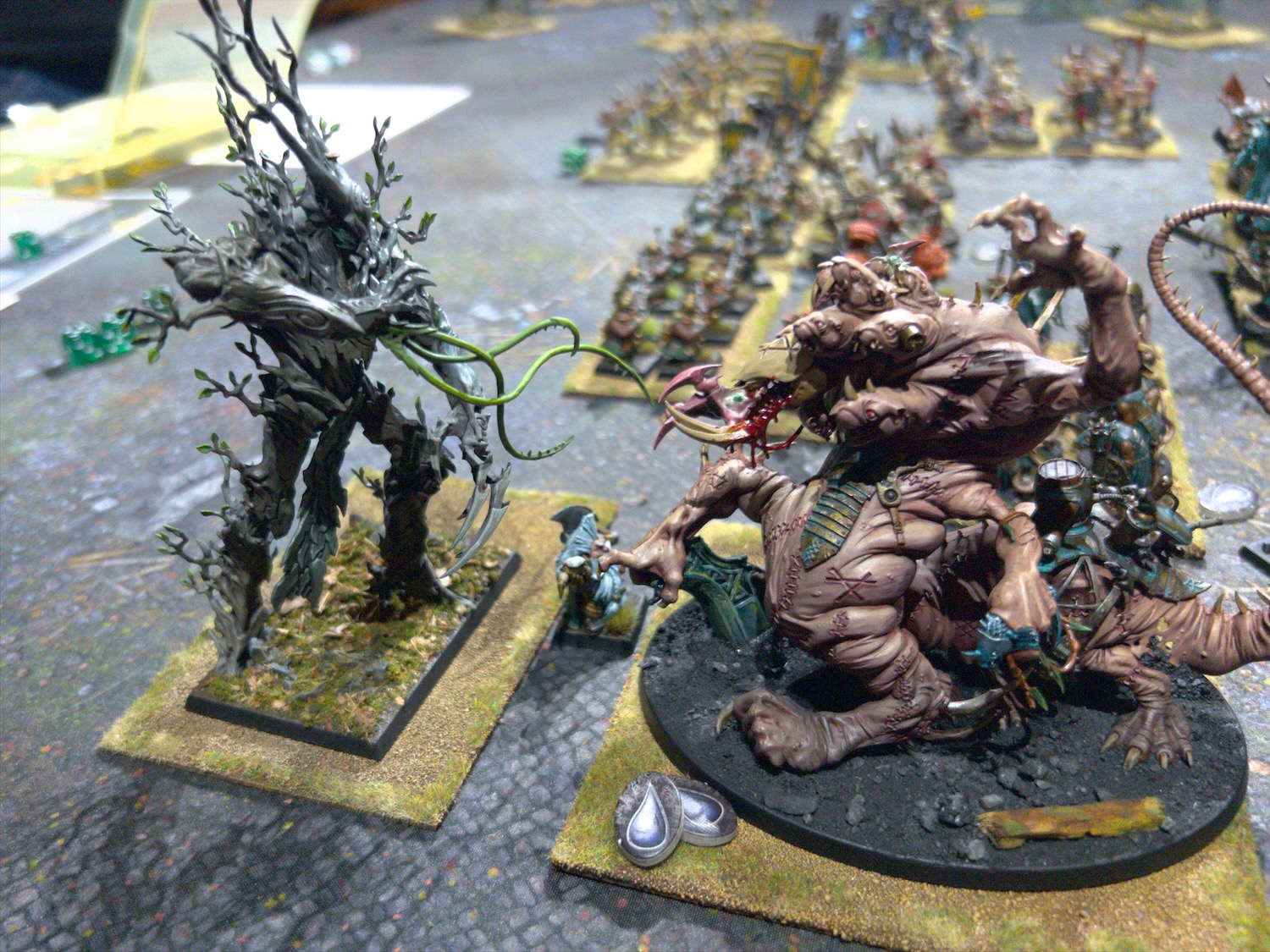
The scenario I set up was as follows: the Skaven and Undead armies needed to hold onto a warpstone meteor while the Dwarf/Bretonnian alliance needed to get them clear of it. To spice things up some, I placed four isolated trees on the board (i.e. not on the forest bases), and after turn one revealed them to actually be treemen who were generally opposed to the idea of big battles being fought in their forests and went after whatever unit was closest. Despite this extra chaos the game was extremely close and ended with both sides within a single reputation point of each other (reputation tracks your force morale, if it’s at or below 0 at the end of the turn, you lose the game). The Skaven/Undead forces won the day, but it really could have gone either way.
Overall, the game was a success I’d say, all the players enjoyed themselves, the game was fun, and it generally felt like playing Warhammer without the big rules overhead. What was missing however was some of that Warhammer atmosphere that is generated by things such as wizards miscasting and Skaven wargear blowing up. Midgard as a low-fantasy/historical wargame does not really cater for this out of the box, but it is easy enough to add some house rules to capture this, and I’ll be doing that going forwards.
After this successful foray into playing Warhammer with Midgard, I’ve been excited about the possibilities. As I said in the opener, Midgard is a very flexible game system, and looks to be able to cater for some of the more esoteric things that can be found in the Warhammer setting and are not catered for in the normal Warhammer rules. With that in mind I’ve been reading through the late 80s/early 90s Realm of Chaos books which are probably about as esoteric as Warhammer gets (I’m sure I’ll be shown something more esoteric in the comments!), and having a great time imagining what that could look like in a game of Midgard.
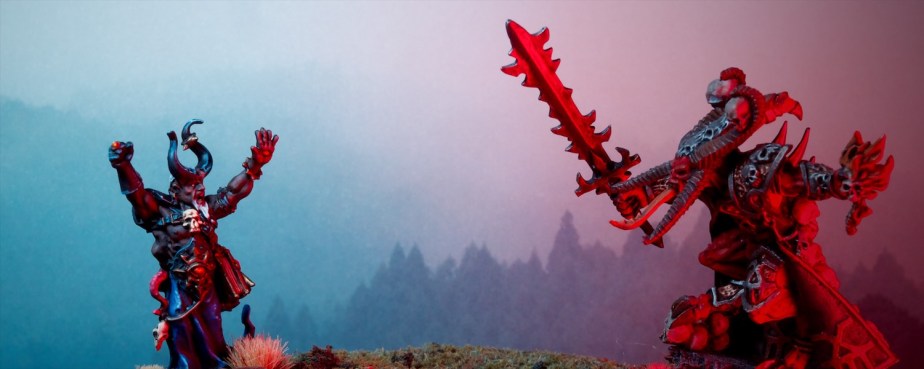
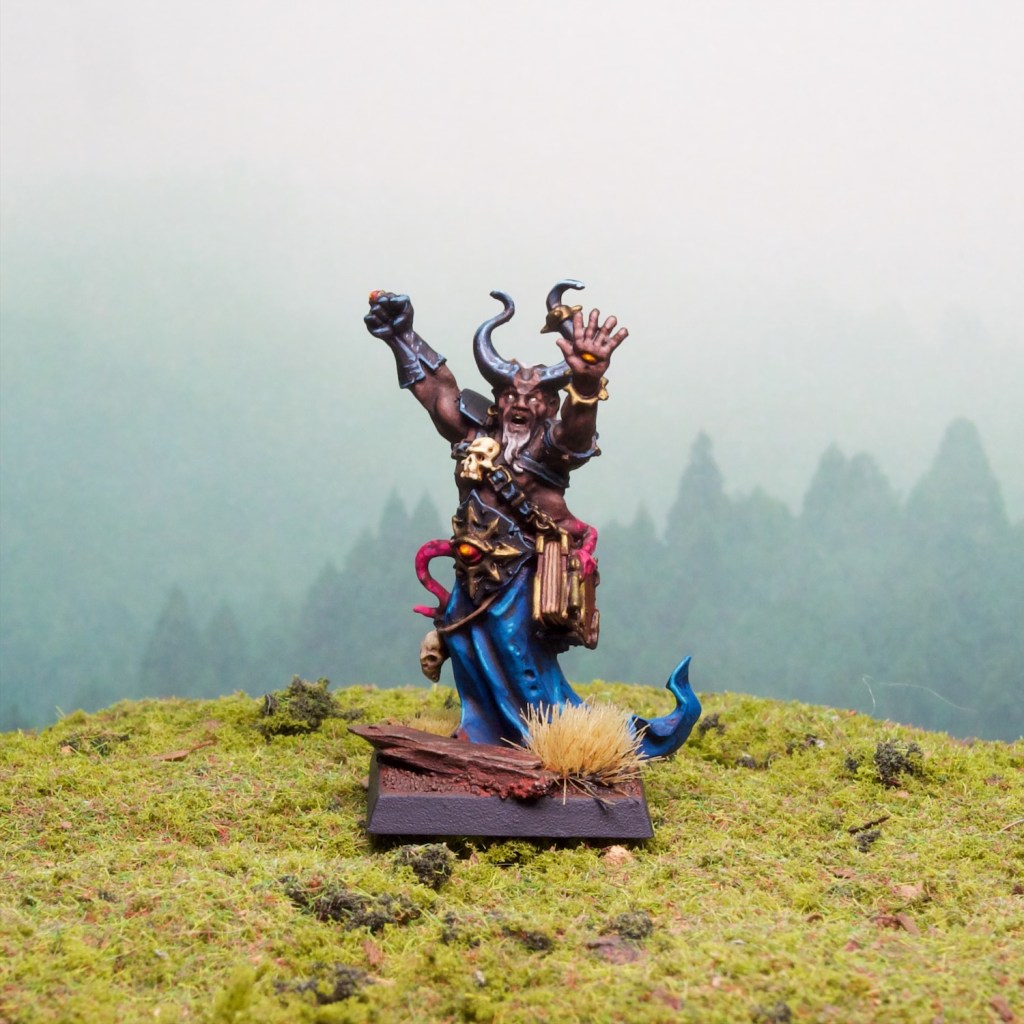
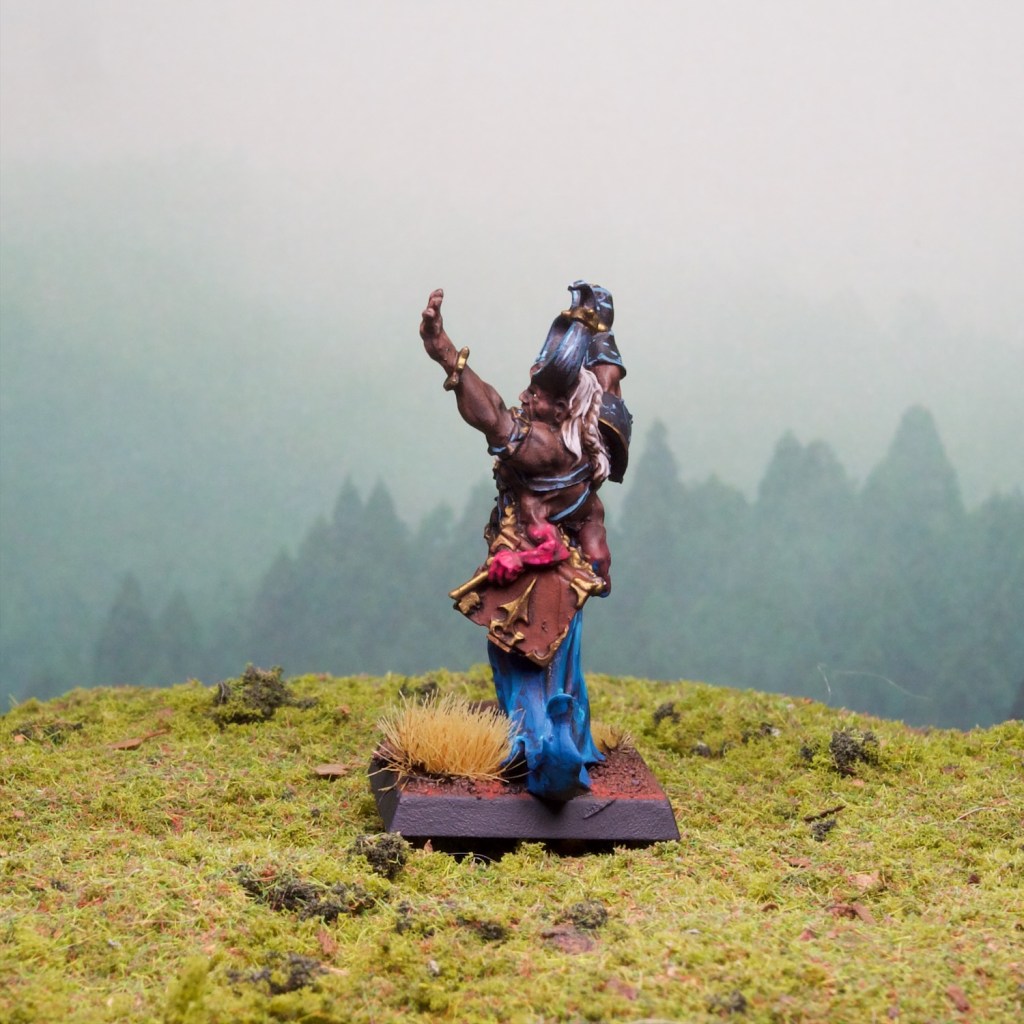
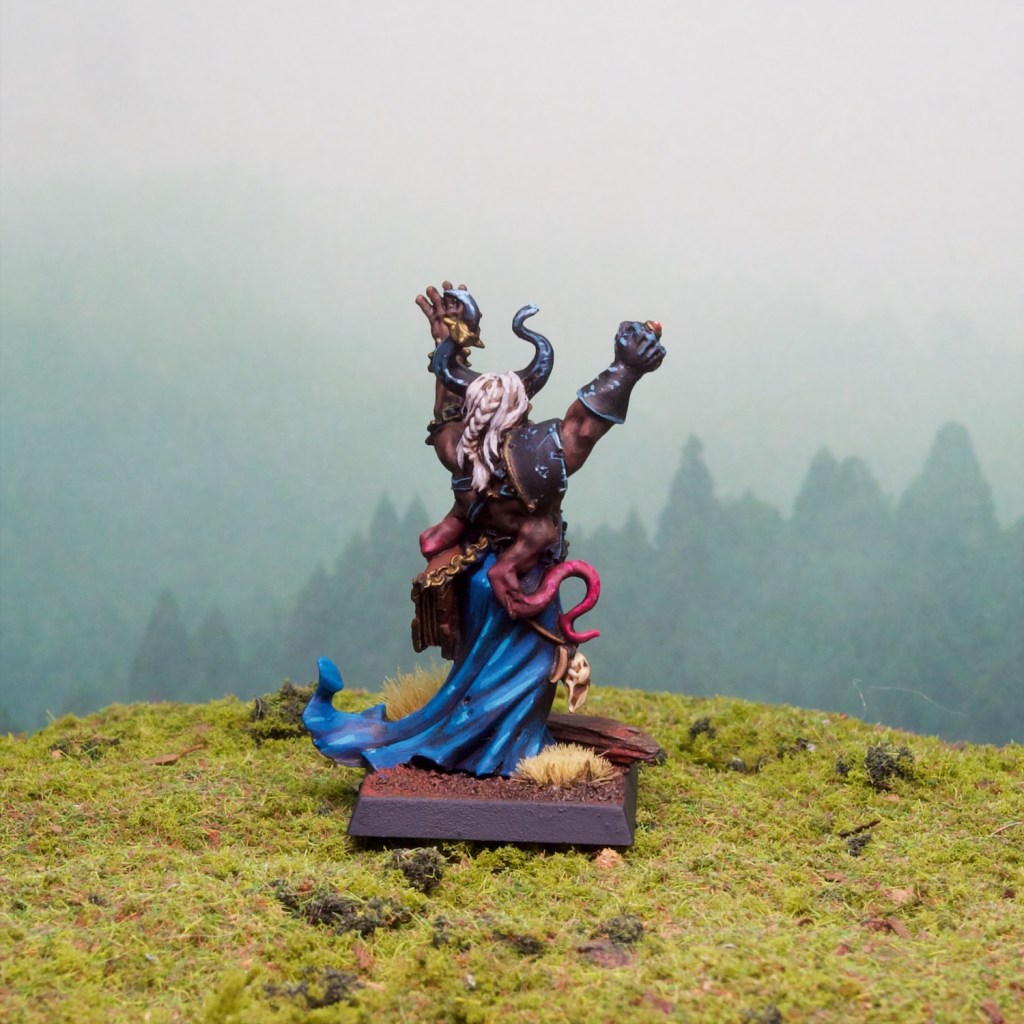
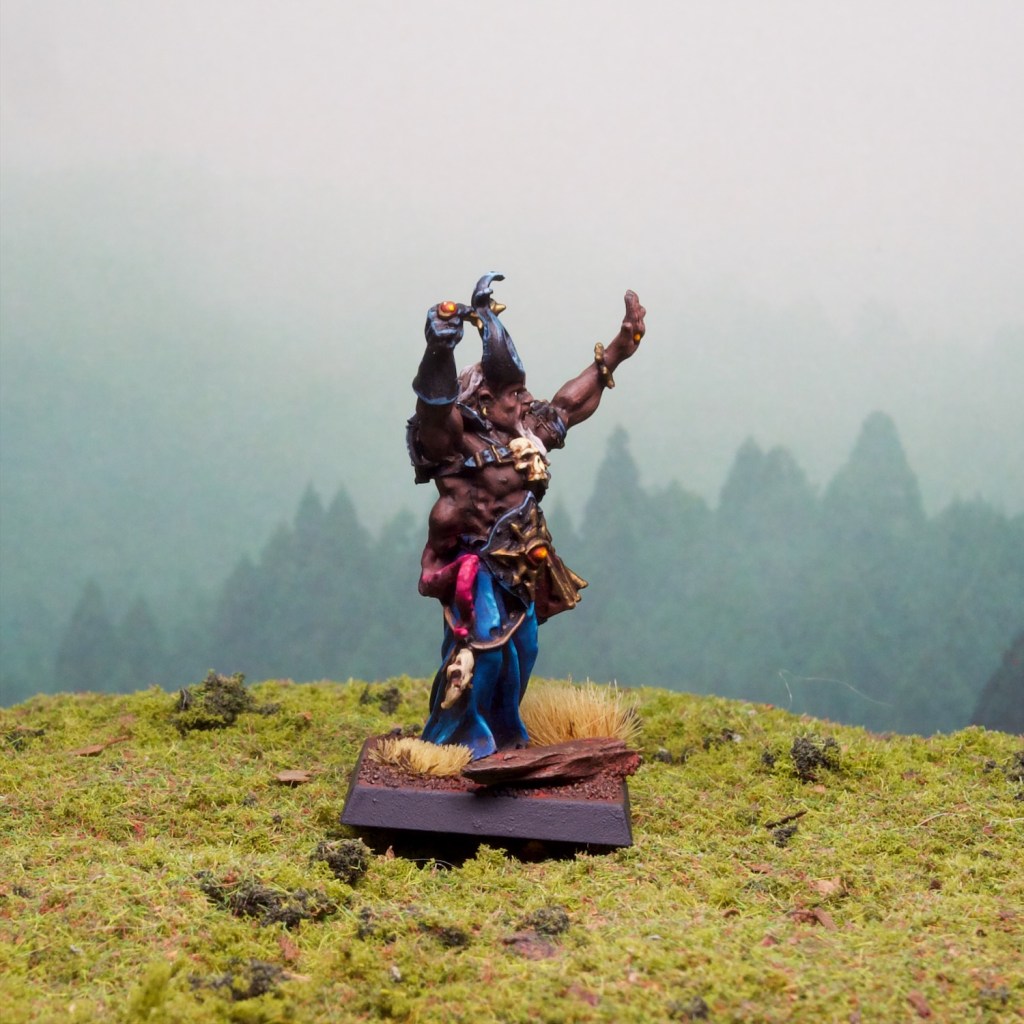
Needless to say some of this energy was redirected towards miniature painting, and in this case towards this Chaos Sorcerer that I found in a case while scrounging for Chaos models for my Midgard/Realm of Chaos plans.
This is a really cool model that was released for Games Day 2010, and that I bought back then. It’s therefore been undercoated in a case for 15 years, and I was well past time I got some paint on him!
I had some fun with the skin (especially the parts with the extra limbs!). I’ve been trying to work on painting darker skin tones and I’d picked up some of the Duncan Rhodes/Two Thin Coats paints made for this purpose (Druid Flesh and Bard Skin). I really like how they worked, although I did feel they needed a touch of extra warmth so I glazed some Citadel Contrast Wyldwood over the top which did the trick.
The model has a lot of nice little details on it which were great fun to paint, the small hand holding the key to the book being my favourite.
I’m sure we’ll see this Sorcerer lead a Midgard contingent at some stage!
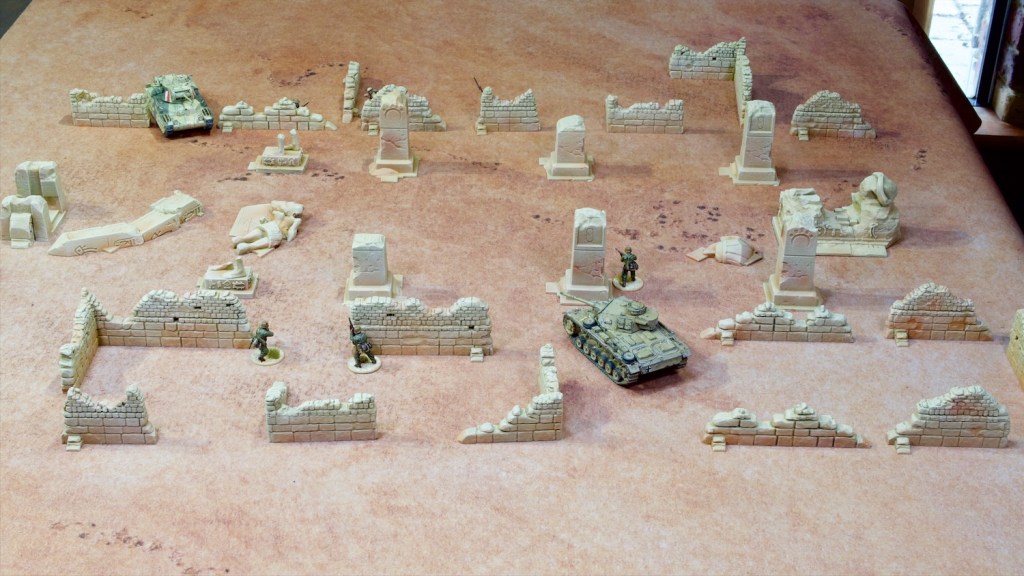
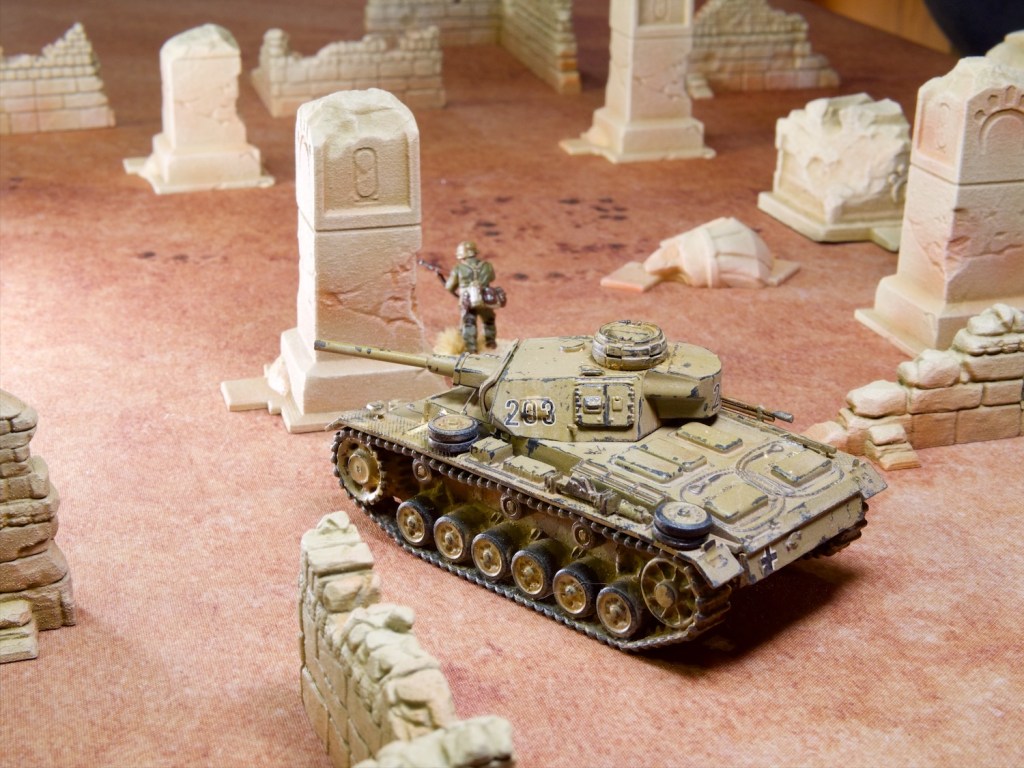
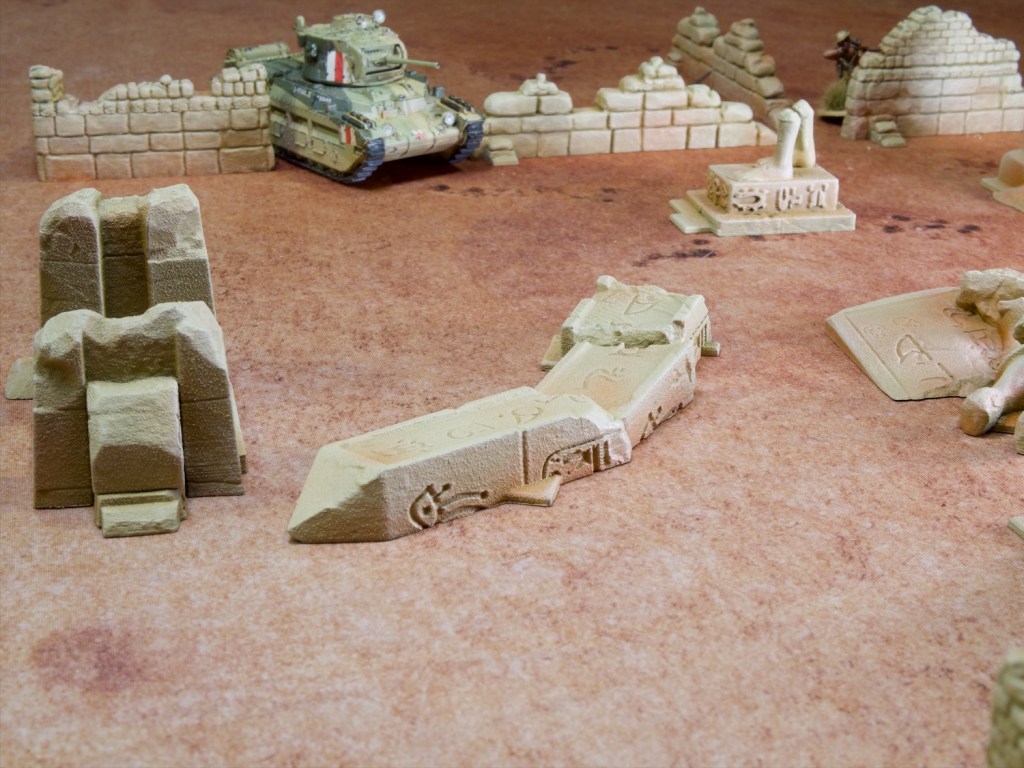
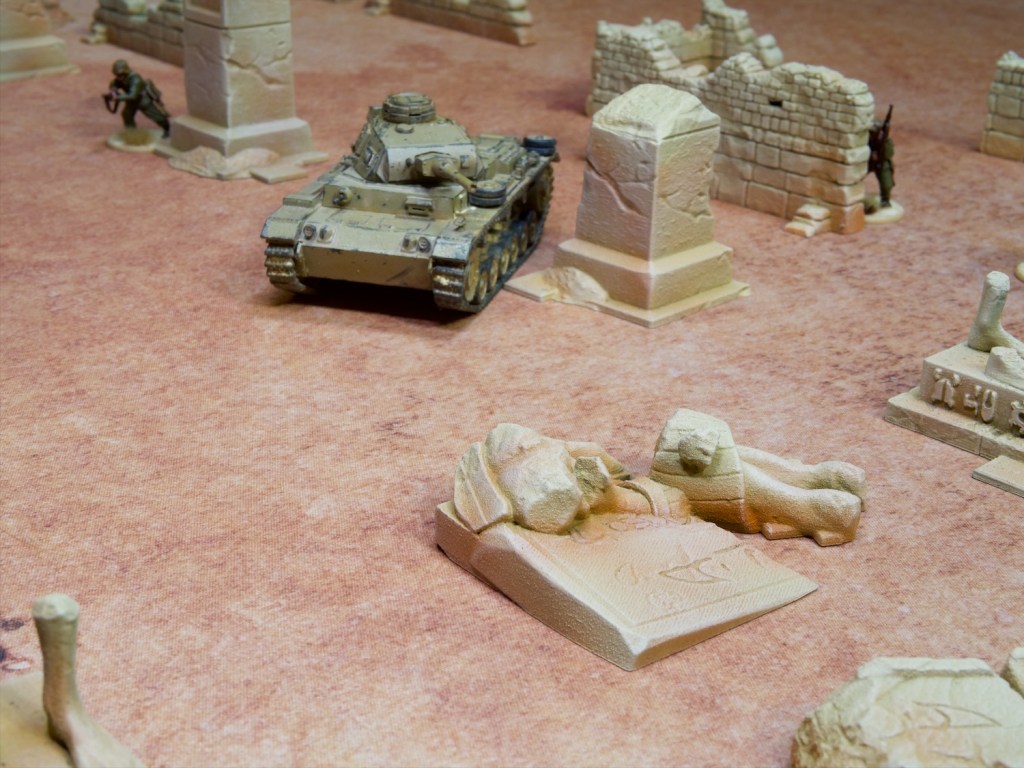
My 3D printer has been very busy these last two weeks, producing enough scatter terrain to cover a densely packed 3’x3′ area, or a more loosely covered 6’x4′ board. The theme: desert ruins, more specifically Egypt-like ruins.
The primary motivation for this effort has been the Silver Bayonet, I picked up the Egypt supplement a few weeks back and one of the North Star units for the game, and needed a nice set of terrain to play some of the missions. The good news is that I have a fair few other games that require desert terrain, such as Bolt Action for my North African forces, and Warhammer of course for my Tomb Kings.
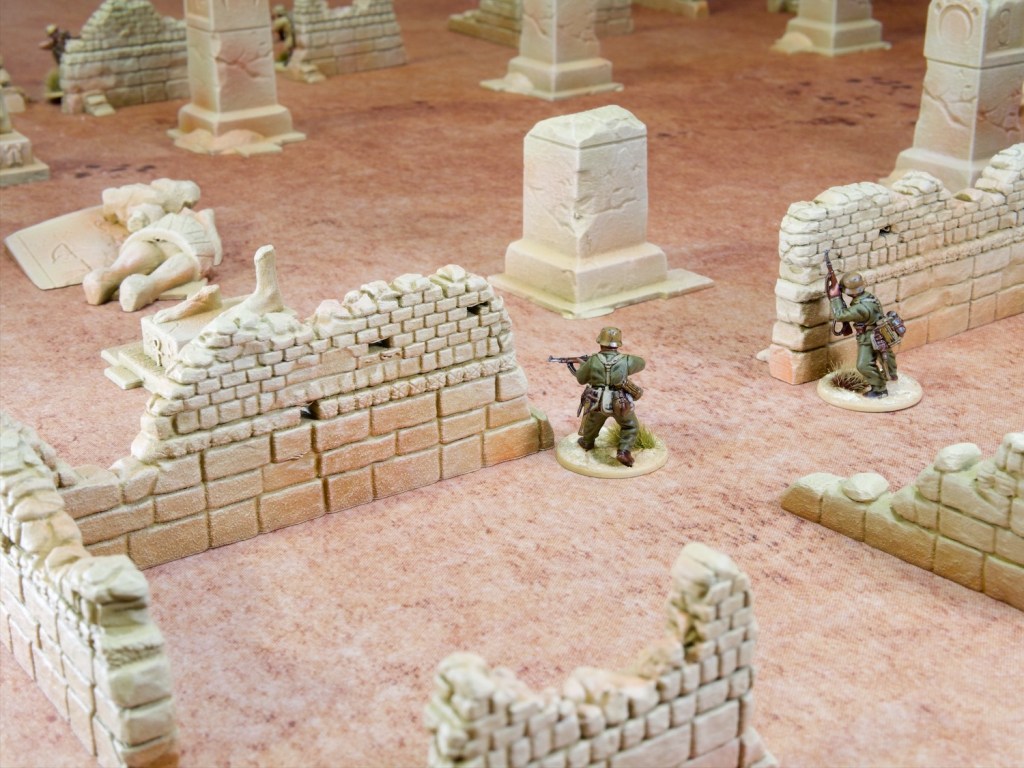
The models I printed were from two sets: the ruined walls are by The Lost Adventures Co., and the Egyptian statues/columns etc are by Txarli Factory. I printed the walls at 65% scale to make them a nice size for my historical miniatures, allowing them to peek over the lower sections of wall.
I undercoated all the pieces with an old can of Citadel Roughcoat which is a spraycan-based texture paint (and long out of production, I’d love to find a good replacement). This had the dual effect of hiding the print lines on the models, and adding some nice grit for that sandstone look.
Painting-wise these were pretty straightforward. I sprayed Vallejo Primer German Dark Yellow all over, followed by a top down spray of Vallejo Model Colour Dark Sand through the airbrush. I then drybrushed Vallejo Model Colour Dark Sand, followed by another drybrush of Vallejo Game Color Bonewhite. At this stage I popped the pieces onto my desert mat and realised they looked out of place as the mat has quite a bit of red to it. To remedy this, I added patches of Vallejo Skin Wash Ink using the airbrush, followed by another drybrush of Vallejo Game Color Bonewhite. I would probably have skipped the first Bonewhite drybrush if I’d known I’d be doing another, but sometimes you find things out and need to go again!
I’m really pleased with how these came out, the roughcoat really did a nice job of making the 3D prints more stonelike. The reddish tones also really tie the pieces to the game mat. Here’s a few more closeups showing off the different pieces:
A nice quick update after the longer last few posts. I do enjoy panting terrain as a nice break from more involved models. I’m currently painting up my Egypt campaign unit for Silver Bayonet (guess what nation!), and looking forward to playing some game with this new terrain. The Egypt 3D model set also comes with a sphinx and a pyramid so if I feel like filling out a bigger table I have what I need!
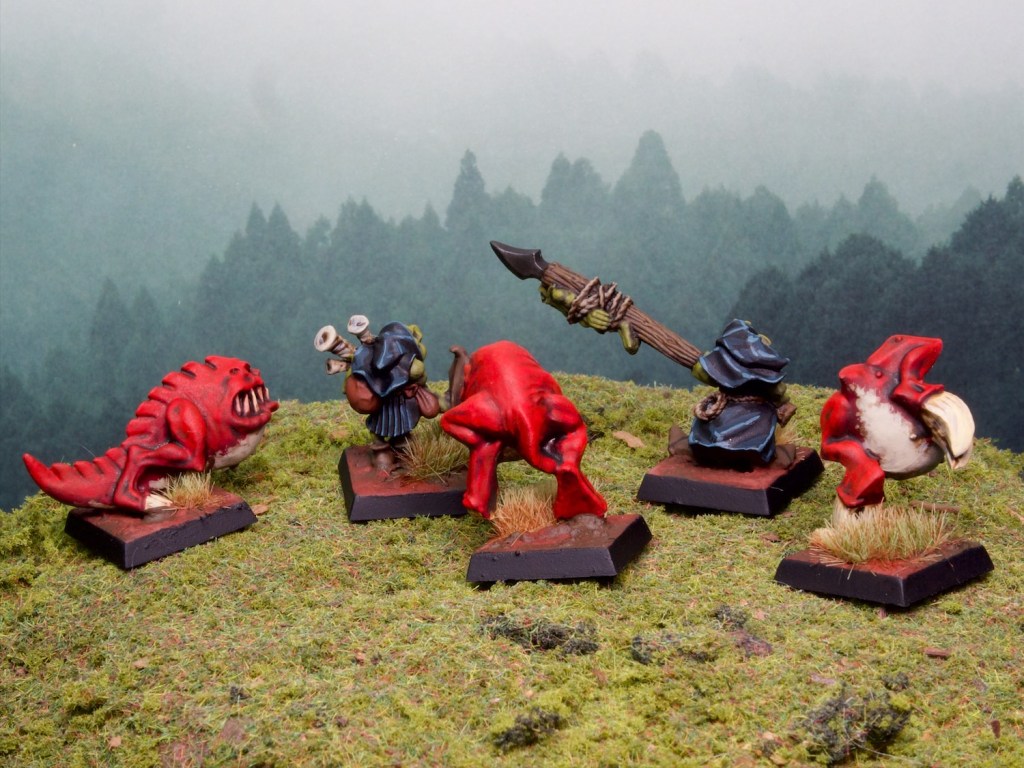
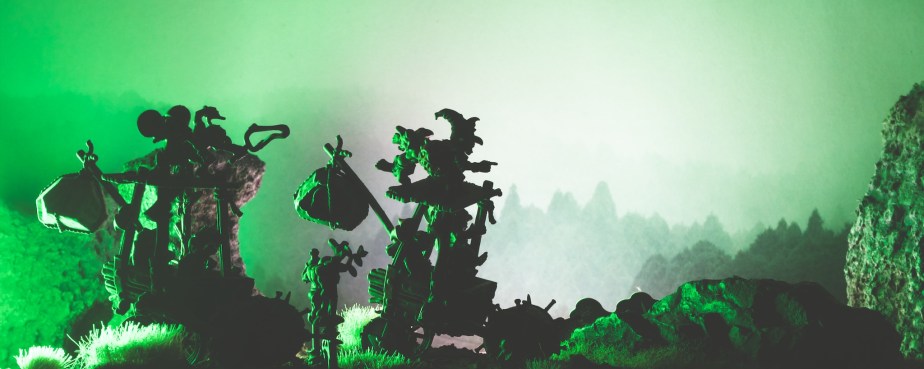
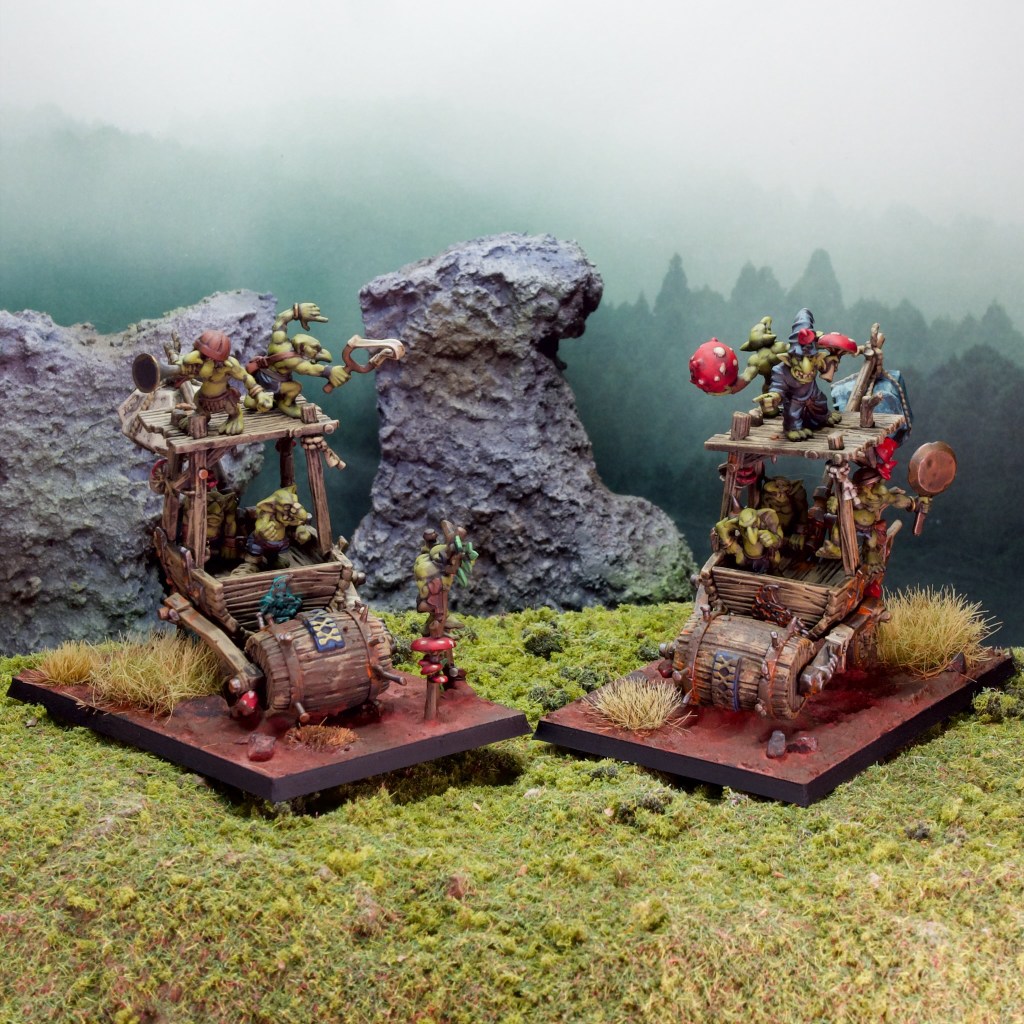
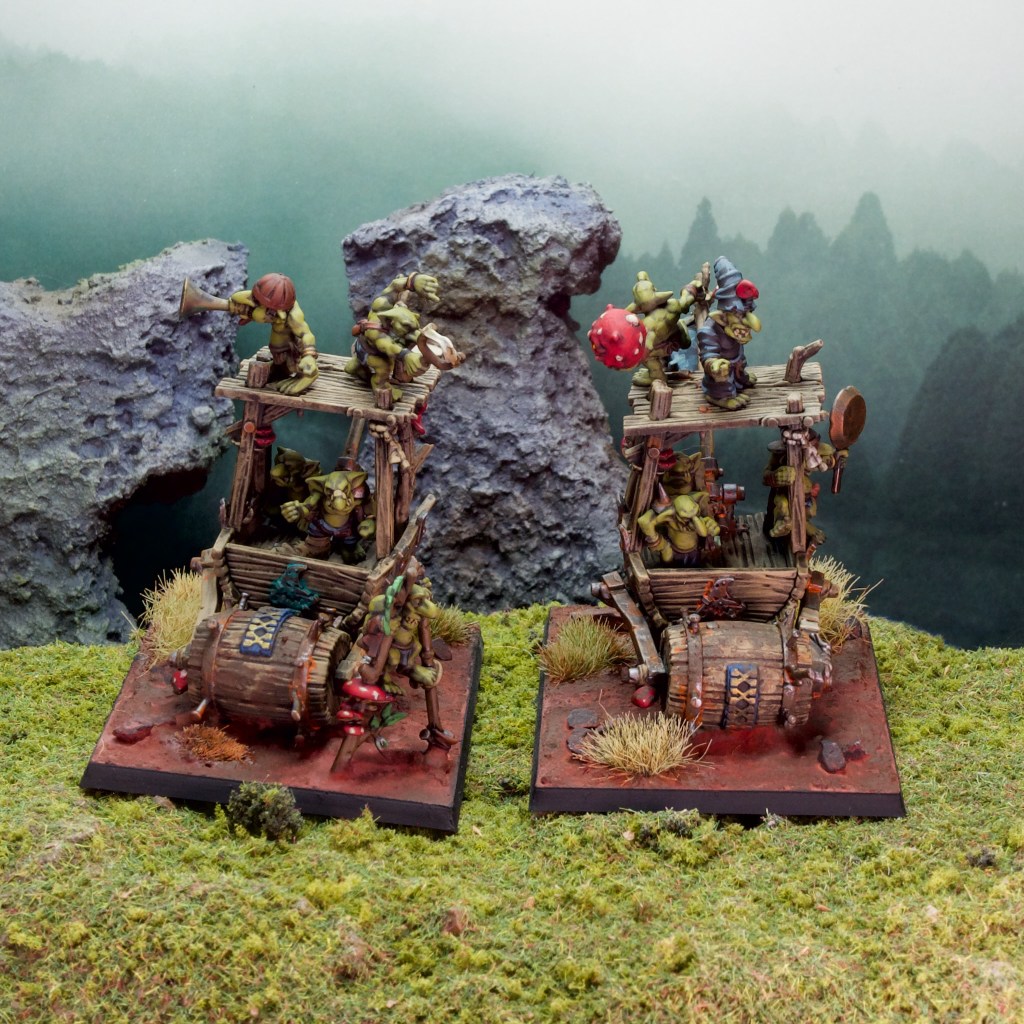
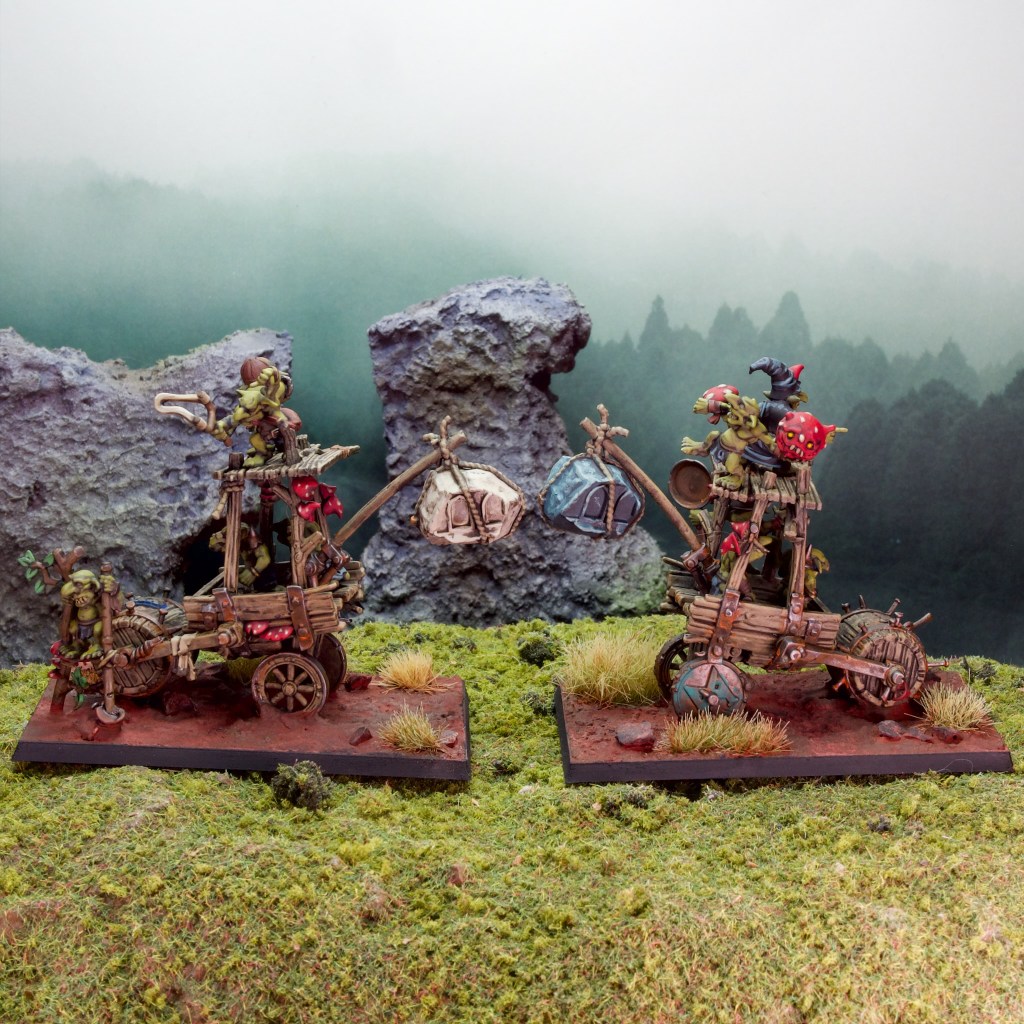
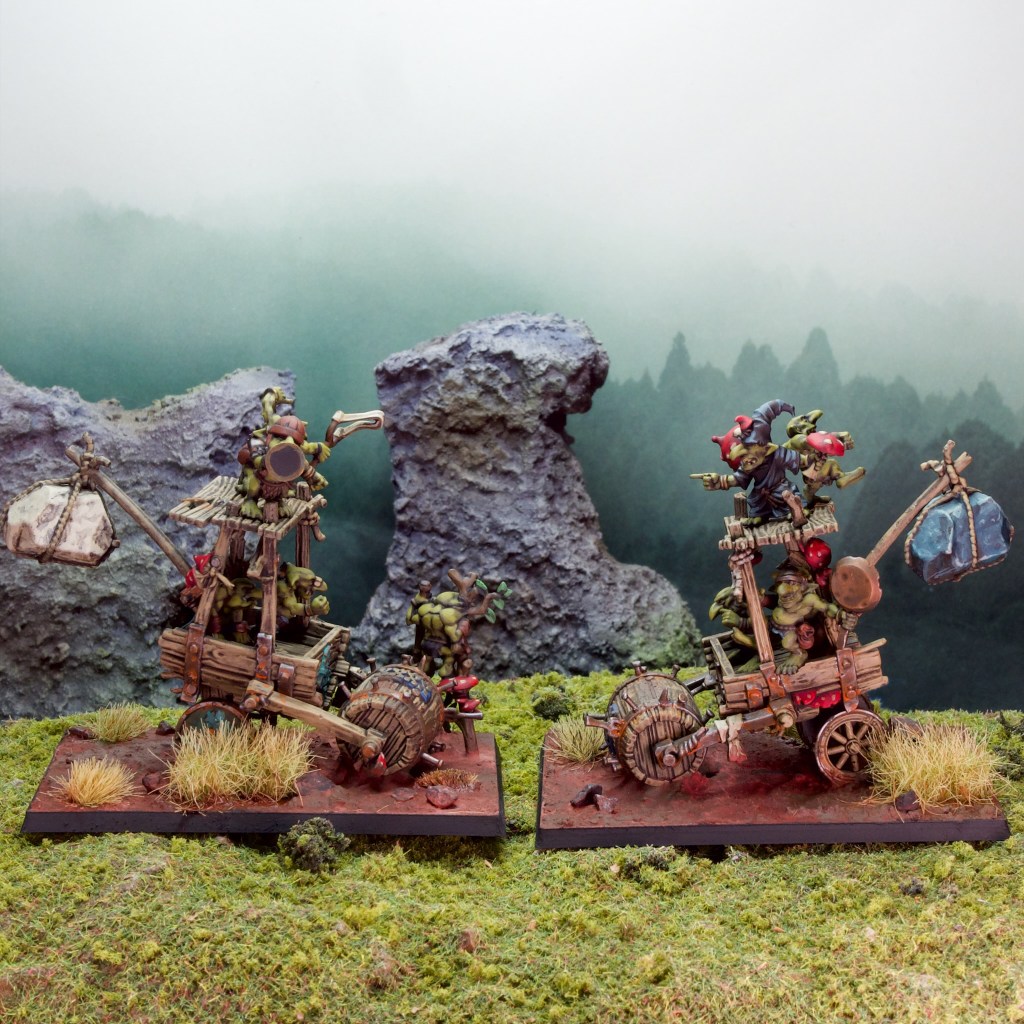
After last post‘s detour into card gaming, back this time with some more usual fare for this blog, models! I’m still pottering away at my Orcs and Goblins army and just finished these two extremely fun models: Snotling Pump Wagons!
For the non-initiated, Snotlings are what Orcs and Goblins call their even smaller cousins, which are even tinier goblins (The models are quite small as you might imagine!). Pump wagons are weird contraptions that are built, crewed, and powered by Snotlings, and as a result barely hang together but can surprisingly effective in the game … if they reach their target.
These models are actually the Blood Bowl Pump Wagons, which I much prefer to the proper Warhammer ones. Even though they’re plastic, they’re surprisingly fiddly to put together (to the extent that I think it’s on purpose to ensure they end up as rickety as if they’d been built by Snotlings!). They come as part of the Snotling Blood Bowl team which is packed full of characterful Snotling models, which meant I could cram them full of different sculpts.
While the models are the same model twice I tried to add some variety to them, mainly through the addition of different Snotlings as I mentioned, but also with some painting differences. The kit is also relatively flexible and lets you add pieces in a few different ways which is nice.
These were a lot of fun to paint as you might imagine. I had all the Snotlings separate for painting to make things a bit easier for myself, and gluing them to the pump wagon once everything was painted was very satisfying.
I’ve just embarked on a “small” side project which has my son very interested in miniature-related gaming so expect to see some (all?) of that next post!
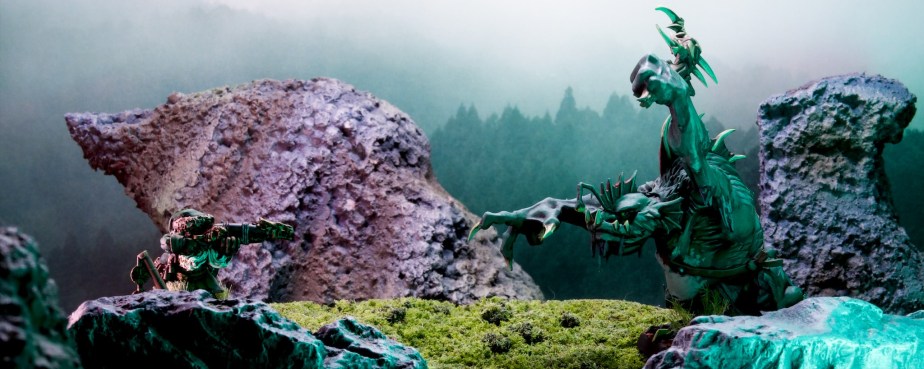
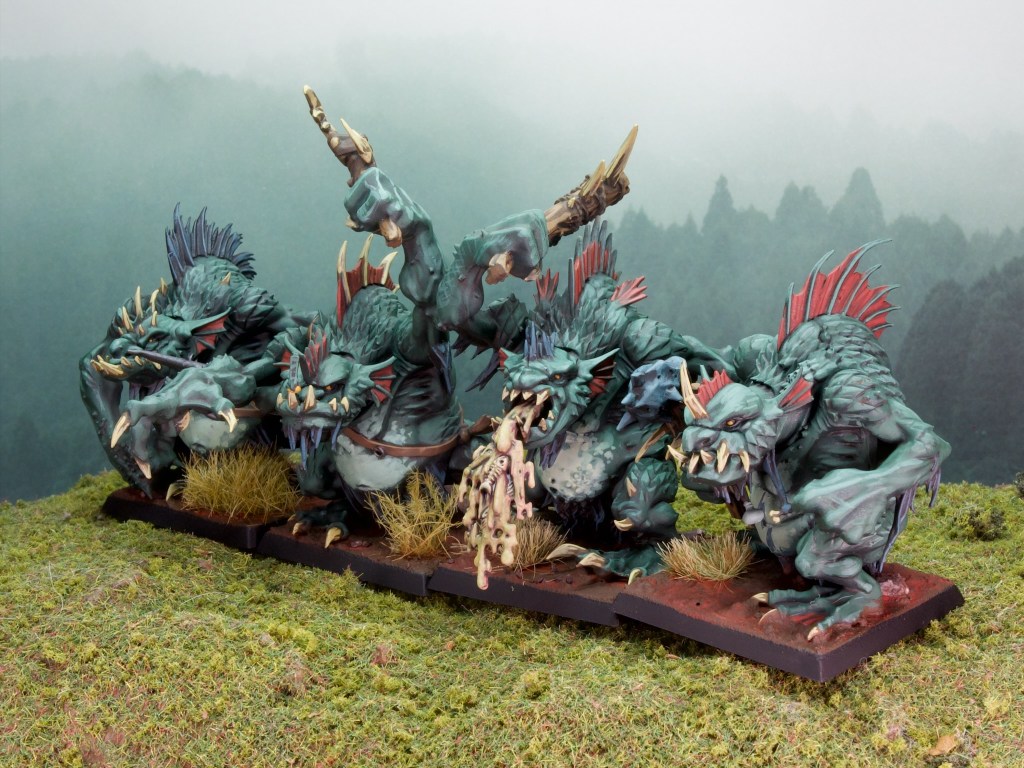
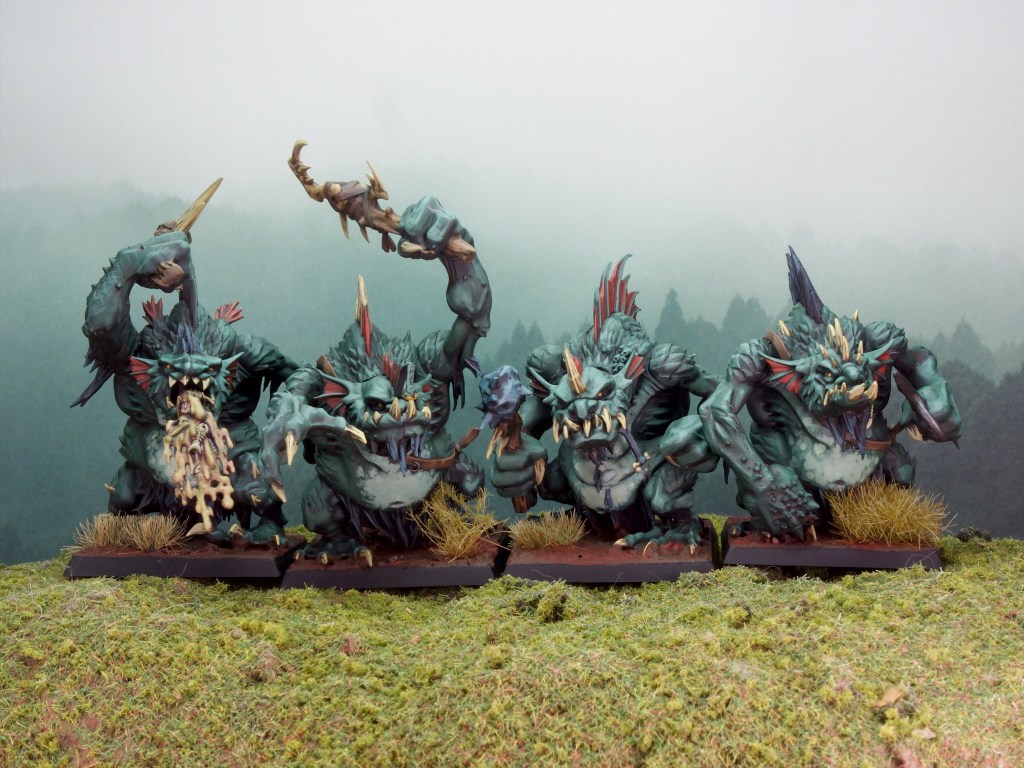
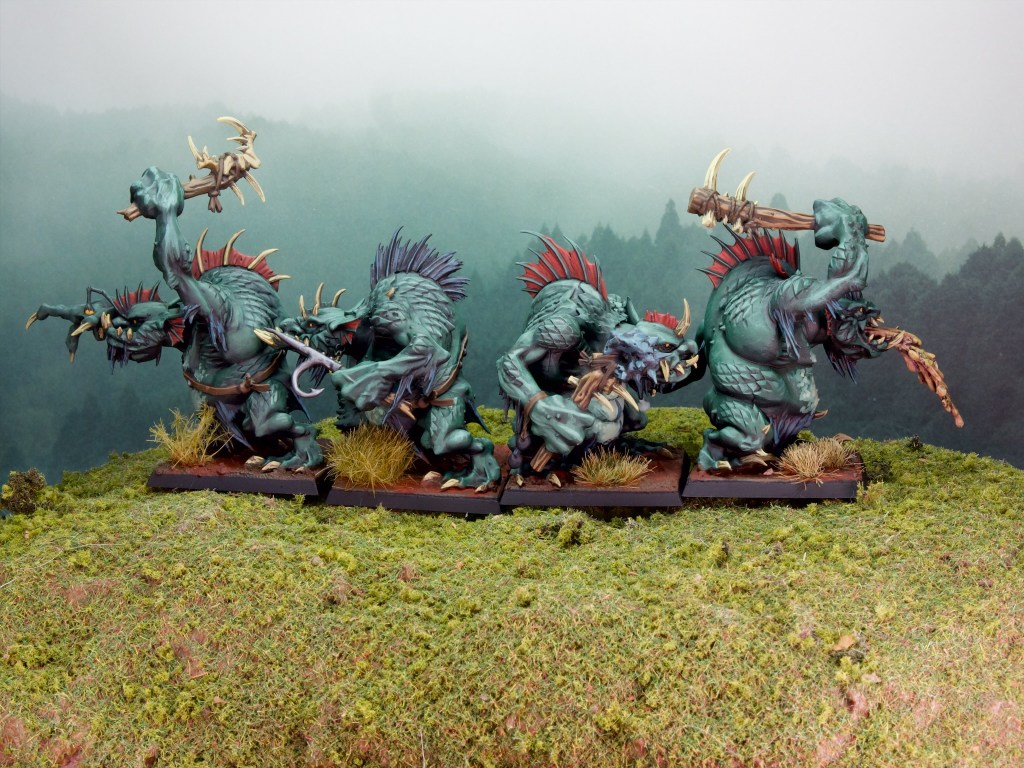
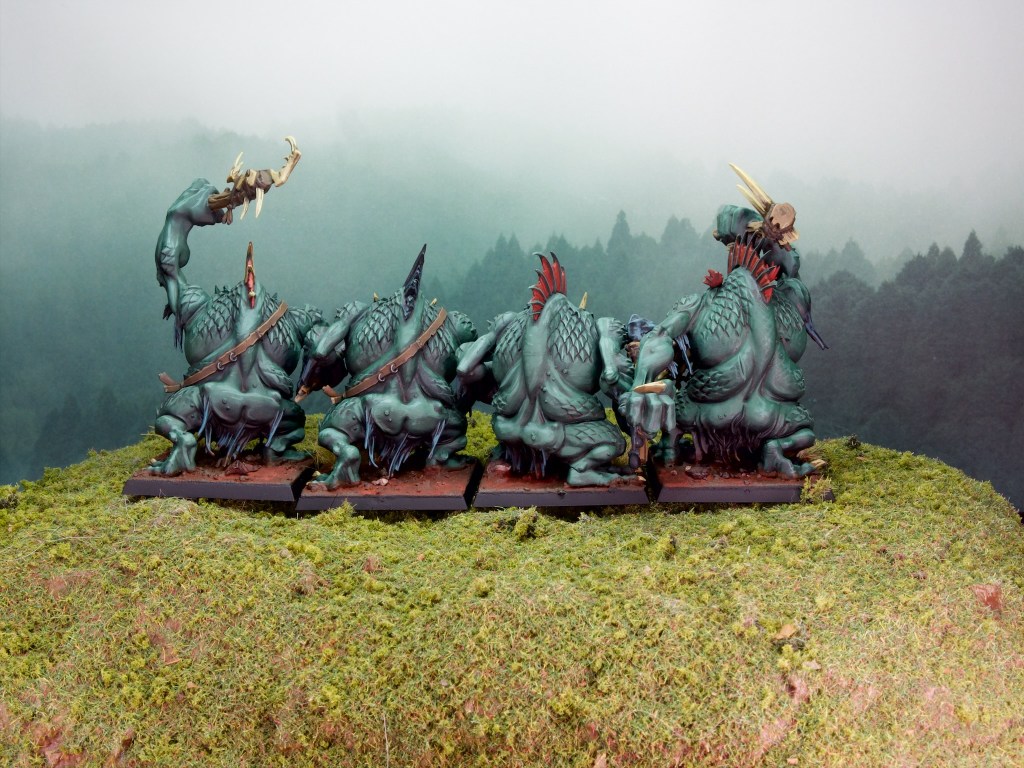
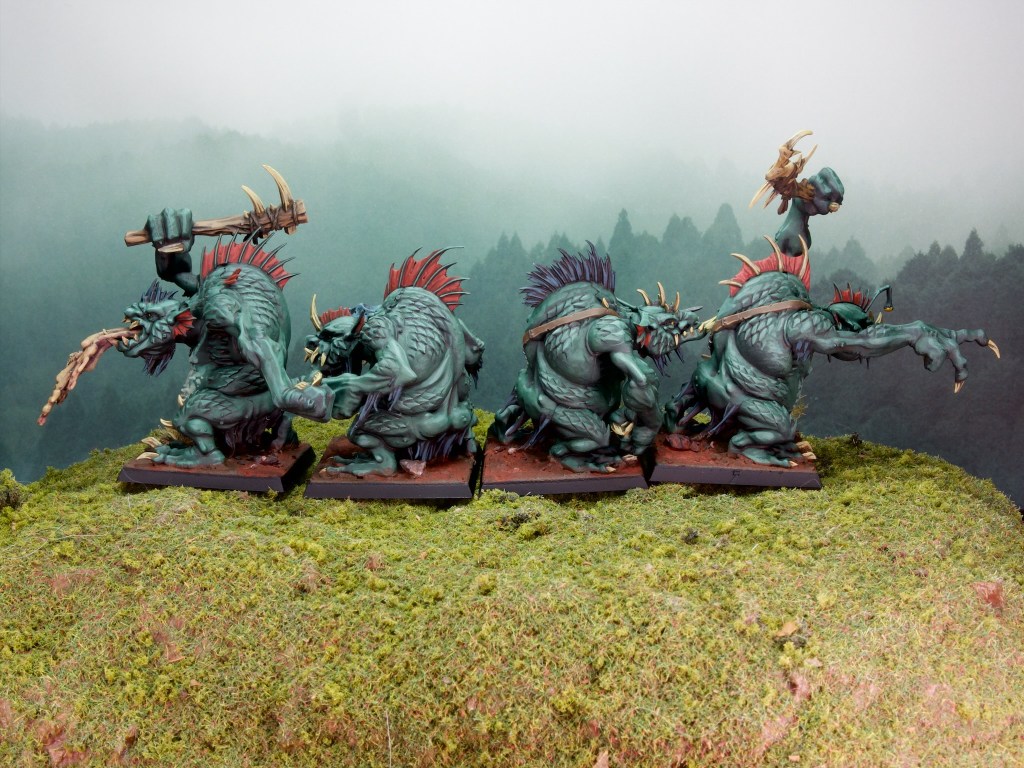
With some leave over the Christmas break I’ve had a bit more time to paint (and game!) and have managed to get through a unit that I’d applied a basecoat to back in September-ish: River Trolls!
I’ve had these models for quite a while. I originally bought them to make Chaos Trolls back in the early 2010s and instead left them unbuilt for 10 years. It’s therefore nice to have them done for this latest project.
The models themselves are quite fun to paint as they have a decent amount of detail, much of which is quite characterful (including the infamous troll vomit!).
For units that are relatively unique in armies (i.e. that I won’t have to paint again) I like to experiment a bit with my painting. In this case I played around with oil washes in a slightly different way than I usually do. Normally I dilute my oils heavily with thinner, apply, blast with the hairdryer for a minute and get wiping the raised areas away with a sponge. I’ve had issues in the past with oil washes looking but not actually being dry by the time I varnish the models and found a few months later that the model has gone a bit tacky. Luckily this is easy to fix with a fresh coat of varnish. Here instead I went for a heavier wash (less diluted) and let it sit for a day or so before touching it. I was a bit worried that would limit my ability to wipe off the excess wash, but those fears were unfounded, and in fact I found it easier to get nice gradients with the wash in this way. To make sure the wash was dry before continuing, I left the models for another day or so, monitoring the areas where the wash had pooled the most. It’s a time consuming process but the results are worth it. Luckily for me I had something else to paint while I was waiting, which I will show later!
I wanted a cold green for these models to match their “riverness”, so I went for a basecoat of Vallejo Game Color (VGC) Heavy Blackgreen, and progressively mixed in more and more Vallejo Model Color (VMC) Pastel Green. The red fins are VMC Mahogany Brown, highlighted with a mix of the same brown and VGC Dead Flesh. The hair/fur is a mix of VMC Dark Sea Grey and VMC Black, highlighted with a mix of VMC Dark Sea Grey and VMC Pastel Green. The teeth/nails were a basecoat of VMC English Uniform, highighted with VGC Dead Flesh. The leather was VMC Chocolate brown, highlighted with a mix of the same and VGC Dead Flesh. All of these received the oil wash discussed above, which was a mix of Abteilung 502 Midnight Blue and Brown Wash oil paints.
Overall I’m very happy with these, nice addition to my Orcs and Goblins army.
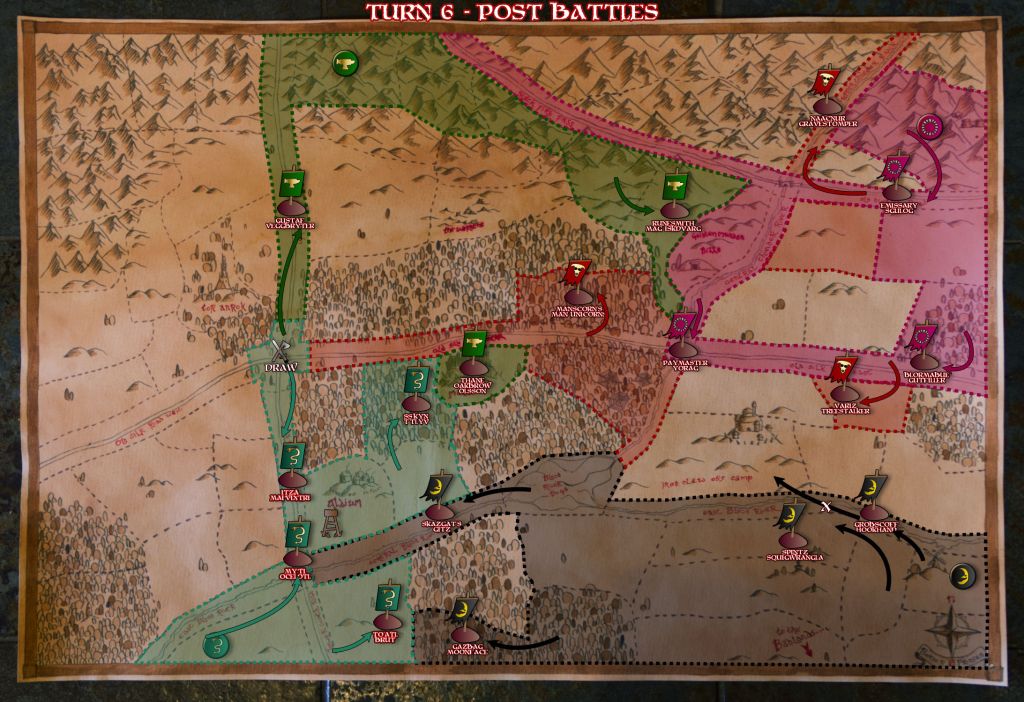
As I said in the opening lines, I got some gaming in too this break, with a campaign game for our Border Princes campaign. The campaign was on a bit of a hiatus after the back end of the year got very busy for most of us (including a few weeks where 3 of us were out of the country!). The next match due was my Dwarfs against the Lizardmen, battling over a major crossroads. The game was a lot of fun and as a result I completely forgot to take photos! The outcome was our first draw of the campaign so far, which results in both armies retreating from the area. Here’s the campaign map at the end of Turn 6.
We’re currently planning our moves for the next turn, so hopefully I should have some updates soon.
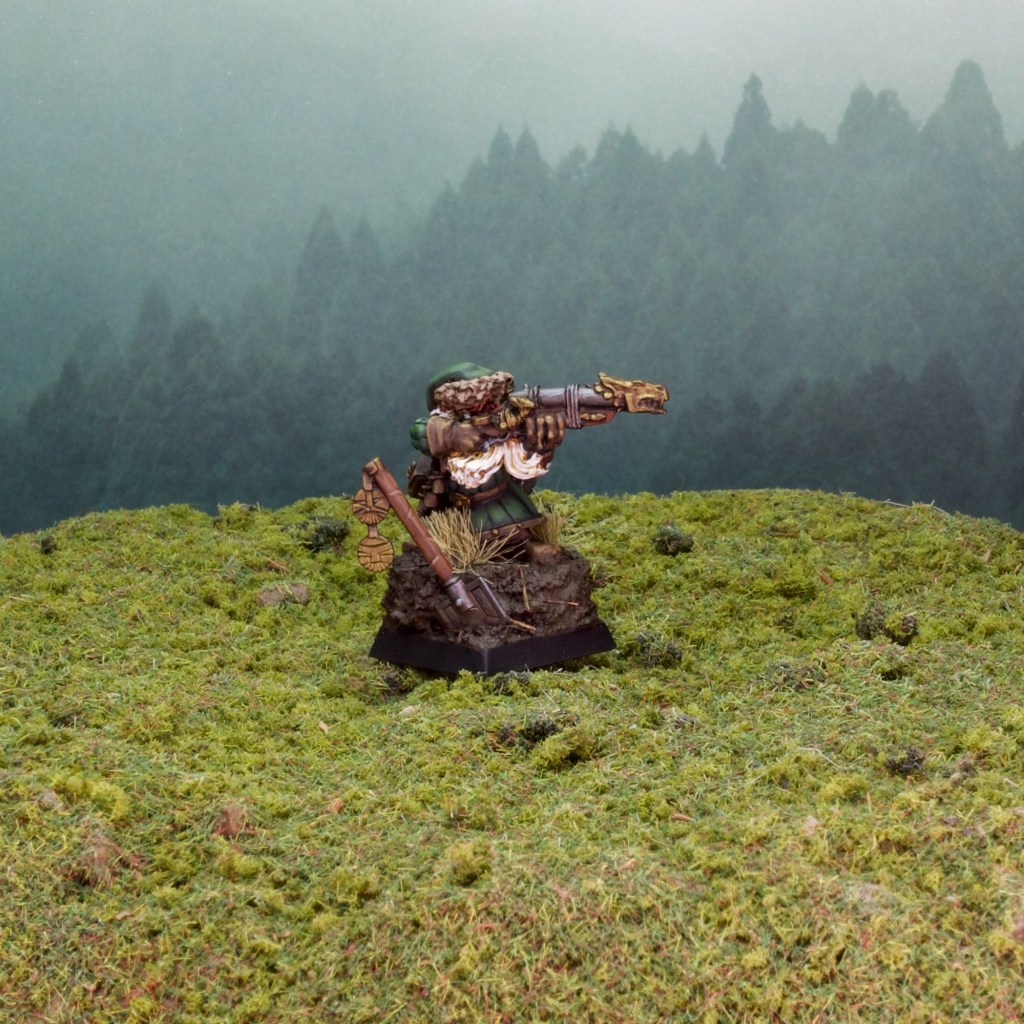
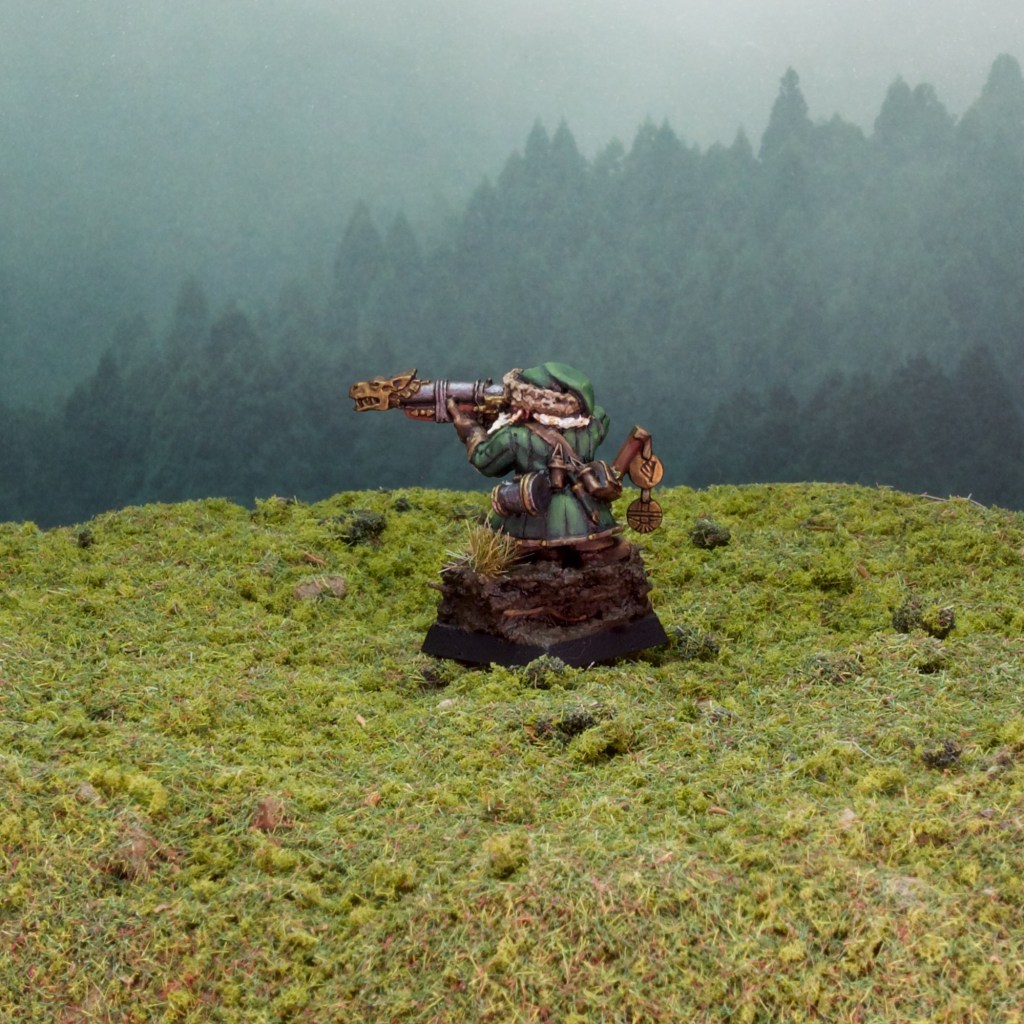
One thing that happened during the game is I tried out the new engineer rules from the Dwarfs Arcane Journal. These allow you to take a Sapper Engineer, which allows all kinds of things such as entrenching your artillery, and booby trapping the battlefield. I equipped said engineer with a handgun inscribed with some of the new ranged weapon runes also found in the book. He then proceeded to cause more damage single-handedly than most of the other units I had in the game! I decided that meant he deserved a proper model and set about to making one as there is no Sapper Engineer model in the range.
I used an old metal dwarf handgunner (one of the first models I ever bought!) which has a really cool dragon head muzzle on his handgun. This looked appropriate as a runic handgun, and I also liked the practical attire he was wearing. One thing that was missing was anything that screamed “sapper”. The distinguishing mark for a sapper in the Napoleonic era (at least for the French army) was the carrying of a great big axe, but a dwarf carrying an axe just blends in so I went for a spade instead.
I wanted to accentuate the digging aspect so I tried to make it look like he’s taking potshots while digging a trench. Hopefully that comes through!
I’ve been chipping away at this small unit of archers for my Orcs and Goblins over the past few weeks. I have not been in any particular rush and it’s been quite nice painting at a sedate pace. I have a tendency to want to get things done fast, but with work quite busy lately it’s been good to do the fun things in life in a more relaxed fashion!
These are new casts of old models like much of the rest of the newly (re)released Orcs and Goblins models for Warhammer The Old World. These are pretty old sculpts now and were current when I started the hobby in the early 2000s. I’m absolutely the demographic for this nostalgia fueled set of releases!
I tried to make them look generally cohesive but in a haphazard manner, picking out their clothes in different colours. For my own future reference (I have plenty more of these to paint!) these are: Vallejo Model Color (VMC) German Fieldgrey WWII (also used for the fletching), VMC US Field Drab, VMC Black, and VMC German Camo Medium Brown (also used for the furs). The rest of the colours used are the same as for the rest of the army as detailed in my Orc Warboss post.
One nice discovery painting these was a new method (new for me at least!) for placing pigment powders on the bases in a much less messy way. So far I’ve been applying them dry, which tends to get them everywhere, and fix them using airbrushed varnish (at low pressure but still very messy). For these I experimented with mixing them with acrylic thinner before applying them in patches to the bases. I then dipped my brush in water and blended the patches into the uncovered section to get an uneven look. This method was much cleaner than dry application and was a lot easier to control. I’d recommend trying it out if you’re using dry pigments on your bases!
After a few posts promising a unit of goblins as the next addition to my Orcs and Goblins army (and a few posts apologising for failing to deliver!) I’ve finally finished this large unit of Night Goblins!
With a cool 42 models in it it is one of the largest units I’ve ever painted, and took me quite a while to get through. With its rather sizeable footprint it was a bit awkward to photograph too, a lot like a large terrain piece.
I ended up batch painting the unit row by row (i.e. seven models at a time), except the shields and the basing which were done for the whole unit at once. Each row was relatively quick to do, but together this added up to a lot of work (Basing took me a whole evening!).
The banner was quite fun to paint, although I went in to it without a good idea of what to put on it. I decided a mushroom would be a good option given the Night Goblin moon was already represented at the top of the banner pole. I painted on a mushroom and then wasn’t sure where to go from there. I ended up taking a photo of the banner and doodling on the photo on my iPad to test out designs to add to my mushroom and I settled on what you see below. It was great to be able to experiment with designs without painting over and over again so I’ll do that again, a good lesson learned.
You might have noticed the shaman holding the green-headed staff on the right of the unit. This is one of the army’s characters, in fact the only wizard I have planned in there at the moment. This is a classic model that I picked up on eBay alongside the netters you see in the unit.
The night goblin models are the newly re-released plastics that were the standard kit back in 6th edition. There is a more modern night goblin box which is from the 7th edition era which is now marketed as an Age of Sigmar set. I really like the older plastics and I’d been looking for a second hand box when GW announced they were re-realeasing them. That made me and my wallet very happy, those second hand prices were getting sky high.
This new set came with a transfer sheet with a couple of designs for the shields. I loved the moon design on those transfers so that was an easy pick. I’ve never applied this many transfers in a single sitting!
I’m glad to see the end of this one, I’ve been painting it on and off for what must be a couple of months now (inter-spaced with a few other small projects such as the Fanatics I did a while back, which will be launched from this unit), and it took some determination (and a fair few hours) to get them finished this week. I love the look of these models as a massed unit and am chuffed with how they came out. I’m going to paint up a smaller scale project next I think!
It’s been almost two months since the last post, probably the biggest gap in a while! It’s been a rather busy period family-wise (lots of birthdays in my family in July/August) and work-wise so I haven’t gotten much painting time lately. I’ve also chosen this period to paint a rather large unit of night goblins for my Orcs and Goblins army, so rather than wait another month to post something I decided to take a break from the big unit and paint up some supporting models, namely these fanatics!
For those of you unfamiliar with these rather fun models, fanatics are Night Goblins that have consumed a concoction of “special” mushrooms that give them the strength and willpower to twirl about while wielding oversized flails. They are hidden in Night Goblin units and get released when enemy units get close.
These models are older metal versions that I’ve had for quite a while now, so nice to get some paint on them. They are painted much like the rest of the army, although with more black cloth! For the recipes, check the first post on the army, which featured a Night Goblin perched atop an Orc Warboss!
That’s it for painting updates, but some campaigning happened since the last update on that so here is where things stand.
We had a win each for the Beastmen and Ogres in Turn 5, with the Ogres capturing the Beastmen’s home territory as a result of the first battle, but the beasts held their own in the second battle, scattering the Ogre army back to its own home territory.
The moves for turn 6 have been planned and we have one battle this round: my Dwarfs against the Lizardmen encroaching on my territory from the south!
Here’s hoping I can get through this busy period soon and resume more frequent posting!