
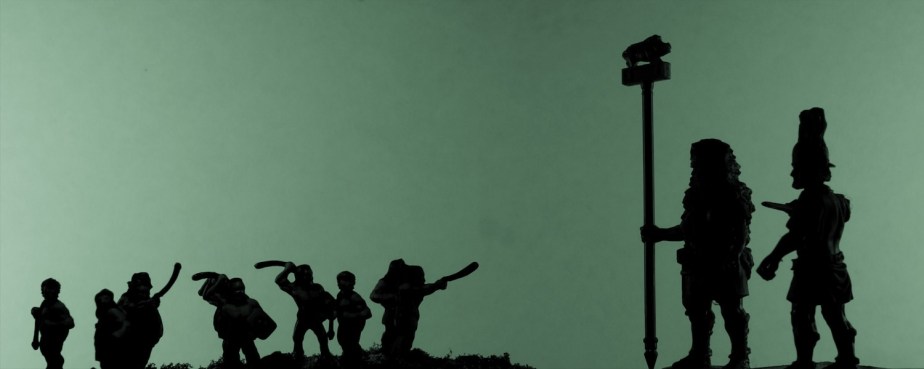
My historical wargaming kick is still going strong (I’ll get back to you Fantasy gaming I promise!), and I’ve put some birthday vouchers to good use, picking up some models I’ve been eyeing off since they were released last year: Warlord Games’ Punic War “epic scale” range.
I you’ve been keeping an eye on this blog for a while you might remember my foray into Republican Romans back in 2021. This was in 28mm scale, which is home for me scale wise (well that and the associated 25, and 32mm scales), but while I enjoyed painting the models I was always troubled by the fact that to get some of the formations in the historical record (e.g. the famed Triplex Acies for the romans, with its triple row of supporting infantry blocks) I would need a lot of space on the game board (not to mention crazy amounts of miniatures!). That took the wind out of my sails for this project and the models have sat unprogressed for a long time. When I saw the Warlord announcement last year I knew this was the way forward, a smaller scale letting me have the number of units to play games with some semblance of the historical formations. This doesn’t solve my unused miniatures problem for my 28mm romans however, and the plan there is to repurpose them for smaller scale games in the Caesarean invasion of Gaul which is something else I’d like to wargame.
Another tricky aspect of the era was finding rules that captured the kind of gaming that I’d like to do for the period. That was resolved when I discovered Midgard last month, the game is fun and simple to play and has some great rules to reward the in depth formations the Roman’s adopted. In fact the author has published some army lists for the Punic wars specifically, making using Midgard for the period very easy.
Armed with some rules and a model range I plunged in and picked up the Roman/Carthaginian/Allied division boxes (and most importantly the elephant set) from Warlord, which gave me more than enough models to play a large game of Midgard.
The models come with bases for Hail Caesar, which aren’t quite right for Midgard where units are more standalone. So I decided to make my own bases, larger than the Hail Caesar bases, and put more models on each. The bases are of an 8cm frontage, 4cm deep for infantry and 5.5cm deep for cavalry. I modelled these and 3d printed them. If you’re interested in the files I put them up on Cults3D as a free download.
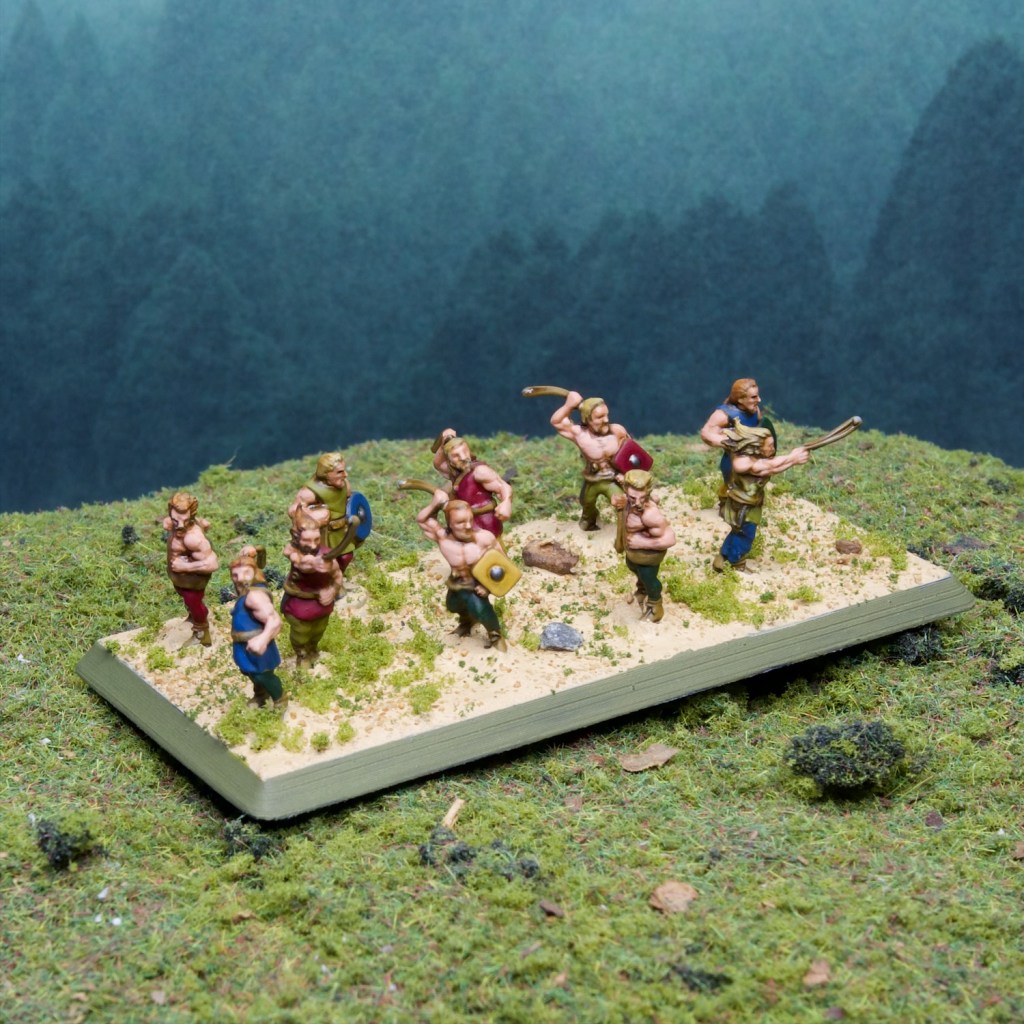
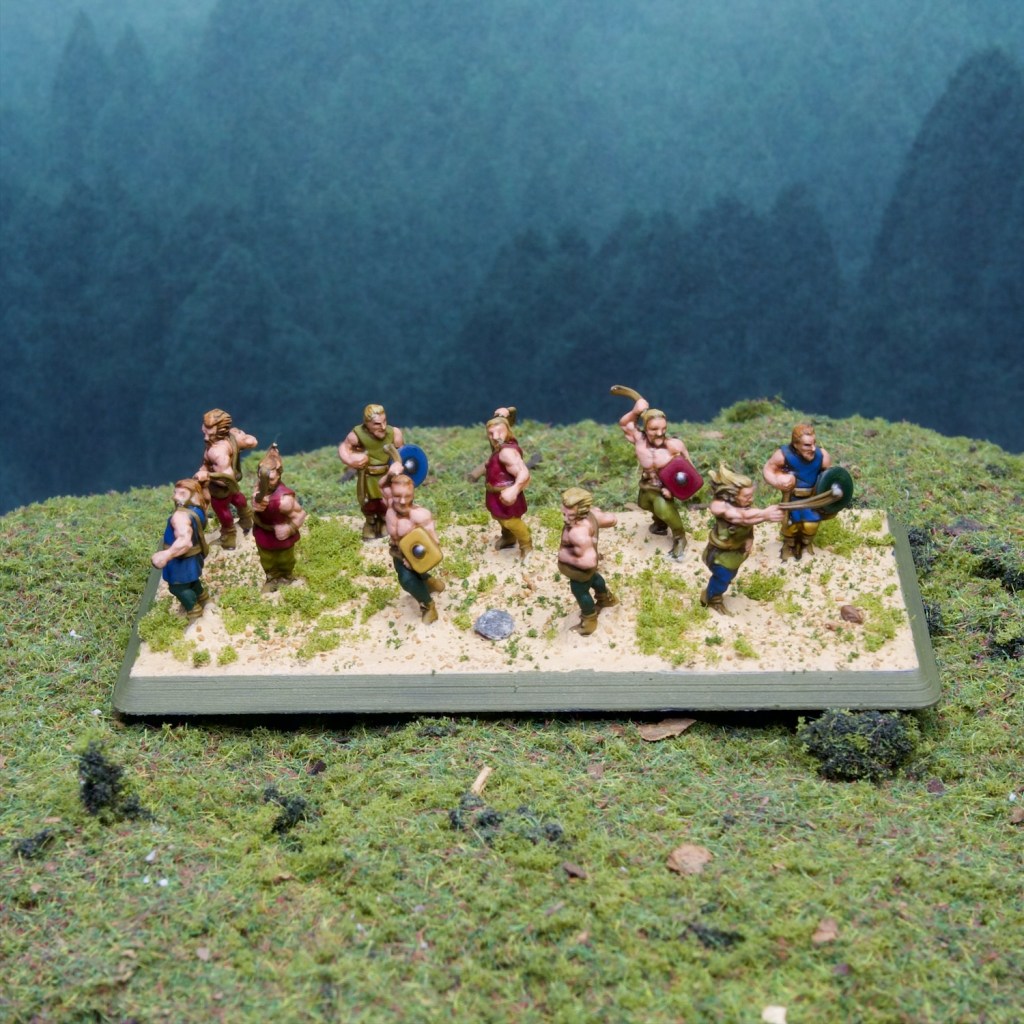
That’s enough context, onto the models! The models are Warlord’s epic scale which seems to be around 14mm so half size from what I’m used to. The detail is really quite good given the size and the models took washes really well which is very helpful. I painted this base of gallic slingers as a test unit to try out a few things: what washes work well at the scale, and what basing scheme I was going to go with. Wash wise, I was worried that my usual go-to Agrax Earthade might be a bit much (too dark/strong) for the scale so I looked for something lighter. I settled on Army Painter’s Soft Tone wash, which I think worked really nicely.
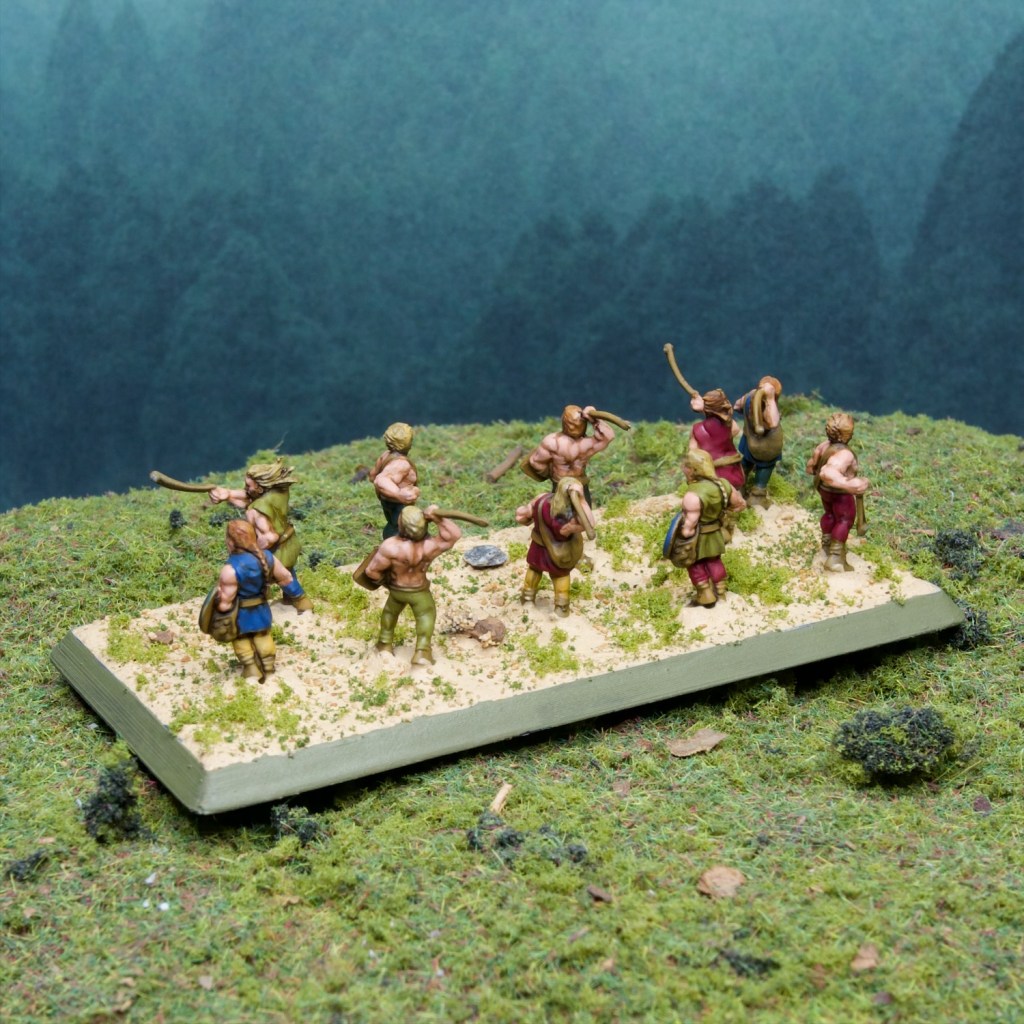
The process I used is as follows: I airbrushed some leather brown all over the models to get a nice brown base to work with, which would work for any leather items (belts, shoes, slings), and let me focus on painting cloth, shields and skin. I then basecoated these areas in nice bright colours (probably inspired by my reading and re-reading of Asterix comics as a kid!), basecoated the skin in AK Beige Red, and gave the models an all over wash of Soft Tone. Once that was dry I gave the skin areas a second wash of Citadel Reikland Fleshshade (somewhat diluted) to get some red into the skin. I then used the basecoat colours to highlight the models back up. The hair was then painted, basecoating it with an off-white, and using GW contrasts for colour (Aggaroth Dunes for the blonde hair, and Gore Grunta Fur for the reddish hair). Nice and quick!
For the basing I wanted to aim for a generic Mediterranean look, which could work for Summery Italy as well as the North African coast. To that end I used and AK texture paint called Sandy Desert, and while it was wet sprinkled on a couple of Woodland Scenics foams and some old GW sand mix I had lying around. The base rim is Vallejo Russian Uniform WW2. Overall I’m happy with the look, it’s probably a bit too deserty for Italy if I’m being honest, but hopefully close enough that suspending disbelief is easy enough!
 Lair of the Lagomorph