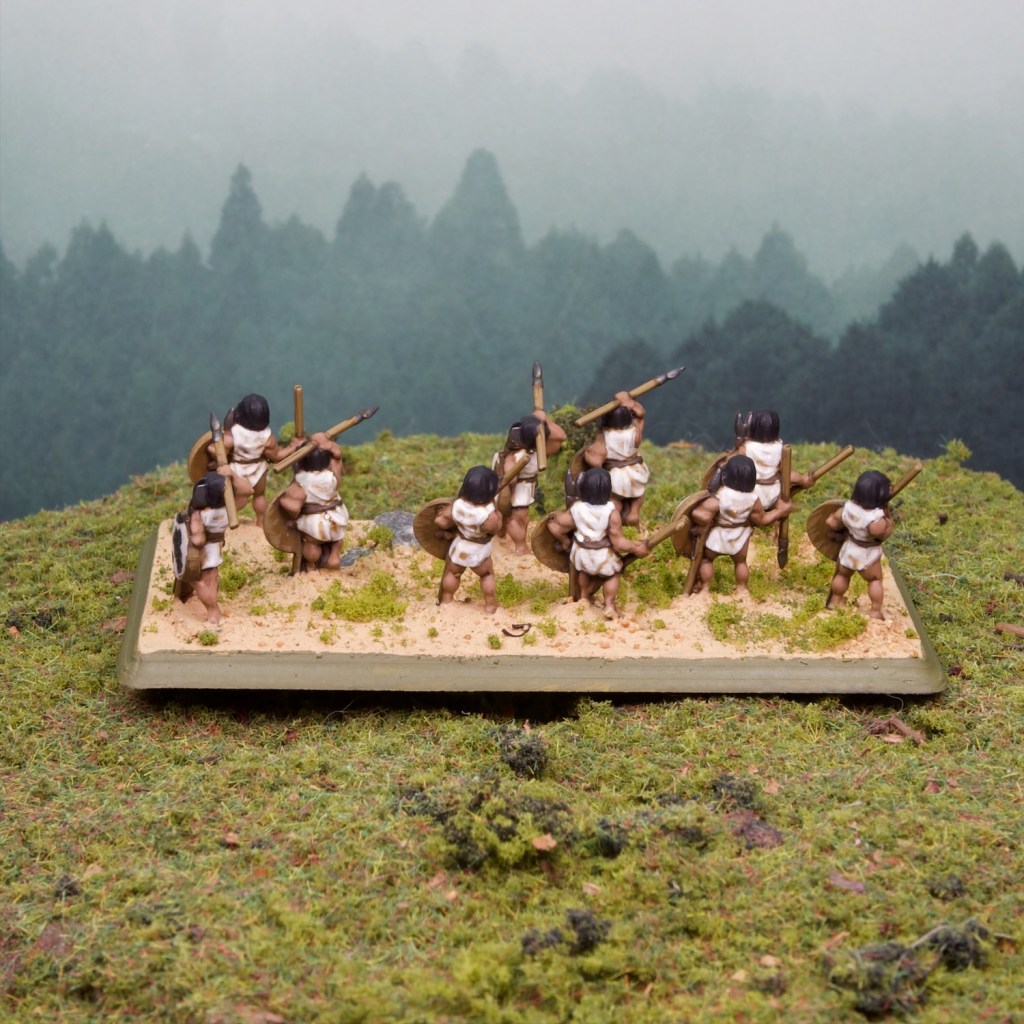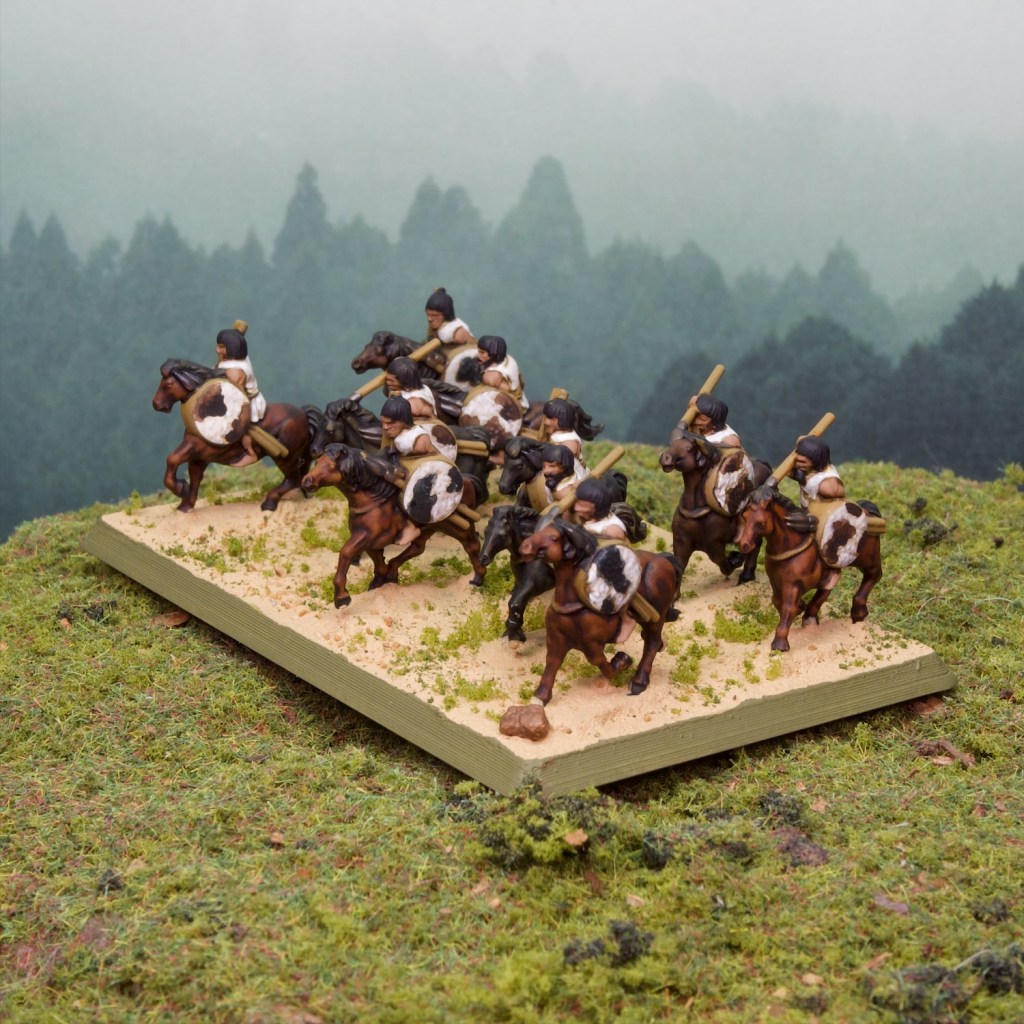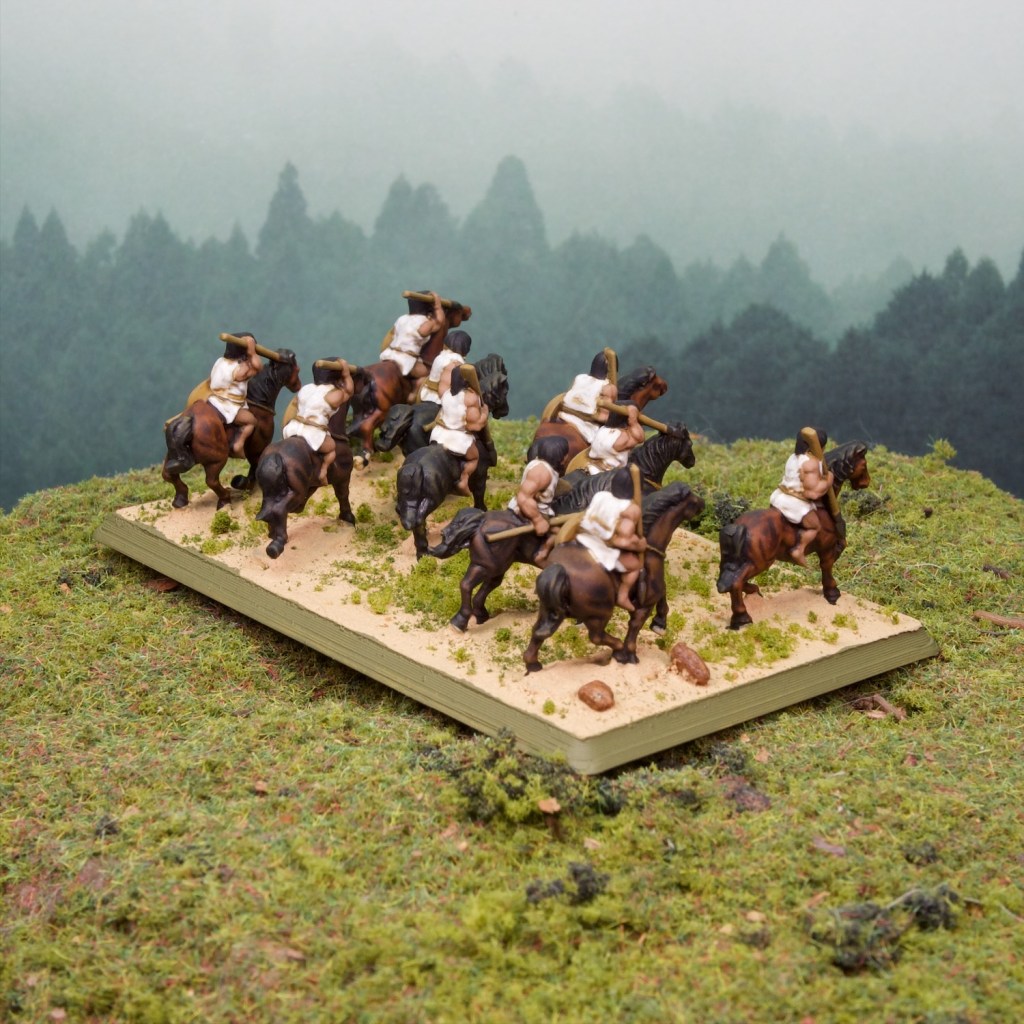
A Busy Few Weeks!

As the title suggested, I’ve been busy the last couple of weeks, with some painting and some gaming to discuss in this latest post.

The Gaming!

I have a regular games night with some friends which is usually spent playing role-playing games or board games. The last few of these we had to change the program as a couple of us couldn’t make it, and we decided to get some wargaming in.

For the first one of these I introduced the group to Silver Bayonet and we played through the fourth solo mission of the main rulebook with my British warband.

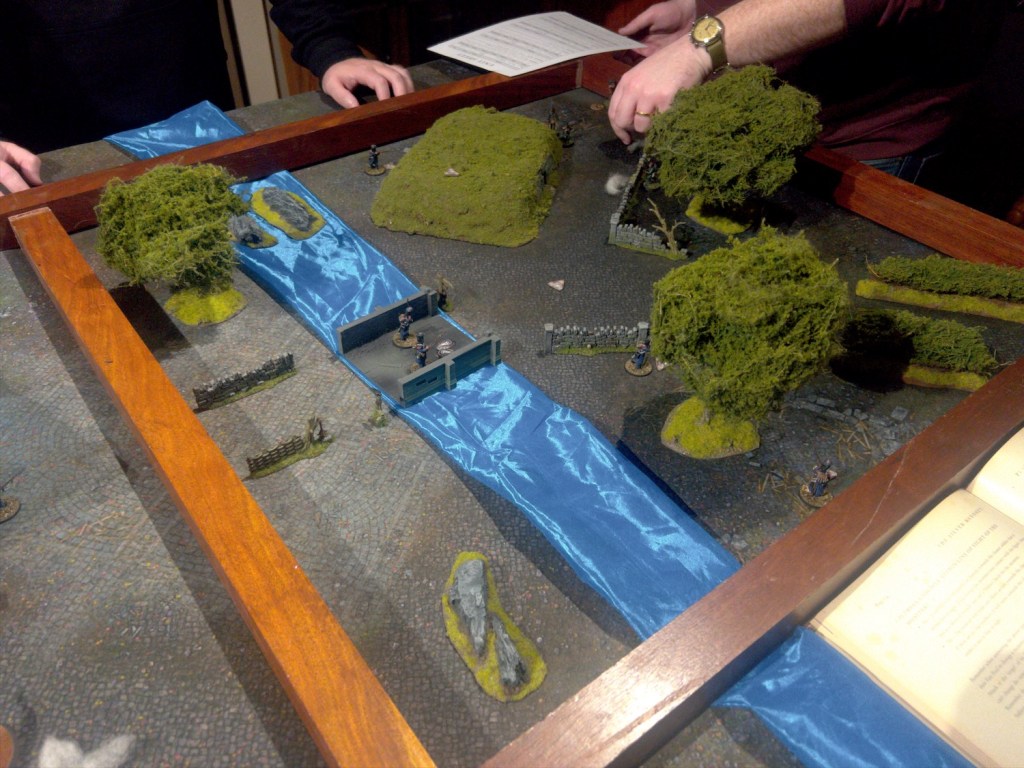
The scenario had the unit attempt to leave the wilderness after its encounters there in the past few missions, but finding their way home cut off by some bandits (role played by the French Imperial Guard unit I painted a few years back). I didn’t take very many photos as I was too busy running the game unfortunately, so no battle report for this mission. Playing the game was very last minute so I had to improvise some of the terrain as you can see in the photo above, with the river being represented by some shiny blue cloth, and the bridge is a section of a ruined church I used for WW2 games!

The game went very well, the two players were running the unit together while I was telling them the rules and taking the monster actions. They were much more aggressive than I usually play, but it paid off and they cleared the mission relatively easily. Both of them really enjoyed the game so that’s always a plus!

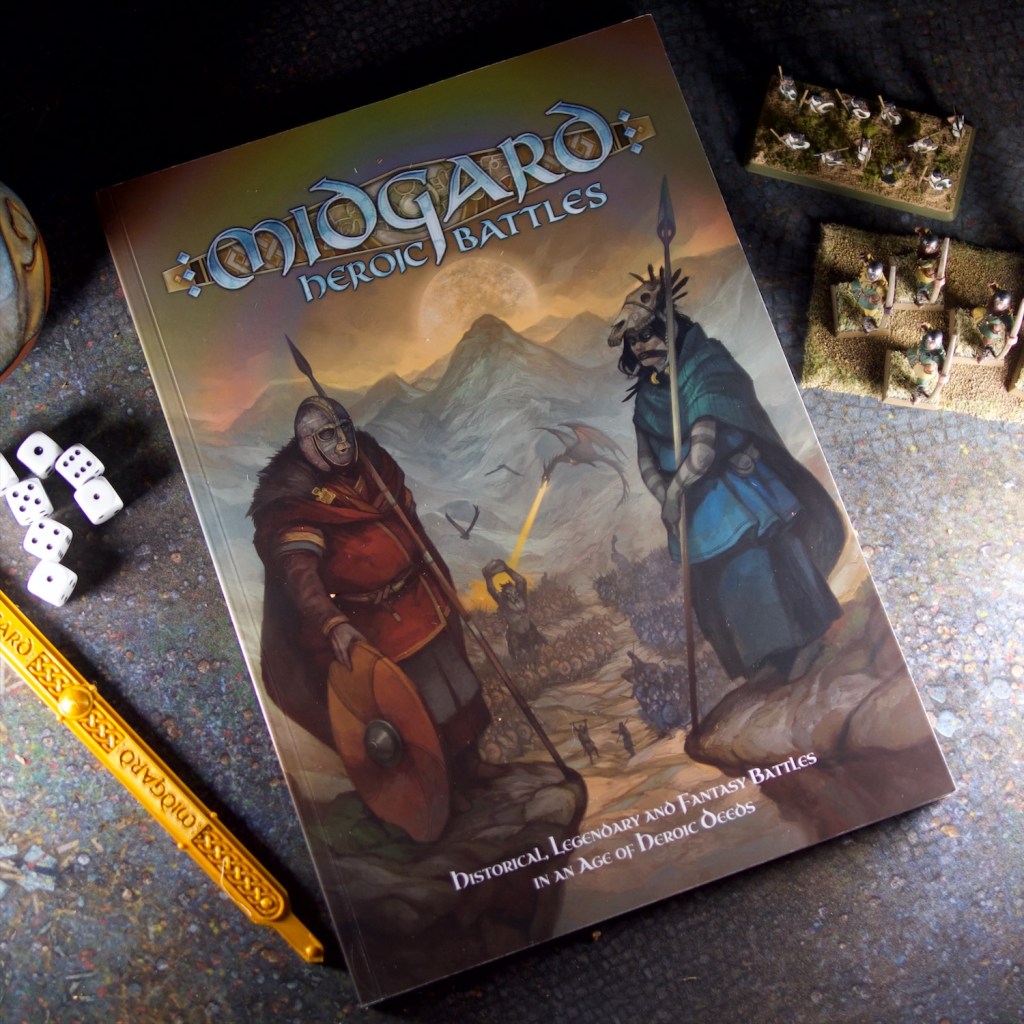
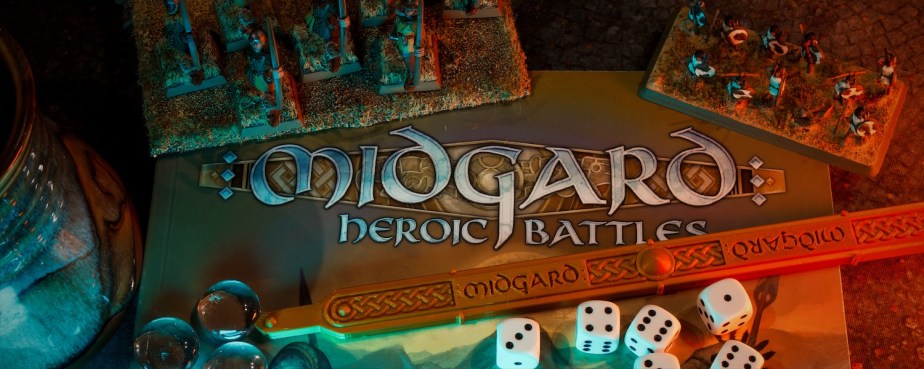
On the second week we decided to try out a new (to us!) ruleset for fantasy/historical battles: Midgard. Midgard is a game by James Morris (check out his blog, it’s very cool https://mogsymakes.net/blog/) which came out last year and covers quite a lot of ground. At its core, it’s a system for covering historical (and fantastical) battles where the heroic actions of army leaders can carry the day. This is suitable for covering periods all the way from antiquity to mid to late middle ages when commanders started running battles from a bit further back than the front lines. Midgard also caters for more mythological/fantastical battles, with rule for monsters and magic thrown in. I’ll be talking a lot more about Midgard in the future as it ticks a lot of boxes for me.

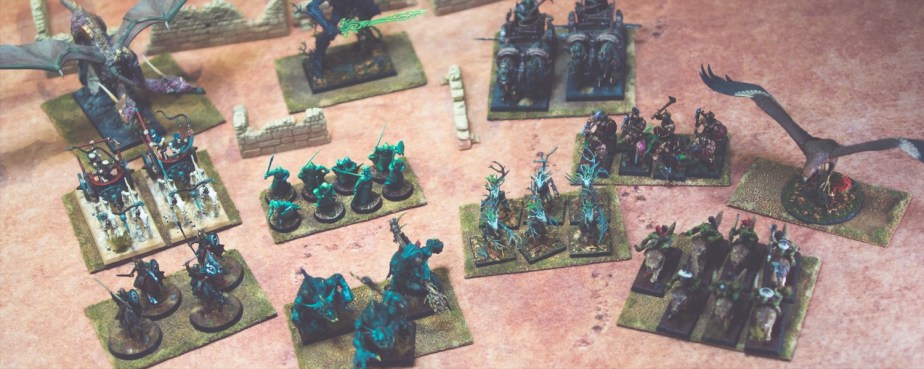
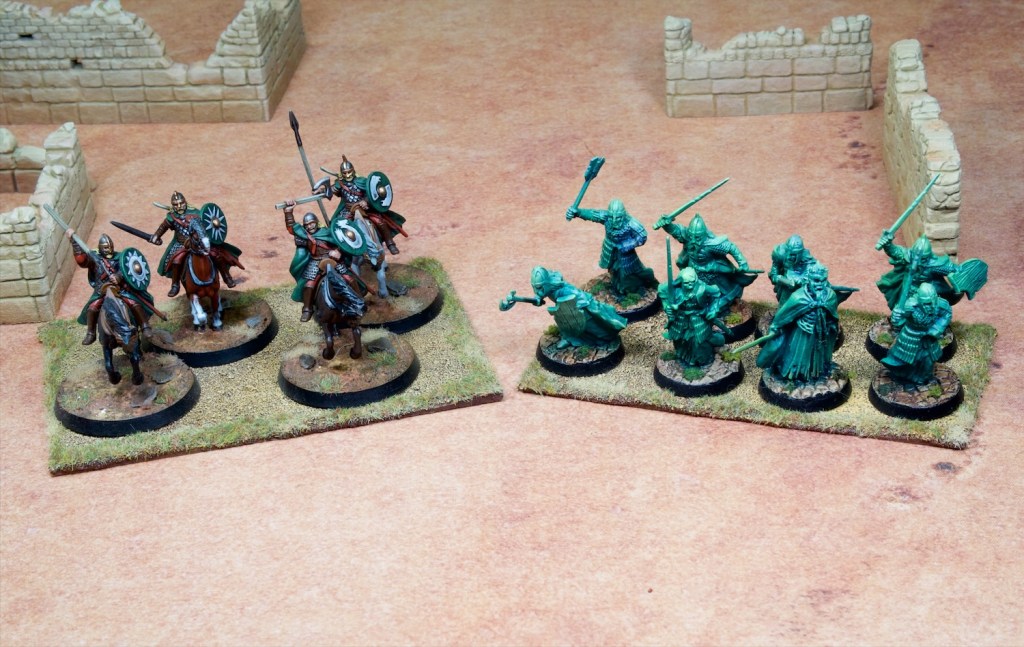
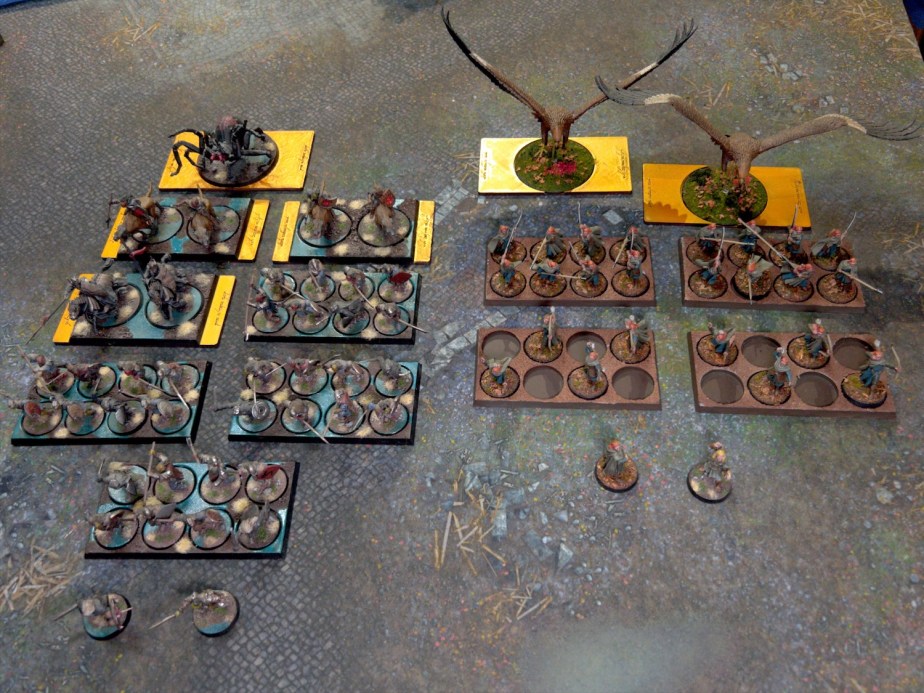
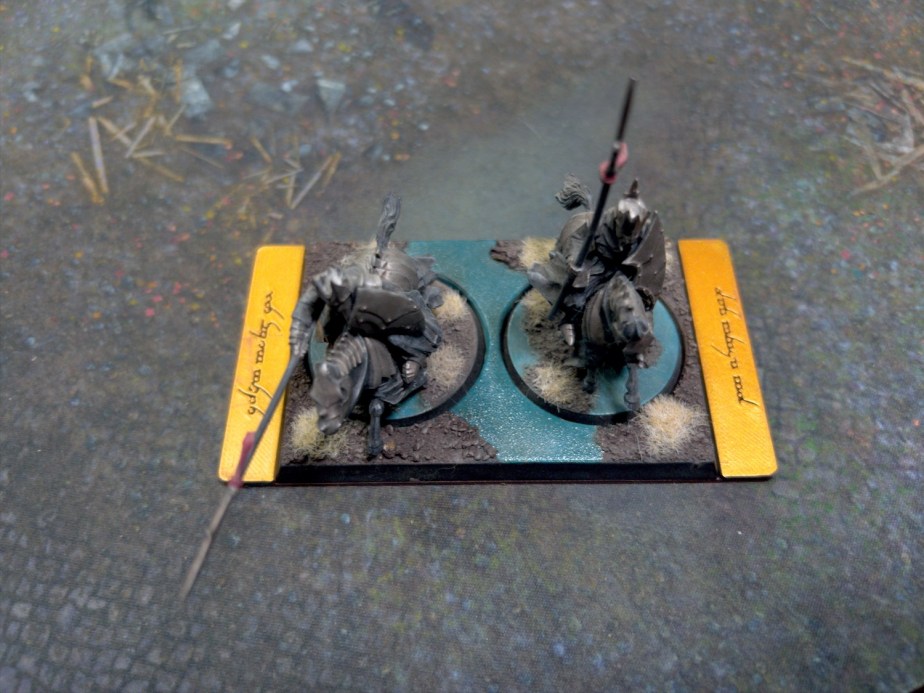
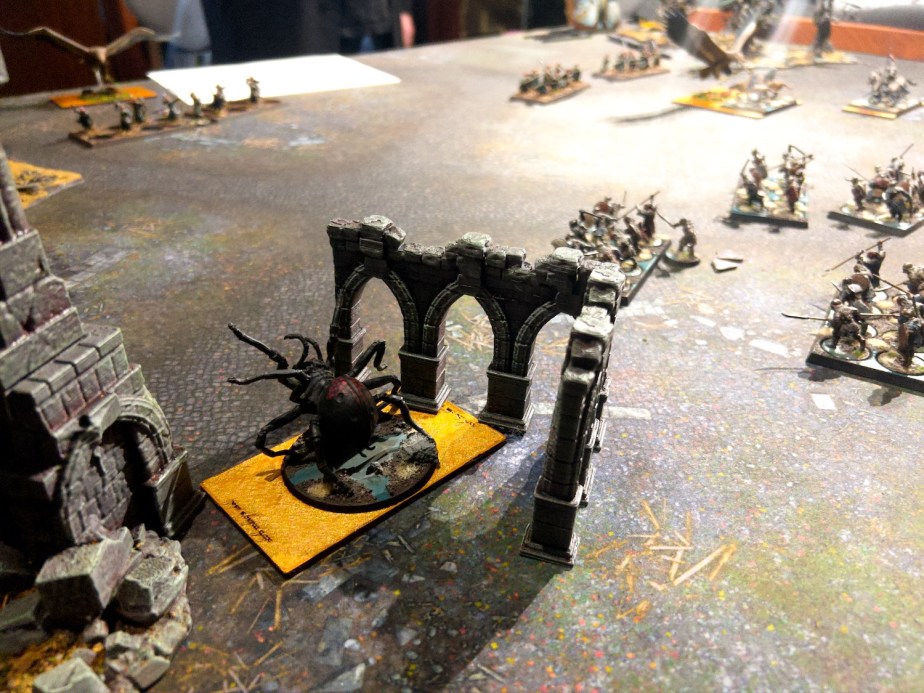
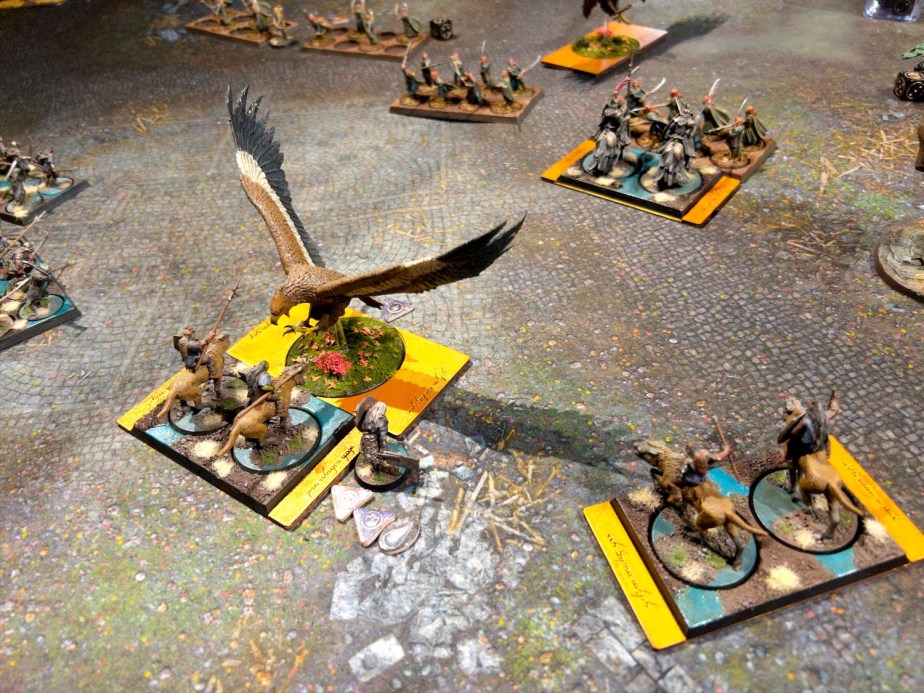
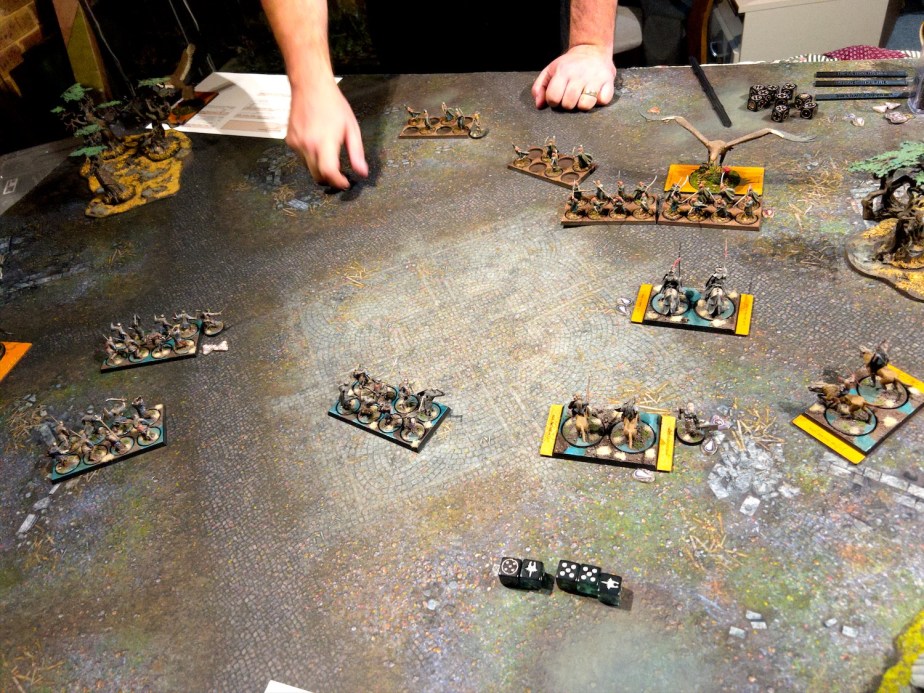
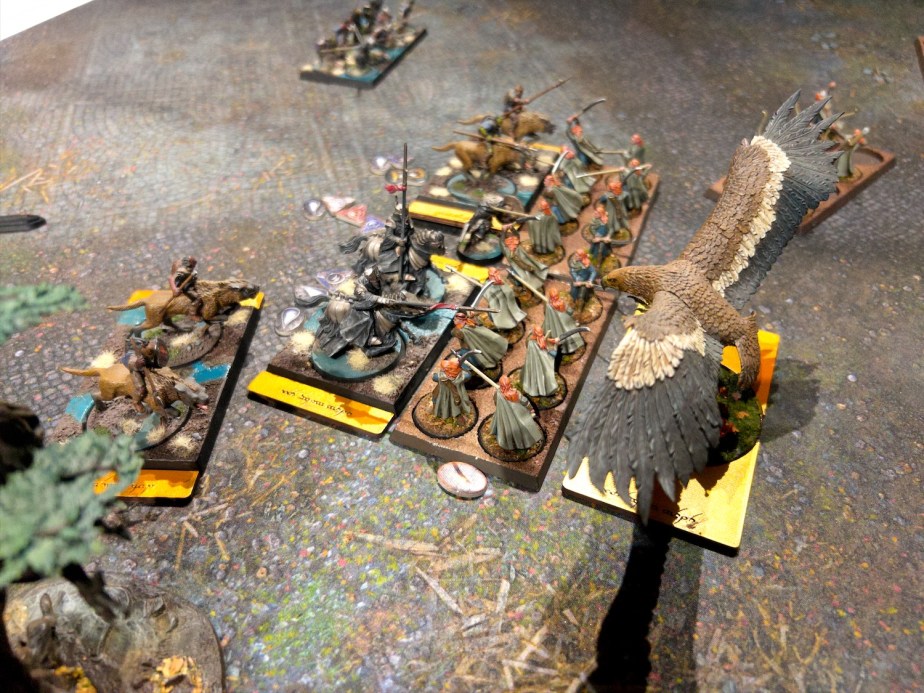
We decided to play the game with some Lord of the Rings armies, and I dusted off two of mine: my Cirith Ungol force, led by Shagrat and Gorbag to rival orc captains, and an amalgamation of Elves led by Legolas and Gildor Inglorion.

If you’re familiar with Games Workshop’s efforts in the Lord of the Rings space, you might recognise the trays they produced for the War of the Ring mass battle version of the game. As Midgard also uses trays they seemed like a great starting point. Midgard however requires all the unit base sizes to have the same frontage so I 3D designed and printed some adapters for the cavalry trays (which are narrower than the infantry trays) and for the monsters (who never had trays in the first place). As I did these adapters the day of the game I needed to go fast and decided to make them simple and to include a little joke – the elven script reads “One tray to adapt them all“.

The game was great fun even for a learning game, and everyone was very impressed with the rules. They are easy to pick up and the system puts pressure on heroes to go out and perform heroic acts in a way that leads to some excellent moments. I look forward to playing much more of the game.

The Painting

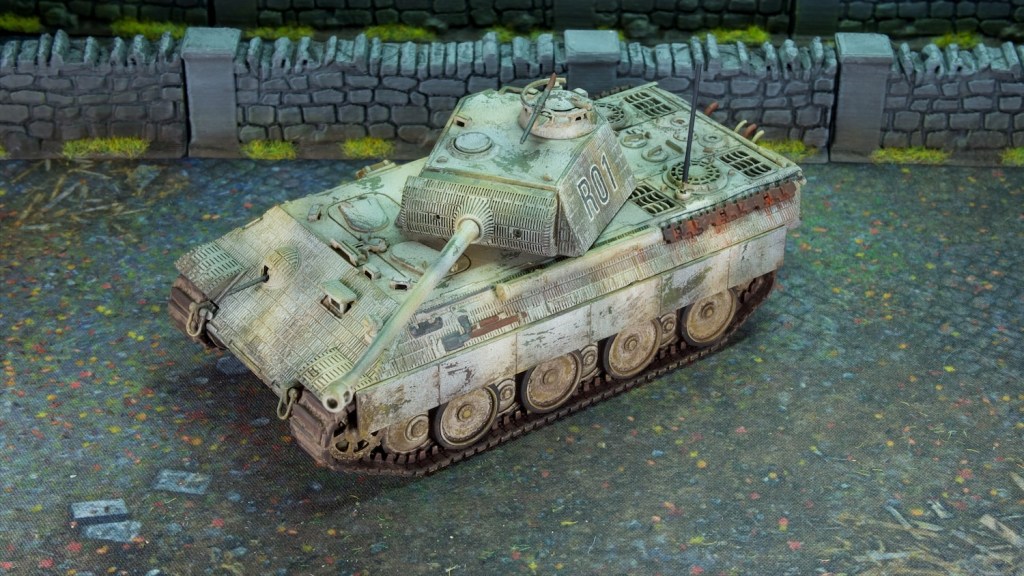
My painting table has had some form of WW2 models on it for quite a while now, as the build up of forces to get ready to play games of Chain of Command continues.

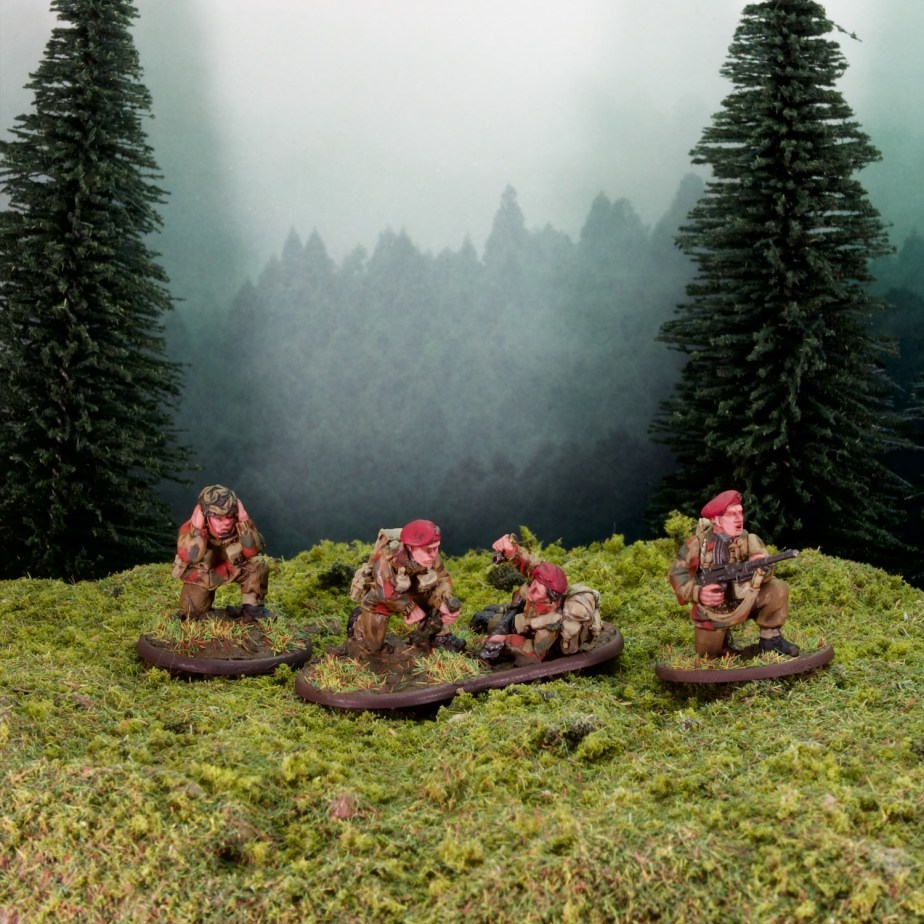
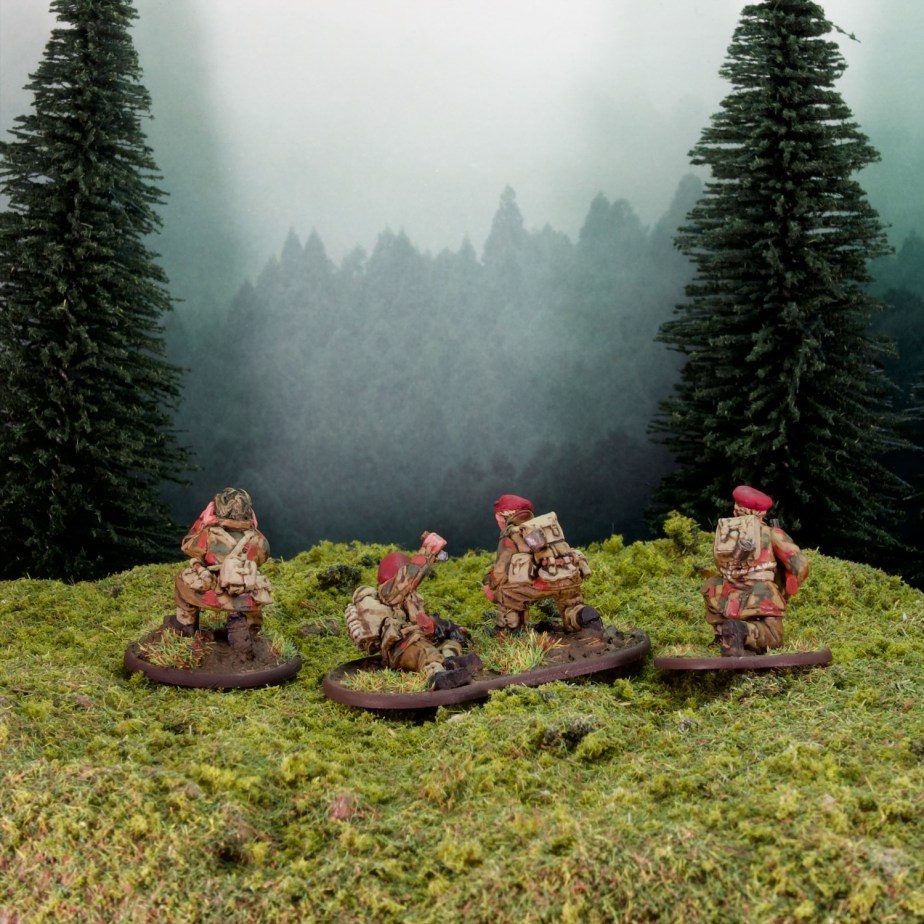
First up some British Paratroopers, with a Bren gunner and a 2-inch mortar team to bring my 6th Airborne up to strength.

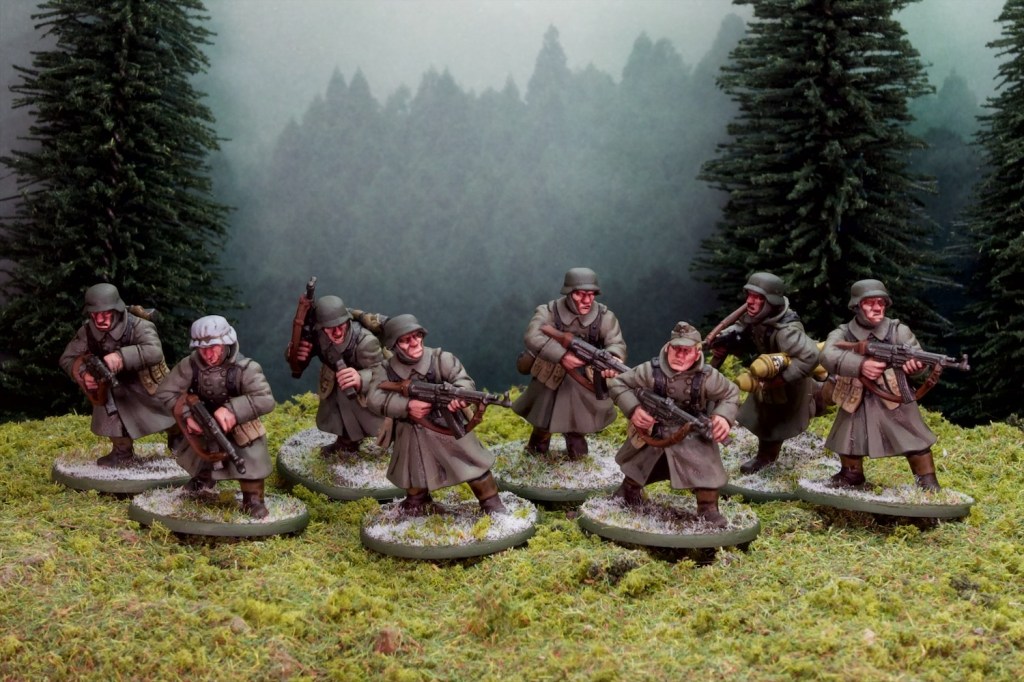
Secondly we have the first unit of a new army (don’t I already have too many WW2 projects on the go? Yes, probably).

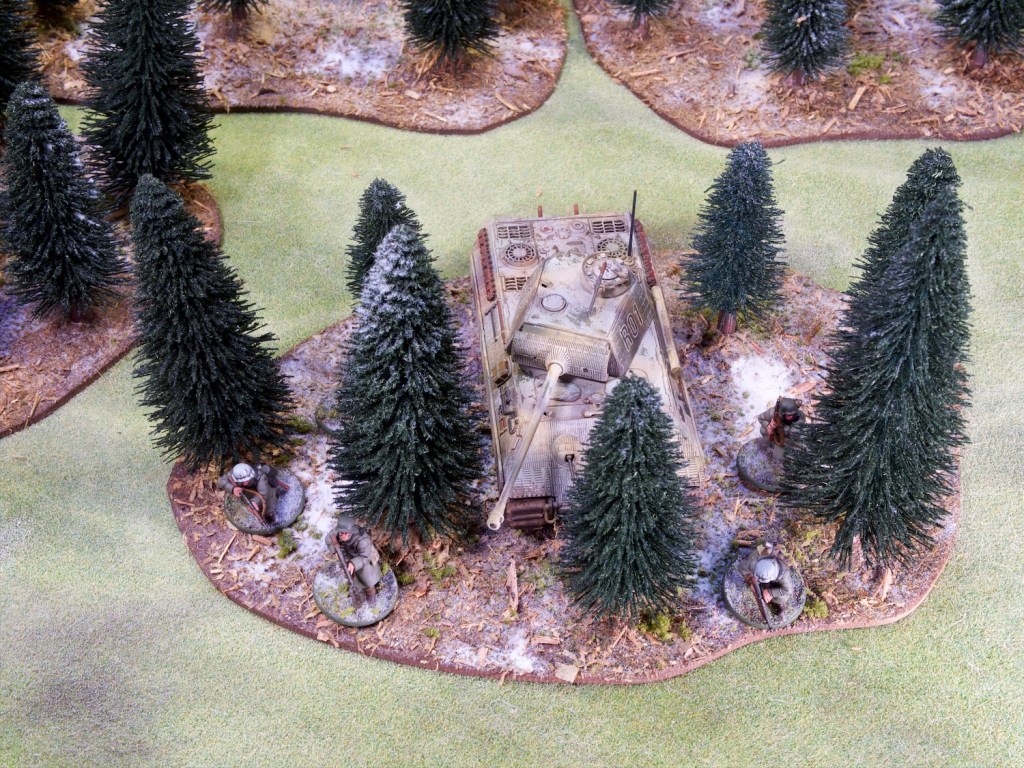
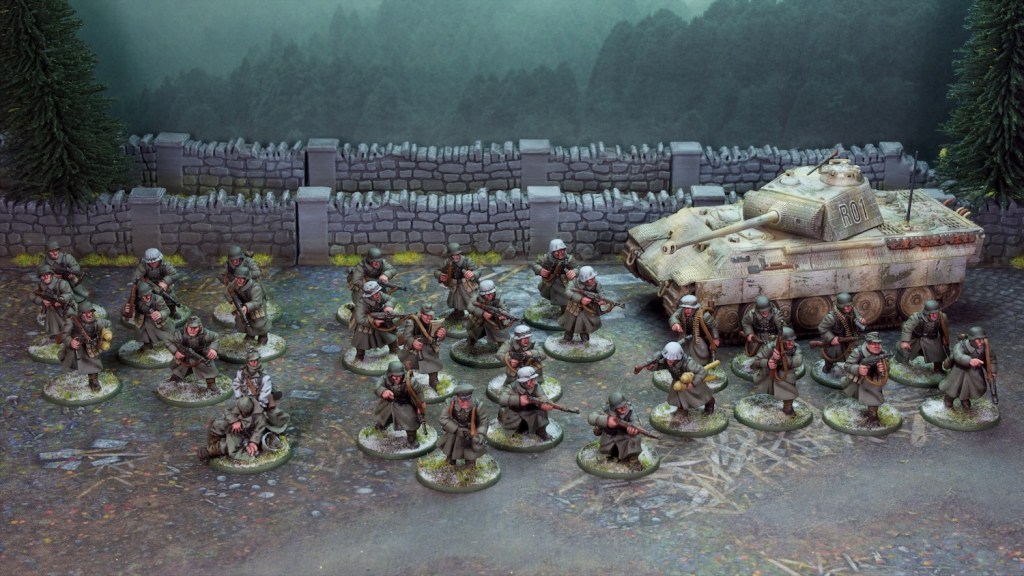
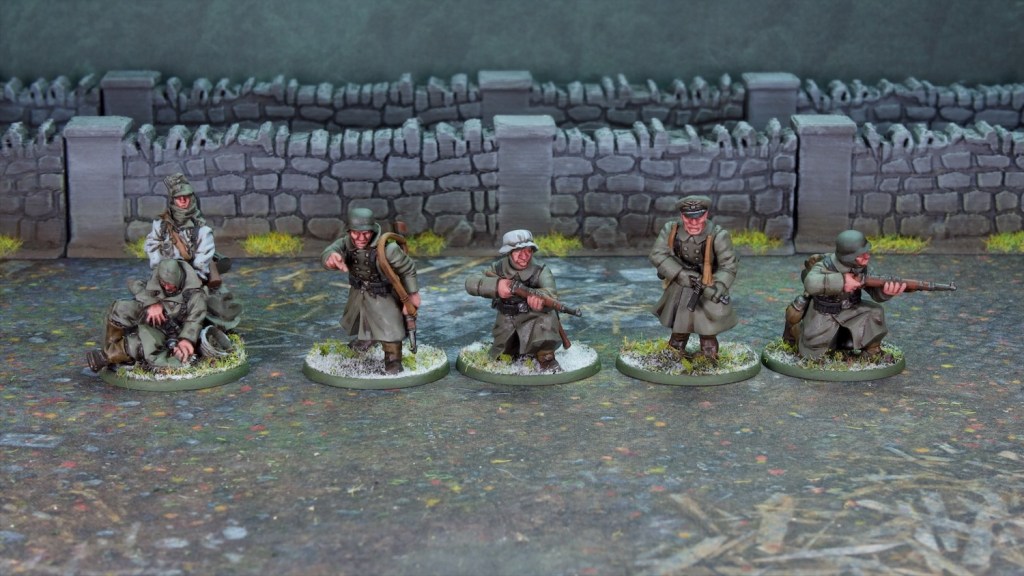
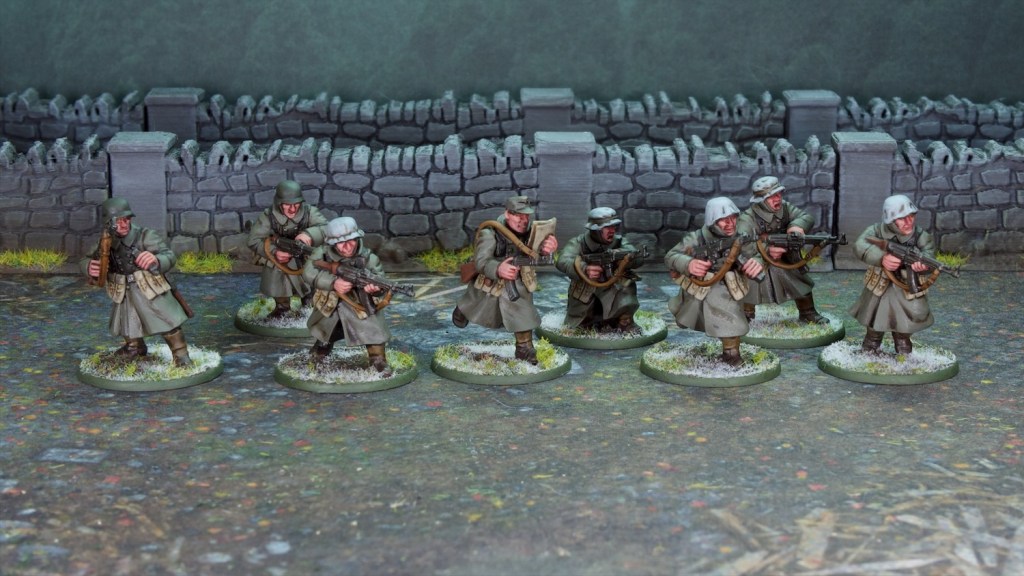
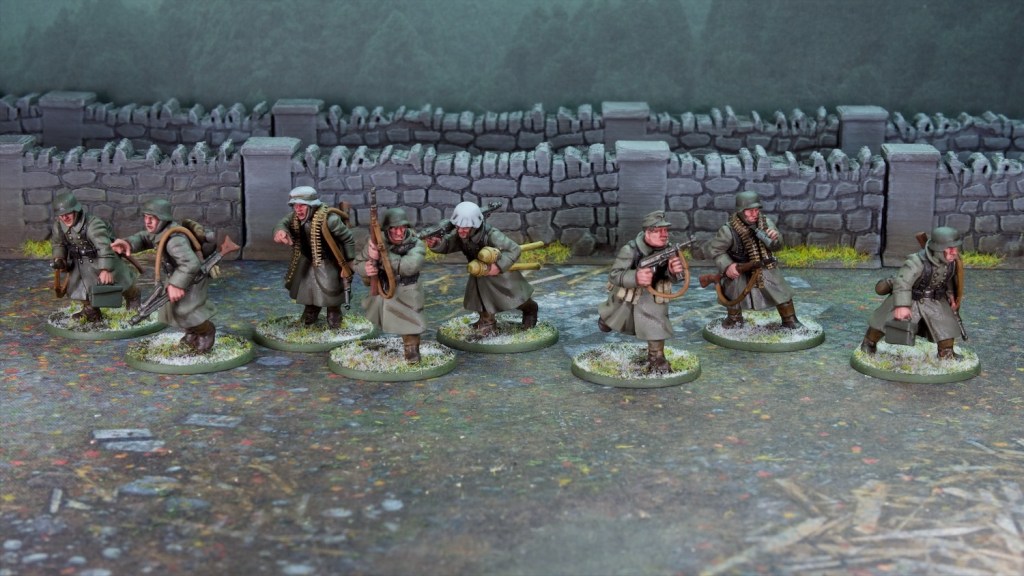
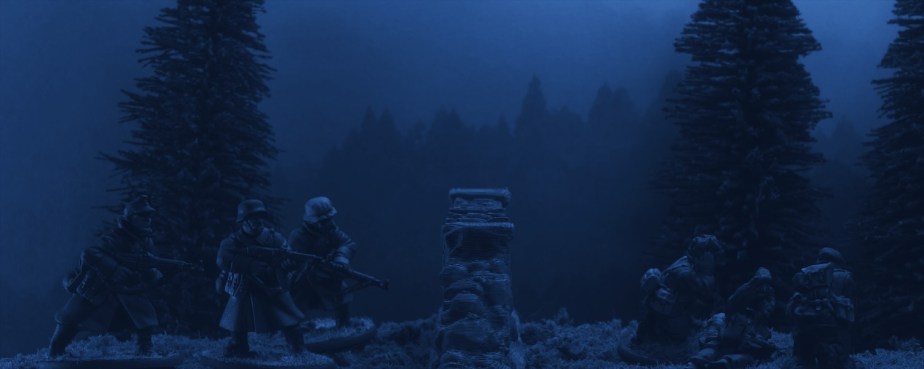
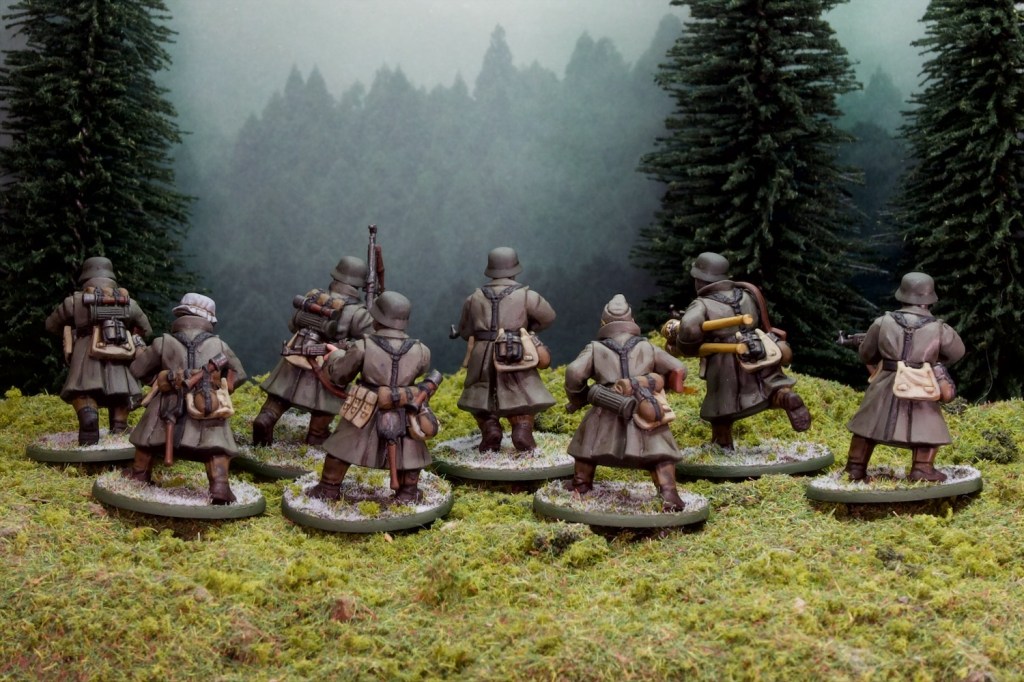
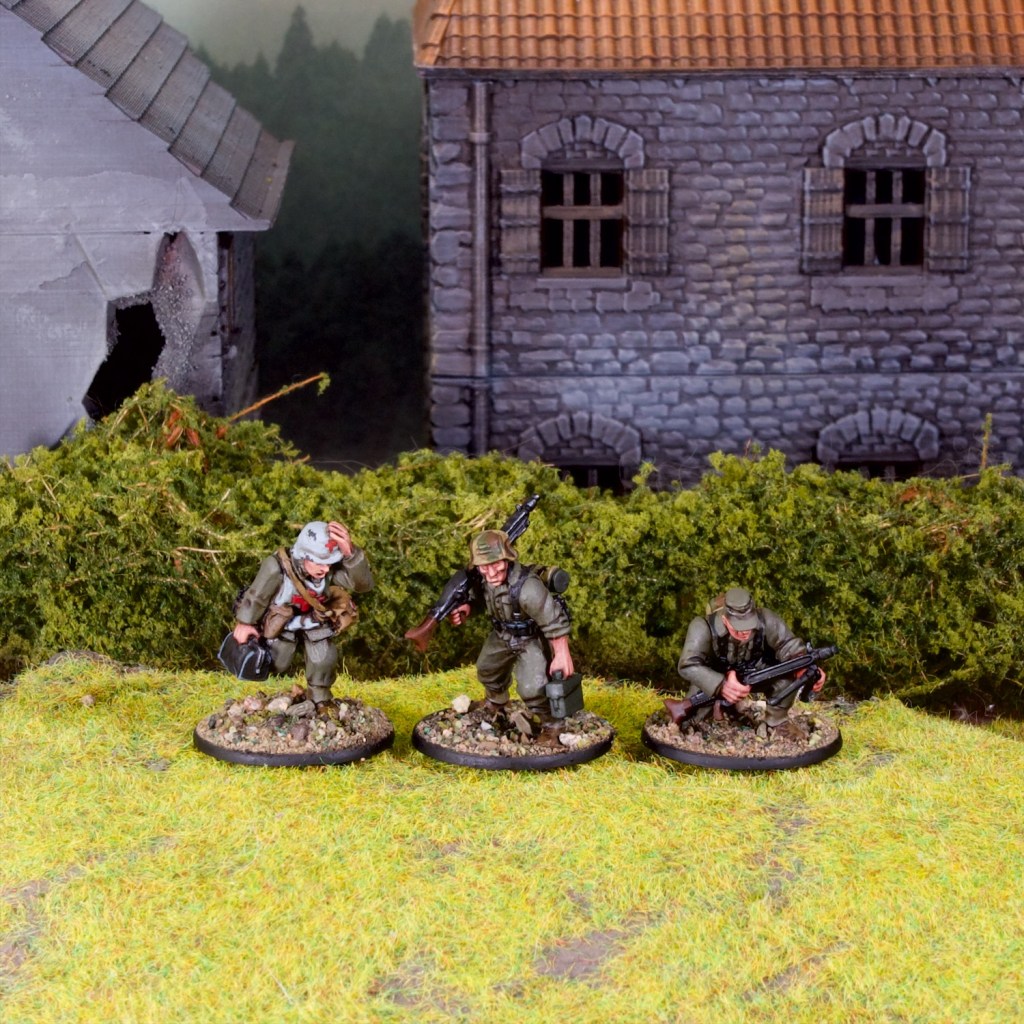
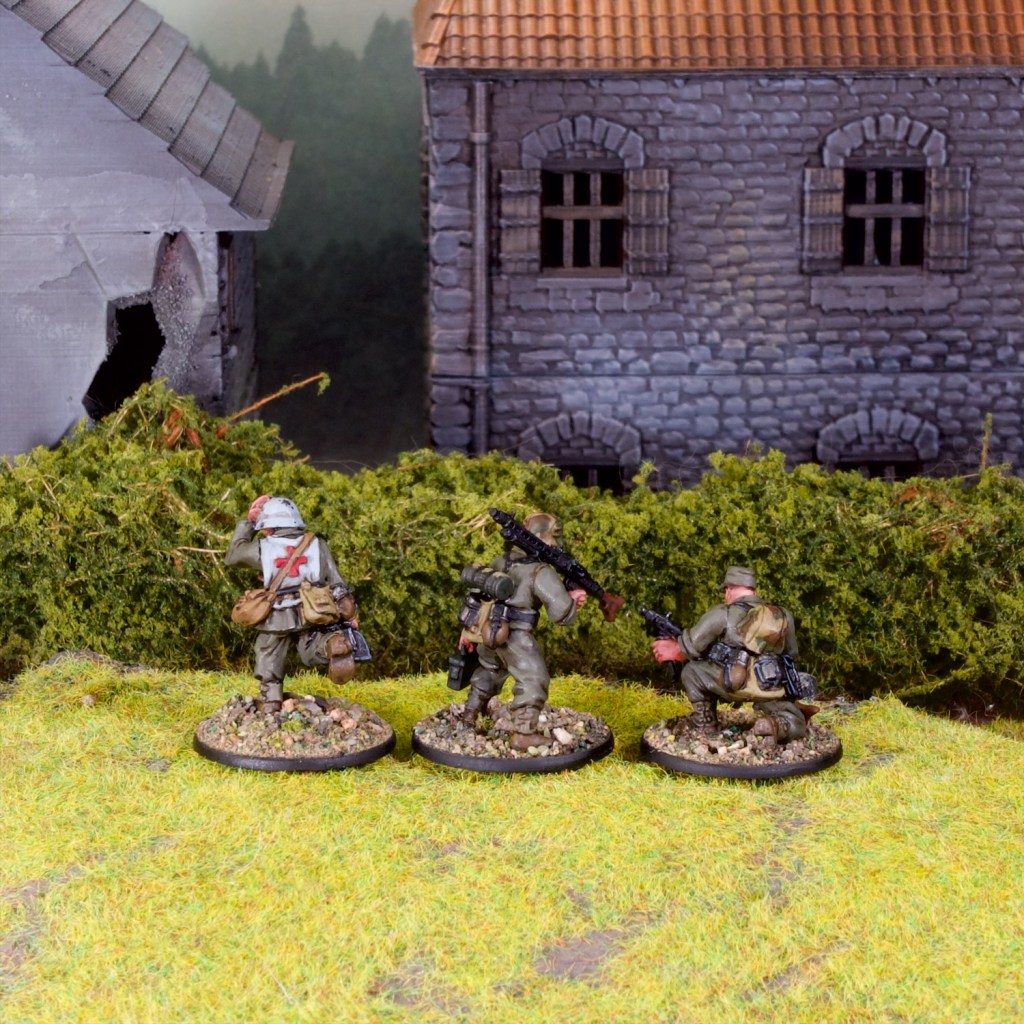
The models are from Warlord Games’ German Infantry (Winter) set, that I’ve built up as Volksgrenadiers for use in late war games on the Eastern Front or the Ardennes. I have a full platoon of these to paint for a game I’m planning soon, so this is just the tip of the iceberg.

Painting-wise, these were quite straightforward as the greatcoats really simplify the models. I started with an all over airbrush of Fieldgrey, then got painting in the details. The process is my usual easy army painting one, with basecoat, wash, then highlight back up with the basecoat colour. The exception is the skin which uses a second highlight colour.

The colours are as follows:

  • Washed with Citadel Agrax Earthshade and highlighted with basecolour
    • Coats/uniforms – VMC German Fieldgrey WWII
    • Wood/leather – VMC Flat Brown
    • Waterbottle/blankets – VMC German Camo Medium Brown
    • Bags/Pouches – VMC German Camo Beige WWII
    • Helmets/Gas Mask Boxes – VMC German Camo Dark Green
    • Panzerfausts – Vallejo Surface Primer German Dark Yellow
    • Cloth Helmet Cover – VGC Heavy Bluegrey
  • Washed with Citadel Agrax Earthshade – no highlights
    • Guns – VGA Gunmetal
    • Other metallic objects – S75 Black Metal
    • Webbing – VMC Black
    • Boots bottom – VMC Dark Rust
    • Boots top – VMC German Camo Medium Brown
  • Skin
    • Basecoat – Pro Acryl Shadow Flesh
    • Wash – Citadel Reikland Fleshshade
    • Highlight 1 – Pro Acryl Shadow Flesh
    • Highlight 2 – 50/50 Pro Acryl Shadow Flesh/AK Beige Red
    • Pick out the nose – Citadel Carroburg Crimson
  • Bases
    • Texture paint – AK Muddy Ground
    • Flock – some mix of foams and static grass I made ages ago
    • Snow flock – Citadel Snow
    • Rim – S75 Ardennes Green (Seemed appropriate!)

This scheme is very quick, I just lay down the basecoats (including the skin), then wash the whole model (Agrax for everything apart from the skin, Reikland Fleshade for the skin – doesn’t matter if they bleed a bit into each other), then highlight.

I’m happy with the way they look, the basing works well for me as I didn’t want to go full snow but rather light snow/frost. I’m also happy with the speed at which I can paint them, these were done in an afternoon/evening with some distractions.

Anyhow this was a rather long post, but I hope it was enjoyable!

Normandy Reinforcements

I’ve had a rather unplanned dip back into WW2 wargaming these last few weeks, and it’s resulted in quite a bit of model painting and building. This all started when I read Cryptonomicon by Neal Stephenson, one of those books I’d always meant to read, which sets half of its action in the WW2 years. This made me look into the new edition of Bolt Action which had been released since I last dipped my toes in the period, and also look into the other much talked about game for the era which is Chain of Command. Turns out Chain of Command had also just released its second edition, and having seen the game played on youtube in the past I was sufficiently interested to pick up a PDF of the rules from the publisher and start reading.

After reading the rules, I decided I really liked the look of Chain of Command (CoC) and I wanted to play it. Now CoC bases its armies on historical formations rather than the more Warhammer-like unit customisation Bolt Action offers. In Bolt Action, squads/sections have a minimum size, and extra models and special weapons are purchased to fill them out. The job of the list builder is to build a army that is functional and fits into the points limit. This often means under strength sections, as extra models get shaved off to upgrade another section to get an extra LMG etc. In CoC the platoon you select is as per historical records and there is little to no customisation available, so sections are full-strength, special weapons are as per historical kit out etc. This meant my Bolt Action armies were not quite playable in CoC and required a few more models to be painted to get there.

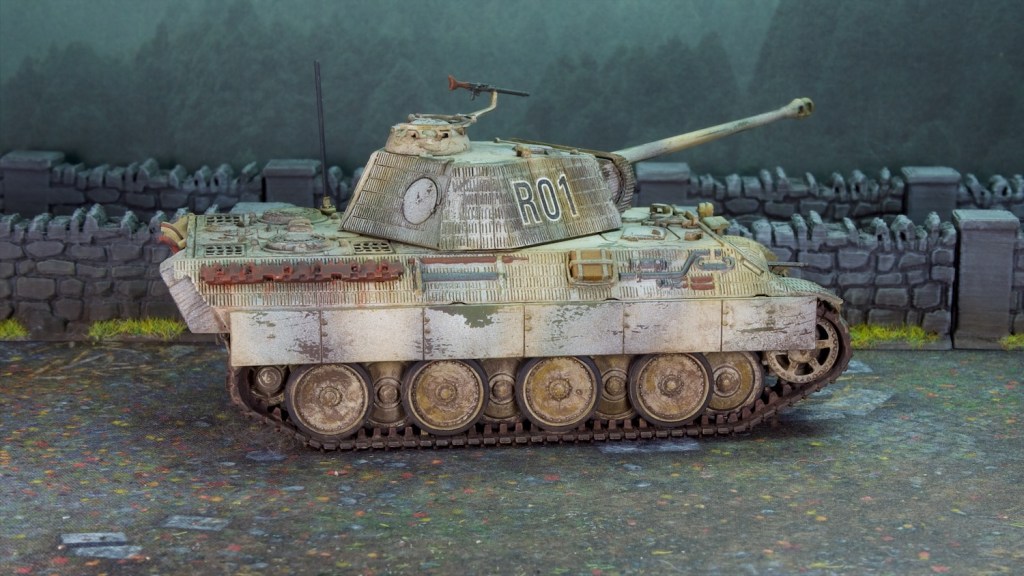
I started working on getting two of my armies up to scratch: my 2ème DB (i.e. my Free French Armoured Division), which needed (and still needs I’m not quite done!) quite a few more models to bring it up to a full strength Armoured Infantry Platoon, and my late war Germans who only needed a handful of models to make them into a Panzergrenadier platoon. I’m planning on making my North Africa forces CoC compliant but that requires a fair bit more work as they’re much smaller for now.

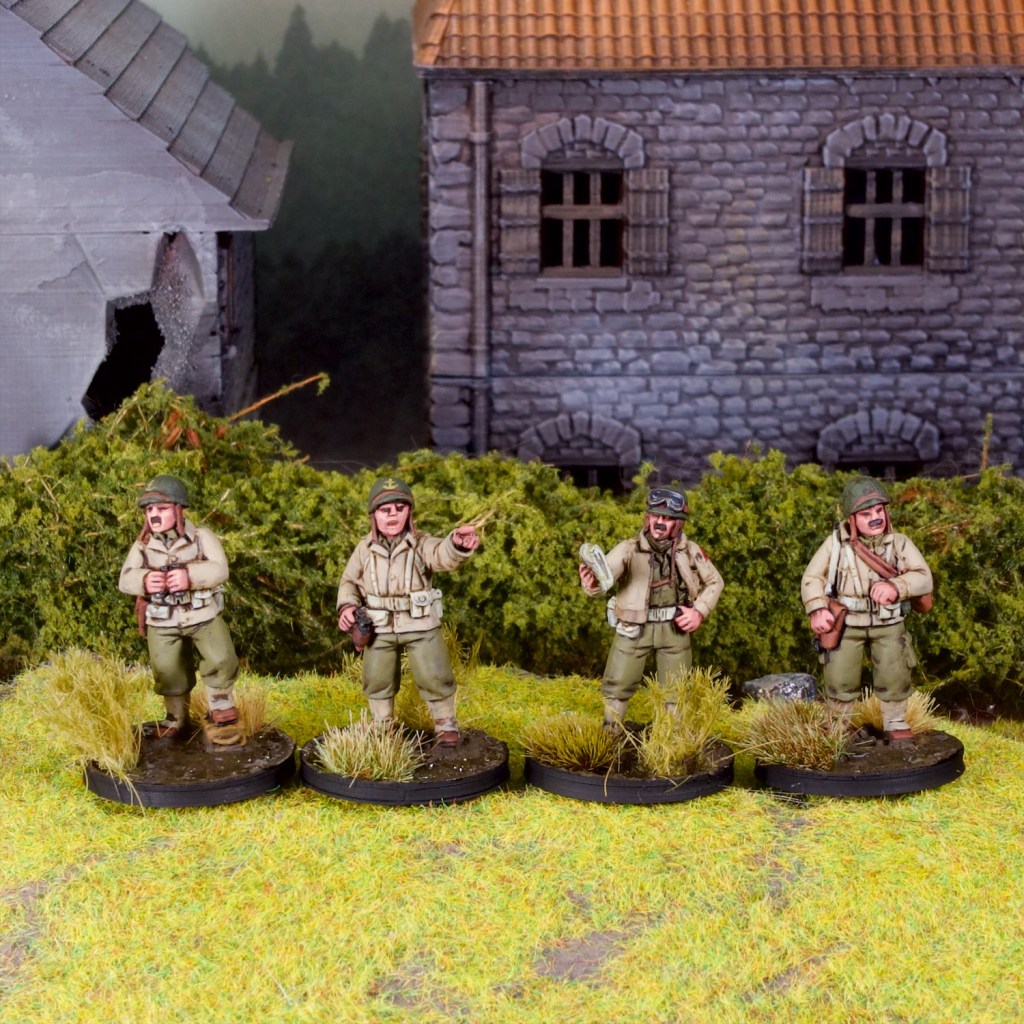
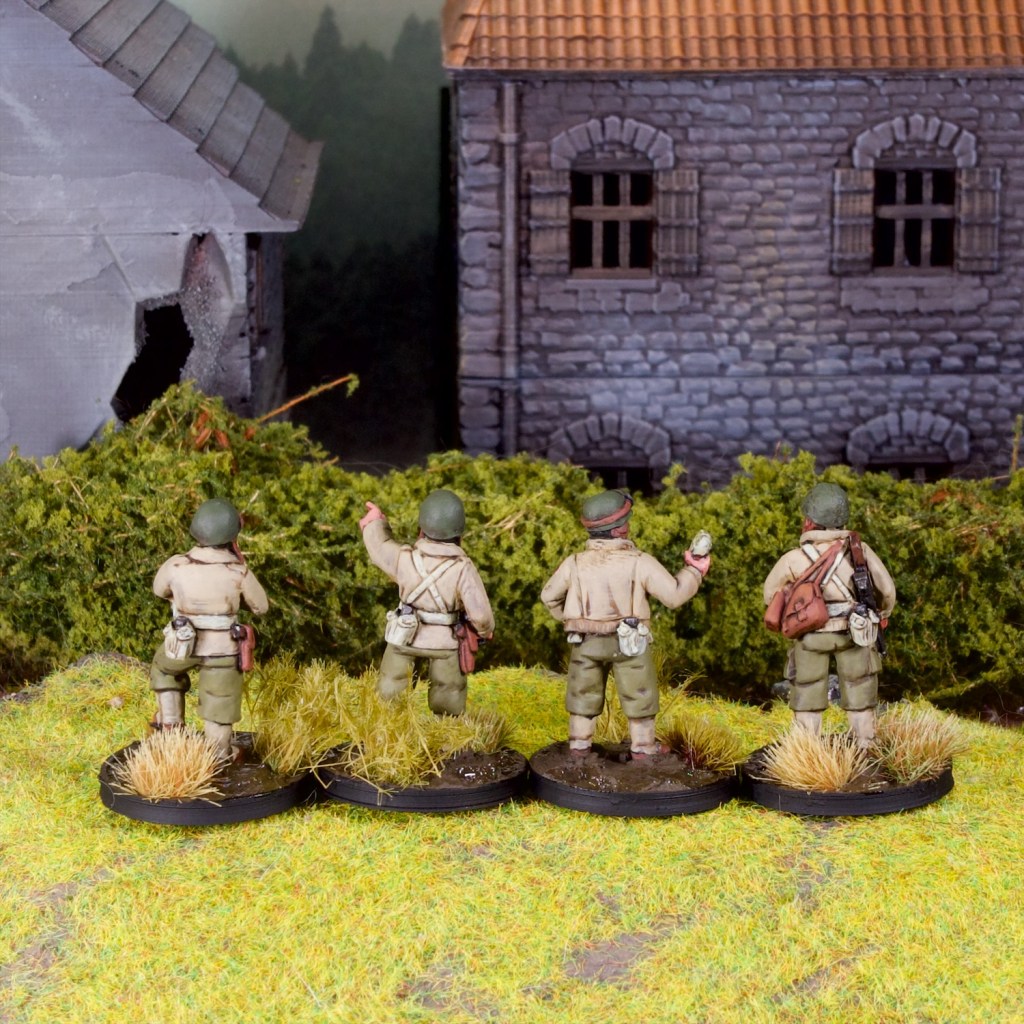
First up, my Free French needed a lot more officers (very important in CoC), so I picked up the Warlord Games US Army Platoon Commanders set which has the four models you see above, cast in their “Warlord Resin”. The models were all one piece and quite easy to clean up. The detail on them was quite nice and they were easy to paint (in my usual slightly speedy manner employed for historical models).

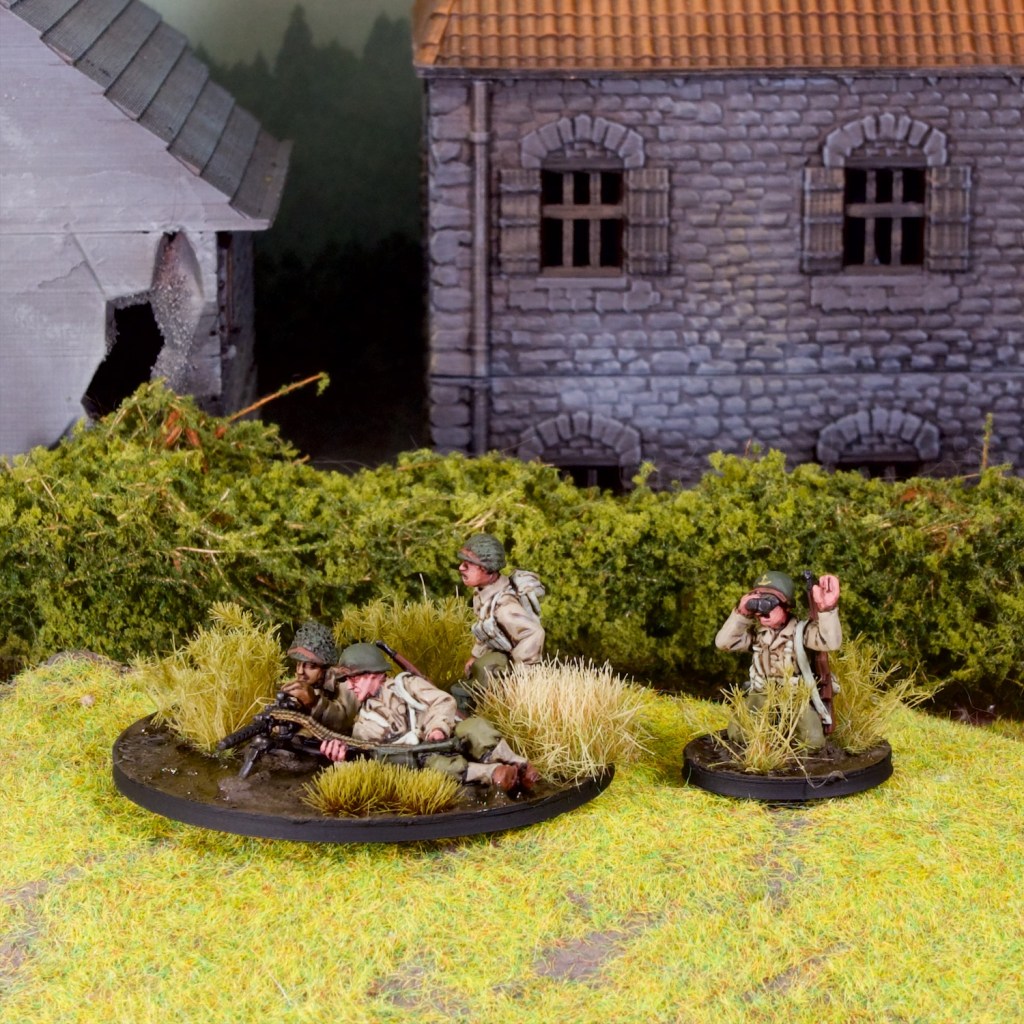
I also added a Browning .30cal team, also from Warlord (this one a metal set), and I also painted the remaining crew member of the Perry Miniatures mortar team I painted as part of my first batch of models for the army all the way back in 2022! Bolt Action tends to default to 3 crew for a lot of weapons (presumably for game balance), while CoC sticks to historical numbers, so the mortar should have 5 crew all up – which means I still need to make another crew at some stage!

I still need a few more models to get the army game ready, namely some regular infantry as well as a second Browning team. I’ll work on them soon so I can play a game!

As mentioned above I also painted a few more Germans to make that army ready to play, which meant painting two more MG42 gunners. I also painted up a medic model I had, this one not required by the game but is an available support option and I liked the model!

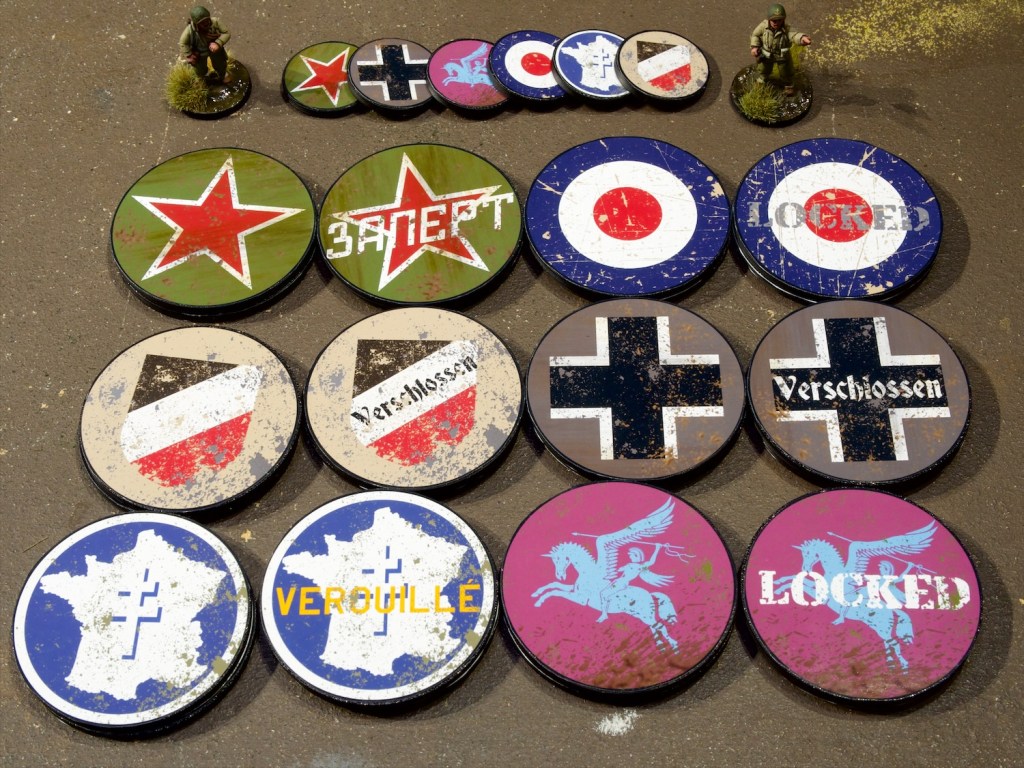
Finally, CoC is a pretty token intensive game, and I’ve been in a token-making mood recently (I made a whole batch of custom tokens for Netrunner recently and that kicked off something in me!) so I started making tokens for the game. Most of those aren’t ready to show so I’ll leave them for another post, but what I do have ready is what are called Patrol Markers and Jump-off Points in the game. These are used for a pre-game mini-game that determines the starting positions of both armies.

The patrol markers tend to be bigger (I went for 60mm diameter) and the jump-off points smaller (I went for 30mm). The patrol markers need to be able to be marked as locked so I made them double-sided with a locked side and an unlocked side. The translations are all mine so hopefully they’re right (I’m confident about the French one at least!).

These are made by 3D printing simple discs and (2D!) printing the designs on some self-adhesive photo paper. I made the designs in Affinity Designer (an Adobe Illustrator alternative that I heartily recommend). The only parts I didn’t make are the map of France (SVG from https://simplemaps.com/svg/country/fr) and the Airborne (From Wikimedia commons https://commons.wikimedia.org/wiki/File:British_Airborne_Units.svg). I made a set for all of my armies as I was enjoying myself quite a bit making these. Left to to right, top to bottom: Soviets (I don’t have any of these but my regular opponent does!), 8th Army, Afrika Korps, Germany, 2ème DB, British Airborne.

I look forward to giving the game a go, it looks like a really nice way to play the period. I’ve organised to have my interested in WW2 friends to come over for a game in the next month or so, so I’ll be doing some preparations for that until then. I’ll most likely be playing a practice game by myself beforehand to get across the rules properly so might turn that into a battle report for the blog.

The Silver Bayonet – The Troll Hunts

My foray through the Silver Bayonet solo campaign continues and in this mission my hapless British unit tries to have a good night’s sleep after their close call in the ruined chapel. As all good horror fans know however, sleeping in the woods is asking for trouble and trouble indeed finds the sleepers!

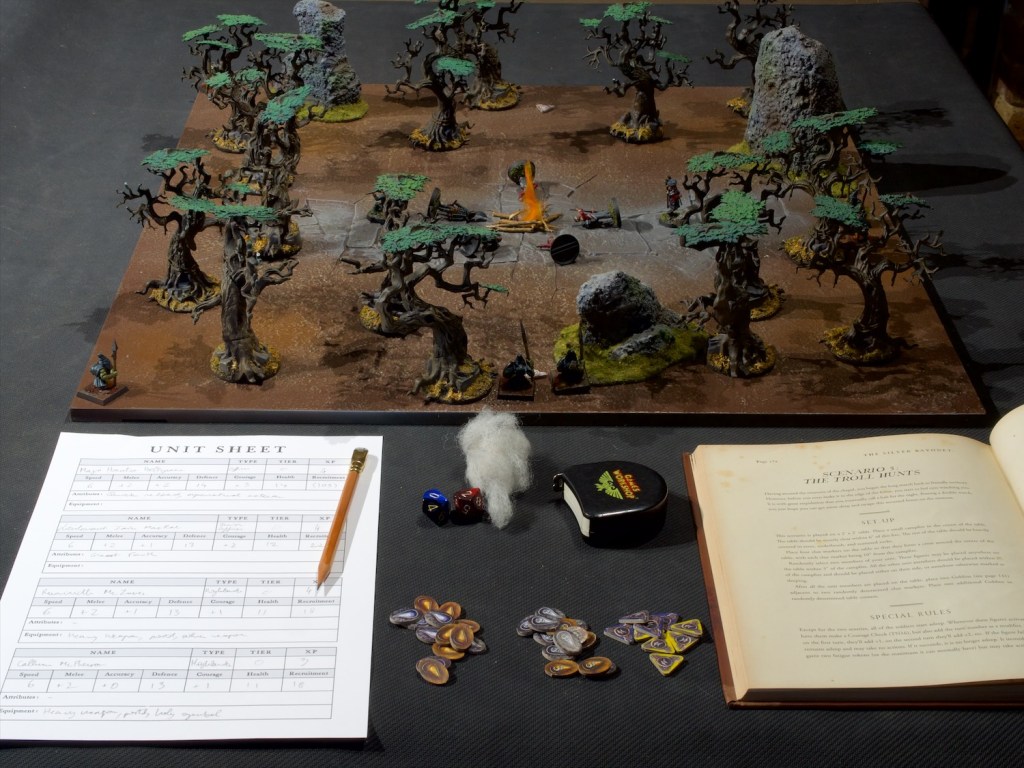
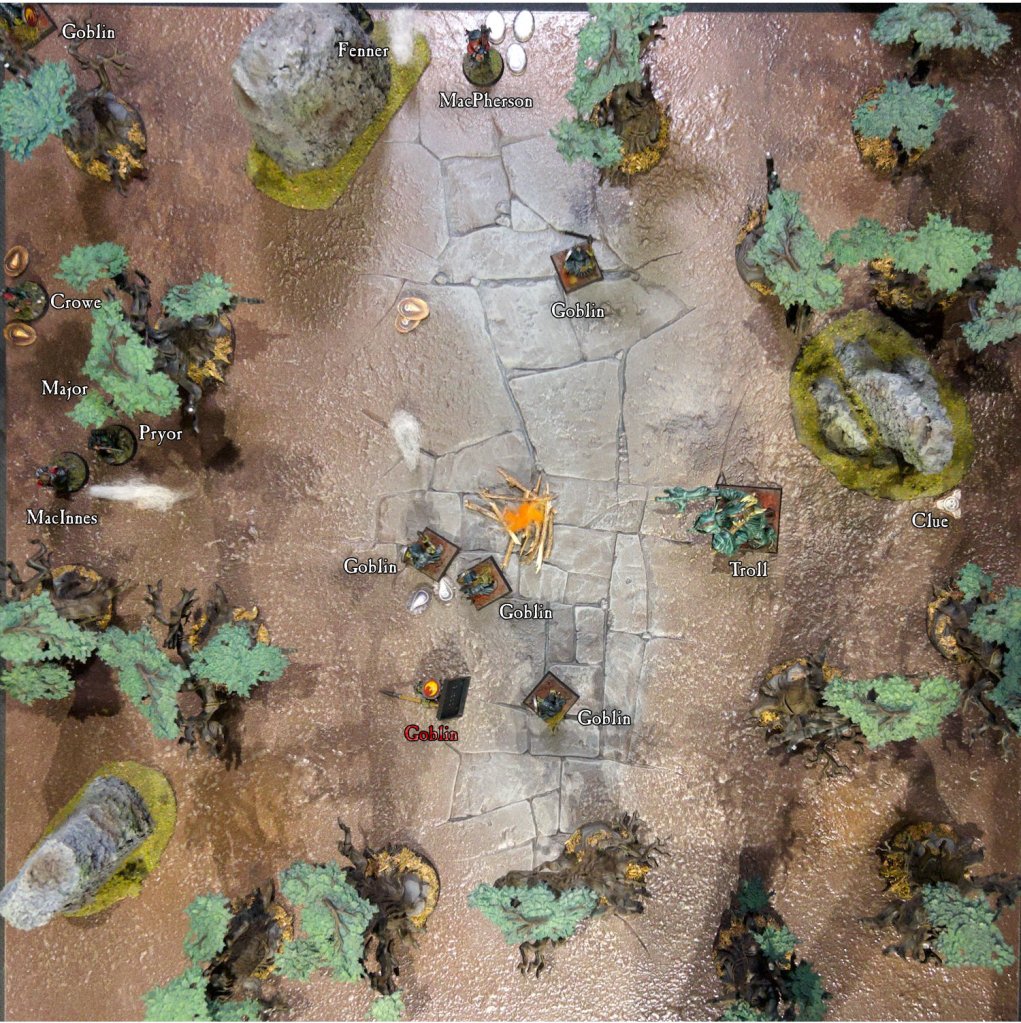
This mission is played on a 2’x2′ table, and rather than marking off an area of my 6’x4′ mat as I’ve done for the last two games, I decided to break out a panel from my Citadel realm of battle board which doesn’t see much use these days (neoprene mats are just so convenient!).

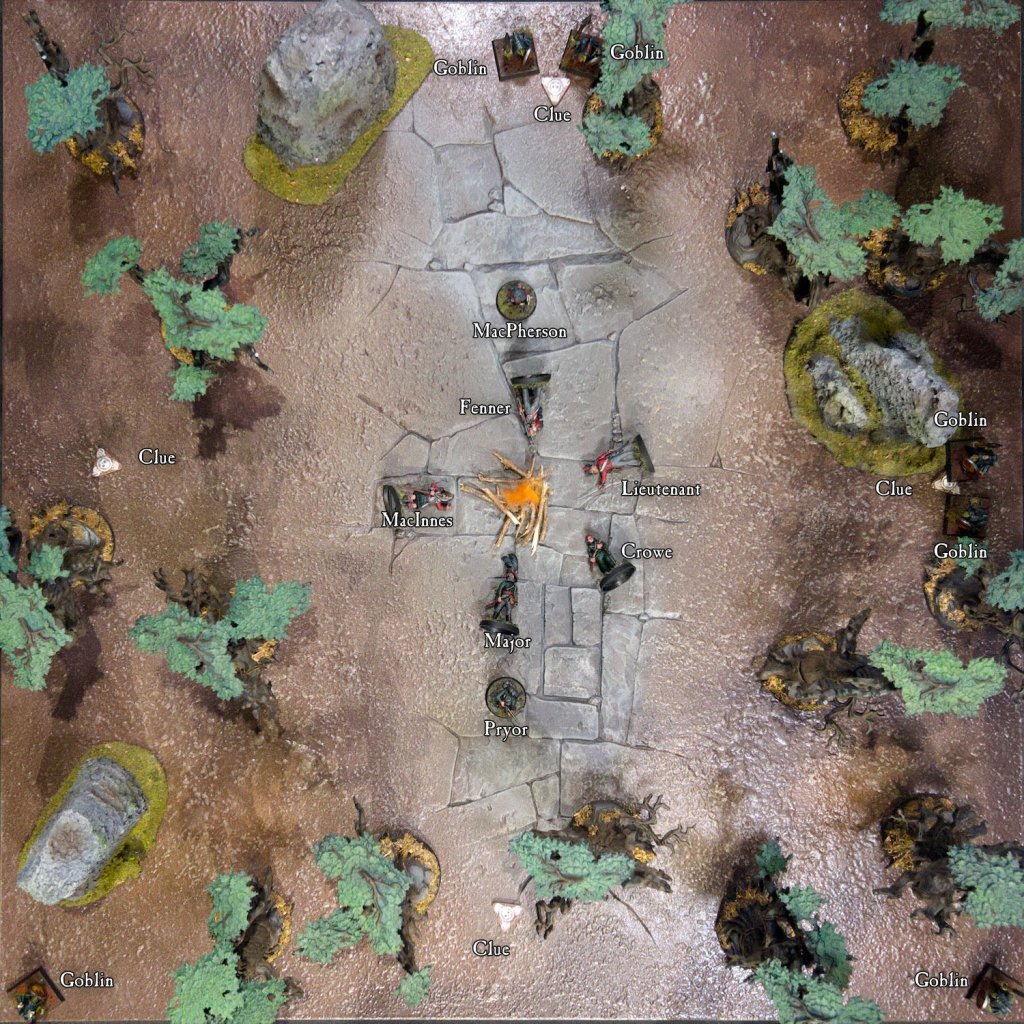
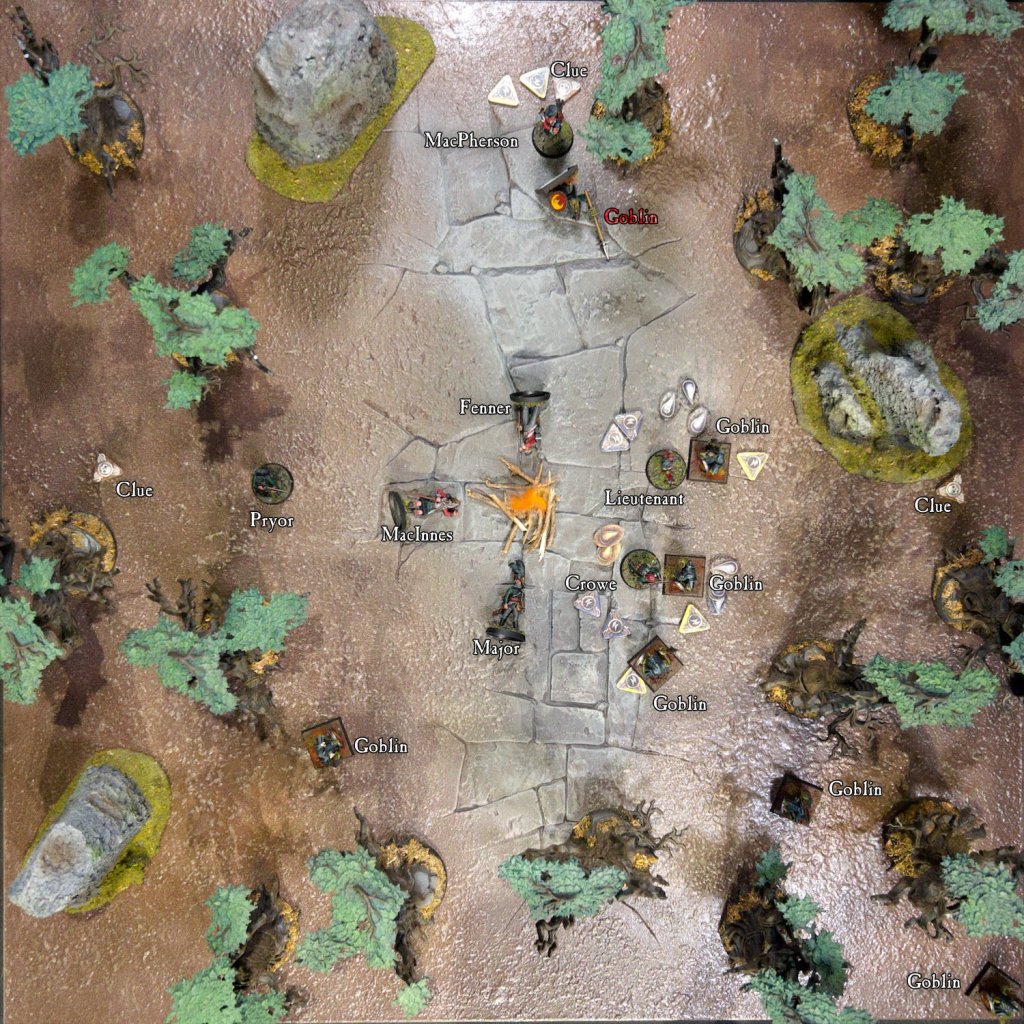
The scenario setup has two randomly selected sentries standing guard while the rest of the unit is asleep around a campfire. There are four clue markers set up close to the outside of the table, two of which have goblins close to them with a further two goblins appearing at two randomly selected table corners. The sleeping figures need to roll each turn to see if they wake, or if a monster attacks them they automatically wake. Either way once a figure wakes it gains fatigue tokens which negatively affect its defense and melee ability for the turn.

The board at the start of the game.

Goblins are very tricky to deal with in the game, they have very high defense, they make mechanical devices fail when close, they are hypnotic meaning voluntarily attacking them is tough, and they have damage reduction (negated by cold iron). They are repulsed by holy symbols, which give them penalties to hit, so MacPherson’s bagpipes should help keep them at bay to some extent!

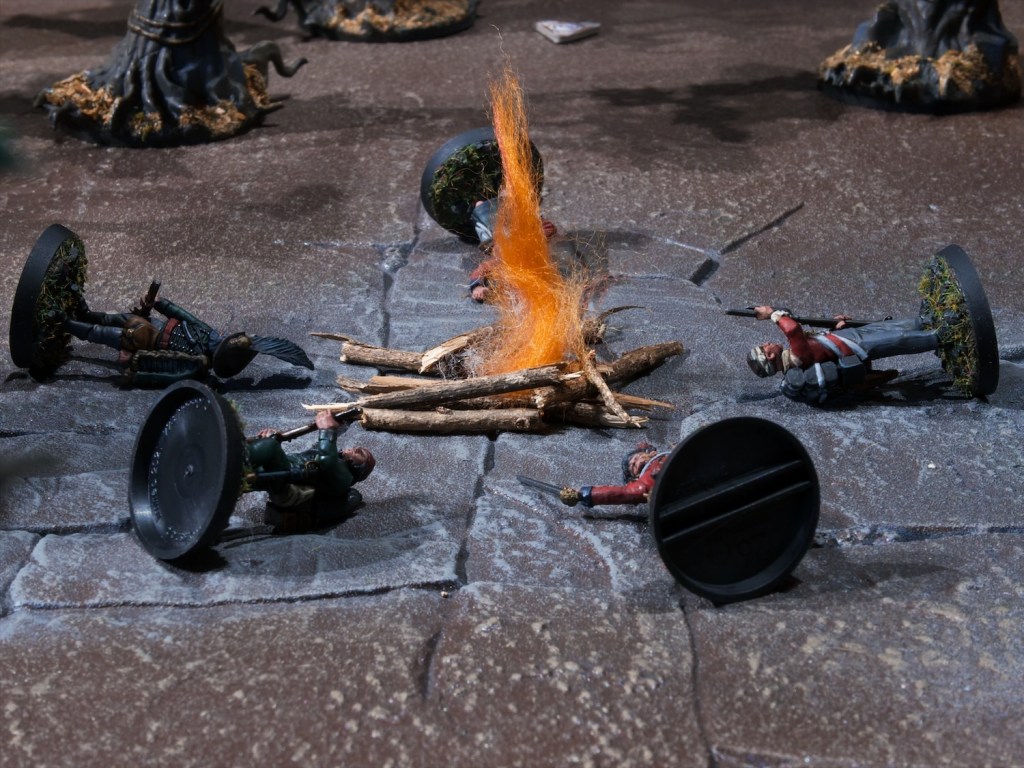
I didn’t have a campfire model on hand, so some twigs from the garden and some orange wool from Bolt Action vehicle damage markers did the trick!

Hopefully they’re sleeping lightly…

Turn 1

The sentries burst into action, with Pryor moving towards the closest clue and investigating it – finding a gold ring which allows me to add a skill or power die to my fate pool (I choose power). MacPherson tries to shoot the closest goblins but finds his pistol won’t fire. Clearly the creatures have some power over mechanical devices! He attacks instead and scores a solid hit. The goblin misses on its attack back, clearly disturbed by the bagpipes. The Major stirs but fails to wake. The goblins near MacPherson swamp him but his pipes affect them and they both miss. On the other hand he rolls amazingly and hits both with his attacks back, killing one.

Seems that they’re heavy sleepers…

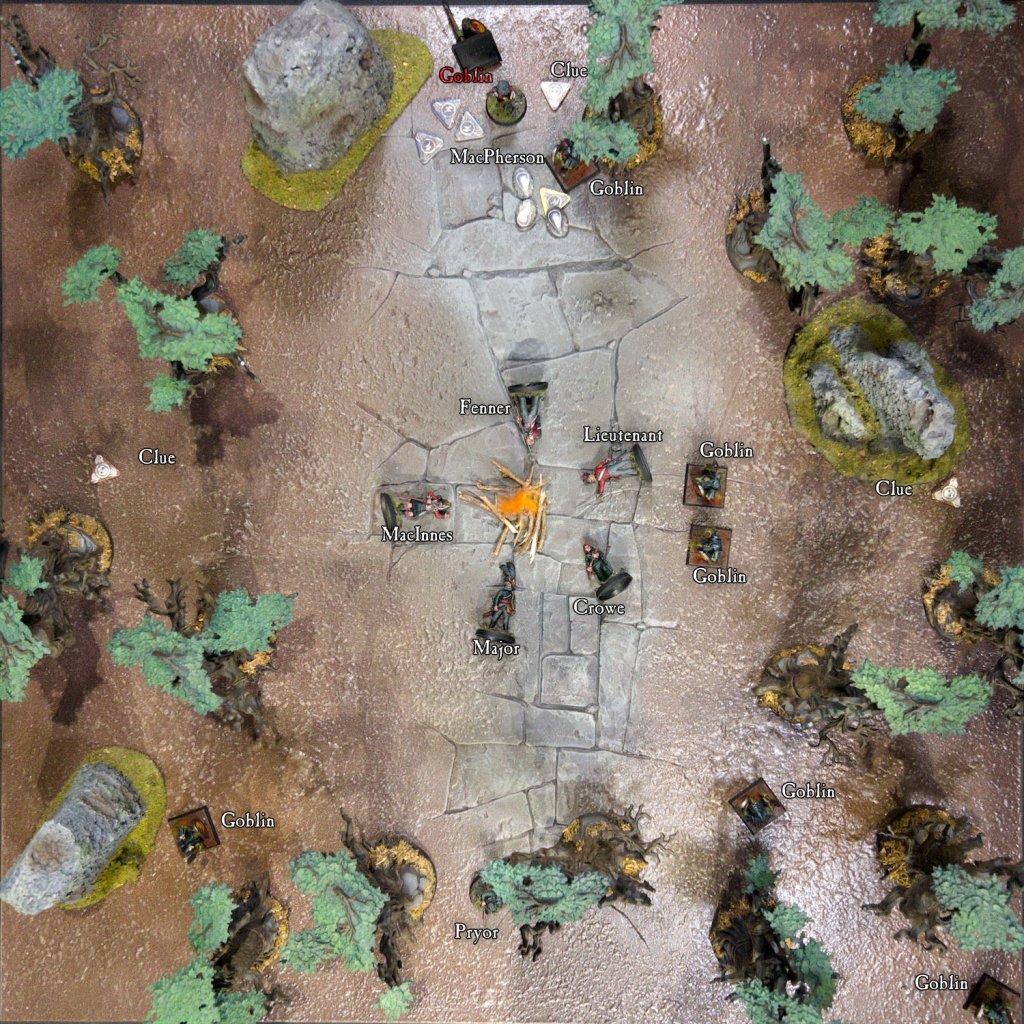
The rest of the goblins close in on the sleeping forms which all fail to wake! At the end of the turn another goblin enters the table.

The board at the end of turn 1.

Turn 2

MacPherson and Pryor are still the only two awake at the start of the turn. MacPherson continues his rampage, disposing of the second goblin. Pryor sprints towards a second clue. The major keeps slumbering. The goblins next to the camp reach Lieutenant MacRae and Crowe and attack them, waking them. Very luckily for me (given both men are fatigued) the only goblin attack that hits only deals small amounts of damage. Even more lucky, MacRae hits his opponent back and Crowe hits one of the two goblins attacking him. The other goblins close in on the camp fire, and my sleeping figures all fail to wake. MacRae attacks on his turn, misses and the goblin strikes nastily, prompting me to burn a fate die to reduce the damage. Another goblin arrives onto the table, things are looking pretty grim.

The board at the end of turn 2.

Turn 3

MacPherson runs to the rescue of the Lieutenant and Crowe, charging the closest goblin. His attack misses, but so does his opponent’s strike back. Crowe is one of the only models in posession of cold iron shot so I really need him to be able to fire which he cannot do if he’s close to them due to their disruptive aura. For that reason he moves back and takes a shot but misses. The Lieutenant then dives in the gap and takes on Crowe’s attackers. He misses and so does the goblin.

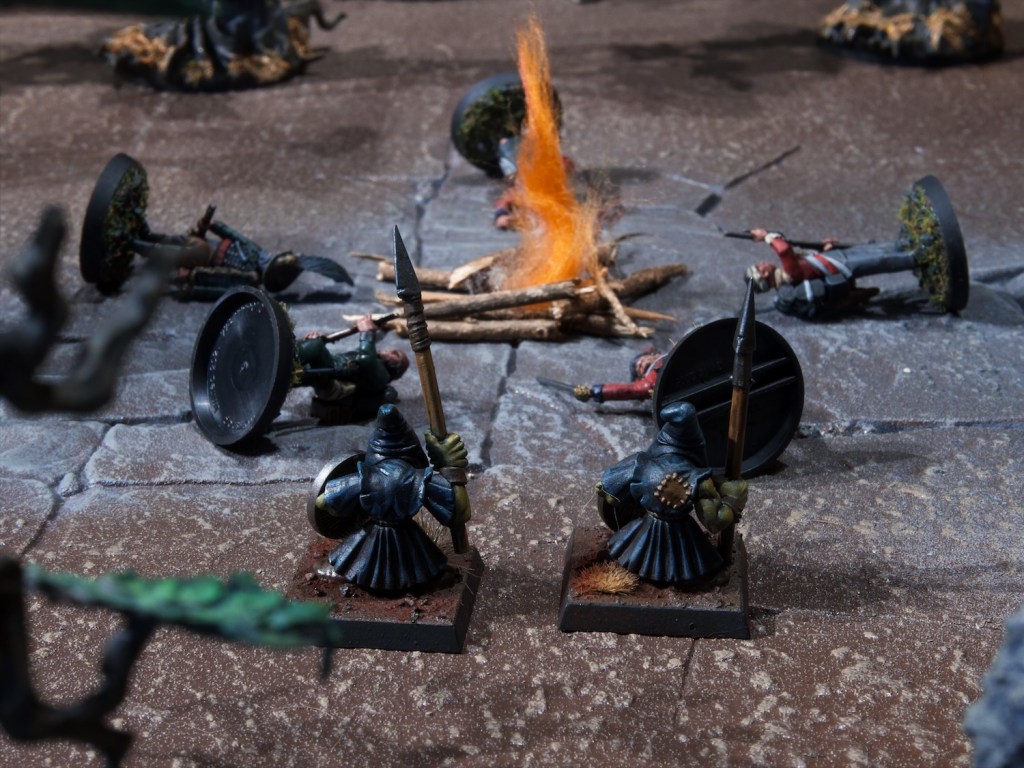
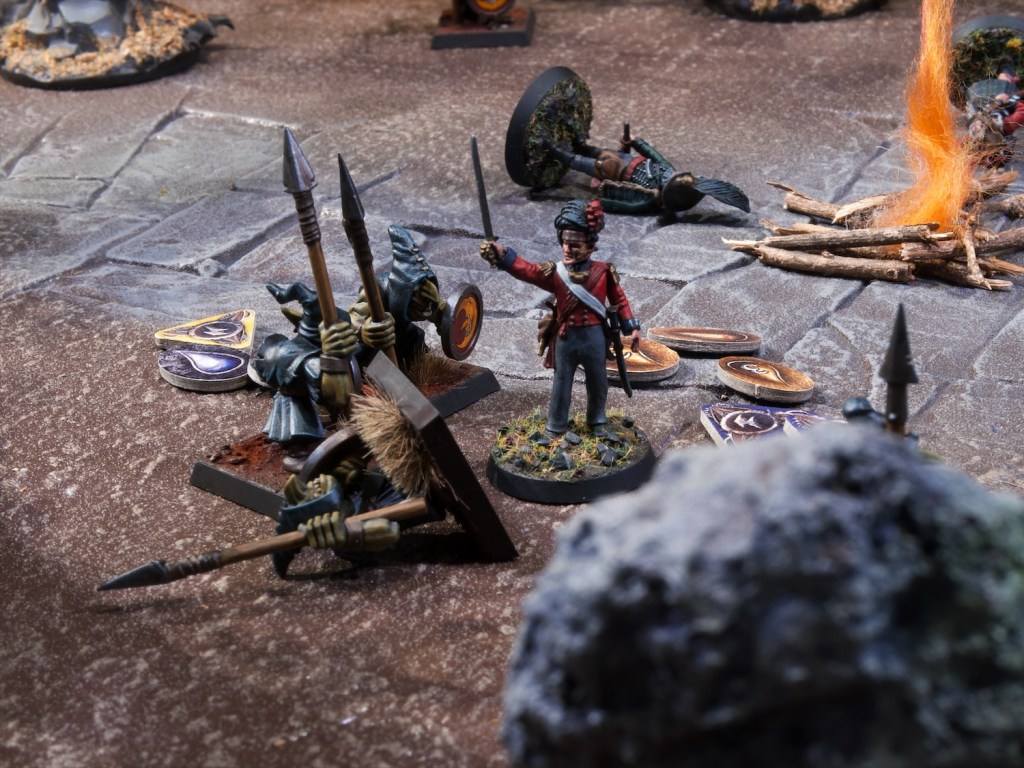
Moments before disaster…

The goblin on MacPherson attacks, misses (those bagpipes!) and MacPherson misses right back. MacRae is in for a bloodier fight: the first goblin attacks, hits him for low damage, and MacRae’s strike back kills the goblin (after I spend my skill die re-roll). The second goblin hits him, dealing 10 damage, which would take MacRae out! I spend my second power die to reduce the damage – this keeps MacRae in the game. MacRae scores a solid hit back. The third goblin also hits MacRae and this time it’s too much for the brave Lieutenant and he collapses. The last goblin charges the Major, waking him by scoring a solid hit. The Major tries to strike back but misses, still bleary-eyed.

Pryor investigates the clue he was moving towards last turn and finds some nice dry wood which he lights up, never know when something will need to be set on fire! Fenner finally wakes up and moves to investigate the clue to the north. He finds a bag of iron nails that he promptly loads into his musket. The Major moves away from his attacker and fires his rifle at it, hitting and heavily wounding the goblin. MacInnes sleeps on.

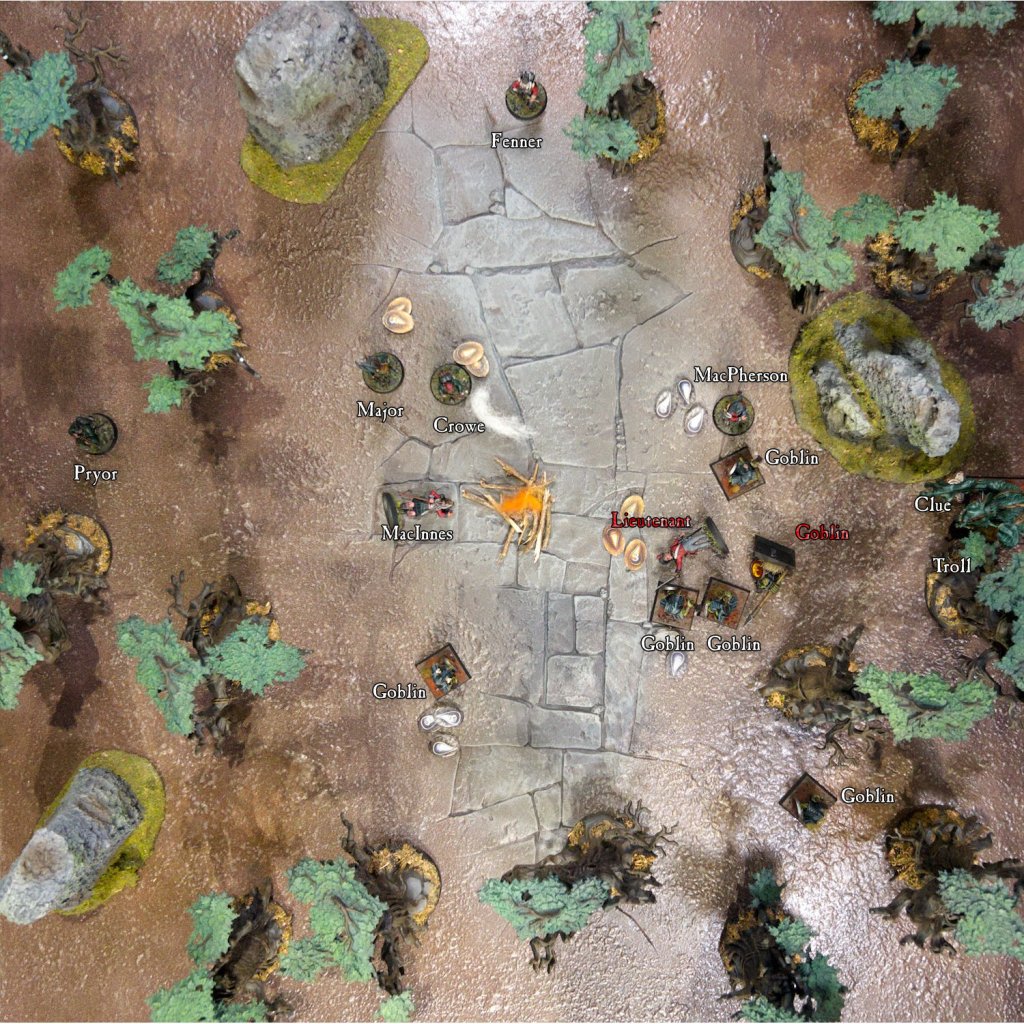
A large troll walks onto the eastern edge of the table.

The board at the end of turn 3.

Turn 4

At this stage, the Lieutenant is down, a troll is approaching, and the goblins have been cleared from the North-West corner of the board. Time to clear out!

MacPherson sprints away from the goblins. Crowe walks away and reload his rifle with some cold iron shot. The Major does a quick reload and fires at the closest goblin but misses. He then also moves away. Most goblins are now out of range of attacking anyone so they just follow the unit members. One goblin is in range of MacInness and rushes him, waking him up with a close miss. MacInnes reads the room and moves back rather than attacking back. The troll approaches the campfire, picks up a rock and throws it but misses.

Time to get out of here!

Fenner moves back and fires his iron nails at the closest goblin but misses. McInnes legs it away from the goblin, fires his pistol and also misses. Crowe moves back and reloads.

Another goblin enters from the North East corner.

The board at the end of turn 4.

Turn 5-6

These turns are rather uneventful, the unit moves back and finally off the board, taking pot shots at goblins and the troll but no more real damage is done.

After the game I rolled on the injury table for Lieutenant MacRae and he picked up a permanent injury for his troubles, with a nasty leg wound that reduces his move by one.

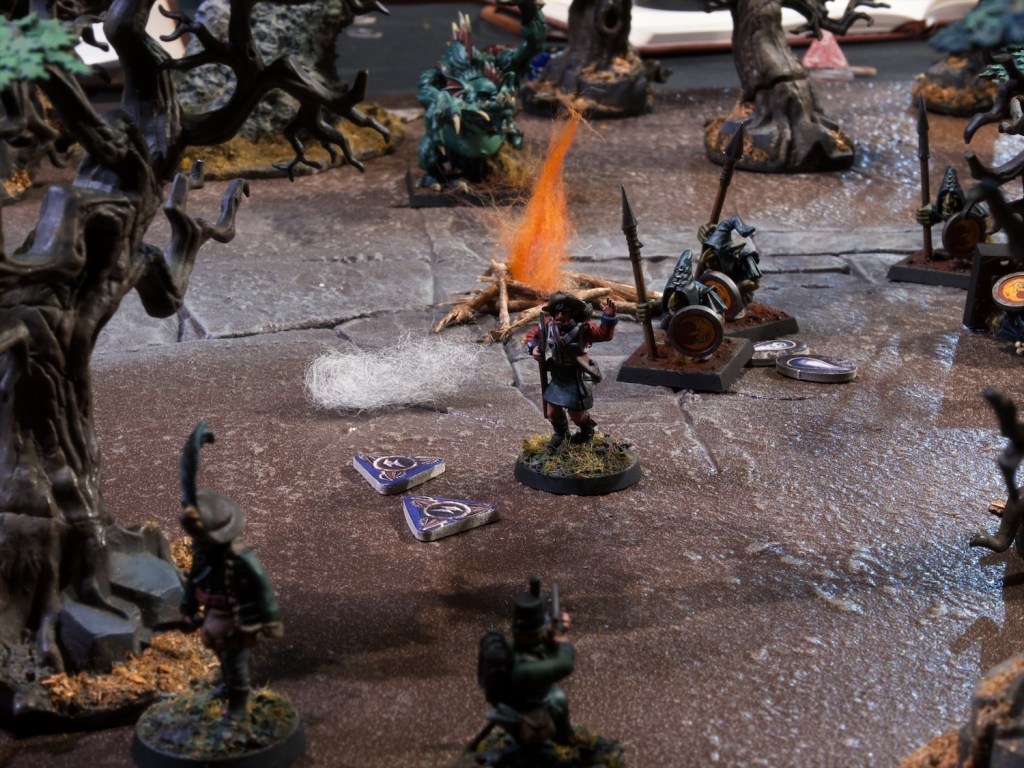
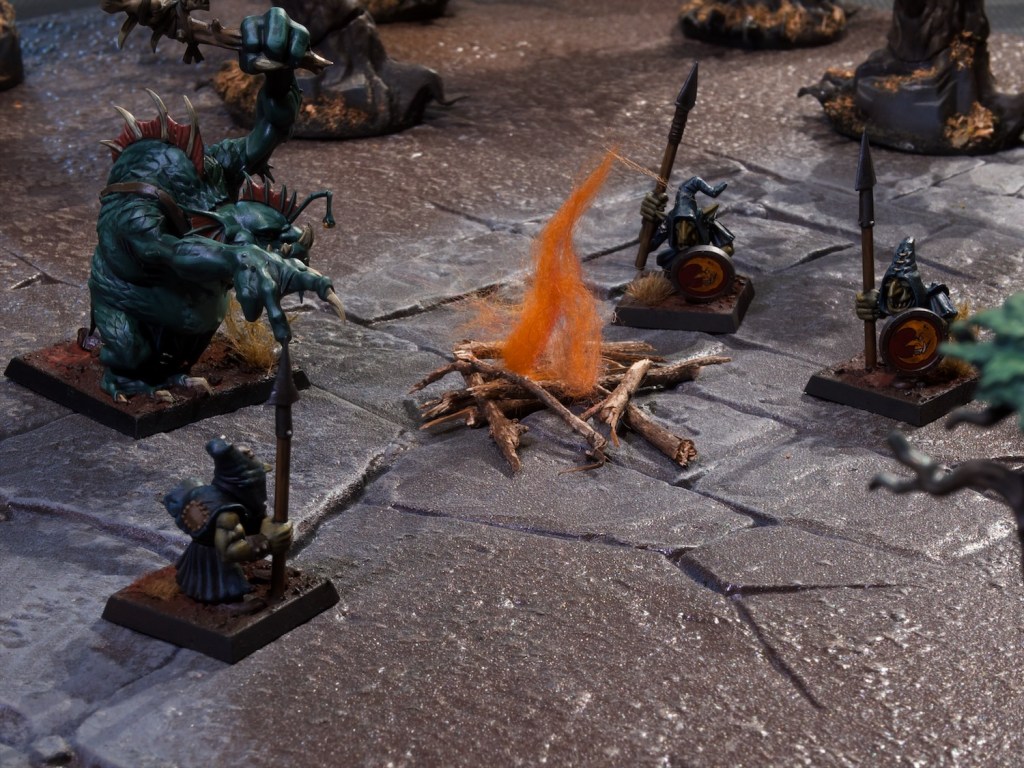
The troll and the goblins enjoying their well-earned camp fire

This mission felt like the hardest by far, the goblins are really tough! I didn’t even brave tangling with the Troll, that felt like a good way of losing half my unit. This game is quite interesting, I achieved most of the objectives (investigating 3 clues, killing 3 goblins, getting 6 unit members off the table), but it still felt like losing as I unceremoniously scampered off the table. It’s a great bit of atmosphere through mechanics I think.

There’s one more solo mission left in the main rulebook which I’ll run through soon I think. As I mentioned last post I’ve been enjoying this game enough that I’m preparing a new unit for the Egypt supplement, so will continue solo missions in a different setting after that.

Japanese January

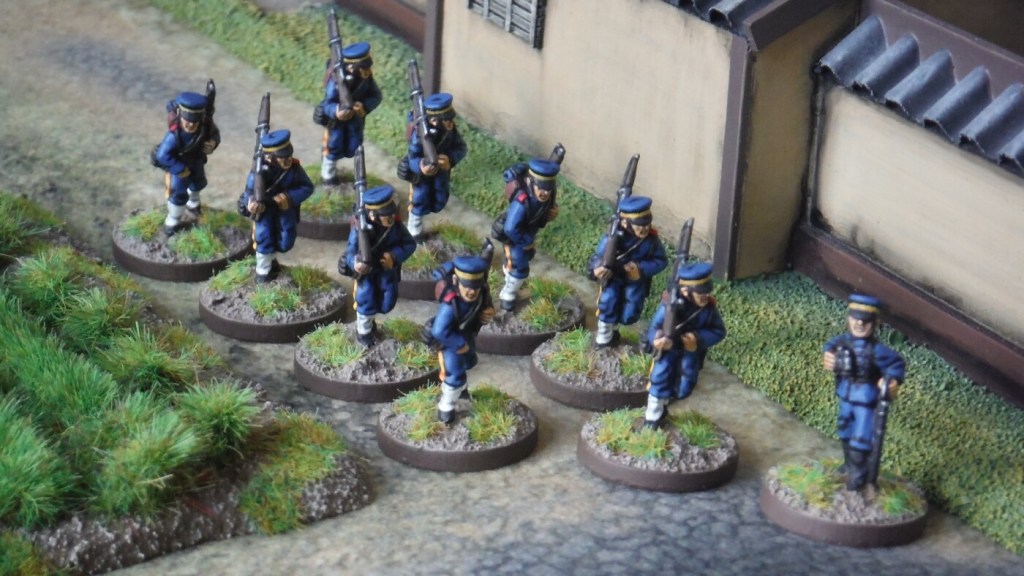
I’ve been in contact for a few months with John over at Just Needs Varnish!, over which time we decided to tackle some of our respective Japanese backlog. He had some turn of the 19th century Japanese forces in need of painting, and I’d been sitting on a collection of unpainted Sengoku era miniatures for a couple of years.

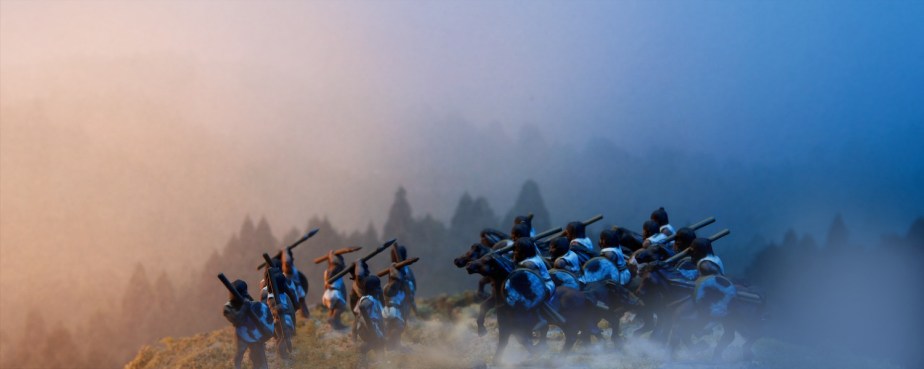
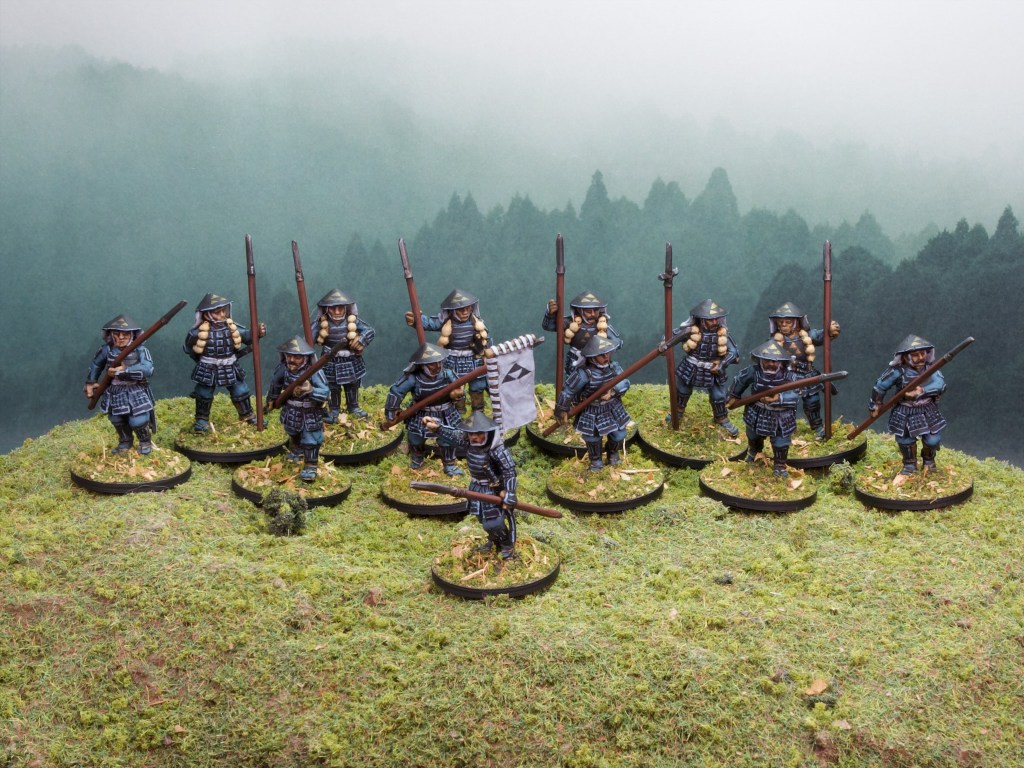
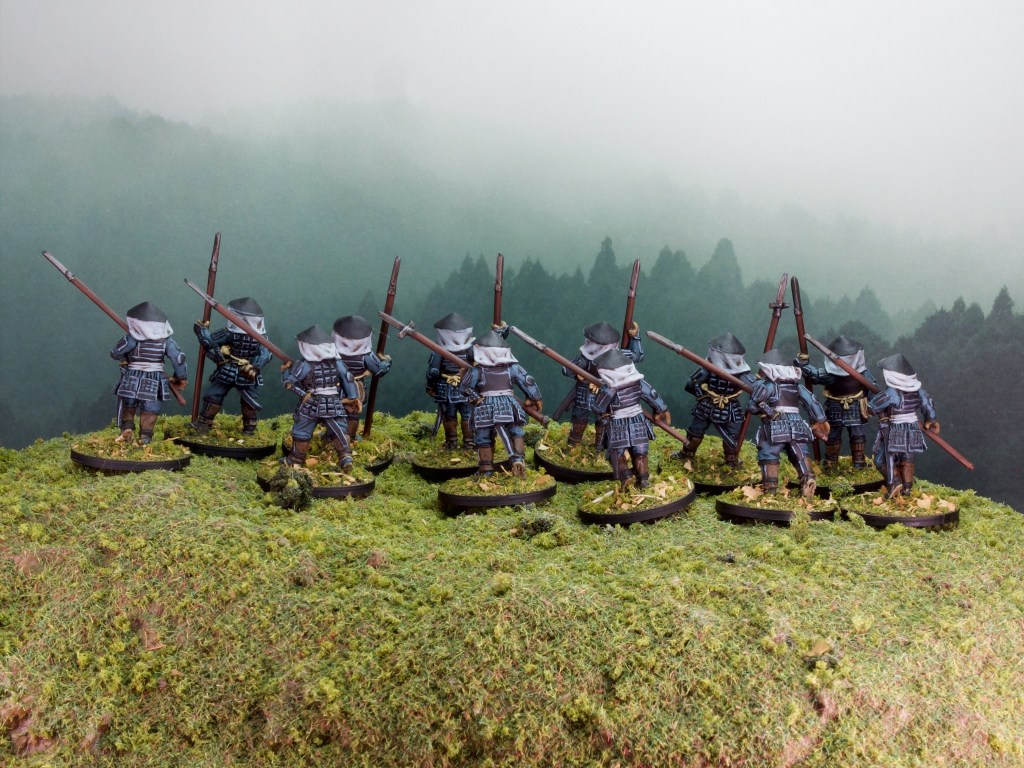
I decided to kick off my Sengoku collection with some spear Ashigaru. The models are from Perry Miniatures and come in boxes of 6 metal miniatures so what you see in the photo above is two boxes of spearmen and a lieutenant from the ashigaru command box also by Perry.

The resulting odd block of 13 models works well for my current target rules system for playing this era: a repurposing of the MESBG ruleset. It’s one of my favourite skirmish systems and I think lends itself very well to historical gaming. The game system is very flexible and makes it easy to represent mixed units as the models are individually placed and moved. In MESBG you pick armies by assembling warbands lead by character models, with 12 models lead by a minor “hero” being pretty standard for the game. This means this group of 13 above makes for a nice warband.

If you’re familiar with the period you might have recognised the mon (emblem) of Clan Hōjō, with it’s three triangles (representing fish scales if I understand rightly!). I decided to go with this clan as I visited some the region they ruled over during my first visit to Japan back in 2015 and really liked it, it’s one of my fondest memories from that trip. In fact the foggy forest photo I’ve been using as a backdrop to my miniature photos for quite a while now was taken there! So the backdrop is very appropriate for these models.

Painting-wise these were relatively simple, with the black and blue scheme heavily reliant on Vallejo’s Dark Sea Blue. I used it both for the cloth areas and the highlights on the black, just mixing in different levels of pale greys in for highlights to differentiate them. For the skin I followed the recipes in my previous Samurai post.

I was planning on tackling some buildings I 3D printed early in the month but simply ran out of time, so they will appear on the blog at a later date when I get around to them!

John got some great results out of our themed painting month, painting some very nice cavalry and some matching infantry that you can see pictured above. Overall this was a fun exercise, and got me to paint some models which I had no immediate plans to tackle which is always a nice plus! So thanks John for the motivation, and I recommend you all go check out the models John painted (and generally follow his blog, lots of great stuff on there).

River Trolls

With some leave over the Christmas break I’ve had a bit more time to paint (and game!) and have managed to get through a unit that I’d applied a basecoat to back in September-ish: River Trolls!

I’ve had these models for quite a while. I originally bought them to make Chaos Trolls back in the early 2010s and instead left them unbuilt for 10 years. It’s therefore nice to have them done for this latest project.

The models themselves are quite fun to paint as they have a decent amount of detail, much of which is quite characterful (including the infamous troll vomit!).

For units that are relatively unique in armies (i.e. that I won’t have to paint again) I like to experiment a bit with my painting. In this case I played around with oil washes in a slightly different way than I usually do. Normally I dilute my oils heavily with thinner, apply, blast with the hairdryer for a minute and get wiping the raised areas away with a sponge. I’ve had issues in the past with oil washes looking but not actually being dry by the time I varnish the models and found a few months later that the model has gone a bit tacky. Luckily this is easy to fix with a fresh coat of varnish. Here instead I went for a heavier wash (less diluted) and let it sit for a day or so before touching it. I was a bit worried that would limit my ability to wipe off the excess wash, but those fears were unfounded, and in fact I found it easier to get nice gradients with the wash in this way. To make sure the wash was dry before continuing, I left the models for another day or so, monitoring the areas where the wash had pooled the most. It’s a time consuming process but the results are worth it. Luckily for me I had something else to paint while I was waiting, which I will show later!
I wanted a cold green for these models to match their “riverness”, so I went for a basecoat of Vallejo Game Color (VGC) Heavy Blackgreen, and progressively mixed in more and more Vallejo Model Color (VMC) Pastel Green. The red fins are VMC Mahogany Brown, highlighted with a mix of the same brown and VGC Dead Flesh. The hair/fur is a mix of VMC Dark Sea Grey and VMC Black, highlighted with a mix of VMC Dark Sea Grey and VMC Pastel Green. The teeth/nails were a basecoat of VMC English Uniform, highighted with VGC Dead Flesh. The leather was VMC Chocolate brown, highlighted with a mix of the same and VGC Dead Flesh. All of these received the oil wash discussed above, which was a mix of Abteilung 502 Midnight Blue and Brown Wash oil paints.

Overall I’m very happy with these, nice addition to my Orcs and Goblins army.

As I said in the opening lines, I got some gaming in too this break, with a campaign game for our Border Princes campaign. The campaign was on a bit of a hiatus after the back end of the year got very busy for most of us (including a few weeks where 3 of us were out of the country!). The next match due was my Dwarfs against the Lizardmen, battling over a major crossroads. The game was a lot of fun and as a result I completely forgot to take photos! The outcome was our first draw of the campaign so far, which results in both armies retreating from the area. Here’s the campaign map at the end of Turn 6.

We’re currently planning our moves for the next turn, so hopefully I should have some updates soon.

One thing that happened during the game is I tried out the new engineer rules from the Dwarfs Arcane Journal. These allow you to take a Sapper Engineer, which allows all kinds of things such as entrenching your artillery, and booby trapping the battlefield. I equipped said engineer with a handgun inscribed with some of the new ranged weapon runes also found in the book. He then proceeded to cause more damage single-handedly than most of the other units I had in the game! I decided that meant he deserved a proper model and set about to making one as there is no Sapper Engineer model in the range.

I used an old metal dwarf handgunner (one of the first models I ever bought!) which has a really cool dragon head muzzle on his handgun. This looked appropriate as a runic handgun, and I also liked the practical attire he was wearing. One thing that was missing was anything that screamed “sapper”. The distinguishing mark for a sapper in the Napoleonic era (at least for the French army) was the carrying of a great big axe, but a dwarf carrying an axe just blends in so I went for a spade instead.

I wanted to accentuate the digging aspect so I tried to make it look like he’s taking potshots while digging a trench. Hopefully that comes through!

Goblin Archers

I’ve been chipping away at this small unit of archers for my Orcs and Goblins over the past few weeks. I have not been in any particular rush and it’s been quite nice painting at a sedate pace. I have a tendency to want to get things done fast, but with work quite busy lately it’s been good to do the fun things in life in a more relaxed fashion!

These are new casts of old models like much of the rest of the newly (re)released Orcs and Goblins models for Warhammer The Old World. These are pretty old sculpts now and were current when I started the hobby in the early 2000s. I’m absolutely the demographic for this nostalgia fueled set of releases!

I tried to make them look generally cohesive but in a haphazard manner, picking out their clothes in different colours. For my own future reference (I have plenty more of these to paint!) these are: Vallejo Model Color (VMC) German Fieldgrey WWII (also used for the fletching), VMC US Field Drab, VMC Black, and VMC German Camo Medium Brown (also used for the furs). The rest of the colours used are the same as for the rest of the army as detailed in my Orc Warboss post.

One nice discovery painting these was a new method (new for me at least!) for placing pigment powders on the bases in a much less messy way. So far I’ve been applying them dry, which tends to get them everywhere, and fix them using airbrushed varnish (at low pressure but still very messy). For these I experimented with mixing them with acrylic thinner before applying them in patches to the bases. I then dipped my brush in water and blended the patches into the uncovered section to get an uneven look. This method was much cleaner than dry application and was a lot easier to control. I’d recommend trying it out if you’re using dry pigments on your bases!

Giant!

It’s been a little while between updates, but I’ve been slowly chipping away at the miniature I’ll be showing today over the past month. Slowly because it’s getting chilly here down under and my hobby table is in a cold part of the house (and therefore is being visited much less often than usual!) and slowly because I’ve been really enjoying the process on this model!

The model as you probably realised from the post title is a giant! This is the plastic Warhammer giant from the mid 2000s, which is still current in the range. I got mine during 8th edition for my Ogre army, and like many other models from that era it has sat mostly unpainted since then. I rebased that army for Age of Sigmar so this model was transplanted onto an oval base, before being cut off that and put back on a square base for the return to classic Warhammer.

As I mentioned above, I thoroughly enjoyed myself painting this model and I went probably above and beyond what I would usually do for an army model, although I always do tend to try to spice up centerpiece models!

I really wanted to make it look like his pants were made from banners he’d collected over the years, so I painted them in a patchwork of colours, and applied transfers from all kinds of sheets I’d collected over the years to add some interesting patterns to the patches. From memory there are transfers from the Bretonnian, Eldar, Imperial Knights, and Space Wolf ranges on his pants.

Another detail I enjoyed painting because of the scale of the model was the nails, I tried to go for a dirty nail look with some muck caught under there. This might be a bit hard to see in the photos though, I think the best example is in that top photo on the hand that is holding the hapless man.

I spent a bit of time on his face, I don’t get to paint large scale heads very often given my usual subjects, so this was a fun new thing for me to do. I tried to go for the classic pale/red/blue zones on the face which I think worked out nicely, but I’m keen to see how you find it.
Overall I had a great time painting this giant, but it’s time to move on to smaller models again! I have the largest unit in the army lined up next, a big unit of night goblins which will likely keep me busy for quite a while so the next post may also be a bit further away than usual!