
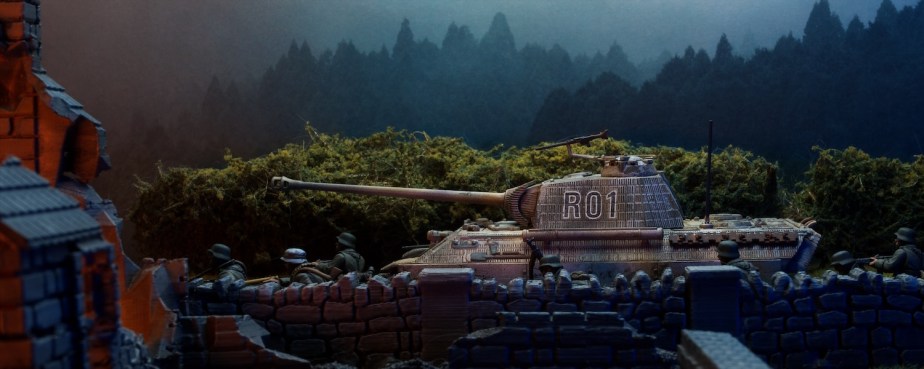
I’ve had some leave this week and have put it to good use by painting lots of models! I’ve now finished painting my Volksgrenadier platoon for Chain of Command (you saw the first section last post), as well as some extra firepower in the form of a Panther tank.
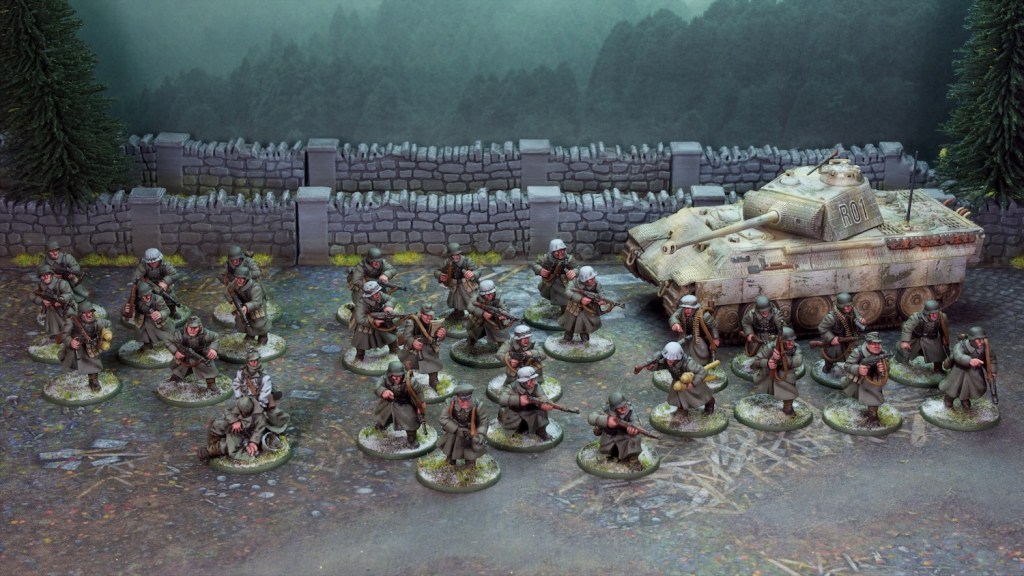
The platoon is made up of a command section, two assault sections (armed with STG44 assault rifles), and an LMG section (split into two LMG teams).
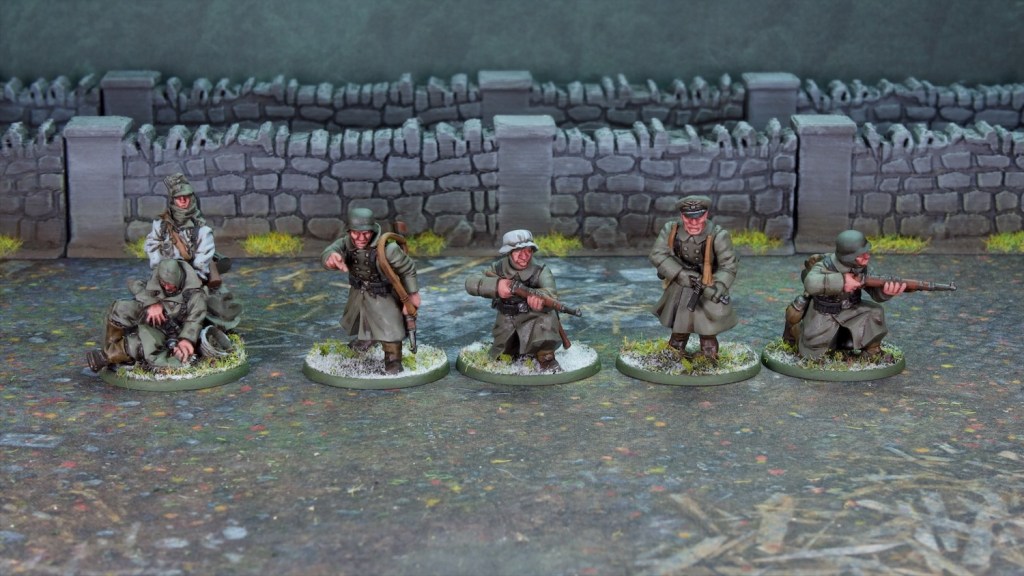
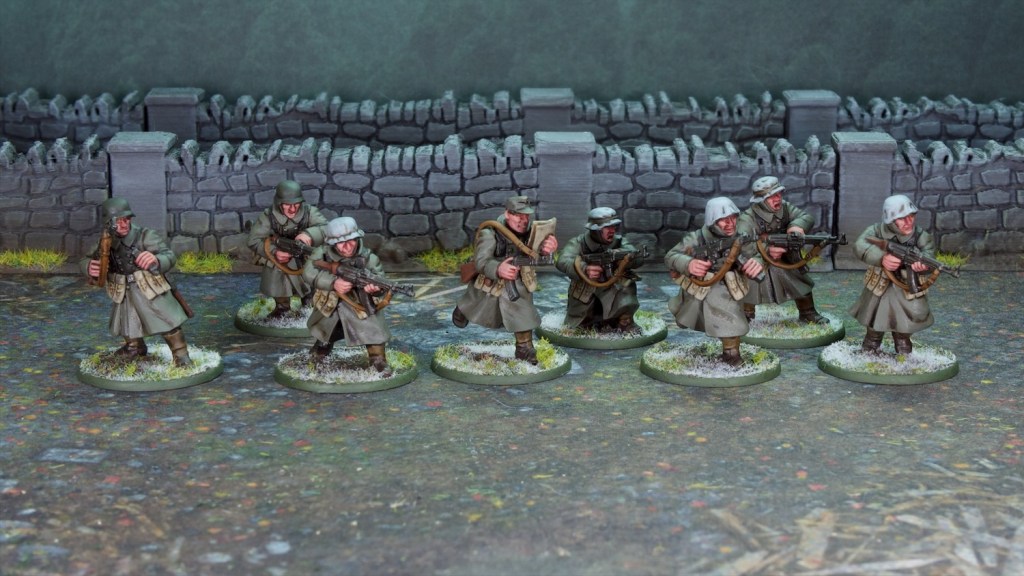
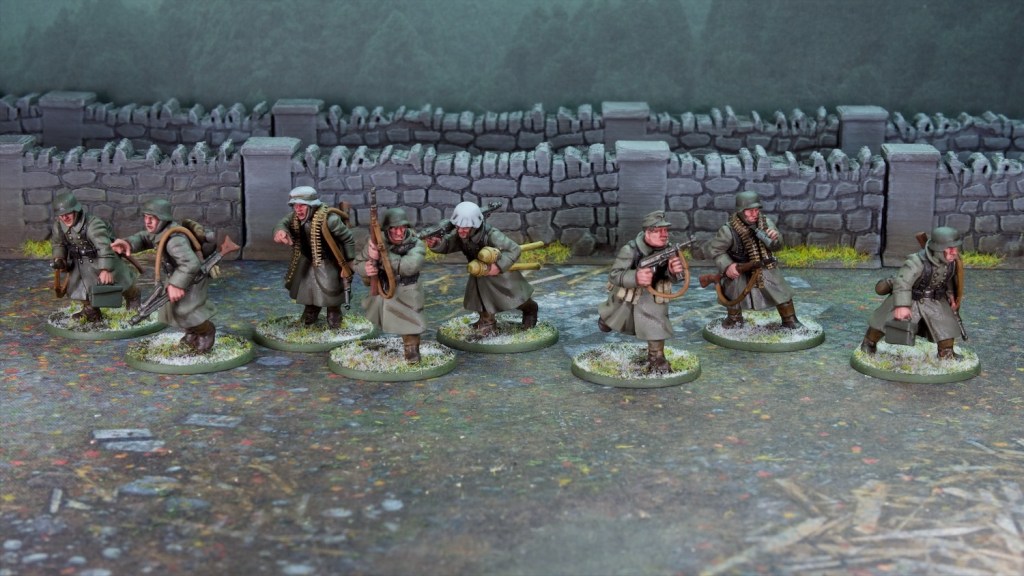
I described the painting method for the infantry last post so I won’t repeat it here. The process is very quick, and this was a good test for it. I batch painted all three new sections (and the medic) at once (21 models all up), painting each colour on each model in a row. I got them to the wash stage in a few hours on Sunday, and did all the highlights on Monday. Not a bad rate I think! They’re certainly not my finest work, but they look effective on the table which is always the primary purpose for army models.
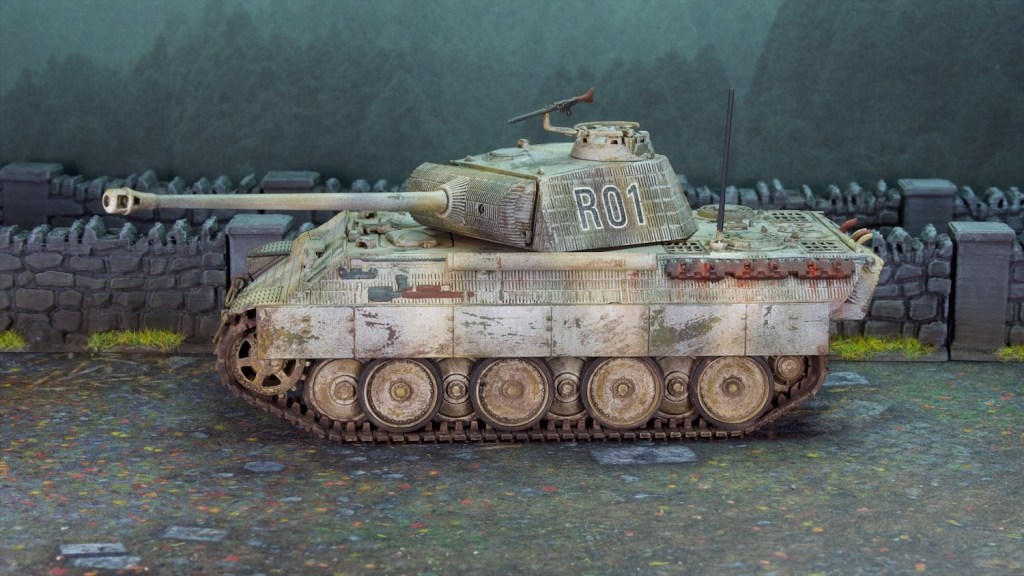
Onto the tank! This is a Warlord Games/Italeri plastic kit, and as with all the ones of these I have put together over the years it is a relatively simple build, if a bit light on detail (for example the tools on the side are basically flat). These are meant to be gaming pieces over display models however, and they paint up nicely.
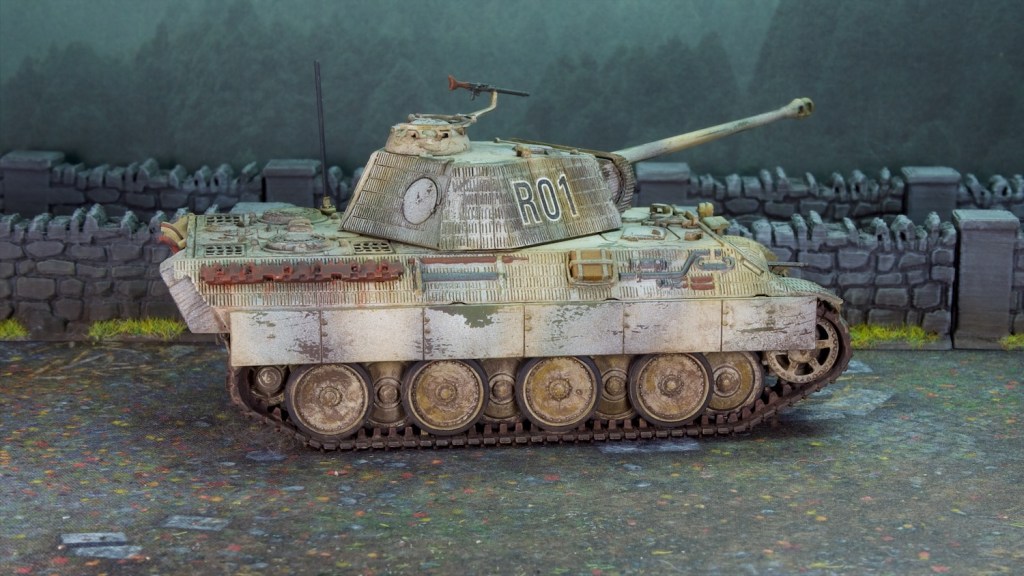
I decided to go for a winter scheme on the tank, and tried my hand at a white wash look. To achieve this I painted the normal late war German camo pattern (yellow base with dark red/brown and dark green patterns – you can see it under the somewhat transparent white), then followed that up with a coat of hairspray on which I lightly airbrushed some white.
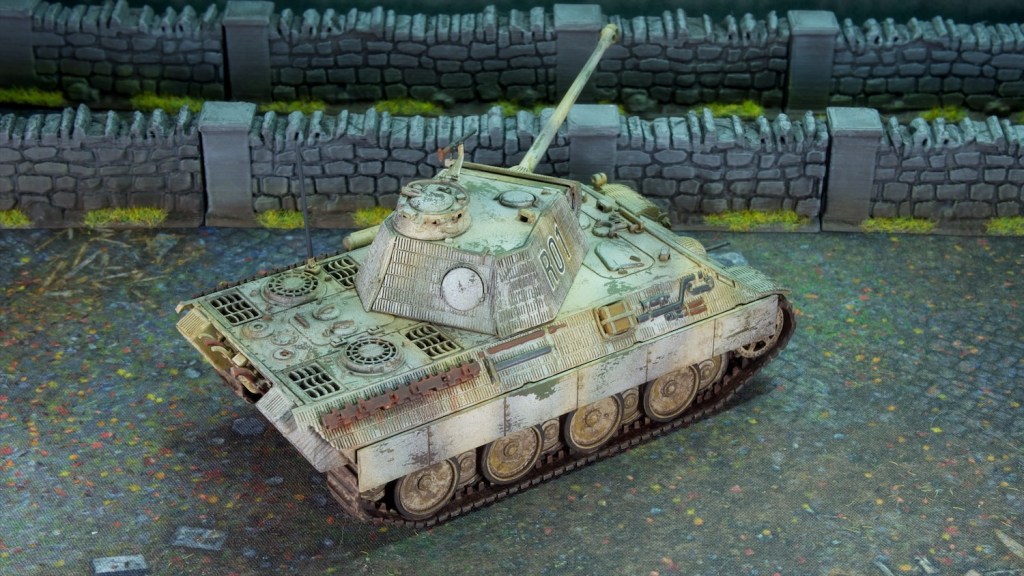
If you’re not familiar with the old hairspray method you may be wondering what that’s all about. Effectively, the hairspray allows for some great chipping patterns by providing a water soluble layer under the coat of paint in need of chipping (the white paint in my case). This paint can then be rubbed away by using a wet brush (ideally with somewhat stiff bristles, a drybrush is great for this). The water disolves the hairspray under the paint, which causes the paint to drop off in nice patterns. The tank needs a good coat of varnish after that so that the unstable layer gets locked away an no more paint rubs off.
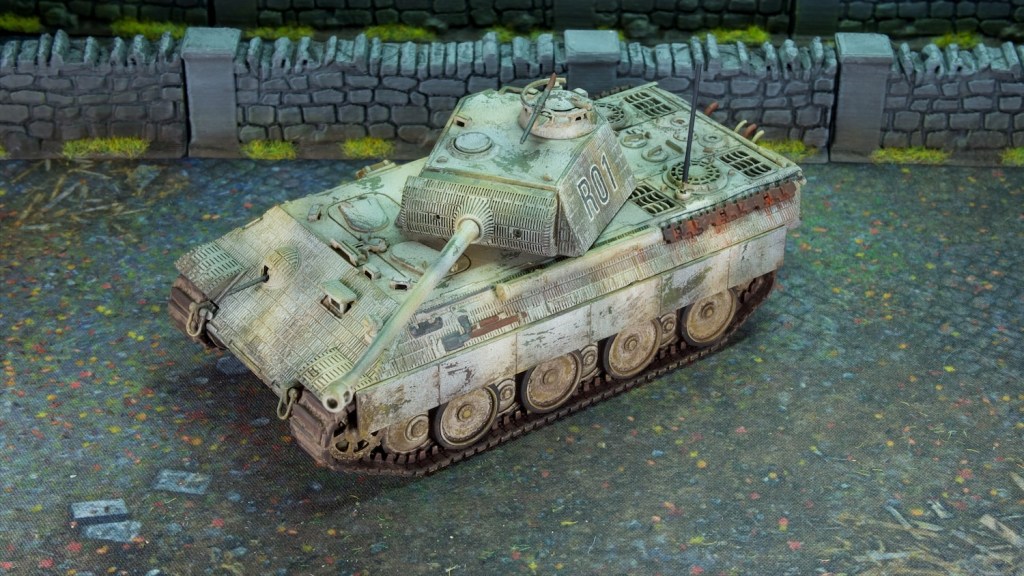
I then finished the model with the usual oil washes, with a mix of browns and dark grey colours. I also added spots of rust (also using oils) which I streaked downwards, mostly from the spare tracks. I then finished the tracks using pigments. This is a new thing for me, I usually douse tracks in mud but in this case I figured if the ground is frozen there would not be any mud around!
I now have all the models I need for a game of Chain of Command I’m planning on running for some friends soon. What’s missing now (and you may have noticed from the photos!) is some appropriate cold weather terrain. Next up on the painting table will be said terrain, I have most of what I need now, it’s just a matter of painting it.
 Lair of the Lagomorph
Very nice, Nic! 🙂 You’re getting along well with these! That Panther definitely looks like it’s got a well worn winter whitewash!
LikeLiked by 1 person
Thanks John! Glad the whitewash looks the part, was fun to do!
LikeLiked by 1 person
Painting is a great way to relax whether you’re working all week or you’ve got some extra time off. You’ve made some great progress on your WWII miniatures as well. The tank is weathered very well. To my eyes, the weathering is nicely varied and very realistic. I’ve never attempted winter terrain so I’m eager to see what you make next!
LikeLiked by 2 people
Thanks Jeff! It’s been a great time relaxing while painting. Glad you think the tank looks realistic!
I spray painted a lot of the terrain yesterday so should be able to get started on that soon.
LikeLiked by 1 person
Nicely done.
Love that Panther.
LikeLiked by 1 person