
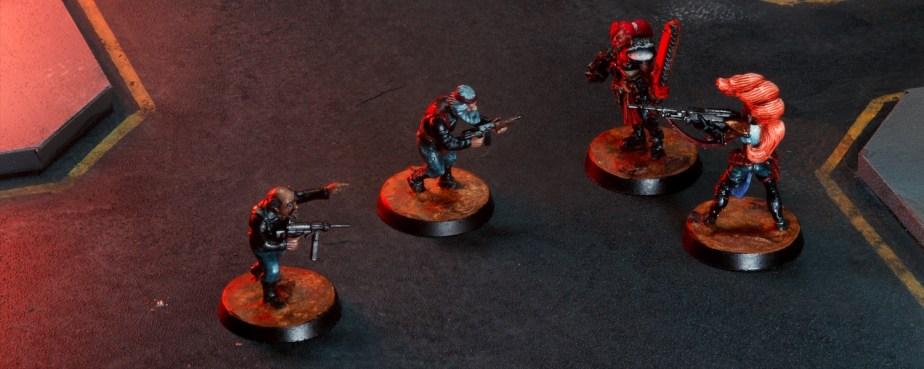
I’ve been working on a cyberpunk version of Masse d’Armes as I’m a fan of cyberpunk media and been wanting to play some miniatures games in the genre. There was a slight problem with that, which is that I don’t really have suitable models and terrain! The closest I do have is the terrain and models I made for This is not a Test, which is firmly in the post apocalyptic genre so not really appropriate. I therefore decided to start at the beginning and make a game board.
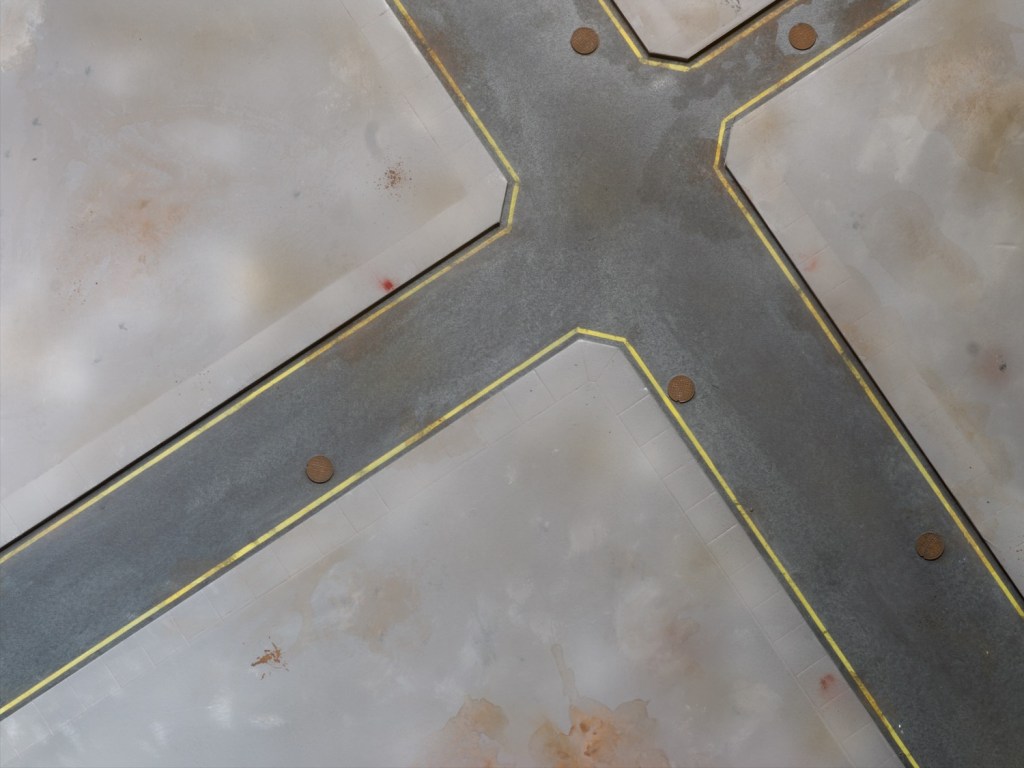
Rather than get a game mat, I decided to make my own, starting with a 900x400mm (~3x2ft) MDF board from the local hardware shop. I then cut out the shapes for the raised footpath areas using 5mm foam core panels.
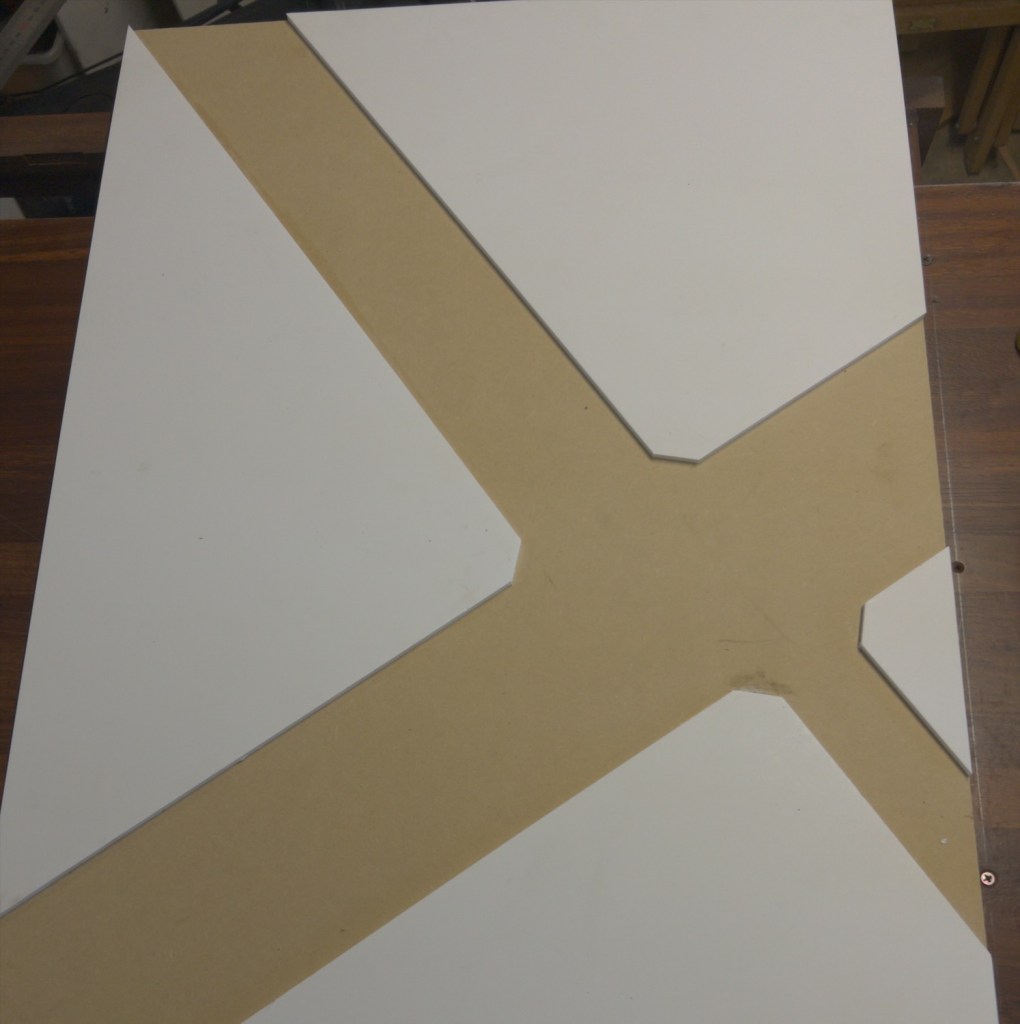
I glued these down with PVA glue and left them overnight weighted down.
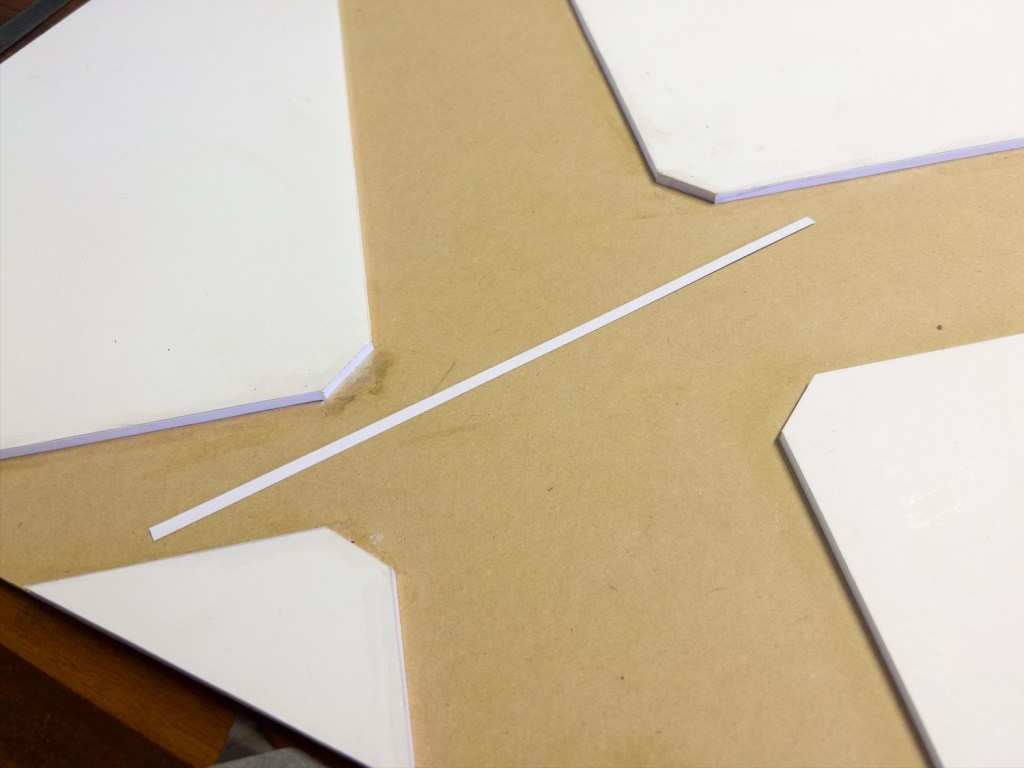
To cover up the exposed foam on the sides of the foamcore panels I cut 5mm strips of thick paper and glued them to the exposed edges.
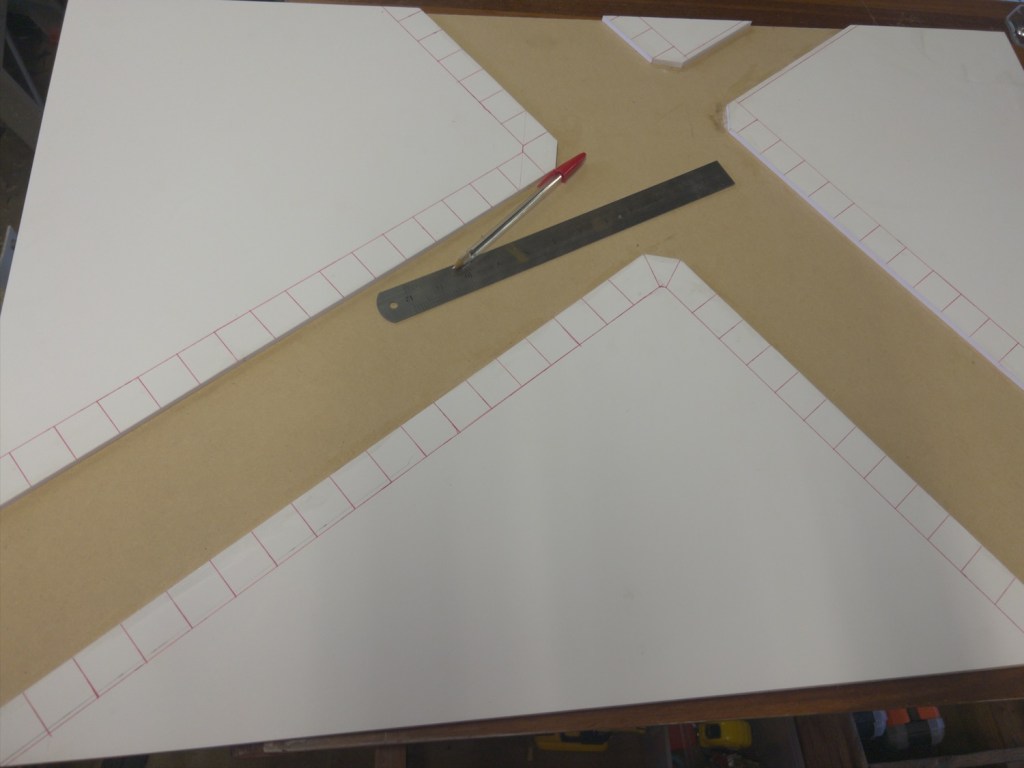
I used a ballpoint pen and a straight edge to mark some lines in the foam core to represent separate sections for the footpath. I tried to keep the pressure hard enough to mark the surface but not too hard so as not to tear through the outer layer of card.
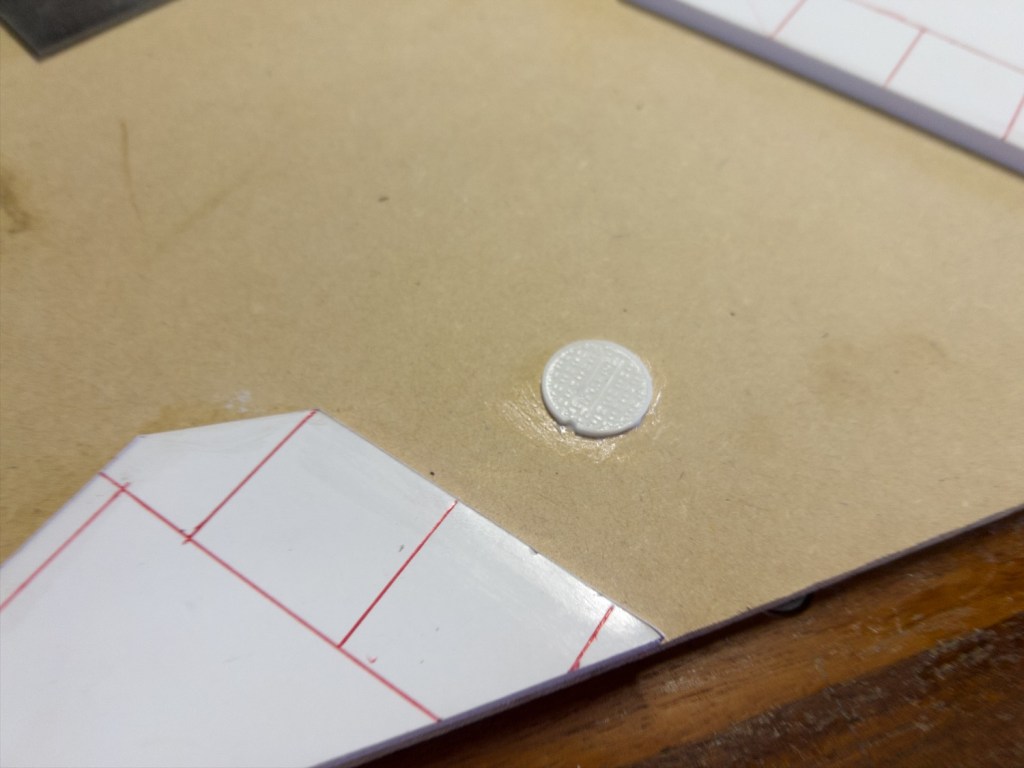
I 3d printed some manhole covers (https://www.thingiverse.com/thing:3246148 – shrunk to 20mm diameter) to add some details to the road sections. I glued these down using PVA.
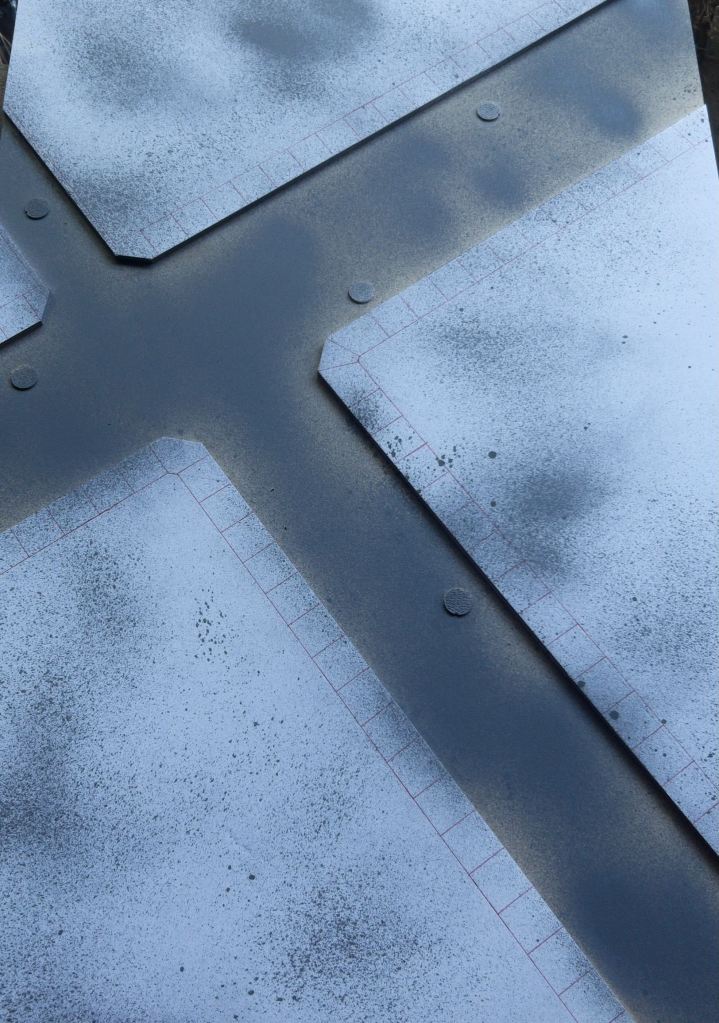
I had a little bit of Citadel Roughcoat left in an old can so I sprayed some in patches, concentrating on the road sections, but making sure to dust all areas. I then undercoated the whole board with some grey undercoat, painted the road sections over with a mix of black and blue paint, aiming for that asphalt colour.
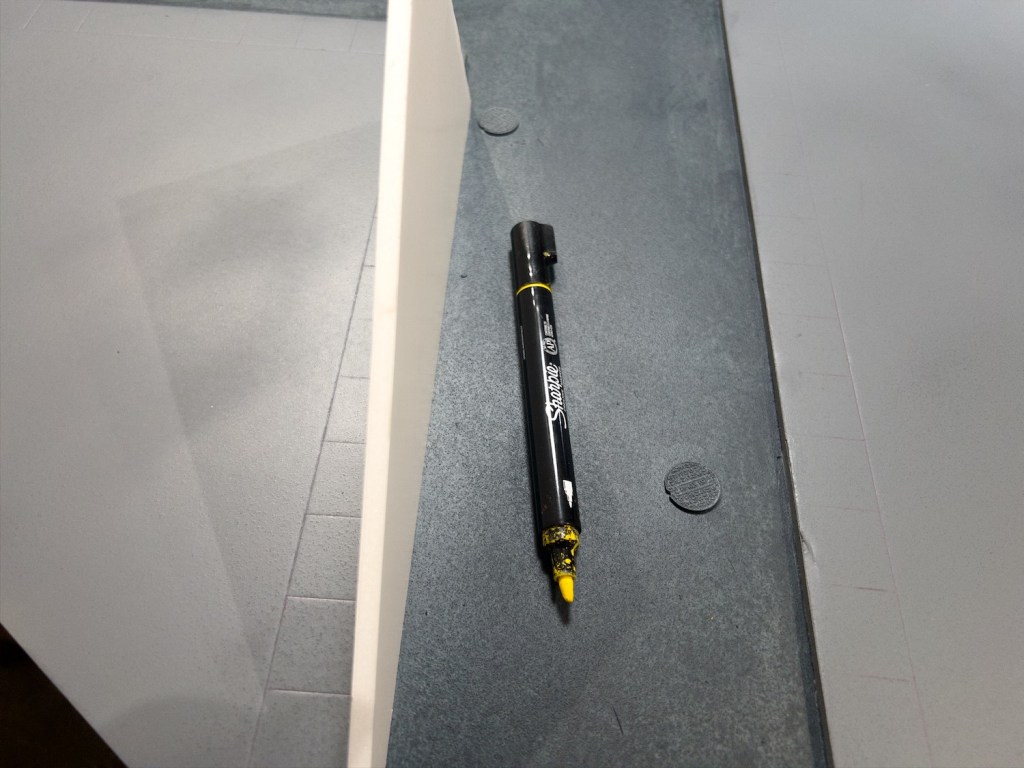
For the lines on the roads I used a Sharpie paint pen (Creative Marker I think is the name). I used some foam core offcuts to act as a spacer, pushing them against the raised edge. This worked really well and I’ll do this again if I have to paint road lines again in the future.
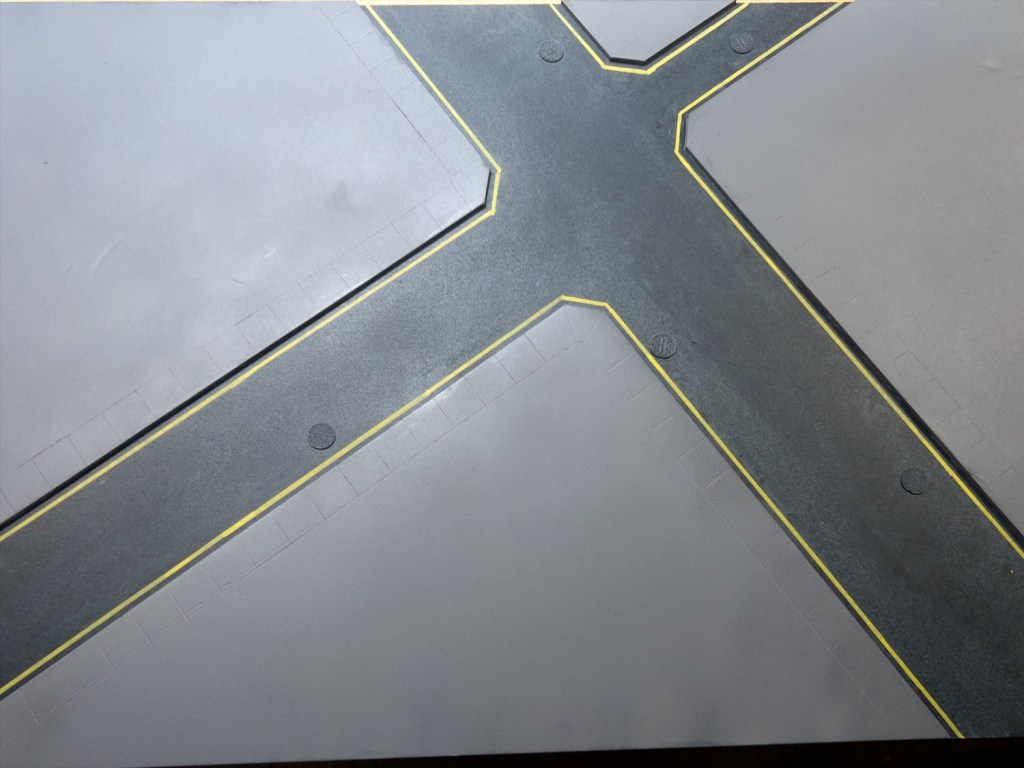
I then got into weathering all this. No photos from this stage I’m afraid, was having too much fun to remember to take photos! I used quite a few washes of diluted acrylic paint, as well as some drybrushing and stippling paint using a torn sponge. Finally I broke out the airbrush and sprayed on some patches of browns and greys.
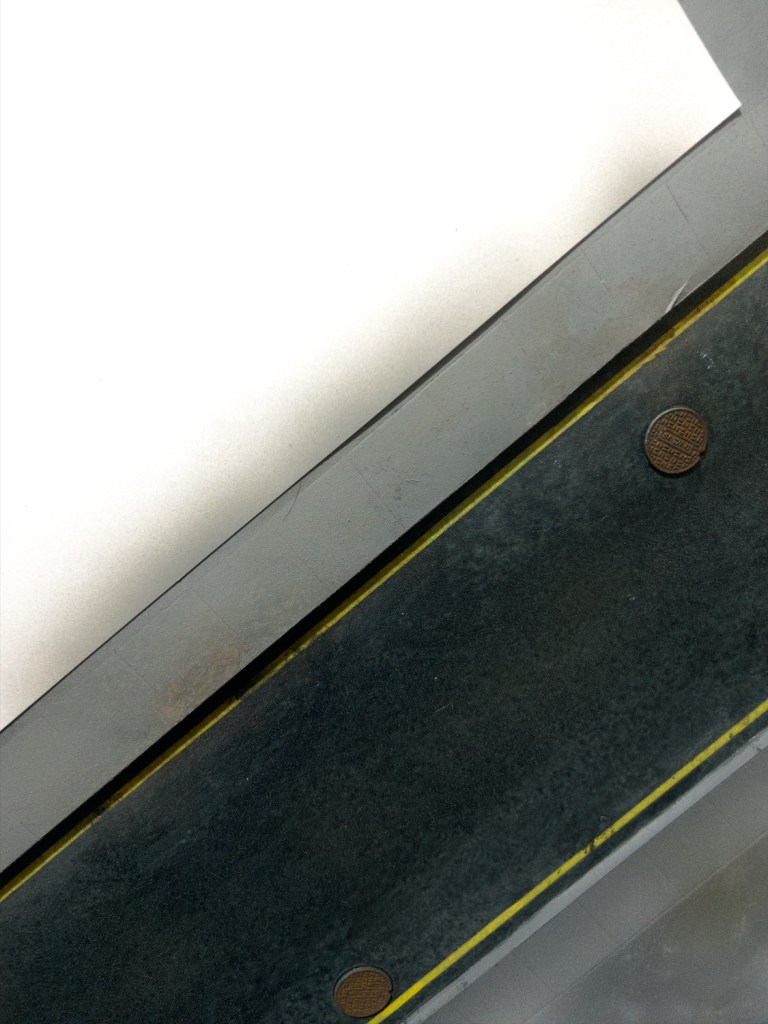
I also used the airbrush masked with a piece of paper to spray a mostly clean line along the paved area to separate it from the rest of the non-road sections.
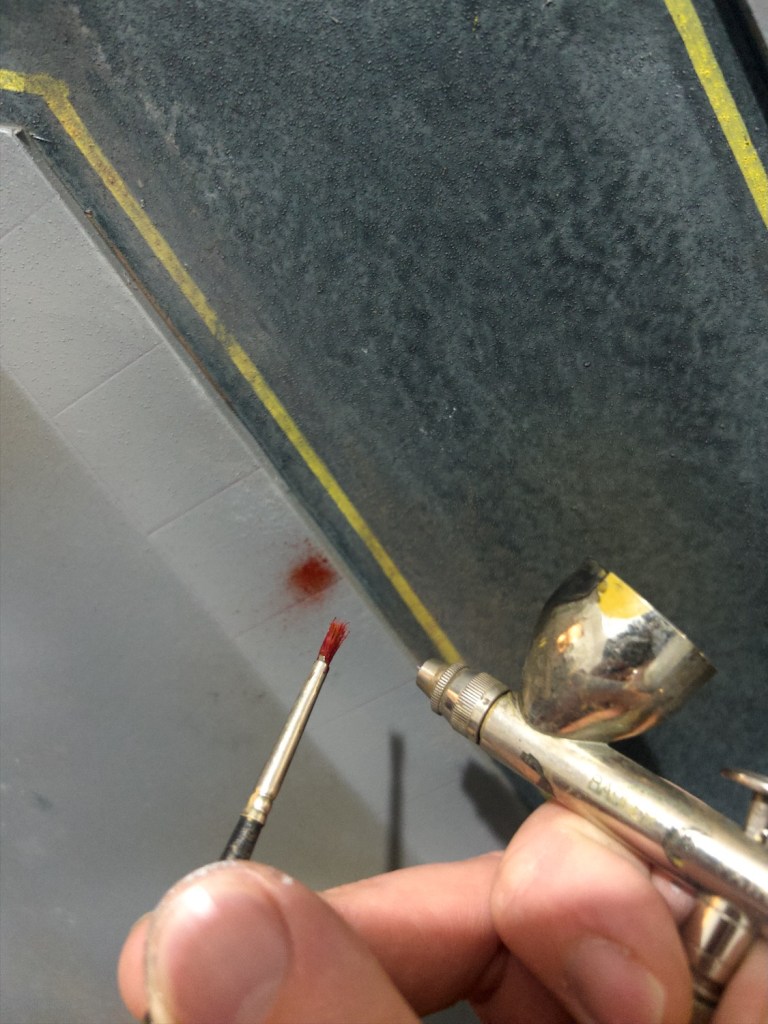
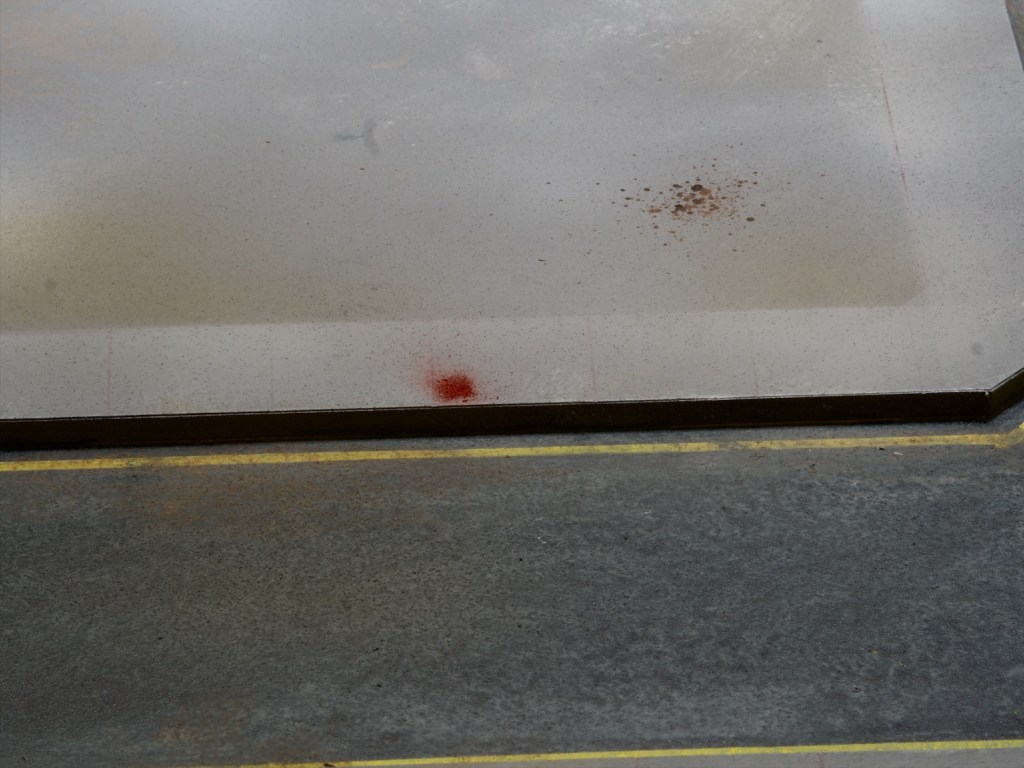
Finally I sprayed a few splatter effects with the old trick of loading up your brush with some paint/wash and using the air from the airbrush to flick it everywhere.
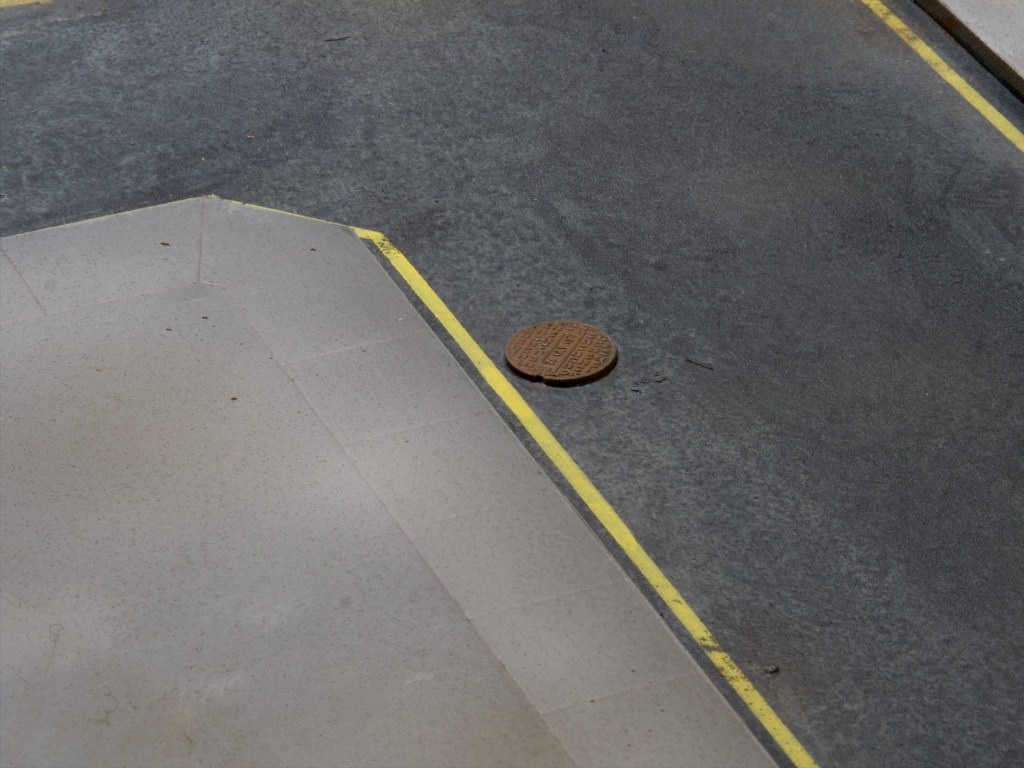
The manhole covers were just painted with a burnt umber and drybrushed with a gunmetal. These really should be level with the road surface, but I wasn’t keen enough to cut a recess for these to sit in.
I really enjoyed putting this together, and now need some terrain to go on top! Luckily enough I have some 3D printed buildings ready to go (ready for painting at any rate!) so should be able to get started on these.
This is likely my last post before Christmas, so for those of you that celebrate it I hope you have a lovely time (and lots of miniatures under the tree)!
 Lair of the Lagomorph