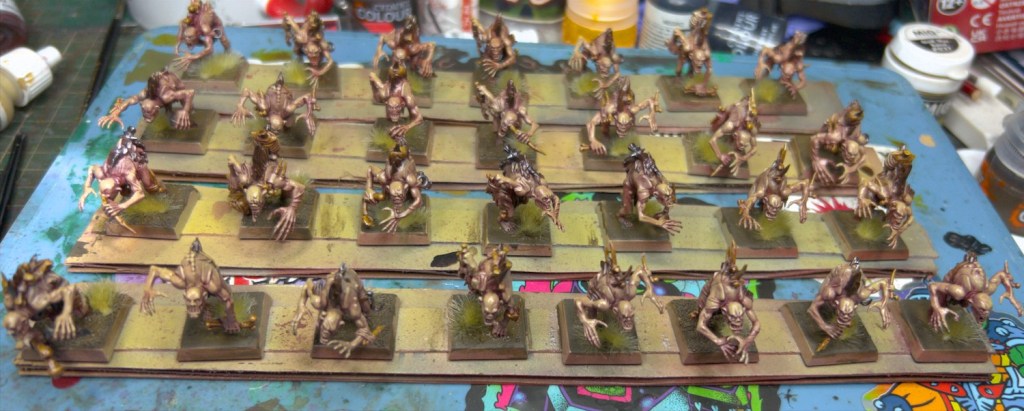
I’ve been busy trying to get through the remaining miniatures needed for the 100 target I have in the 1 Million Miniatures challenge. I left the last post at 36, and with just over a month left I needed a bit of a speed boost. Luckily for me I found 29 of the most speed paintable miniatures: Ghouls!
So why are they so speed paintable? Well they’re mostly organic materials, which lend themselves really well to airbrushing and washing, which are two elements that help you get far fast. On top of that, they’re mostly one organic material: skin!
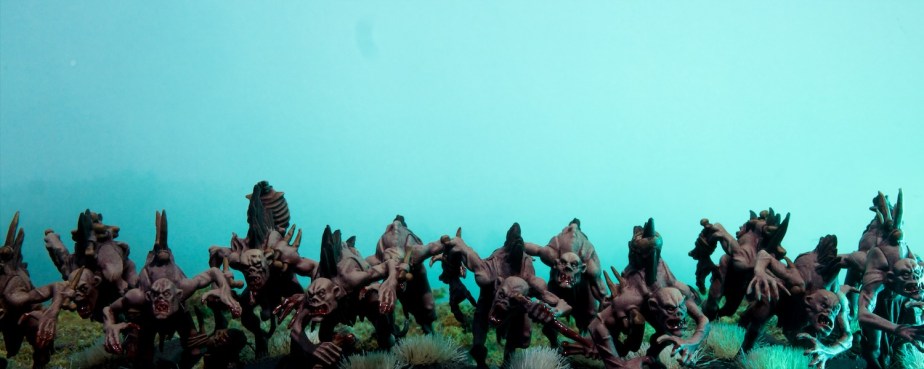
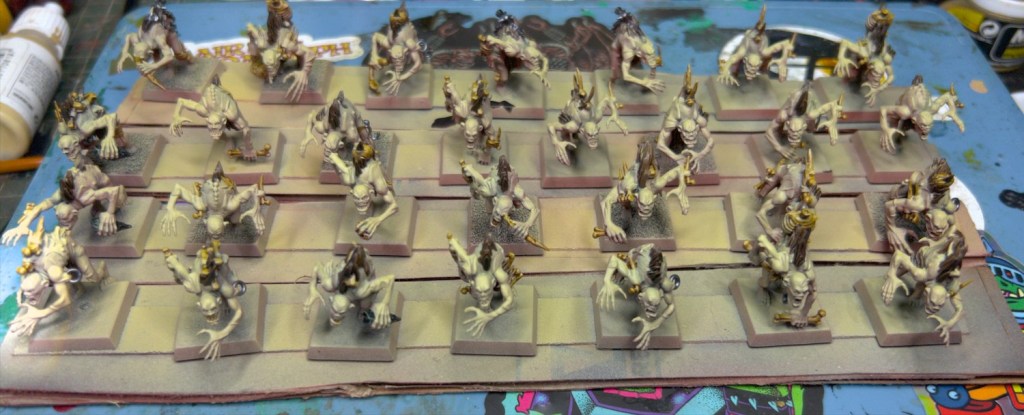
To get these done fast, I leveraged my airbrush to get a terracotta colour base coat, followed by a dead flesh zenithal (from above) spray. I then picked out bones, fur, leather, stone, using contrast paints, and painted over the metal areas.
Airbrushed and contrasted!
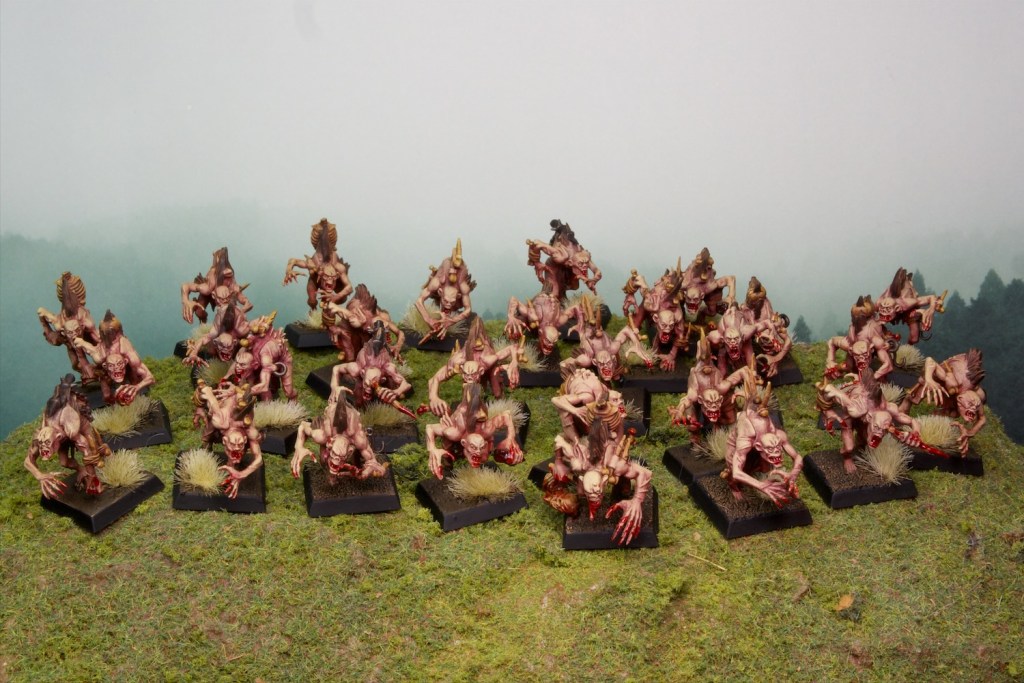
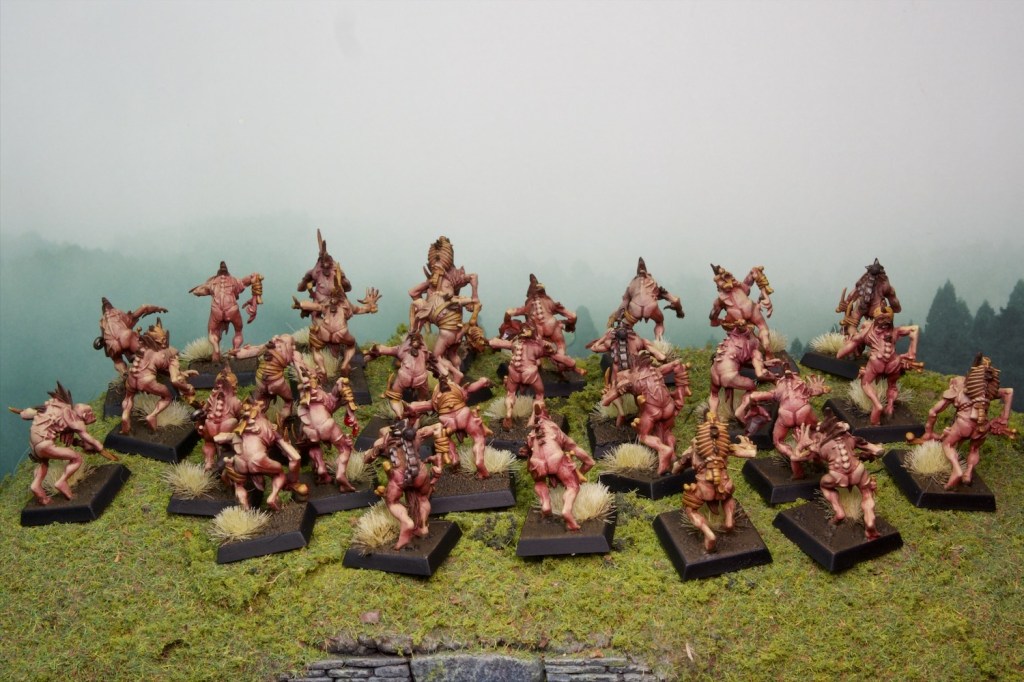
I then airbrushed some acrylic floor polish all over them (an old military modelling trick – basically a cheap way to get gloss varnish). Once that was dry (helped along with a hair dryer), I did an all over oil wash with a mix of terracotta, magenta, brown, and a blueish grey to get a brownish purple with some red accents. Again I helped it along with a hair dryer before wiping the oil off the raised areas with some makeup sponges. I then applied some texture paste and grass clumps to the bases and left everything to dry/cure overnight.
Washed and Based!
The next morning I did a brown acrylic wash over the bases, painted the base rims, airbrushed on some matt varnish and painted on some blood effects on their mouths and hands. Overall painting time was approximately 4h split over the two sessions ~2.5 hours before the overnight drying session, and an hour or so for the final touches. So nice and quick for 29 models!
I quite like this kind of painting, it’s quite cathartic to just glob oil paint all over your models knowing you can clean them up after. There’s not too many models you can do this to however. I did do something similar in the past with acrylic washes for the Goblin Town models, but I think I like the oil route better, it’s more controllable and the extended drying time is actually really helpful when doing so many models.
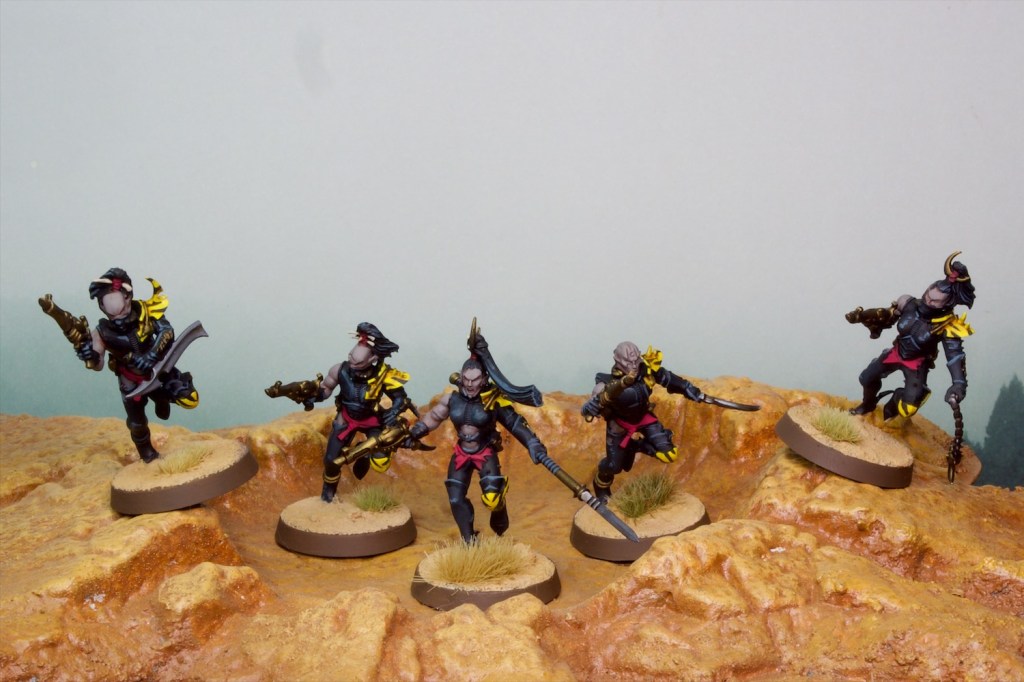
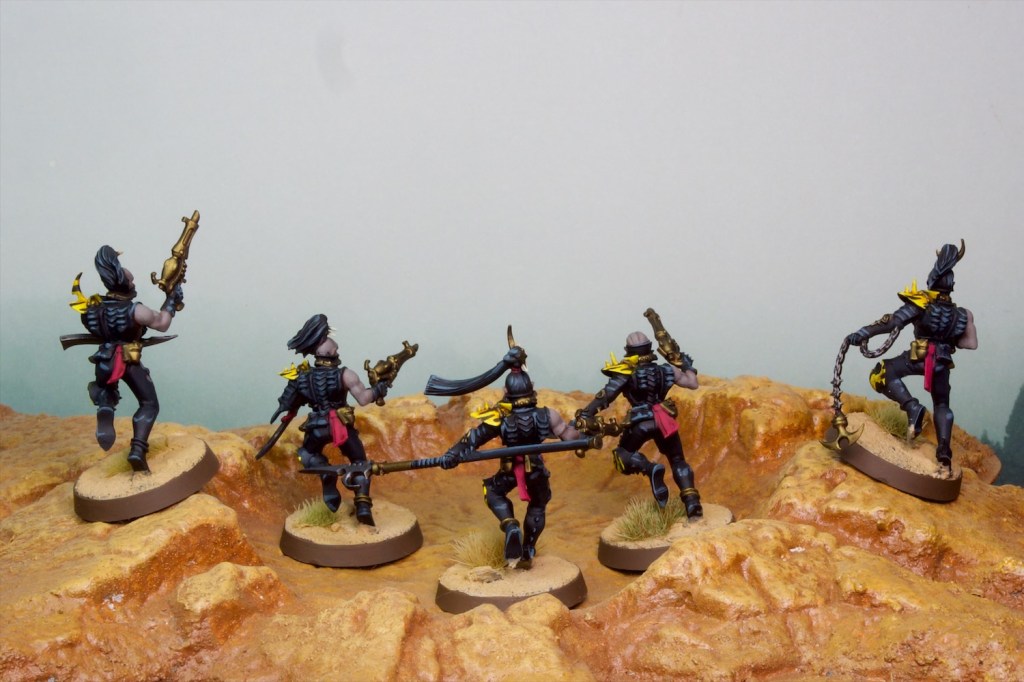
I also tried out my new Dark Eldar scheme on some Wyches:
They’re probably a little rough for my liking, so I might take my time a bit more on the next batch, but they still look nice at table level.
Anyway that adds a nice 34 extra miniatures to my tally, taking me up to 70 total which is a much more comfortable place to be with little over a month to go in the challenge. Let’s see what catches my fancy next!
Back in December last year, Games Workshop announced their 1 Million miniatures challenge, which has people pledging in their local Warhammer stores to paint 25, 50, or 100 miniatures between January and early May. I figured that would be a fun thing to do so I duly pledged I’d do 100 miniatures thinking that would be a piece of cake (foolish!). I had this great idea that this would serve as a good excuse to paint my Tomb Kings starter set which has 90+ miniatures in it, and skeletons being relatively easy to paint that would be that.
Trouble was, building 90+ skeletons in one shot is actually quite boring, and I quickly found my enthusiasm dwindled to pretty much nothing. Which left me in early-march with just the last two post’s worth of miniatures done for the challenge: the Flagellants and the Amazon Blood Bowl Team, totalling 20 miniatures. Suddenly to make the 100 by May 9th I needed to paint something like 1.3 models a day.
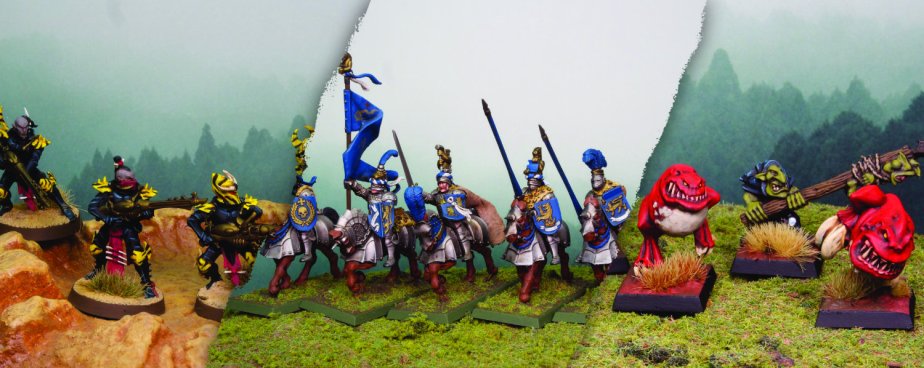
So I switched tack to the methodology that gets me painting the most: abandon all plans and paint whatever I feel like at the time. Hence this post which shows of the eclectic result of the whatever I feel like strategy, but in so doing adds another 16 models to the tally. I’ll show them off in painting order.
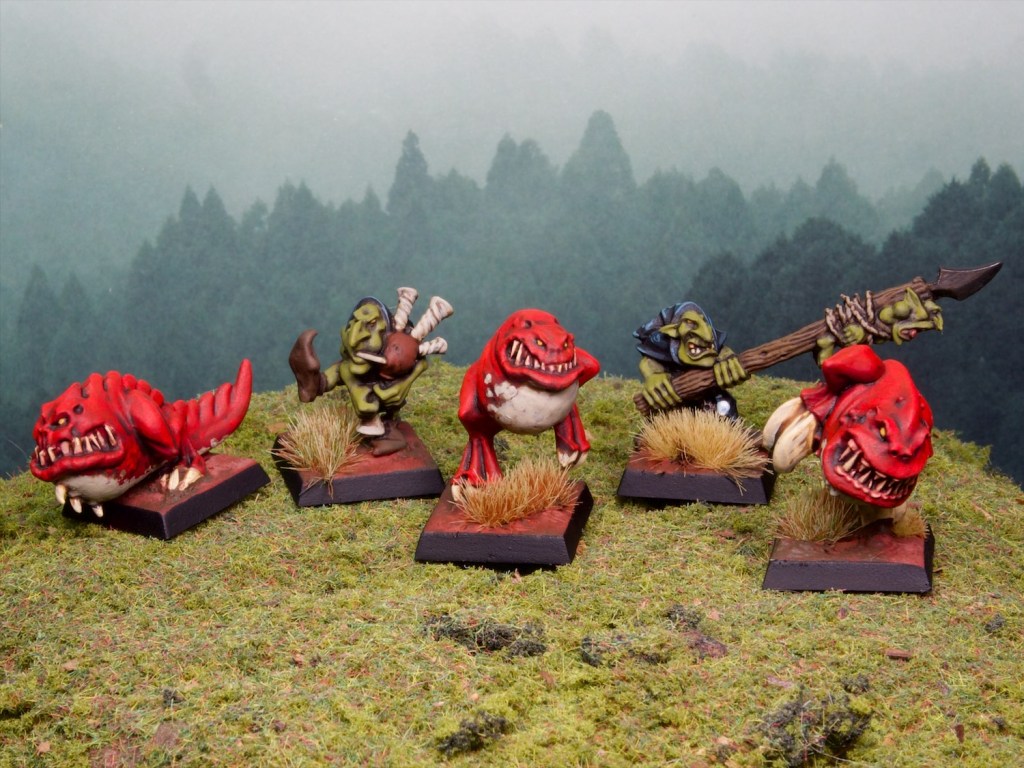
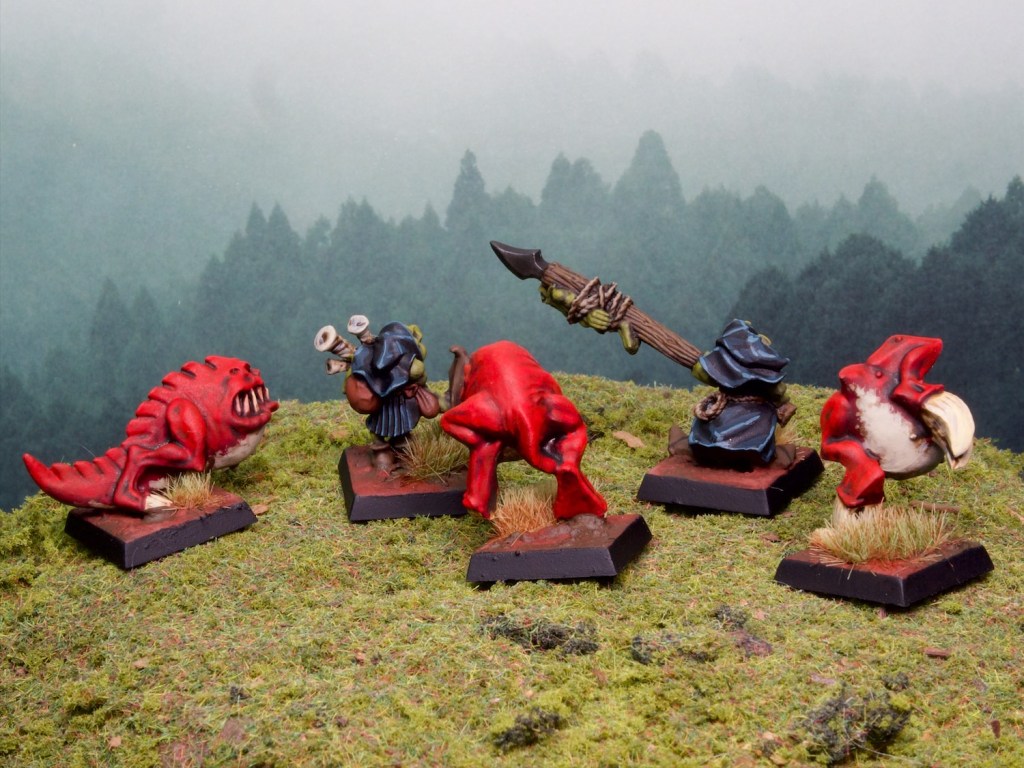
First up we have these wacky Goblin Squid Herders and their charges, three mean-looking Squigs!
These models are very fun, and were great to paint. I really enjoyed doing the patterns on the Squig bellies, and felt they were necessary to break up what would otherwise have just been angry red balls with legs!
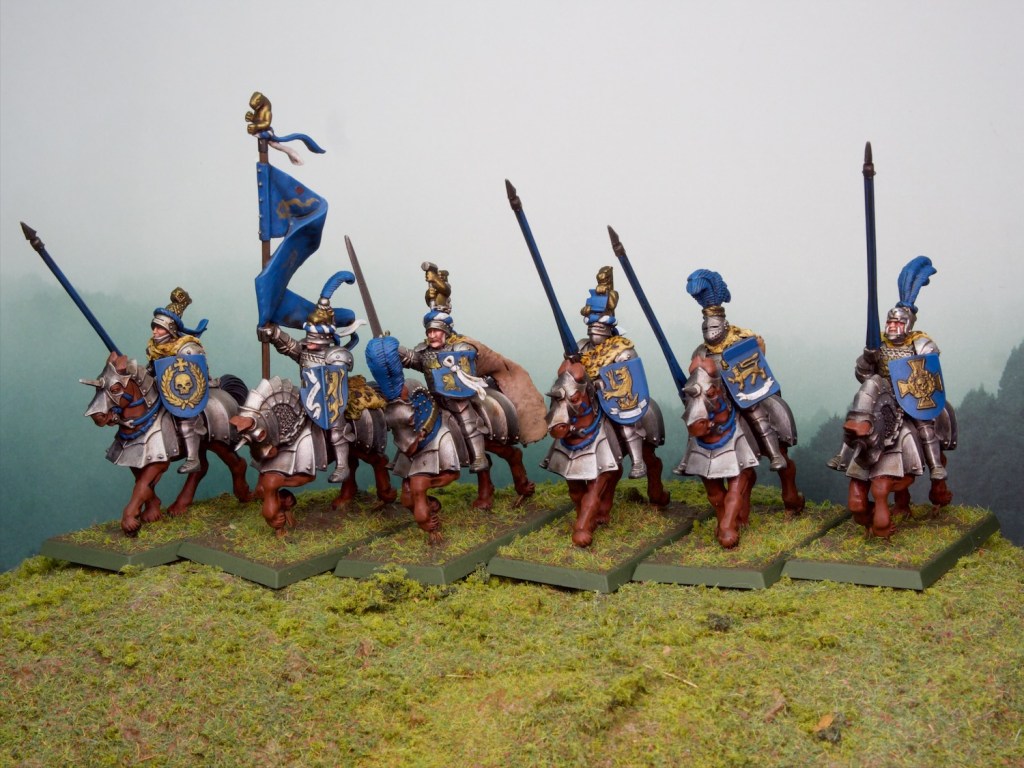
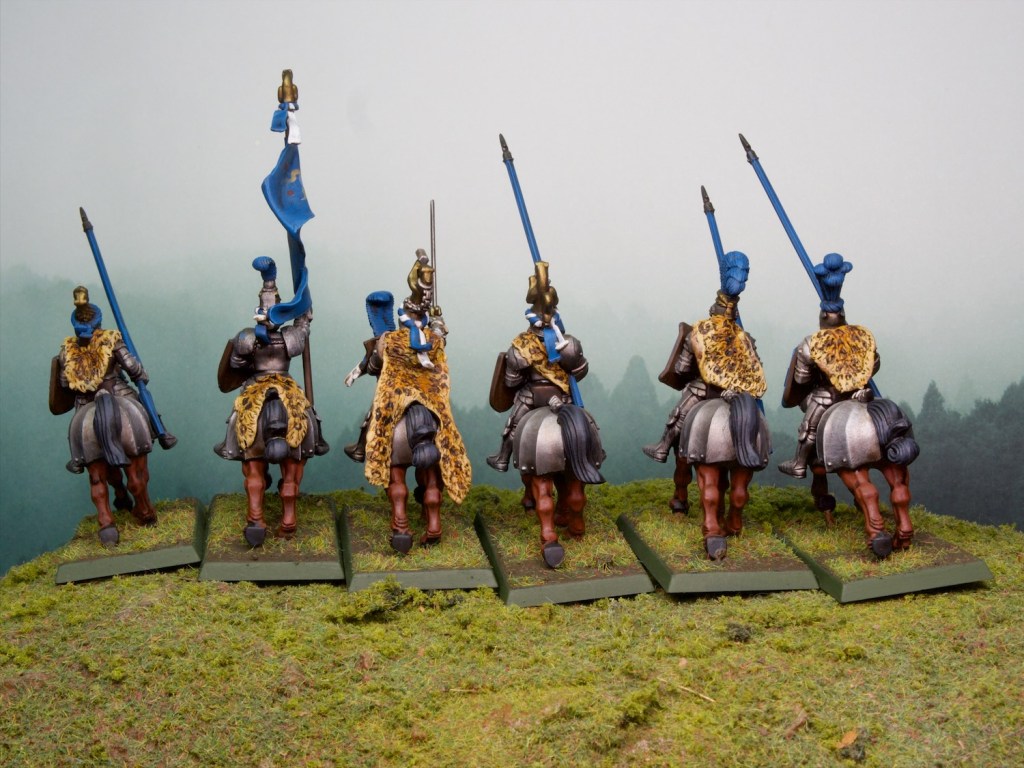
Next up we have this unit of Empire Knights converted and painted to be of the order of Knights Panther.
I made the cloaks and other fur applications from greenstuff which was good practice (but also really slow, bad idea when trying to paint 100 miniatures, whatever I feel like isn’t always efficient). The paint job on these was quick, although I spent a bit of time on the furs as the signature element of these models. This mostly involved creating the gradient from yellowy-brown to cream on the furs before painting on the spots using dark brown contrast paint.
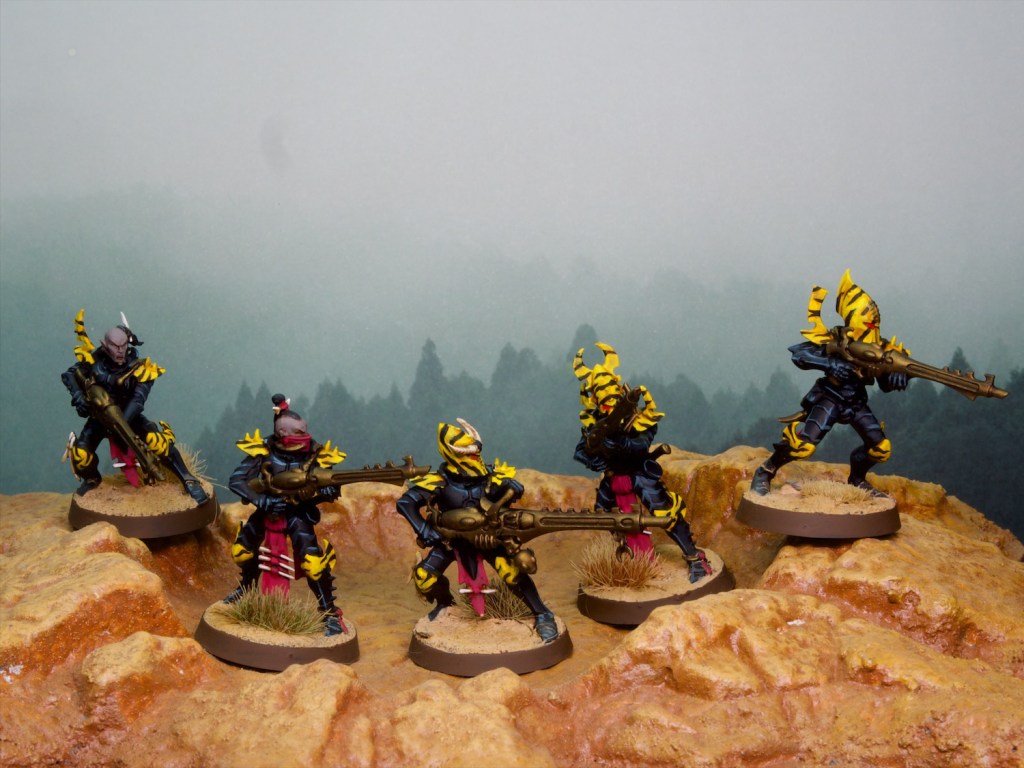
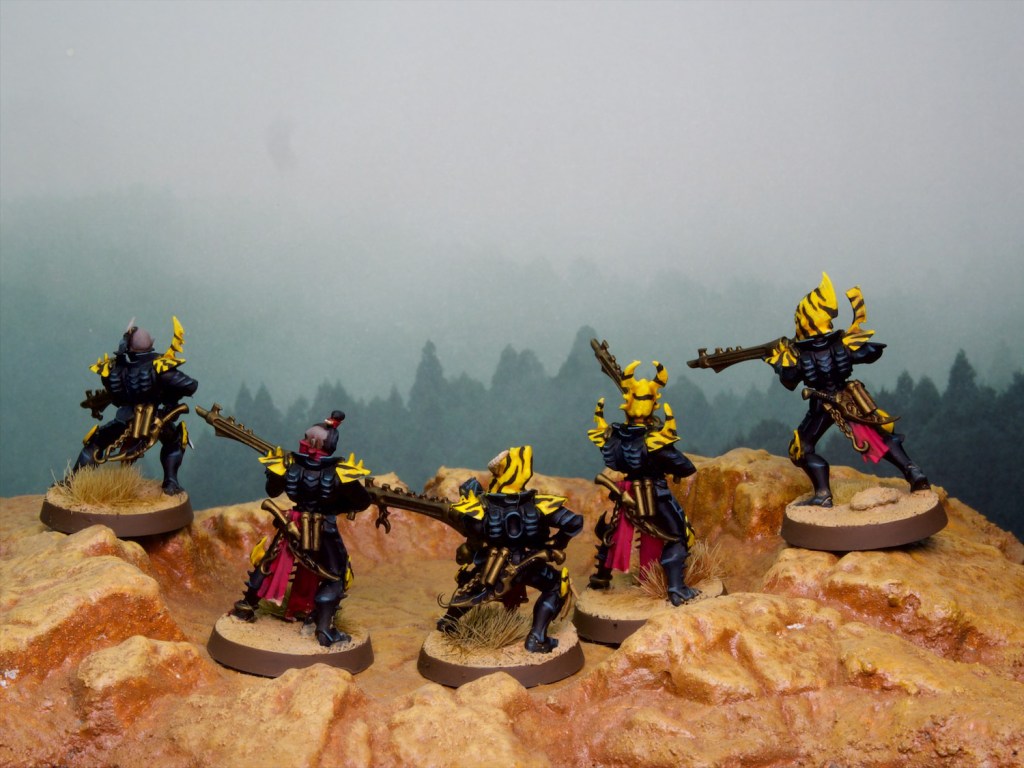
Finally we’re staying with animal patterns but in a much more synthetic setting with the last entry in this post: some Dark Eldar warriors with a wild (pun intended) colour scheme. I’ll go more in depth on the influences for this scheme in another post hopefully, but long story short I saw some very cool, extremely 80s, Eldar colour schemes in the 1st edition Warhammer 40,000 rulebook and went from there. Some of the tiger stripes are a bit wonky, but I got better as I went along and learned what worked and what didn’t. The scheme is surprisingly fast to paint, mainly because most of the armour is black and I find I can do that black with blue-ish edge highlight look pretty quickly (don’t look too close at those highlights thanks).
I hope you’ve enjoyed this look into the mix of models that made the cut for things I felt like painting in the last few weeks! This is a bit of a microcosm for how I approach this hobby and why if you’ve followed this blog for a bit you’ll have noticed me jumping from project to project all the time. I value the fun I get out of this hobby more than anything else and that means I’m always trying to paint what inspires me. I like to think of it as striking while the iron is hot on an idea.
That might mean I get excited on a project for a few months then stop when I get excited about something else. This might seem unproductive, but at the end of the day I find even if I park a project for a bit, inspiration will come back at some stage and that is the time to resume it. If I push through when I’m not inspired anymore I’ll a) not enjoy myself and b) get a worse result, both of which are things I like to avoid. Anyway that’s enough yammering, I have 64 more models to paint!
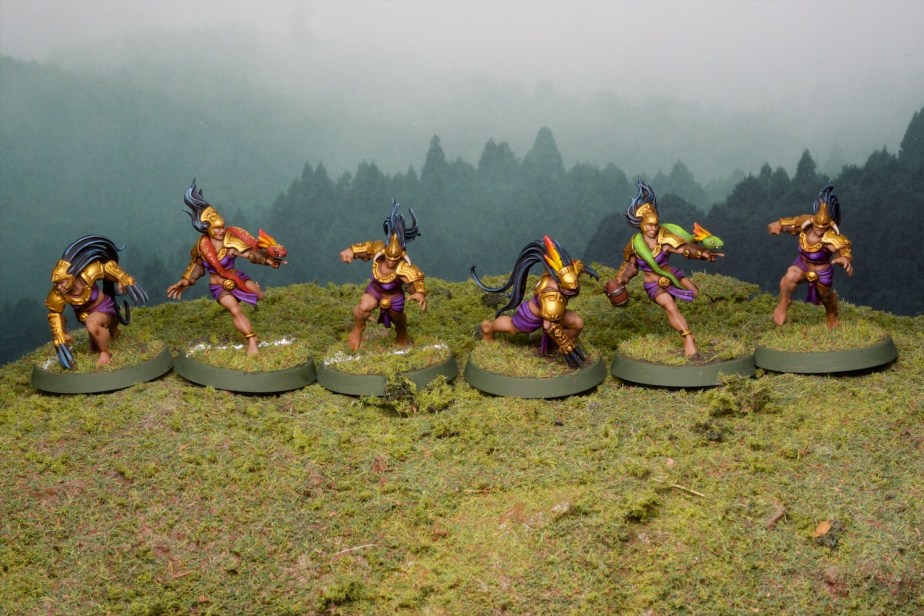
I’ve taken a slight detour through the screaming crowds of Blood Bowl fans over the last couple of weeks, as my gaming group decided to get ready for some games of Blood Bowl after the release of the latest edition of the rules. I’ve always enjoyed Blood Bowl, so I did not take much convincing and found myself assembling a freshly unsealed box of Amazons soon after.
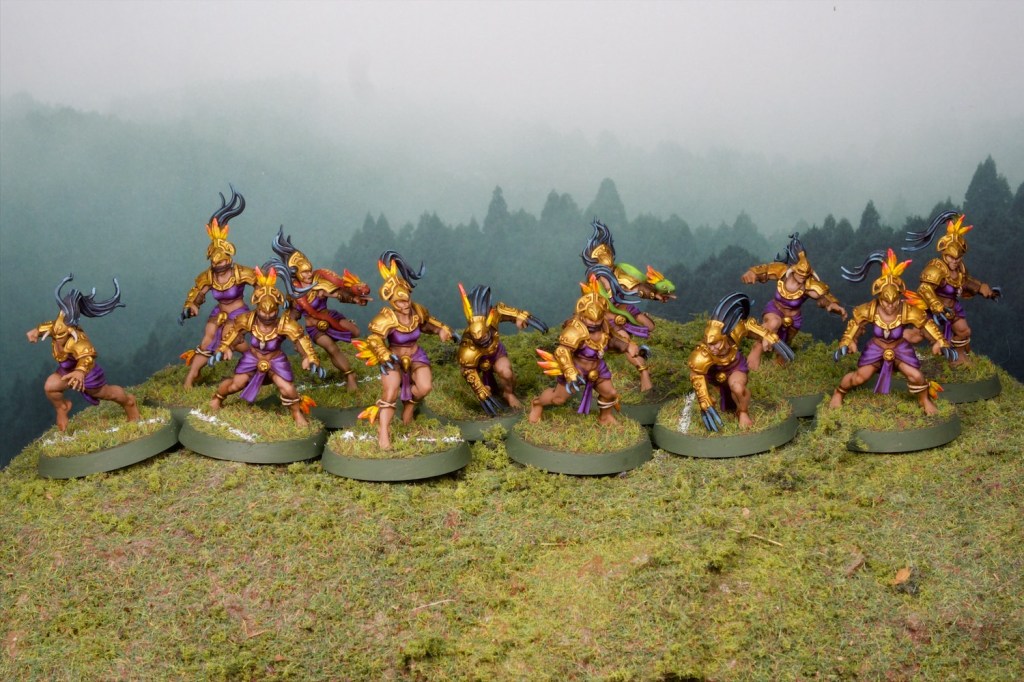
I’d sort of kept an eye on Blood Bowl models over the last few years, and was always pretty impressed with the sculpts. Now I’ve put a modern team together and painted it I can say they stand up to that initial impression. They’re great models, with a nice amount of detail (but not so much they’re tedious to paint, which is a great balance).
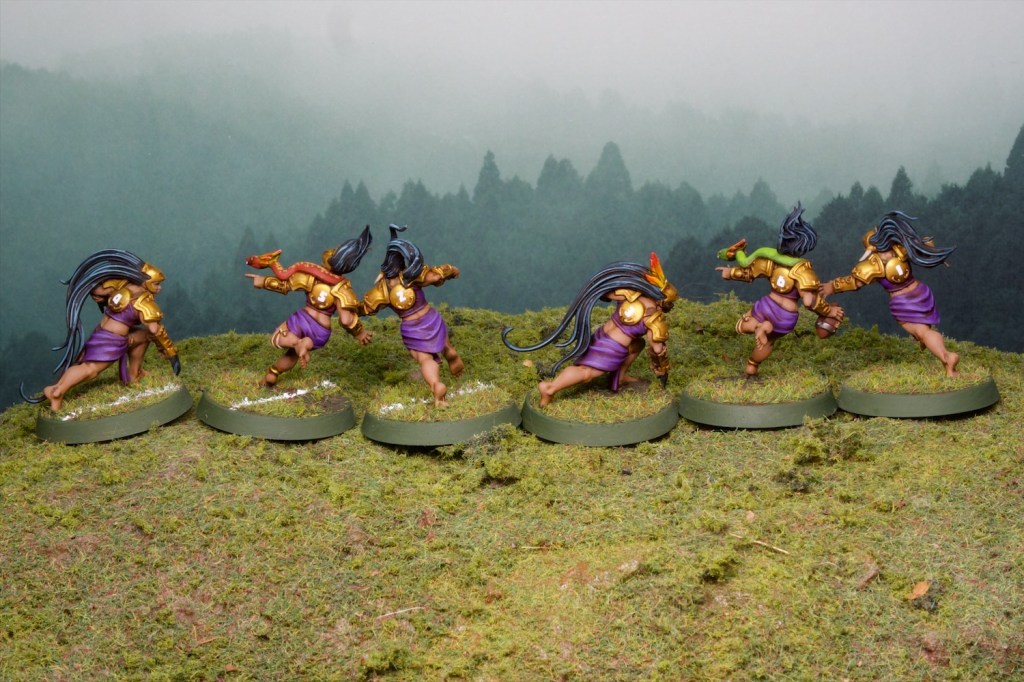
The specialist players.The specialist players from the back.
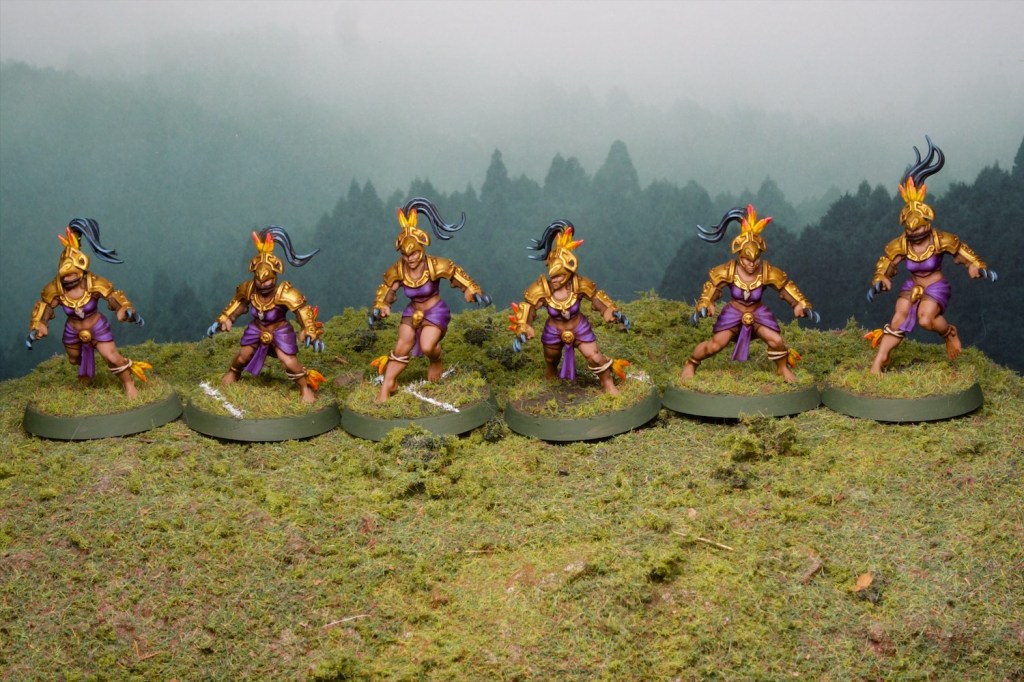
I went for a gold and purple colour scheme for no other reason than I found it pleasing to the eye. The yellow and red feathers were inspired by the artwork for the Magic: The Gathering set Ixalan which has these really cool yellow/red/purple feathered dinosaurs all through it.
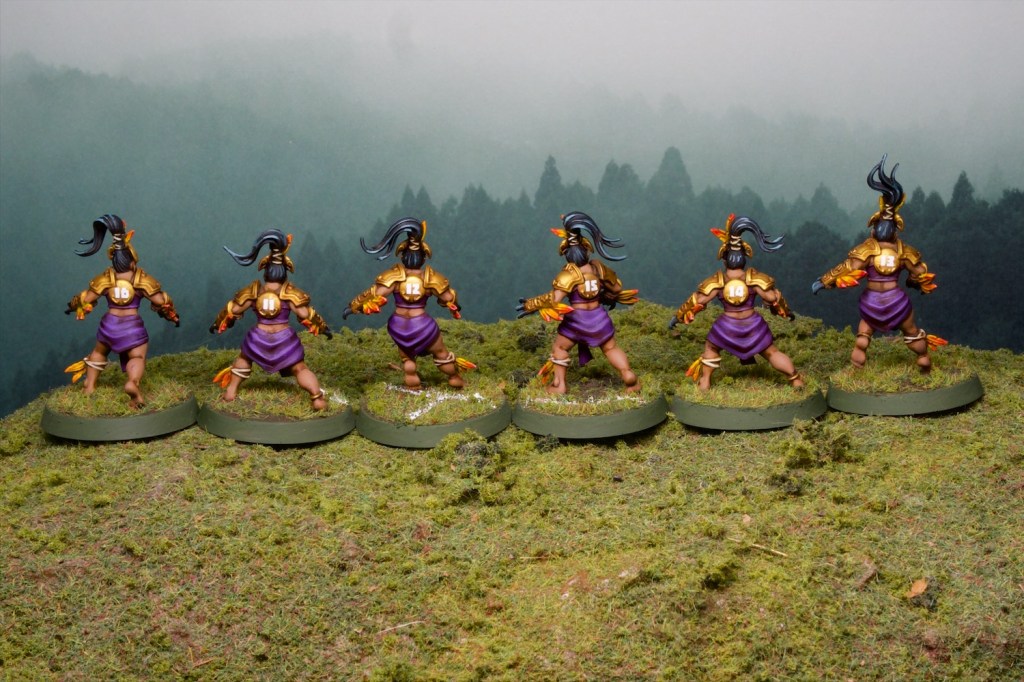
The lineswomen.The lineswomen from the back.
The numbers are from the transfer sheet that came with the set. They also had transfers for the base rims to indicate the player positions (e.g. blitzer etc.) which I’m sure is practical but I didn’t really like the look of that so I avoided them.
I look forward to playing some games with them, it’s been ages since I’ve played tabletop Blood Bowl (I’ve played a bit of the video games in the intervening years). Amazons were very fun to play back in the day and I hope that still holds.
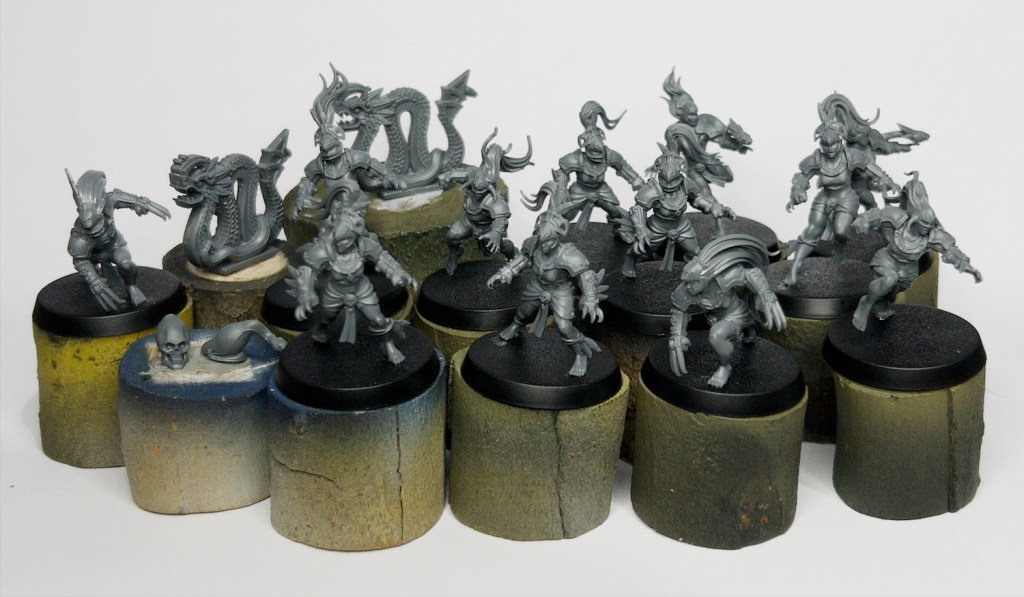
I wanted to show a photo of my setup for batch painting after a discussion with Jeff over at https://kuribospainting.com on holders for miniatures in the last post‘s comments.
As you can see I tack on the models to some bits of branch I’ve cut up into ~4cm cylinders. I find these quite comfortable to hold and they have a nice bit of weight to them (they’re eucalyptus, so quite dense) which means the models don’t topple over. I prime the models like this and don’t take them off till I go paint the base rims. Having one per model is quite practical. You can also see some of the markers and the balls which I didn’t paint yet, I’ll get to them at a later date!
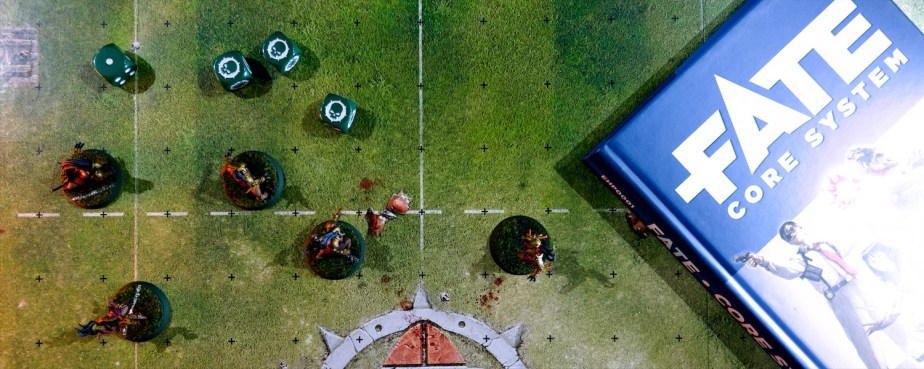
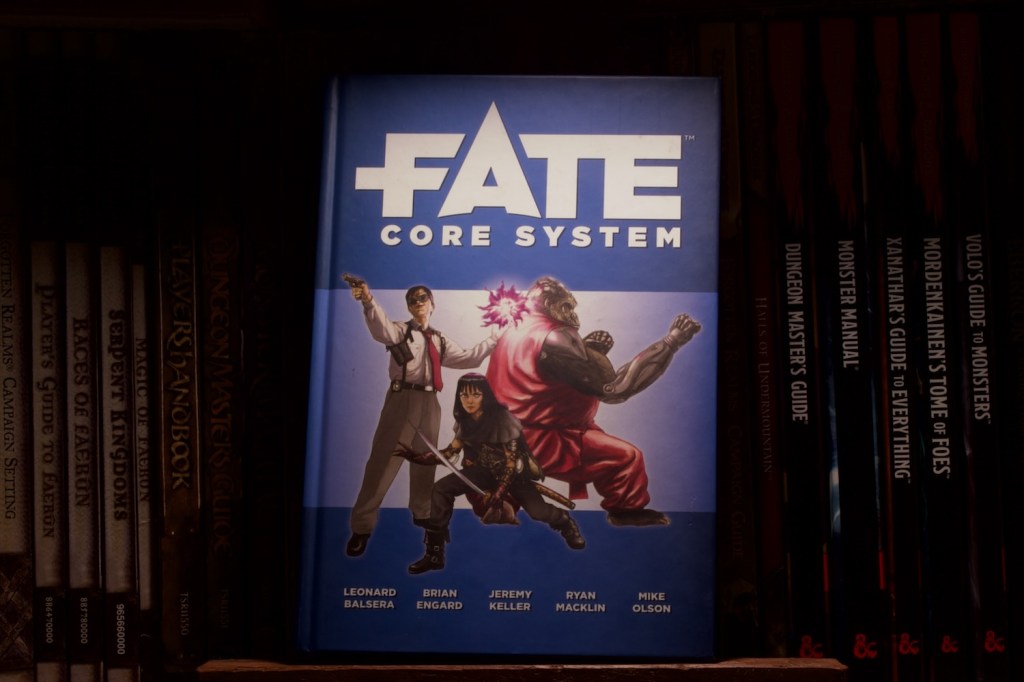
For the second instalment of From the shelves I have Fate Core from 2013.
Fate is a really interesting system that has clearly influenced a lot of later roleplaying games. I’ve played a decent amount of it over the years (although mostly an earlier version, which was part of the Dresden Files roleplaying game). As I mentioned earlier this book is from 2013 and represented a refreshed version of Fate. I’d actually never read it, so it’s been sitting on my shelves unread for 10 or so years. One good outcome of this series is that I’ve finally read through it.
The core concept of Fate is the Aspect system. The way that works is characters, antagonists, locations, basically anything in the game works have aspects, which are short descriptive sentences. These sentences can be used in the game to change what is happening by spending a resource called fate points. For example a player with a character with the aspect “Avid wargamer” could spend a fate point to get a bonus to a roll to do with statistics (this is called invoking an aspect), the player justifying this because their character is very familiar with probabilities. This works for locations too, if a location is “dimly lit”, the player could spend a fate point to get a bonus to hiding. The games master can also use these aspects to make the player’s life difficult (called a compel), for example by making the “Avid wargamer” fail to resist going into a games store when they’re meant to be meeting a friend somewhere else. When the GM does this, they offer the player a fate point which they can spend later for a positive bonus. This whole aspect system is very cool and makes the game really character driven.
There are quite a few other systems to the game but I’m focusing on aspects because I think they’re an interesting mechanic that I’d like to leverage in wargames. It would be quite easy to give aspects to units on the battlefield (e.g. “Bodyguard to the King”, “Want to prove themselves”, “Fled in the last battle”) and give players a pool of fate points they can use to invoke the aspects of their own troops for bonuses, or compel their opponent’s troops to do something negative, but passing a fate point to the opposition in so doing. I think it would be great fun for more narrative games.
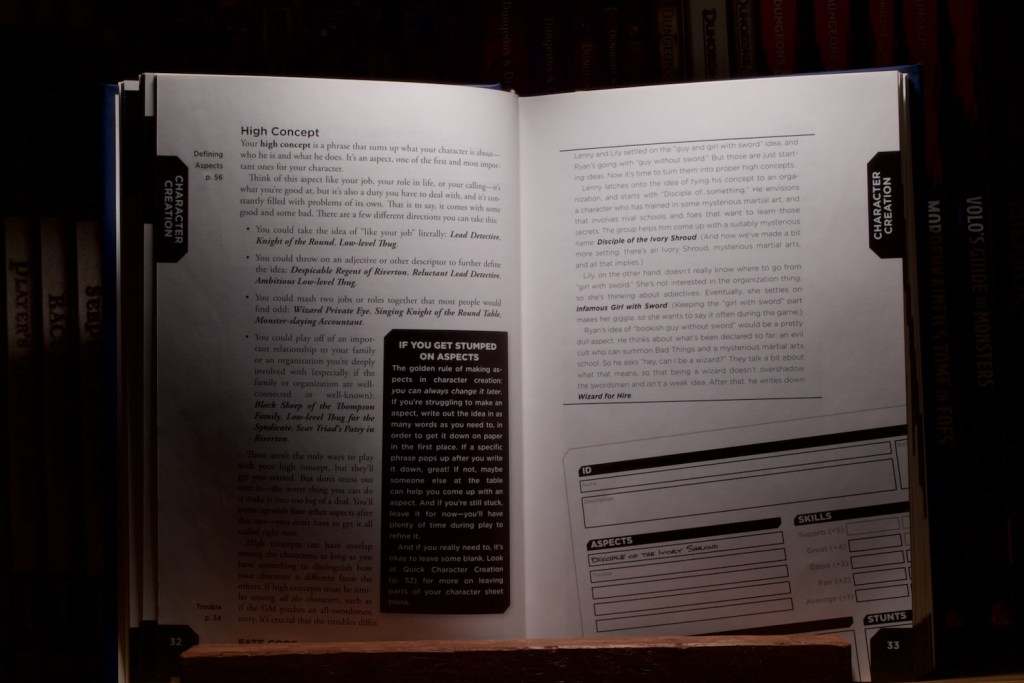
From a book writing perspective, I think this is a really well laid out book, with an abundance of clarifications for the reader. The pages above are a good representation of the style of the book, with a rules section (left page), a play example (right page, italics), and where appropriate an example of what the rule looks like on the character sheet. You also have these dark tabs on the edges of the pages that make it really easy to find sections by quickly flicking through the book.
Overall I’m impressed with the book, and really like what the game is doing. In practice my group has struggled with Fate, the system as a whole just doesn’t quite work for us and that’s why we stopped playing it. However it is packed with great ideas and I’ve re-used plenty of them throughout the years and plan on doing so plenty more in the future. Fate has also clearly had an impact on many later roleplaying games, and I find Fate mechanics or ideas all the time when reading/playing other roleplaying games.
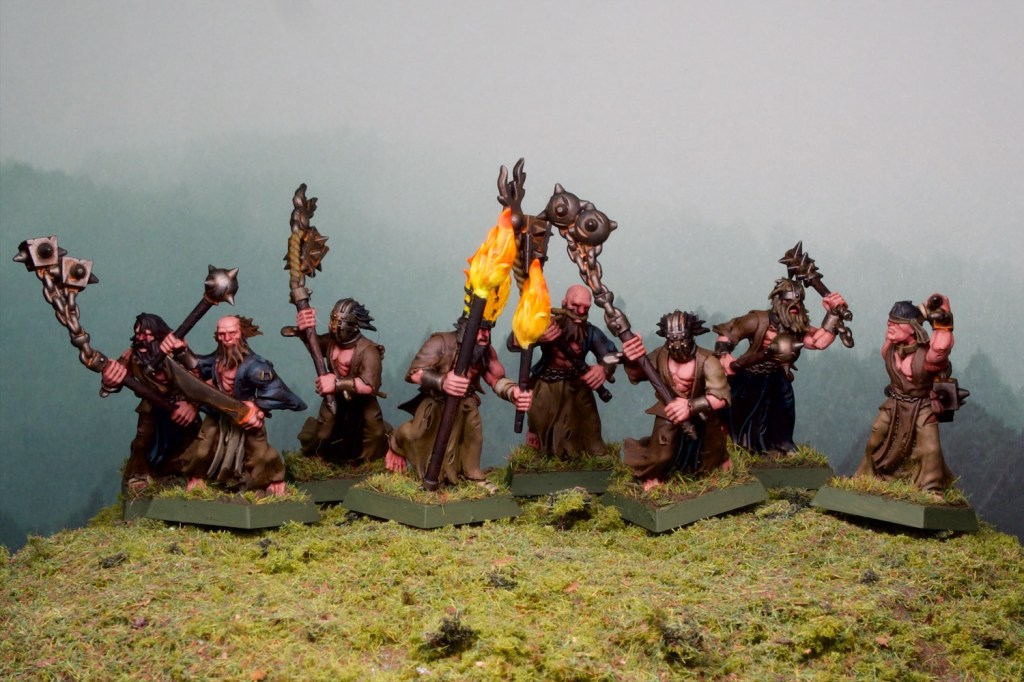
As I mentioned last post, I hadn’t done too much painting over the Christmas break, but I decided this week to break that negative streak and get back into it! The best way to do that was to pick an easy project and that meant finishing this next batch of Flagellants.
These will fight alongside the last batch, most likely in games of Midgard – hence the two sets of 8 models which make up a base each.
There’s not too much to discuss painting-wise, these are your bog standard doom saying, apocalypse preaching, world is ending types, in their usual accoutrements: brown and black rags! I tried to break up the mass of rags with some different shades of brown (I think I have 3 all up), as well as the aforementioned black sections. The fire was fun to paint, with some wet blended yellows and oranges over an off-white base coat.
If you remember my last post, I discussed creating a space in my posts to talk through books from my gaming bookshelf, partly to remind myself of old favourites, but mostly to motivate me to crack open those that have sat unread for many years. I’m a little bit undecided if these should be standalone posts or be part of “regular” posts (as I’ve done here; open to opinions if you have any!). Anyway, here’s my first shot at a segment I decided to call From the Shelves.
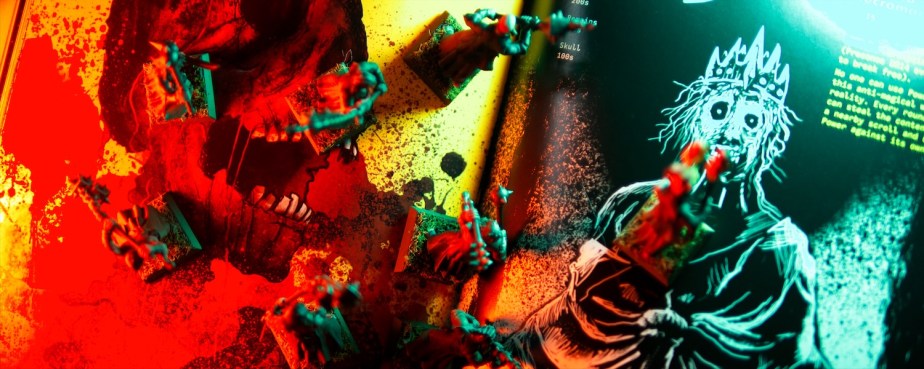
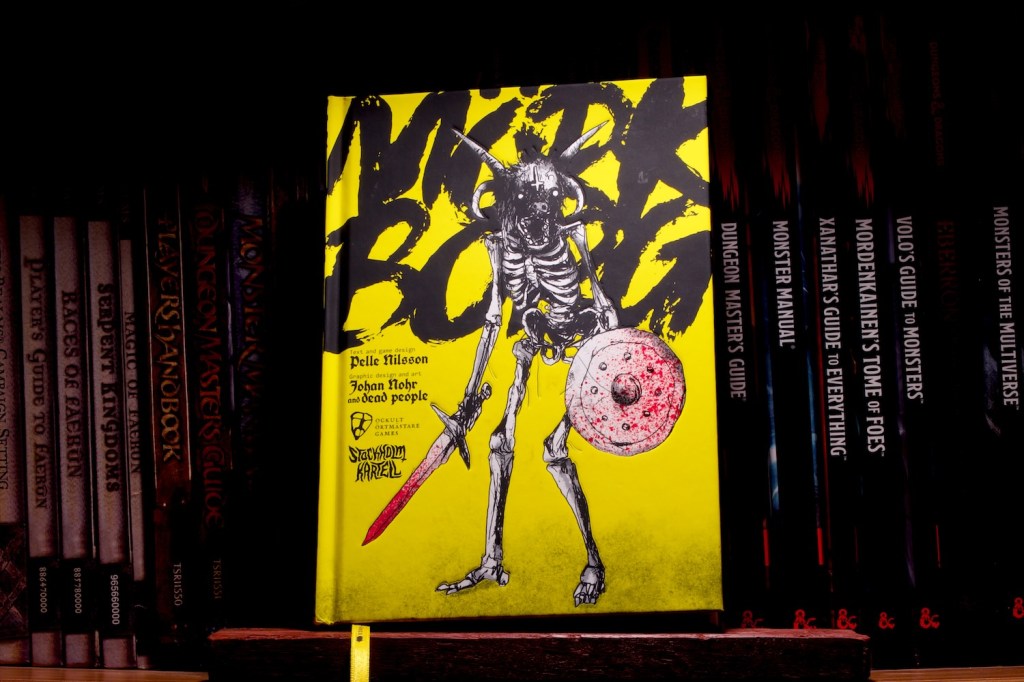
For the inaugural From the Shelves segment, I decided to pick out a book that has some nice thematic parallels to the flagellants above: Mörk Borg. Mörk Borg is a rules-light roleplaying game that sort of blurs the line between art project and game, with some pretty wild graphic design that looks like nothing else I’ve ever read.
I’ve had my eye on this book for quite a while (it was originally released in 2020), but I only picked it up in December last year, as my gaming group started talking about running short games instead of long campaigns as our default way to play RPGs. The book is pretty short (80 something pages, most of which are pretty light on text) and the rules are very simple (~8 pages of the book are the actual rules of the game). There’s a few pages on the setting (the world is about to end, and things are generally pretty grim; maybe the flagellants are right!), then character creation rules which are mostly dice driven (i.e. result in pretty random characters), this is followed by the main game rules, some optional classes, a bestiary, and an introductory adventure. All in all a pretty complete game given the small format.
The game itself is a simplified fantasy adventure system, in the OSR genre (i.e. tries to capture some of the nature of early RPGs), but has its own voice rather than being a classic Dungeons and Dragons reproduction. While the universe at first glance is extremely grim, there is a tongue in cheek feel to the whole book which reminds me of early Warhammer fantasy/40k publications. This in some ways is so over the top it’s impossible to take it too seriously and I’m sure this ridiculousness will lead to some great moments at the gaming table.
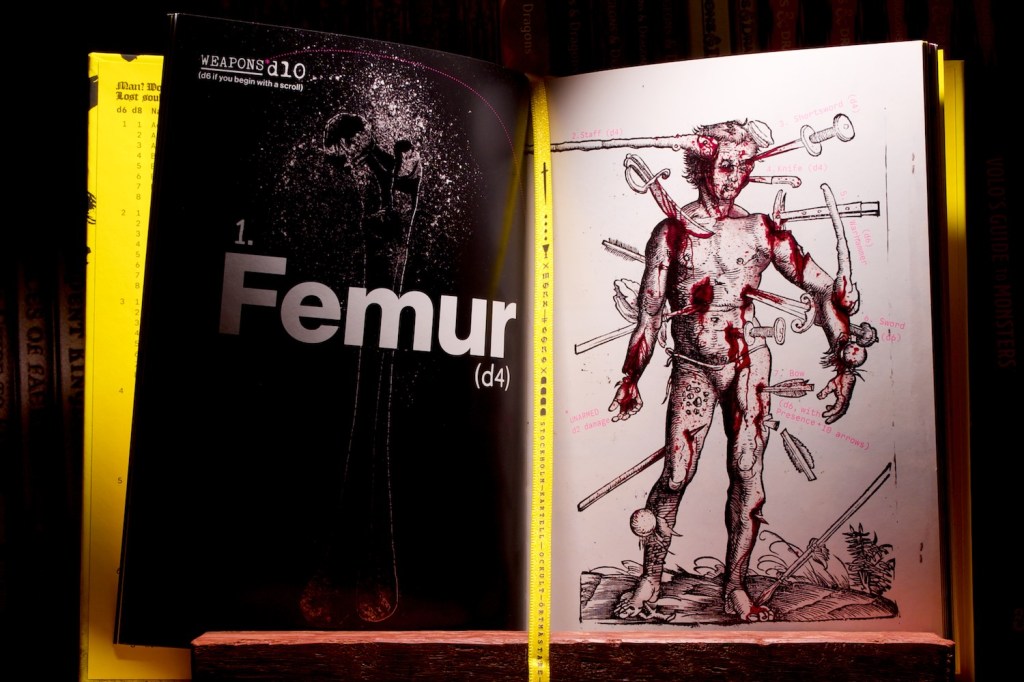
One of the more unusual weapons tables I’ve seen!
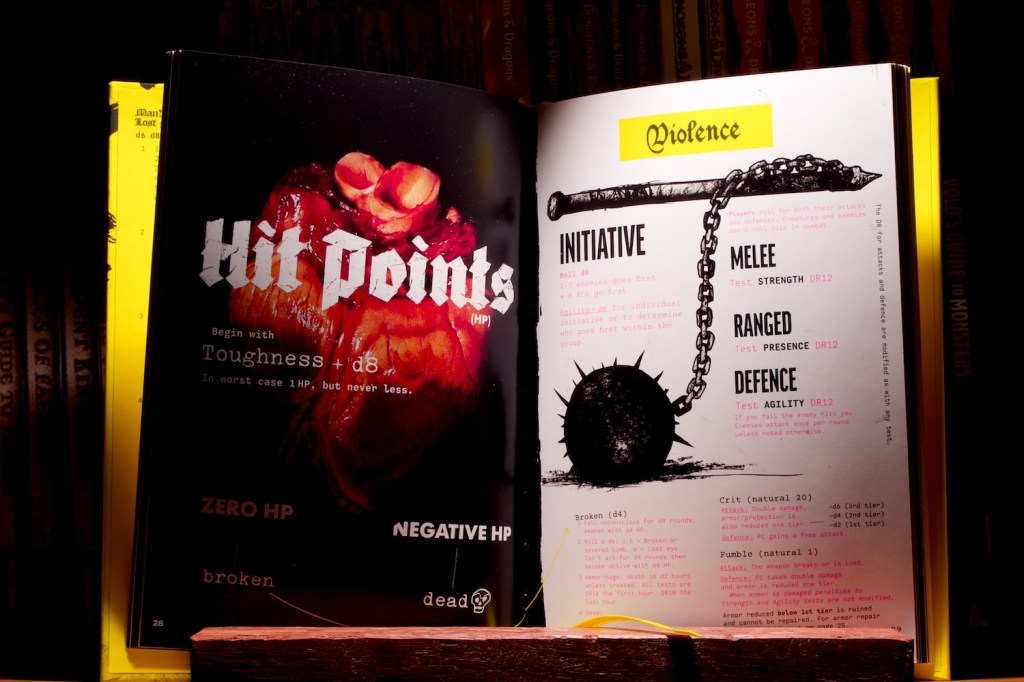
The crazy graphic design is pretty interesting, on the one hand it does a great job of communicating the feel of the game, but possibly more importantly it does a good job of making different sections easy to find. I read an article on this book that discussed that as each page looks different, you end up using the art/text as a landmark when flicking through the book, and I very much agree with that. The book also has the index on the rear inside cover which is a genius move that makes it very easy to consult at a moment’s notice.
Looking for rules on hit points? Just find the page with the big heart!
Overall the book is a fun read and I really look forward to running games of it. It has a great amount of support out there from 3rd party publishers due to its permissive license model, so it’s hard to run out of pre-prepared content. It even has a in-universe 3rd-party miniature skirmish game called Forbidden Psalm which I’ll have to check out some day!
Hopefully you’ve enjoyed this quick look into this book, I’ve definitely enjoyed reading it and now I’m going to go try to convince my friends to play the game.
Over the Christmas break I reconnected with one of my favourite pastimes: reading roleplaying game books (hence me posting something painting-related just once over two weeks of mostly free time!). I have a regular gaming group with which I play roleplaying games (and the occasional wargame!), and we play quite a few different games, but my gaming bookshelf is filled with games I’ve never played (and in some cases never read). I’d like to turn that around to some extent, and use the blog to motivate me to read through these books and write up my thoughts around them (More on that later!).
What I immediately got out of my readings however is a furthering of my appreciation of narrative gaming (as opposed to competitive gaming), and/or rules light games. I’m saying and/or because I see quite a bit of overlap between the two. While narrative games aren’t always rules light, both narrative games and rules light games expect players to come up with rules for their games, which is very different to competitive games where rules are expected to be provided.
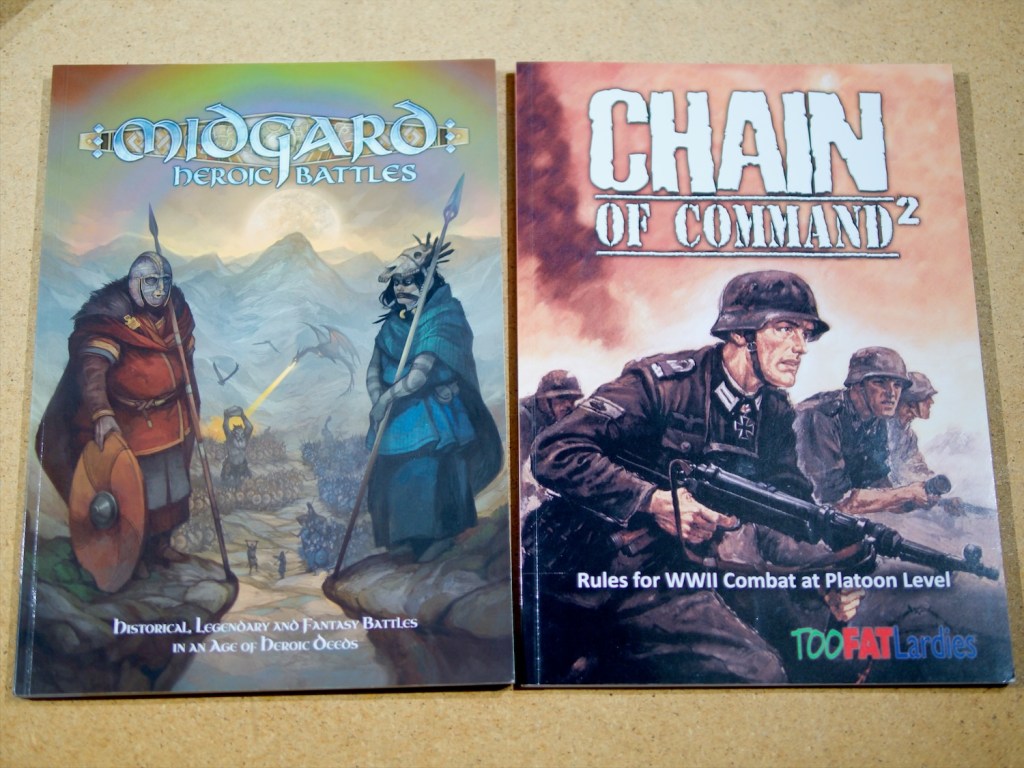
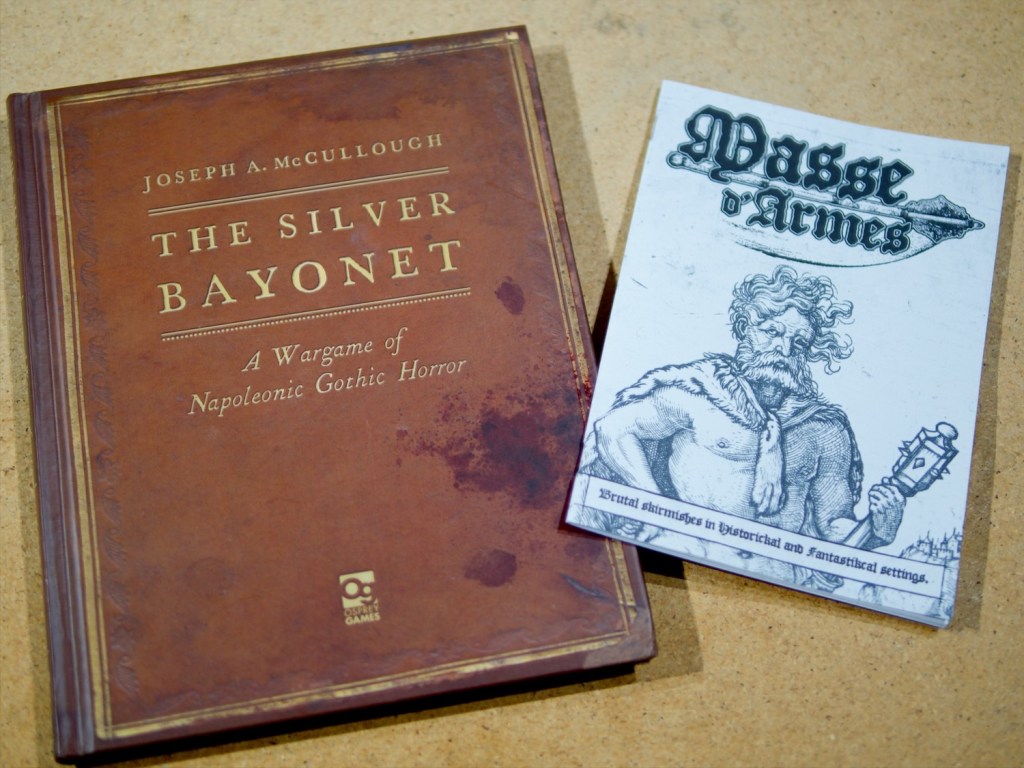
This personal shift is something that’s been happening quite a bit over the last year, you’ve seen me take to Midgard over Warhammer and other historical and fantastical rulesets, Chain of Command over Bolt Action, explore narrative solo gaming with The Silver Bayonet and dip my toes into rules writing with my own rules-light skirmish game Masse d’Armes. This was a very wargames focussed transition, but this Christmas reading got me effectively in the same place for roleplaying games.
Neither is rules-light as such, but they are lighter rules than many other similar wargames, and both have a definite narrative bent.
I’m enjoying lighter rules in games for a few reasons. First of all, my time is more limited now than when I was younger, therefore my ability to a) play games, and b) read a massive rulebook front to back is much more limited than it used to be. I also more importantly have had a bit of an attitude shift to gaming itself, moving from a mindset of doing well in a game, playing to win etc. to enjoying the stories that emerge from these games. Looking back on 20+ years of wargaming, I don’t remember many of my victories (maybe not many to remember hah!), but I do remember plenty of fun moments in games where a lone soldier took down some chaos monstrosity, or when a unit of puny Skaven clan rats routed a mighty dragon.
The Silver Bayonet’s light rules had a lot of influence on my own attempt at writing rules.
More competitive play-styles tend to rely on tight rulesets, which cater to (or try to) all situations that can arise in games – and therefore lead to big rulebooks. This style of game aims for game balance and fairness. In wargames of this style this means that players can assemble their armies and expect a game where in theory the best general can walk away with the victory. In roleplaying games, while not competitive as such, this tendency to aim for game balance as well as fairness is also present, with games trying to make sure all players are roughly the same power level and therefore able to have the same amount of fun. Games in this vein tend to have rules covering all kinds of situations so that the game master needs to make as few rulings as possible during games – keeping things fair.
This competitive play style is very common in wargames because it means you can build your army to a common ruleset and play games against anyone else that has also followed those rules. It allows tournaments to be played, but also allows for random pickup games at clubs. This shared rules phenomena is also present in roleplaying games, with games organised at stores and conventions following rules familiar to players that may not know each other before the game. This is the style of games I played for most of my gaming life, whether it be Warhammer or Dungeons and Dragons. If a query came up, I expected to be able to pick up a rulebook and find out how to resolve it (or failing that go look at FAQs online).
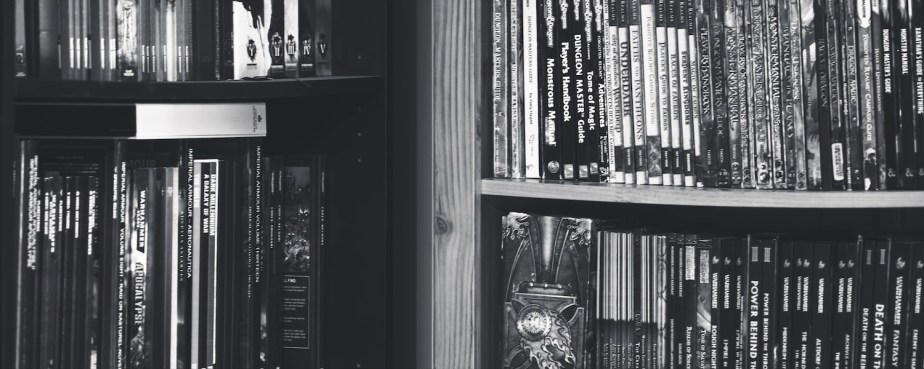
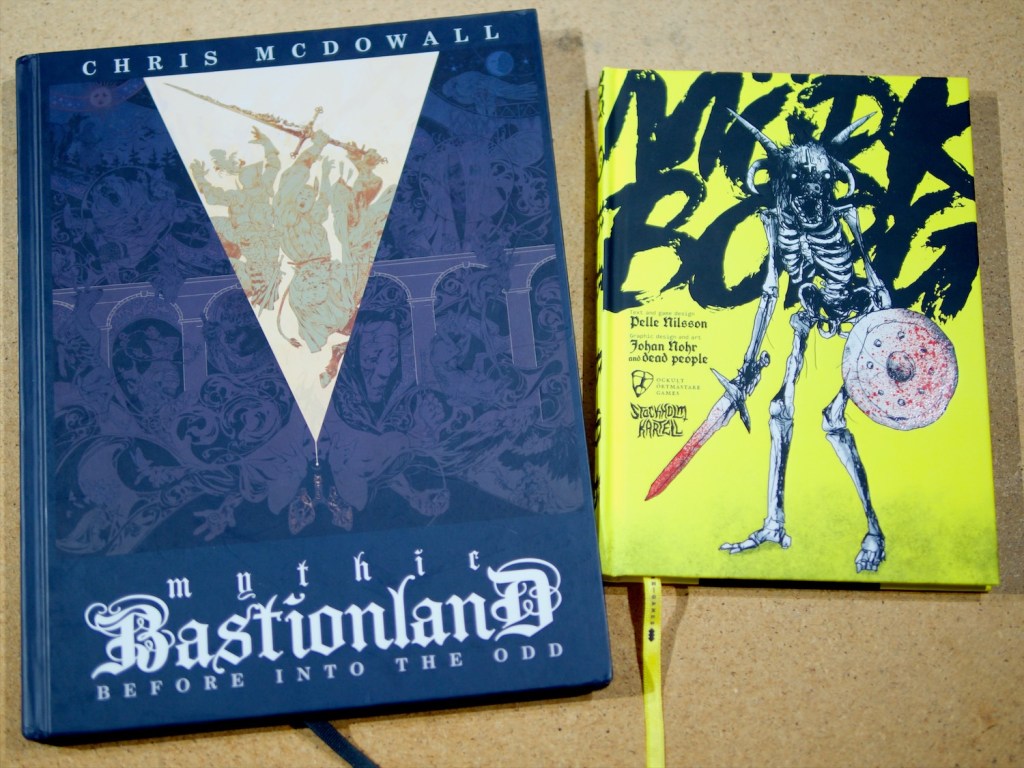
Mythic Bastionland’s main rules fit on a handful of pages, so do Mörk Borg’s.
Rules-light games on the other hand expect that situations will arise that will not be covered by the rules and therefore need some adjudicating during play. This is not a bug, it’s a feature. There is a movement in the roleplaying space called the OSR (Old School Renaissance/Revolution) which calls back to some glorious past vision of roleplaying in the 80s and 90s. I’m not sure things were that rosy, but I have to say the ethos that’s come out of that movement definitely resonates with me. One of the mantras I hear in this space is “Rulings not rules” which touches on that exact point: the rules provide a framework, the players (the game master mostly) are expected to fill in the gaps as they arise.
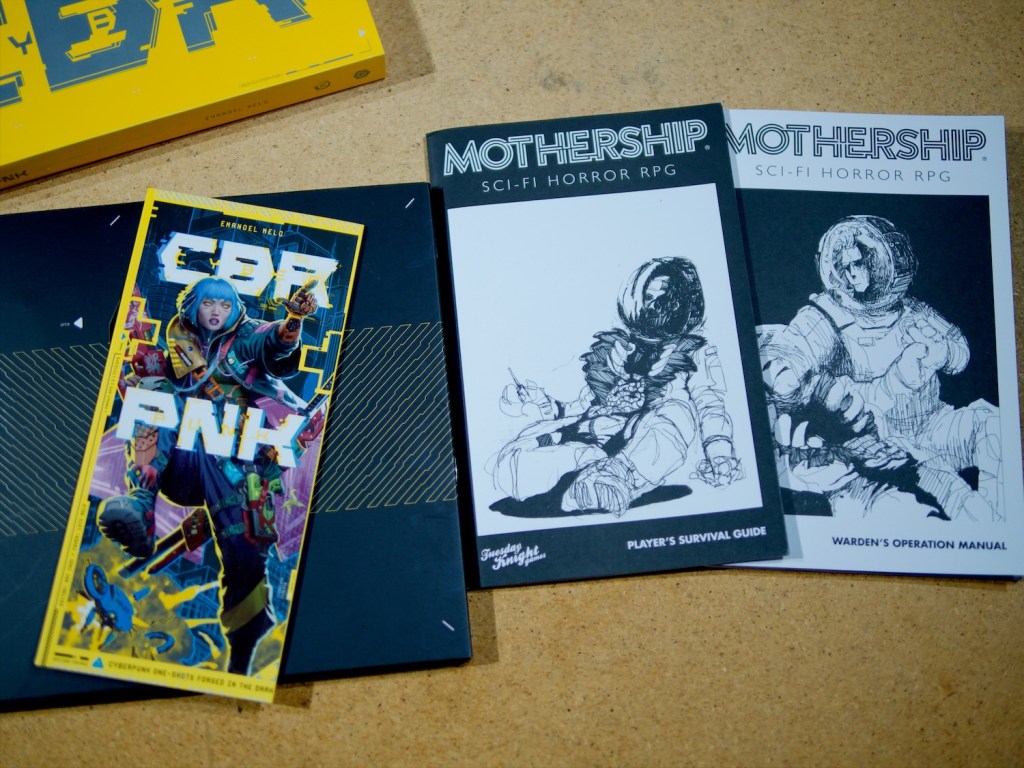
CBR+PNK’s rules are literally a pamphlet, and Mothership fits in a few zine-style booklets.
This sounds like more work, but in practice I really like it – I would much rather make a call on rules in the moment than try to find the relevant rule in a book. It’s probably not any faster, but it creates a shift in focus: instead of thinking about how to play the rules, you start thinking about how to play the situation in the game. For example, say a unit retreats into a dangerous magical swamp. A comprehensive set of rules might say they take d6 hits and how to resolve them. A more rules-light game might not, and the players will have to decide what this swamp does. Maybe this is a necromantic swamp filled with the dead dragging the living down and therefore some agility or initiative test might be in order to avoid being drowned. Perhaps the players land on the same rules they would have been given by a more comprehensive ruleset, but at least they’ve thought about what is happening in the imagined world.
Clearly I’m enjoying this shift, so what took me so long? Well I was always worried about this game balance and fairness aspect. For me, house rules were never going to be as tested as “proper” rules, and therefore would lead to unfair and consequently unfun games. I’ve now come to the decision that fairness is overrated in these games we play, and we’re much more likely to have a good time if we don’t worry so much about what is fair, and rather focus on what is unfolding in the game. The price of this is that it might be hard for me to find people that want to play games the way I do at a club or store. Luckily for me I have some friends that enjoy this play style, and we’re having a great time. This right there might be the reason you prefer one style of game over another, and that’s just fine – do what works for you!
To get back to that sentence right at the top on how I want to use the blog to motivate me to read through my book pile of shame, I’ve decided to try something along the lines of a series of posts dedicated to books. For these I would pick a book off my bookshelf, read through it and write down my thoughts. Not really as a review, more like reading notes. It would likely be a mix of wargames books and roleplaying books, which given this blog is 99% about wargaming might be a bit of a change but hopefully those of you that aren’t into roleplaying might find the posts interesting if only from your familiarity with rulebooks!
Anyway I hope my digression into games rules was interesting to read, let me know in the comments what you think about all this!
I’ve been working on a cyberpunk version of Masse d’Armes as I’m a fan of cyberpunk media and been wanting to play some miniatures games in the genre. There was a slight problem with that, which is that I don’t really have suitable models and terrain! The closest I do have is the terrain and models I made for This is not a Test, which is firmly in the post apocalyptic genre so not really appropriate. I therefore decided to start at the beginning and make a game board.
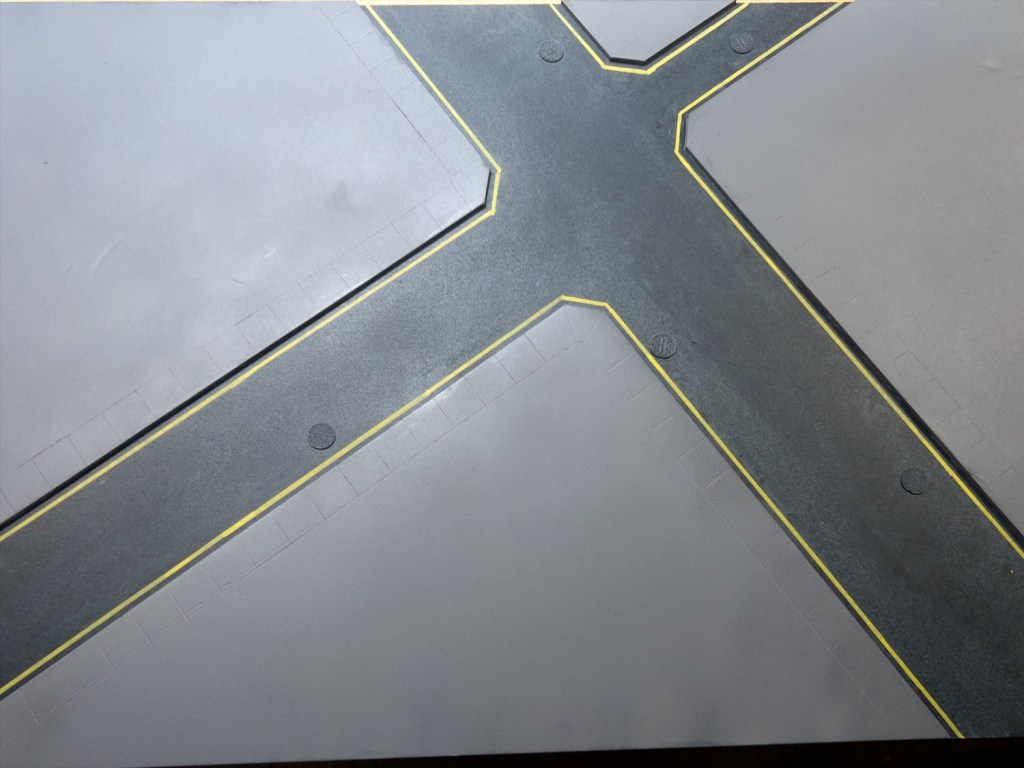
The finished product.
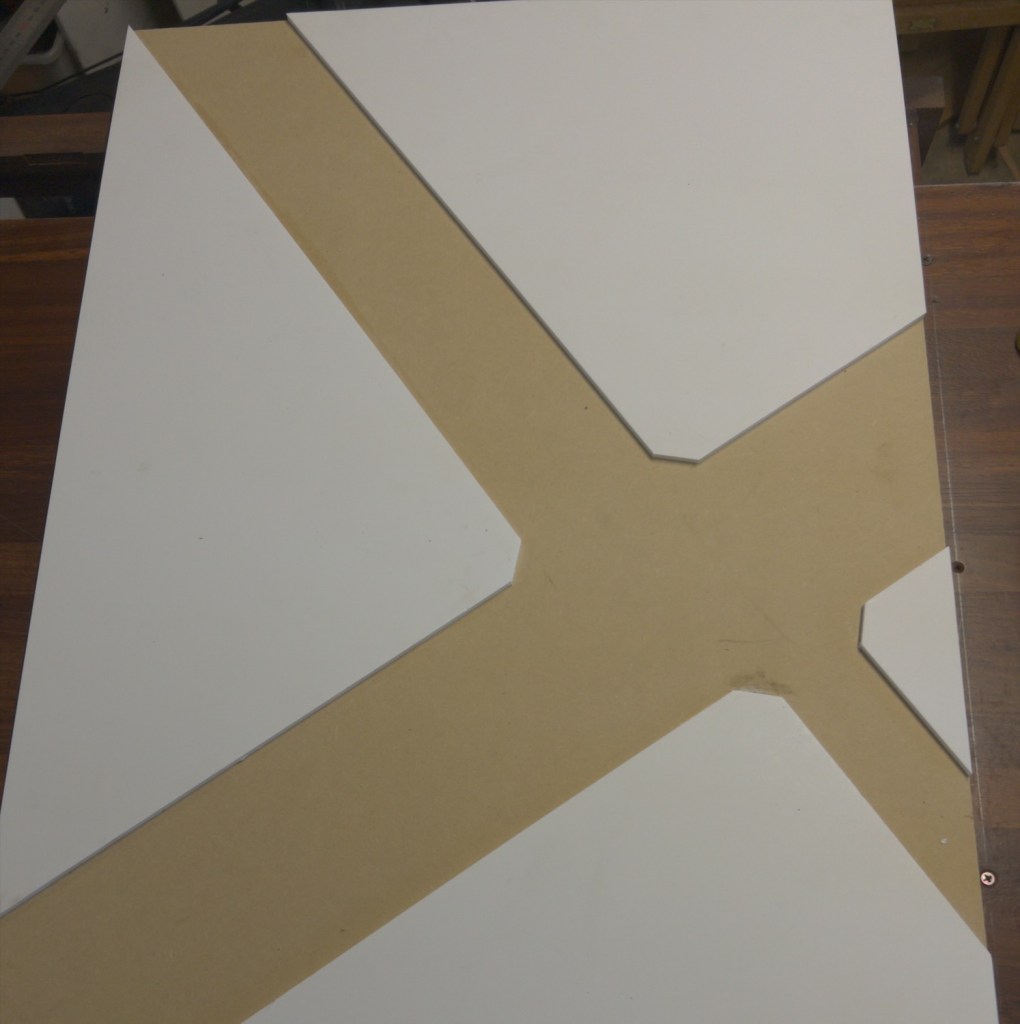
Rather than get a game mat, I decided to make my own, starting with a 900x400mm (~3x2ft) MDF board from the local hardware shop. I then cut out the shapes for the raised footpath areas using 5mm foam core panels.
I glued these down with PVA glue and left them overnight weighted down.
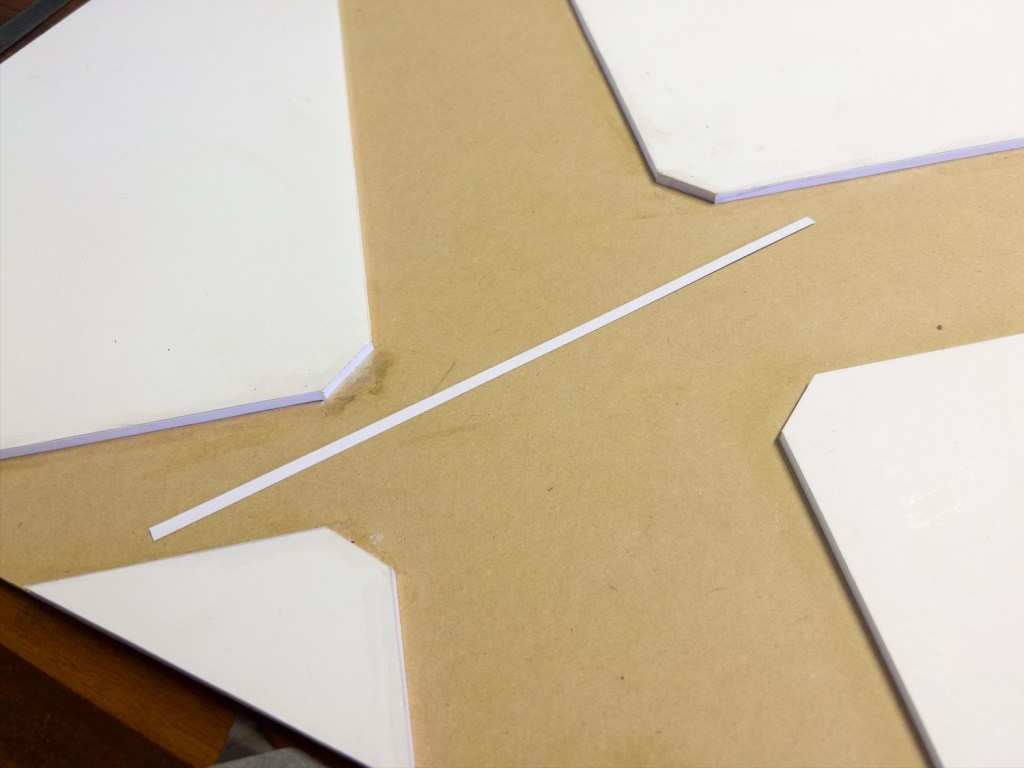
To cover up the exposed foam on the sides of the foamcore panels I cut 5mm strips of thick paper and glued them to the exposed edges.
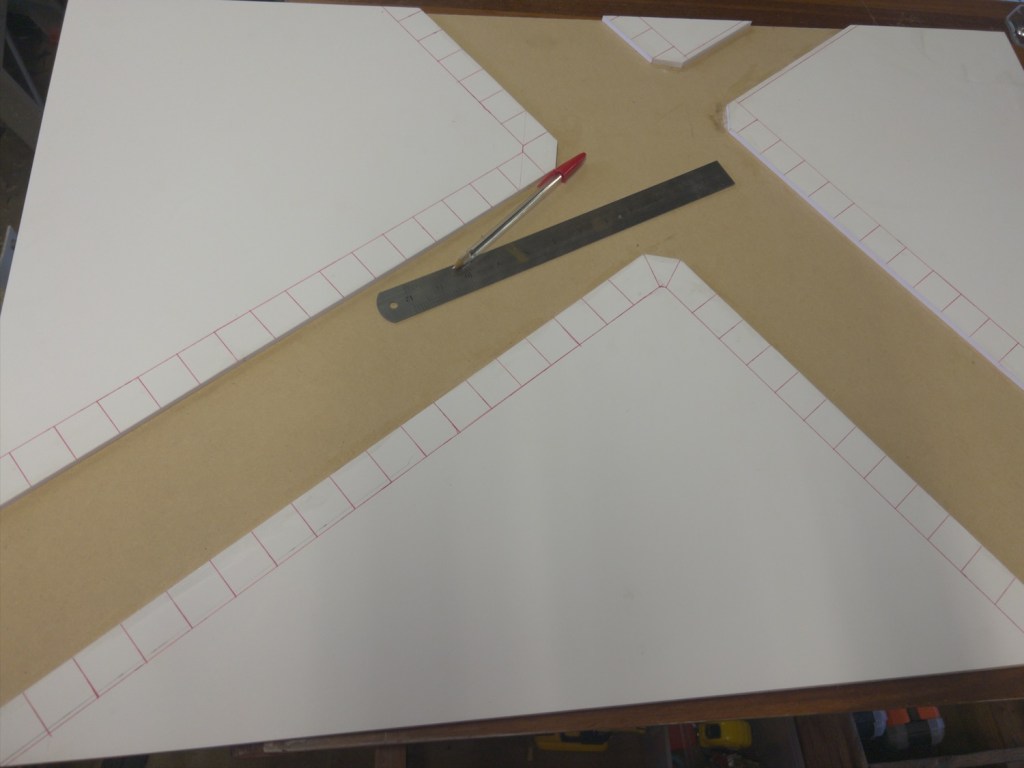
I used a ballpoint pen and a straight edge to mark some lines in the foam core to represent separate sections for the footpath. I tried to keep the pressure hard enough to mark the surface but not too hard so as not to tear through the outer layer of card.
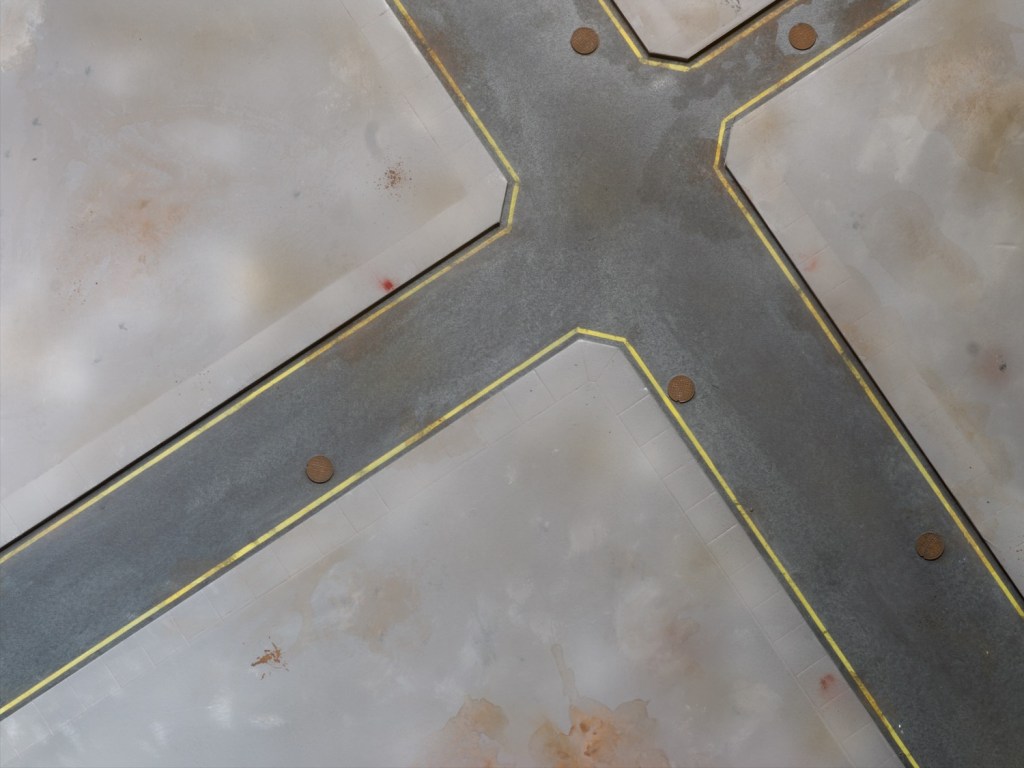
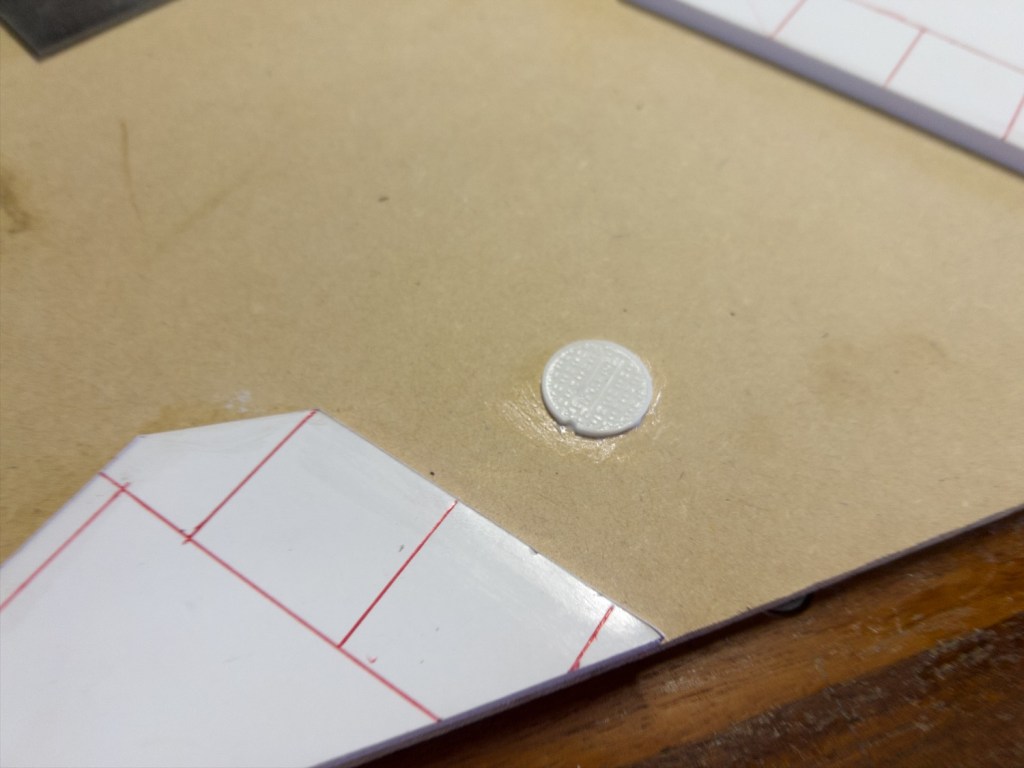
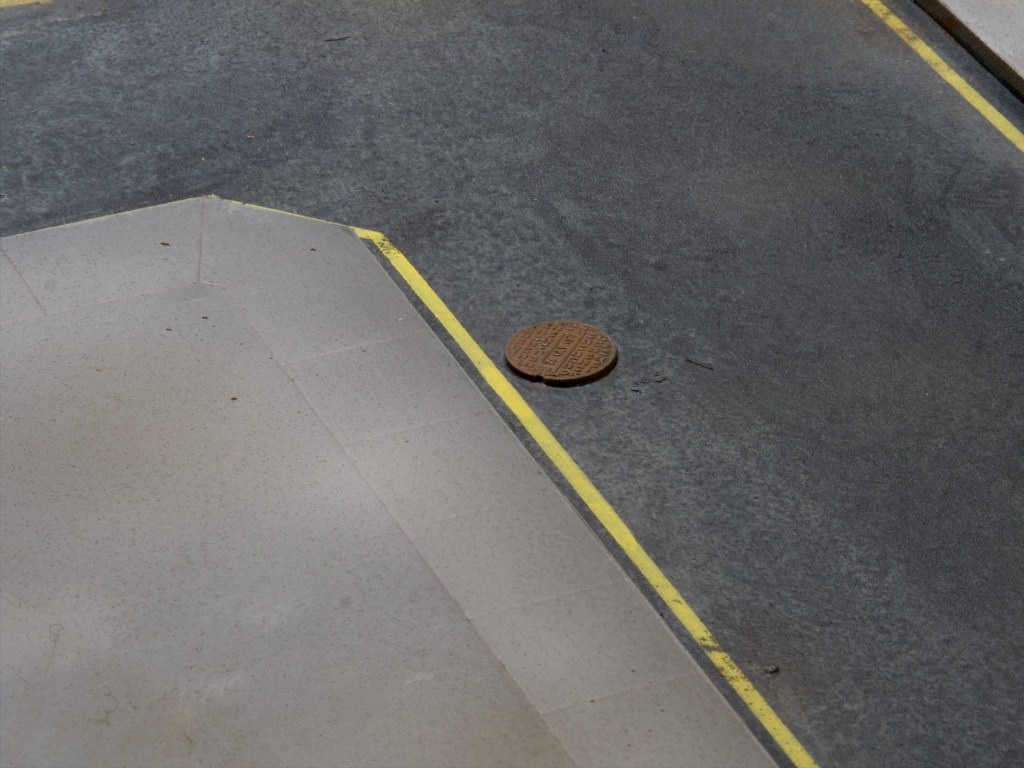
I 3d printed some manhole covers (https://www.thingiverse.com/thing:3246148 – shrunk to 20mm diameter) to add some details to the road sections. I glued these down using PVA.
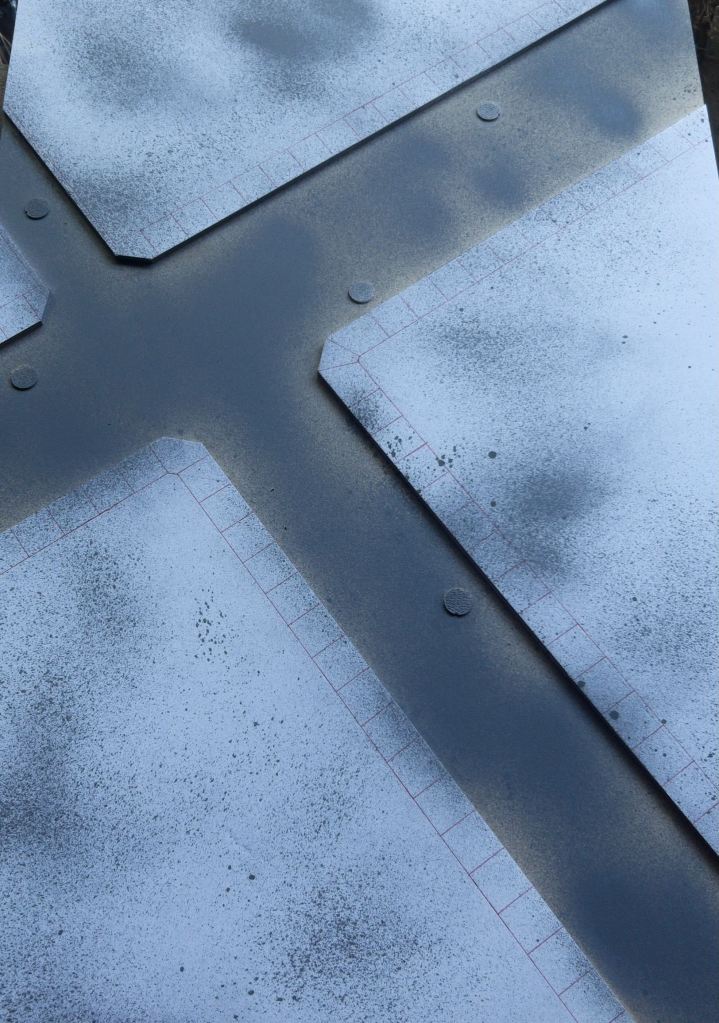
I had a little bit of Citadel Roughcoat left in an old can so I sprayed some in patches, concentrating on the road sections, but making sure to dust all areas. I then undercoated the whole board with some grey undercoat, painted the road sections over with a mix of black and blue paint, aiming for that asphalt colour.
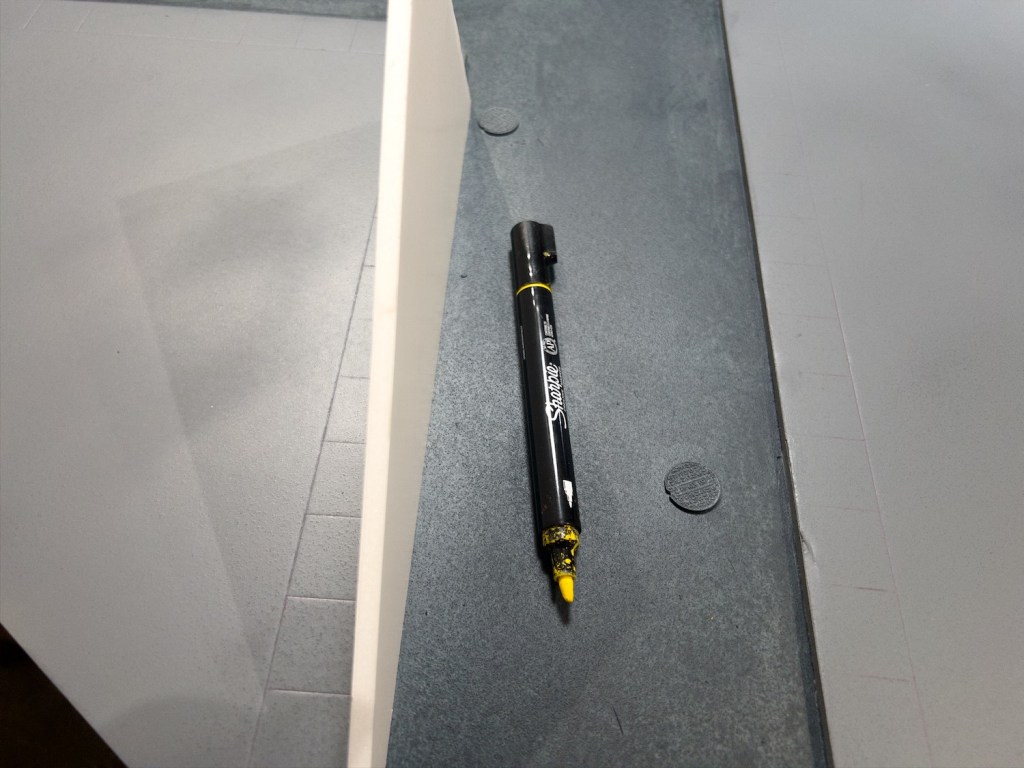
For the lines on the roads I used a Sharpie paint pen (Creative Marker I think is the name). I used some foam core offcuts to act as a spacer, pushing them against the raised edge. This worked really well and I’ll do this again if I have to paint road lines again in the future.
Fresh lines! Time to dirty this up.
I then got into weathering all this. No photos from this stage I’m afraid, was having too much fun to remember to take photos! I used quite a few washes of diluted acrylic paint, as well as some drybrushing and stippling paint using a torn sponge. Finally I broke out the airbrush and sprayed on some patches of browns and greys.
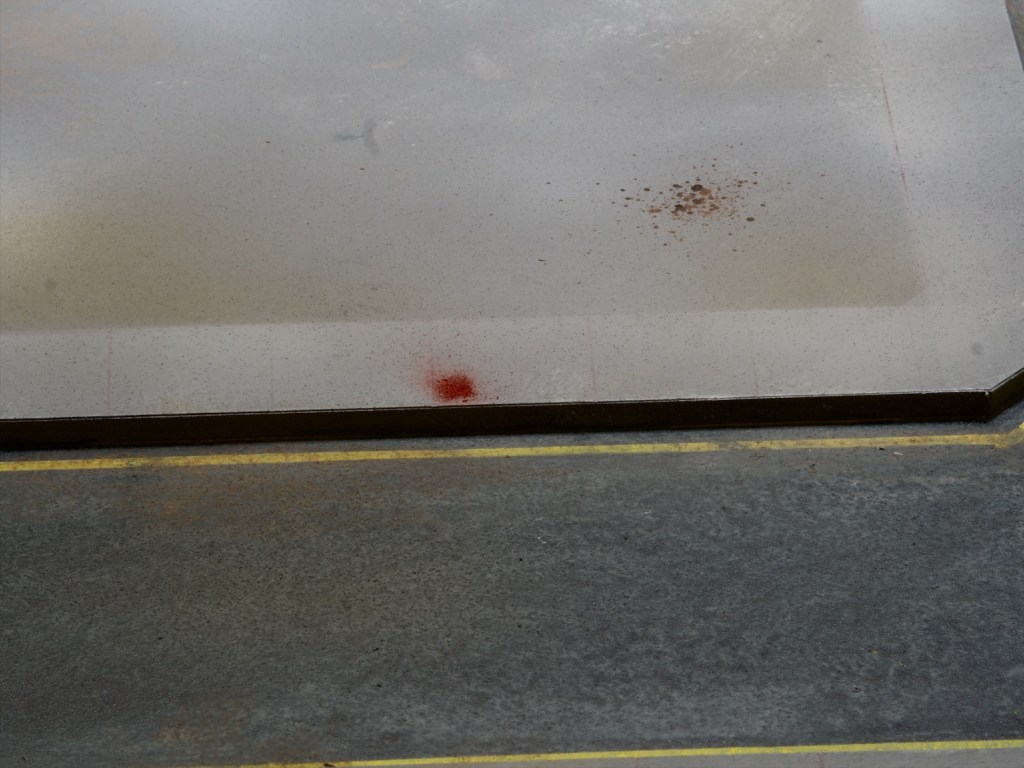
I also used the airbrush masked with a piece of paper to spray a mostly clean line along the paved area to separate it from the rest of the non-road sections.
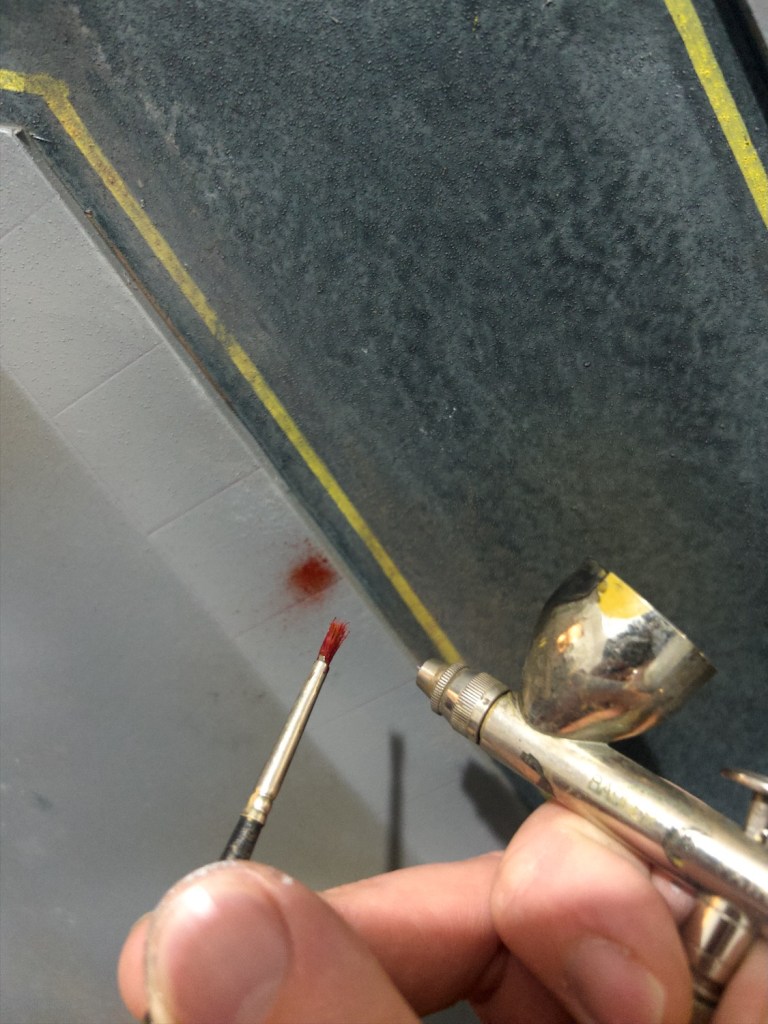
Finally I sprayed a few splatter effects with the old trick of loading up your brush with some paint/wash and using the air from the airbrush to flick it everywhere.
A few splatters. You can also see the effect of masking off the footpath area in this photo.
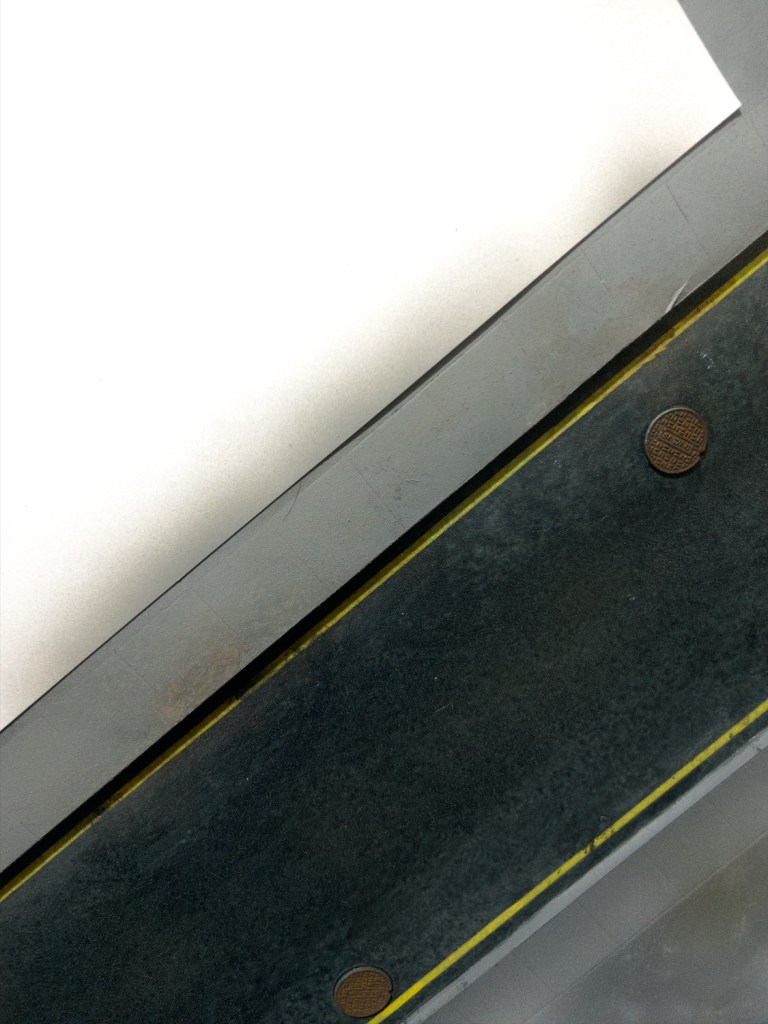
The manhole covers were just painted with a burnt umber and drybrushed with a gunmetal. These really should be level with the road surface, but I wasn’t keen enough to cut a recess for these to sit in.
I really enjoyed putting this together, and now need some terrain to go on top! Luckily enough I have some 3D printed buildings ready to go (ready for painting at any rate!) so should be able to get started on these.
This is likely my last post before Christmas, so for those of you that celebrate it I hope you have a lovely time (and lots of miniatures under the tree)!
I haven’t painted much over the last few weeks as it’s been a bit of a busy time, with some travelling (more on that later!) but I managed to chip away some more at some Empire models.
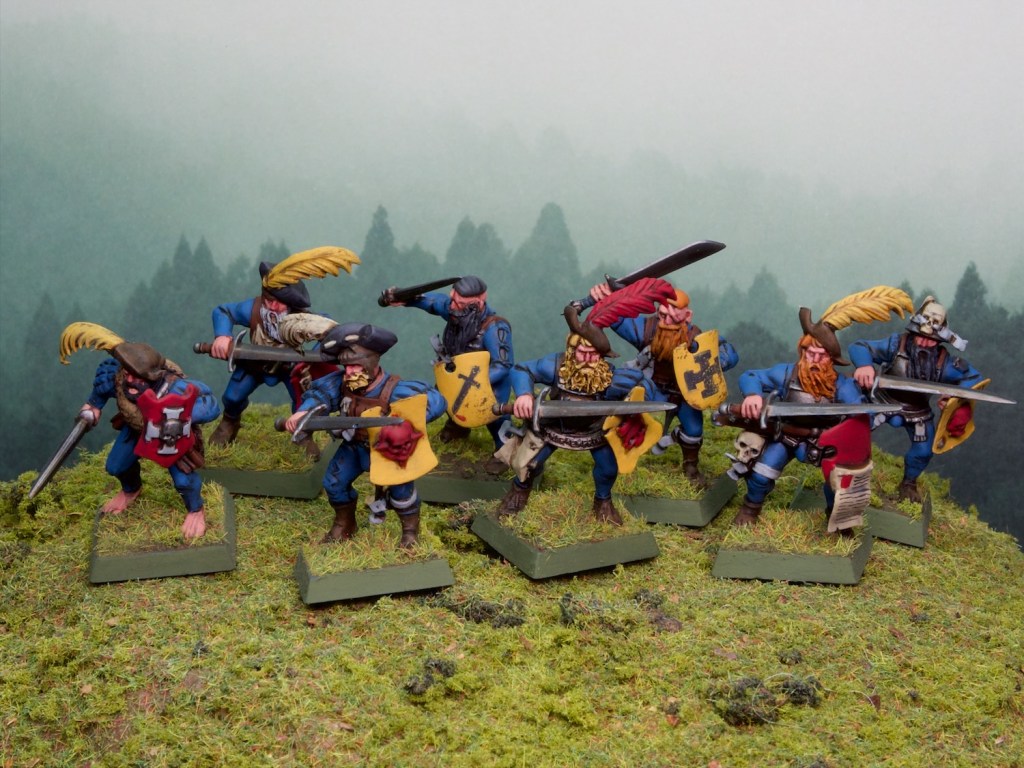
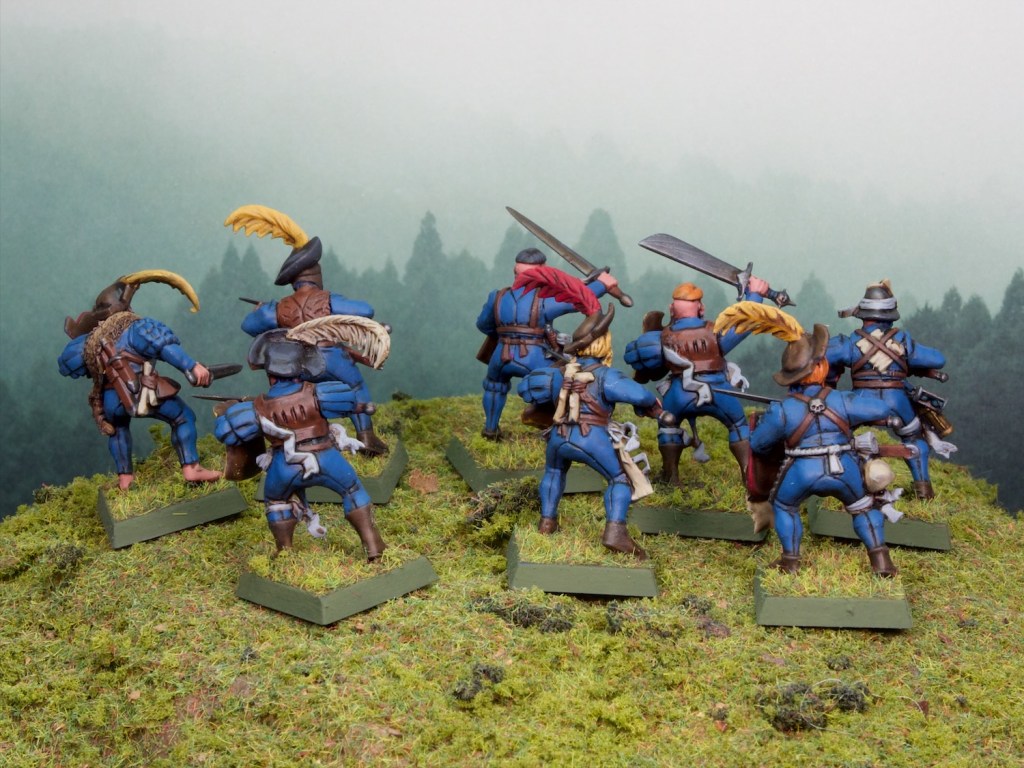
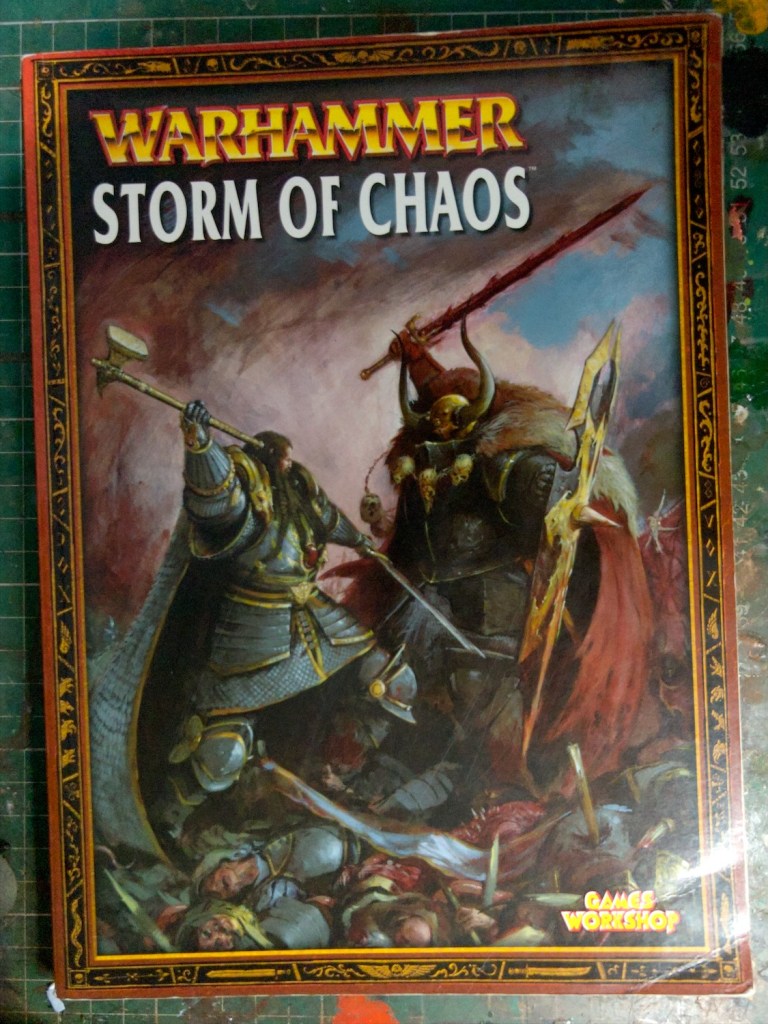
After learning to sculpt beards for last post’s Valten, I tried my hand at it again on these swordsmen. I wanted to represent some state troops from Middenland, one of the northern provinces of the Empire which is presumably filled with gruff bearded men. The Storm of Chaos campaign is mostly set around Middenheim which is the capital of Middenland. These models will then be fighting on their home ground.
The uniform of Middenland is just blue, but the book I have on Empire uniforms suggests multicoloured feathers, and I extended that to the shields. They might be a bit more colourful than the average representation of Middlenlanders but they work for me.
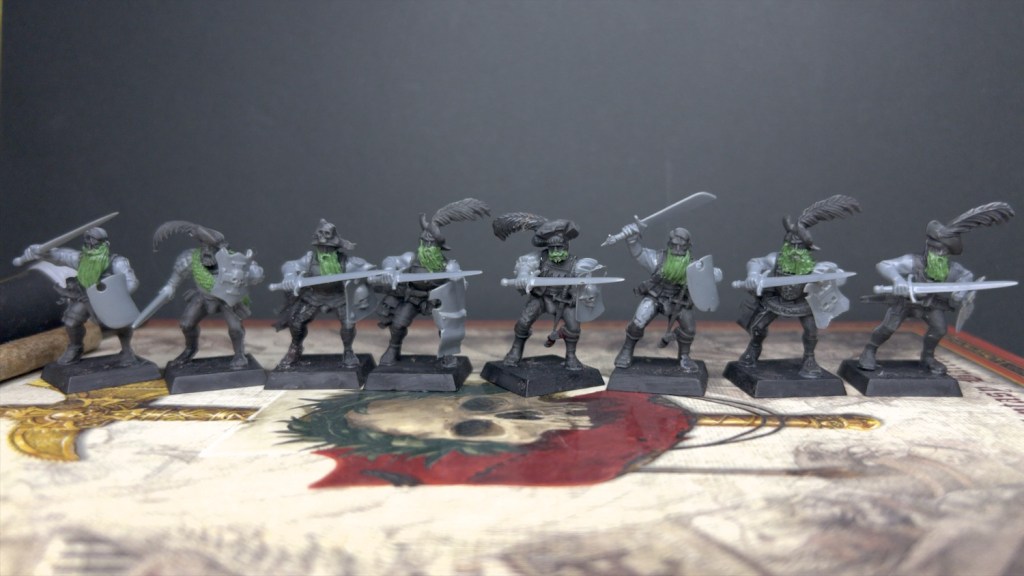
These models are “rescues”, in a previous life they belonged to a friend that had built them as halberdiers, but all of the halberds had broken over the years. I inherited them a little while back and have since then stripped them of paint and rebuilt them as swordsmen from spare arms I had.
I find that I can get most if not all the paint off when stripping plastics, but there is always some residue which adds a bit of texture to the models. As a result I wouldn’t use these as display models but they’re ok for armies!
You can see what I mean in the unpainted photo above, the light grey plastic is the new parts I glued on, while the dark grey/black areas are the stripped models. You can also see my attempts at sculpting!
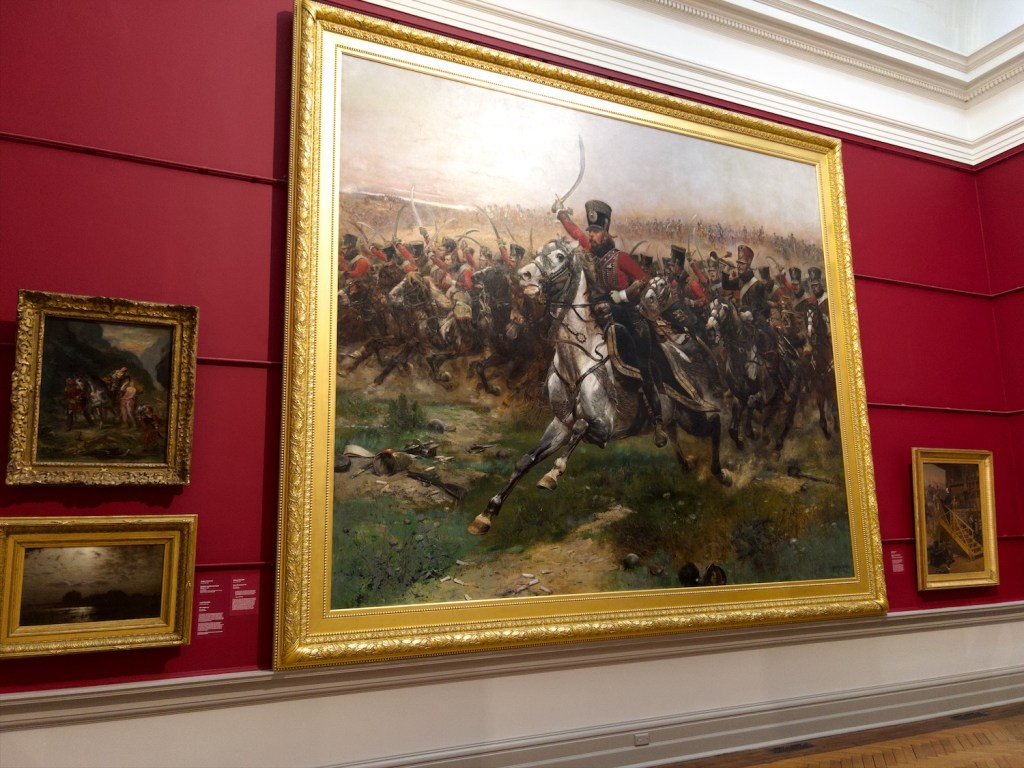
I mentioned travel above, I ducked over to Sydney for a few days to see a concert at the Opera house (a metal band would you believe!). I took the opportunity to visit some museums and the art gallery there and wanted to share this humungous painting of some Napoleonic cavalry by Édouard Detaille.
The painting is something like 4.5x5m and dominates the room. You can get a better view of the painting itself on the gallery’s website (https://www.artgallery.nsw.gov.au/collection/works/4560/), but hopefully my photo gives you a sense of scale! The whole gallery was very inspirational, plenty of ideas to pinch for hobby projects!
I’ve had a productive week, getting a fair bit built and painted. I’m still inspired by the idea of playing out a big game set in Warhammer’s Storm of Chaos campaign, specifically the battle that occurs as part of the relief of Middenheim by a combined army of Empire, High Elves, and Dwarfs. It sounds like a great excuse to break out our collective collections and play a very large game for most of a day (using the Midgard rules).
For those not in the know, Middenheim is a big city built on a mountain in the Empire, and is the target of a very large Chaos invasion led by Archaon, the biggest baddest Chaos champion. Middenheim is pretty much impregnable because of its natural defenses so the Chaos forces settle down for a long siege. Meanwhile Karl Franz, the emperor (of the empire!) gathers an army to relieve the city, with troops from many provinces of the empire. Along the way he’s joined by a Dwarf army and a High Elf army who both recognise the threat posed by the Chaos invasion. Alongside Karl Franz is Valten, who as a young man single-handedly wiped out a beastman attack on his village and has since been hailed/raised as Sigmar (the chief god of the empire) returned. There’s a whole interesting sub-story a to whether that is the case or not, but regardless the powers that be seem to buy into the story (or at least realise that if the people believe it it doesn’t make much of a difference). As a result, Karl Franz gives Valten the warhammer (the one on the cover of all the books), Ghal Maraz, and when the elves and dwarfs join up with Karl’s army, they also gift equipment to Valten, the dwarfs give him a suit of armour (that was orginally meant for Sigmar himself) and the elves a mighty steed (sired by the horse of Tyrion, the greatest high elf hero).
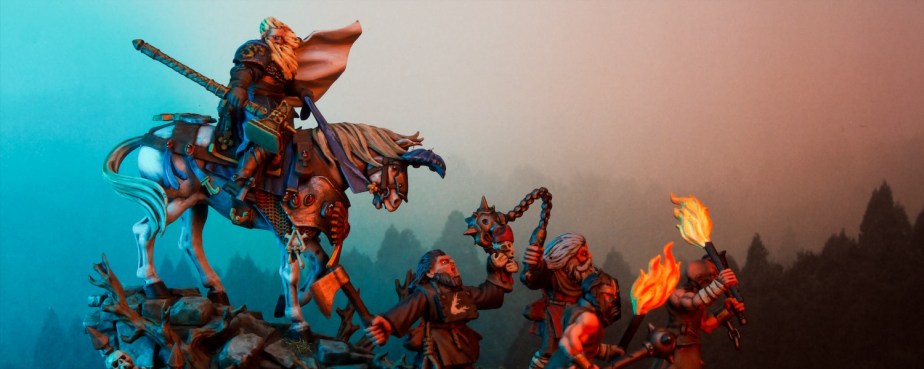
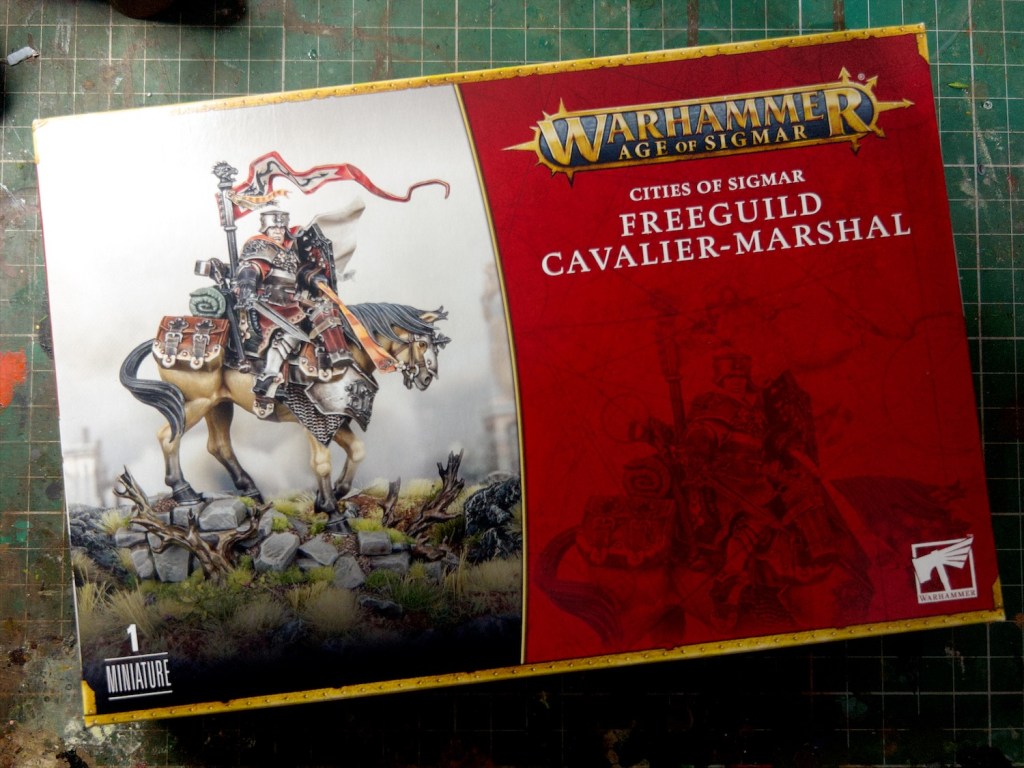
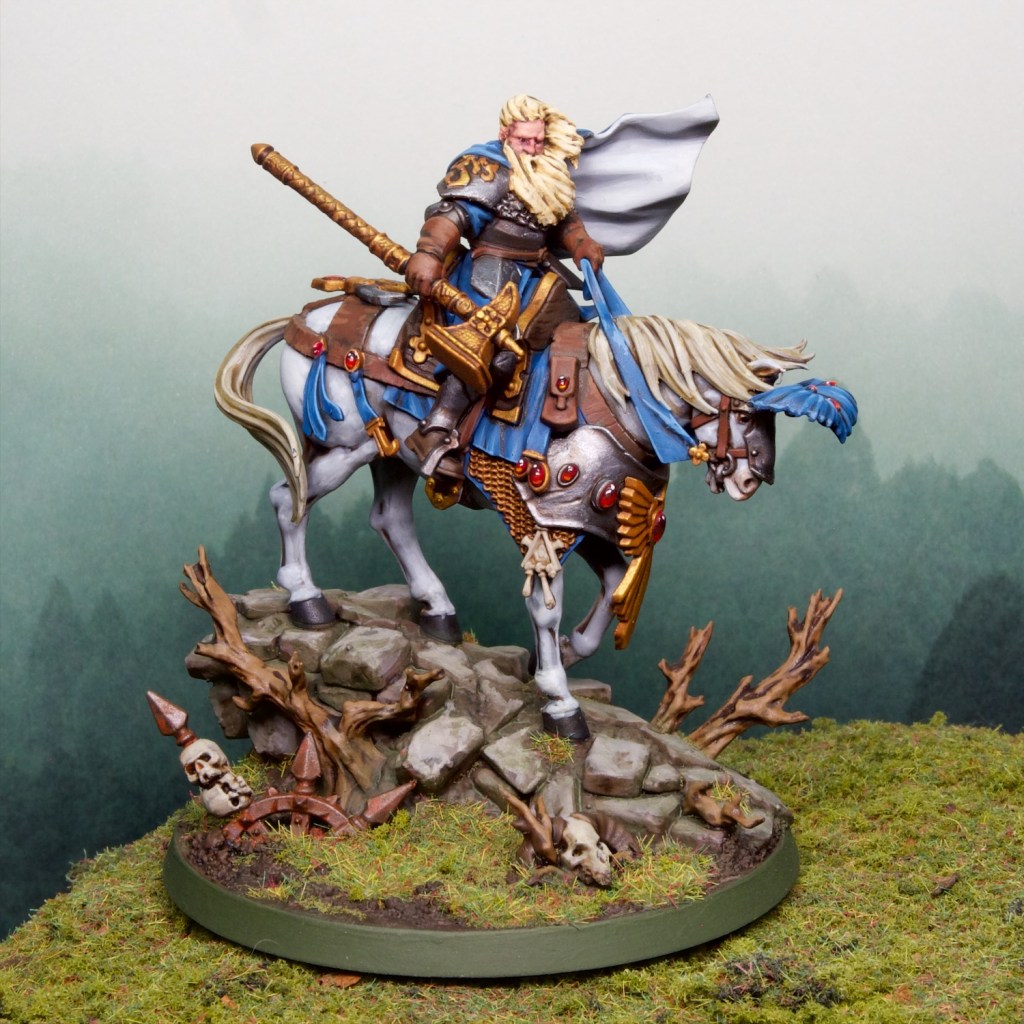
The reason I’m telling you all this is that I built and painted a custom model for Valten, and tried to capture the story in that model. Valten had a model at the time of release of the campaign book (~2004) and I think was re-released as a Finecast model during that later era. I was scouring ebay for the model and despairing slightly at the prices (and postage, UK or US to Australia is veeery expensive these days). After some deliberation I decided to just convert my own out of a model I’ve had my eye on for quite a while: the Cities of Sigmar Cavalier-Marshal.
The character of Valten is a bit of a tragic, maybe reluctant hero in my mind, the cavalier model really has a weary look to it that I think really fits Valten so it seemed like a great base for the model.
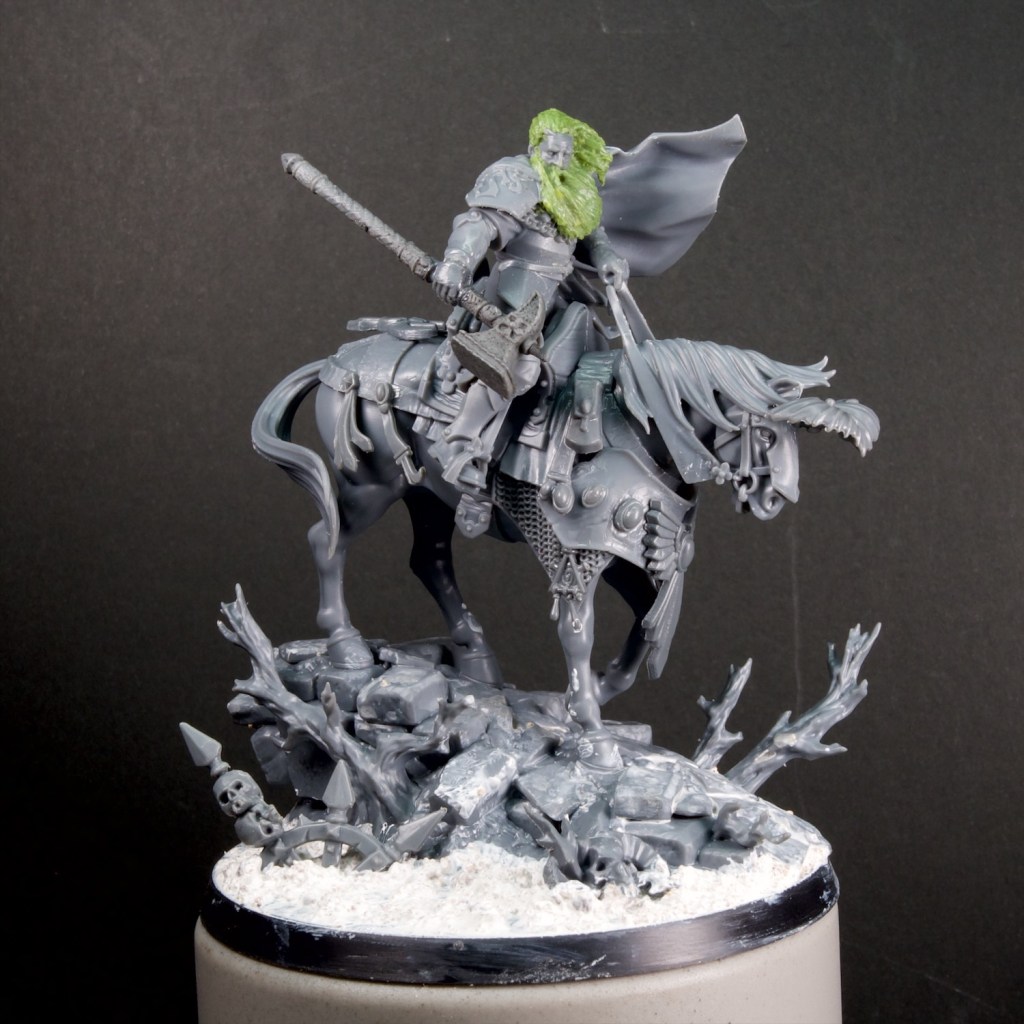
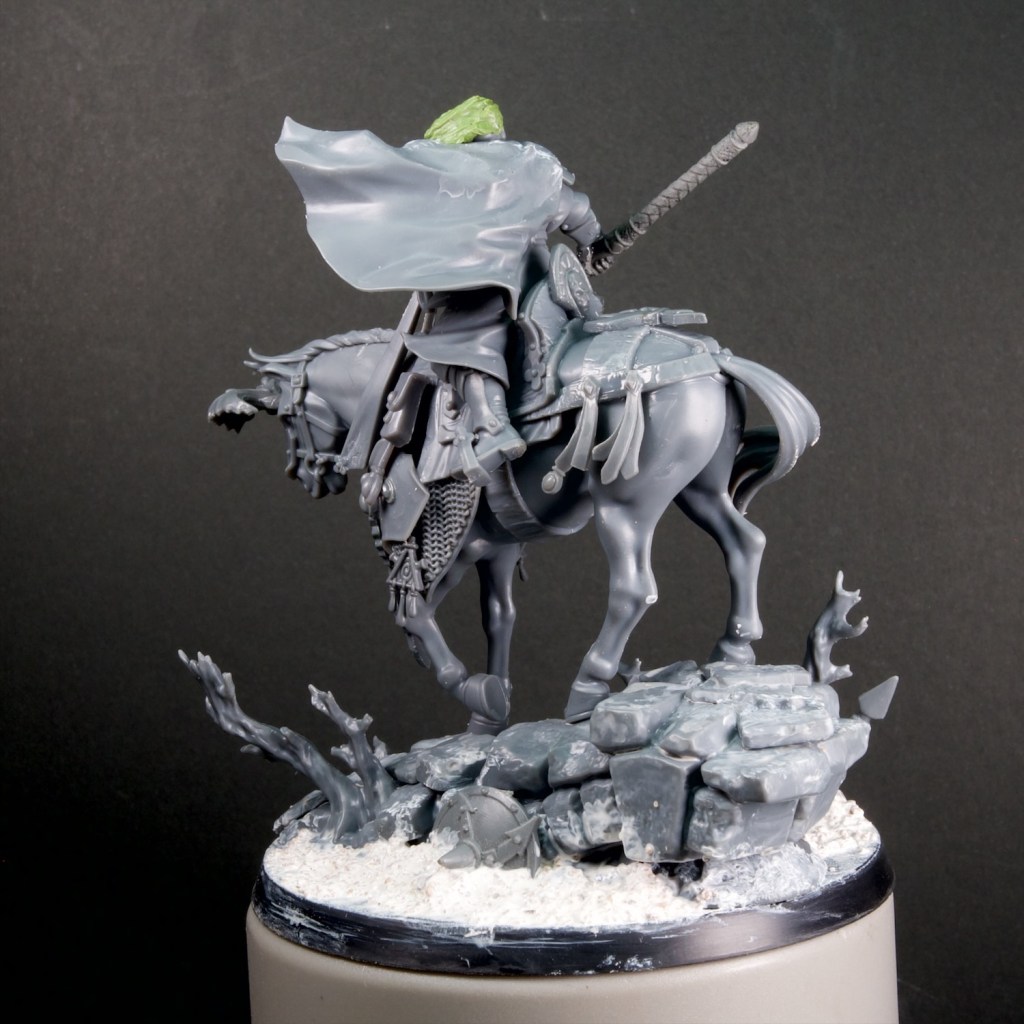
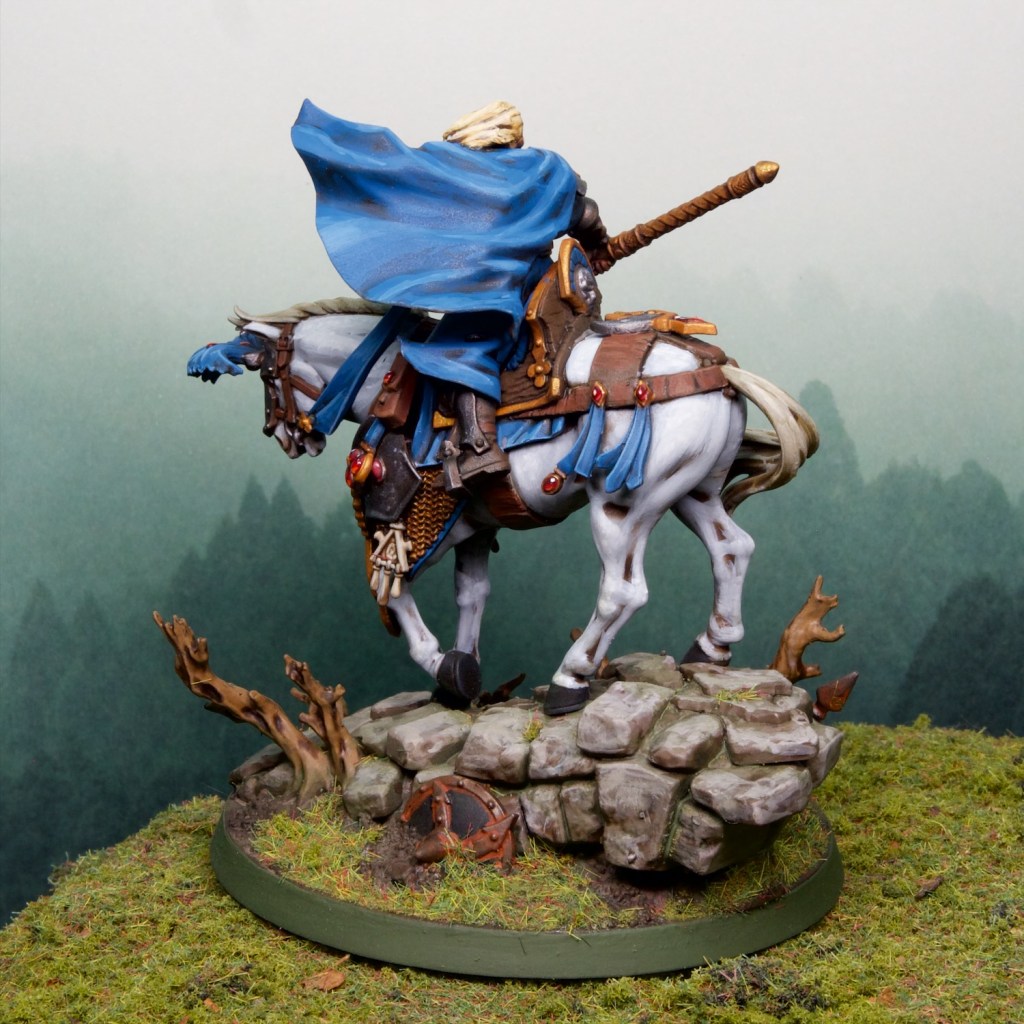
I removed as much iconography off the horse as I could and added lots of spare high elf bits I had big around to sell the horse as a gift from the elves. I kept the armour on the rider as is, the cities of sigmar range armours have a very angular look to them which I think is good for a dwarven made suit of armour.
For the head I liked the expression on the Cavalier model, but Valten has long hair and a long beard, while the Cavalier is clean shaven and short haired. So I decided to do something I do rarely, which is to sculpt! It was a bit daunting to build up this centrepiece model and to try my hand at something new right on its face, but I found this very handy tutorial by Valbjorn on YouTube and at least I knew I was going in with a plan. The result is ok I think, a bit rough in some places (not helped by the age of my green stuff) but it does the job!
For the painting stage I stuck to blues, whites, and gold as a scheme. This is how the original model was painted and helps with the whole Elven influence on the horse.
The cavalier model comes with a very cool scenic base meant to fit on an oval base. I decided to go for a 60mm round base instead so had to fill out some of the extra space. I cut up some chaos bits and blended everything in using a mix of acrylic paste and sand.
Overall I’m very happy with the model, was fun to get kit bashing and even do a bit of sculpting. It’s been a while since I painted a bigger character model and that’s enjoyable too. Getting to spend some more time on some of the details I would usually keep simpler for regular army models makes for a nice change.
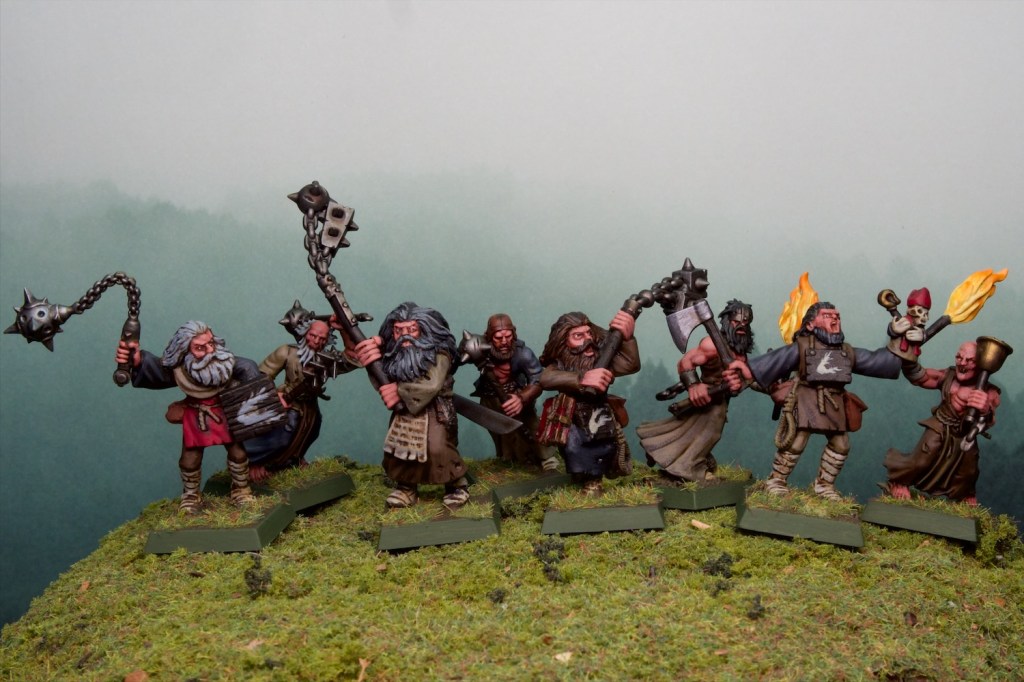
Valten is not all that I finished this week, I also painted up the first batch of some Flagellants for that same empire army.
Four of these are originally Mordheim models, some of the first models I ever bought in fact, as part of the Witch Hunter warband for the game. They’ve seen a lot of mistreatment throughout the years, and all had some breakage over that time, so I fixed them up with some plastic parts. The other four are from the current (still 10+ years old I think), plastic flagellants kit. I have another 8 to paint up of these, for a future update.
There you go, busy week but I’m happy with what I got done!
Ever since my experiments playing Warhammer with Midgard rules I’ve been thinking of fun “historical” battles we could re-create. One that’s stood out is re-fighting the siege of Middenheim from the Storm of Chaos campaign. As a group we have plenty of miniatures we could use, except a proper Empire army, which given they’re the primary force on the “good” side is a bit problematic! Luckily I have plenty of empire models, but none that are really painted.
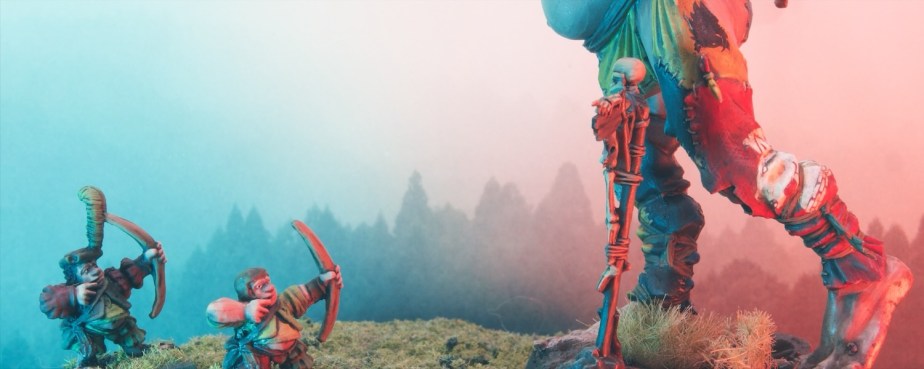
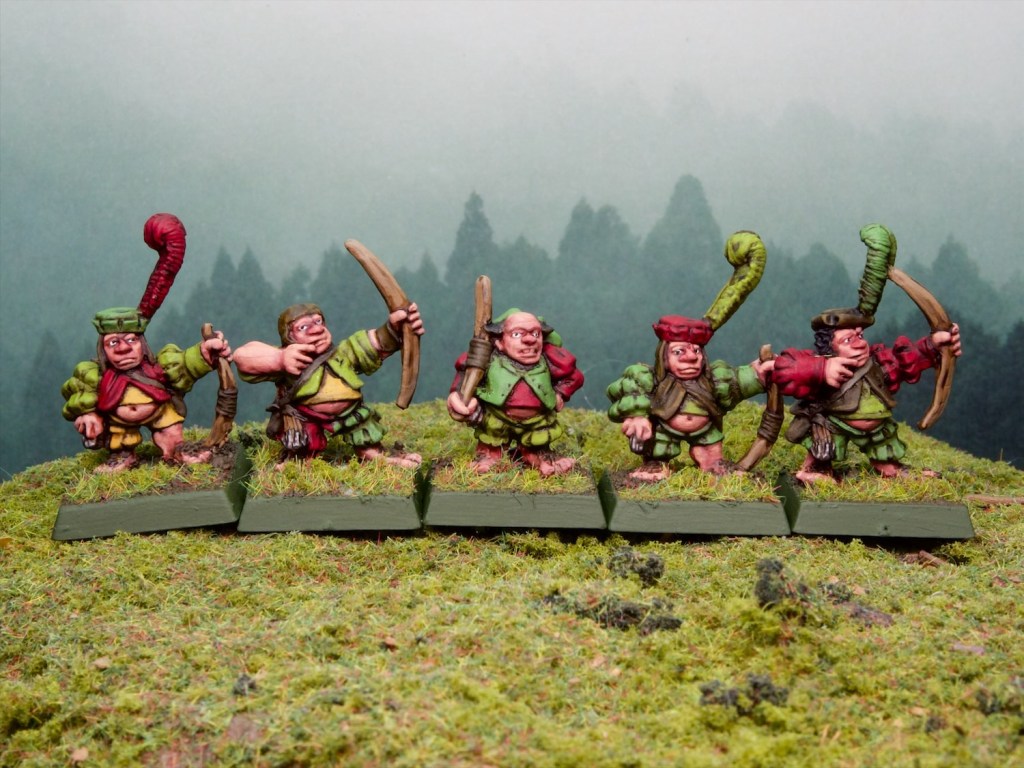
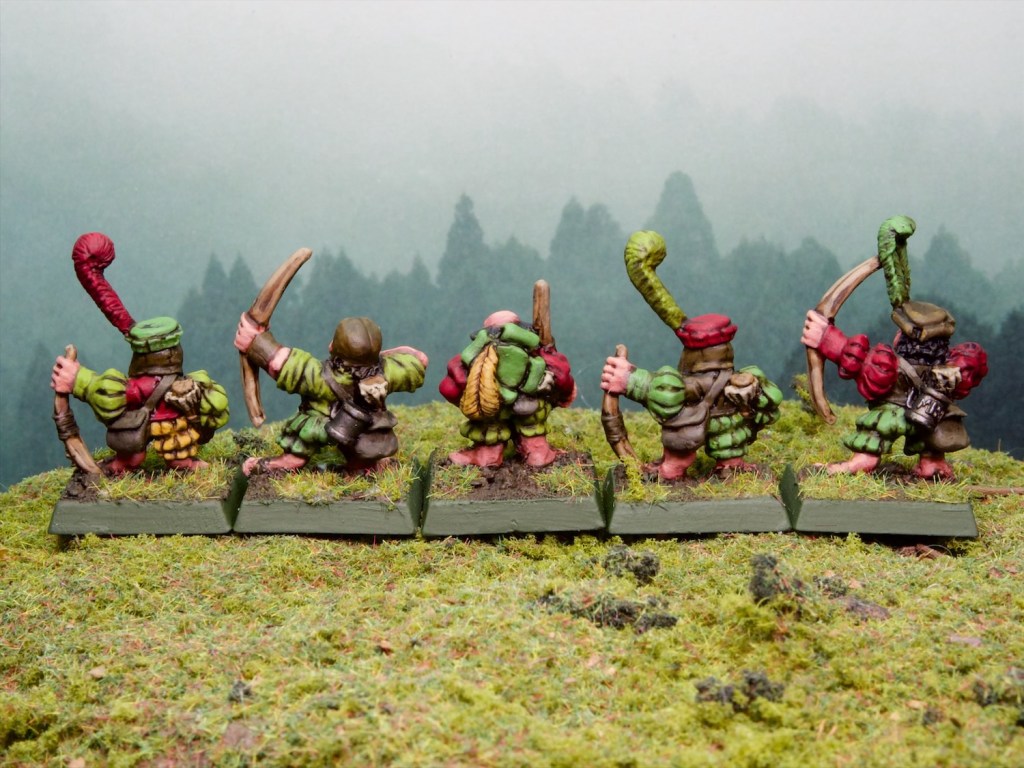
With the idea of “painting Empire models” in mind, I went scrounging through my reserves and found this small unit of halfling archers that have been sitting in a case for 15 or so years. They seemed perfect, I had a few hours to myself and they’re quite small models they seemed paintable in the allotted time.
They’re fairly old models from the Empire range, and I’m not exactly sure when they date from but I found them in a 1998 catalogue on Solegends so that should give you a rough idea.
I painted them in the colours of the Moot, the halfling province in the Empire. The uniforms are primarily green and red, but some of the guides show yellow as a spot colour so I added that too. I went for two different shades of green to keep things interesting, with the lighter yellower green being Scale75 Sherwood Green and the darker being Vallejo Game Color Goblin Green. The red is Vallejo Heavy Red, the yellow Heavy Goldbrown. They were quick to paint, I think roughly 3 hours start to finish which is a nice rate. The base rims are Scale75 Ardennes Green.
I might keep on chipping away at Empire units like this, with different uniforms rather than having only one province for the collection. Another good motivation to paint some of the pile of shame!
In other news I published another small booklet over on itch.io, this time a set of forest-themed adventure hooks for role-playing games https://lair-of-the-lagomorph.itch.io/woodland-adventures. It’s not miniatures related (although I suppose you could use it to generate wargaming scenarios in forests!), so I won’t go into it too much here, but feel free to check it out of interested.
I’ve been thinking about game rules quite a bit over the past few weeks (which prompted my Midgard review last post!), and have been reading rulesets not so much to play them, but to think about wargaming rules in general. In so doing I came across a subset of wargaming rules written as pamphlets or zines published by individuals (mostly on itch.io), in the vein of some lightweight roleplaying games that have become fairly popular over the last few years. These generally seek to address issues they see with big rulebooks in the role-playing and wargaming worlds, which is that there are just too many rules in games, and they can be stripped down while keeping their essence. This lightweight approach to rules is quite compelling for me, as my game time is much reduced these days and I don’t really enjoy re-learning complex rules every time I do get to play. More importantly, I found seeing “regular people” produce their own rulesets quite inspirational and I decided to give it a shot myself.
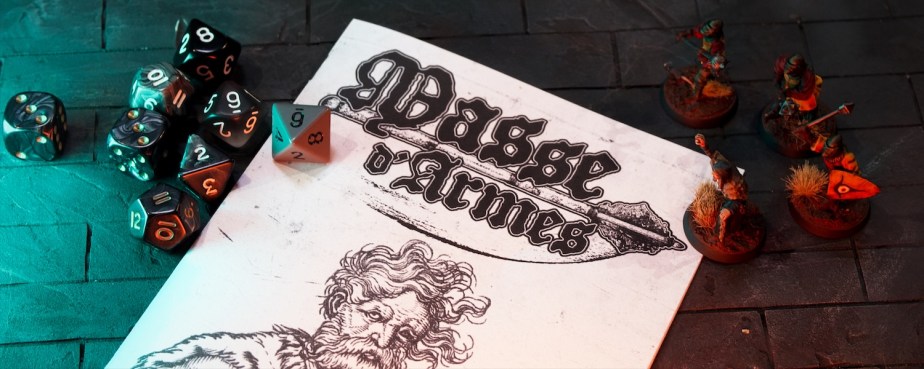
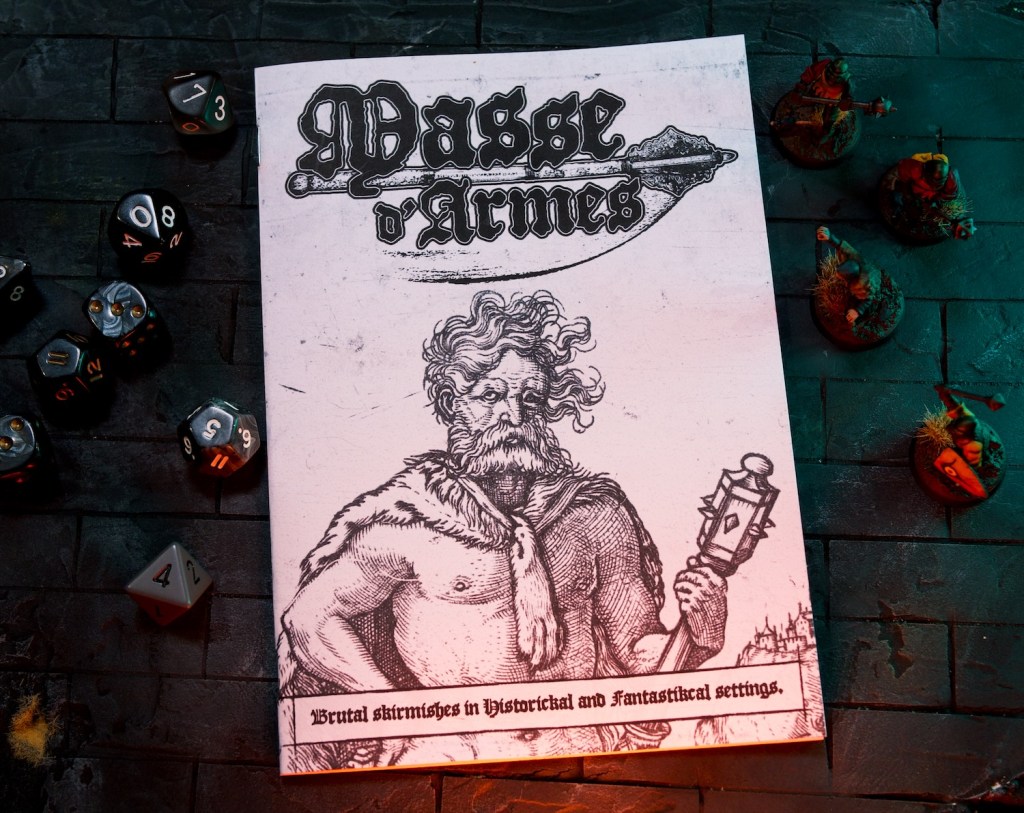
The result of this is Masse d’Armes, a small ruleset for playing out skirmish games (~4-8 models) in settings both historical and fantastical. It’s fine for any setting where the technology level is blackpowder era or below, and has rules for magic for more fantastical settings. I’ve put up the latest version of the rules over at https://lair-of-the-lagomorph.itch.io/masse-darmes as a free download, it’s likely to get updates sooner or later, but at least I’m past the constant tweaking phase.
The game itself is derived from quite a few other games I enjoy playing, making use of mechanics or mechanics inspired by other wargames and role playing games. The basic concept is that of opposed rolls, where models add a characteristic die (d6 to d12 depending on skill level), to their weapon die (also d6 to d12). Highest roll wins, and the amount they win by determines the outcome. This means combat is resolved in a single roll and makes the game quite quick. Shooting and magic are variations on this theme.
Assembling warbands is quite straightforward too, there are no points, players simply add traits to their models to represent equipment/skill/abilities up to a maximum of 15 traits. Models must have at least one trait, so players can either have a few models with many traits or many models with fewer traits.
Overall I think the rules are simple and the games pretty quick. If you’re interested do check them out, I’d love to get some feedback from people outside my gaming group!
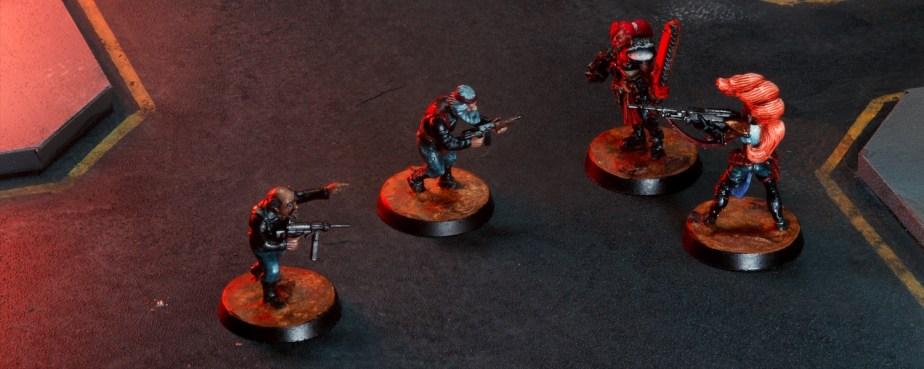
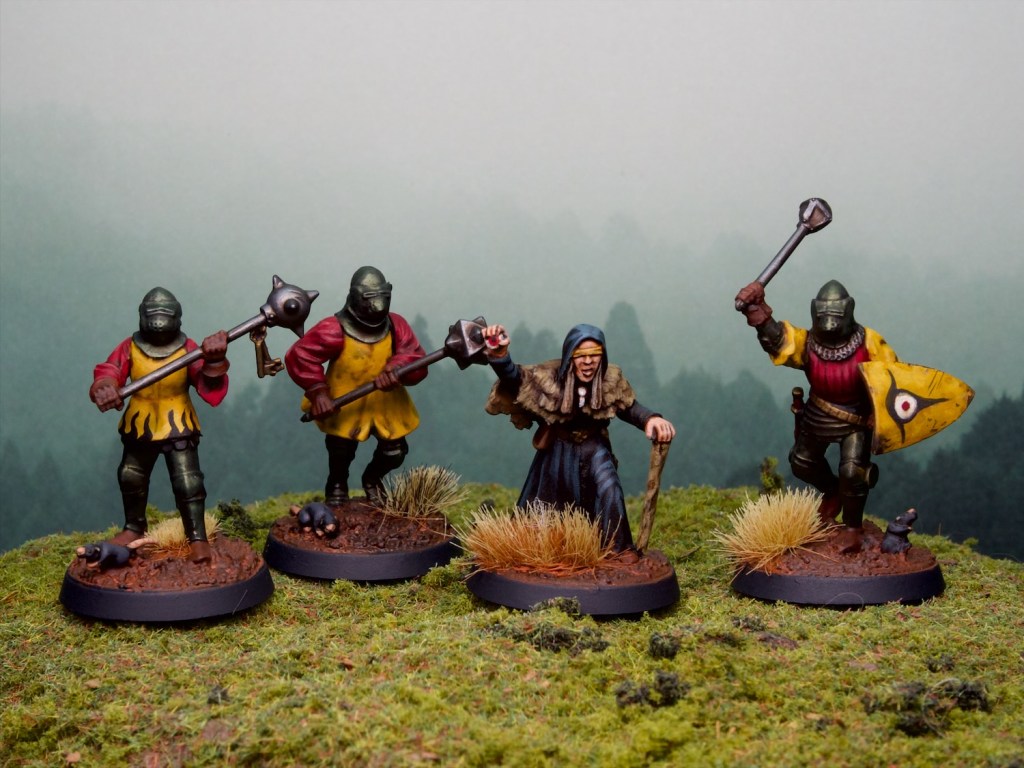
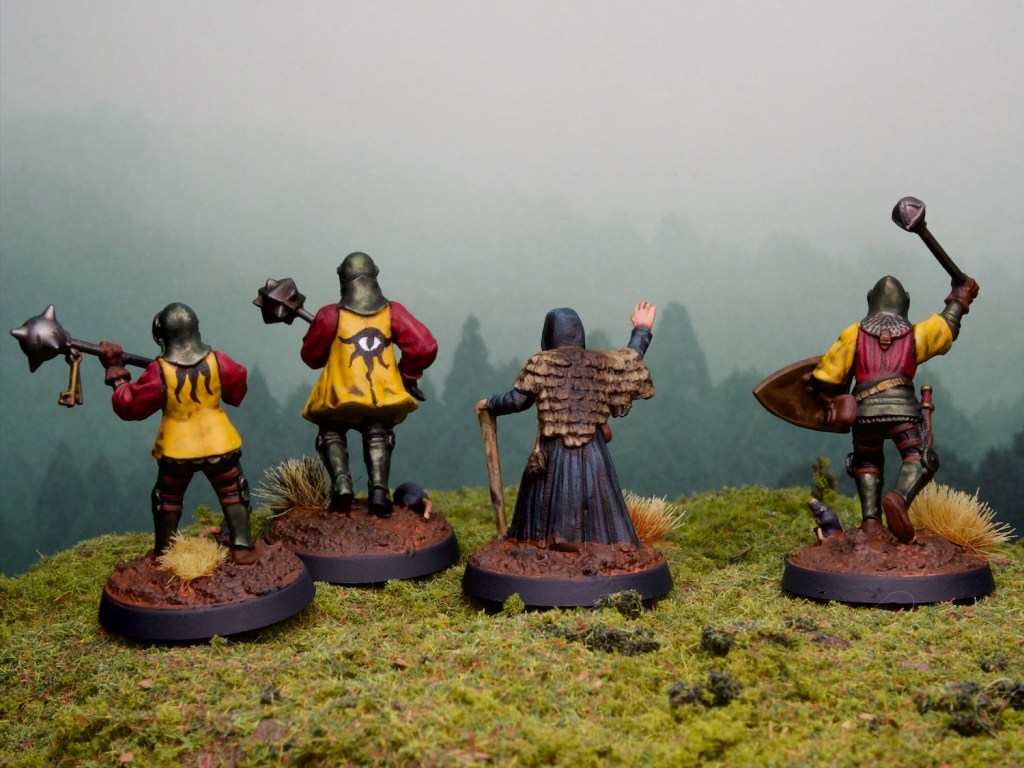
With the rules in place I decided to put a warband together as a fun small painting project. This warband is quite elite with only 4 models. The leader is the seer with Sorcery d10 (3 traits), then two heavily armoured knights with weapon die of d10 and great weapons (4 traits each), and a heavily armoured knight with weapon die of d8, hand weapon and shield (4 traits).
The Seer model is from Bad Squiddo Games which I’ve had for a little bit, and this seemed like a great time to use it. Yes that’s a giant’s eye she’s holding! The knights are Perry Miniatures, from their Agincourt French Infantry set, with some Warhammer mace heads (for the great weapons), and a mace from the Morannon Orcs from MESBG. The shield is from Wargames Atlantic’s Foot Serjeants set.
I decided that the knights are there to form the bodyguard for the seer and added some eye-related iconography to tie them all together. They were quite fast to paint, and I enjoyed myself throughout the process (kit bashing and painting!).
It’s been fun looking at other aspects of the hobby, and to think about how a game could work given my own preferences. I’ll keep working on Masse d’Armes, and might even try my hand at some other games in the future. If you do read the rules, let me know what you think!




 Lair of the Lagomorph