Knights of Malko – Part 1

The walls of Malko need manning, for vengeful dwarfs are about! If you’ve been following the last year or so of posts on the blog you’ll know that I’ve been painting models and terrain for a Warhammer campaign set in the Border Princes region of the Old World. One of the armies I painted for this campaign is a small force of Bretonnians, not as a player controlled faction, but rather to act as a roadblock to players attempting to take the central map section: the town of Malko.

Alongside the new set of rules for Warhammer Old World an army list covering Bretonnian Exiles was released, which was both timely and very useful for adding flavour to this small army. The army list however requires the inclusion of a regiment of Knights of the Realm, either mounted or on foot. Horses not being particularly useful atop castle walls, I decided to opt for the foot version. With the new plastic foot knights kit being released a few weeks back (Australia has been getting delayed releases for all Old World stock unfortunately), I set about remedying my lack of knights.
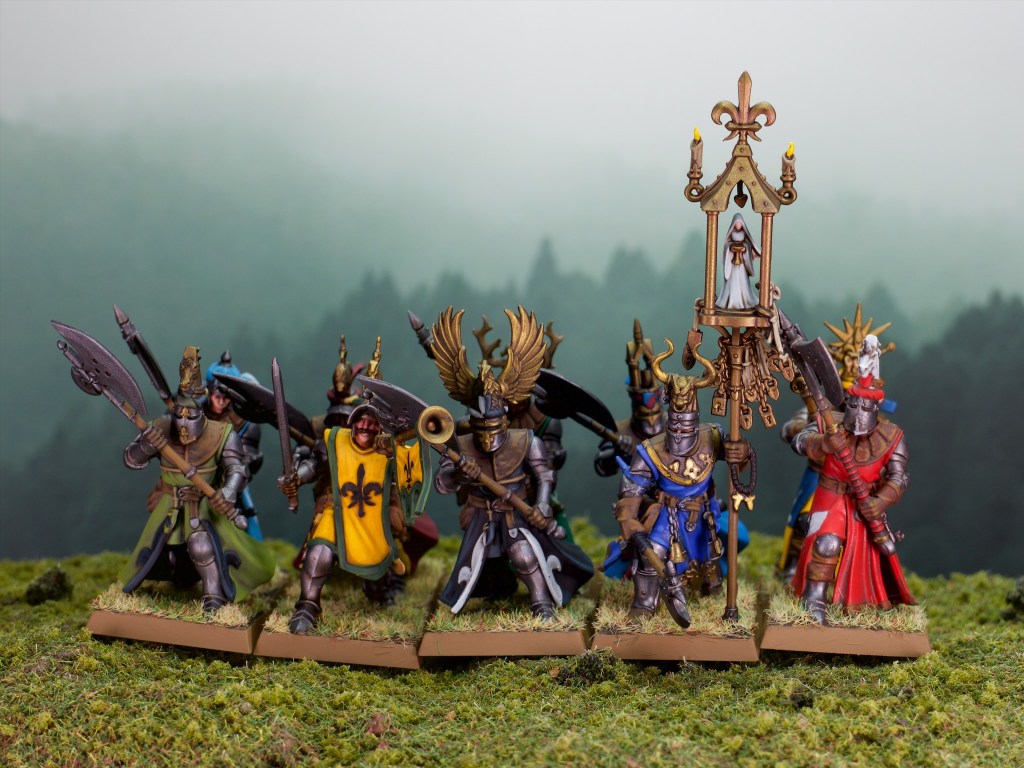
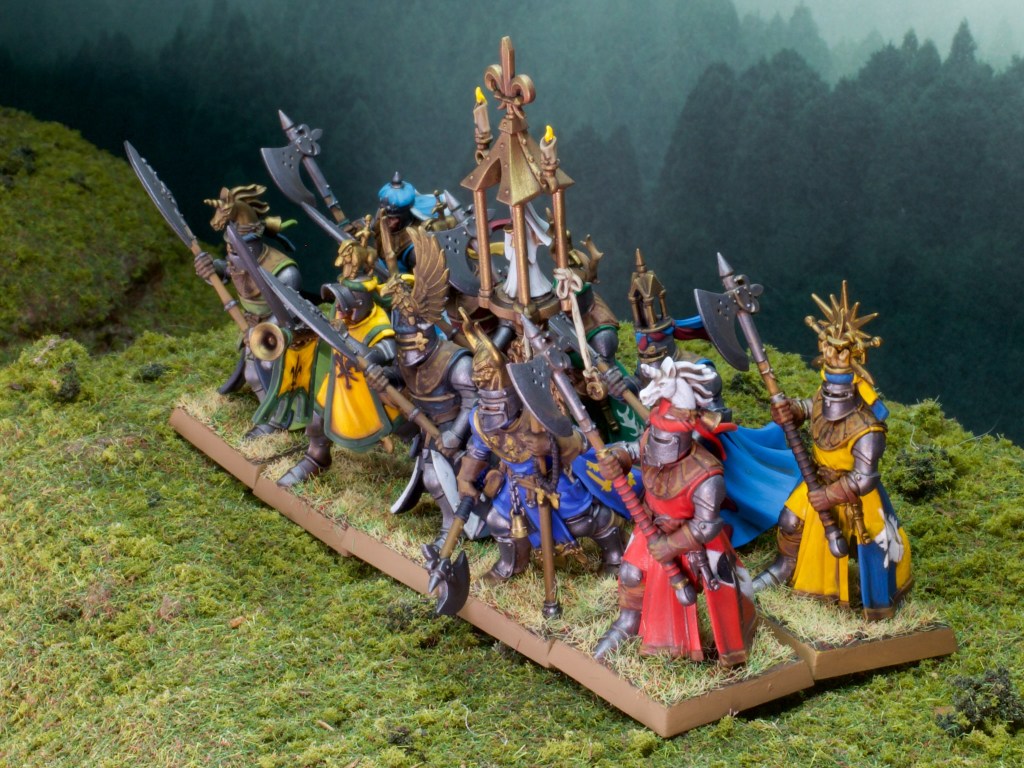
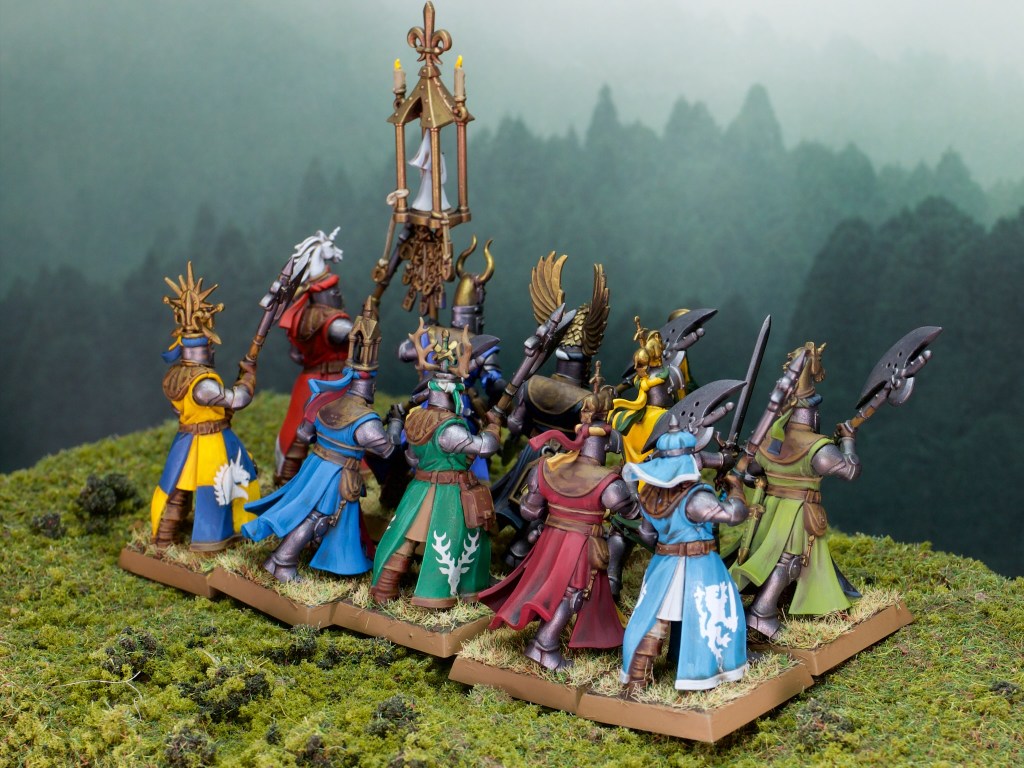
These new knights are very cool models (Those axes are monstrous though! Talk about heroic scale!), and were a) fun to put together, and b) fun to paint! They are quite tall compared to older models, and my poor general is definitely “petit” next to them.
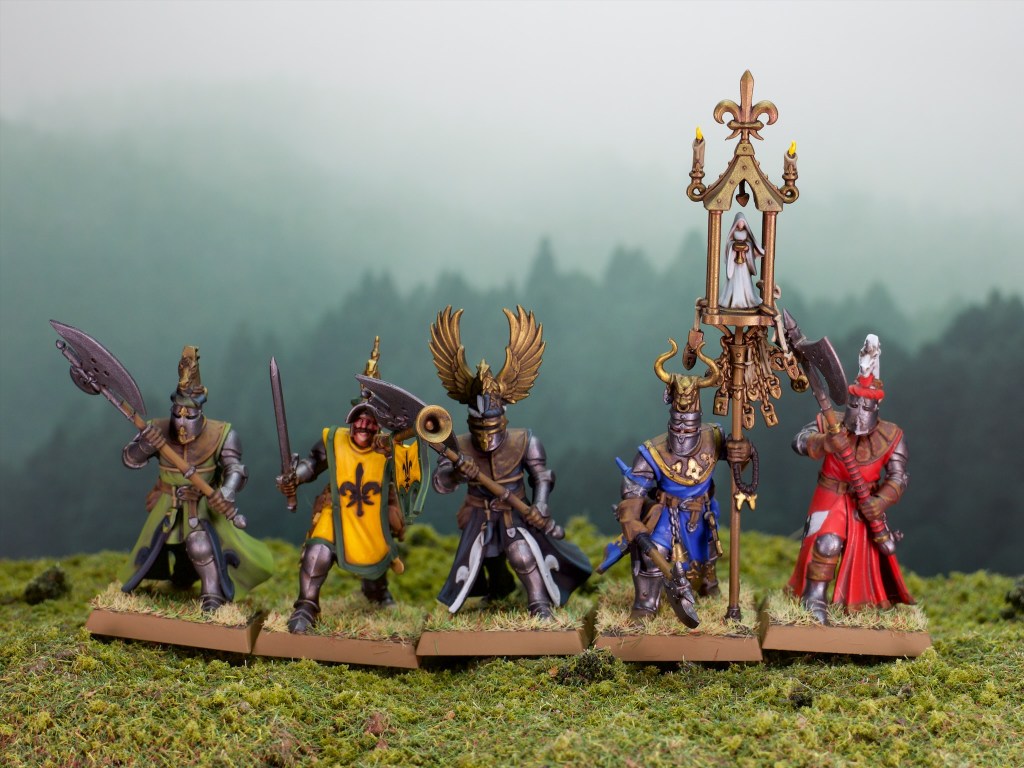
The box art for these and the transfer sheet that came with the box are geared towards the uniform look that Games Workshop have been proposing for Bretonnians in this era of the Old World, where the knights wear the livery of their lord. I opted for the old style rainbow knights where the knights wear their own colours, and regiments look like bowls of skittles. I was helped along there by having an old Bretonnian transfer sheet which had a lot of different heraldry.
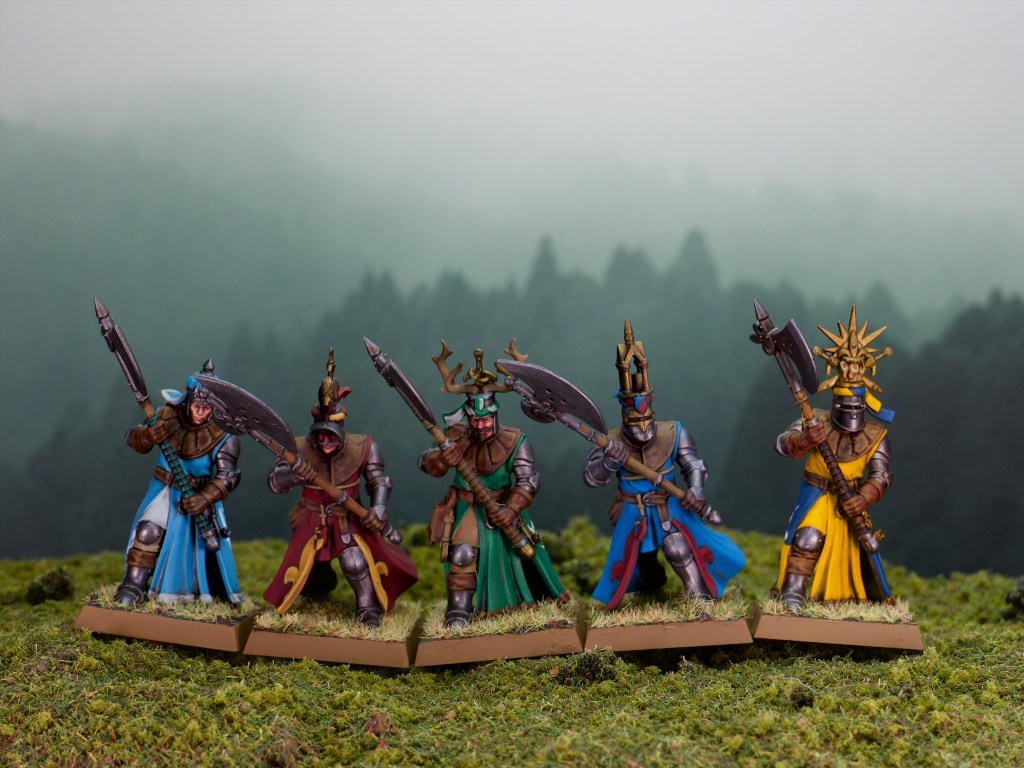
Needless to say there was no batch painting these, I painted them one by one which was rather fun and a lot less monotonous than usual unit paint although it was a lot slower. You might notice that there are two main bodies in the photos above (barring the command models that is). There are five distinct bodies in the kit, which are repeated four times for a total twenty knights. I’ve only painted half the box so far (enough for the campaign army, the other half will come when I take the army to 1000pts), and to avoid repeating colours on the same bodies I made sure I painted the knights with the same bodies next to each other. This makes these first ten a bit samey, but hopefully as a unit it’s not too noticeable.
If you remember I opened this post with a mention of Dwarfs being about? This was not merely flavour, but a true representation of what is happening in the campaign. That’s right the campaign has finally started after all this preparation (just about a year’s worth!).

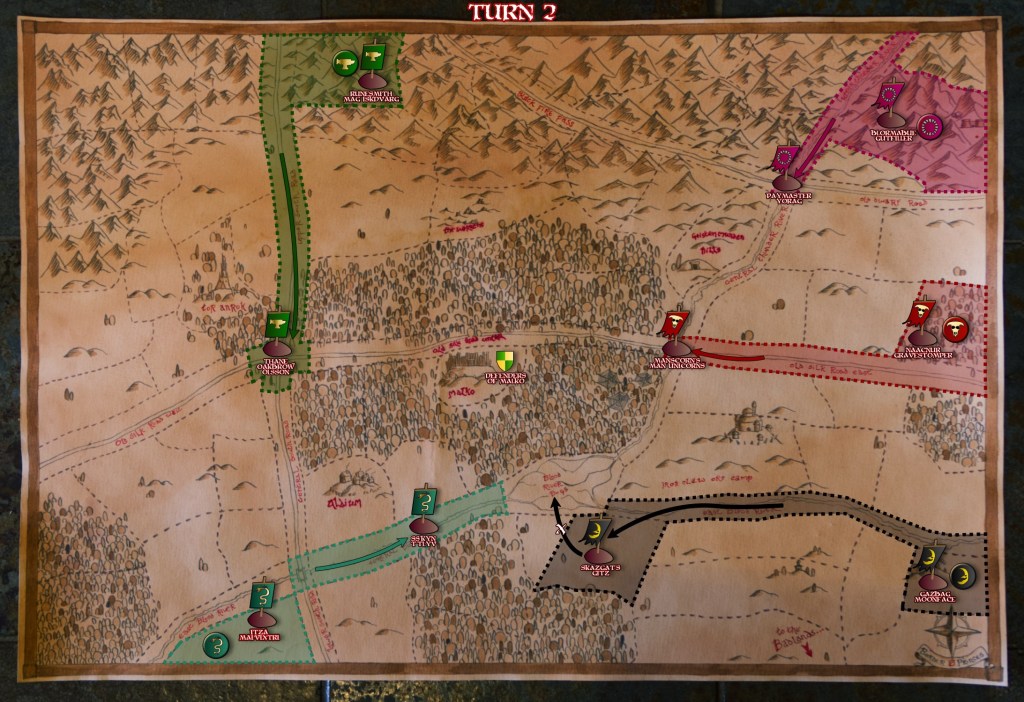
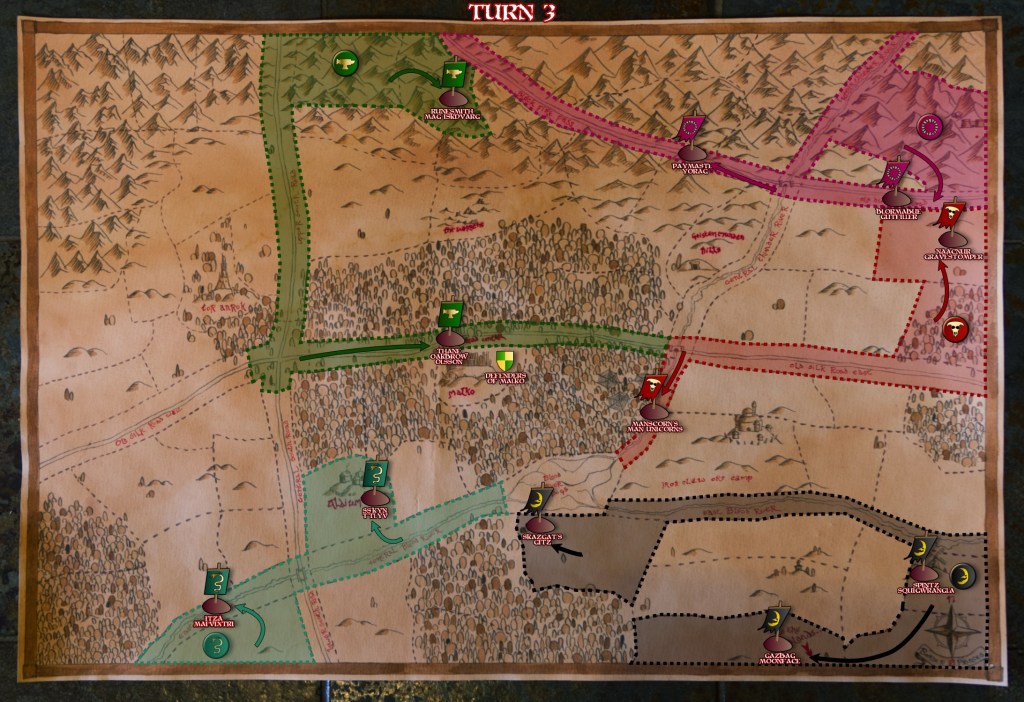
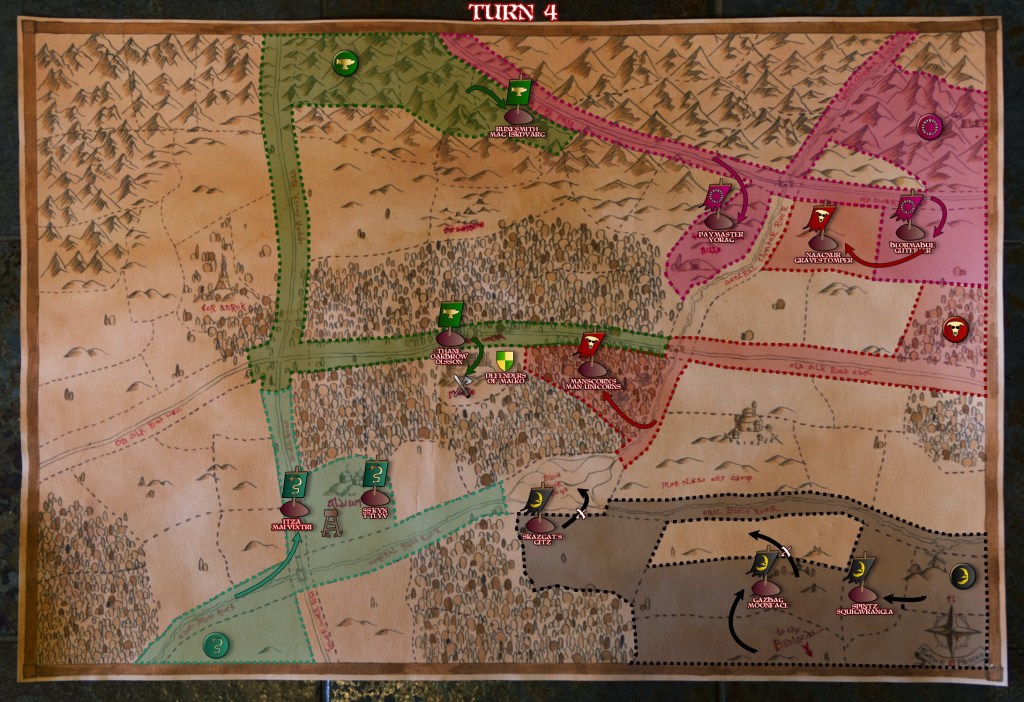
I’ve been recording the player’s moves on a digital version of the map that I drew way back in April 2023.
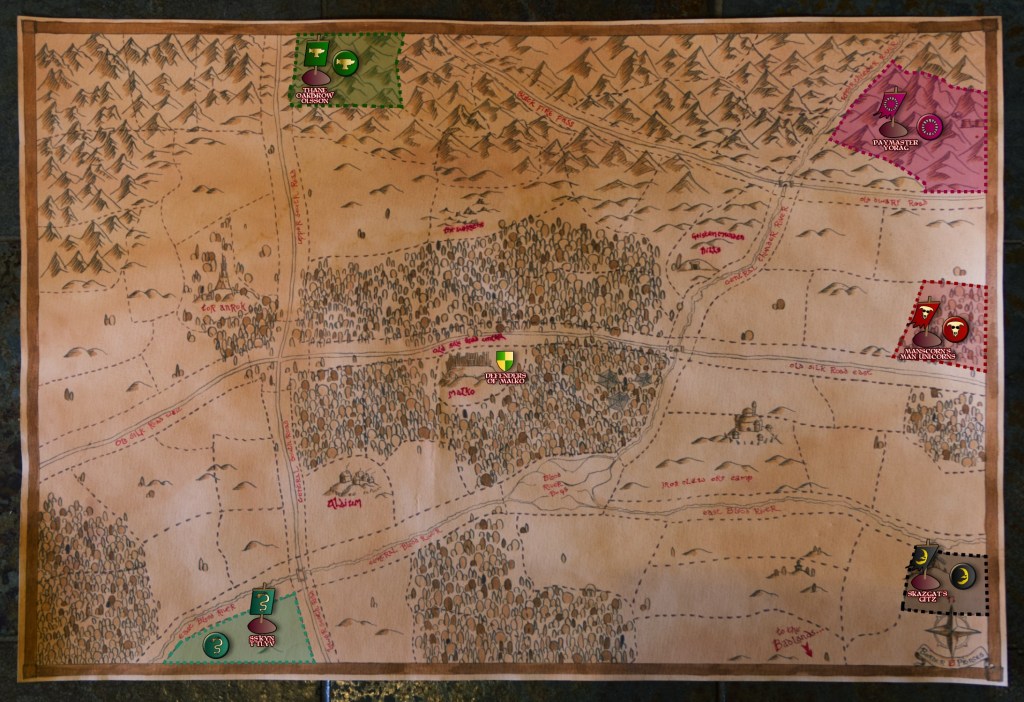
Starting Positions

There are five of us, using the following factions (clockwise from top left): Dwarfs (green), Ogres (magenta), Beastmen (red), Orcs and Goblins (black), and Lizardmen (teal).

We’re up to turn four now, I’ve included the moves for turns one though four below.
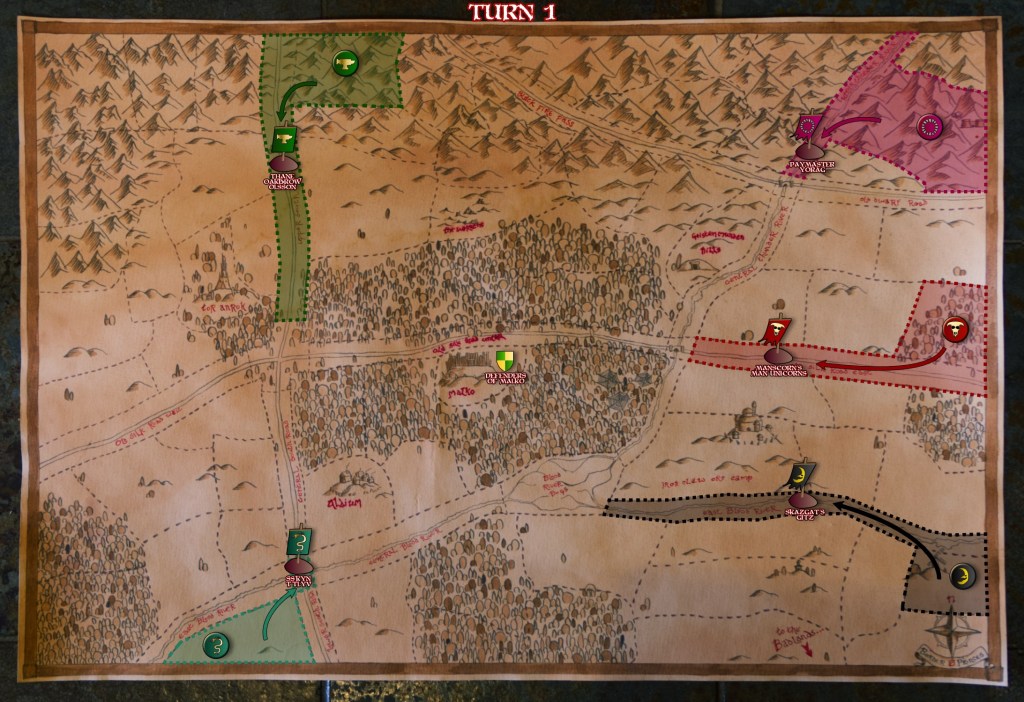
Turn four is still in progress, because as you can see my Dwarfs have attacked Malko, and we need to play out that game, which was dependent on me getting these very knights painted. The campaign has been on hold since that happened, but now the knights are done we can resume!

I’m looking forwards to seeing these knights on the table, although I won’t be controilling them as one of the other campaign players will be playing them as my Dwarfs try to get into the city! Should be fun, and I’ll try to remember to take some photos of the game for the next post!

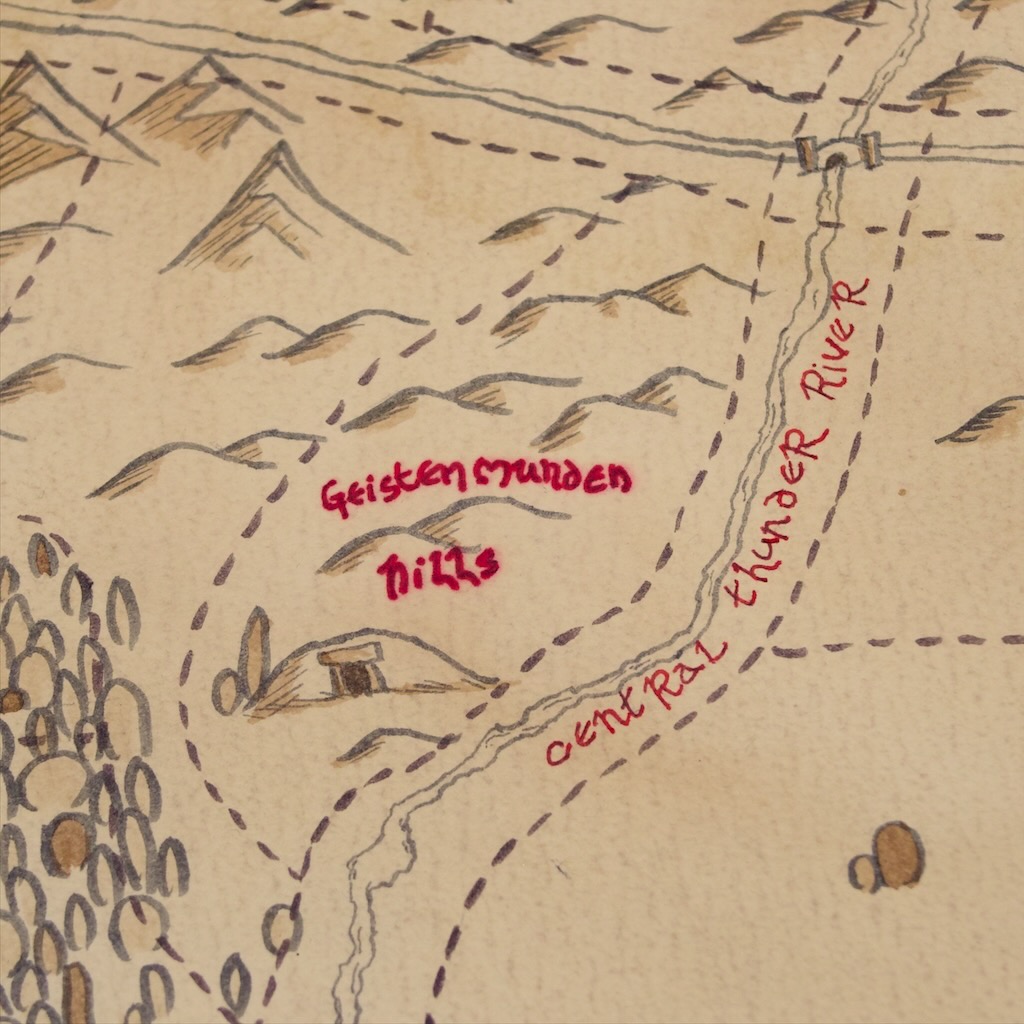
The Geistenmunden Hills

It’s been a fair while between posts, over a month in fact! Over this period I’ve been on holidays and busy with work so haven’t had much time to get things painted, but I’ve still been chipping away in the background. Here’s something I’ve been working on for a little while: a set of terrain for the Geistenmunden Hills area of the Border Princes campaign map.

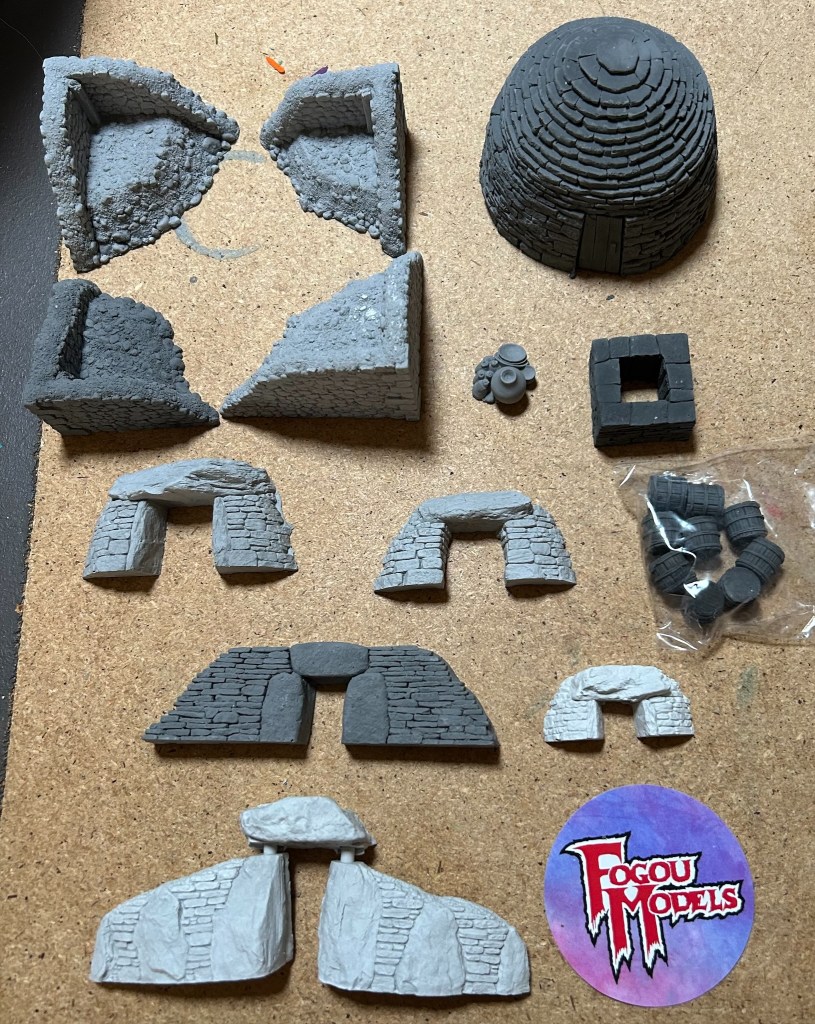
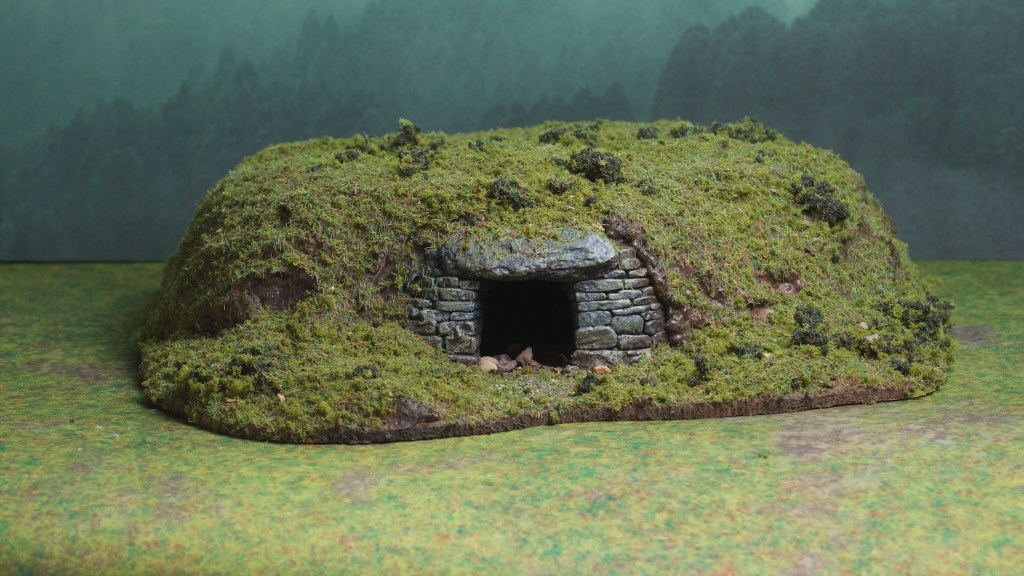
As you can see from the illustration, this is going to require some barrows! Luckily for me back over the Christmas break I’d ordered some terrain from https://www.fogoumodels.co.uk/ including a set of resin barrow entrances (well not so lucky, I ordered these for this very purpose!).

There are some other bits and bobs there that I’ll get to painting at some stage. Overall the quality of these models is excellent, the stone textures are really nice. I’d been waiting for an excuse to order from them for a while, and this was it!

Entrances are all well and good, but they need some burial mounds attached to them, and that’s what I busied myself at next. I took some photos of the process so I thought I’d make this post a bit of a tutorial.

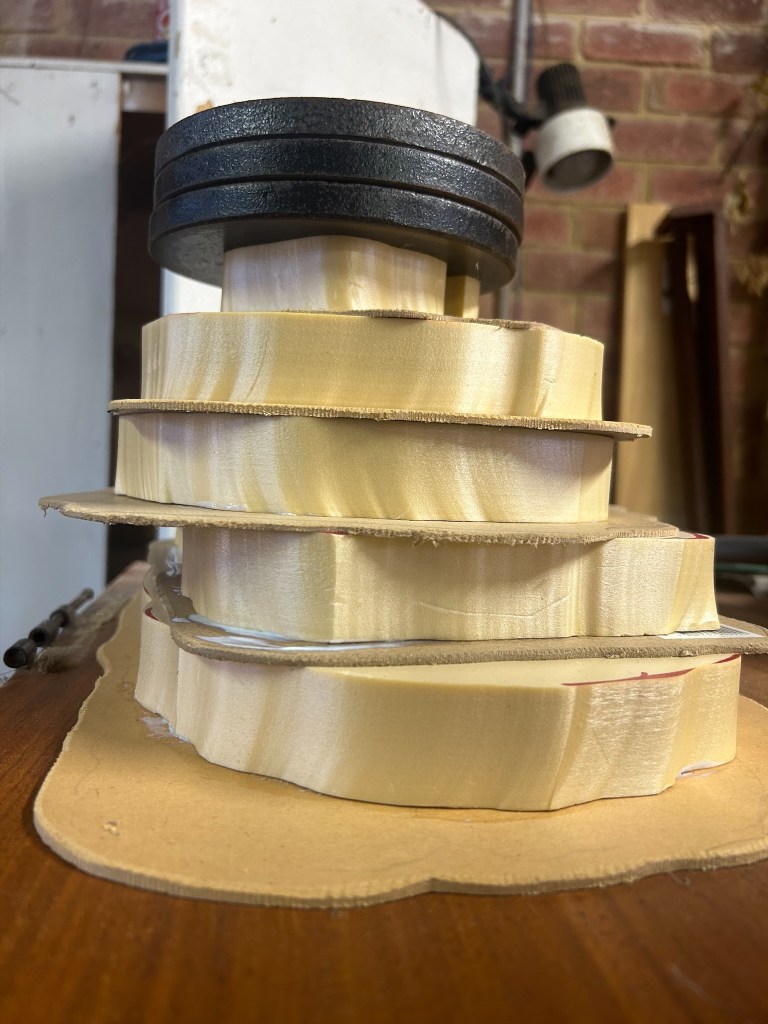
I started by cutting some rough shapes out of MDF for the bases and matching smaller shapes out of insulation foam to make the main shape of the hills. I also cut a notch out of each of the hills to make the tunnels behind the entrances. You can see said notch in the smallest hill at the top of the pile. I then covered the undersides of my foam shapes with PVA glue and glued them down, and weighed them down with some small weights.

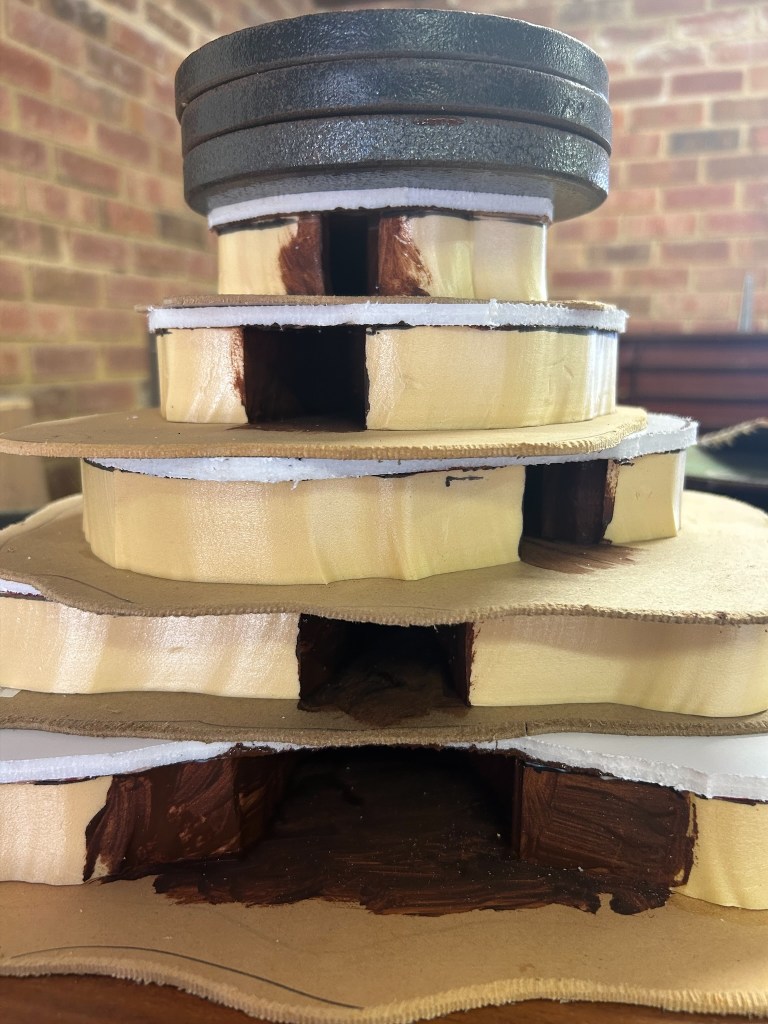
Next step was to put a roof on my hills. For this I used foamcore cut to match the hills. I also glued this down with PVA glue, but before I did this I painted my “tunnels” with some dark brown paint as I wasn’t going to be able to get to these once the entrances were glued on.

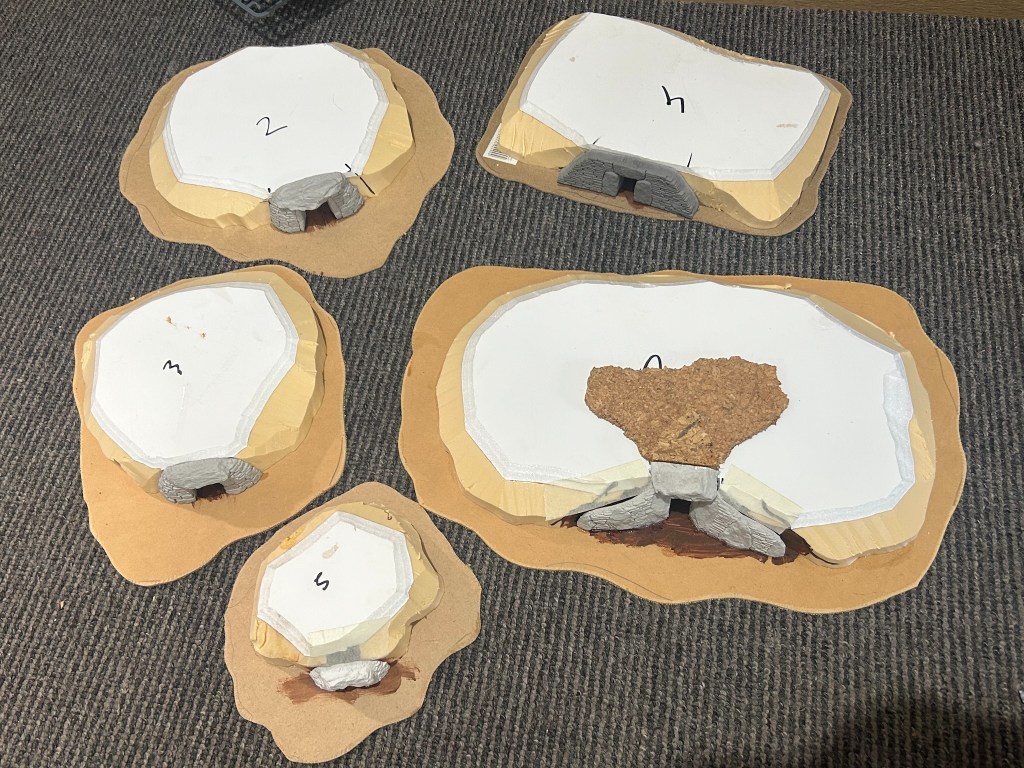
Once the glue was dry (read a few months later!) I carved my hills using a snap blade/retractable blade knife, with a special focus on making sure the entrances lined up neatly with my hills. For the big hill the entrance was taller than my foam assembly so I added some cork pieces to create a gradient to match the entrance. I used masking tape to patch any gaps, and glued the entrances down to the MDF using super glue (watch the foam doing this, super glue melts it!).

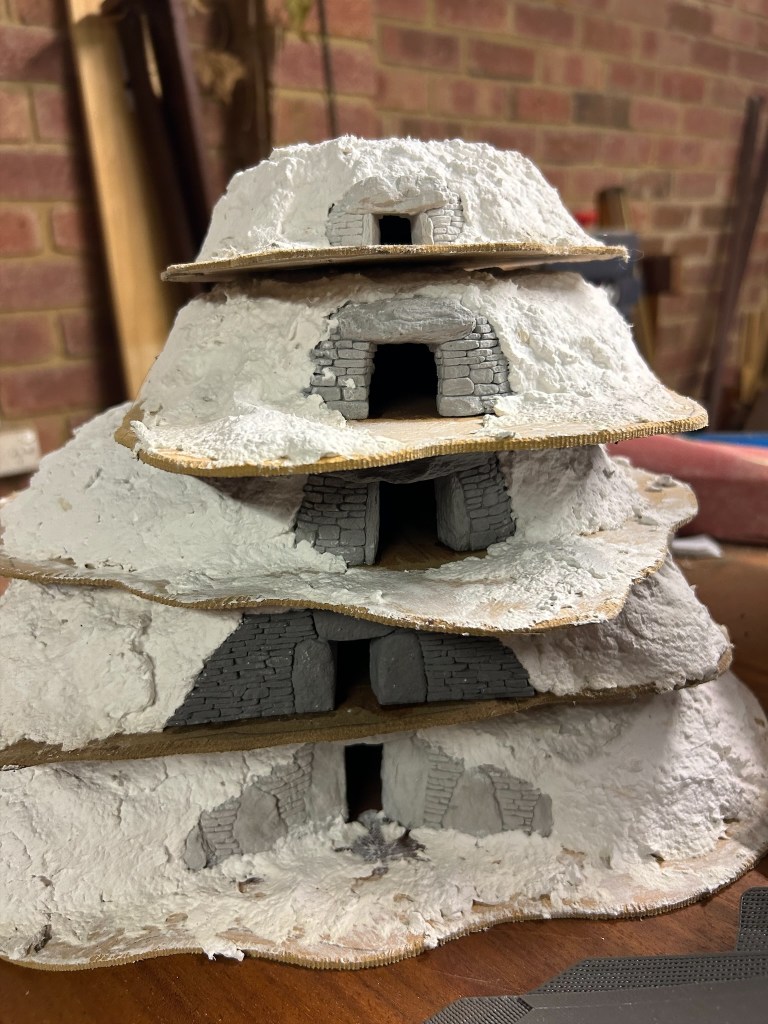
Following on from this I used Sculptamold (plaster with paper fiber mixed in) to cover the foam forms and blending in the entrances, taking care not to cover them up. This added some variation to the shapes and smoothed everything down, making them look much more like hills.

That’s it for the build side of things, now onto painting!

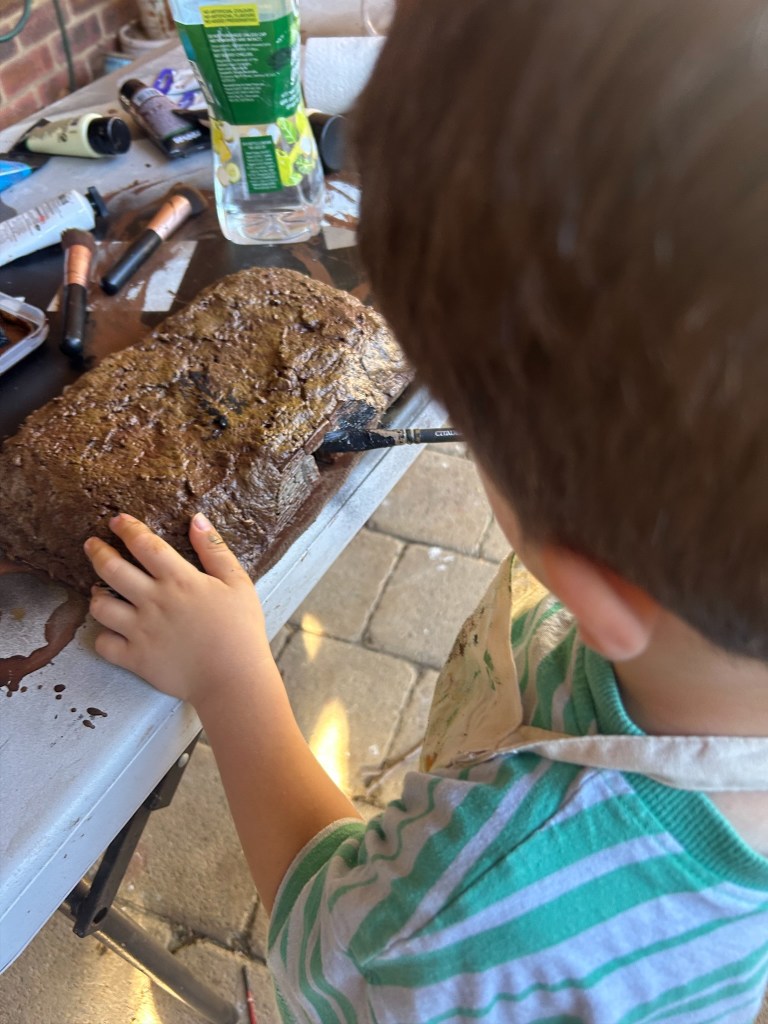
I don’t really have photos of the painting process apart from this one. I’m finding terrain has been a good fun way to get my son to join into the hobby side of things. He’s 3 and miniatures are a bit too small, but he’s fine getting some paint down on larger objects (including himself)!

Once the base colours were down, I gave the entrances a few drybrushes of greys and some green and brown washes to add a bit of colour in there. Once that was done I covered them using the flock mix I’ve been playing with for a while, a mix of Woodland Scenics foams and GW static grass.

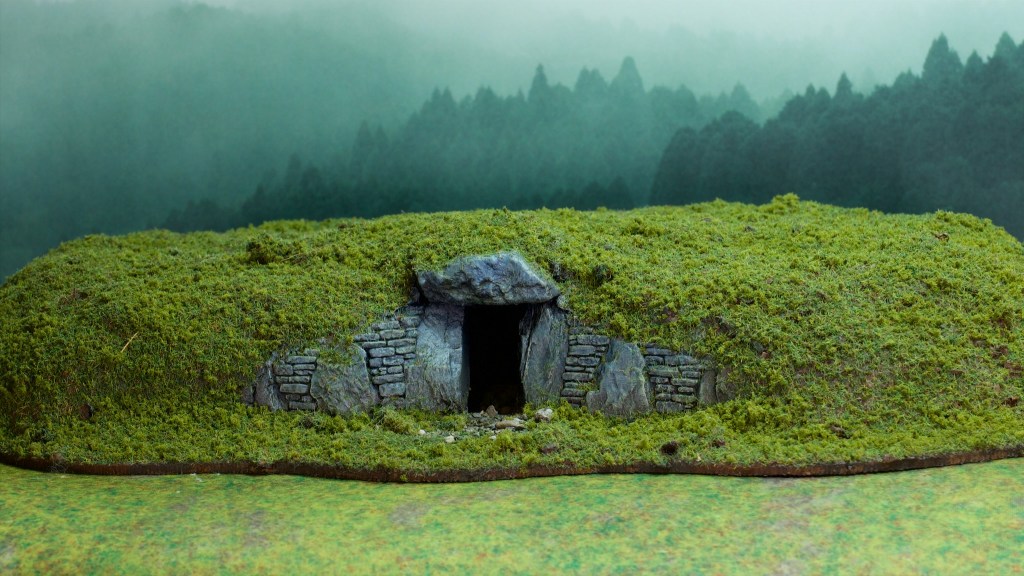
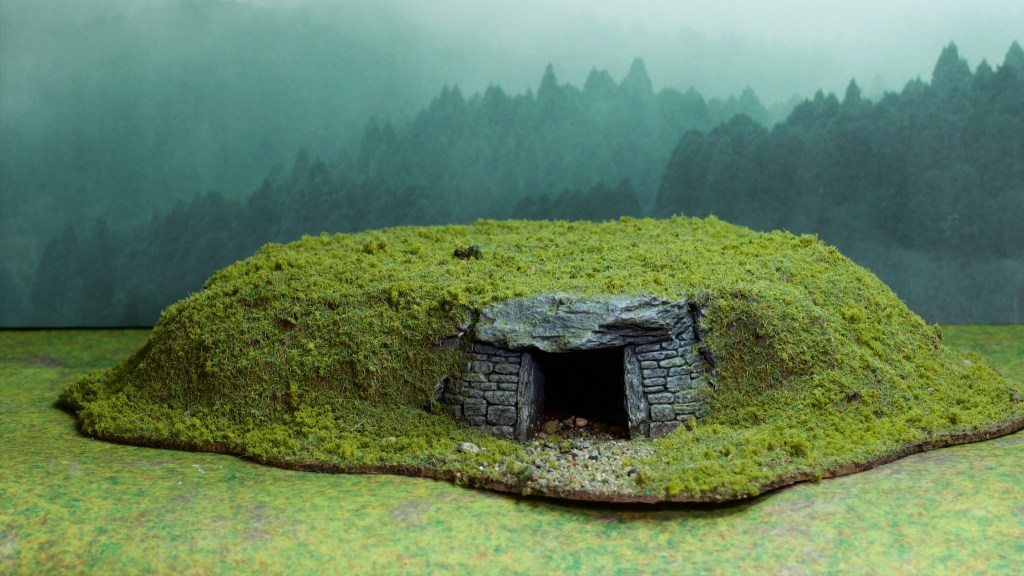
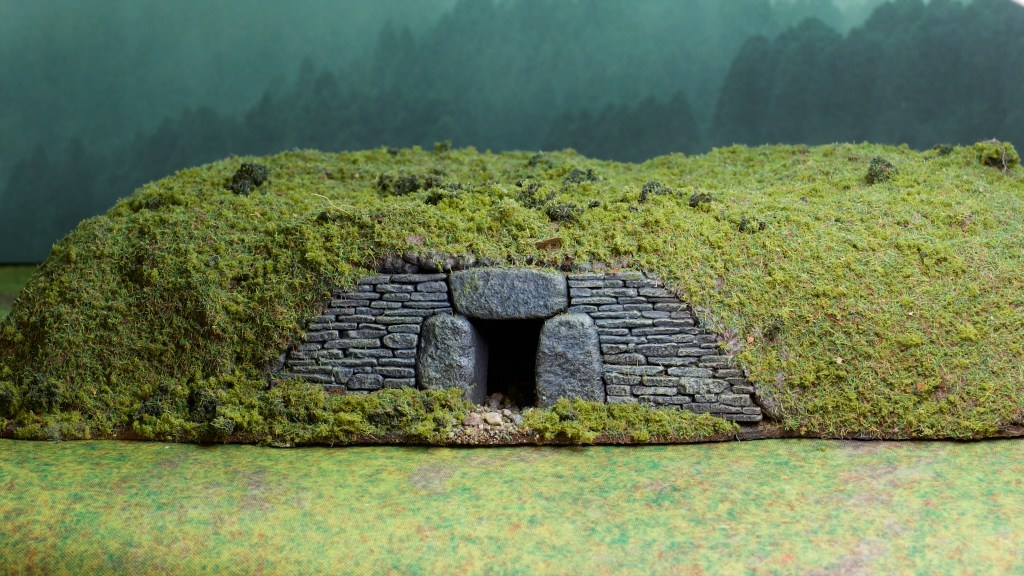
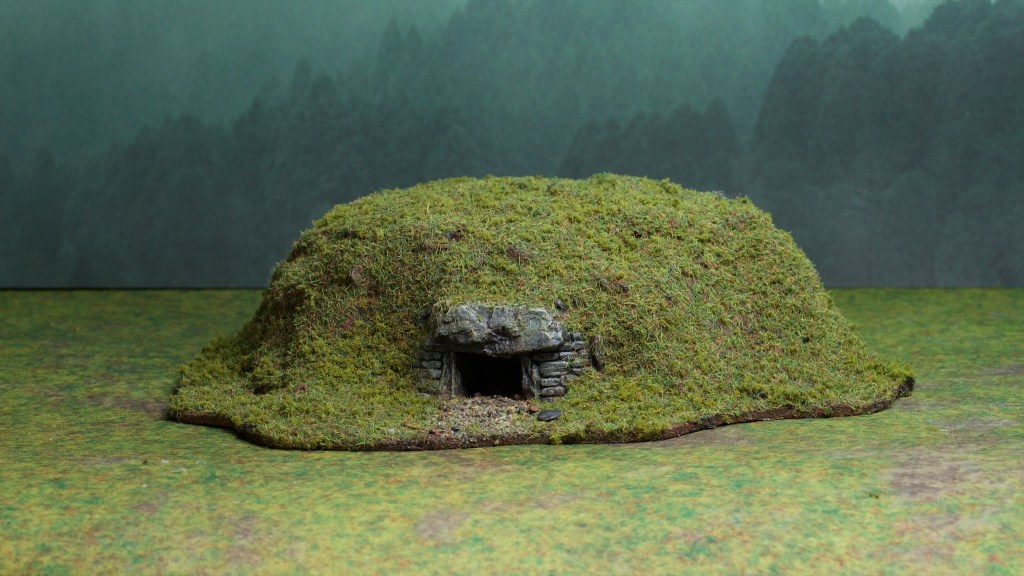
Here are the finished barrows:

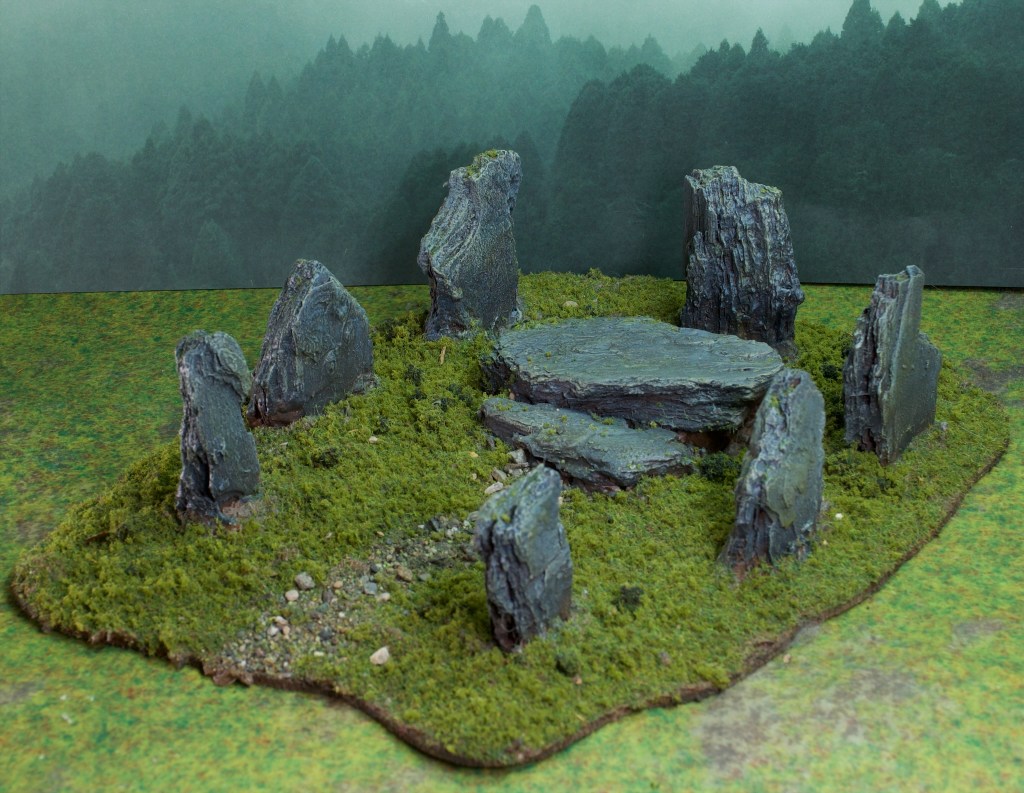
The Geistmunden Hills scenario calls for a piece of terrain to sit in the center of the board, and they suggest amongst other things a stone circle. This appealed to me, and I used some pine bark I had lying around to make an altar of sorts surrounded by standing stones. I painted these to match the stone of the barrows.

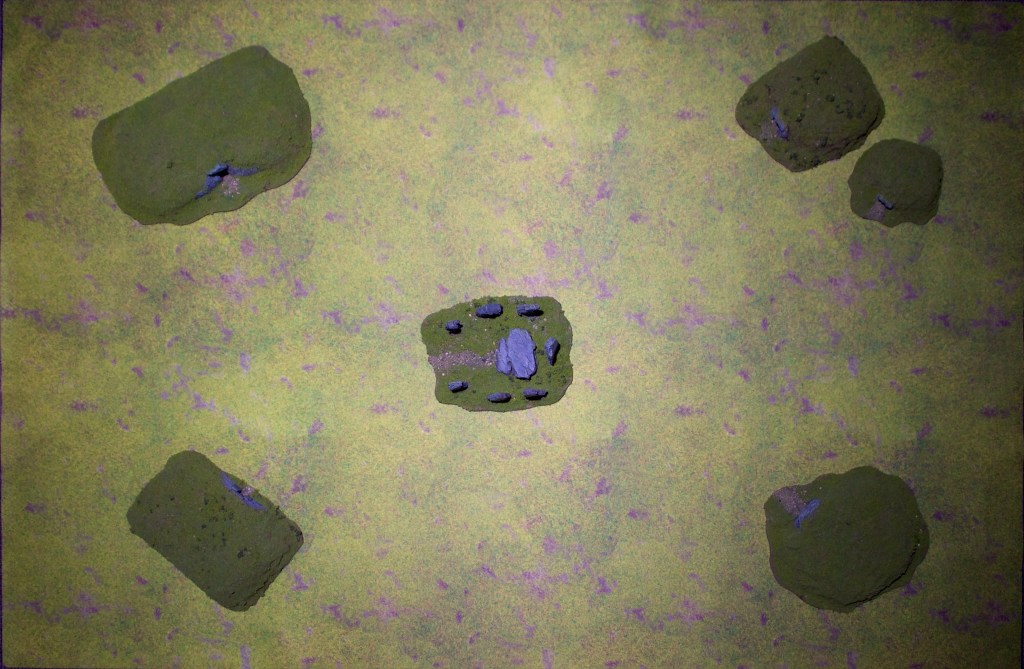
Overall here’s how these all fit on a 6ft x 4ft board:

These were lots of fun to put together, and I’m excited to use them in games. The motivation for these was this Warhammer campaign, but I can easily see using these for historicals or Middle-Earth games.

Until next time!

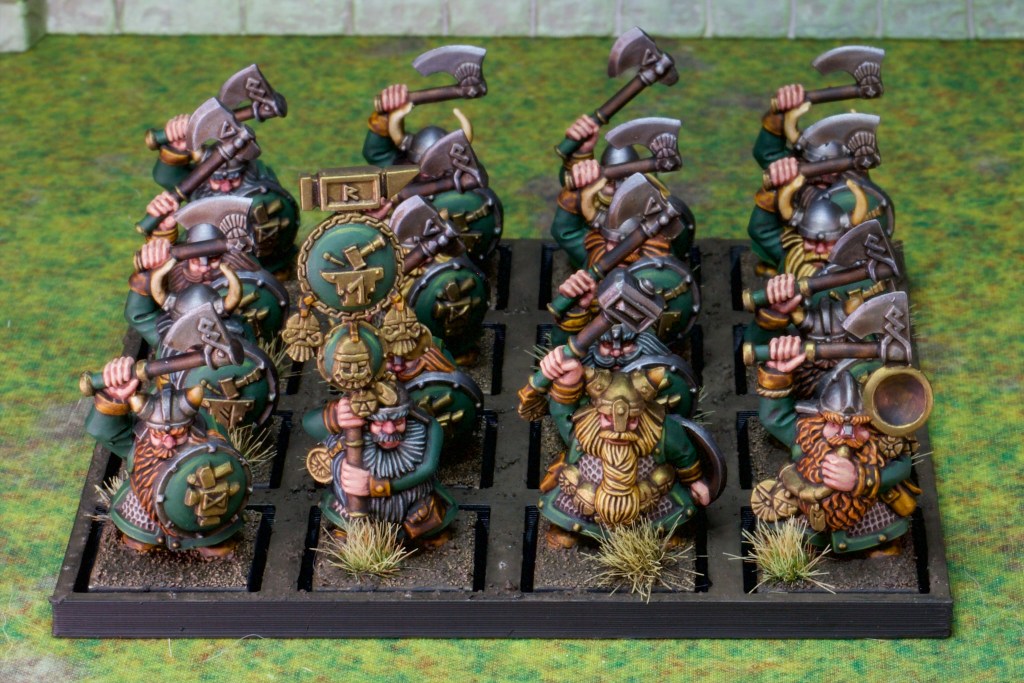
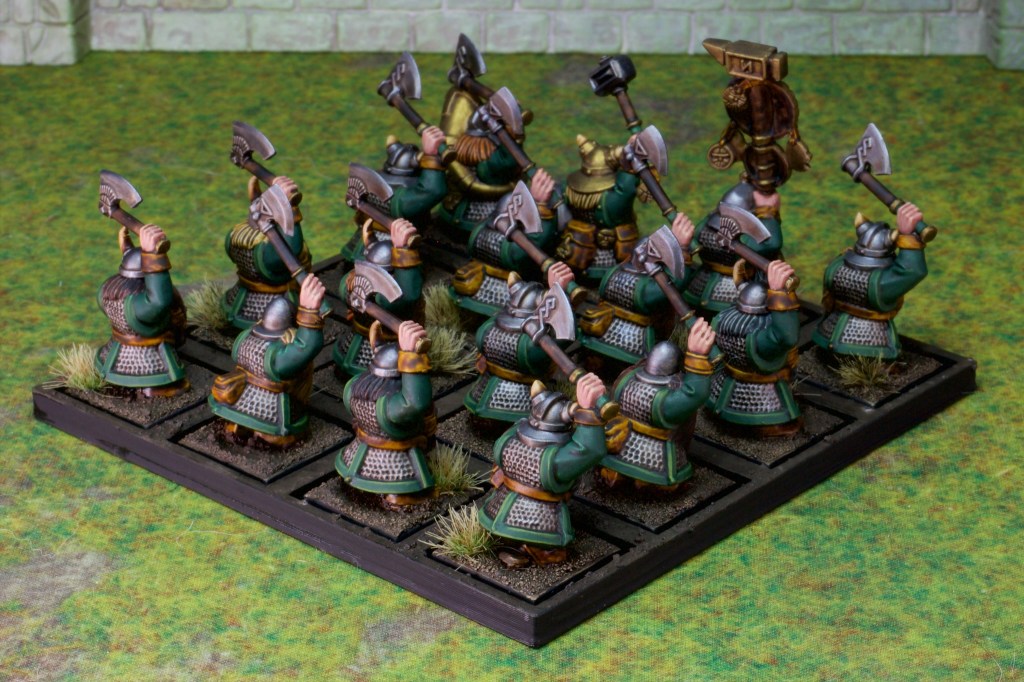
Dwarf Warriors

After all these diversions painting Wood Elves, I’m back in the realm of trusty axes with some more Dwarfs!

These are the old Battle for Skull Pass starter set models, which are quite basic one piece models (hence the flat poses!). The upside of this is detail on them is limited and they’re quite fast to paint.

Painting-wise there is nothing groundbreaking on these, still using the same recipe as the unit of Miners that kicked this all off. It’s quite a fast scheme and looks fine on the table!

A big part of the drive to get these models painted was to make this army legal under the newest ruleset. I was a bit light on core units, so a small block of warriors filled that void nicely.

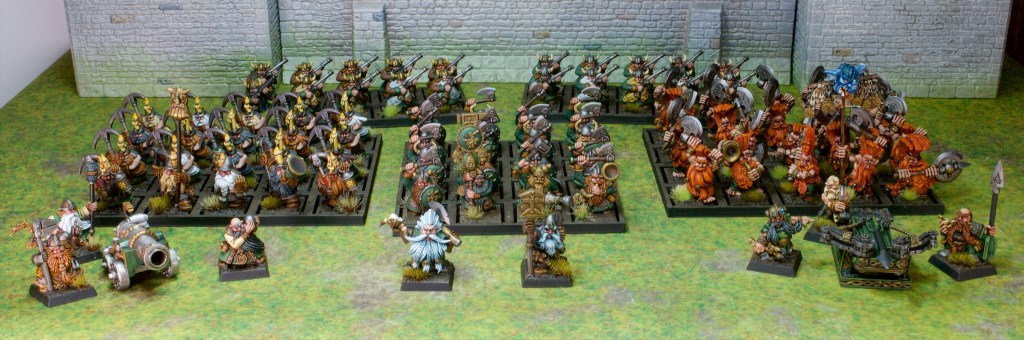
You may notice these are on a spaced out movement tray, while my previous units were close together. The new edition of the game has dwarfs sitting on 25mm bases rather than the classic 20mm, so rather than rebasing all these, I knocked up some movement trays in tinkercad that add the missing 5mm around the models and printed them on my filament printer. I did this for all my current units, which means it’s a good time for an army photo!

Having all this painted up gives me far more than I need for the campaign which means I’m good to go on that front which is very exciting!

I should have some terrain for the campaign done up soon, so I’d expect that to be the next post!

Tree Kin

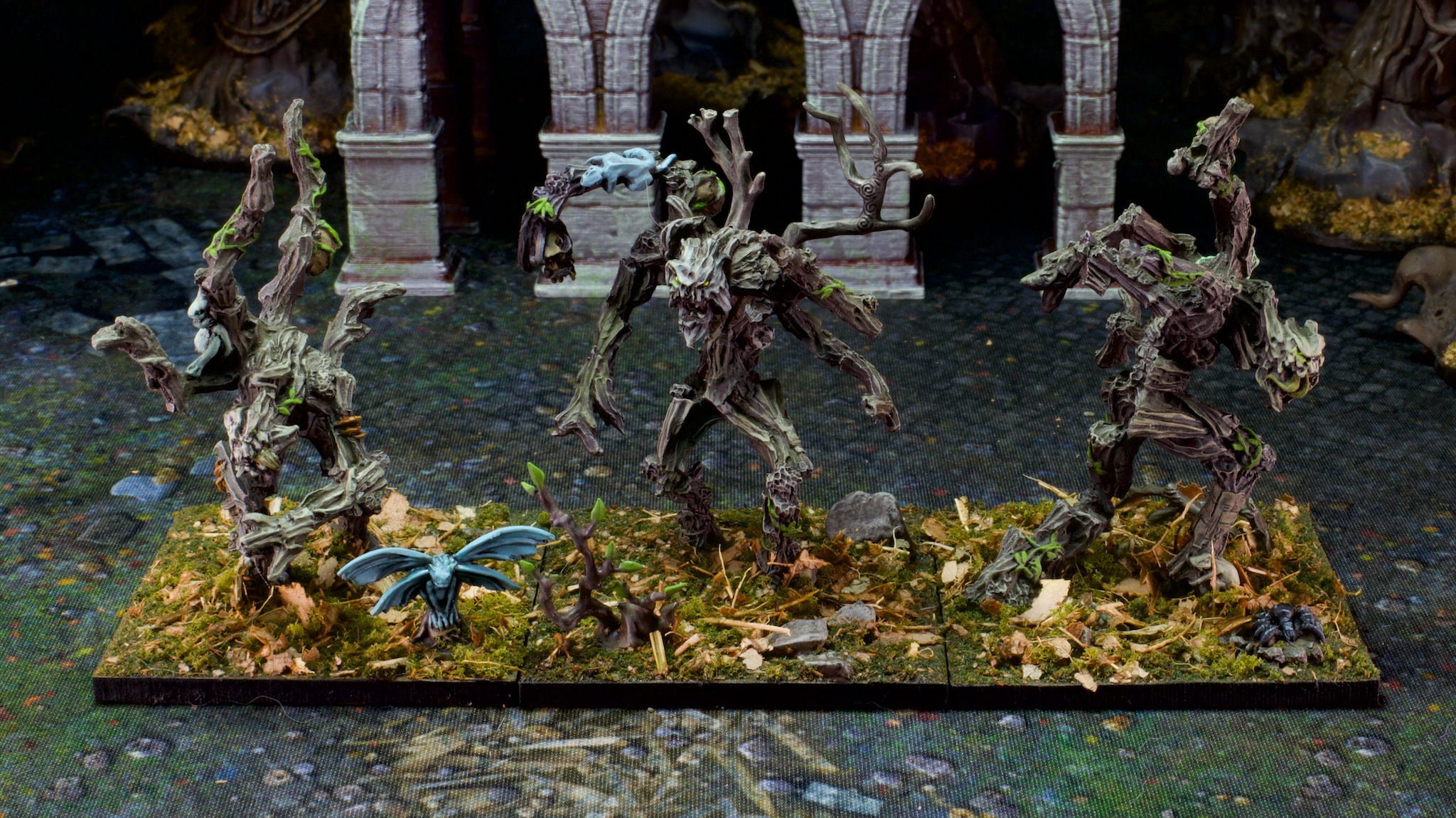
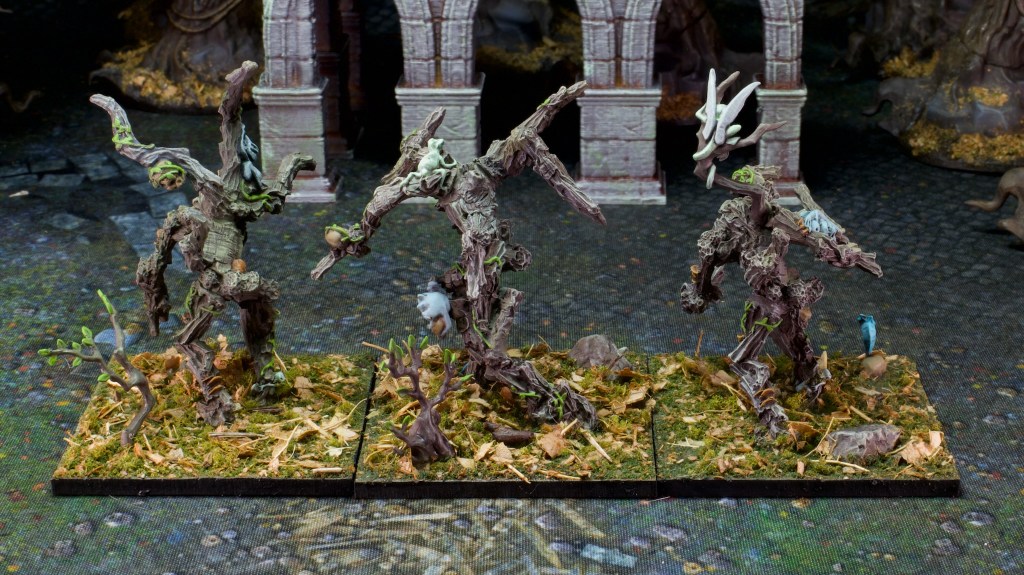
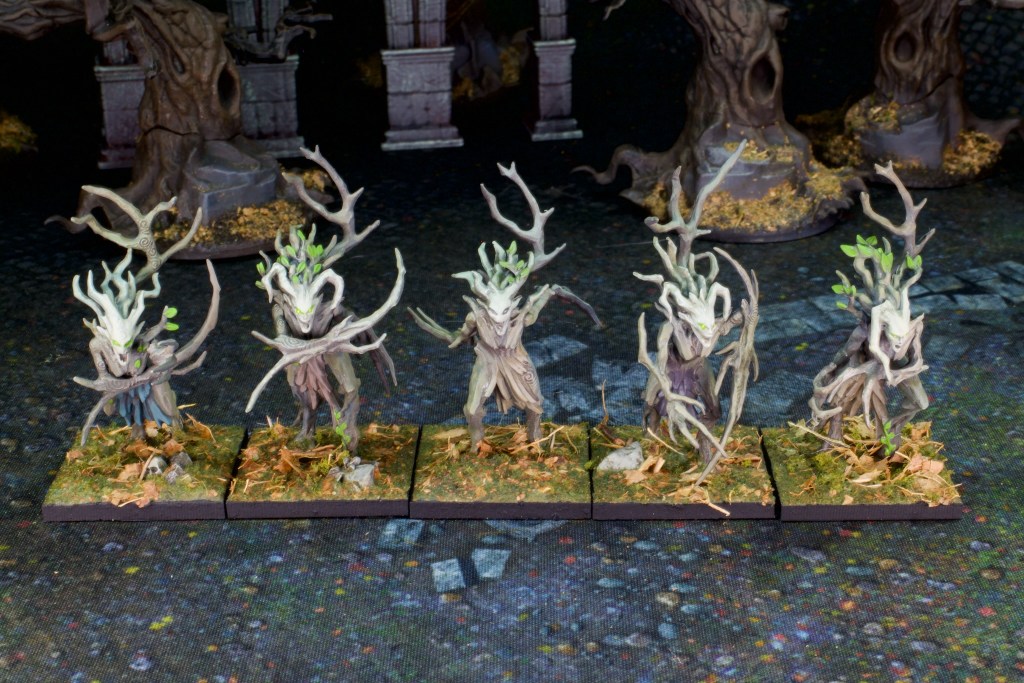
Back again with more forest spirits, this time Tree Kin, smaller than Treemen, but bigger than Dryads!

I’ve had half of these models for quite a long time now, as part of the wood elf army I put together around 2007. The other half I recently inherited from a friend who generously gave me his. Both sets needed some care after years of neglect, but nothing a trip in the stripping bath and some fresh glue couldn’t fix! My models were built as is, but he’d done some cool conversions on his to spice them up a bit (there only being 3 variants, it’s nice to have some extra variety in a unit of 6!).

I painted these in the same manner as my Dryads and Treemen, hitting them with the airbrush in random patches of greens, browns, and blues, then highlighting them as guided by this eclectic mix. See those posts for more detail on this.

These models are covered in little critters (called spites!), which were quite fun to pick out in various colours. I decided to stick to a blueish/greenish range for these to make them relate to each other while still having some variation.

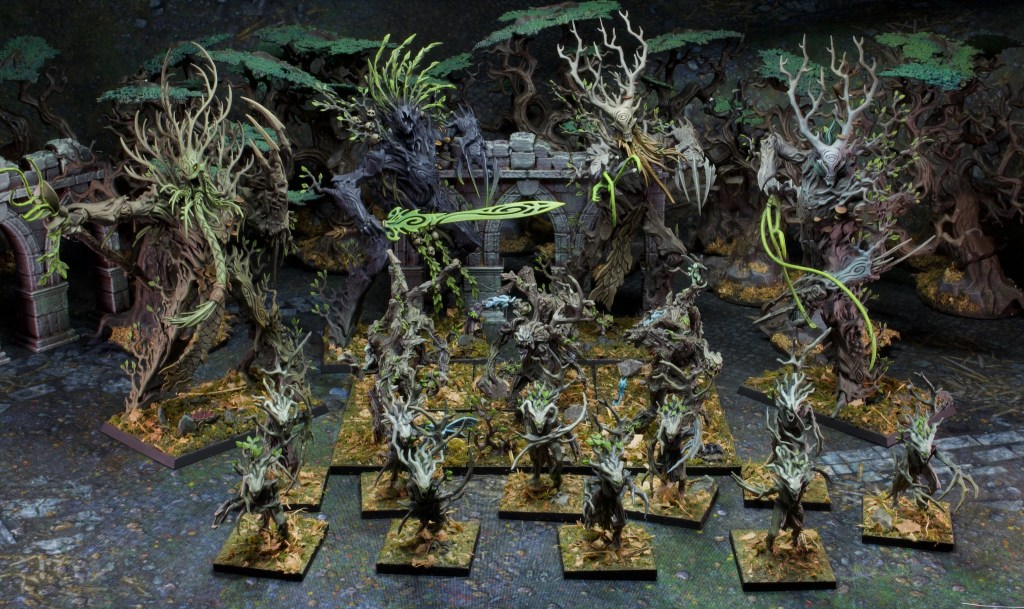
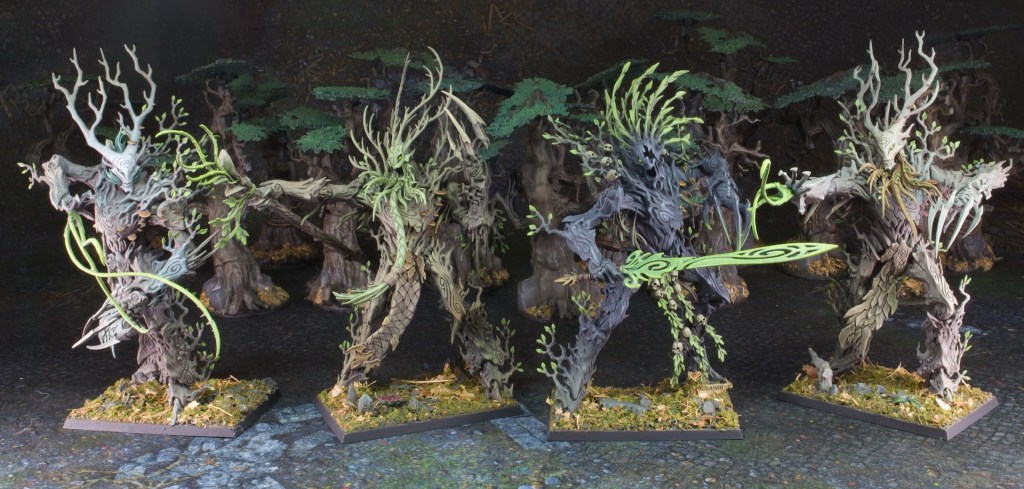
As I’ll be moving on to the elvish side of the army now, I thought it would be fun to have a family portrait of all the forest spirits I’ve painted so far.

I won’t be able to run all 4 treemen till I paint a lot more models for the army, but I’m planning to run one in the first thousand points. I suppose I can rotate them between games for now! As I said above I’ll start painting elves next, and have some archers ready to start painting now. Presumably those will for the focus of the next post unless I get distracted which is always a possibility!

Dryads

The Old World release has had me going around in circles reading, getting excited about an army, army list writing, model building, model painting, rinse and repeat for another army. So I’ve started a lot of things but not finished much! One thing that I have realised doing this is that I really enjoyed painting those Treemen last post and wanted to paint some more foresty units!

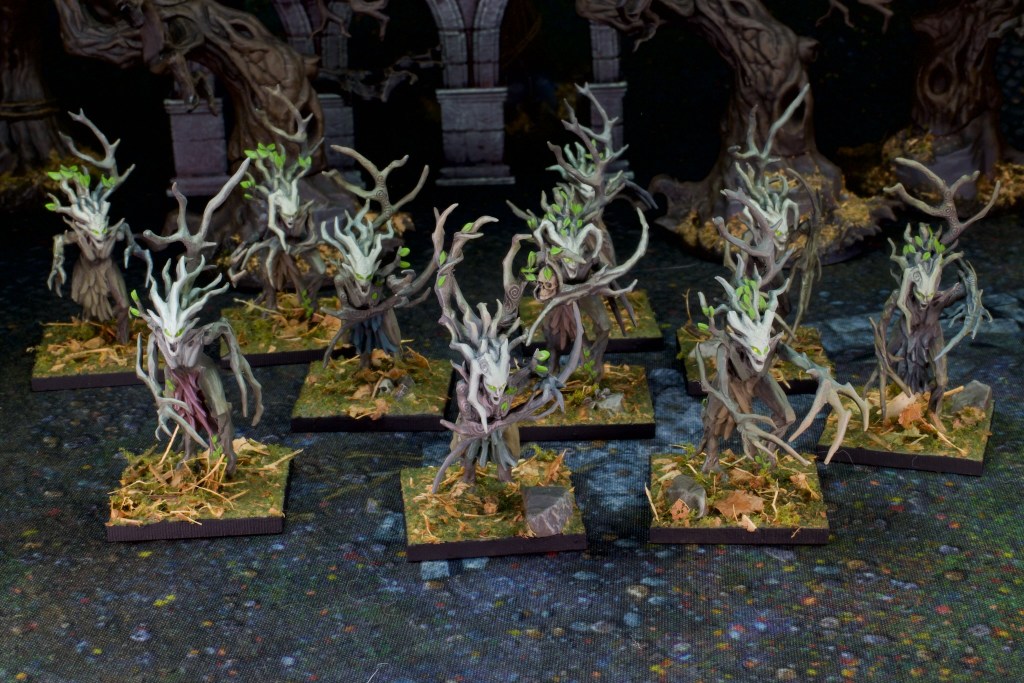
So I broke out some dryads from the foam cage of an army case, rebased them on the new base size and got to painting them! Much like the treemen, this was rather free-form painting, starting with an airbrushed basecoat of a patchy mix of browns, greens, and blues and going from there.

This has turned out to be a rather fun way to paint, and gives rather nice results for these rather organic models. I think this would work quite well for something like Tyrannids in Warhammer 40,000.

I think the shots from the rear show the patchy nature of the paint work well, being flatter and less obscured with detail.

One thing I do need to figure out is how I’m going to paint the elvish section of the army. This works well for all the forest spirits, but I’ll need to try out something for the non-tree people!

Regardless of how I decide to do the elves, I’m pretty committed at this stage to paint up a small force of Wood Elves for the Old World. In fact I’m leaning towards choosing them as my army for our Border Princes campaign. I’m finding the new rules don’t suit how I’d like to run my Dwarves at 1000 points (But look excellent for running them in bigger games!) so that may cause me to pivot to a different army.

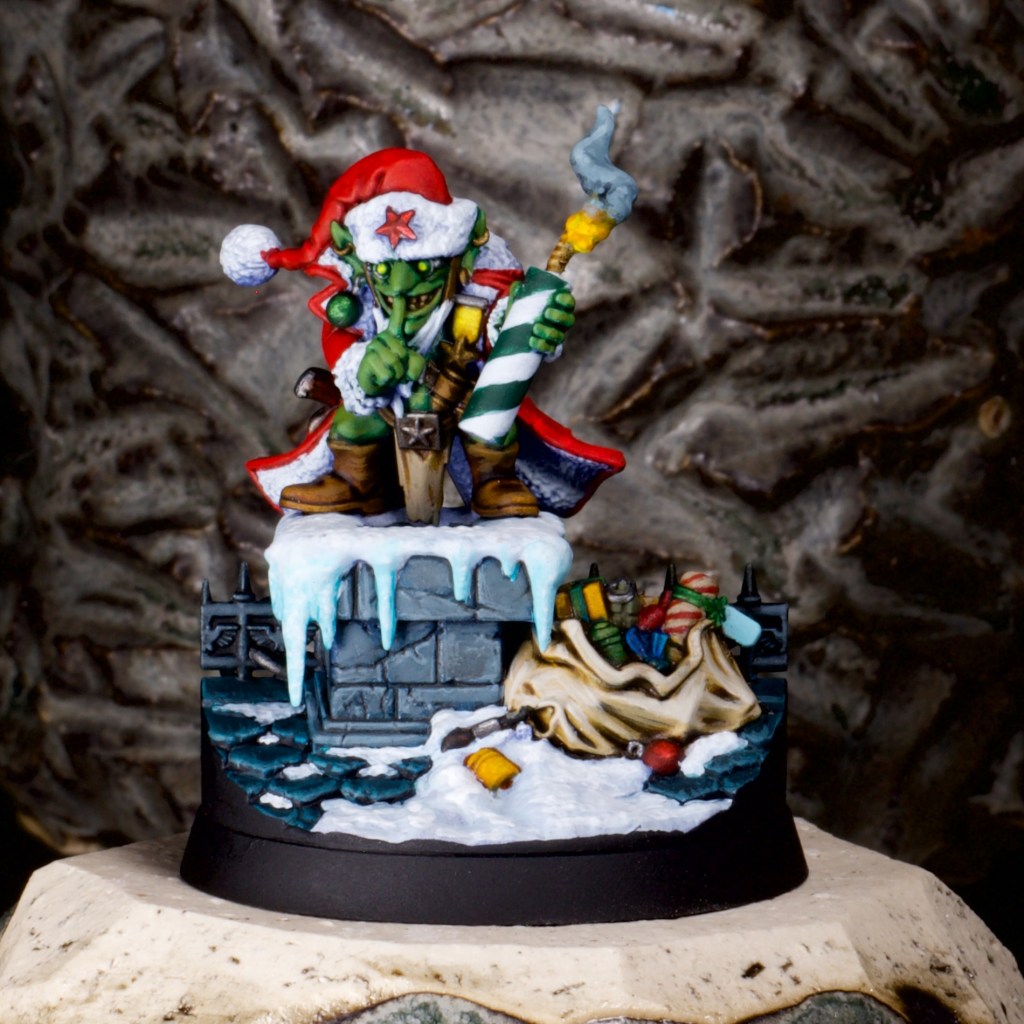
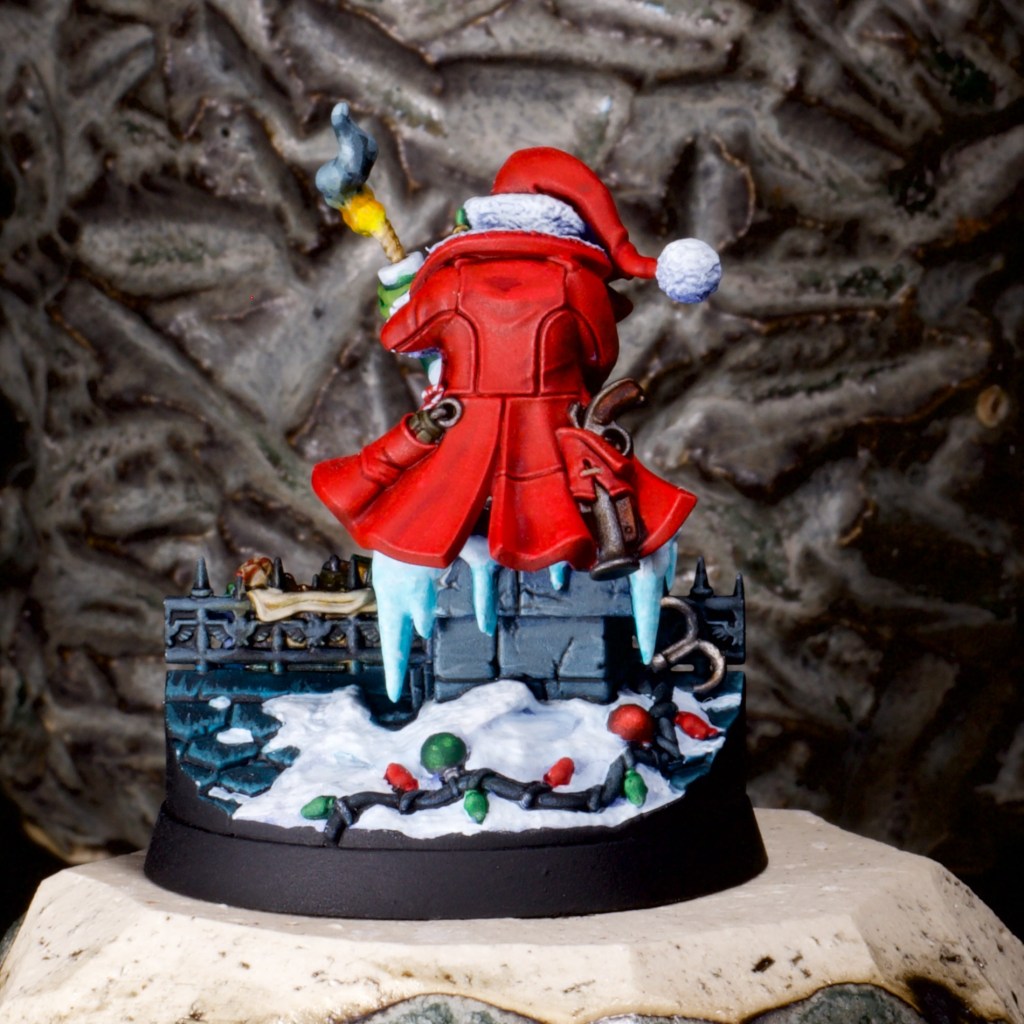
On a different note, I painted this mischievous Christmas goblin for a friend a couple of weeks ago and finally managed to meet up to hand it over so I figured it was time to post up some pictures!

A rather fun model to paint!

I’m most of the way through some more Wood Elf models (still Forest Spirits!) so expect a post on them soon!

Treemen

One of the things that has me excited about the new Warhammer ruleset is that the armies are self-contained in the main army books, so I can start planning out all sorts of armies without having to wait for them to be re-released for the game. Given that I have a decent collection of models that will be useable in it, I’ve decided I’ll have the most fun if I work on models for the Old World in general rather than painting one army after another. This means picking up what I feel like painting most and getting it done! Last week we had Tomb Kings, this week Wood Elves!

After the base sizes for the new game were announced for models, I had a hunt through my collection for models staying on the same base size that I could paint while I wait for my Tomb Kings starter set. I came across these treemen which have been sitting undercoated in a case for close ten years, and I decided they deserved some paint after their long entombment! These actually belonged to my wife when she had a period of interest in tabletop gaming (as a result of which we met!), and I’ve inherited them since.

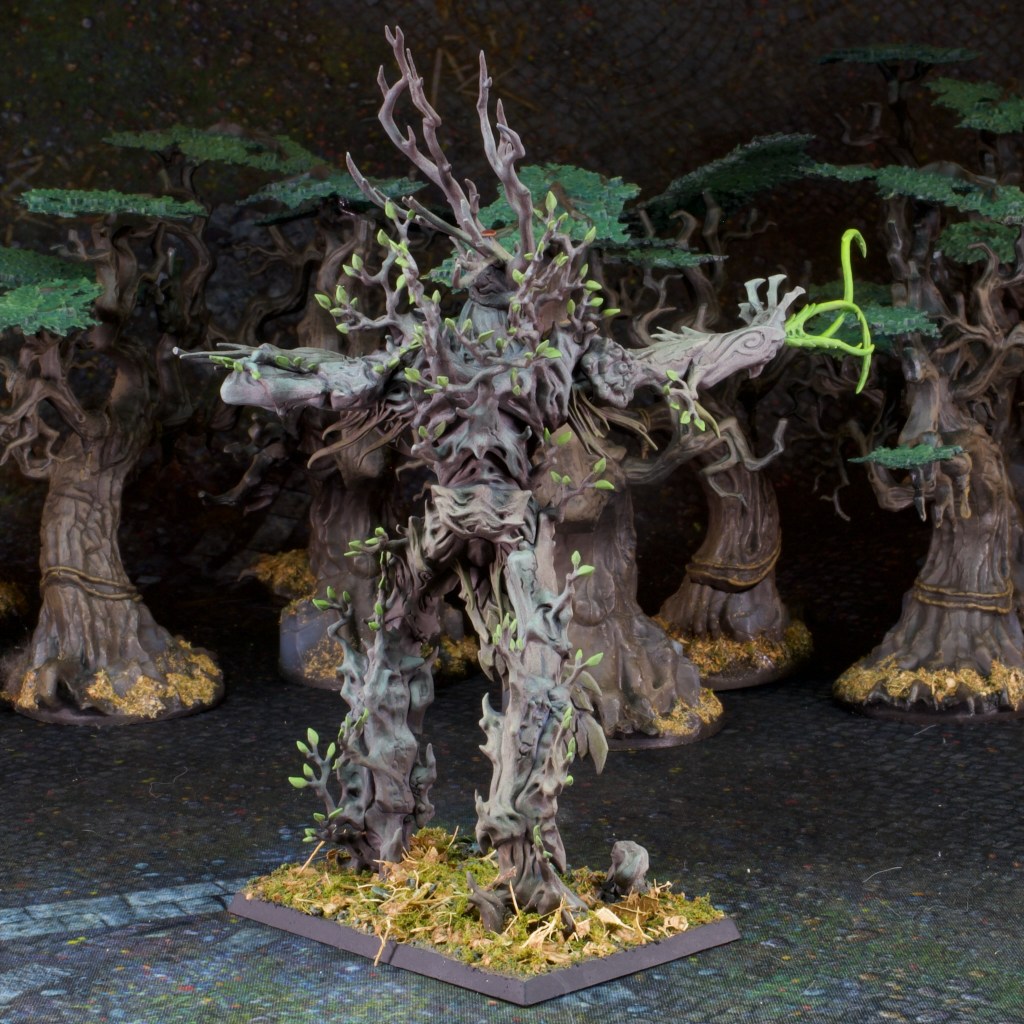
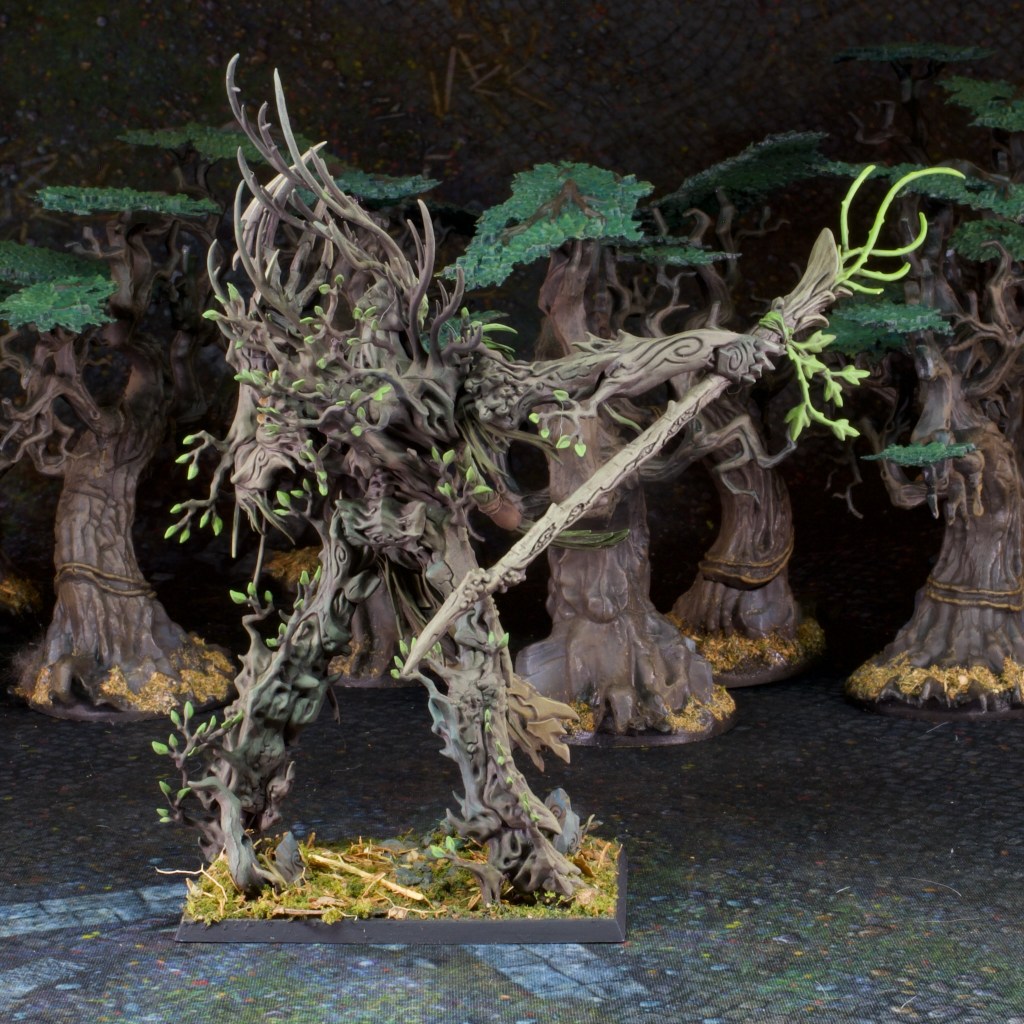
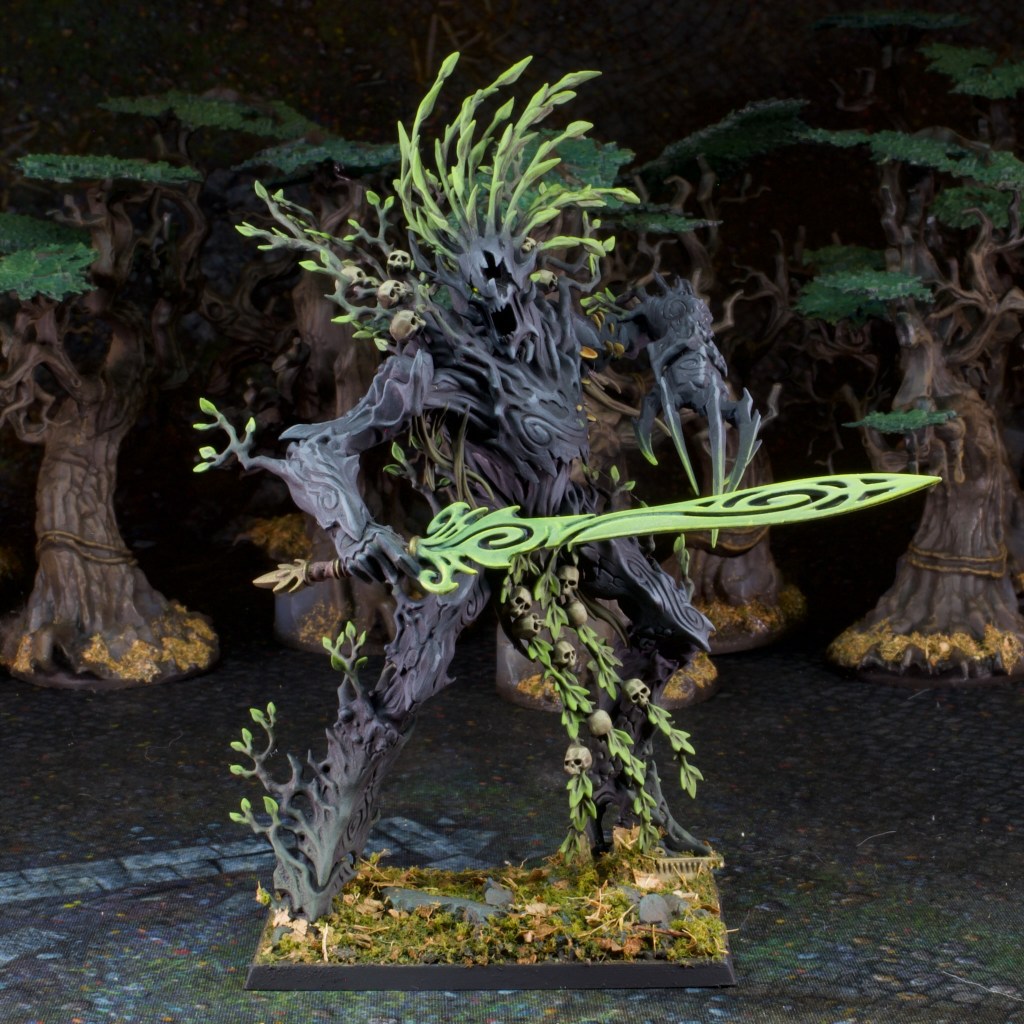
We have 3 variants here, 2 treemen, a treeman ancient, and the named character Durthu. I’ve taken photos of each side of each, and put them into a slideshow for each model so you should be able to scroll sideways though them.

Treemen

Treeman Ancient

Durthu

From a painting perspective, these models were painted in a rather freeform manner (apart from Durthu which had much more of a plan, detailed below). I first took to them with the airbrush and put on random patches of greens, browns, blues, greys. I then started highlighting the models, roughly following the patchy undercoat. This required a lot of mixing, as the patches of airbrushed paint blended into each other. So no paint recipes here, each area was done on its own and the ratios based on whatever made sense there. I think this gave a really naturalistic look to these models as trees are far from uniform in nature, being covered in all kinds of mosses, lichen, mud, etc.

This was an extremely fun way to paint and I’ll definitely replicate that on the rest of the forest spirit models in the army.

Durthu as I mentioned above had a much more deliberate plan in his painting, driven by my experiences walking in the local bush land here in Perth. It’s rather common to come across burnt bush around here, either from bushfires, or burn offs done to reduce the impact of future bushfires. The forests end up black after these events, but nature here is built to live through these events, and when rain comes life springs anew from the ashes, revealing what I think its a pretty amazing sight: bright green new growth surrounded by pitch black burnt forest. Here are some photos I’ve taken of what I’ve seen here.

Having grown up near temperate European forests, I find this quite an amazing sight and have always wanted to paint a model that tries to replicate the effect. That’s what I tried to go for on Durthu, his main trunk is blackened by fire, but bright new leaves are coming up.

Dwarfs were the first Warhammer models I bought, but Wood Elves were my first “proper” (i.e. built to a decent size) army for Warhammer. I have a lot of models for that army, although most are in a dire state so I’m excited to repair and repaint them and get them back on the table with the new ruleset.

I’m using these new rules to indulge my love of painting whatever I feel like at any given time so I’m not sure what I’ll be painting next! Potentially some more terrain for the Border Princes campaign, we’ll see when I sit down at the painting table next!

Chariots of the Dead

To the surprise of absolutely no one I’ve been very excited for the relaunch of classic Warhammer as the Old World and doubly so now release is just around the corner. As part of said release I ended up ordering one of the stater sets, and not the one that might have been expected given the fact I’ve been painting Bretonnians recently. So off to the dusty tombs of Khemri for me!

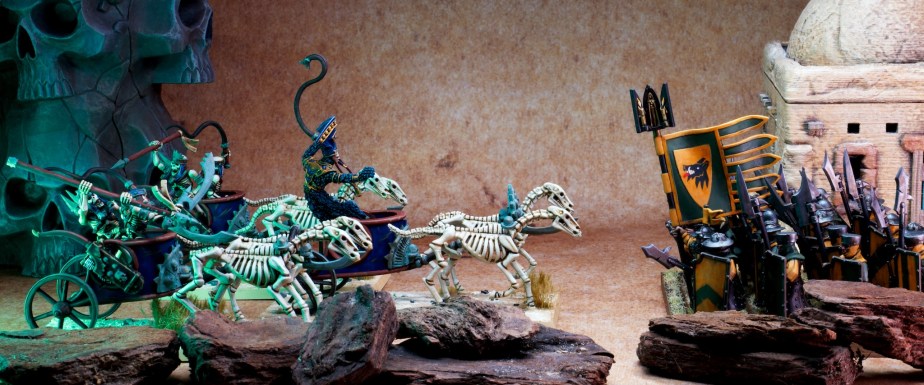
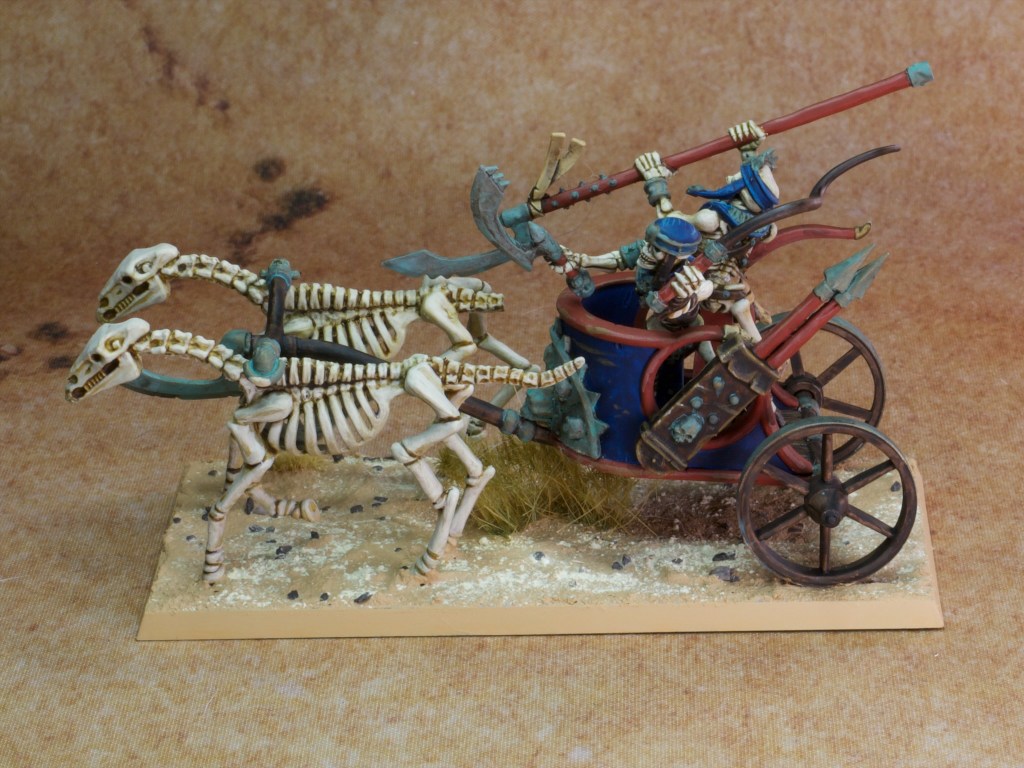
Clearly I was excited about Tomb Kings after that, so I scrounged around my forgotten sprues pile and found a full box of Tomb King chariots! Well not so full, one of the crews was missing, probably cannibalised for some long forgotten project. I decided then that this crew-less chariot should serve as a character mount, and low-and behold I had in my possession a model of Prince Apophas, the mass of beetles with a head (very the Mummy). I’d gotten Apophas as a fun alternate Wraith for my Vampire Counts many years ago and had converted him to wield a scythe of all things, and promptly never painted him. I therefore had an empty chariot and a purpose-less Tomb Kings character on my hands and settled on making him my chariot rider!

Given his previous stage of conversion, the original dagger the model came with was long lost, and while I still have the original head, I wanted to change that to make this a bit more than just Apophas on a chariot. I had a look around for promising heads and found Arkhan the Black’s head as a spare on the Mortarchs sprue, left over from when I built Neferata many years ago. That seemed like a good fit so on it went. I thought his arm position was well suited to be cracking a whip, so I had a look around for an appropriate donor model, and cast my eyes upon a poor metal dark elf chariot rider, again leftover from some previous project (see, you should never throw anything away), and cut off his whip to give to my new chariot rider.

These 3 chariots will join up with the 3 that come in the starter army to make a nice chariot block, when I get these I’ll build the command models so the unit has the usual banner/musician/champion. Speaking of the starter army, I’ll not be getting this till February, as Australia is a few weeks behind the rest of the world for receiving their stuff unfortunately, so I better write down my recipes so I can match up the new models with these!

  • Acronyms:
    • VMC: Vallejo Model Color
    • VGC: Vallejo Game Color
    • PA: Pro Acryl
    • S75: Scale 75
    • GW: Games Workshop/Citadel
    • AK: AK Interactive
  • Blue
    • VMC Dark Prussian Blue
    • VMC Andrea Blue
  • Red
    • VMC Cavalry Brown
    • PA Shadow Flesh
  • Bone
    • 50/50 GW Aggaroth Dunes/Contrast Medium
    • 50/50 VGC Bonewhite/AK Ivory
  • Leather
    • GW Wyldwood Contrast
    • For larger areas only:
      • VMC English Uniform
      • 50/50 VMC English Uniform/VGC Bonewhite
      • 30/70 VMC English Uniform/VGC Bonewhite
  • Bronze
    • S75 Necro Gold
    • GW Nihilakh Oxide
    • For larger areas only:
      • VMC Light Sea Grey – very thinned down, in uneven patches
  • Gold
    • S75 Elven Gold
    • GW Reikland Fleshshade
    • S75 Elven Gold
  • Scrolls/Fabric Straps
    • GW Skeleton Horde Contrast
    • VMC Iraqi Sand
  • Bases
    • AK Sandy Desert (Texture)
    • Mig Light Dust (Pigment)

Note that in addition to the above the models got a pin wash of dark brown enamel to pick out the details. If you’ve followed the blog for a bit you’ll notice that my usual application of GW’s Agrax Earthshade for shading is absent. I decided I wanted to get these models much brighter and less contrasty than usual to get that sunbaked feeling, hence the light enamel wash instead of the usual heavy acrylic wash.

These models were really fun to paint, and I look forward to the sea of bones headed my way in the new starter set! As for what I’ve seen of the new rules so far, I’m really liking. It’s capturing the essence of the editions I really enjoyed, that is 6th and 7th editions. We’ve already decided to use this new edition for our Border Princes campaign, and I can’t wait to get stuck into the new books.