Cold Forests

In what is the final post of my holiday-driven burst of activity we have quite a few trees!

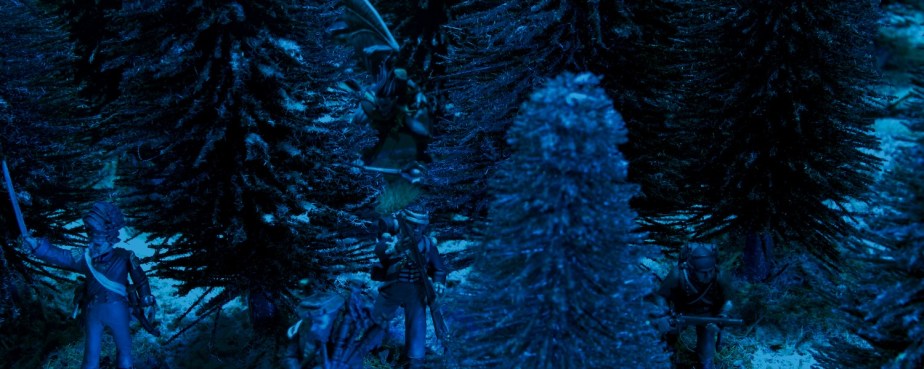
As I’ve mentioned a few times in the last few posts, I’m planning on running a game of Chain of Command for some friends in the coming weeks, and the setting is the Eastern Front, sometime in winter 1944. Having no winter terrain was going to make that a bit difficult, so I decided to paint up a few pieces to populate the table. The main thing I wanted was to have some nice pine forests, so I set about finding some suitable trees.

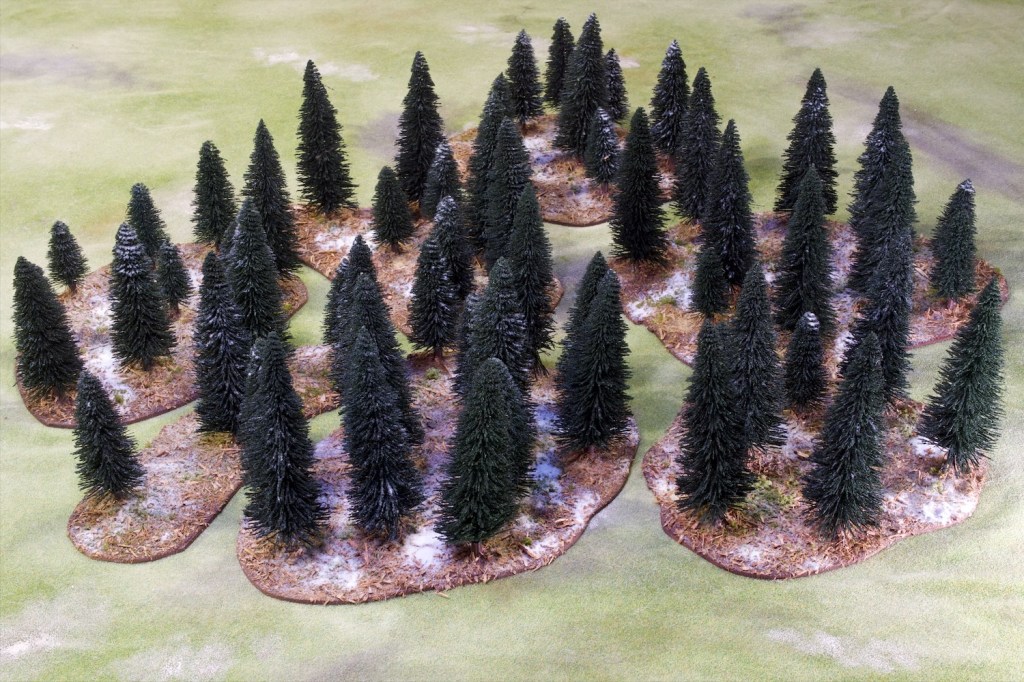
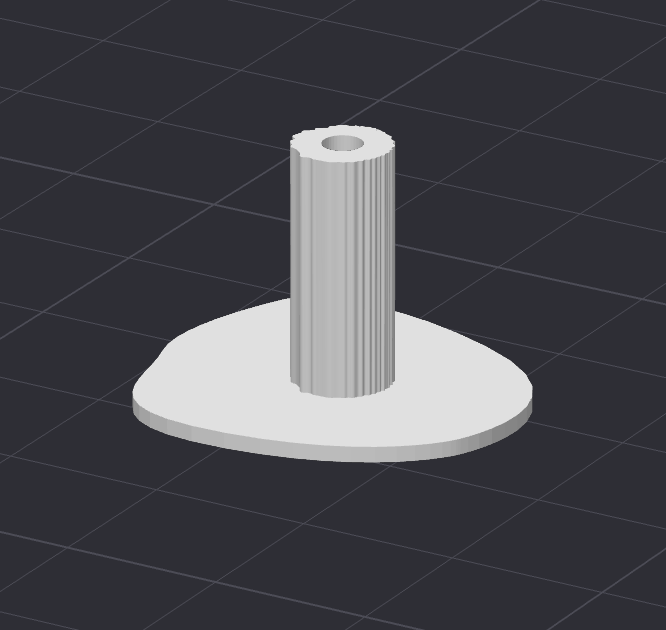
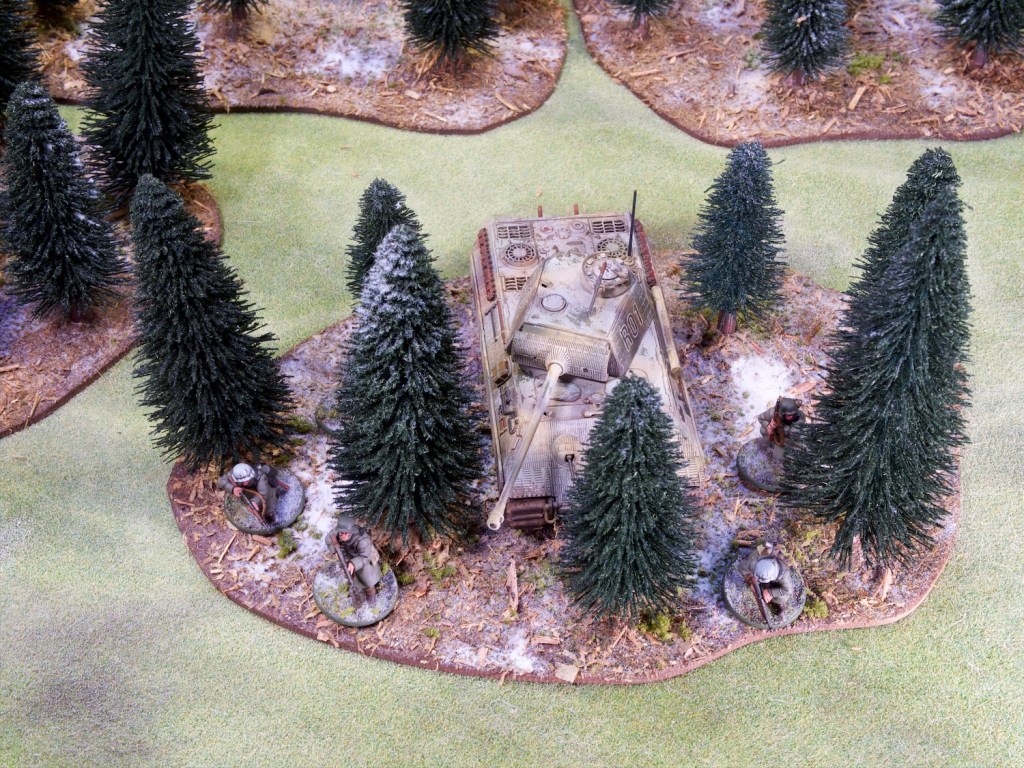
The trees you see above were cheap ones from Amazon which came in big batches with some variety in sizes which was quite nice. 60 of them cost me just below $60 (Australian dollars that is!) which seemed like a nice rate. They are a basic shaped and flocked bottlebrush style pine trees, nothing fancy but they do the trick. The flock was not glued on great but I knew I was going to spray them with varnish to get some snow on there too so was not too worried. The “trunks” of the trees were bare wire twists so I needed to make some holders for them, to make the trees more realistic and allow them to be removed for gaming and storage purposes.

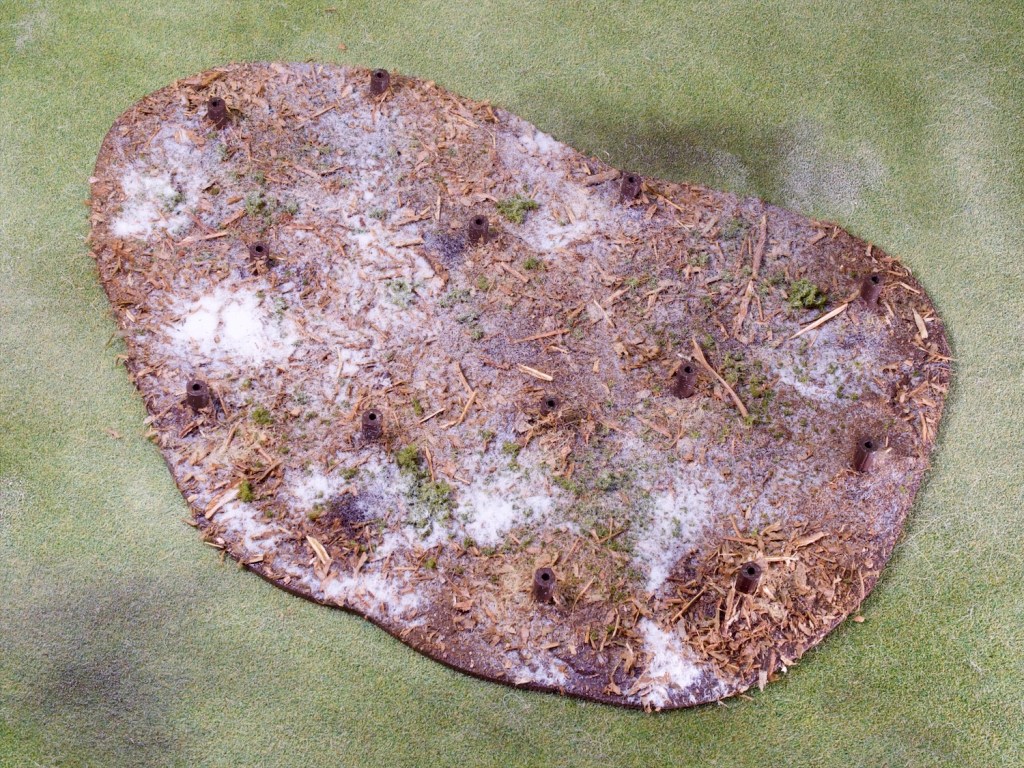
I made a very rough trunk shape in tinkercad and 3D printed the 60 I needed. I then glued them down in a semi-random pattern to some MDF bases I cut out of the back of an old bookshelf (never throw anything away!), and was ready for basing.

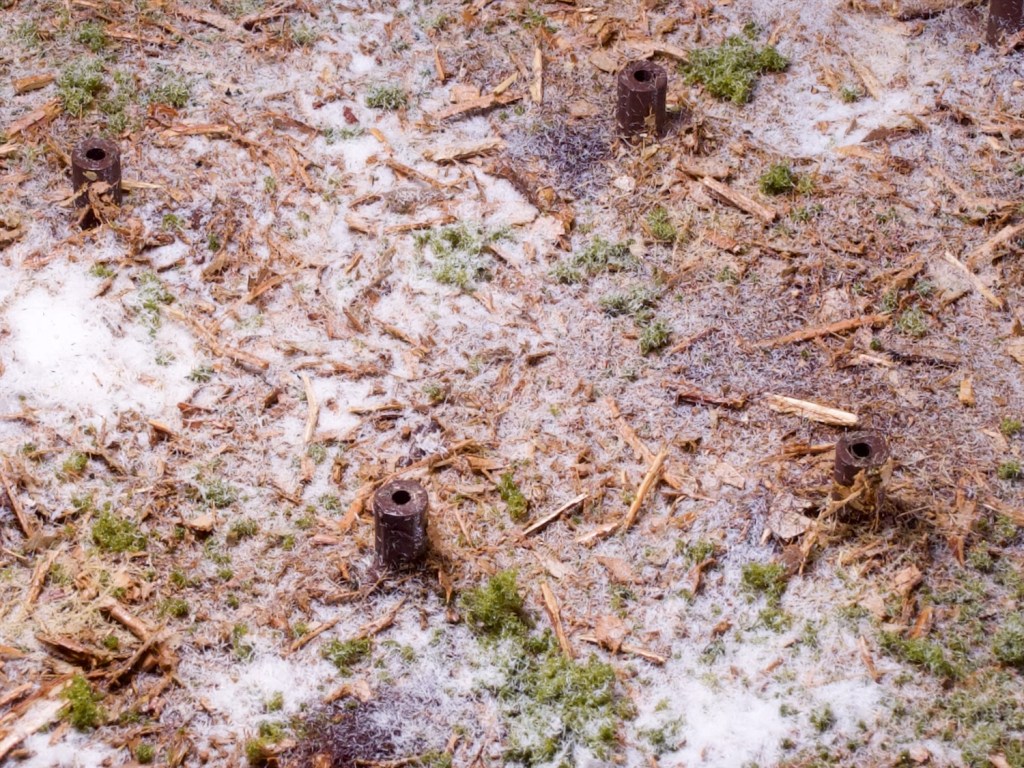
I wanted a forest floor look but wanted to stay away from a leafy look as befits a pine forest. As a result while I went my usual route of blending up some leaf litter as I did for these citadel woods and for my endor table I stayed away from soft leaves (european style!) and went for dried eucalyptus leaves which are much harder and blend down to a powder. That mixed with small twigs gave a nice finish that I think does a decent job of impersonating dropped branches and bark at the scale.

To finish the look I added some green foam from woodland scenics to represent small vegetation on the forest floor. I tried adding some dark and some dry static grass to look like dropped needles, but I don’t think they’re very visible. To top it off I sprinkled some snow flock over the trees and bases (over wet hairspray), then sealed the lot with some spray varnish.

Keeping the trees removable is quite practical for gaming purposes, especially for those game systems that treat forests slightly abstractly as an area of terrain rather than individual trees.

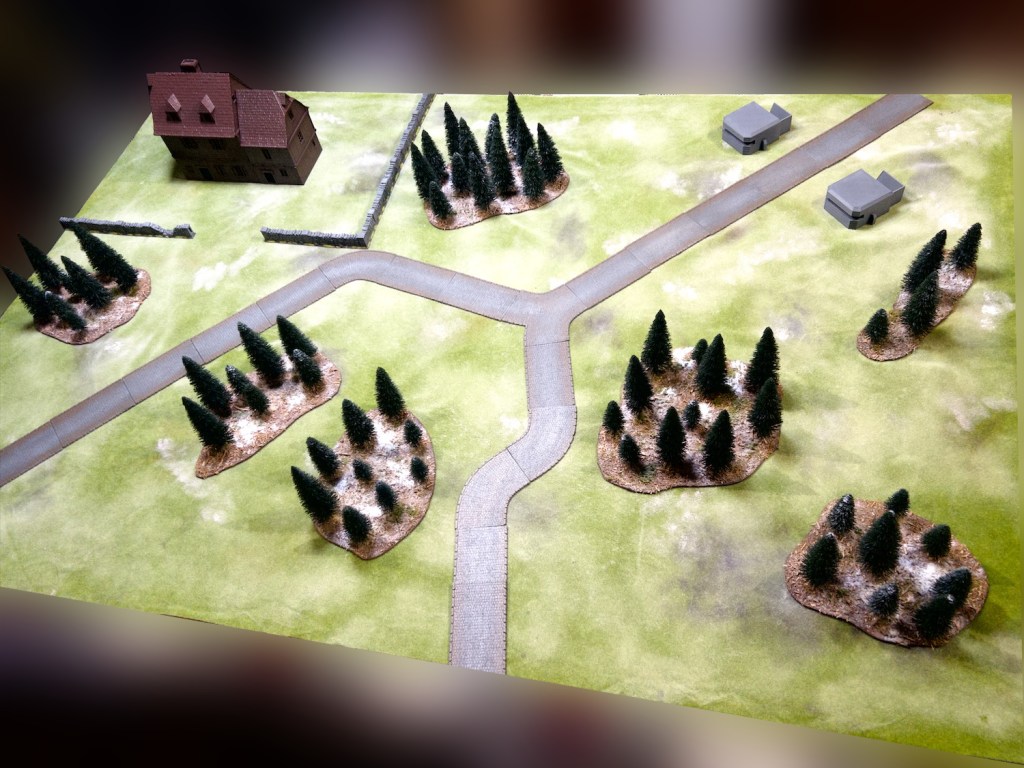
The trees make up most of the terrain I needed ready for this game as you can see from the layout I set up above. You get a sneak preview of the remainder of the terrain which is the large house in the left corner and the two small bunkers to the right.

You also get to see my attempts at repurposing my old Citadel grass mat, which has sat unused for years since I’ve move on to printed neoprene battlemats. It seemed a waste to not use it, so I decided to see if I could convert it for this cold setting. I hit it with patches of brown and white and then “frosted” it with a light pass of white spray paint to get that frozen grass look.

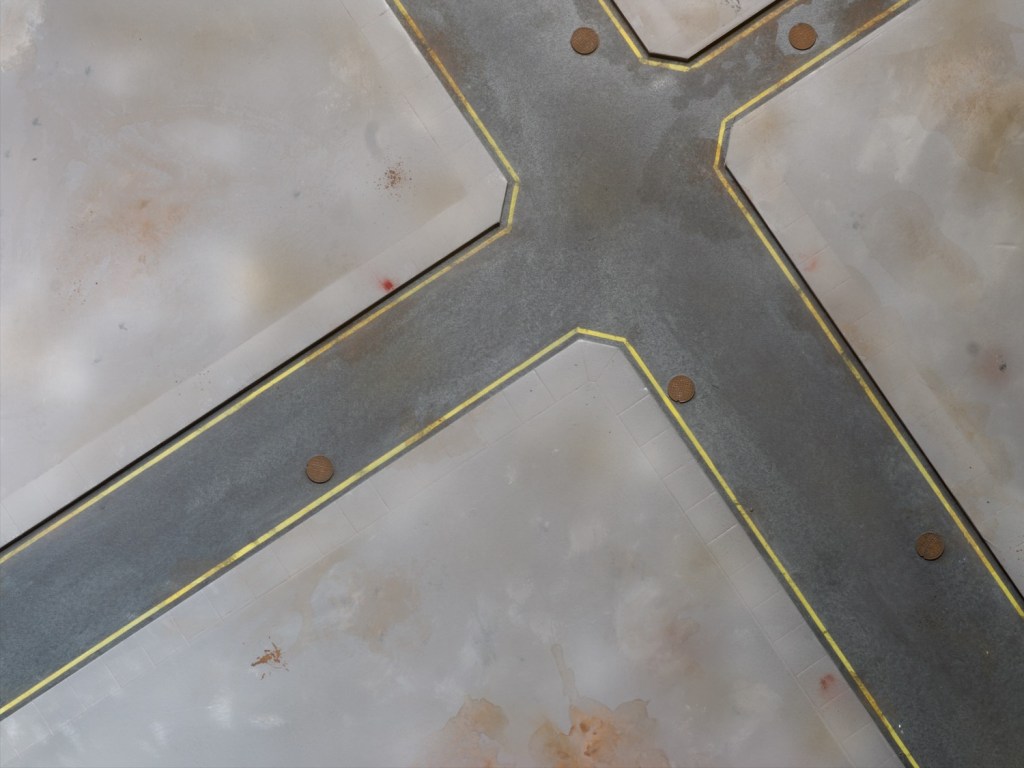
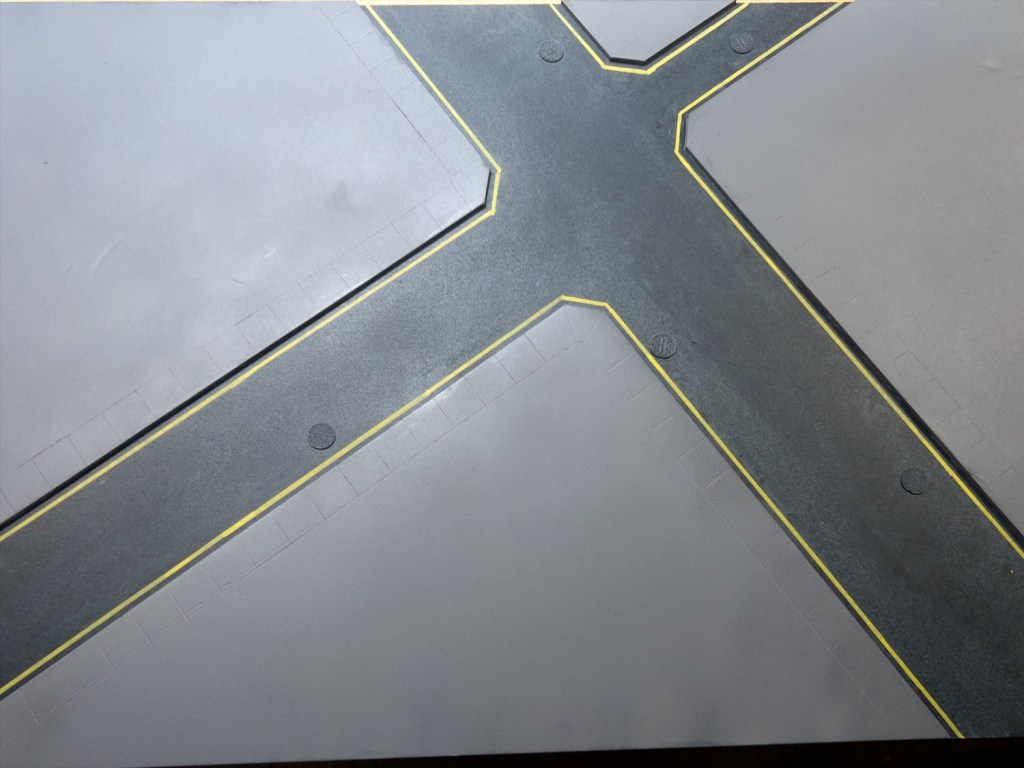
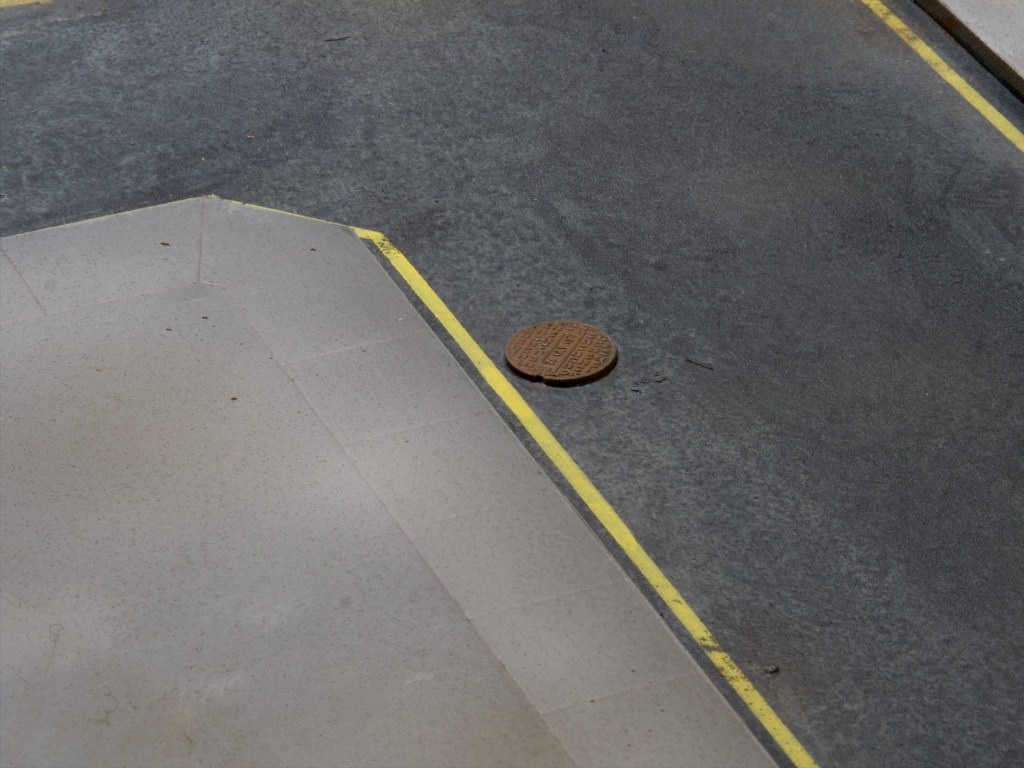
I wanted the table to have a frosty morning with some light snow look rather than a full on snow storm, hence the light use of snow flock on the forests and the light dusting of white on the mat. I’m hoping to communicate the cold through the mat and the tree stands only, allowing me to place terrain pieces I painted for my other settings over it and having them not look out of place. For example I’m planning on using the cobblestone road I painted for my Normandy games in this game as you can see above.

I hope you like the look of these, and I’ll be likely back onto my slower pace of posts as I head back to work next week!

Desert Ruins

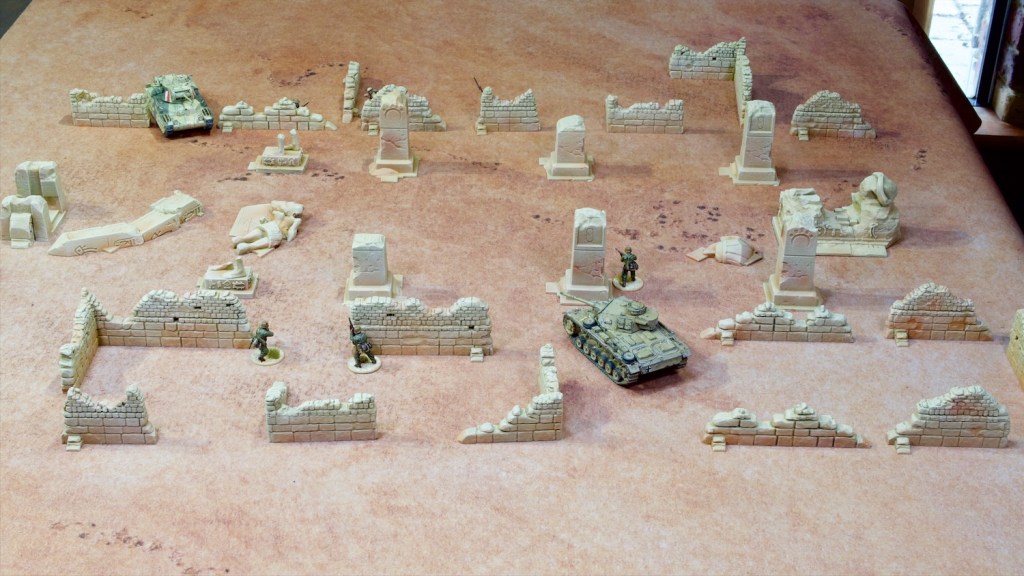
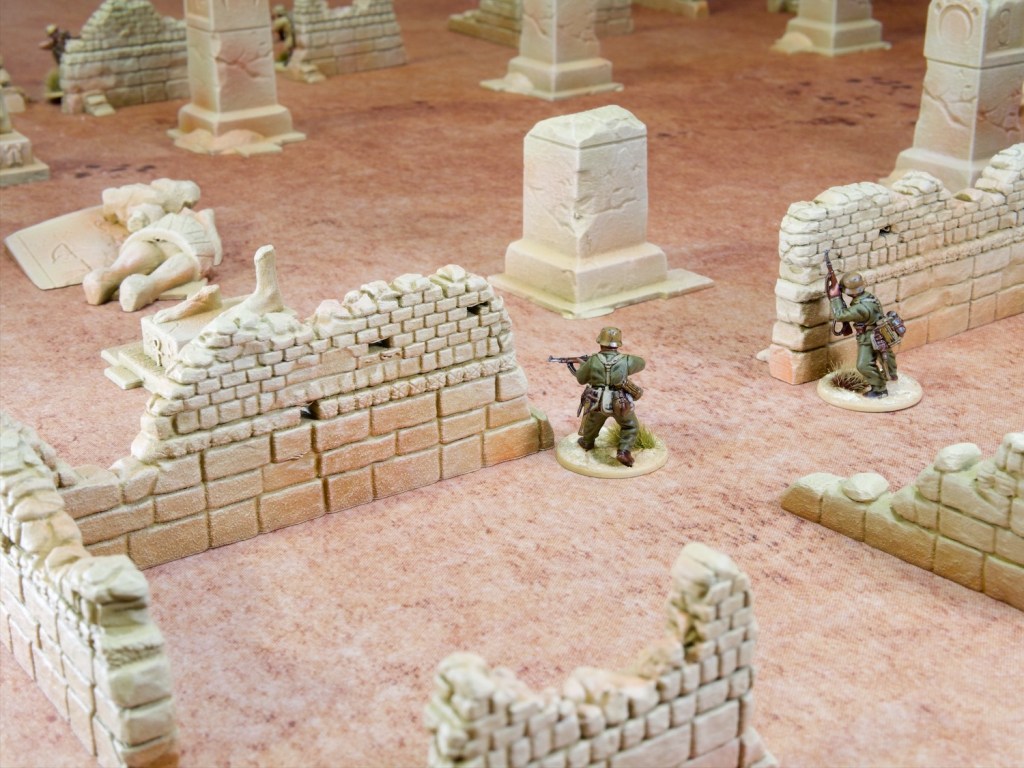
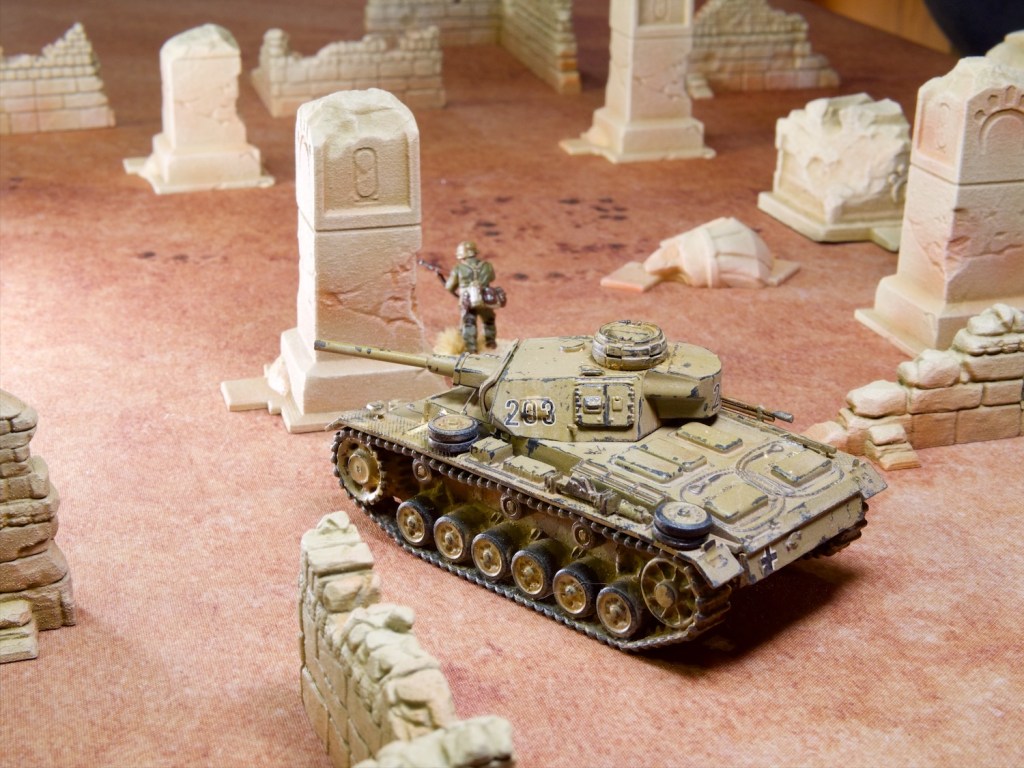
My 3D printer has been very busy these last two weeks, producing enough scatter terrain to cover a densely packed 3’x3′ area, or a more loosely covered 6’x4′ board. The theme: desert ruins, more specifically Egypt-like ruins.

The primary motivation for this effort has been the Silver Bayonet, I picked up the Egypt supplement a few weeks back and one of the North Star units for the game, and needed a nice set of terrain to play some of the missions. The good news is that I have a fair few other games that require desert terrain, such as Bolt Action for my North African forces, and Warhammer of course for my Tomb Kings.

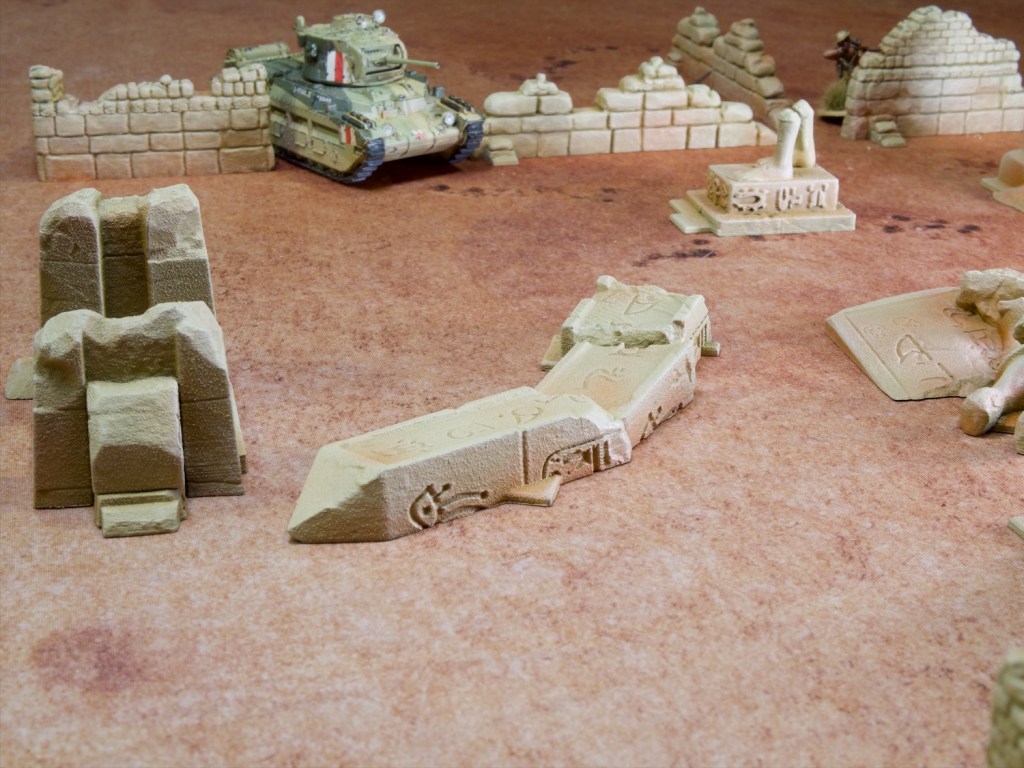
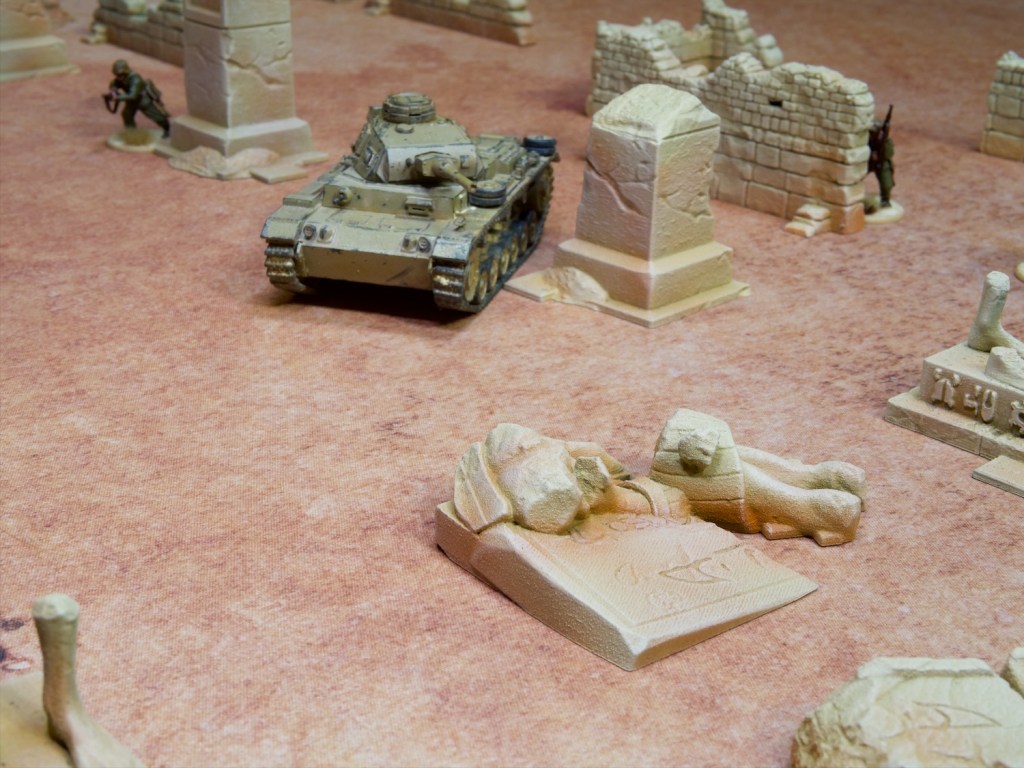
The models I printed were from two sets: the ruined walls are by The Lost Adventures Co., and the Egyptian statues/columns etc are by Txarli Factory. I printed the walls at 65% scale to make them a nice size for my historical miniatures, allowing them to peek over the lower sections of wall.

I undercoated all the pieces with an old can of Citadel Roughcoat which is a spraycan-based texture paint (and long out of production, I’d love to find a good replacement). This had the dual effect of hiding the print lines on the models, and adding some nice grit for that sandstone look.

Painting-wise these were pretty straightforward. I sprayed Vallejo Primer German Dark Yellow all over, followed by a top down spray of Vallejo Model Colour Dark Sand through the airbrush. I then drybrushed Vallejo Model Colour Dark Sand, followed by another drybrush of Vallejo Game Color Bonewhite. At this stage I popped the pieces onto my desert mat and realised they looked out of place as the mat has quite a bit of red to it. To remedy this, I added patches of Vallejo Skin Wash Ink using the airbrush, followed by another drybrush of Vallejo Game Color Bonewhite. I would probably have skipped the first Bonewhite drybrush if I’d known I’d be doing another, but sometimes you find things out and need to go again!

I’m really pleased with how these came out, the roughcoat really did a nice job of making the 3D prints more stonelike. The reddish tones also really tie the pieces to the game mat. Here’s a few more closeups showing off the different pieces:

A nice quick update after the longer last few posts. I do enjoy panting terrain as a nice break from more involved models. I’m currently painting up my Egypt campaign unit for Silver Bayonet (guess what nation!), and looking forward to playing some game with this new terrain. The Egypt 3D model set also comes with a sphinx and a pyramid so if I feel like filling out a bigger table I have what I need!

Beehive Hut

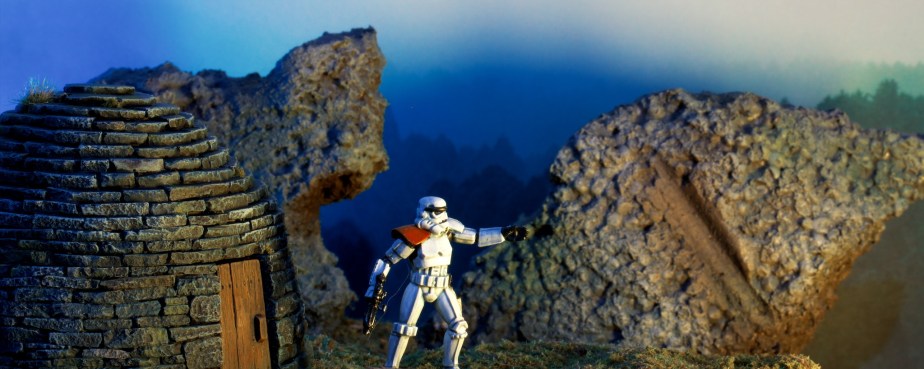
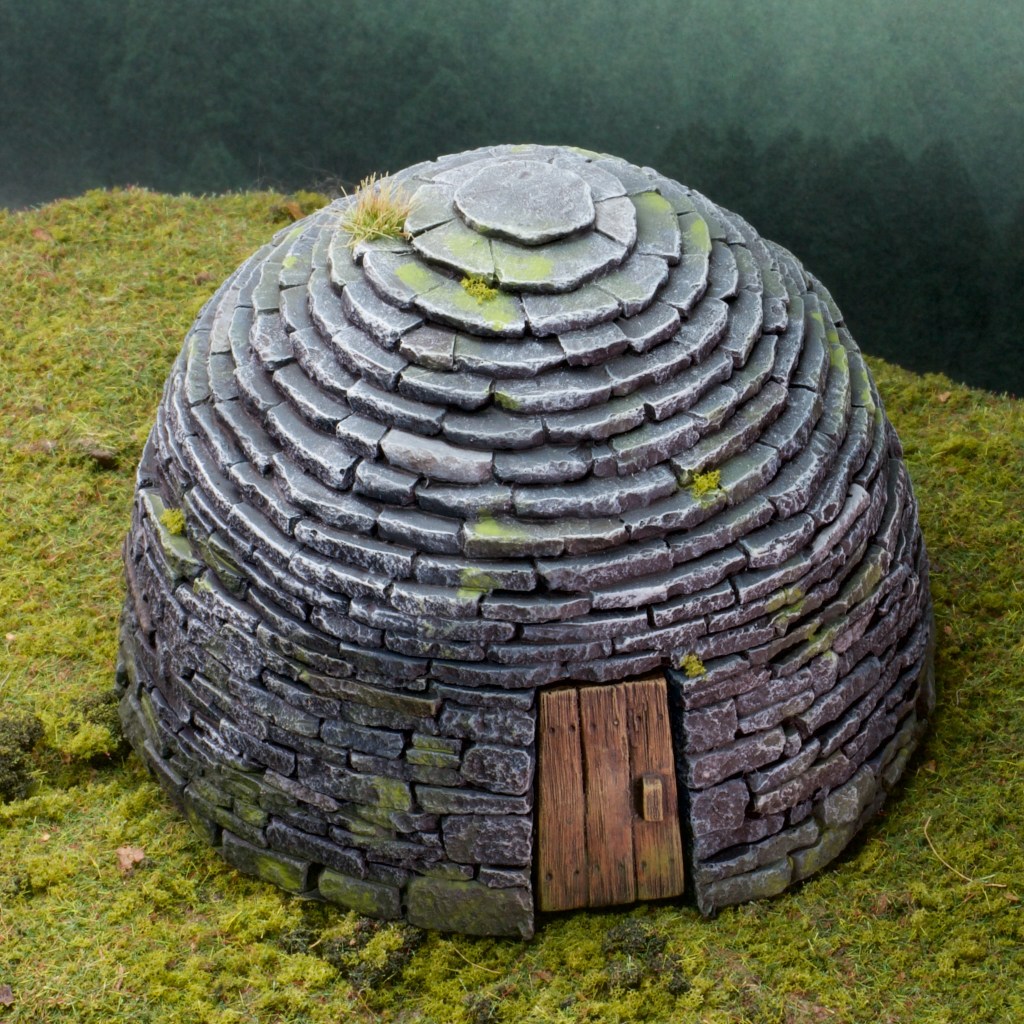
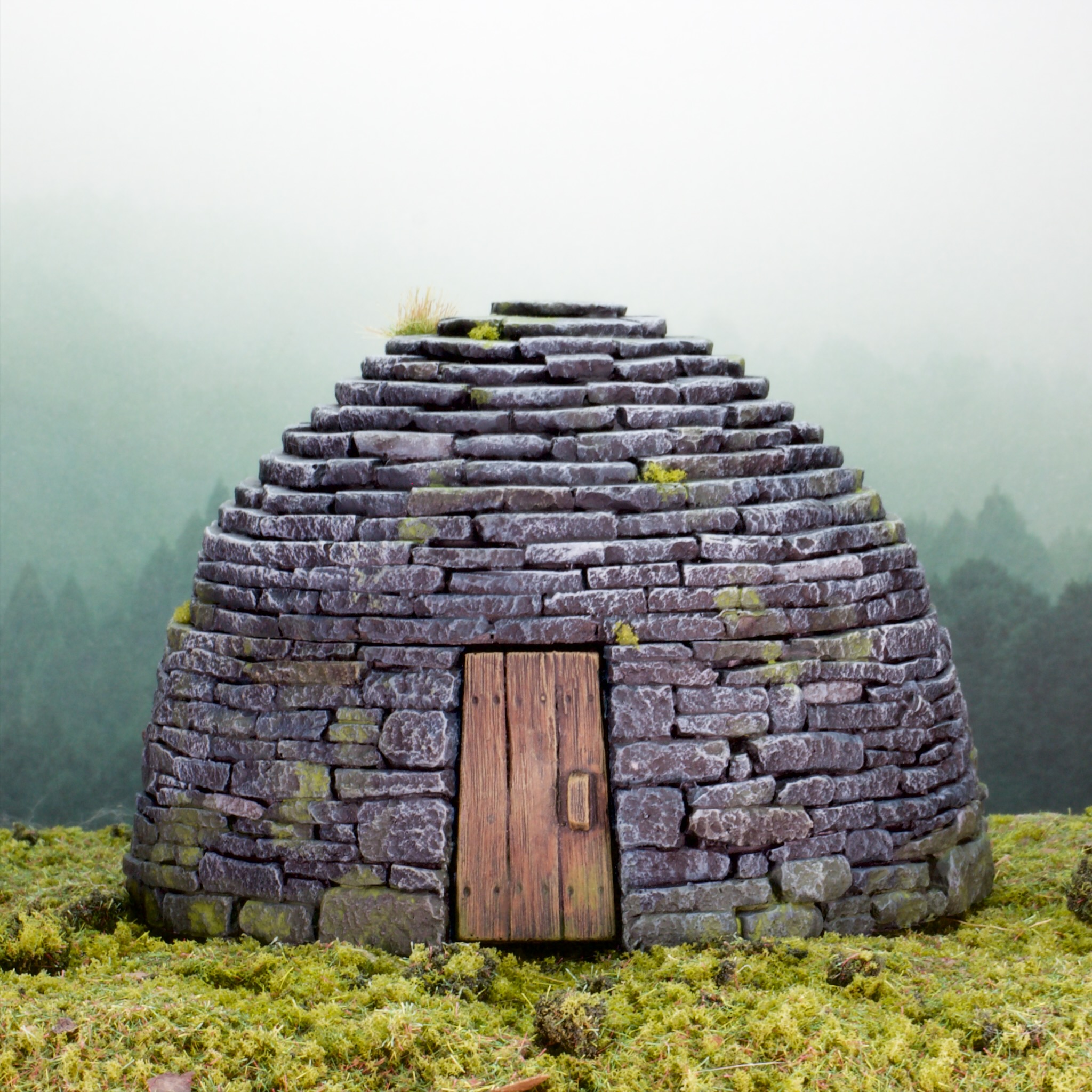
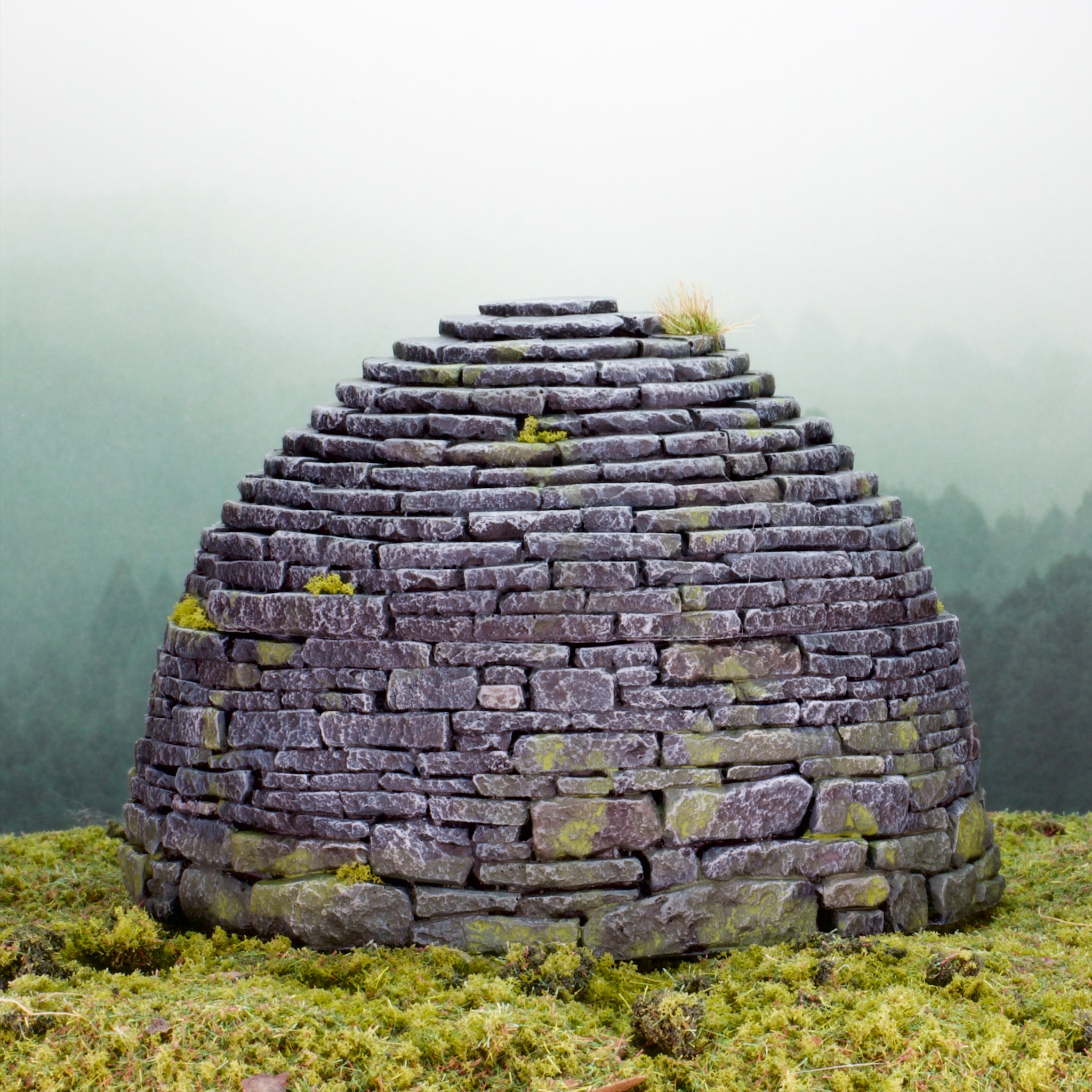
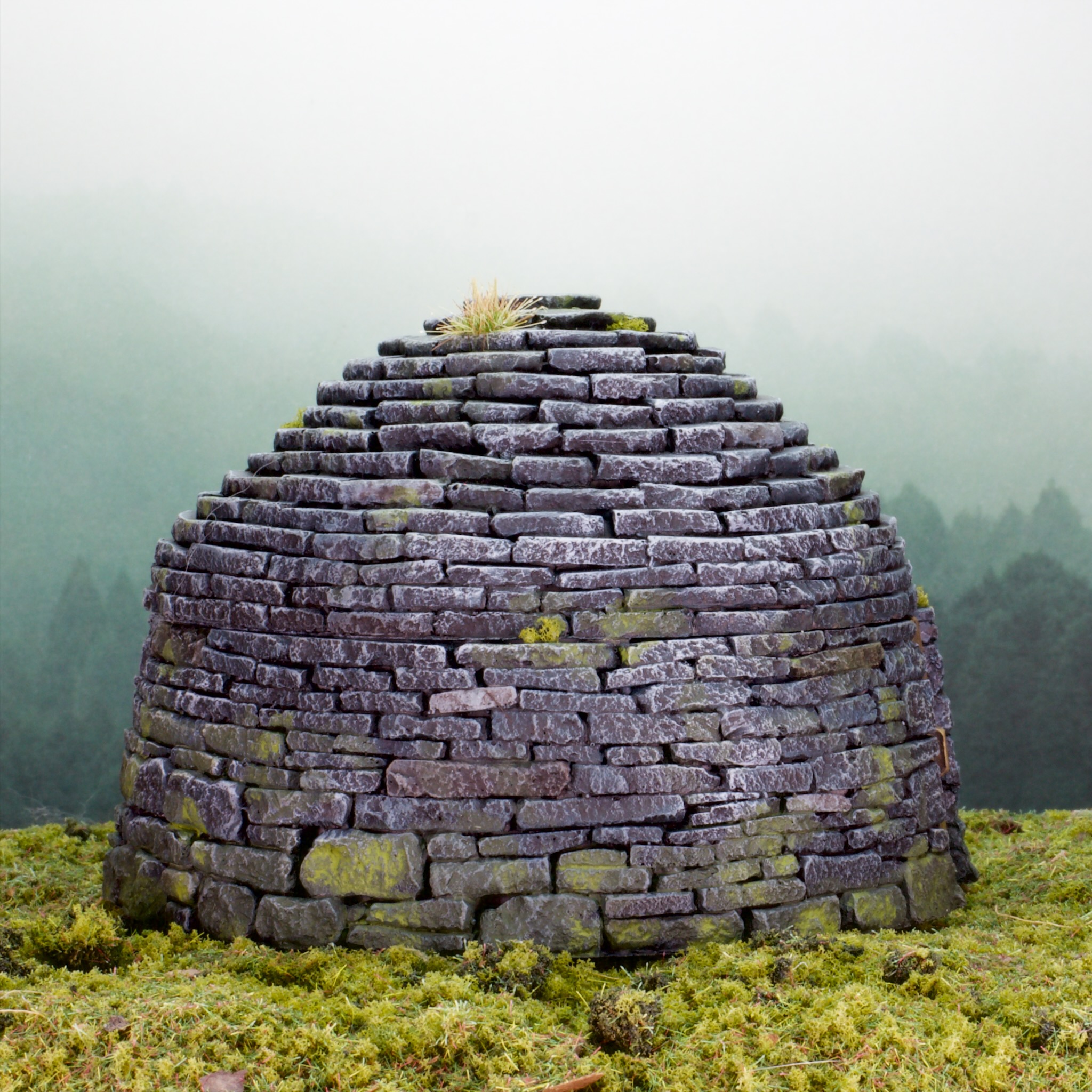
I’ve been off traveling for work so haven’t had much painting time in the last few weeks, but I felt like getting something done so turned to some terrain painting. I’ve had this beehive hut for a little while, it arrived alongside my barrow pieces from Fogou models and like everything I’ve gotten from there is a really cool model.

It was pretty fun and fast to paint, I followed my usual stone building paintjob, which is inspired by an old White Dwarf article.

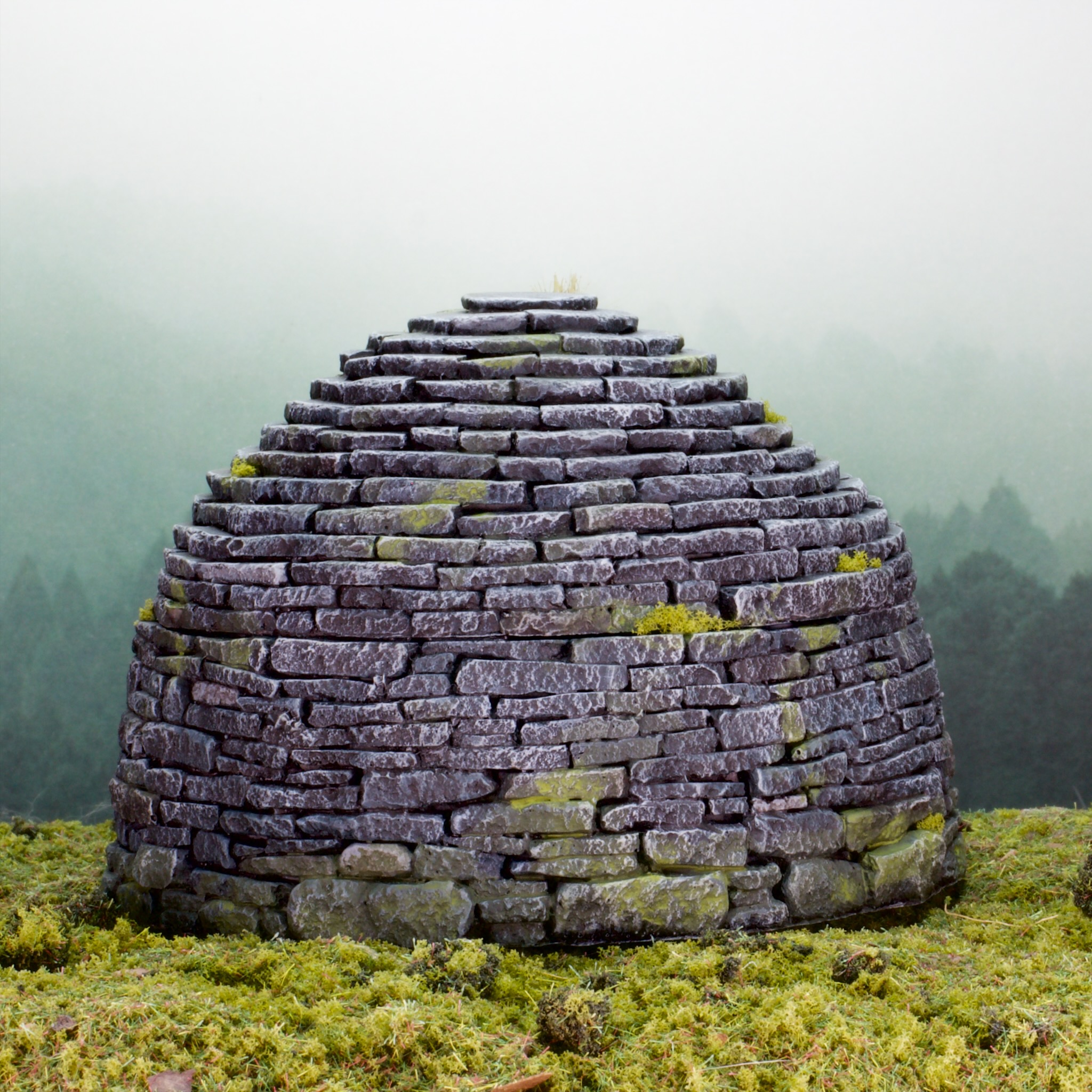
I generally start with a basecoat of Vallejo Codel Color Dark Sea Grey, followed by successive drybrushes of Dark Sea Grey mixed with more and more of a light grey (Vallejo Game Color Heavy Bluegrey in this case). I then picked out some random stones with the Heavy Bluegrey, and tinted some random other with Citadel Fyreslayer Flesh Contrast and Citadel Aggaroth Dunes to add a bit of variety to the stones.

I then apply my homemade terrain wash (50/25/25 black ink, green ink, red ink, with water, flow aid, matte medium to taste) all over. The flow aid could be dish soap, I find that bubbles up a bit when I mix the wash up and apply it so I tend to avoid it, but it does the same thing at the end of the day! After that dries I hit the building with another drybrush of the light grey, followed by a more patchy drybrush of an off-white (AK Ivory White here). That finishes up the stone and I move on to the mossy areas. Those are done with enamel washes: AK Slimy Grime Dark and AK Slimy Grime Light. I generally start with the dark grime and apply it quite liberally to the lower areas, and in smaller patches to higher areas. The light grime is then plopped on top of areas of dark grime while those are still wet to get them to bleed into each other.

The painting stage is then followed by some foam moss to get a 3D effect in there and I decided to add a grass tuft to add to the overgrown look.

I have a few more pieces from Fogou I need to paint up and I’m sure they’ll be this fun to paint as well. The details on these models are really nice and they take paint very well.

In other news I got a notification from WordPress that the blog is now 4 years old, which is a nice little achievement. I started the blog as I missed the hobby blogging community, a lot of that content having moved to social media over the years (understandably, for those that want to try to make a living out of this social media is where the large audiences are). I’d enjoyed reading hobby blogs back in the early/mid 2000s, and gotten a lot out of them as the blog format in my opinion is very well suited for teaching. Funnily enough making this blog has led me to discover some phenomenal blogs which has been fantastic. Here’s to many more years!

The Geistenmunden Hills

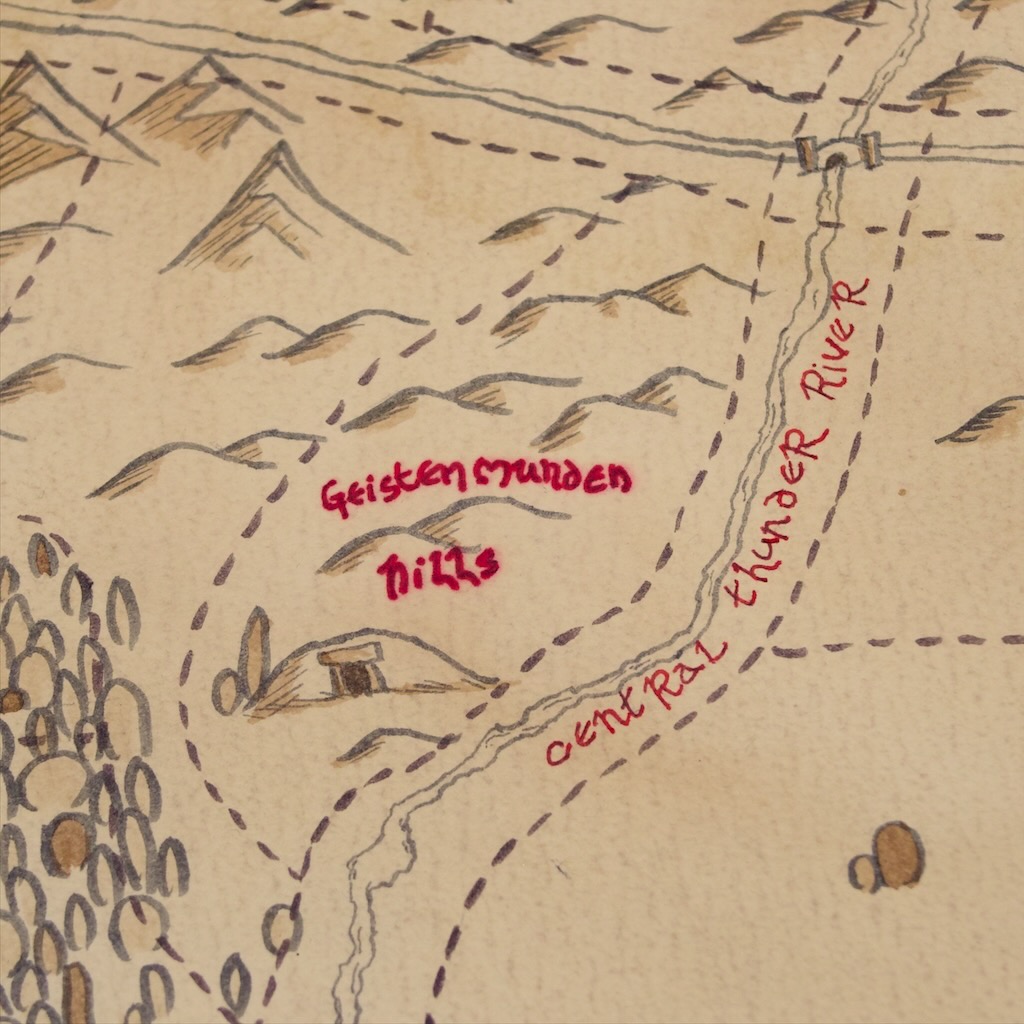
It’s been a fair while between posts, over a month in fact! Over this period I’ve been on holidays and busy with work so haven’t had much time to get things painted, but I’ve still been chipping away in the background. Here’s something I’ve been working on for a little while: a set of terrain for the Geistenmunden Hills area of the Border Princes campaign map.

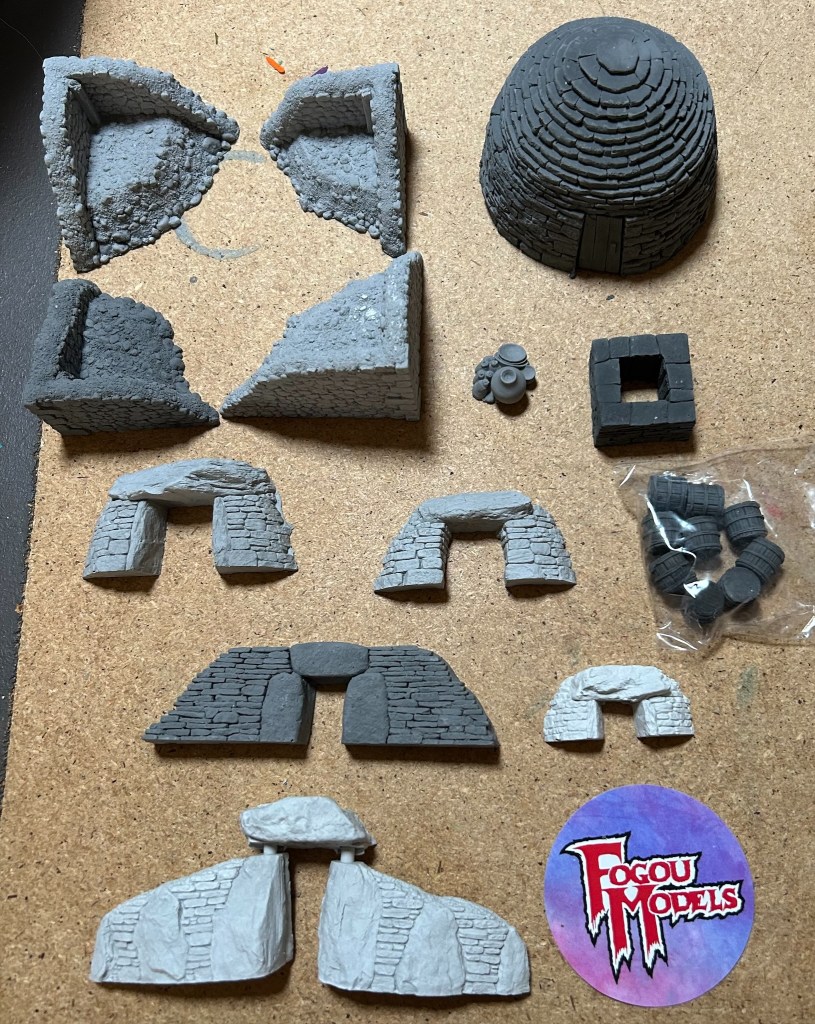
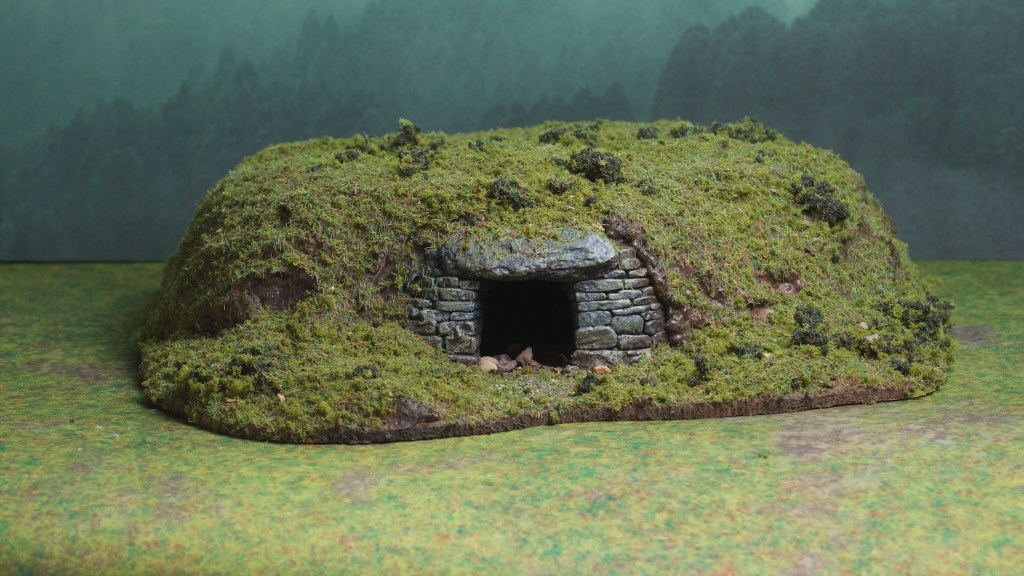
As you can see from the illustration, this is going to require some barrows! Luckily for me back over the Christmas break I’d ordered some terrain from https://www.fogoumodels.co.uk/ including a set of resin barrow entrances (well not so lucky, I ordered these for this very purpose!).

There are some other bits and bobs there that I’ll get to painting at some stage. Overall the quality of these models is excellent, the stone textures are really nice. I’d been waiting for an excuse to order from them for a while, and this was it!

Entrances are all well and good, but they need some burial mounds attached to them, and that’s what I busied myself at next. I took some photos of the process so I thought I’d make this post a bit of a tutorial.

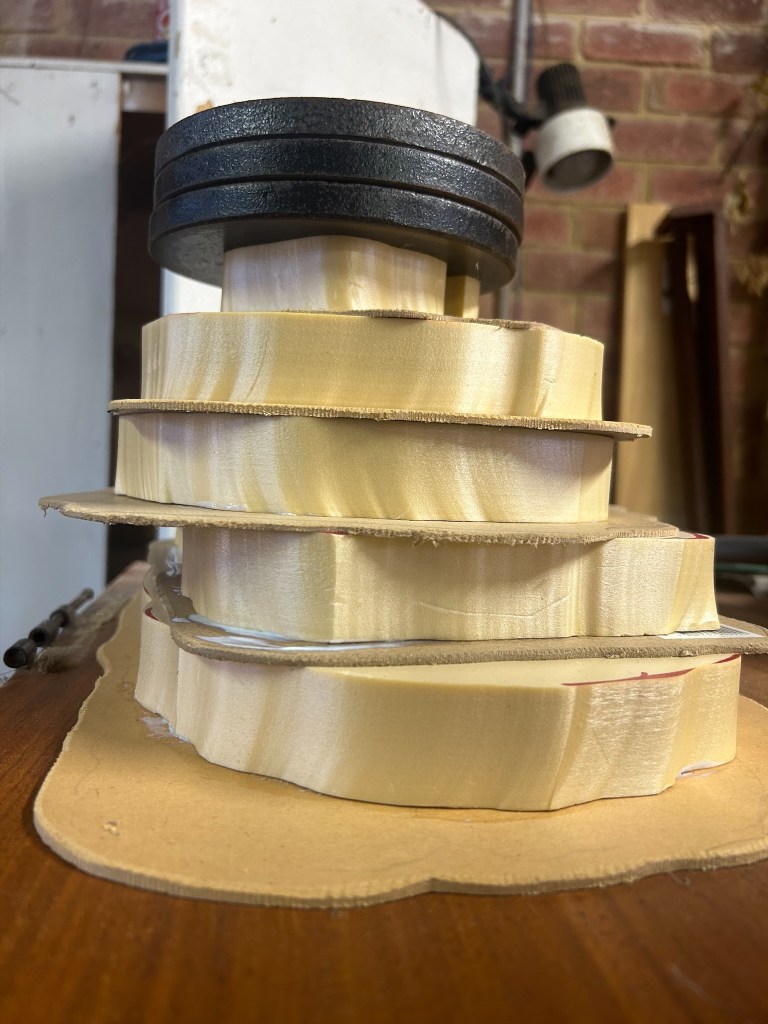
I started by cutting some rough shapes out of MDF for the bases and matching smaller shapes out of insulation foam to make the main shape of the hills. I also cut a notch out of each of the hills to make the tunnels behind the entrances. You can see said notch in the smallest hill at the top of the pile. I then covered the undersides of my foam shapes with PVA glue and glued them down, and weighed them down with some small weights.

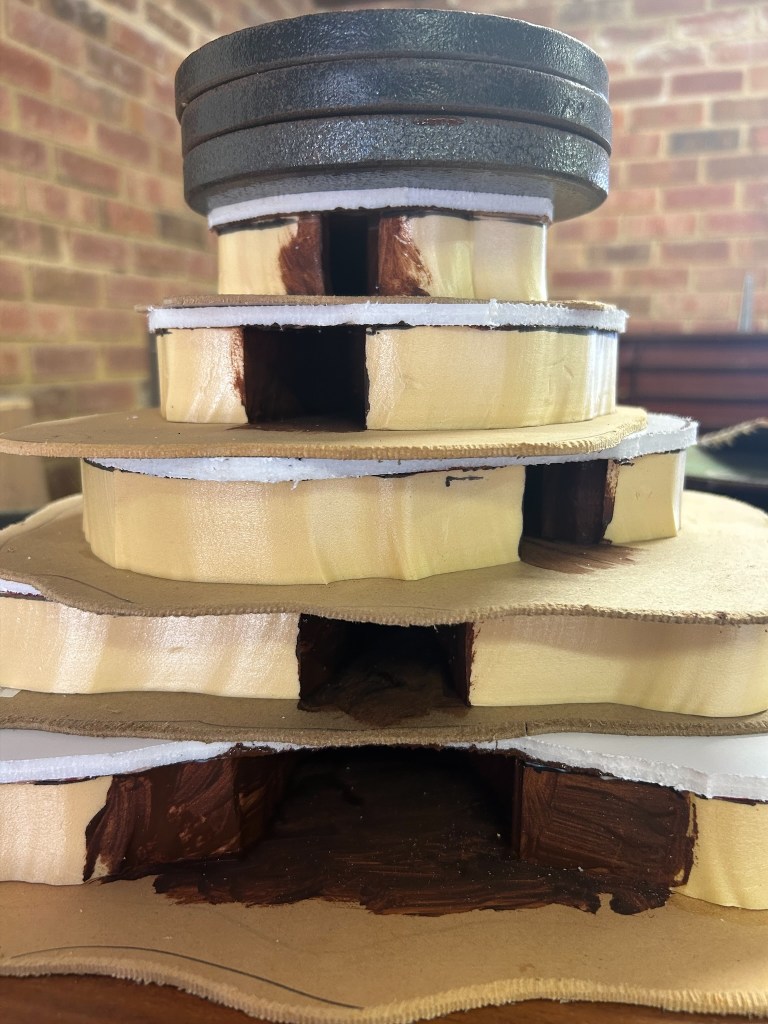
Next step was to put a roof on my hills. For this I used foamcore cut to match the hills. I also glued this down with PVA glue, but before I did this I painted my “tunnels” with some dark brown paint as I wasn’t going to be able to get to these once the entrances were glued on.

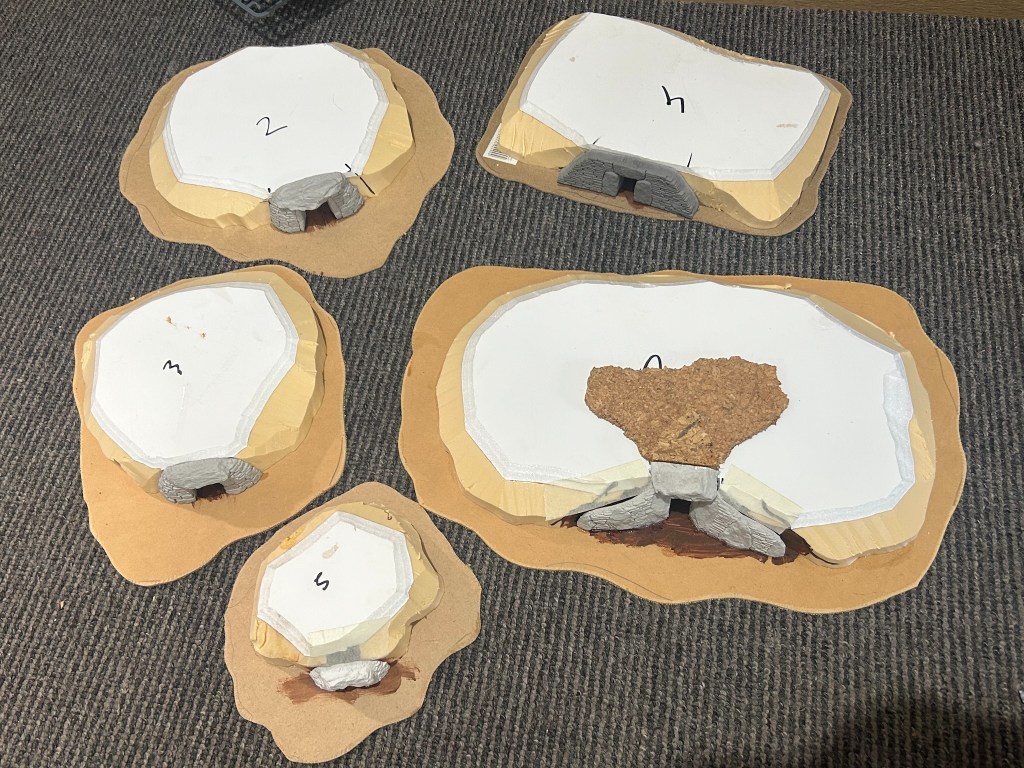
Once the glue was dry (read a few months later!) I carved my hills using a snap blade/retractable blade knife, with a special focus on making sure the entrances lined up neatly with my hills. For the big hill the entrance was taller than my foam assembly so I added some cork pieces to create a gradient to match the entrance. I used masking tape to patch any gaps, and glued the entrances down to the MDF using super glue (watch the foam doing this, super glue melts it!).

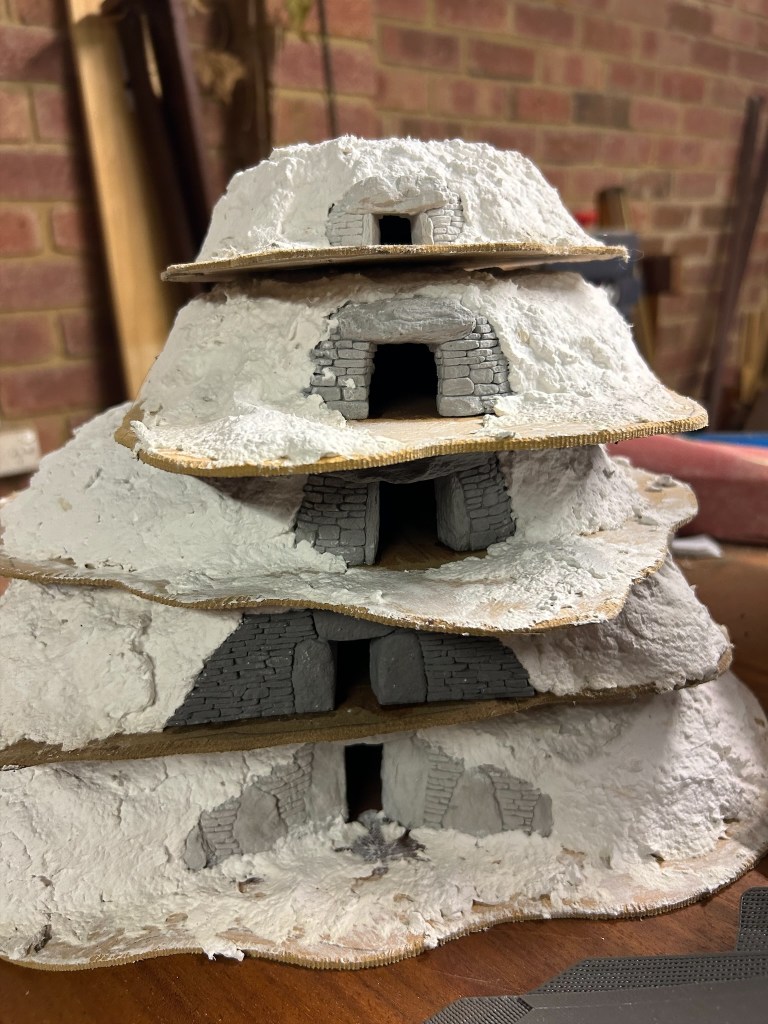
Following on from this I used Sculptamold (plaster with paper fiber mixed in) to cover the foam forms and blending in the entrances, taking care not to cover them up. This added some variation to the shapes and smoothed everything down, making them look much more like hills.

That’s it for the build side of things, now onto painting!

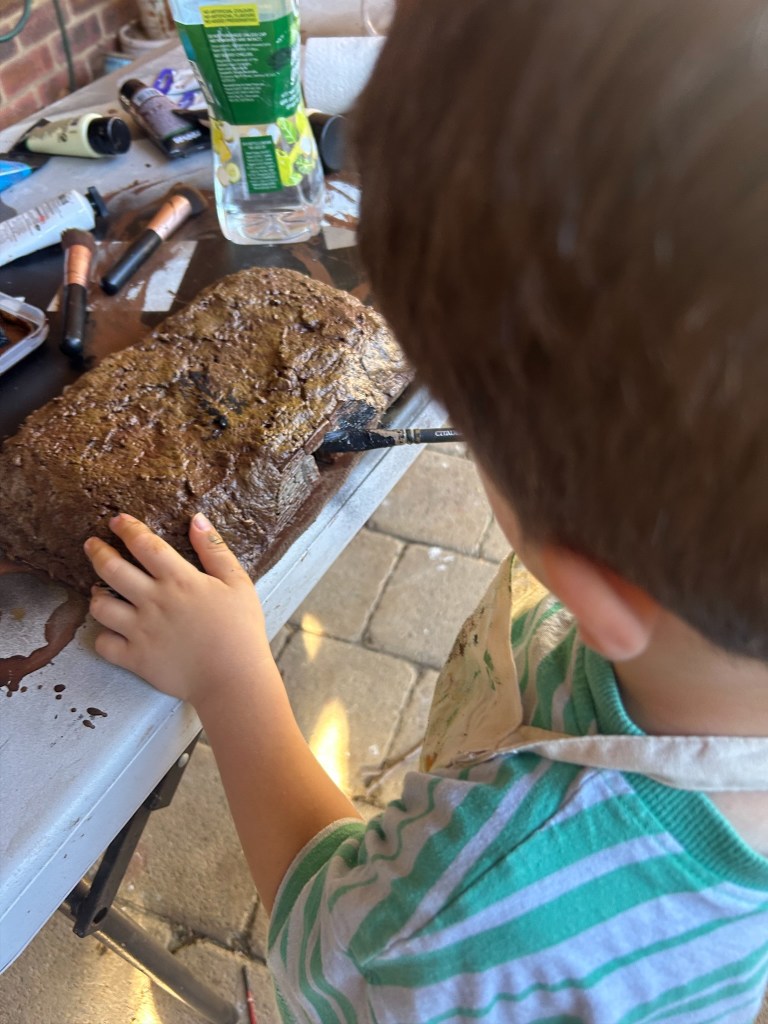
I don’t really have photos of the painting process apart from this one. I’m finding terrain has been a good fun way to get my son to join into the hobby side of things. He’s 3 and miniatures are a bit too small, but he’s fine getting some paint down on larger objects (including himself)!
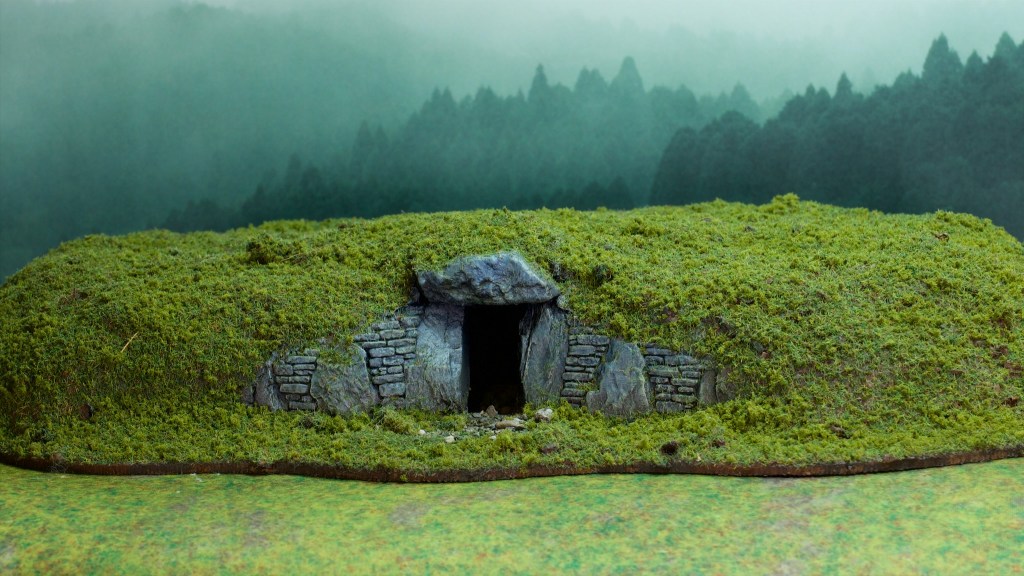
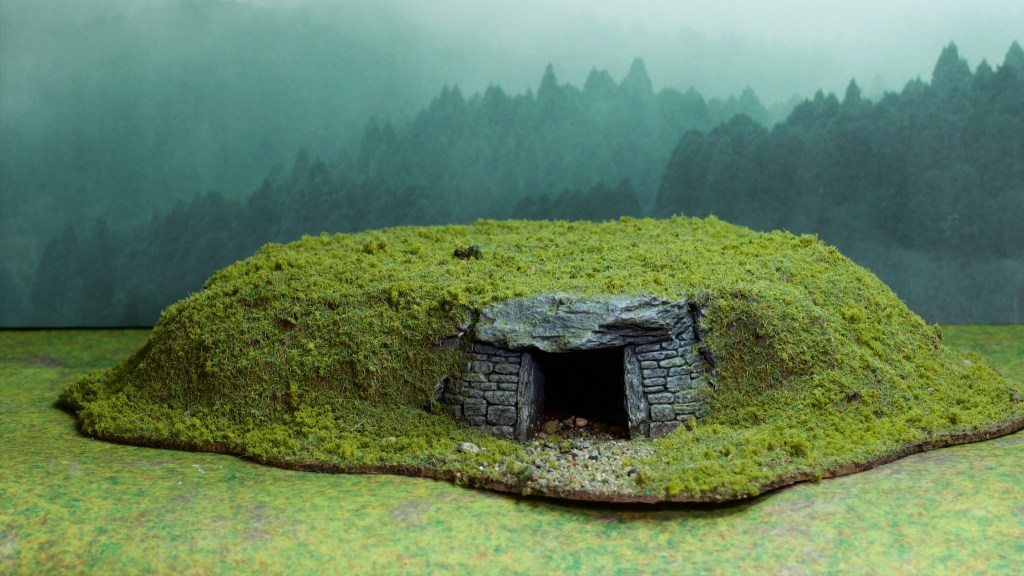
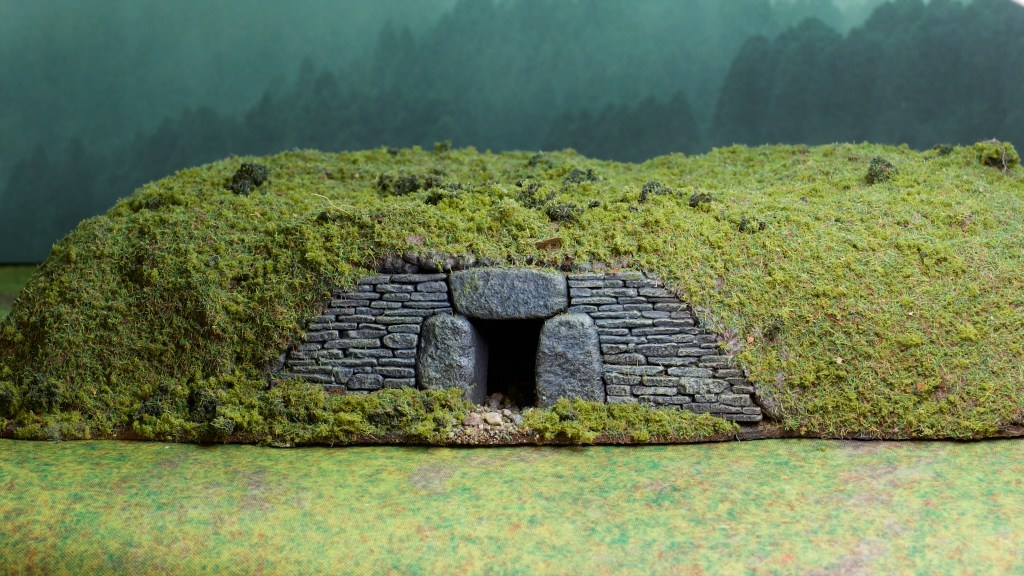
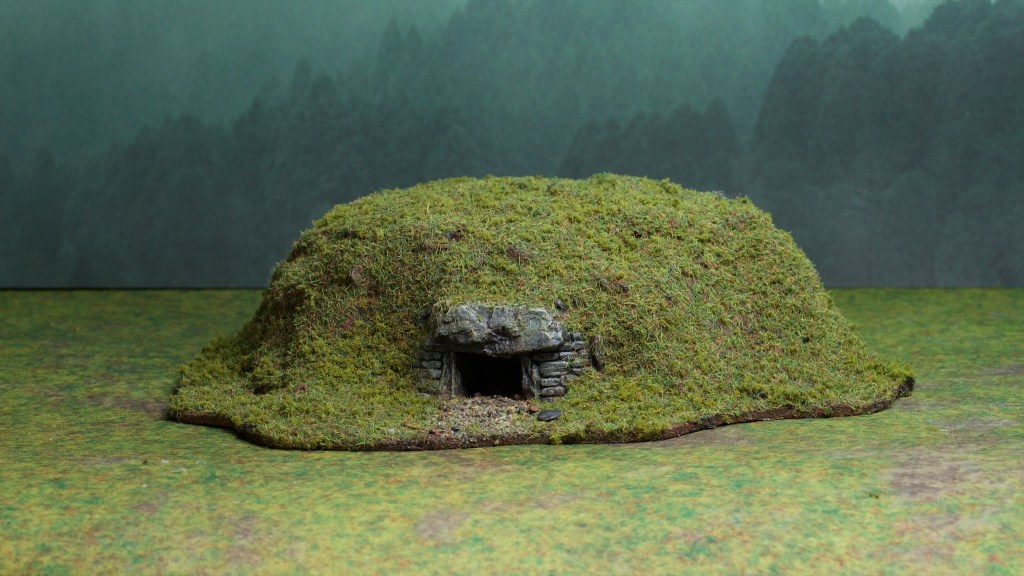
Once the base colours were down, I gave the entrances a few drybrushes of greys and some green and brown washes to add a bit of colour in there. Once that was done I covered them using the flock mix I’ve been playing with for a while, a mix of Woodland Scenics foams and GW static grass.

Here are the finished barrows:

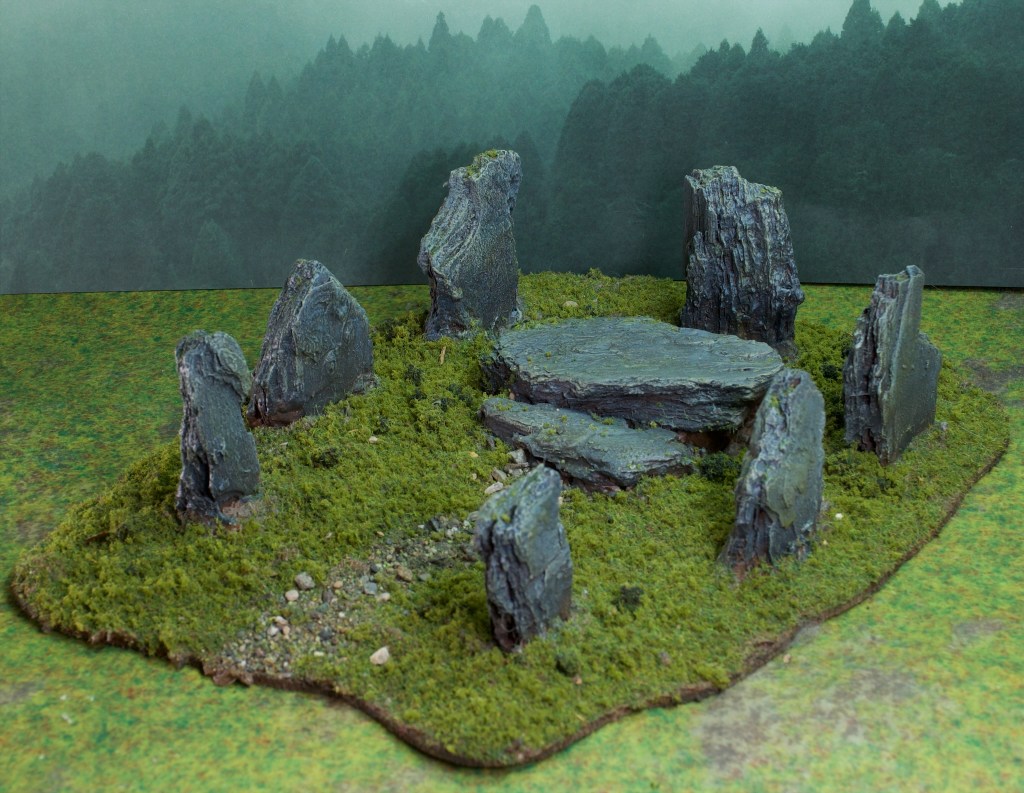
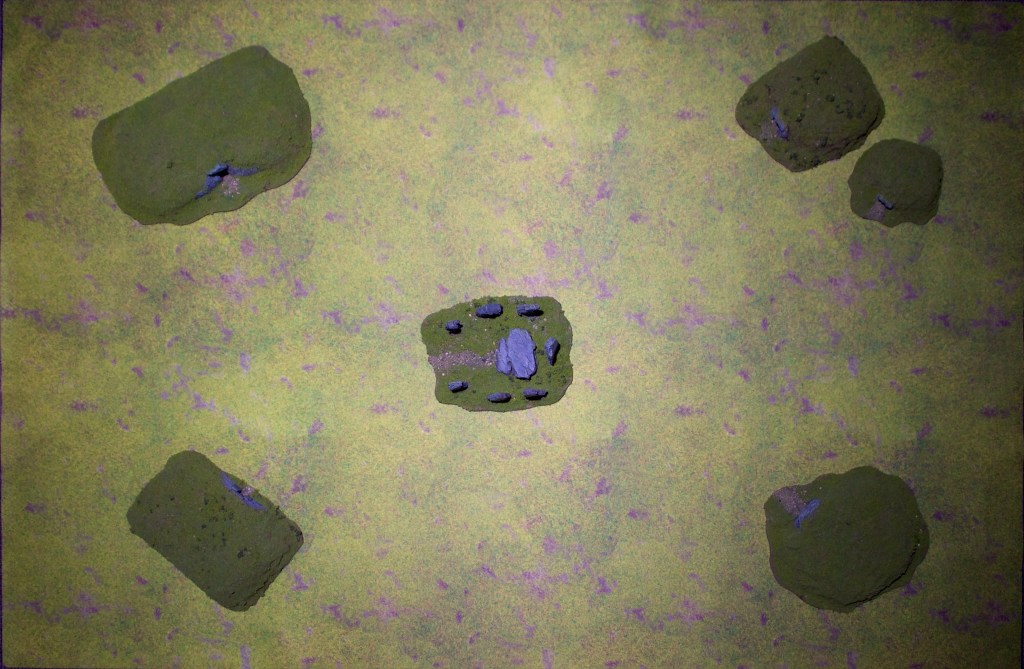
The Geistmunden Hills scenario calls for a piece of terrain to sit in the center of the board, and they suggest amongst other things a stone circle. This appealed to me, and I used some pine bark I had lying around to make an altar of sorts surrounded by standing stones. I painted these to match the stone of the barrows.

Overall here’s how these all fit on a 6ft x 4ft board:

These were lots of fun to put together, and I’m excited to use them in games. The motivation for these was this Warhammer campaign, but I can easily see using these for historicals or Middle-Earth games.

Until next time!
The Warrens

It’s been a little while between updates, work has been rather busy and painting time has suffered as a result, but I’ve still been busy in the background! Quite a few models started over the last month, and unfortunately not many finished! Hopefully they will grace these pages soon, but for now here’s something I started this weekend and finished up early this week.

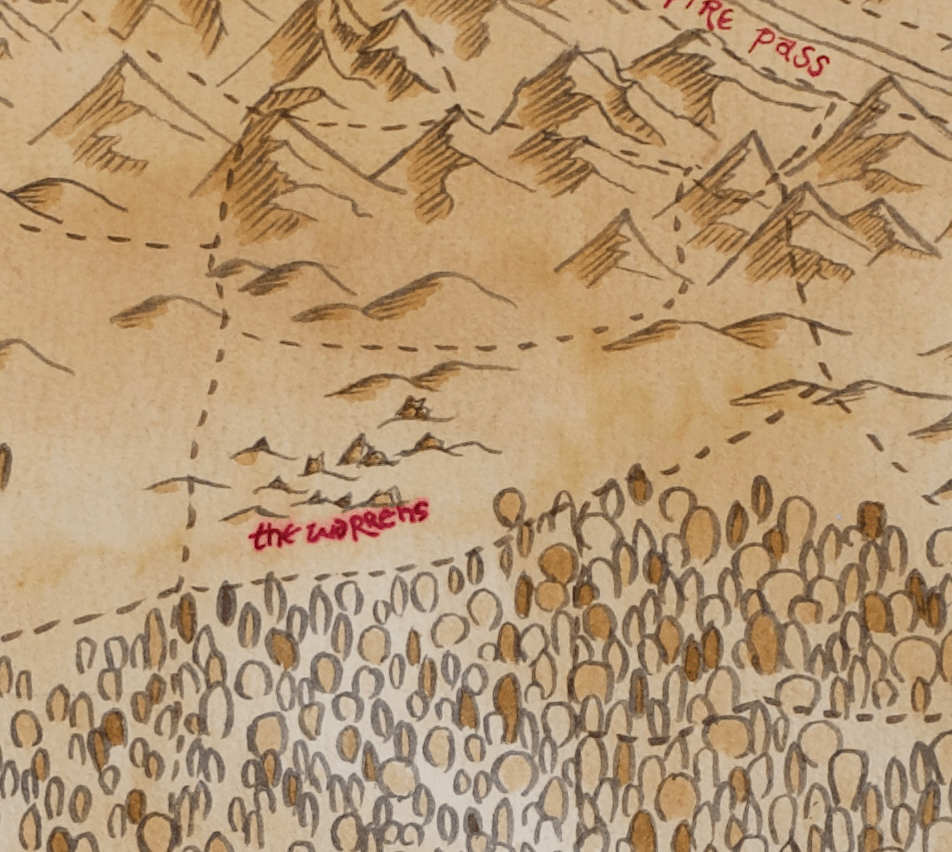
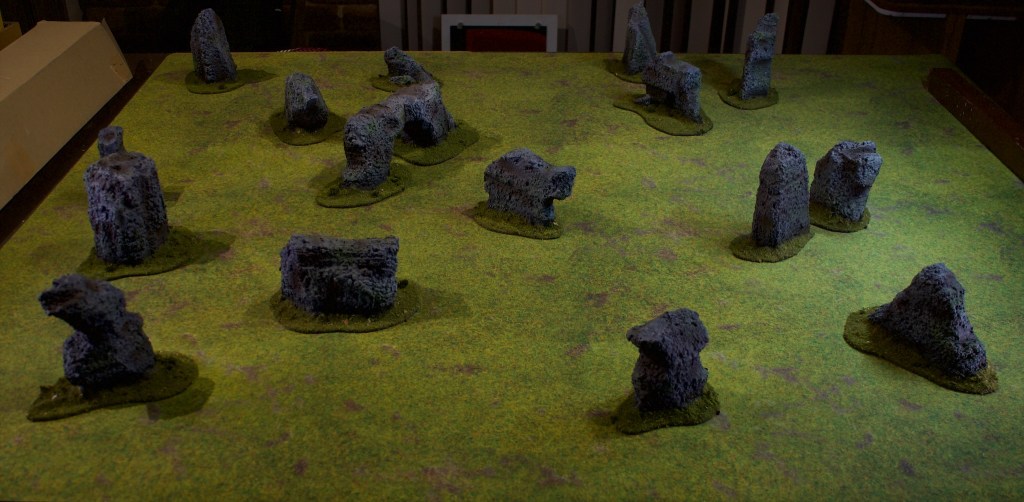
If you remember the map I drew for the Border Princes campaign, you might remember an area called “The Warrens”, that had a scattering of tall stones pictured in the area. This area has a special scenario associated with it (aptly named Rock Labyrinth!) that requires the board to be covered in rocky outcrops. This makes movement very difficult for ranked up regiments as you might imagine, and the scenario allows normally ranked units to fight in skirmish formation to ease their passage through the board.

The scenario consequently requires a great many rocks to be placed on the battlefield, many more than I had access to in my terrain collection so I decided to make up a batch for it.

These rocks are carved blocks of polystyrene, roughed up with a large wire brush and covered in homemade texture paint (mix of PVA glue, paint, sand, and bicarb soda). This texturing stage I did with my 3-year-old son who greatly enjoyed himself (He somehow got some on his back despite my best efforts to cover him with an apron!).

The goal was to have enough of these to play the Rock Labyrinth scenario on a 4ft by 4ft board, appropriate for the game size we’ll be playing during the campaign. The photo above shows them on a board of that size. It looks pretty cramped which is just right, mission accomplished there I’d say!

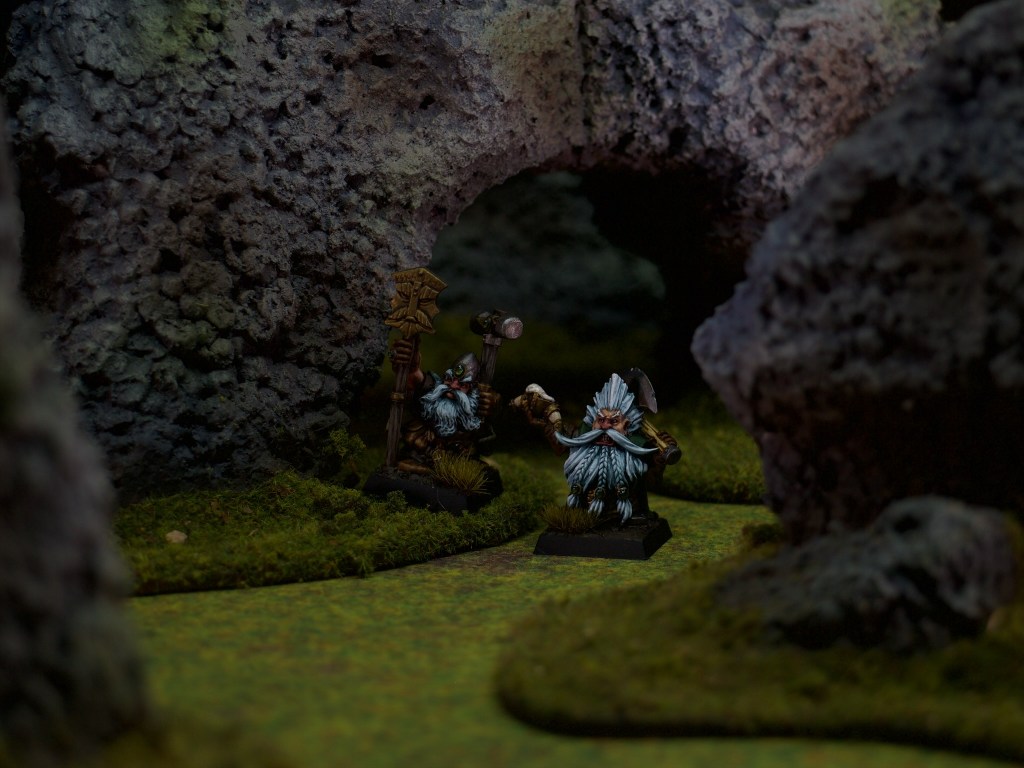
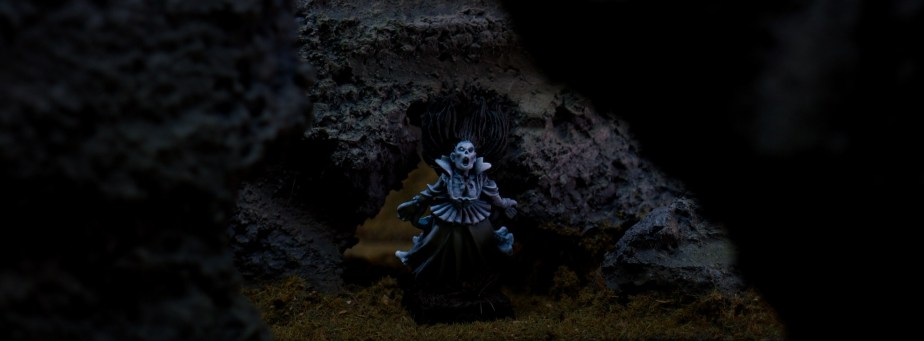
Turns out these rocks make for some fun backdrops for miniature photography so I couldn’t resist posing some models amongst them.

Here’s some proper dwarven terrain!

These were really fun to make, if a bit messy (I had the vacuum running while I was carving and still got polystyrene balls everywhere!). I look forward to playing some games using them, and I’m sure you’ll see them in the background of miniature shots in the near future.

The Chapel and Watchtower

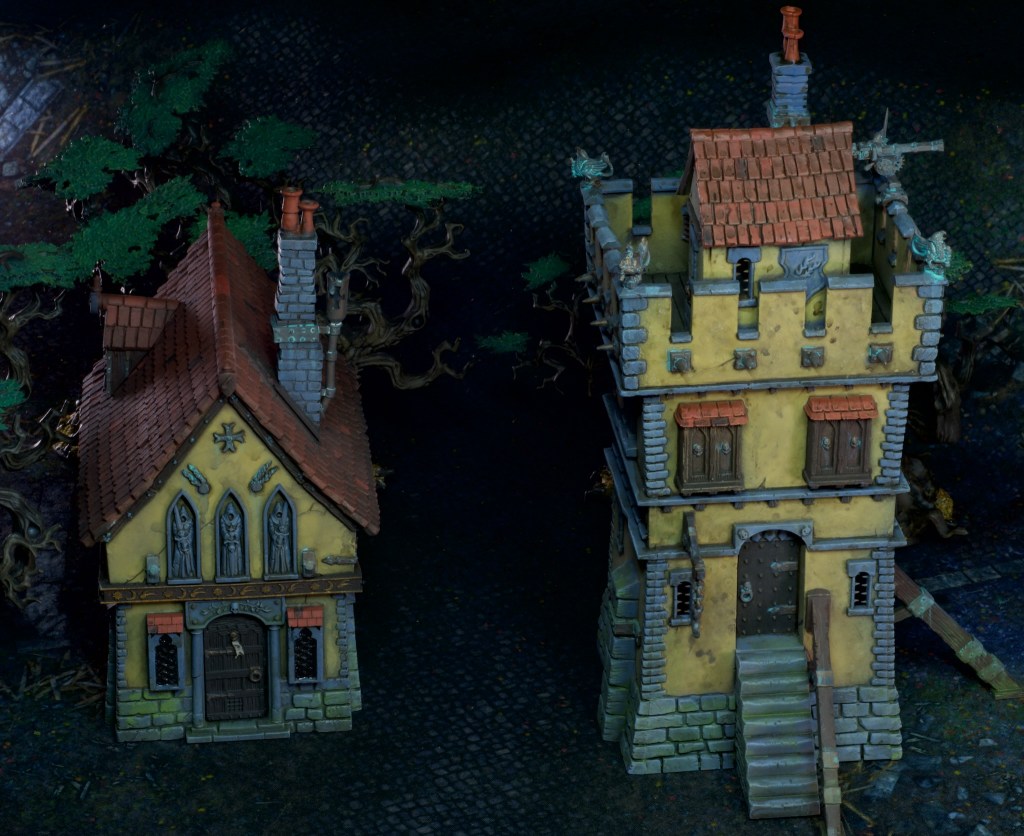
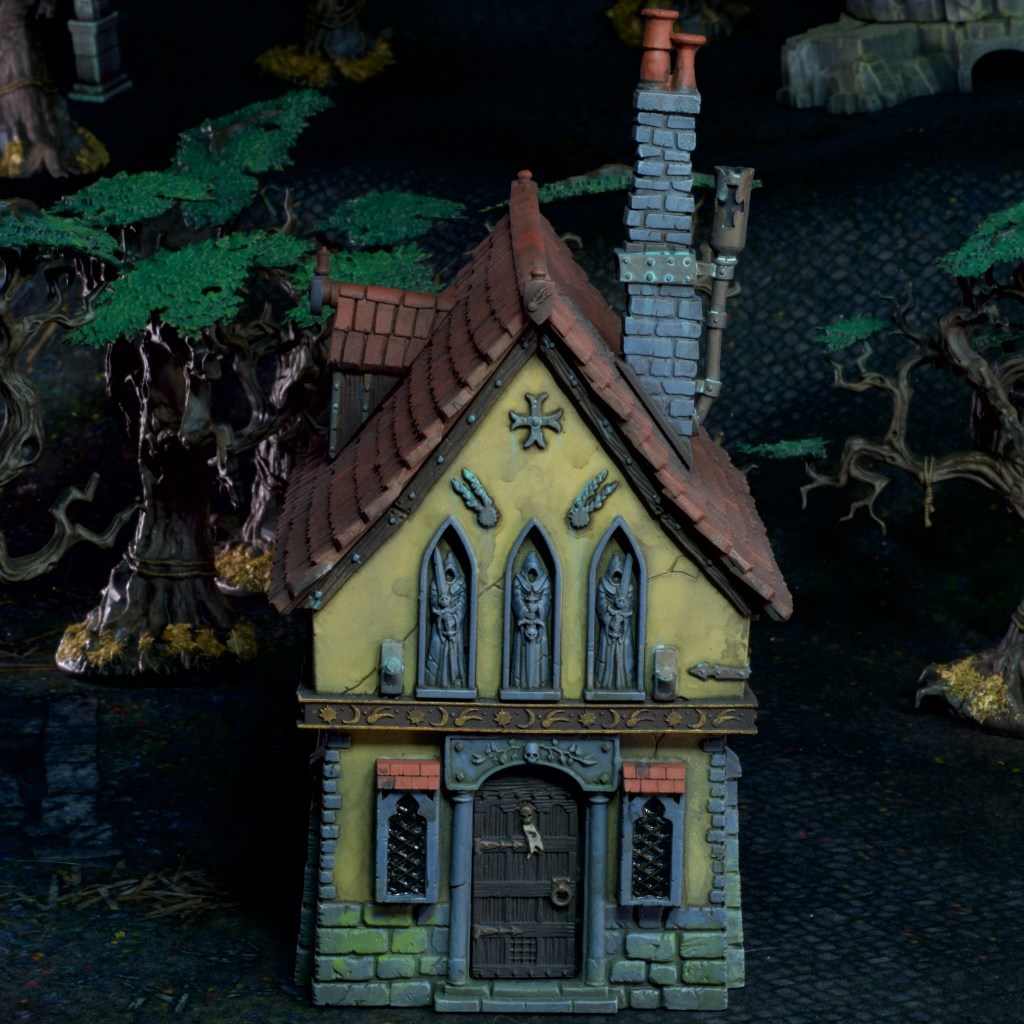
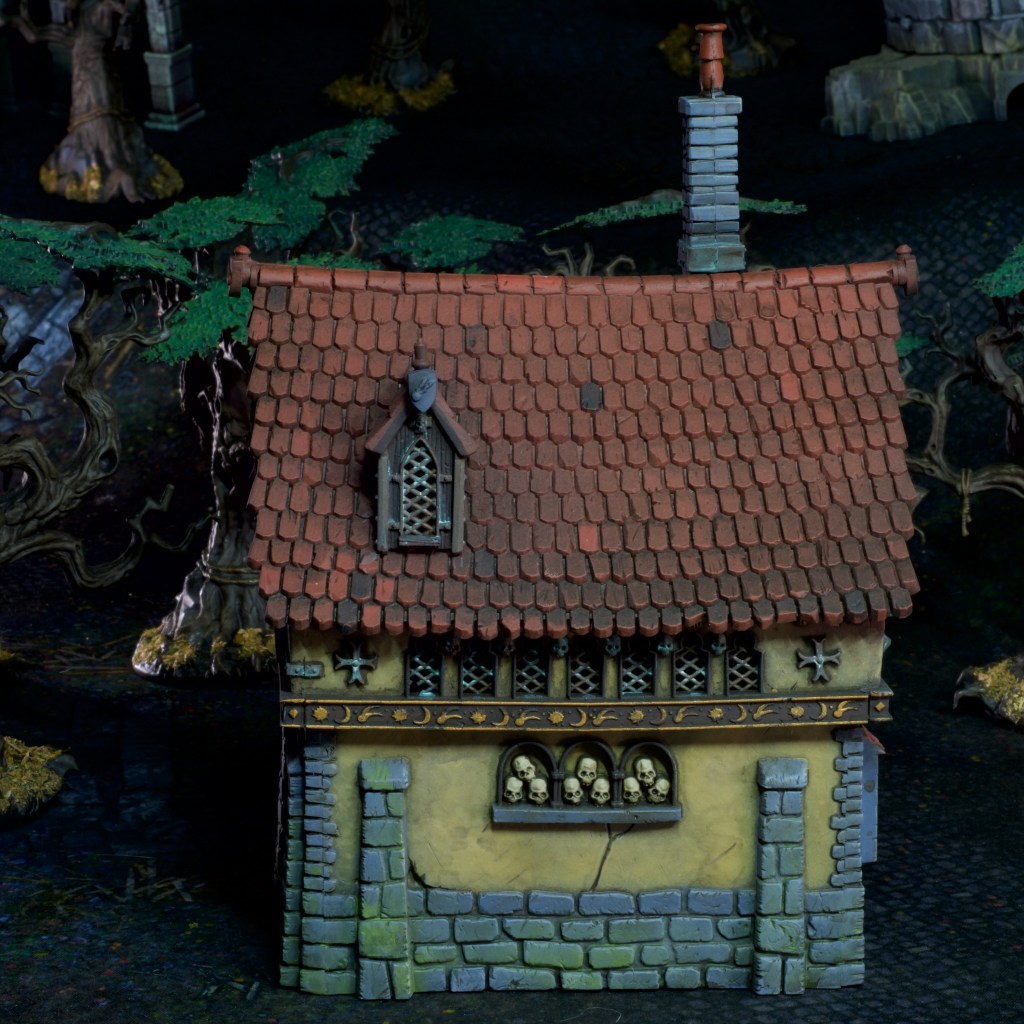
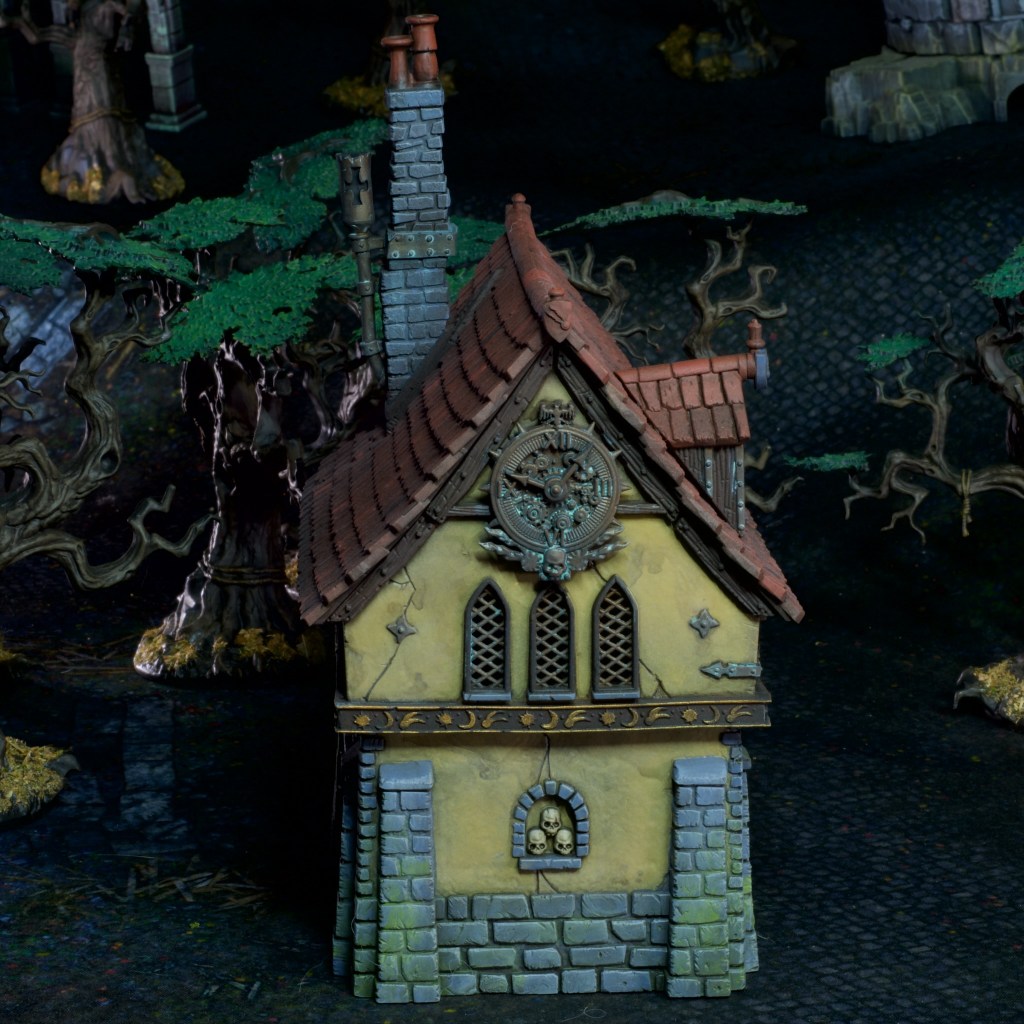
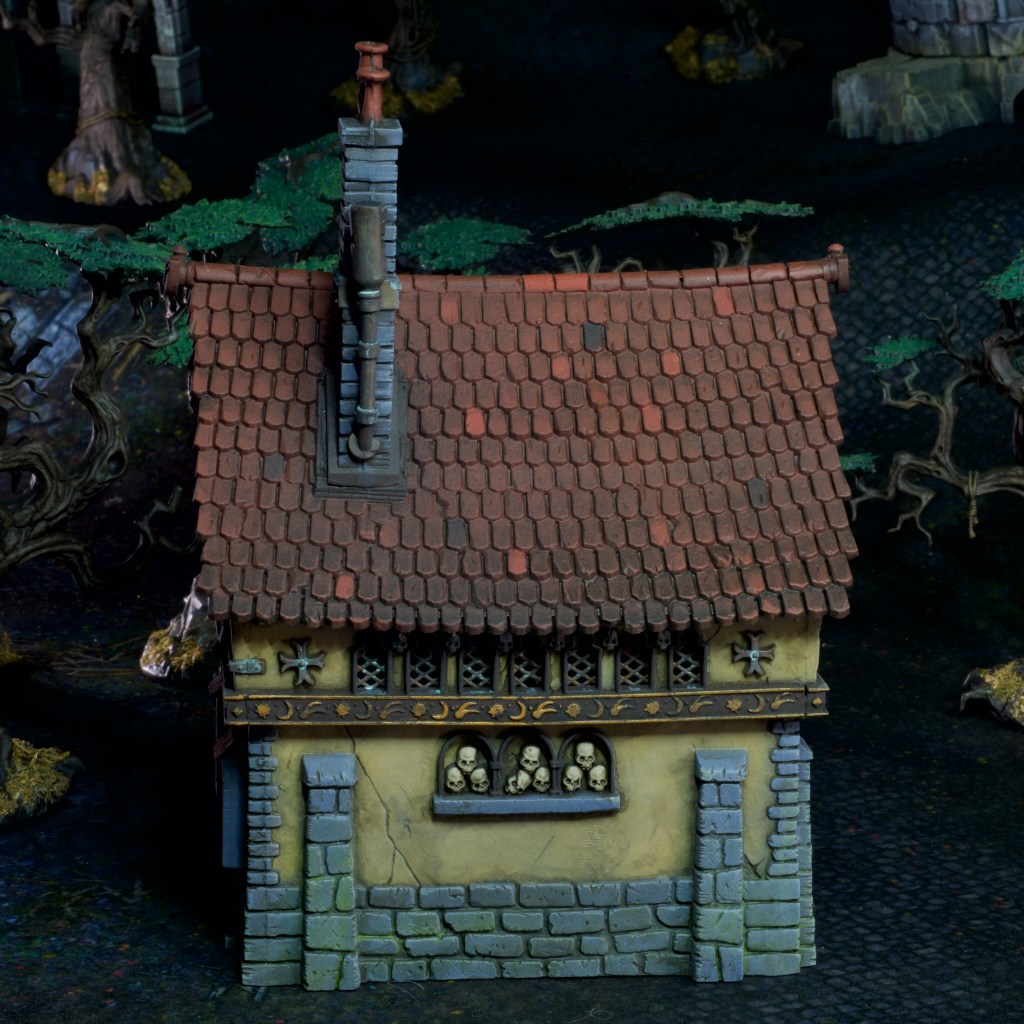
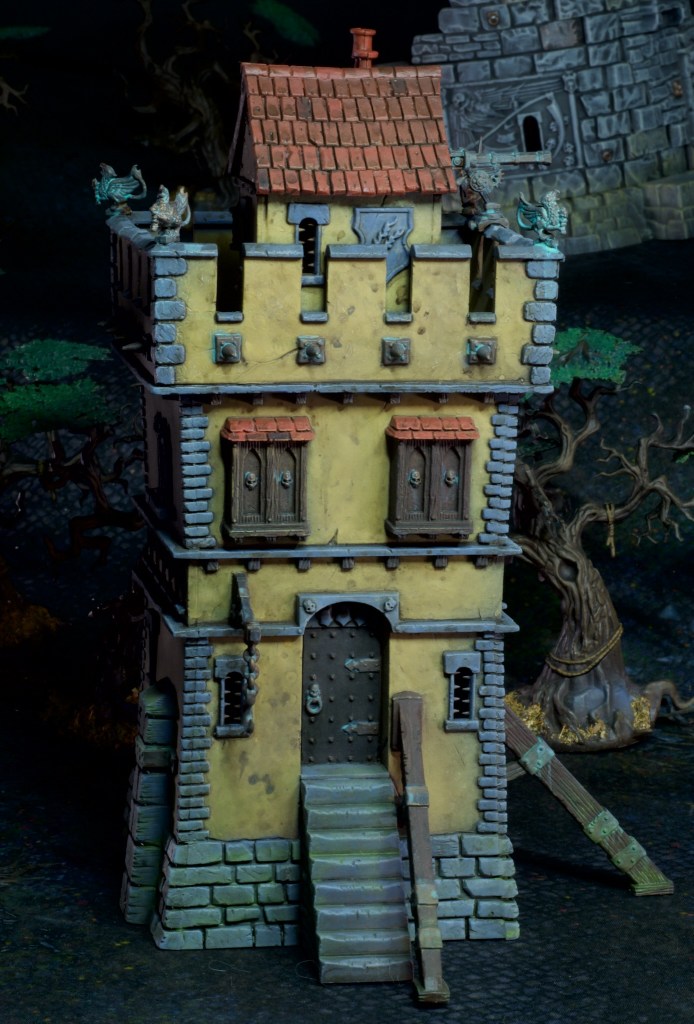
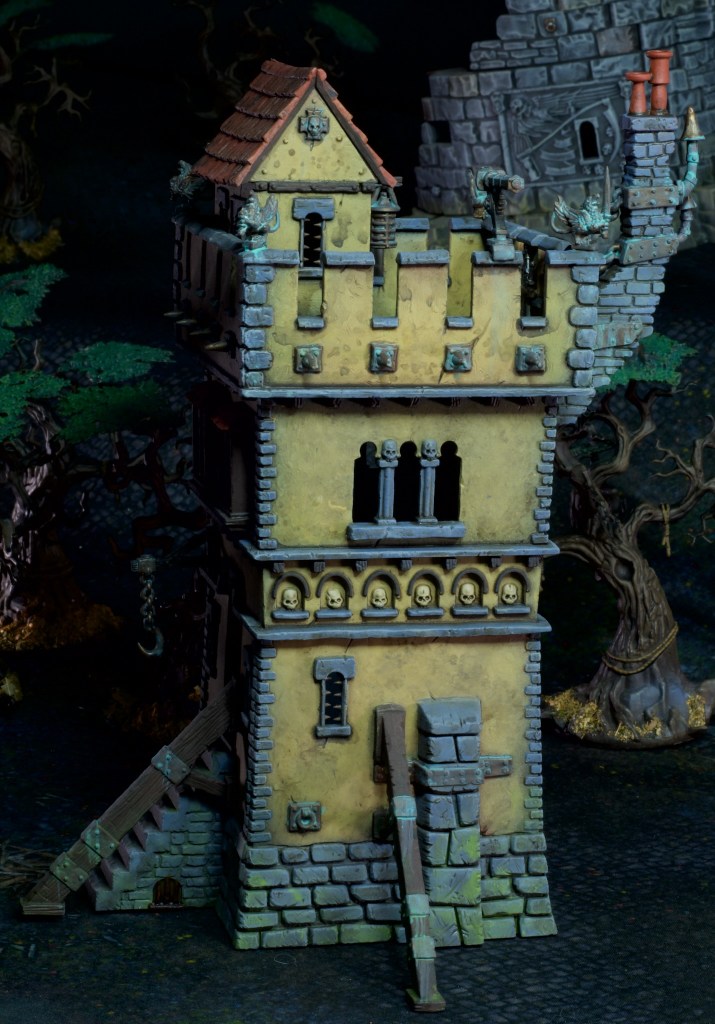
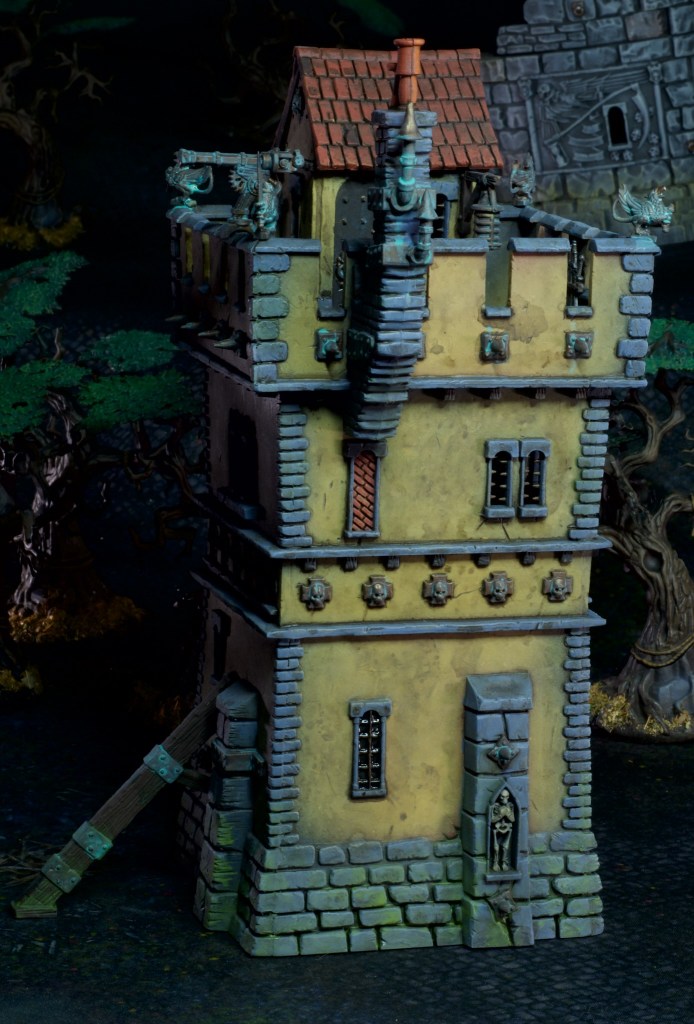
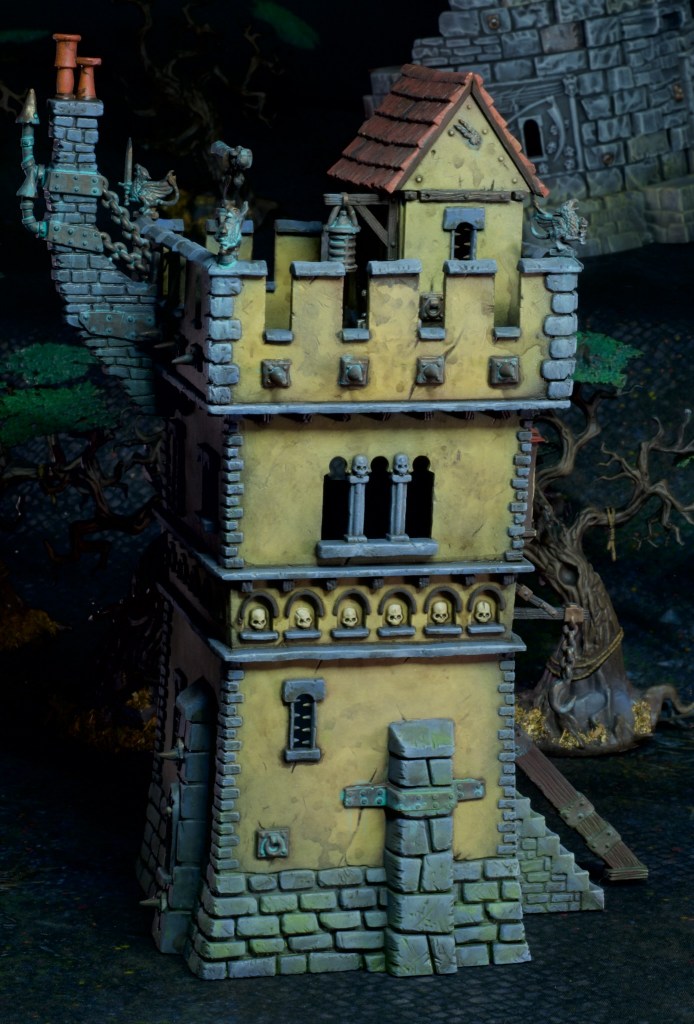
Between Baldur’s Gate 3 sessions I’ve been doing some more terrain painting for Warhammer. This time around a couple of kits that came out a few years before last post’s Skullvane Manse: an Empire chapel and watchtower. These two also came out as a combined kit where extra parts liked them together into one bigger building, but I don’t own that variant!

These are both great models and I was pretty chuffed when a friend gave me his seeing as I never picked them up when they were still being sold by GW. Just like the Skullvane Manse I took my time painting these hence the 3ish week gap between posts (the aforementioned Baldur’s Gate 3 sessions did not help!).

I think the results are worth it though, and I’m excited to put these on the table! Here’s some 360° shots of the buildings.

Had some fun adding gloss varnish to the windows, I think that worked pretty well
Wouldn’t be a proper Warhammer building if it didn’t have skulls all over!
I felt bad oxidising that clock, but the mechanisms are all exposed, what else could I do!
I picked out a few tiles in a darker brown and a few in a lighter terracotta to add a bit of variation.
The lower stone areas got the green enamel wash treatment to get that mossy/licheny feel.
The copper oxidisation is done with Games Workshop’s Nihilakh Oxide, slightly watered down.
The skeleton enshrined in the wall is quite small, I choose to believe it must have belonged to some sanctified halfling.
The variations in tones on the cream sections of the wall are a result of first airbrushing Vallejo Desert Yellow over the undercoat colour, then washing it with a brown wash, and highlighting it with some very thin (a glaze effectively) Vallejo Desert Yellow. The wash left some great grimy patterns all over the walls of both buildings which was a pleasant surprise!

I hope you’ve enjoyed these! I’m not too sure what I’ll be painting next but I think it’ll be models rather than terrain. Time will tell!

Skullvane Manse

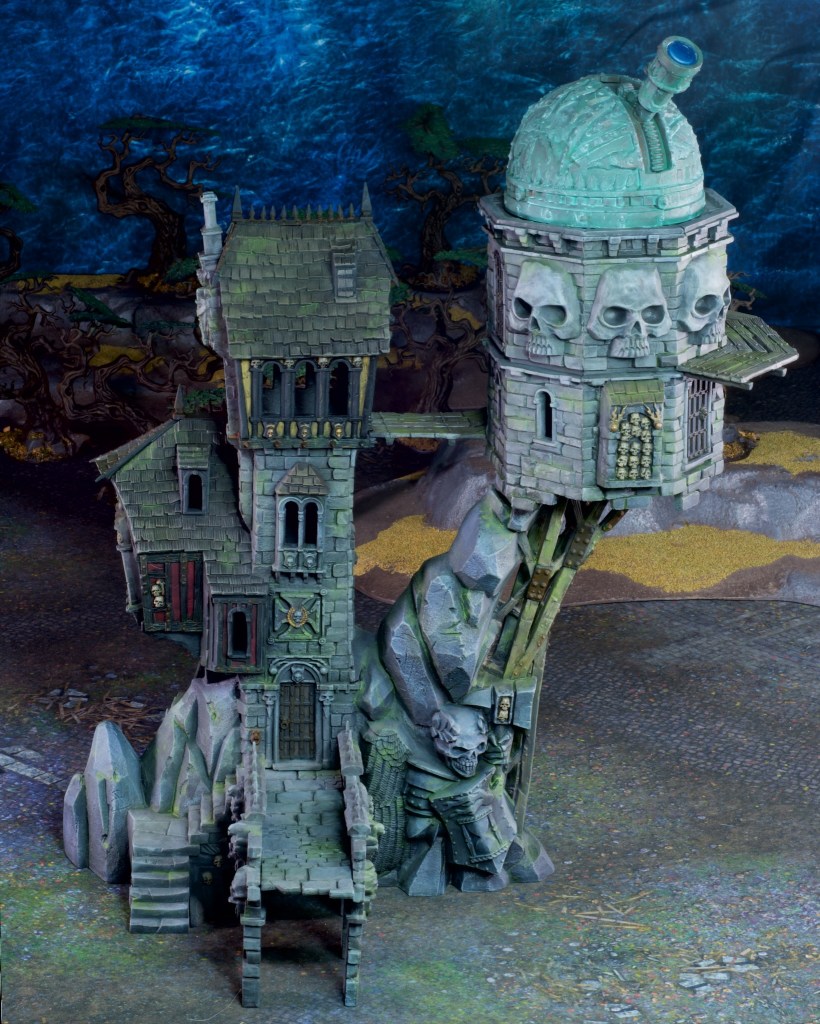
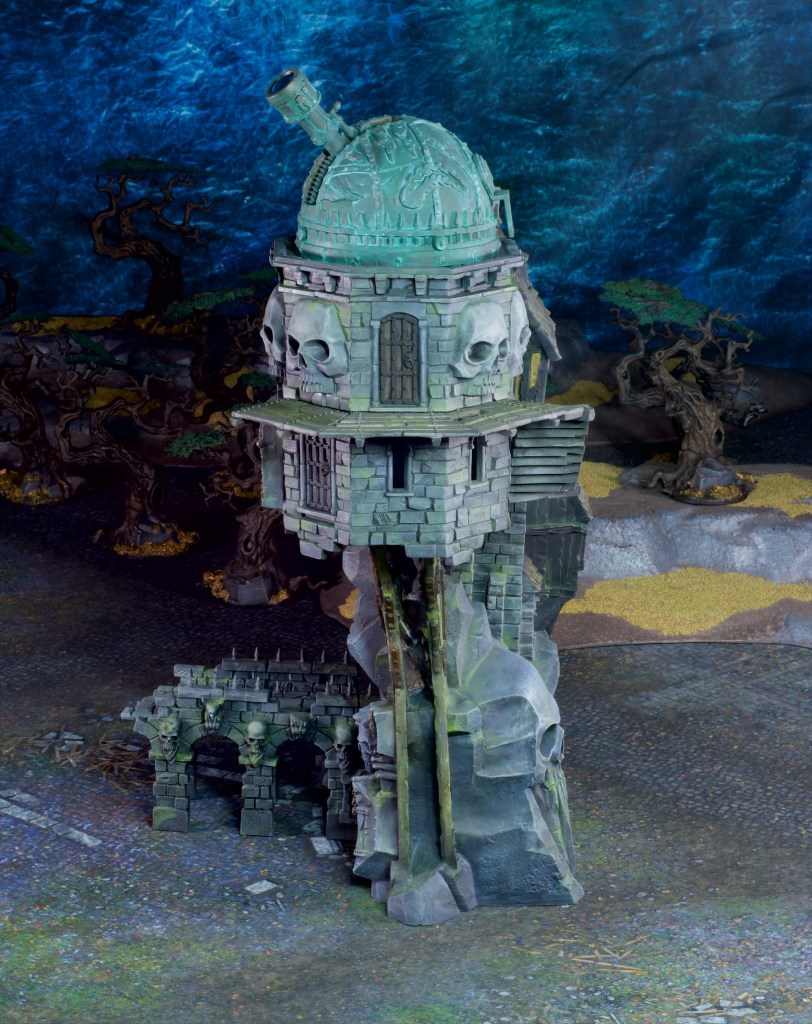
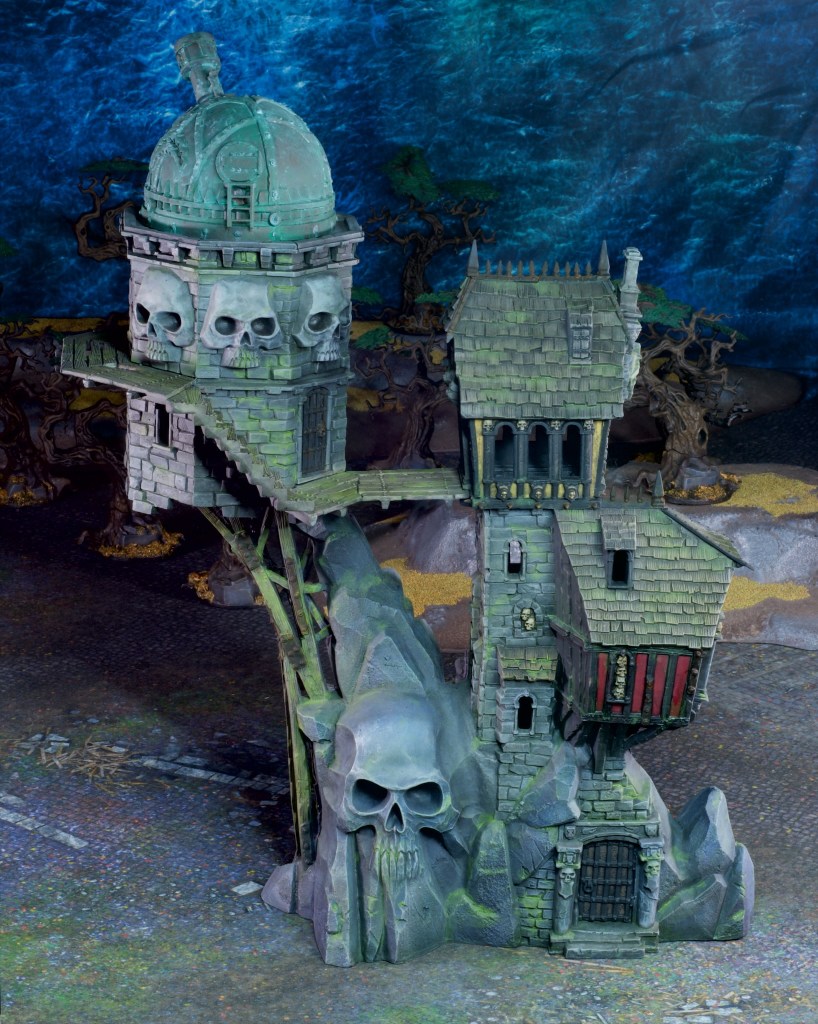
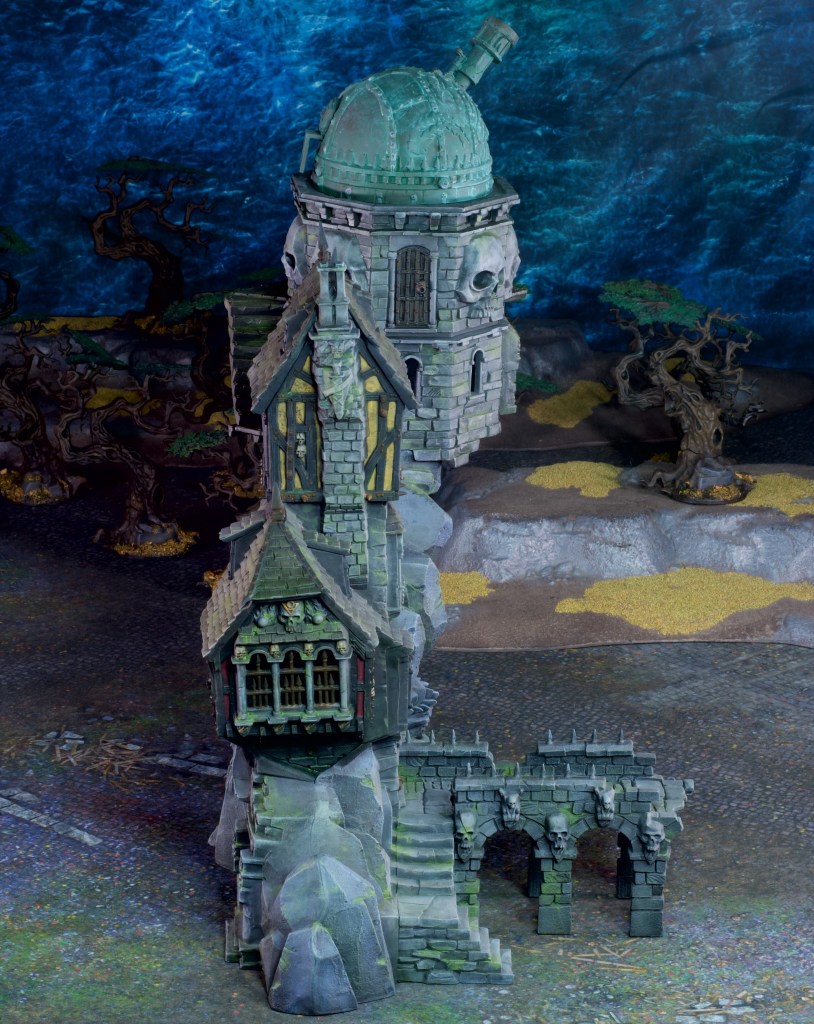
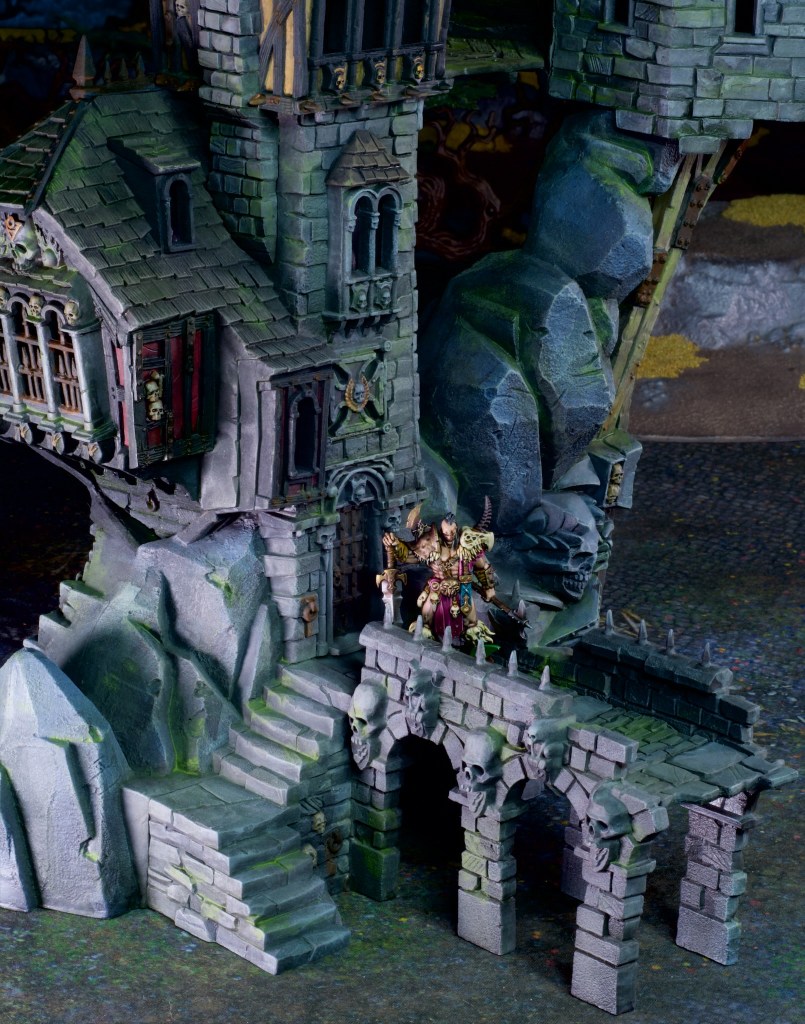
After painting quite a few models for our Border Princes campaign, and a good chat in the comments of fellow blogger Kuribo’s latest post, I decided to get some terrain done. I wanted this terrain to contribute towards the campaign, so painted an old (well not so old!) Warhammer terrain kit: Skullvane Manse, also known as Warscryer Citadel in its Age of Sigmar re-release. For the campaign, it will be used for battles fought around the town of Aldium, which is home to many wizardy types that like to do their research far from the gaze of imperial witch hunters!

It is quite a fun model, with a ton of detail. The rickety tower reminds me of the tower Merlin is given in the old Disney movie The Sword in the Stone for those that remember that! With its giant telescope it seems like an excellent home to a wizard. It is covered in Empire iconography, but you have to fool witch hunters somehow!

This model is very tall, and was a bit of a challenge to paint as a result. The only sub-assembly I did was to keep the telescope cupola separate, and I kept the rest of the model in one piece which was definitely a mistake. This made the painting process much more complicated, as I had to wield this big model while trying to get to many hard to reach places.

I did have a lot of fun painting it however, it is just covered in fun details, and while I was initially going to paint it to my normal terrain standard, I ended up putting quite a bit of time into this model.

This model has a lot of stone on it, and one thing I did to break all that up was to make the natural rock a blue grey, and the artificial stonework a more desaturated grey. I don’t think that came through in the photos that well however, but in person it’s pretty visible.

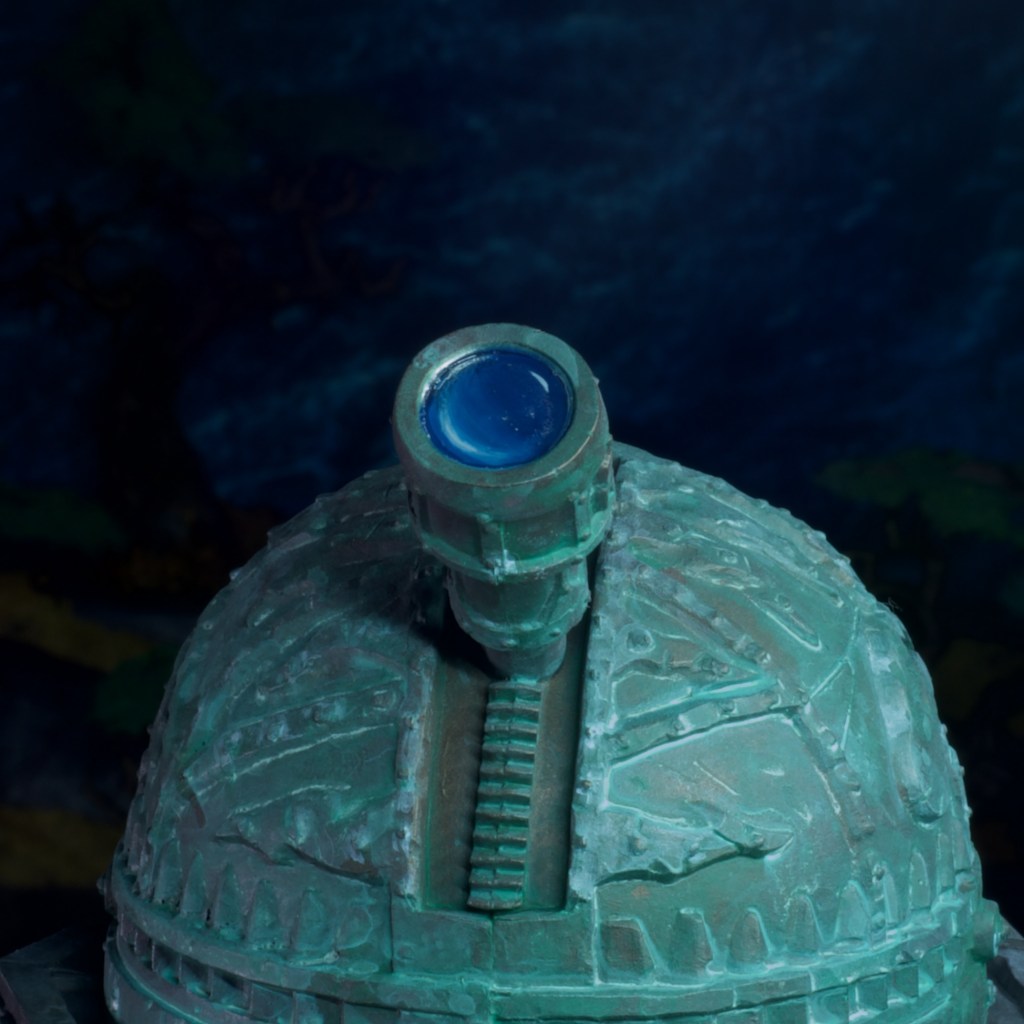
Another bit of experimenting I did was with the telescope’s lens. I painted the lens as I would any other, but then instead of gloss varnish to finish it off, I filled the hollow part with UV Resin, and cured it in place. This gives a pretty fun effect in person, hard to capture in photos but I’ll let you imagine it. The UV resin is 2-3mm thick above the painted area, so the depth really adds a lens-like quality to it,

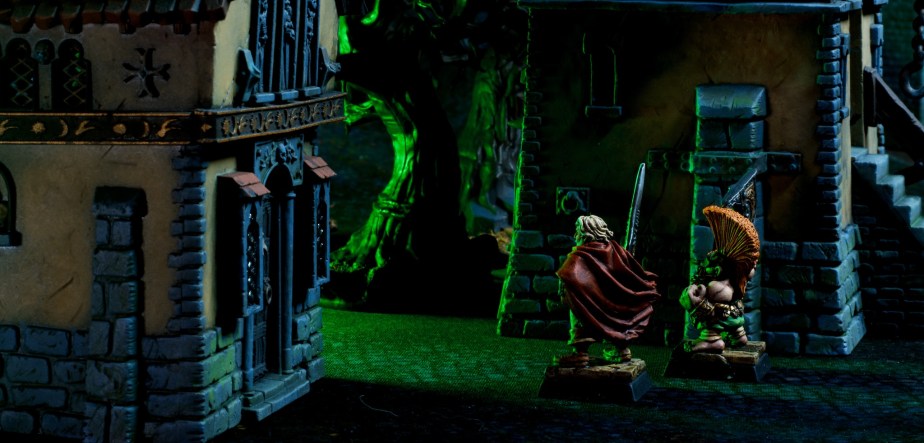
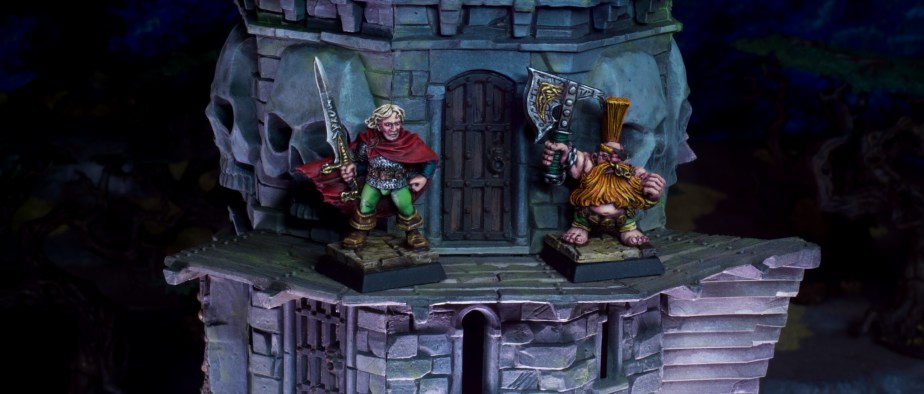
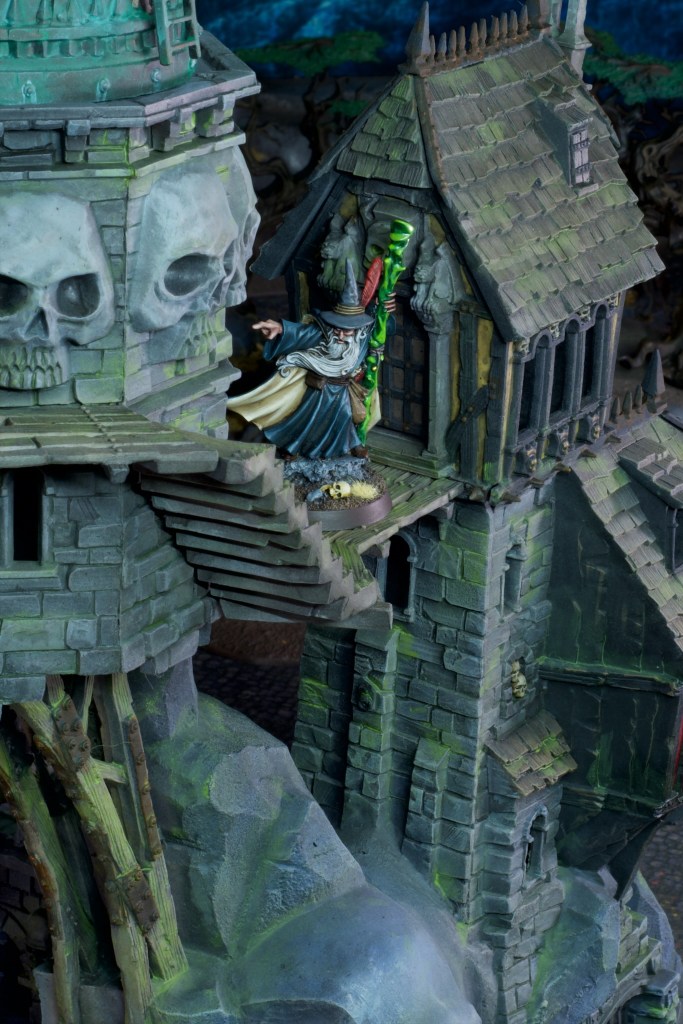
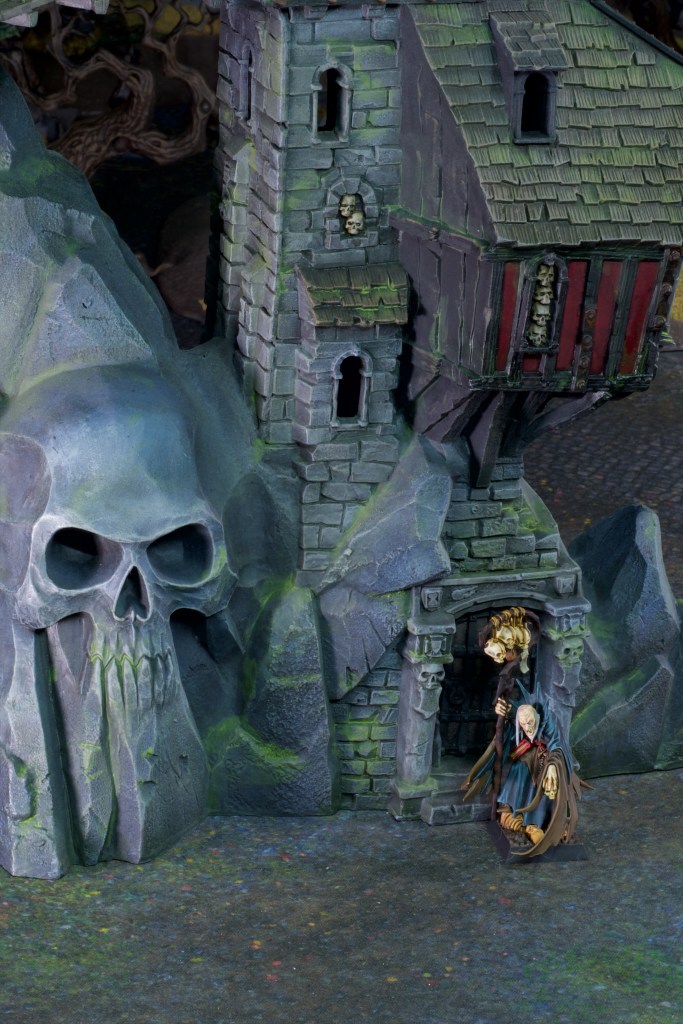
To give you a sense of the scale of this model, and showcase some detail not captured in the photos above here are some more photos with models included.

Anyway I hope you enjoyed that model! I’m not sure what’s headed to the painting table next, but given how much fun I had painting this I could well see more terrain on its way soon!

Fortress

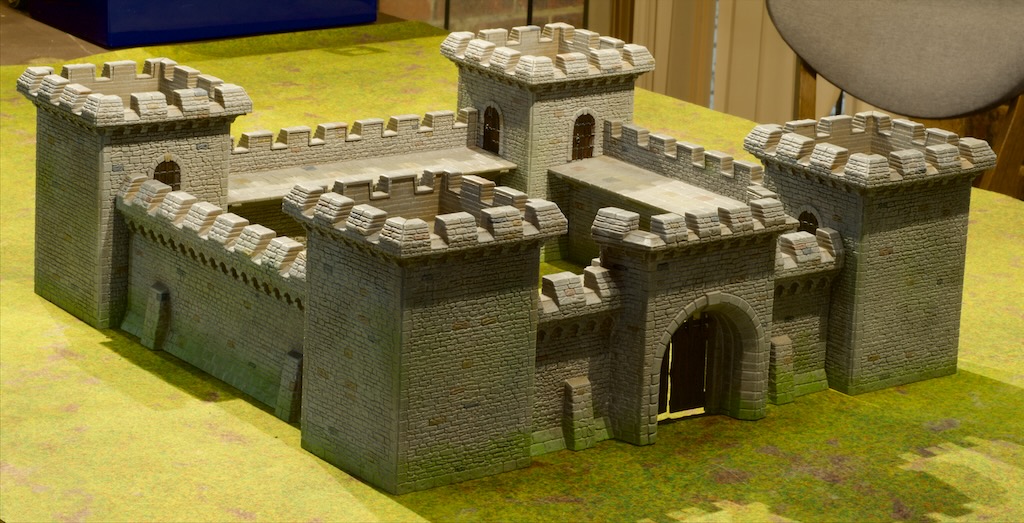
It’s been a little bit between updates, I’ve taken to working from the office again mostly and my painting time is much reduced as a result. It also hasn’t helped that Diablo 4 is finally out! Regardless, I found myself with a bit of painting time today and decided to use it to finish off something that’s been in progress for a good 3-4 years.

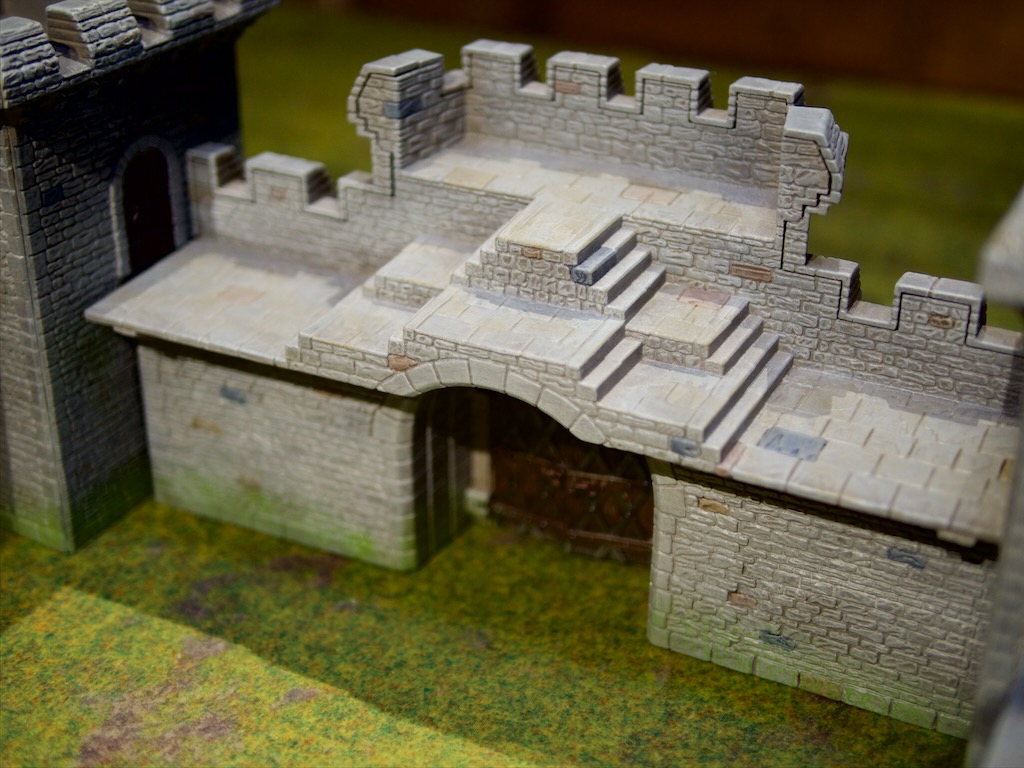
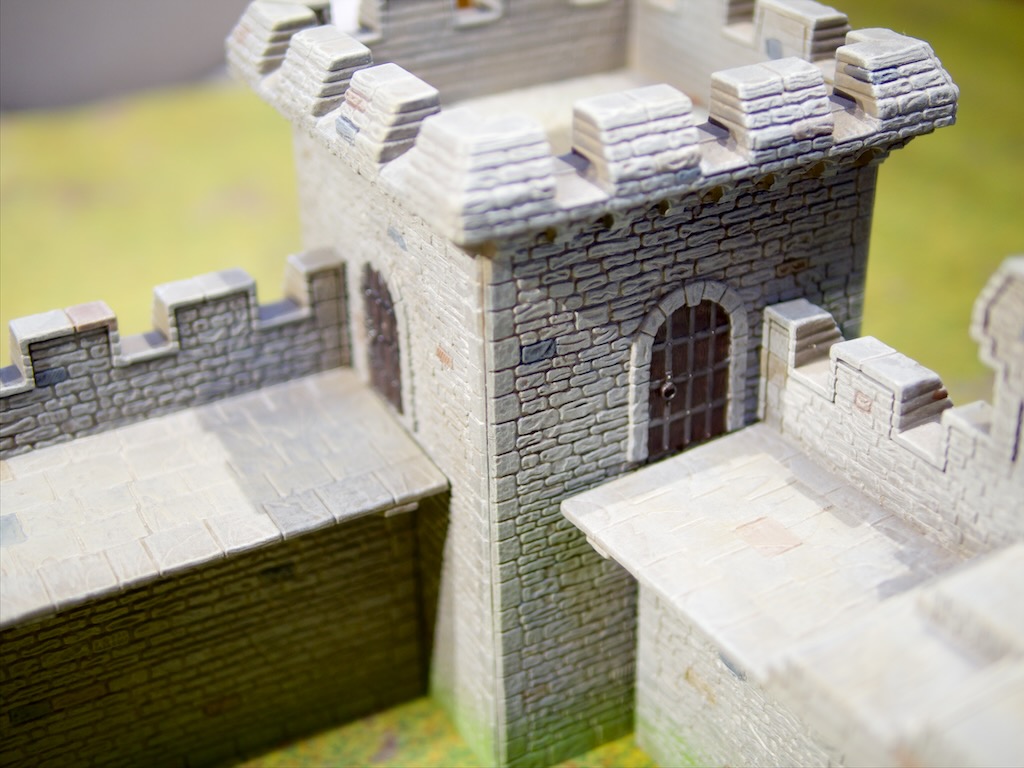
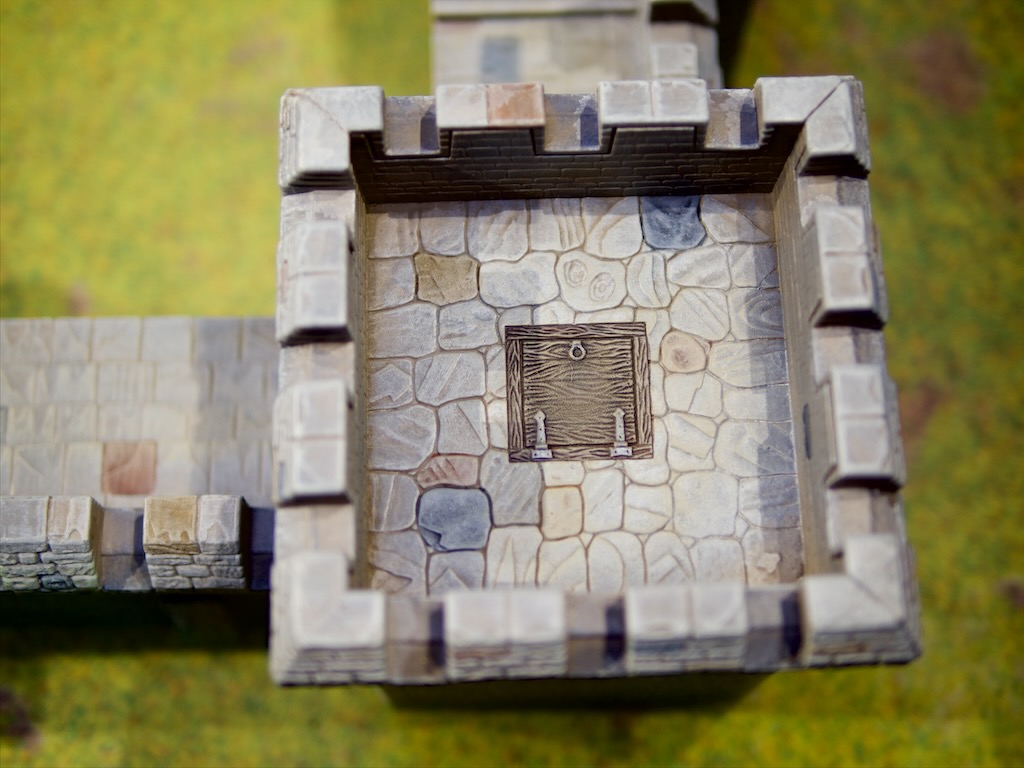
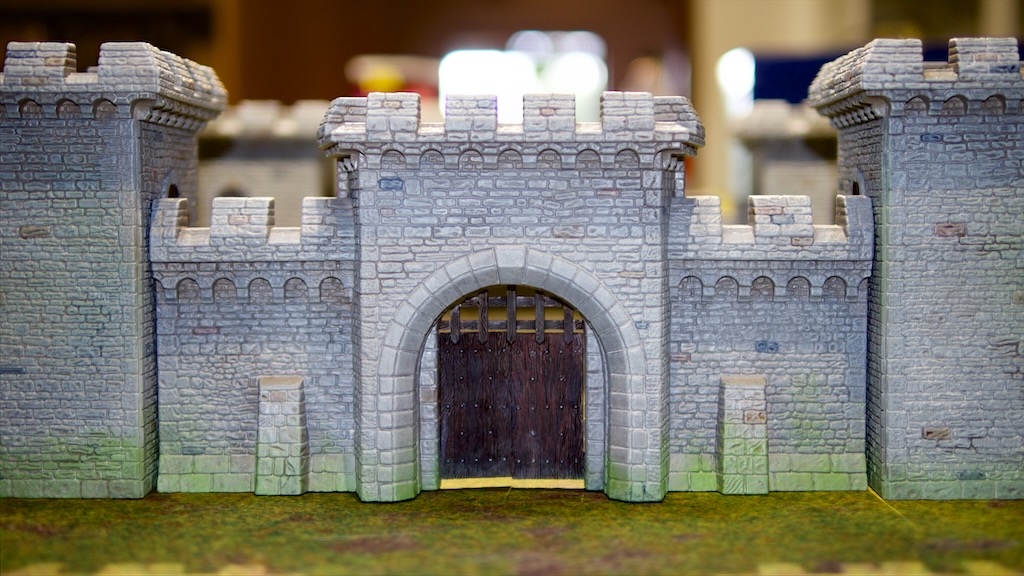
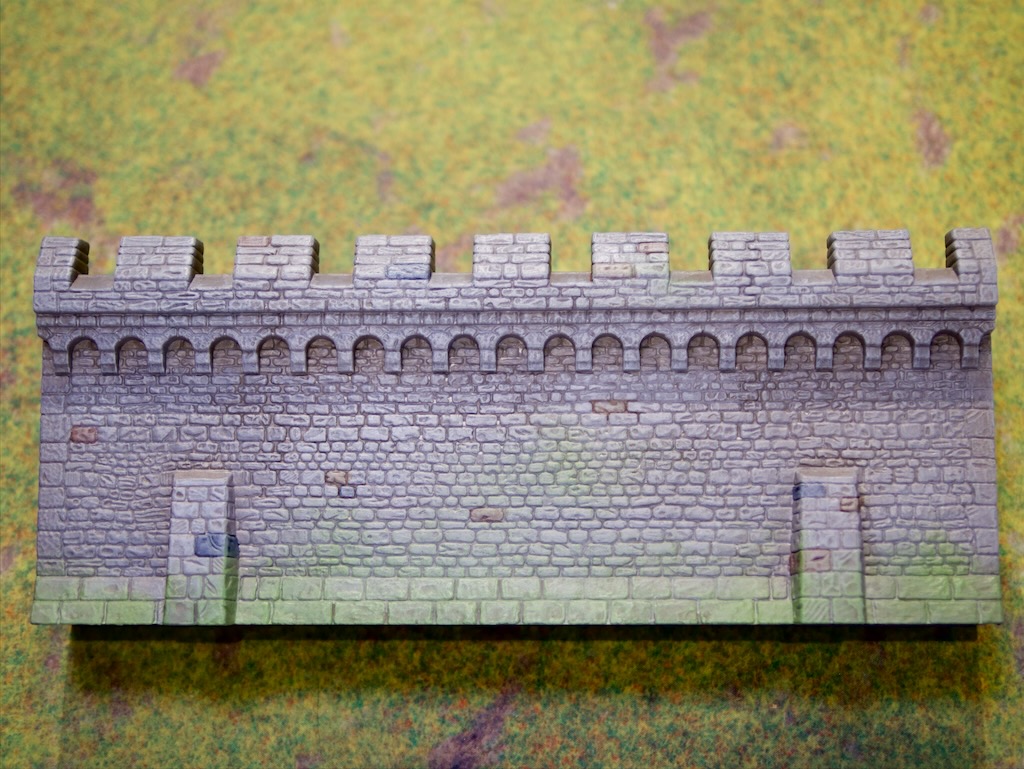
Those of you familiar with the old Warhammer Fortress might have recognised it in the background of a few of my photos over the years, most recently in my previous post, and further back as backdrop for my Skaven army. It’s finally painted, and will be used as part of the Border Princes campaign.

These photos are a bit lower quality than what I try do do usually, I don’t have lightning big enough to take photos of something that size, so the room lights had to do!

Painting-wise I don’t have much detail unfortunately (that’s what I get for taking so long to paint something!) but generally here’s how it was approached:

  • The whole model was undercoated with some spray paint from the hardware store – a greyish brown
  • The model was washed with some thinned down brown craft acrylic
  • Everything was dry brushed with greys, dark to light
  • Some stones were picked out with GW Shades, in blues, reds and ochres.
  • The wood bits were picked out in GW Contrast Cygor Brown
  • The metal bits were picked out in Vallejo Gun Metal
  • A very light wash of Abteilung 502 Dust Oil Paint was done over the stone areas to represent mortar
  • A dry brush of Vallejo Goblin Green was done on the lower parts of the walls and towers to make them look a bit mossy
  • A slight dry brush of brown and bone was done over the areas that would be trodden on, i.e. the tops of the walls and the towers

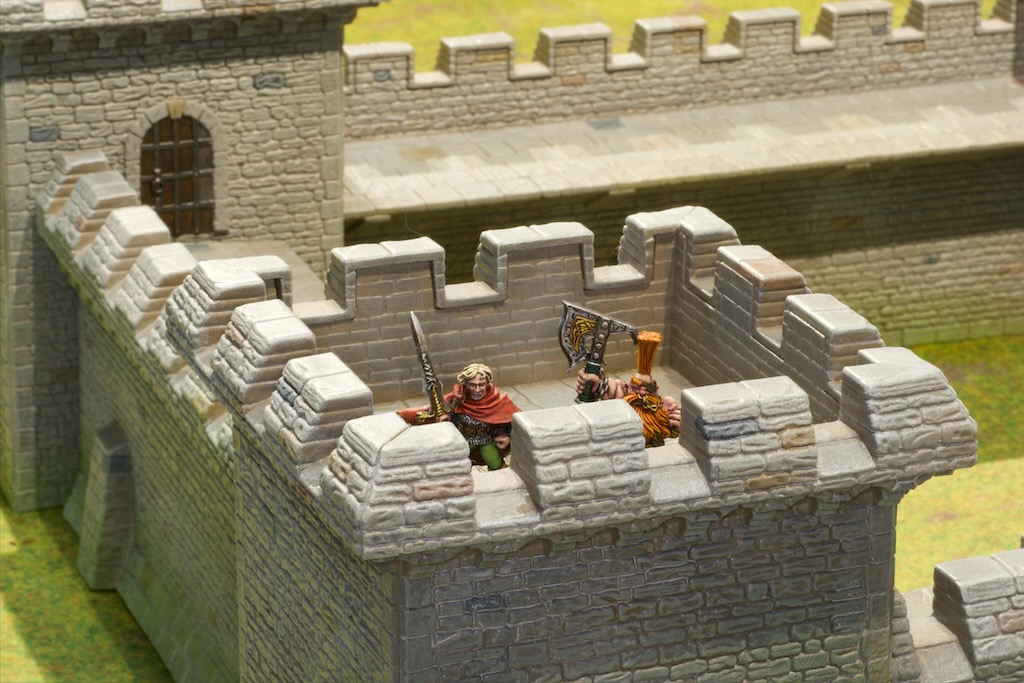
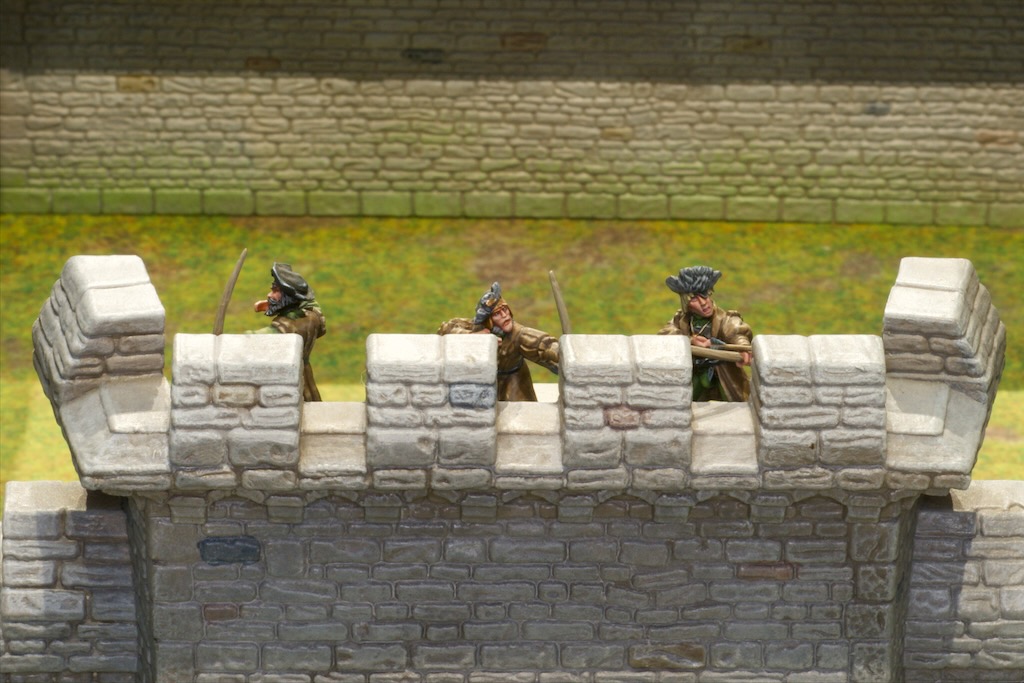
This was pretty fun to paint even considering the size of it, and I look forward to using it in games! I’ll leave you with a couple of shots with miniatures in the battlements so you can see the scale for yourself. Till next time!

Mines and Meteors

It’s been a little while since I’ve posted anything, almost a month! A few local events in the card gaming sphere have gotten my interest lately and regular painting sessions have been replaced with card gaming and deck building! This is all mostly over now and the paintbrushes have been dipped in paint once more.

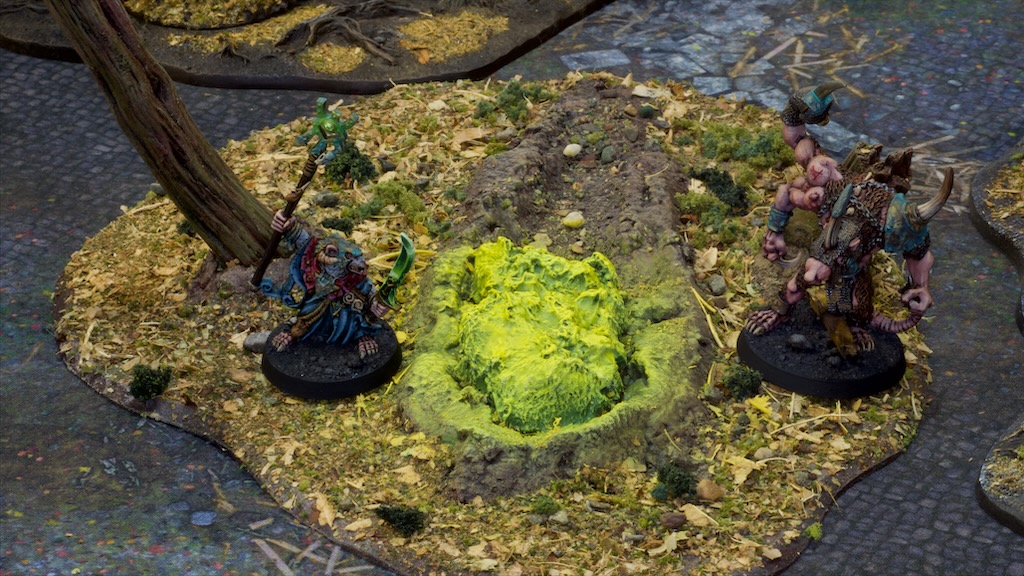
A few months ago I planned a narrative game with a friend pitting my Skaven against his Wood Elves. The game would be centered around a chunk of warpstone falling into Athel Loren (the forest the wood elves mostly live in for you non-warhammer fans!), and the Skaven tunnelling up into the forest to seize it!

The scenario requires me to make some terrain to represent the meteor and the tunnel holes dug by the Skaven, and the date for the game being set to mid next week it was about time I got to it!

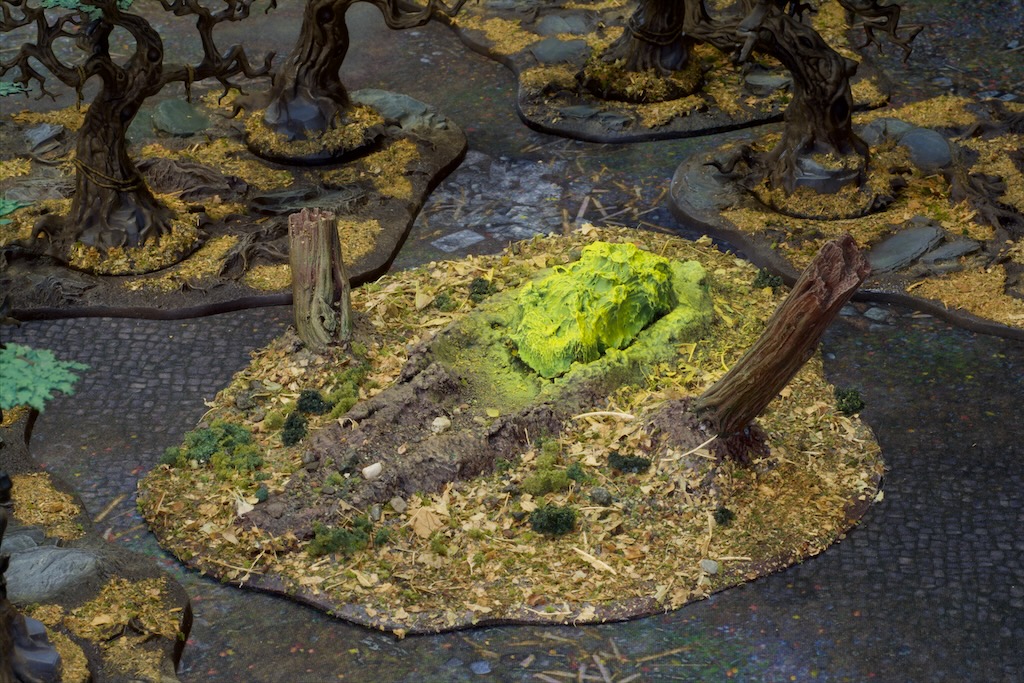
This was a relatively quick project, and like most terrain a lot of fun to put together! The meteor was made from polystyrene that I roughly shaped with a knife and then sprayed with a spray can right up close. Aerosols melt polystyrene when blasted up close which is really undesirable usually, but I thought it might give some interesting texture here, and I think it worked out nicely!

The tree stumps are just interesting looking sticks from the garden, and the whole thing was brought together with some sculptamold for modelling of the crater and give some form to the ground areas.

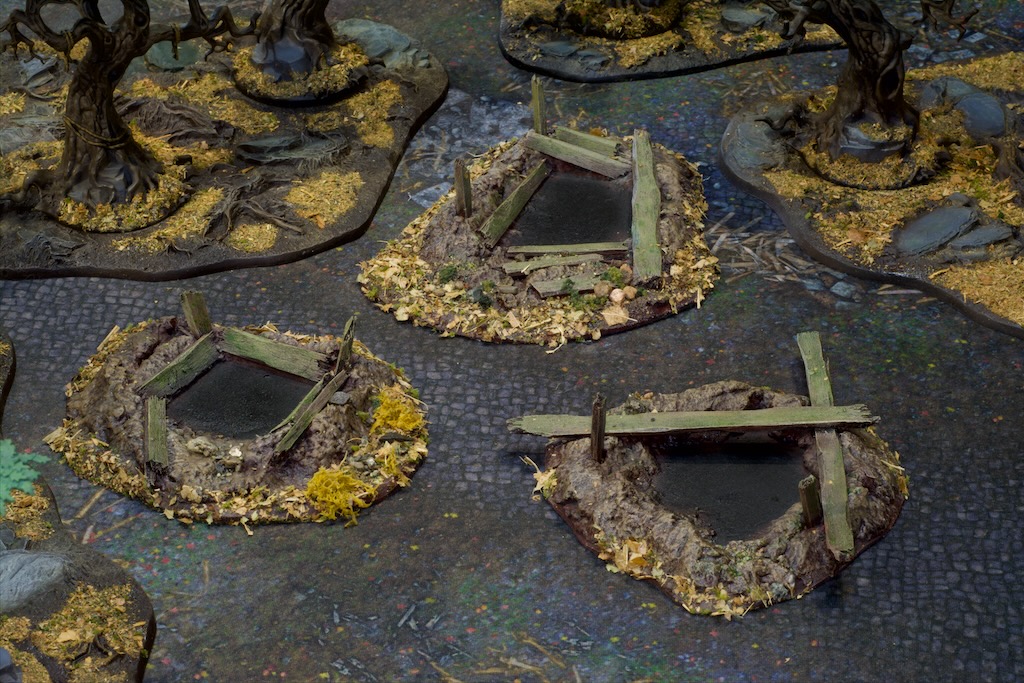
The tunnel holes were also done using sculptamold, with some planks made from balsa wood added to show that lovely Skaven craftsmanship!

I’m now all ready for the game next week, and will try to remember to take photos to post up!

Overgrown Ruins

I’ve done a bit of terrain painting over the last week, tackling a bunch of forest bases I’ve accumulated over the years. These are all the same kit, Citadel Woods which I believe are not sold anymore unfortunately. I’ve somehow amassed a bit of a collection of them and it felt like time to finally get them painted!

Taking pictures of these gave me the opportunity to take pictures of some more terrain I did up a little while back, this time not old kits, but pieces I 3D printed. The files are from RM Printable Terrain from their Stormguard collection. I was waiting to receive the mat you see the pieces on before I took photos.

I didn’t necessarily plan on painting these trees to match, but I think the ruins and the trees work nicely together and I’ll definitely have them both on the table at the same time for games going forward.

Look forward to getting some games in amongst these!